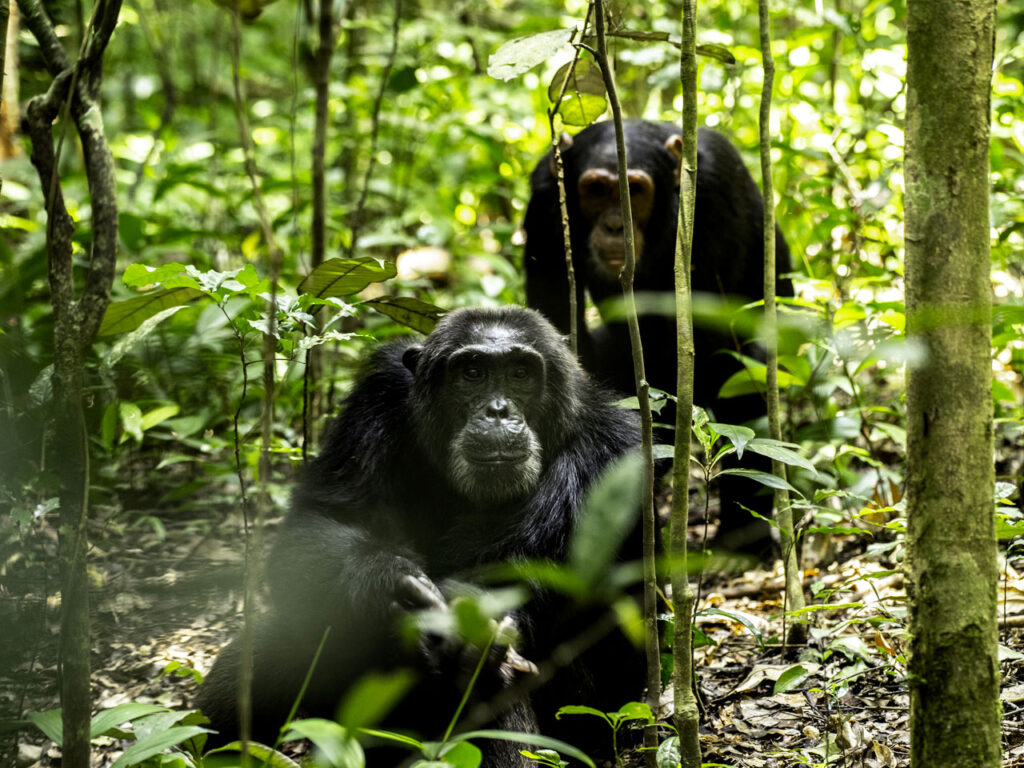
Chimpanzee trekking in Budongo Forest—located in the Murchison Falls Conservation Area—is an unforgettable primate experience. Trekking permits cost $85 to $130 per person. The activity takes 3 to 4 hours, including a thrilling 1-hour window to observe our closest living relatives in their natural habitat.
4-days-murchison-falls-and-chimpanzee-tracking-in-budongo-forest
1. Where is Budongo Forest located?
Budongo Forest is a magnificent tropical rainforest situated in the northwestern region of Uganda, forming an integral part of the southern sector of the greater Murchison Falls Conservation Area. This immense natural sanctuary covers an expansive area of approximately 825 square kilometers, making it a critical ecological buffer zone for the diverse wildlife populations that migrate across the regional savannahs and woodlands. For travelers planning their itinerary, Budongo is exceptionally well-located and highly accessible compared to the more remote primate destinations in the far southwestern corners of the country. It is located roughly 250 kilometers from the capital city of Kampala, translating to a highly scenic and comfortable three and a half to four-hour drive along smooth, well-tarmacked highways.
The journey takes visitors through vibrant trading centers, rolling green landscapes, and the historic town of Masindi, which often serves as a popular lunch or overnight stopover point for tourists heading into the wilderness. Because of its unique geographic placement immediately adjacent to Murchison Falls National Park, Budongo Forest represents the perfect transitional habitat for a classic multi-day Ugandan safari. It allows tour operators to effortlessly combine a thrilling, high-energy primate trekking experience in a dense, primeval canopy with traditional big-game savannah safaris, boat cruises along the historic River Nile, and a visit to the world's most powerful waterfall. This strategic location makes Budongo an absolute favorite for travelers who want to maximize their wildlife viewing variety while minimizing long, exhausting travel days across the country.
2. What are the chances of seeing chimpanzees?
When clients invest time and resources into a primate safari, they naturally want assurance about their wildlife viewing prospects. Fortunately, chimpanzee sightings in Budongo Forest are extraordinarily high, consistently maintaining a success rate of around 90% or higher throughout the entire year. This world-class reliability is primarily due to the presence of several fully habituated chimpanzee communities that reside within the Kaniyo Pabidi sector of the forest canopy. Habituation is a highly specialized, patient process overseen by dedicated international researchers and expert conservationists. Over several decades, these wild chimpanzees have gradually become completely accustomed to the peaceful presence of human observers. As a result, they continue their daily activities—such as grooming, foraging, and playing—without feeling threatened or stressed by tourists.
The park employs a highly organized team of expert local trackers who venture deep into the forest at the break of dawn every single morning. These trackers are masters at reading subtle forest signs, locating fresh nests from the previous night, and listening for the loud, echoing pant-hoots that chimpanzees use to communicate across the canopy. Once a community is located, the trackers immediately relay the precise coordinates via radio to the waiting guides at the visitor center. This advanced infrastructure means that when your clients head out on the trail, their guide is not wandering aimlessly; they are walking directly toward a known location. While they are still wild animals free to roam a vast forest, this sophisticated management ensures an encounter is virtually guaranteed.
3. How much does a Budongo chimpanzee tracking permit cost?
Securing a chimpanzee tracking permit is a mandatory legal requirement for anyone wishing to enter Budongo Forest for this activity, and a standard tracking permit currently costs around $90 USD per person. This highly competitive price represents exceptional value for international travelers, especially when contrasted with the significantly higher primate permit fees found in other parts of East Africa. This transparent fee is highly inclusive, covering several essential operational components to ensure your clients enjoy a safe, educational, and completely seamless day in the forest. Most notably, the permit covers your mandatory park entry fees for that specific sector and includes the services of a certified, highly knowledgeable Uganda Wildlife Authority ranger guide.
These professional guides accompany you every step of the way, sharing deep insights into forest ecology and managing the pace of the hike. It is important to educate clients that this permit fee is fundamentally an investment in long-term environmental sustainability. A significant portion of the revenue generated from permit sales is directly reinvested by the Uganda Wildlife Authority into daily anti-poaching patrols, boundary management, and ongoing primate health monitoring programs. Furthermore, a percentage of tourism revenue is shared with the local communities surrounding the forest to fund schools and clinics, transforming local residents into active guardians of the wilderness. Permits should always be booked well in advance through a registered tour operator to ensure your preferred dates are locked in before arrival.
4. When is the best time to track chimpanzees in Budongo?
Budongo Forest is a spectacular destination that can be successfully visited for chimpanzee tracking all year round, but the optimal time for the most comfortable experience is during the dry seasons. The region experiences two distinct dry windows: the primary dry season from December to February, and a secondary dry season spanning from June to September. During these months, rainfall is minimal, which provides several distinct logistical advantages for hikers. The forest floor and winding trails are substantially less muddy, firmer, and much easier to navigate, reducing the physical exertion required to keep up with the primates. Furthermore, the undergrowth is less dense, which significantly improves visibility through the trees.
Crucially, the dry season changes chimpanzee behavior in a way that benefits trackers. When water and fruit become scarce in the upper canopy, the chimpanzees are forced to descend from the high mahogany treetops to forage for food and water on the forest floor. This means they spend significantly more time on the ground, allowing tourists to enjoy spectacular, eye-level views and incredible photographic opportunities. However, the rainy seasons (March to May and October to November) also offer unique advantages. During the rains, the forest transforms into a lush, vibrant green paradise, and food is incredibly abundant. Because wild fruits are everywhere, the chimpanzees do not have to travel far, meaning they are often located much closer to the starting trailheads, resulting in much shorter, easier walks for your clients.
5. Are there chimpanzees in the forest all year?
Yes, chimpanzees are absolute, permanent year-round residents of Budongo Forest, meaning there is never a bad month to schedule a primate safari to this destination. Unlike certain migratory wildlife species that travel vast distances across open savannahs in search of seasonal water or shifting grasslands, these chimpanzees are deeply bound to the rich, stable ecosystem of this massive mahogany forest. Budongo’s unique microclimate and dense, ancient canopy provide a highly dependable, continuous supply of diverse food sources, including wild figs, complex forest leaves, tree bark, and various insects, ensuring the primates never have a biological reason to leave.
Because they do not migrate, the daily operation of chimpanzee tracking runs continuously every single day of the year, regardless of the changing seasons. The habituated communities remain within their established territorial boundaries, which are actively monitored by the park's research stations and ranger patrols. Whether your clients choose to travel during the bright, dry days of January or the lush, quiet, and emerald-green rainy days of April, the chimpanzees will be right there in their natural habitat. This year-round availability provides incredible flexibility for tour operators designing comprehensive Ugandan travel itineraries, giving you complete confidence that no matter when your clients arrive, they can experience a profound, authentic, and deeply moving encounter with man's closest living relatives in the heart of Africa.
6. How long does the trek take?
A standard chimpanzee tracking excursion in Budongo Forest generally takes between 2 to 4 hours from start to finish. This makes it an incredibly popular half-day activity that fits perfectly into a busy safari schedule, leaving ample time in the afternoon for a game drive or a boat launch down the Nile. The total duration of the trek is never fixed, as it is entirely dependent on the natural movements and daily whims of the chimpanzees. Every morning, the adventure begins at the visitor center with a vital safety briefing, after which you step directly into the cool, shaded forest canopy to begin your search.
The length of the initial hike depends heavily on where the chimpanzees chose to build their nests the previous night and how far they have traveled since waking up at dawn. On lucky days, a habituated community might be foraging just a short, leisurely 20-minute walk from the forest edge. On other mornings, if the group is actively hunting or moving in search of a specific fruiting tree, the hike can involve a couple of hours of steady walking through the winding forest trails. The pace of the walk is always kept moderate and comfortable, intentionally managed by your guide to suit the physical abilities of the group. Once you locate the chimpanzees, you spend a dedicated hour with them before enjoying a relaxed walk back to the base station, completing a rewarding forest journey.
7. How long can you stay with the chimpanzees?
Once your tracking group successfully makes visual contact with a habituated chimpanzee community, the clock officially begins, and visitors are permitted exactly 1 hour of direct observation. This strict sixty-minute time limit is a rigid international conservation standard implemented across East Africa to protect the health and well-being of the primates. Chimpanzees share roughly 98.7% of their DNA with humans, making them exceptionally vulnerable to human stress and behavioral disruptions. Limiting human contact to one hour ensures that the wild apes do not become overly dependent on tourists, overly stressed by human crowds, or altered in their natural grooming, foraging, and mating behaviors.
This single hour passes incredibly quickly because watching a chimpanzee community is a profoundly captivating and dynamic experience. You will have front-row seats to observe their complex social hierarchies, listen to their deafening vocal communications, and watch mothers tenderly caring for their young or dominant males patrolling their territory. Your UWA ranger guide will utilize this hour to interpret their fascinating behaviors, point out specific individuals, and help you position yourself safely for the best possible views. Photographers will find that one hour provides ample time to capture beautiful, memory-filled shots. When the hour concludes, the guide will quietly ask the group to bid farewell to the community and begin the return hike, leaving the chimpanzees to enjoy the rest of their day in complete peace.
8. How many people are allowed in a trekking group?
To ensure a highly intimate, world-class tourism experience while strictly prioritizing wildlife conservation, tracking groups in Budongo Forest are kept intentionally small. The Uganda Wildlife Authority enforces a strict regulatory maximum of just 6 people allowed per tracking group for each habituated chimpanzee community. This low number is a crucial component of modern eco-tourism management, designed specifically to minimize the environmental footprint and psychological impact that humans have on the forest and its resident primates. Large crowds can easily startle the chimpanzees, cause unnecessary stress within the troop, or trigger defensive behaviors from alpha males.
For your clients, this small group size is an immense benefit that dramatically elevates the overall quality of their safari. Traveling in a cozy group of six means there is never a struggle for a clear view, and everyone can easily hear the fascinating commentary, historical anecdotes, and ecological insights shared by the expert ranger guide. It creates a quiet, respectful atmosphere that allows you to fully immerse yourself in the raw sounds of the rainforest without the distraction of loud crowds. Because these daily slots are strictly capped and highly sought after, it highlights the absolute importance of advanced planning. Booking your clients' permits months ahead ensures they secure their spot in these exclusive, small-scale groups, guaranteeing a highly personalized and profoundly memorable wildlife encounter.
9. Can children track chimpanzees in Budongo?
To participate in a chimpanzee tracking expedition within Budongo Forest, the Uganda Wildlife Authority enforces a strict minimum age requirement of 12 years old. Children under this age are legally not permitted to enter the forest trails for tracking under any circumstances. This age restriction is deeply rooted in international primate conservation science and safety management. Children under 12 possess developing immune systems and are statistically far more likely to carry common childhood illnesses, cold viruses, or airborne infections. Because chimpanzees are genetically almost identical to humans, a simple human cold could easily sweep through a wild community with devastating, potentially fatal consequences.
Furthermore, the forest environment requires a solid level of emotional maturity and behavioral control. Chimpanzees can be incredibly loud, vocal, and physically intimidating when they display power or swing rapidly through the lower branches. A younger child might easily become terrified, panic, cry, or run away, which can startle the primates and potentially trigger an aggressive, defensive reaction from the dominant alpha males. By maintaining the minimum age at 12, park authorities ensure that all participants have the physical stamina to complete the trek, the emotional maturity to remain calm during intense wildlife encounters, and the ability to strictly follow the guide's verbal instructions, guaranteeing a safe, educational, and completely secure experience for both families and primates.
10. Do I need to be incredibly fit to trek?
Your clients do not need to be elite athletes or marathon runners to enjoy chimpanzee tracking in Budongo Forest, but a moderate, basic level of physical fitness is highly recommended. One of the most appealing structural characteristics of Budongo is its topography. Unlike the intensely mountainous and steep volcanic slopes encountered during gorilla trekking in Bwindi Impenetrable Forest, the terrain in Budongo is generally considered flat to gently rolling. This makes the physical demand of the walk significantly lower and far more accessible for a wider demographic of travelers, including older adults and active families.
However, it is vital to remember that this is still a wild, natural rainforest environment. The trek involves walking along uneven dirt paths, navigating around massive exposed mahogany roots, climbing over fallen tree trunks, and occasionally walking off-trail through thick vegetation to keep up with a moving troop. If it has rained recently, the forest floor can become muddy, slick, and slippery, requiring good balance and steady footing. The expert UWA guides are highly professional and will always pace the trek according to the slowest member of the group, pausing regularly to share botanical knowledge and allow everyone to catch their breath. Advising your clients to engage in regular, light walking or brief hikes in the weeks leading up to their Ugandan safari will ensure they feel completely confident and comfortable throughout their forest adventure.
11. Rules and Regulations: What is the minimum viewing distance?
When observing chimpanzees in Budongo Forest, the Uganda Wildlife Authority enforces a strict and non-negotiable minimum viewing distance of 8 to 10 meters (approximately 25 to 30 feet) at all times. This mandatory spatial boundary is a cornerstone of modern primate conservation and serves a vital dual purpose: safeguarding the long-term health of the wild chimpanzees and ensuring the absolute physical safety of the tourists. Because chimpanzees share nearly all of their genetic code with humans, they are highly susceptible to contracting human respiratory diseases, flu strains, and airborne bacteria. Maintaining this distance significantly reduces the risk of cross-species disease transmission.
From a safety perspective, it is important to remember that chimpanzees are incredibly powerful wild animals that possess muscle density several times stronger than a human adult. While they are fully habituated to human presence, getting too close can violate their personal space, making them feel cornered, threatened, or agitated. Your expert UWA ranger guide will constantly monitor the distance during your observation hour, politely instructing the group to step back if the chimpanzees naturally move closer along a path or trail. By respecting this boundary, your clients allow the chimpanzees to behave naturally and peacefully in their wild home. This distance still provides phenomenal, completely unobstructed views for observation and photography, ensuring that the magic of the encounter is fully preserved while maintaining the highest standards of safety and eco-tourism ethics.
12. Rules and Regulations: Can I use a flash camera?
No, the use of flash photography is strictly and absolutely prohibited during chimpanzee tracking in Budongo Forest. This rule is rigorously enforced by all Uganda Wildlife Authority guides from the moment you enter the forest canopy. The sudden, blinding burst of an artificial camera flash can be incredibly terrifying and disorienting for a wild animal in the naturally dim, shaded environment of a dense rainforest. A sudden flash can instantly startle a chimpanzee, potentially causing them to drop out of a high tree branch, disrupt their natural social interactions, or cause the entire community to flee deep into the forest, ruining the viewing experience for everyone.
Worse, repetitive flashing can be interpreted by a dominant alpha male as a direct threat or a hostile provocation. This can cause the chimpanzees to become highly agitated, vocal, and aggressive toward the tracking group. To prevent any accidental flashes, photographers must meticulously check their camera and smartphone settings during the pre-trek morning briefing, turning the flash completely off. To capture high-quality images in the dappled light of the mahogany forest without a flash, travelers should adjust their camera settings by increasing their ISO sensitivity, widening their lens aperture, or utilizing a lens with image stabilization. This allows photographers to capture stunning, tack-sharp, and completely natural images of the chimpanzees while showing respect for their comfort, safety, and wild environment.
13. Rules and Regulations: What happens if I get sick during my trip?
If a traveler displays any signs of a communicable illness—such as a common cold, influenza, a persistent cough, fever, or diarrhea—on the morning of their trek, they will strictly not be permitted to enter Budongo Forest to track chimpanzees. This rigid policy is an absolute international conservation mandate designed to prevent an ecological catastrophe. Because chimpanzees are our closest living relatives, their biological vulnerability to human pathogens is extreme. A simple human virus that an adult tourist can easily fight off could spread like wildfire through a wild, habituated chimpanzee community, potentially devastating the entire population because they lack natural immunity to human diseases.
Before heading into the forest, UWA rangers will assess the health of all trekkers during the mandatory briefing. We strongly advise our safari clients to be completely transparent about their health status. If a client is declared unfit to trek due to illness, tour operators will work closely with park authorities to discuss alternative options or look into partial permit refunds or rescheduling possibilities where feasible. To protect their highly anticipated vacation, travelers should practice excellent personal hygiene, wash hands frequently, and consider wearing a lightweight face mask during travel days leading up to the trek. This strict health rule highlights the deep responsibility that modern eco-tourists share in protecting Africa's fragile ecosystems and endangered primates while enjoying these rare wildlife encounters.
14. Rules and Regulations: Are there any other restrictions?
Yes, there are several additional, highly critical restrictions enforced during a Budongo Forest chimpanzee trek to ensure a completely safe and ecofriendly experience. First and foremost, eating, drinking, and smoking anywhere near the chimpanzees are strictly and completely prohibited. This rule is designed to prevent two major issues: the accidental transmission of human diseases through discarded food items or saliva, and the alteration of the primates' natural feeding habits. If a chimpanzee were to get hold of human food scraps, it could cause severe digestive illness or cause them to begin begging or scavenging from tourists, destroying their wild nature.
Additionally, all electronic devices, including smartphones and tablets, must be switched to completely silent or airplane mode before entering the forest, and clients must keep their voices down to a low whisper throughout the encounter. Loud, sudden noises can easily startle the chimpanzees or disrupt their complex internal social communications. Littering is a serious offense; absolutely everything carried into the forest must be carried out, including organic waste like fruit peels. Flash photography is banned, and visitors are instructed never to attempt to touch the animals or make direct, prolonged eye contact with dominant males, which can be perceived as a challenge. By understanding and respecting these professional boundaries, your safari clients ensure that tourism remains a powerful tool for conservation rather than a disruption.
15. Preparation and Packing: What should I wear for the trek?
Dressing appropriately for a trek through Budongo Forest is absolutely essential to ensure your clients remain comfortable, protected, and fully focused on the incredible wildlife around them. First and foremost, high-quality, sturdy hiking boots are non-negotiable. These boots must be fully waterproof, well broken-in to avoid blisters, and feature deep tread to handle muddy, slick, or uneven forest trails. Clients must wear long trousers made of durable, lightweight material and a breathable, long-sleeved shirt. This specific clothing choice is vital to shield their skin from sharp, thorny bushes, scratching branches, and stinging nettles that are common in the dense undergrowth.
A classic, highly recommended safari trick is to tuck the bottoms of your long trousers completely into your thick hiking socks. This simple step creates an effective physical barrier that prevents crawling insects, such as biting safari ants, from traveling up your legs if you accidentally step near a moving column on the trail. Your clients should select clothing in neutral, earthy tones—such as khaki, olive green, tan, or brown—which help them blend seamlessly into the natural forest environment. Bright whites, vibrant neon colors, and dark blues or blacks should be avoided, as dark colors can actively attract biting insects like tsetse flies. Finally, bringing a pair of lightweight, durable gardening gloves is highly smart, allowing hikers to grab onto nearby vines or branches for balance without getting scratched.
16. Preparation and Packing: Are there biting insects in the forest?
Yes, like any pristine, wild tropical rainforest ecosystem, Budongo Forest is home to a wide variety of insects, including biting varieties such as mosquitoes, safari ants, and various forest flies. While these insects play a vital and irreplaceable role in the rich biodiversity and pollination of the mahogany forest, they can easily cause discomfort to unprepared travelers. Therefore, packing a high-quality, medical-grade insect repellent is an absolute must for anyone embarking on a chimpanzee tracking safari in Uganda.
We strongly advise clients to select an insect repellent containing a reliable concentration of DEET or Picaridin, which are scientifically proven to provide long-lasting, effective protection against a wide range of tropical insects. Repellent should be thoroughly applied to all exposed skin—such as the neck, wrists, and hands—before stepping onto the forest trails, and the bottle should be carried along in their daypack for quick reapplication during the hike if they sweat it off. In addition to chemical repellent, wearing the proper clothing—such as long-sleeved shirts, long trousers tucked into socks, and high-traction boots—provides an excellent, highly effective physical barrier against bugs. By taking these simple, proactive packing precautions, your safari clients can completely protect themselves from annoying bites and potential insect-borne discomfort, allowing them to enjoy their magical forest journey in absolute comfort and peace of mind.
17. Preparation and Packing: What else should I pack in my daypack?
When preparing a daypack for a Budongo Forest chimpanzee trek, the primary objective is to pack light while ensuring you are fully equipped for changing tropical weather conditions. A comfortable, lightweight, and waterproof backpack is ideal for this excursion. Inside, clients must pack an ample supply of clean drinking water—at least two liters per person is highly recommended—to stay properly hydrated throughout the physical walk. A lightweight, high-quality waterproof rain jacket or a durable poncho must always be packed, as tropical rainstorms can develop completely unannounced at any time of year.
Photographers should ensure their camera gear is protected by placing it inside a fully waterproof dry bag within their pack. A pair of lightweight, high-magnification binoculars is an outstanding addition to the pack, allowing travelers to get crystal-clear views of chimpanzees when they are resting high up in the massive mahogany canopy, as well as spot the forest's magnificent birdlife. Clients should also pack their physical passport and printed booking vouchers, as these are required by UWA rangers during the morning check-in. Finally, packing a small personal first-aid kit containing blister pads, antiseptic wipes, personal medications, and a high-energy snack like nuts or dried fruit will keep your clients energized and prepared for any minor trail needs, ensuring a smooth, completely worry-free expedition into the wild.
18. Preparation and Packing: Do I need to hire a guide?
Yes, absolutely. It is a strict and non-negotiable legal regulation that all chimpanzee tracking excursions within Budongo Forest require you to be accompanied by a certified, armed Uganda Wildlife Authority ranger guide. Independent, unguided hiking inside the forest boundaries is strictly prohibited under any circumstances. This rule is paramount for guaranteeing the absolute safety of the tourists and ensuring that the delicate forest ecosystem and its habituated wildlife are treated with the highest levels of respect and professional care.
These UWA ranger guides are elite professionals who undergo extensive, rigorous training in wildlife biology, wilderness survival, first aid, and customer care. They carry a firearm purely as a protective safety precaution to handle rare emergencies, such as deterring an aggressive wild animal by firing warning shots into the air. Beyond safety, these guides are the true highlights of your safari experience. They possess an incredibly deep, encyclopedic knowledge of Budongo’s unique ecology. They can read the forest like an open book, effortlessly identifying complex bird calls, tracking fresh animal footprints, and explaining the fascinating medicinal properties of various ancient trees. Having a professional UWA guide transform a simple walk through the woods into a profound, highly educational, and deeply moving journey of discovery, adding immense value to your clients' African holiday.
19. More About Budongo: What is unique about Budongo Forest?
Budongo Forest is a truly extraordinary ecological gem that holds a position of immense significance within East Africa. What makes this forest completely unique is that it stands as the largest remaining unbroken, continuous block of natural mahogany forest in the entire East African region. Walking through Budongo feels like stepping back in time, as the landscape is dominated by awe-inspiring, ancient trees, including spectacular giant Ugandan Mahoganies (Entandrophragma) that climb over 60 meters into the sky and have stood for centuries. This massive, unfragmented canopy provides a critical, pristine habitat for an astonishingly diverse array of wildlife that depends on its continuous coverage.
Furthermore, Budongo is globally renowned as a premier hub for international scientific research and conservation innovation. It is home to the world-famous Budongo Conservation Field Station, an acclaimed research facility originally founded in 1990 by legendary conservationist Professor Vernon Reynolds. For decades, this station has hosted leading international primatologists, veterinarians, and field scientists who study chimpanzee behavior, forest ecology, and sustainability. This deep scientific background means that the chimpanzees here are among the most thoroughly understood and meticulously protected primate populations on earth. For your safari clients, visiting Budongo offers a rare opportunity to step directly into an active, living laboratory of global conservation, where eco-tourism and cutting-edge science work hand-in-hand to secure the survival of an endangered species.
20. More About Budongo: What other animals can be seen besides chimpanzees?
While the thrilling opportunity to track wild chimpanzees is undoubtedly the primary headline attraction for most visitors, Budongo Forest is a biodiversity hotspot teeming with an incredible variety of other fascinating wildlife. As your clients quietly trek through the dense mahogany stands, they are highly likely to encounter a spectacular assortment of other primate species. The forest canopy is alive with the acrobatic movements of stunning black-and-white colobus monkeys, playful red-tailed monkeys, elegant blue monkeys, and large troops of olive baboons foraging along the forest pathways, offering a masterclass in primate diversity.
For bird watching enthusiasts, Budongo is recognized as an absolute paradise, globally famous for its "Royal Mile" sector, which offers some of the finest forest birding in all of Africa. The forest is home to over 360 distinct tropical bird species, including rare endemics that cannot be found anywhere else in East Africa, such as the elusive Puvel's Illadopsis, Nahan's Francolin, and the spectacular Chocolate-backed Kingfisher. Beyond primates and birds, the forest floor is home to a variety of secretive mammals, including beautiful forest elephants, bushbucks, duikers, and giant forest hogs, which occasionally cross the trails. The forest is also alive with hundreds of species of vibrant, colorful tropical butterflies. This rich ecological diversity ensures that every single minute spent on the trail is filled with exciting new discoveries, making the entire journey incredibly rewarding.
Booking Chimpanzee tracking in Budongo forest with us Roads of Adventure safaris
Booking a chimpanzee trek in Budongo Forest with Roads of Adventure Safaris requires purchasing a trekking permit, arranging transportation from Kampala, and securing park accommodations. Standard permit rates cost $130 for foreign non-residents, $120 for foreign residents, and $85 for East African citizens
