Yes, 21 days is actually the gold standard for a comprehensive Uganda bird watching safari. With over 1,073 recorded species, this duration allows you to comfortably traverse the country's diverse habitats—from the Albertine Rift Valley to savannahs and papyrus swamps—without feeling rushed.
A 21-day itinerary represents the gold standard for travelers wanting to experience Uganda’s spectacular biodiversity without compromise. While shorter trips force hard choices between distinct regions, a three-week window unlocks a complete national loop. Here is an in-depth breakdown of why a 21-day timeline is the ultimate choice for a comprehensive Ugandan safari.
21-days-uganda-birding-safari-extravaganza-to-best-uganda-safari-parks
Maximize Your Checklist
A 21-day timeline allows birdwatchers and nature enthusiasts to maximize their species checklist across Uganda's diverse ecosystems. Because Uganda sits at the unique geographical crossroads where the East African savannah meets the West African rain forest canopy, it hosts an astonishing array of over 1,090 confirmed bird species. Short-duration trips limit you to just one or two regions, but three full weeks allow you to methodically explore every premier birding habitat without rushing.
The journey begins at the Mabamba Wetland on the shores of Lake Victoria. Here, you can board traditional wooden canoes to navigate narrow papyrus channels, offering an excellent opportunity to view the legendary, prehistoric-looking Shoebill Stork as it hunts for lungfish in the shallows.
[Mabamba Swamp] -> [Mabira Rain Forest] -> [Savannahs & Jungles of the West]
From the wetlands, the 21-day itinerary transitions into the dense, low-altitude canopy of Mabira Forest to seek out specialized forest dwellers like the Nahan's Francolin. Moving westward, you will explore the lush primate capital of Kibale National Park, home to the striking Green-breasted Pitta, before traversing the open savannahs and volcanic crater lakes of Queen Elizabeth National Park.
The loop then ventures deep into the ancient montane forests of Bwindi Impenetrable National Park and culminates in the expansive Borassus palm plains of Murchison Falls National Park. Having 21 days ensures that your itinerary accommodates targeted morning and evening birding walks, allows for slow-paced patience in hidden blinds, and provides the necessary time to successfully track down elusive species with the assistance of expert local guides.
Albertine Rift Endemics
The Albertine Rift is a dramatic geographical branch of the East African Rift System that forms a western border through Uganda, Rwanda, and the Democratic Republic of Congo. This isolated, mountainous terrain is celebrated as one of Africa's most important biodiversity hotspots, hosting a remarkable collection of endemic bird species found nowhere else on Earth. For serious birders, the primary objective of a Ugandan safari is to cross off these highly restricted Albertine Rift endemics—a feat that requires significant time, patience, and high-altitude hiking.
A 21-day itinerary provides the precise logistical flexibility needed to spend multiple, dedicated days in the misty, high-elevation sectors of Bwindi Impenetrable National Park, most notably the rugged highlands of Ruhija. Sitting at an altitude of over 2,300 meters, Ruhija’s cool, mountainous cloud forests serve as the premier habitat for some of the world's rarest and most localized avifauna.
Ruhija Highland Ridge (2,300m+)
└── Mubwindi Swamp Trail
└── Target: African Green Broadbill & Grauer's Broadbill
With the luxury of a three-week window, you can dedicate an entire day to conquering the challenging Mubwindi Swamp trail. This steep, muddy trek descends deep into an isolated valley to look for the critically endangered African Green Broadbill and Grauer's Broadbill.
Furthermore, this extended timeframe increases your chances of spotting the elusive Shelley's Crimsonwing—a strikingly beautiful but notoriously difficult-to-find bird that inhabits dense bamboo thickets along the valley floors. Other Albertine Rift treasures unlocked by this extended timeline include the Regal Sunbird, Rwenzori Batis, and the Handsome Francolin. Spending consecutive nights in these high-altitude sectors ensures you do not miss these species due to sudden mountain downpours or thick fog.
Combine with Classic Wildlife
The ultimate strength of a 21-day Ugandan itinerary is its ability to seamlessly combine world-class birdwatching with Africa's iconic primate tracking and big-game savannah safaris. On a short tour, a traveler must choose whether to focus purely on a single highlight, often rushing from an airstrip to a gorilla family before flying home. A three-week expedition removes this frantic pace, allowing you to experience the full spectrum of Uganda’s wild heritage as a cohesive, deeply rewarding journey.
[Weeks 1-2: Big Game & Primates] ──> [Week 3: Deep Jungle Tracking]
* Elephants, Lions, Chimps * Mountain Gorillas (Bwindi)
* Savannas & Water Channels * Highland Endemic Birding
You can comfortably allocate dedicated days to track our closest living relatives—wild chimpanzees—through the fruiting trees of Kibale Forest, watching them socialise, groom, and hunt in the canopy. From the rainforests, your 4x4 vehicle will descend onto the sweeping plains of Murchison Falls and Queen Elizabeth national parks. Here, traditional game drives reveal thriving populations of African elephants, Cape buffaloes, leopards, and prides of lions—including the unique tree-climbing lions of the remote Ishasha sector.
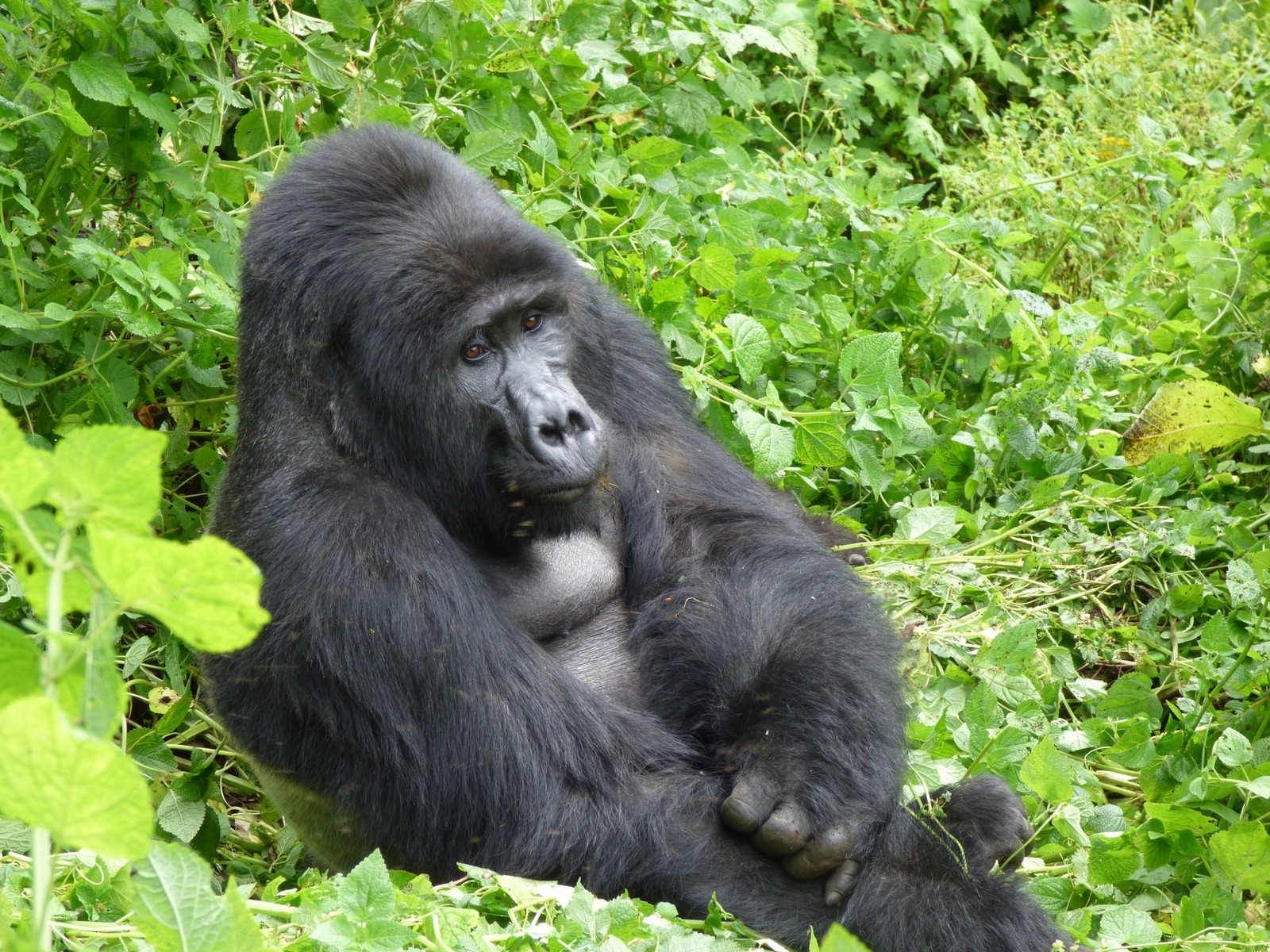
The journey then climbs into the ancient jungles of Bwindi or Mgahinga for the definitive highlight: gorilla trekking. Spending an unforgettable hour observing a 400-pound silverback gorilla and his family in their natural habitat is physically demanding, but a 21-day trip ensures you have built-in rest days at locations like the tranquil Lake Bunyonyi to recover. Balancing big-game safaris, great ape encounters, and deep-jungle birding over three weeks creates an all-encompassing African expedition.
Welcome to Uganda, widely celebrated by ornithologists and nature enthusiasts as the Pearl of Africa. Straddling the equator, this compact yet incredibly diverse country boasts one of the highest avian checklists in the world, exceeding 1,080 species. Its unique location creates a beautiful mosaic of ecosystems, ranging from the vast East African savannahs and dense, primeval rainforests to papyrus swamps and towering volcanic mountains. This variety of habitats makes it a vital sanctuary for both resident birds and Palearctic migrants.
21 Days if am going for Uganda bird watching safari
A 21 Days if am going for Uganda bird watching safari is the ultimate expedition to maximize your bird list, offering unparalleled chances to track highly sought-after avian marvels. Highlights include the prehistoric-looking Shoebill, the elusive Green-breasted Pitta, and the spectacular Great Blue Turaco. Beyond the phenomenal birdlife, you will traverse breathtaking landscapes, from the shimmering waters of Lake Victoria to the mist-shrouded valleys of the Albertine Rift.
Guided by seasoned local ornithologists, this journey ensures you navigate these crucial Important Bird Areas (IBAs) efficiently. Whether you are searching for rare Congo-Guinea biome species in Semuliki or ticking off localized endemics in the lush highlands, this extensive itinerary promises a highly rewarding trip for both enthusiastic listers and passionate photographers. Get ready to experience some of the finest, most comprehensive birdwatching on the continent.
Day-by-Day Itinerary
Day 1: Arrival and Entebbe Birding
Your 21 Days if am going for Uganda bird watching safari starts as you arrive at Entebbe International Airport. After a warm welcome, transfer to your accommodation to settle in. Depending on your arrival time, we will head out to the Entebbe Botanical Gardens for your first taste of Uganda's rich birdlife. This lush, lakeside sanctuary offers relaxed birding where you can spot colorful species like the Great Blue Turaco, Eastern Plantain-eater, Slender-billed Weaver, and the majestic Palm-nut Vulture. It is the perfect, gentle introduction to your three-week journey, helping you shake off jet lag while immediately starting your bird checklist in a serene, scenic environment.
Day 2: Mabamba Swamp Shoebill Quest
Today is dedicated to one of the most exciting targets of any African birding trip: the elusive and prehistoric Shoebill. You will travel from Entebbe to the nearby Mabamba Bay Wetland, a premier Ramsar site and Important Bird Area. Boarding a motorized traditional canoe, you will glide through the thick papyrus swamps. Patient observation will reward you with sightings of the Shoebill standing silently in the shallows. Keep your binoculars ready for other wetland specialists, such as the African Marsh Harrier, Papyrus Gonolek, Malachite Kingfisher, and the elegant Blue-breasted Bee-eater.
Day 3: Mabira Forest Reserve
Leaving the central region, you will drive east towards Mabira Forest Reserve, a beautiful expanse of primary tropical rainforest. Mabira is a crucial birding haven, home to over 300 bird species. You will spend the day exploring the well-maintained trails with your guide, seeking out canopy and understory residents. Listen closely for the echoing calls of the Weyn’s Weaver, Blue-throated Roller, Tit Hylia, Yellow-throated Tinkerbird, and the striking African Pied Hornbill. The forest also hosts several monkey species and stunning butterflies, adding to the vibrancy of your day.
Day 4: Journey to the Royal Mile (Budongo Forest)
Today involves a scenic drive towards Masindi, the gateway to the renowned Budongo Forest Reserve. En route, we will make a stop at the Ziwa Rhino Sanctuary. While primarily a conservation project for the endangered white rhinos, the sanctuary’s acacia woodlands and swamps provide excellent birdwatching. You may spot the White-crested Turaco, Abyssinian Ground Hornbill, and various raptors. Afterward, we continue our journey to Masindi, where you will check in to your lodge and rest up for the forest birding that awaits you the following day.
Day 5: The Royal Mile Extravaganza
Budongo Forest’s "Royal Mile" is legendary among birders and is frequently cited as one of the best birding spots in Africa. This wide, easily navigable track cuts through dense forest and offers incredible visibility. Spend the entire day here searching for the highly prized Puvel’s Illadopsis, which is unique to this forest in East Africa. You will also look out for the Chocolate-backed Kingfisher, Blue-breasted Kingfisher, Yellow-footed Flycatcher, Crested Guineafowl, and various canopy-dwelling sunbirds. The sheer density and diversity of birdlife here will keep you busy from dawn till dusk.
Day 6: Murchison Falls National Park
Today, your 21 Days if am going for Uganda bird watching safari heads into the expansive savannahs of Murchison Falls National Park. Enter through the Kaniyo Pabidi sector, offering another chance to spot forest specials. As you transition into the savannah woodlands, the birdlife changes completely. Look out for the Crested Francolin, Silverbird, and various widowbirds. You will take a ferry across the mighty Nile to your lodge on the northern bank, enjoying incredible views of the roaring waterfall and taking in the surrounding bushland.
Day 7: Northern Bank Game Drive
An early morning game drive on the northern bank of Murchison Falls National Park offers spectacular savannah birding and wildlife viewing. This open grassland supports a wealth of bird species, including the striking Abyssinian Roller, Speckled-fronted Weaver, Northern Red Bishop, and the sought-after Secretary Bird. You will also look out for large raptors like the Martial Eagle and the Bateleur. Alongside the avian treats, you can expect to see elephants, giraffes, lions, and vast herds of Uganda Kob dotting the landscape.
Day 8: Boat Cruise to the Bottom of the Falls
In the afternoon, embark on a scheduled birding and wildlife boat cruise along the Victoria Nile. Cruising towards the base of Murchison Falls provides a fantastic vantage point to photograph water birds and mammals cooling off by the river. Key sightings frequently include the Goliath Heron, Rock Pratincole, White-faced Whistling Duck, and the African Fish Eagle. The boat ride offers unparalleled, relaxed viewing, bringing you close to basking crocodiles, hippos, and occasionally, a rare Shoebill stalking the riverbanks.
Day 9: Journey to Kibale Forest National Park
Today will be a full day of traveling as you leave the northern savannahs and head southwest towards the lush, tea-plantation-draped landscapes around Kibale National Park. The drive is long but highly scenic, passing through traditional homesteads and vibrant local markets. Keep a lookout for opportunistic birding stops along the way, as raptors and open-country birds frequently appear. You will arrive at your lodge near Kibale in the late afternoon, surrounded by the sights and sounds of the equatorial forest.
Day 10: The Green-breasted Pitta Quest
Kibale National Park is home to an incredible 350+ bird species, and today you will focus on one of the most elusive birds in Africa: the Green-breasted Pitta. Accompanied by a specialized guide, you will embark on an early morning trek through the dense forest floor. Finding this bird requires patience and a bit of luck, but the reward is immense. After the trek, spend the afternoon birding the edge of the forest or relaxing at your lodge amidst the tranquil forest atmosphere.
Day 11: Bigodi Wetland Sanctuary
Today you will explore the Bigodi Wetland Sanctuary, located just outside the national park. This community-run initiative is a fantastic papyrus swamp habitat. Walking along the boardwalk, your local guide will help you spot specialized swamp dwellers. The star attractions include the Papyrus Gonolek, White-winged Warbler, Shining-blue Kingfisher, and the Great Blue Turaco. This walk also provides excellent opportunities to observe primates, including the Red-tailed Monkey, Black-and-white Colobus, and Grey-cheeked Mangabey, playing in the adjacent trees.
Day 12: Transfer to Queen Elizabeth National Park
Bid farewell to Kibale and descend into the Albertine Rift Valley, making your way to Queen Elizabeth National Park. The drive offers sweeping views of the Rwenzori Mountains (the "Mountains of the Moon"). As you enter the park, the habitat shifts to open savannah, acacia woodland, and crater lakes. Spend the afternoon doing a game drive en route to your accommodation, ticking off birds like the Black-bellied Bustard, Flappet Lark, and various colorful bee-eaters.
Day 13: Kazinga Channel Boat Cruise
Queen Elizabeth National Park boasts over 600 bird species—the highest of any park in the country. Your morning begins with a boat cruise along the famous Kazinga Channel. This waterway connects Lake George and Lake Edward and acts as a magnet for both wildlife and aquatic birds. You will glide past massive concentrations of hippos, buffaloes, and elephants. Bird highlights include the African Skimmer, Pink-backed Pelican, Yellow-billed Stork, and the striking Malachite Kingfisher. It is an absolute must-do activity for both birders and wildlife photographers.
Day 14: Kasenyi Plains and Ishasha Sector
Spend the morning birding the Kasenyi Plains, a classic savannah area known for hosting large numbers of Uganda Kob. Here, you will look out for ground birds, including the Crowned Lapwing, Senegal Lapwing, and raptors such as the Brown Snake Eagle. In the afternoon, journey south to the remote Ishasha sector of the park, famous for its tree-climbing lions. Birding in Ishasha offers unique species adapted to this southern woodland, such as the Black-larded Cisticola and the Martial Eagle.
Day 15: Transfer to Bwindi Impenetrable Forest
Your 21 Days if am going for Uganda bird watching safari continues as you leave the savannahs of Queen Elizabeth and ascend into the misty, ancient heights of Bwindi Impenetrable National Park. Recognized as a UNESCO World Heritage site, Bwindi is not only famous for its mountain gorillas but is also considered one of the premier birding destinations in Africa. The drive provides spectacular views of terraced hillsides and deep, forested valleys. Arrive at your lodge in the Buhoma sector, nestled on the edge of the forest.
Day 16: Gorilla Trekking / Forest Edge Birding
Today, you have the option to undertake a legendary mountain gorilla trek, or simply enjoy a full day of guided birding along the forest trails. If birding, look out for the Black Bee-eater, Red-throated Alethe, Cassin's Hawk-Eagle, and the massive Crowned Hornbill. Bwindi is home to 23 of the 24 Albertine Rift endemics. The forest edge offers a spectacular symphony of birdsong, making it easy for both beginners and seasoned birders to build their checklists in an awe-inspiring natural setting.
Day 17: Ruhija Sector and Mubwindi Swamp
Today, you will transfer to the high-altitude Ruhija sector of Bwindi. This area is steep, but it offers some of the most specialized and sought-after birding in the country. Spend the day trekking the trail leading down into the lush Mubwindi Swamp. This is the premier location to spot the rare and spectacular African Green Broadbill. Other highly desired targets include Grauer’s Broadbill, Rwenzori Batis, Regal Sunbird, Archer’s Robin-Chat, and the Handsome Francolin. This is a physically demanding but highly rewarding day of birding.
Day 18: Birding to Mgahinga Gorilla National Park
Leave Ruhija and travel towards the extreme southwestern corner of Uganda, where the towering Virunga Volcanoes dominate the landscape. Mgahinga Gorilla National Park is situated here and forms part of the greater Virunga conservation area. The drive passes through scenic, mountainous country with breathtaking vistas. On arrival, settle into your lodge and enjoy some relaxed birding around the camp. Keep an eye out for the Rwenzori Turaco and the Dusky Turtle Dove.
Day 19: Mgahinga Birding and Golden Monkeys
Spend the day exploring the diverse habitats of Mgahinga, which range from bamboo zones to the afro-alpine moorland. The park is home to striking localized species, including the Rwenzori Nightjar, Blue-headed Sunbird, Scarlet-tufted Sunbird, and the Cinnamon Bracken Warbler. If you are feeling adventurous, you can also track the rare Golden Monkeys that inhabit the bamboo forests. The combination of stunning volcanic backdrops, unique primates, and localized bird species makes this a truly memorable day of your safari.
Day 20: Lake Mburo National Park
Today, your 21 Days if am going for Uganda bird watching safari takes you east towards the rolling hills and acacia woodlands of Lake Mburo National Park. Breaking the journey from the highlands, this park provides an entirely different suite of birds. Arrive in the afternoon and embark on a boat ride on the lake itself. You will search for the elusive African Finfoot, White-backed Night Heron, and the Giant Kingfisher. The surrounding acacia woodland is home to the striking Red-faced Barbet, which is highly localized.
Day 21: Departure and Kampala En Route
Your final day begins with an early morning nature walk or game drive in Lake Mburo, offering a peaceful opportunity to observe zebras, elands, and birds on foot. Afterward, start the journey back to Kampala or Entebbe for your international flight. En route, we will make a stop at the Equator for photography and perhaps a final lunch. You will arrive at the airport with a massive checklist, a wealth of memories, and a profound appreciation for Uganda’s spectacular avian diversity.
If you are finalizing your booking or need assistance with adjusting this itinerary to match your specific birding priorities, please let me know. I can help you
1. Is 21 Days Enough to See the Best Birding Sites in Uganda?
Planning a 21 Days if am going for Uganda bird watching safari gives you the perfect amount of time to cover the country's absolute best birding areas. Uganda is a small country, but its rough roads and dense forests mean that travel between destinations takes time. A three-week timeline ensures you do not have to rush through these critical areas. You can spend multiple nights in key hotspots rather than rushing off after just one morning. This length of time allows you to comfortably visit the central wetlands, eastern primary forests, northern savannahs, and western Albertine Rift forests.
When you dedicate 21 days to this journey, you are building in a safety net for unpredictable factors like weather and bird behavior. Forest birding is notoriously difficult; rain can quiet the canopy for hours, or a target bird might simply refuse to show itself on the first try. With a longer itinerary, you can afford to spend a full second day searching for a rare species if your first attempt falls short. It turns a stressful checklist race into a relaxed, highly productive expedition.
Furthermore, this duration allows you to see how the country's landscapes shift. You will watch the habitat change from the open waters of Lake Victoria to the dry acacia woodlands of Murchison Falls, and finally to the misty, high-altitude cloud forests of Bwindi. Each of these zones holds entirely different bird families. If you try to compress this route into one or two weeks, you would miss out on entire ecosystems, such as Semuliki or Mgahinga. A 21-day window represents the gold standard for a complete, highly successful Ugandan avian checklist.
2. What Key Bird Species Will I Target on a 21-Day Safari?
When considering a 21 Days if am going for Uganda bird watching safari, your main motivation is likely the incredible diversity of target birds. Uganda boasts over 1,080 species, and a three-week trip puts a massive chunk of that list within your reach. Your absolute top target will likely be the prehistoric Shoebill, a giant wetland specialist sought after by birders worldwide. A 21-day timeline allows you to visit premier locations like Mabamba Swamp and Murchison Falls to maximize your chances of spotting this incredible bird.
Beyond the Shoebill, this extended itinerary allows you to deep-dive into the Albertine Rift Endemics. These are highly localized species found only in this specific mountain range. You will actively track jewels like the African Green Broadbill in Ruhija, the Rwenzori Turaco, Handsome Francolin, Regal Sunbird, and Archer’s Robin-Chat. In the lowland forests like Budongo, your targets shift to the rare Puvel’s Illadopsis, Chocolate-backed Kingfisher, and the Nahan’s Francolin. These secretive forest birds require patience and time to locate, which a shorter trip simply cannot accommodate.
Another massive highlight of a three-week trip is the chance to look for the Green-breasted Pitta in Kibale Forest. This bird is famously difficult to find, often requiring early morning forest floor tracking before it starts its brief display calls. On the savannah stretches of your journey, your targets change completely to massive raptors, the Secretary Bird, Abyssinian Ground Hornbill, and the colorful Pennant-winged Nightjar. Having 21 days ensures you do not have to choose between forest endemics and savannah specialists; you get to target them all.
3. Which Important Bird Areas (IBAs) Are Included in this Timeline?
A 21 Days if am going for Uganda bird watching safari allows you to visit an impressive network of Uganda’s globally recognized Important Bird Areas (IBAs). Uganda has more than 30 designated IBAs, which are sites chosen by BirdLife International for their critical importance to bird conservation. On a shorter trip, you would be forced to skip several of these zones due to travel distances. With three full weeks, your itinerary seamlessly connects the country's most vital avian sanctuaries.
Your journey starts at the Mabamba Bay Wetland IBA on Lake Victoria, a protected papyrus swamp critical for the survival of the Shoebill. From there, you move to the Mabira Forest Reserve IBA, an island of primary tropical forest in an urbanized landscape. As you head north, you will spend days exploring the Murchison Falls National Park IBA, where the Nile River creates unique wetland-savannah interfaces that support hundreds of waterbird and raptor species. You will also spend significant time in the Budongo Forest IBA, famous for its older growth trees and unique West African bird species.
Moving southwest, your route takes you through the Kibale National Park IBA, a premier destination for forest interior specialists and primates. You will then cross into the Queen Elizabeth National Park IBA, which holds the record for the highest bird list of any protected area in Uganda. Finally, you reach the high-altitude crown jewels: the Bwindi Impenetrable National Park IBA and the Mgahinga Gorilla National Park IBA. These mountain parks protect the fragile habitats required by Albertine Rift endemics. Visiting all these diverse IBAs is only possible with a well-planned, three-week journey.
4. How Physically Demanding is a Three-Week Birding Trip?
If you are wondering about the physical toll of a 21 Days if am going for Uganda bird watching safari, it is important to understand that birding in Uganda is highly active. Over the course of three weeks, you will experience a wide variety of terrains that require different levels of physical fitness. While savannah birding in Murchison Falls or Queen Elizabeth is mostly done from the comfort of a custom 4x4 safari vehicle, forest birding demands a lot of walking on your own two feet.
Forest trails in places like Budongo's Royal Mile are wide and completely flat, making for an easy, relaxed walk. However, tracking the Green-breasted Pitta in Kibale involves moving off-trail through thick undergrowth, stepping over logs, and navigating uneven forest floors in semi-darkness. The physical challenge peaks when you reach the southwestern highlands. Birding in the Ruhija sector of Bwindi down to the Mubwindi Swamp involves steep, muddy descents and long, exhausting climbs back up to the ridge at high altitudes. Similarly, Mgahinga involves hiking up volcanic slopes through dense bamboo zones.
Enduring these physical challenges over 21 consecutive days requires a good baseline of stamina. You will be waking up before dawn almost every day to catch the morning chorus, standing for long periods with heavy binoculars, and walking several kilometers daily. However, a 21-day itinerary actually helps manage this fatigue better than a shorter, rushed trip. It allows your guide to schedule slower afternoons, boat cruises on the Kazinga Channel, or rest periods where you can simply bird from your lodge veranda without falling behind on your route.
5. What is the Best Time of Year for a 21-Day Uganda Birding Safari?
When asking "When should I schedule my 21 Days if am going for Uganda bird watching safari?", you need to look closely at Uganda's distinct wet and dry seasons. Because this itinerary spans three weeks and covers multiple geographic zones, the time of year you choose will heavily impact your overall species count, trail conditions, and photography opportunities. Uganda can be birded year-round, but certain months offer distinct advantages for avid listers.
The prime months for a comprehensive birding safari are late May through September, as well as January and February. During these drier windows, forest trails are less muddy and much easier to hike. This makes the challenging treks in Bwindi, Kibale, and Mgahinga far more manageable. Furthermore, birds are highly active during these months, and clear skies provide excellent lighting for photography. If your main goal is to maximize your total species count, scheduling your trip between November and April is highly rewarding because thousands of Palearctic migratory birds arrive from Europe and northern Africa, filling the wetlands and savannahs.
However, the rainy seasons of April, May, October, and November should not be completely discounted by birders. Many resident forest birds do their breeding displays and sing heavily during the rains, making them much easier to locate by call. The downside is that heavy downpours can make forest trails incredibly slick and cause travel delays on rural dirt roads. A 21-day trip gives you enough buffer time to handle occasional weather delays, but booking during the drier windows generally provides the most comfortable and productive experience.
6. How Do I Choose the Right Binoculars and Camera Gear?
Equipping yourself correctly for a 21 Days if am going for Uganda bird watching safari is crucial because you will be viewing birds in wildly different lighting conditions. Over three weeks, you will move from bright, open savannahs to the deep, dark understory of equatorial rainforests. Your optics need to be versatile enough to handle both extremes. For binoculars, an 8x42 or 10x42 configuration with high-quality, fully multi-coated lenses is highly recommended to gather maximum light under dense forest canopies.
For photographers, choosing the right camera gear requires balancing focal length with portability. A telephoto lens of at least 400mm to 600mm is essential for capturing clear shots of small, fast-moving sunbirds and distant raptors. Because you will be doing a significant amount of hiking in Bwindi and Mgahinga, a lightweight zoom lens (like a 100-400mm or 200-600mm) is often much more practical than a heavy, fixed prime lens. A sturdy monopod is also highly useful for stabilizing your camera on steep forest trails where tripods are too bulky to deploy quickly.
You must also prepare your gear to survive the diverse environments you will encounter over 21 days. Dust is a major factor during savannah game drives in Murchison Falls, requiring protective lens covers and cleaning kits. Conversely, humidity and sudden downpours are a constant presence in the rainforests of Kibale and Bwindi. Investing in high-quality rain covers for your camera bag and body, along with silica gel packs to absorb moisture inside your gear cases, will keep your electronics functioning perfectly throughout the long trip.
7. What Packing Essentials are Needed for a 21-Day Itinerary?
Packing for a 21 Days if am going for Uganda bird watching safari requires careful preparation because you will experience a wide range of climates and habitats. Over three weeks, you will encounter hot, humid wetlands, dusty savannahs, and cold, misty mountain highlands. Your clothing needs to be highly functional, durable, and easily layered. Neutral, earth-toned colors like green, khaki, and brown are essential for blending into the environment; bright colors can startle shy forest birds, and dark blue or black can attract biting tsetse flies in certain savannah areas.
For footwear, you will need broken-in, waterproof hiking boots with excellent ankle support for the steep trails of Bwindi and Mgahinga. Lightweight, breathable trail shoes are great for flatter walks along the Royal Mile. Long-sleeved shirts and lightweight trousers are mandatory to protect your skin from sharp vegetation, stinging nettles, and biting insects. A high-quality, breathable raincoat is an absolute necessity, as tropical showers can happen at any time in the rainforests, regardless of the official season.
Other indispensable items for a three-week journey include a wide-brimmed hat, high-SPF sunscreen, and a reliable insect repellent containing DEET. Because you will be out in remote areas for hours at a time, a comfortable, lightweight daypack is necessary to carry your water, field guides, and extra layers. You should also pack long hiking socks; tucking your trousers into your socks is a standard, highly effective trick to prevent safari ants from crawling up your legs while standing still on forest trails.
8. How Experienced Do My Guides Need to Be for this Route?
The success of a 21 Days if am going for Uganda bird watching safari depends heavily on the expertise of your guides. Birding in equatorial Africa is incredibly complex. Many species look highly similar or live high up in the dense canopy, making them almost impossible for a visitor to identify alone. A general wildlife guide is not sufficient for a dedicated birding trip of this length; you need a specialized, professional local ornithological guide who knows Uganda’s birdlife inside and out.
A top-tier Ugandan birding guide can identify hundreds of species purely by their calls, songs, and subtle chip notes. This skill is absolutely vital in dense habitats like Budongo, Kibale, and Bwindi, where you will hear ten birds for every one you actually see. Your guide will know exactly which layer of the canopy a specific greenbul prefers, how to distinguish between confusing cisticolas on the savannah, and where a rare resident likes to roost. Their sharp eyes will save you hours of frustrating searching over your three-week journey.
Additionally, local guides maintain active networks with park rangers and community scouts in every IBA you visit. For instance, when searching for the Green-breasted Pitta in Kibale or the African Green Broadbill in Ruhija, your main guide will work alongside local forest scouts who track these specific birds daily. This teamwork dramatically increases your chances of seeing highly sought-after species. Having an experienced, patient guide for all 21 days turns a regular holiday into a deeply educational, world-class birding expedition.
9. Can I Combine Mountain Gorilla Trekking with a Birding Safari?
One of the greatest advantages of a 21 Days if am going for Uganda bird watching safari is that you do not have to choose between world-class birding and iconic wildlife experiences. A three-week timeline gives you the flexibility to seamlessly integrate a mountain gorilla trekking permit into your schedule without disrupting your birding goals. Because the gorillas live in Bwindi Impenetrable National Park and Mgahinga Gorilla National Park—which are both premier Important Bird Areas—you will already be in the perfect location.
When you spend multiple days in the Bwindi region, you can easily dedicate one full morning to tracking a habituated gorilla family. While the primary focus of that specific morning shifts to primates, the walk through the forest itself is still highly productive for birding. You will walk through prime habitat where you might spot unique species along the trail while searching for the gorillas. Once your hour with the gorillas is complete, the rest of the day can be spent focusing entirely back on your bird checklist with your guide.
Similarly, this extended itinerary allows you to include golden monkey tracking in the bamboo forests of Mgahinga. These striking, endangered primates share their habitat with rare localized birds like the Rwenzori Turaco and the Scarlet-tufted Sunbird. By combining these activities, you experience the very best of Uganda's biodiversity. A 21-day itinerary ensures that taking a day out for gorillas or golden monkeys does not feel like a compromise; instead, it enhances the overall adventure, making your safari a truly complete African wilderness experience.
10. What Kind of Accommodations Can I Expect Along the Route?
When embarking on a 21 Days if am going for Uganda bird watching safari, your choice of lodging plays a huge role in your comfort and your overall birding success. Uganda features a well-developed tourism infrastructure, offering a wide range of accommodations from budget-friendly community campsites to ultra-luxury eco-lodges. A well-planned three-week itinerary will position you in lodges that are not just comfortable places to sleep, but active birding destinations in their own right.
In areas like Entebbe, Kibale, and Bwindi, many lodges are built directly on the forest edge or within lush, mature gardens. This means your birding does not stop when you return to your room. You can often sit on your private veranda with a cup of Ugandan coffee or tea and spot sunbirds, weavers, hornbills, and turacos flying through the property grounds. Many lodges cater specifically to nature enthusiasts, offering early breakfast boxes for dawn departures and providing clean boots-cleaning stations after muddy forest treks.
In the savannah parks like Murchison Falls and Queen Elizabeth, accommodations often overlook major water sources like the Victoria Nile or the Kazinga Channel. This allows you to view elephants, hippos, and a wealth of waterbirds right from the lodge dining area or swimming pool. Regardless of your budget level, ensuring your accommodations are located as close to the park gates as possible is key. This proximity allows you to get into the field at prime morning hours without wasting valuable birding time on long commutes.
11. How Do Malaria and General Health Concerns Impact My Trip?
Prioritizing your health is essential when planning a 21 Days if am going for Uganda bird watching safari, as a three-week trip exposes you to various tropical environments. Malaria is endemic to most parts of Uganda, particularly in the lower-altitude wetlands and savannahs like Mabamba, Murchison Falls, and Queen Elizabeth. Because you will be spending long hours in the field near water sources where mosquitoes are active, taking a reliable malaria prophylaxis prescribed by your travel doctor is highly recommended.
Beyond malaria, you must ensure your routine vaccinations are up to date before arrival. Uganda requires a valid Yellow Fever vaccination certificate for entry at immigration. Because you will be walking through remote forest environments and rural villages, vaccinations for Hepatitis A, Hepatitis B, Typhoid, and Tetanus are also strongly advised. It is smart to carry a well-stocked personal first-aid kit containing broad-spectrum antibiotics, antidiarrheal medication, rehydration salts, antihistamines for insect bites, and plenty of blister bandages for your hiking boots.
Staying hydrated and practicing good food safety over 21 days will keep you energized and healthy. Always drink bottled, filtered, or purified water, and use it for brushing your teeth as well. Lodges catering to international tourists practice high standards of hygiene, but sticking to hot, freshly cooked meals and avoiding raw, unpeeled fruits or vegetables when eating outside major lodges is a safe practice. Taking these simple health steps ensures you spend your safari looking through your binoculars rather than recovering in your room.
12. What Are the Logistics of Internal Travel and Roads?
Understanding the logistics of road travel is a key part of planning a 21 Days if am going for Uganda bird watching safari. Over three weeks, you will cover significant distances, transitioning between different regions of the country. While major highways connecting principal towns are smooth and paved, the access roads leading into national parks, forest reserves, and remote birding sites are often unpaved dirt tracks. These secondary roads can become bumpy, dusty, or muddy depending on the weather.
To navigate these terrains safely and comfortably, a sturdy 4x4 safari vehicle with good ground clearance is mandatory. A reliable vehicle, such as a customized land cruiser with a pop-up roof, allows for excellent visibility during savannah game drives while handling rough forest tracks with ease. Your driver-guide’s familiarity with these roads is invaluable, ensuring you navigate tricky areas safely. A 21-day timeline allows for reasonable daily drive times, ensuring you do not spend entire days stuck in a vehicle without any opportunities to bird along the way.
For travelers looking to minimize long road journeys, domestic flight options are available. You can fly between Entebbe and small airstrips near Murchison Falls, Kibale, Queen Elizabeth, and Bwindi. While these internal flights save considerable travel time, they come with strict luggage weight limits that can be challenging for birders carrying heavy camera gear and multiple optics. Most dedicated birding purists prefer the road option, as roadside birding stops often turn up unexpected species that would be missed entirely from the air.
13. How Do Forest Birding and Savannah Birding Differ?
A 21 Days if am going for Uganda bird watching safari highlights the sharp contrast between forest and savannah birding, requiring you to adapt your spotting techniques as you move through different habitats. In the savannah ecosystems of Murchison Falls and Queen Elizabeth, birding is highly visual and expansive. Birds are often perched prominently on acacia branches, walking across open grasslands, or wading along riverbanks. This environment allows for quick identification, easy photography, and large species counts in a single day.
In contrast, forest birding in places like Budongo, Kibale, and Bwindi is a completely different game that tests your patience and listening skills. The dense, multi-layered canopy and thick understory create dark, shadowy conditions where birds easily remain hidden. Instead of scanning open fields, you will spend hours listening intently for subtle calls, rustling leaves, or feeding flocks moving through the trees. Identifying birds by ear becomes the primary method, and glimpses of target species can be frustratingly brief.
Balancing these two distinct styles over three weeks keeps the safari incredibly engaging. You will experience the high-energy excitement of counting dozens of colorful waterbirds and raptors from a safari vehicle, followed by the quiet, focused concentration of tracking a single, rare greenbul through a dense forest trail. This duality ensures that every day of a 21-day safari feels fresh and distinct, providing a comprehensive understanding of how different bird families have adapted to Uganda's varied ecosystems.
14. What Role Does Community Conservation Play in Ugandan Birding?
When undertaking a 21 Days if am going for Uganda bird watching safari, you will see firsthand how community-led conservation initiatives directly support bird preservation and local livelihoods. Over three weeks, several of your most productive birding stops will take place in sanctuaries managed entirely by local communities living adjacent to national parks. These projects demonstrate that protecting fragile habitats can be economically beneficial for the people who share them.
A prime example is the Mabamba Bay Wetland, where local fishermen have formed an association of specialized birding guides and boat captains. Instead of hunting or draining the swamp for agriculture, the community actively protects the papyrus habitat because the resident Shoebills draw international visitors. Similarly, the Bigodi Wetland Sanctuary near Kibale Forest is managed by a local environmental development group. The funds generated from guided bird walks along the swamp boardwalk go directly toward funding local schools, clean water initiatives, and women's micro-enterprises.
By participating in a 21-day safari that includes these community sites, your travel expenditures directly contribute to grassroots conservation efforts. You will interact with local guides whose passion for protecting their native birdlife is both inspiring and highly educational. This symbiotic relationship between sustainable tourism and community development ensures that critical bird habitats remain protected for future generations, adding an enriching, socially responsible dimension to your African birding adventure.
15. How Can I Best Budget and Plan Financials for a 21-Day Trip?
Budgeting carefully is essential when planning a 21 Days if am going for Uganda bird watching safari, as a three-week expedition involves multiple moving financial components. The overall cost of your safari will be determined by your preferred style of accommodation, internal transport logistics, and the specific conservation and entry permits required along the route. Developing a clear financial plan early ensures your long trip runs smoothly without unexpected expenses.
Your primary costs will include national park entry fees, commercial boat cruise bookings, and the wages of your specialized birding guide and vehicle rental. If you choose to include iconic wildlife encounters like mountain gorilla trekking or chimpanzee tracking, these specialized permits must be booked and paid for months in advance through the Uganda Wildlife Authority due to high demand. Your accommodation choices—ranging from budget guesthouses to luxury eco-lodges—will be the largest variable in your total budget across the 21 days.
When planning your financials, it is important to factor in cash needs for tips, souvenirs, and personal items. While high-end lodges and tour operators accept international credit cards, carrying a sufficient amount of local currency (Ugandan Shillings) or clean, unblemished US Dollar bills printed after 2013 is necessary for tipping local site guides, boat captains, and lodge staff. Budgeting generously for tips is highly encouraged, as it directly supports the local individuals who work hard to ensure you spot your target birds throughout your three-week journey.
Booking 21 days Uganda bird watching safari with us Roads of Adventure safaris
Booking a 21-day Uganda bird-watching safari with Roads of Adventure Safaris offers an immersive experience covering over 1,000 bird species, including the elusive Shoebill Stork and Albertine endemics. To secure your spot, contact their booking desk directly to arrange custom logistics, including gorilla permits and premium eco-lodges
