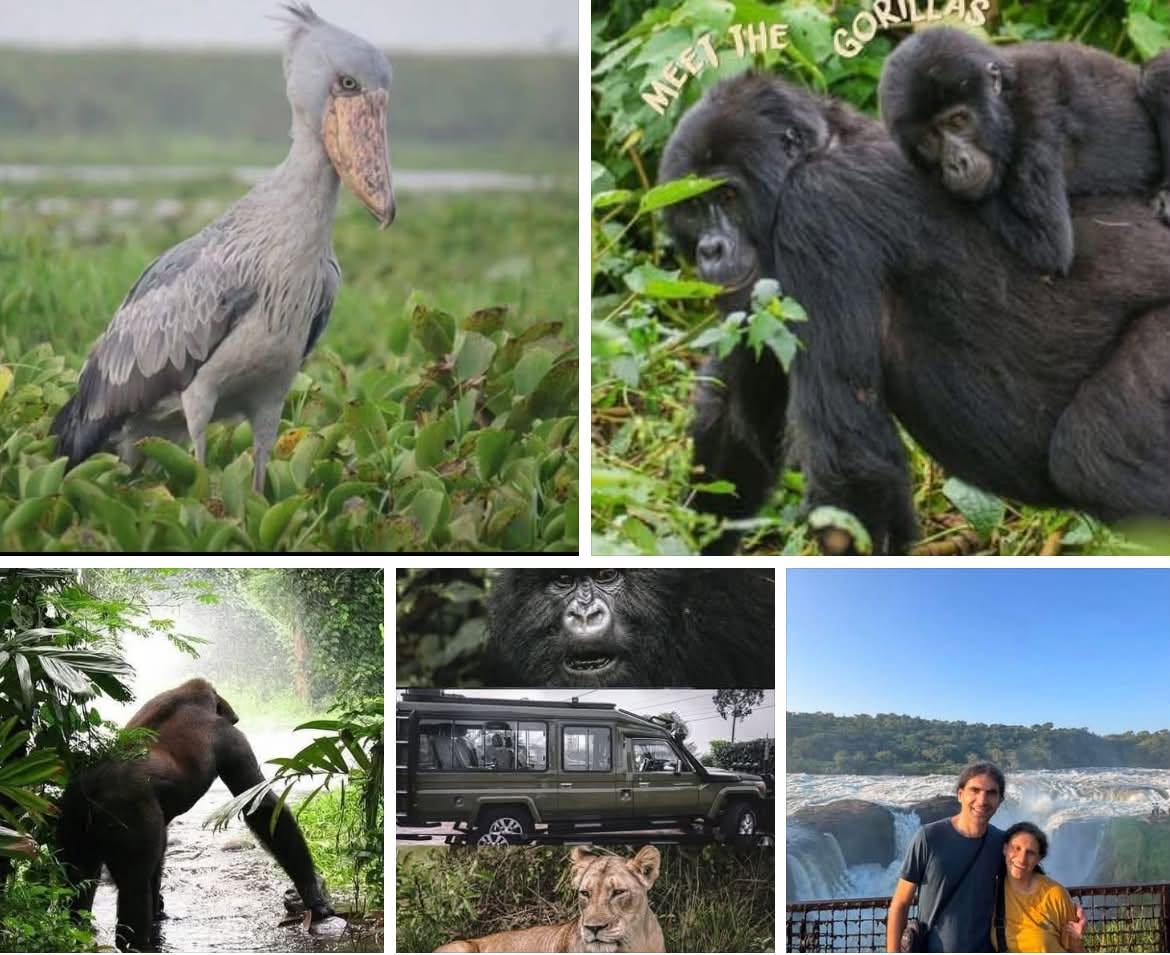
A 16-day Uganda safari gives you the perfect amount of time to slow down, explore Uganda’s most famous parks, and discover some hidden gems without feeling rushed. Here is the ultimate route alongside two distinct alternatives depending on your travel style.
16-days-ultimate-uganda-safari-to-rwanda-safari-tour-package-combo
16-days-classic-uganda-wildlife-safari-and-gorilla-trekking-tour
16-days-best-of-uganda-birding-safari-holiday-extravaganza
16-days-classic-uganda-photography-safari
Route 1: The Ultimate Uganda Classic (Best Overall)
This is the quintessential Uganda circuit. It flows logically to minimize long driving days, allows for two nights at almost every major stop to prevent travel fatigue, and balances diverse experiences—savannah wildlife, boat cruises, primate tracking, and relaxation.
Entebbe ➔ Murchison Falls National Park ➔ Kibale Forest National Park ➔ Queen Elizabeth National Park ➔ Bwindi Impenetrable National Park ➔ Lake Mburo National Park ➔ Entebbe
• Why it’s the best: It offers a smooth progression in landscape and wildlife intensity. You start with classic big game viewing and the dramatic Murchison Falls, move into chimpanzee territory in Kibale, experience tree-climbing lions in Queen Elizabeth, and build up to the grand finale: mountain gorilla trekking in Bwindi. Finishing at Lake Mburo breaks up the long drive back to Entebbe and gives you a peaceful final savannah walk.
Alternative Route 2: The Rugged Wilderness & Culture Circuit
If you want to escape the more traveled tourist paths and experience raw, untouched African wilderness, this route heads north to Uganda's most remote park before sweeping south for primates.
Entebbe ➔ Sipi Falls ➔ Kidepo Valley National Park ➔ Murchison Falls National Park ➔ Kibale Forest National Park ➔ Bwindi Impenetrable National Park ➔ Entebbe
• Why choose this alternative: Kidepo Valley is consistently ranked among Africa's finest wildernesses, but its remote northern location requires extra time to reach. A 16-day itinerary accommodates it perfectly. This route lets you experience the dramatic landscapes of Sipi Falls, cultural encounters with the Karamojong people, and completely uncrowded game drives in Kidepo, while still retaining the essential chimpanzee and gorilla tracking experiences in the west.
Alternative Route 3: The Active Adventure & Primate Deep-Dive
For travelers who prefer being out of the safari vehicle and staying physically active, this route emphasizes hiking, water sports, and island relaxation alongside wildlife tracking.
Entebbe ➔ Jinja (Source of the Nile) ➔ Sipi Falls ➔ Murchison Falls National Park ➔ Kibale Forest National Park ➔ Bwindi Impenetrable National Park ➔ Lake Bunyonyi ➔ Entebbe
• Why choose this alternative: This layout sacrifices one wildlife park (Queen Elizabeth) to unlock Uganda’s best adventure hubs. You get world-class white-water rafting or kayaking in Jinja, multi-day abseiling and coffee tours at Sipi Falls, and a gorgeous multi-day wrap-up at Lake Bunyonyi—one of the safest lakes in Africa for swimming, canoeing, and island hopping—right after your strenuous gorilla trek.
Which 16-day route offers the smoothest driving progression and fewest back-to-back transit days?
Route 1 (The Ultimate Uganda Classic) offers the smoothest driving progression. Its counter-clockwise loop keeps transit legs mostly between 4 and 6 hours while allowing two-night stays at Murchison, Kibale, Queen Elizabeth, and Bwindi. This pacing prevents long back-to-back travel days and ensures you never spend an entire day inside a transfer vehicle without a scheduled activity.
Can I complete Route 2 (Rugged Wilderness & Culture) without internal flights?
Yes, you can complete Route 2 strictly by road, but expect significantly longer transit days. The leg from Sipi Falls to Kidepo Valley takes around 7 to 8 hours, and the drive from Kidepo south to Murchison Falls takes another 8 hours over rough gravel. While feasible, travelers on a strict 16-day schedule often fly one leg (Entebbe to Kidepo) to save a full day of driving.
Why is Lake Mburo included at the end of Route 1 instead of starting there?
Lake Mburo sits on Route 1 as a strategic break during the long 9-to-10-hour drive from Bwindi back to Entebbe. Stopping there turns an exhausting final highway transfer into two manageable 4-hour drives. It also provides a peaceful finale with walking safaris and boat cruises after the strenuous trekking in Bwindi.
How does sacrificing Queen Elizabeth on Route 3 change the overall safari experience?
Sacrificing Queen Elizabeth National Park on Route 3 means missing out on classic savannah game drives, tree-climbing lions in Ishasha, and the Kazinga Channel boat safari. In exchange, you gain active adventures like white-water rafting on the Nile in Jinja, abseiling at Sipi Falls, and relaxing or canoeing at Lake Bunyonyi.
On a 16-day itinerary, how many days are typically spent inside a safari vehicle?
Across all three 16-day itineraries, you will spend roughly 8 to 10 days doing significant driving, either on highway transfers between parks or during early morning game drives. On Route 1 and Route 3, transfers happen every two to three days, whereas Route 2 requires more concentrated driving during the first week to reach the far north.
Where is the best place to add a rest day on Route 1 if I get travel fatigue?
The most logical place for a rest day on Route 1 is Bwindi Impenetrable National Park or Lake Bunyonyi (a short detour from Bwindi). Adding a second night at your Bwindi lodge after your gorilla trek allows you to sleep in, enjoy massage services, or take a gentle community walk without packing up your bags the next morning.
How does the 16-day timeframe make visiting Kidepo Valley National Park viable?
Kidepo Valley is isolated in Uganda's far northeastern corner, making it impractical for shorter 7-to-10-day itineraries without expensive charter flights. A 16-day timeline provides enough buffer days to drive up through Sipi Falls, spend three full nights exploring Kidepo's uncrowded wilderness, and comfortably loop back down south through Murchison Falls.
What is the optimal allocation of nights per park across a 16-day classic route?
A well-balanced 16-day classic route typically allocates:
- 1 Night: Entebbe (Arrival)
- 3 Nights: Murchison Falls (Rhino tracking + Savannah)
- 2 Nights: Kibale Forest (Chimpanzees)
- 3 Nights: Queen Elizabeth (Kazinga Channel + Ishasha lions)
- 3 Nights: Bwindi Impenetrable (Gorilla trekking)
- 2 Nights: Lake Mburo or Lake Bunyonyi (Relaxation/Walking safari)
- 1 Night: Entebbe or departure day.
Which route option is best for a first-time visitor to East Africa?
Route 1 is best for first-time visitors because it covers East Africa’s signature wildlife highlights—the Big Five (via Ziwa Rhino Sanctuary), chimpanzees, tree-climbing lions, hippos, crocodiles, and mountain gorillas. It follows well-established tourist corridors with reliable lodge infrastructure, paving the way for a smooth introduction to Africa.
Can I fit gorilla habituation instead of standard tracking into these 16-day routes?
Yes. The Gorilla Habituation Experience takes place in the Rushaga or Nkuringo sectors of southern Bwindi and gives you 4 hours with the gorillas instead of 1 hour. Because all three 16-day routes spend at least two to three nights in the Bwindi region, you can swap a standard trek for habituation without altering the rest of your route.
Is Route 3 (Active Adventure) suitable for travelers with limited hiking experience?
Route 3 is manageable for moderately active travelers, but it is physically demanding. Abseiling at Sipi Falls, white-water rafting in Jinja, and tracking gorillas in Bwindi require good balance, upper body strength, and stamina. If you prefer low-impact wildlife viewing from a 4x4 vehicle, Route 1 is a much better fit.
How do road conditions impact timing on the northern legs of Route 2?
Roads heading toward Kidepo via Kitgum or Kotido consist largely of unpaved murram. During rainy months (April–May and October–November), mud and river washouts can delay travel times by 2 to 4 hours. Driving a high-clearance 4x4 Land Cruiser and building extra buffer time into Route 2’s daily itinerary is essential.
Where on these 16-day routes can I incorporate a Ziwa Rhino Sanctuary tracking stop?
Ziwa Rhino Sanctuary is located directly along the main highway from Entebbe/Kampala to Murchison Falls. On all three routes, it serves as an ideal 2-to-3-hour lunch and tracking stop on Day 2 or Day 3 as you head north, allowing you to check white rhinos off your Big Five list early in the journey.
Should I end a 16-day safari at Lake Bunyonyi or Lake Mburo?
If your priority is pure relaxation, swimming, and scenic island views after a strenuous gorilla trek, choose Lake Bunyonyi (Route 3). If you prefer active wildlife encounters—such as walking safaris among zebras, horseback riding, or mountain biking alongside giraffes—choose Lake Mburo (Route 1).
How do entry and exit logistics at Entebbe Airport dictate the start and end of these routes?
Most international flights land in Entebbe late in the afternoon or evening, requiring a night’s stay in Entebbe or Kampala before starting the route the next morning. On Day 16, ensure your return drive (from Lake Mburo or Lake Bunyonyi) lands you at Entebbe Airport at least 3 hours before your evening departure flight.
What is the total estimated mileage/distance covered on the 16-day Route 1 circuit?
Route 1 covers approximately 1,500 to 1,800 kilometers (930 to 1,120 miles) in a complete loop. While the distance may look modest for a 16-day trip, average driving speeds on winding mountain roads and dirt park tracks range between 30 and 60 km/h, which is why transfers take several hours.
How does a 16-day Uganda route compare in cost to a similar 16-day Kenya or Tanzania safari?
A 16-day Uganda safari is often slightly more affordable regarding park fees and lodge rates compared to premium circuits in Tanzania or Kenya. However, primate permits add up—a gorilla permit costs $800 and a Kibale chimpanzee permit costs $250. Overall, Uganda delivers exceptional value due to its inclusion of both savannah wildlife and world-class primate tracking.
Can I reverse the direction of Route 1 (heading to Bwindi first) without affecting the experience?
Yes, you can run Route 1 in reverse (Entebbe ➔ Lake Mburo ➔ Bwindi ➔ Queen Elizabeth ➔ Kibale ➔ Murchison ➔ Entebbe). However, counter-clockwise is preferred because starting with savannah game drives and building up to chimpanzee tracking and gorilla trekking creates a more dramatic crescendo for the final days.
What cultural stops fit naturally into the transit days on Route 1 and Route 2?
On Route 1, stopping at the Equator line in Kayabwe fits naturally during the transfer between Lake Mburo and Entebbe. On Route 2, taking a guided community walk to meet the Karamojong near Kidepo or visiting the Ik people on Mount Morungole integrates seamlessly into your days spent in northern Uganda.
Why is 16 days considered the ideal sweet spot for a complete Uganda safari?
Sixteen days allows you to cover Uganda’s primary national parks without forcing 8-hour drives on consecutive days. It provides enough buffer for multi-night stays at key locations, balances intense physical activities (gorilla/chimp tracking) with rest days, and gives you time to explore hidden regions like Sipi Falls, Kidepo, or Lake Bunyonyi.
Booking 16-day Uganda safari with us Roads of Adventure safaris
Booking a 16-day Uganda safari with Roads of Adventure Safaris guarantees an expertly crafted journey through East Africa’s finest wilderness. Our team handles all details—from securing competitive gorilla and chimpanzee tracking permits to assigning experienced local driver-guides and custom 4x4 Land Cruisers. Whether you choose classic savannah game drives across Murchison Falls and Queen Elizabeth, a rugged cultural expedition to Kidepo Valley, or an active adventure incorporating Jinja and Lake Bunyonyi, we tailor every accommodation and stop to your preferences. Contact our Kampala team today to finalize your dates, reserve permits, and begin your ultimate Ugandan safari.