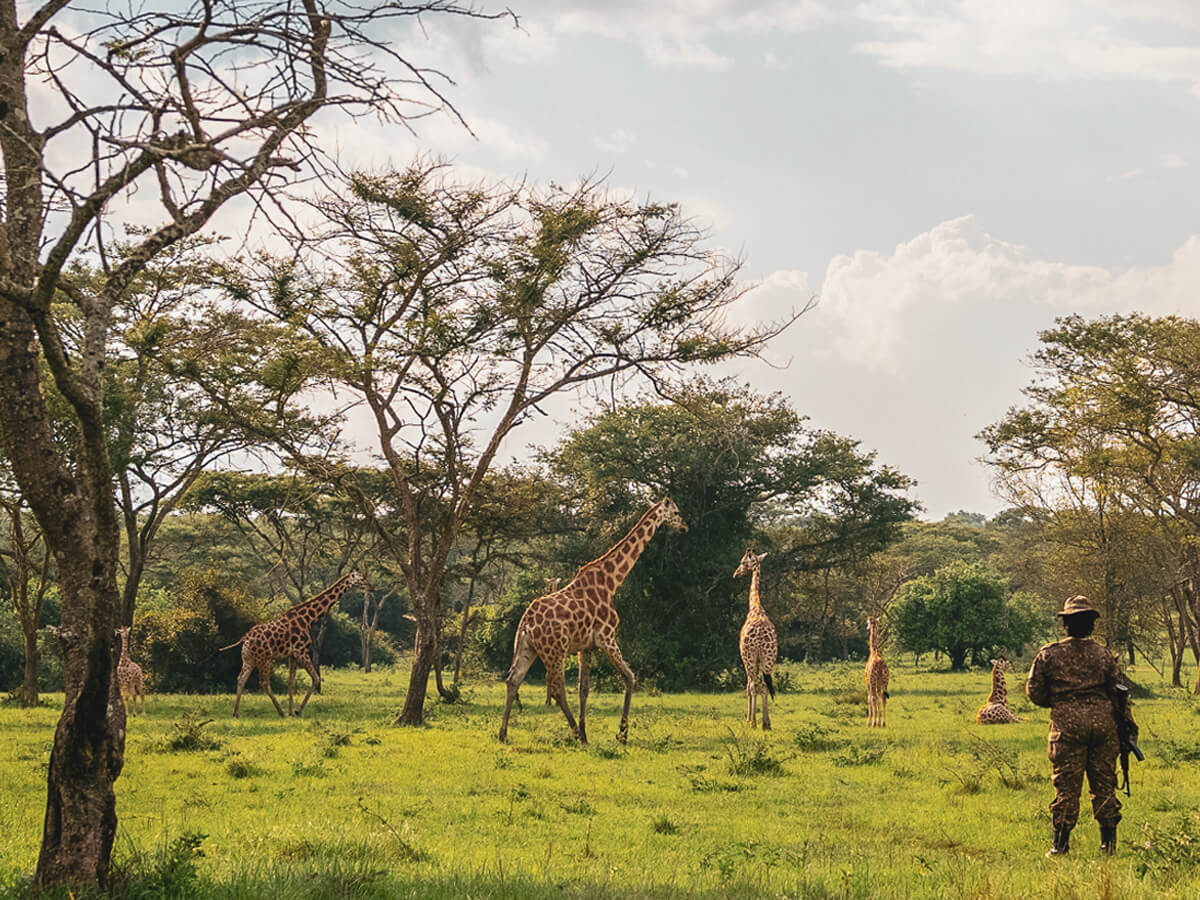
Yes! Lake Mburo National Park is home to a thriving population of Rothschild’s (Nubian) giraffes. While they were historically absent from the park for over a century, the Uganda Wildlife Authority successfully reintroduced them in 2015. Today, seeing these graceful giants stride across the acacia-dotted savanna is one of the absolute highlights of visiting Lake Mburo. Because the park is compact and easy to navigate, your chances of encountering them during a morning or late afternoon game drive are remarkably high.
Popular safari tour packages in Uganda to Lake Mburo national park
2-days-lake-mburo-national-park-uganda-safari-holiday
3-days-best-of-lake-mburo-national-park-uganda-safari-tour-package
4-days-queen-elizabeth-park-and-lake-mburo-uganda-safari-tour
4-days-perfect-honeymoon-uganda-safari-to-lake-mburo-national-park-and-lake-bunyonyi
How did giraffes arrive in Lake Mburo National Park?
Giraffes did not migrate to Lake Mburo naturally; they were brought here through a historic conservation translocation project. In June 2015, the Uganda Wildlife Authority, working alongside wildlife conservation groups, moved 15 Rothschild’s giraffes (11 females and 4 males) from Murchison Falls National Park in northern Uganda to Lake Mburo in western Uganda. Transporting such massive animals hundreds of kilometers across the country was a major logistical feat, but the herd adapted quickly to their new surroundings and immediately began breeding.
What specific species of giraffe lives in Lake Mburo?
Lake Mburo hosts the Rothschild’s giraffe (also classified as the Nubian giraffe), one of the most endangered giraffe subspecies in Africa. These giraffes are easily recognized by their dark coat patches separated by clean, cream-colored lines, and uniquely, their lower legs are completely white with no markings—making it look as though they are wearing long white socks. They also possess up to five ossicones (the horn-like structures on their heads), unlike other giraffe species.
How many giraffes are currently in Lake Mburo National Park?
From the initial 15 individuals translocated in 2015, the giraffe population in Lake Mburo has boomed to well over 50 to 80 individuals today, with some local counts estimating near 100. Thanks to an abundance of nutritious food, minimal natural predators, and high-quality monitoring by rangers, the herd has enjoyed impressive birth rates. Seeing multiple calves running alongside nursery groups (crèches) has become a common sight across the park’s central tracks.
Why were giraffes translocated from Murchison Falls to Lake Mburo?
The translocation served two main purposes: species conservation and habitat management. Scientifically, moving a portion of Murchison’s giraffe population created a separate "insurance population" in western Uganda, reducing the risk of losing the subspecies to disease or localized disasters. Ecologically, Lake Mburo was experiencing severe bush encroachment from fast-growing Acacia hockii trees. As natural browsers, giraffes feed heavily on high acacia branches, helping trim back excessive canopy growth and restore balanced savanna grasslands.
Can you see giraffes on a walking safari in Lake Mburo?
место! It is one of the most thrilling experiences in Uganda. Because Lake Mburo lacks large populations of dangerous big cats like lions, it is one of the few national parks where guided walking safaris are widely permitted. Accompanied by an armed UWA ranger, you can trek through the bush on foot to approach giraffes at a safe, respectful distance. Looking up at a 16-foot tall giraffe while standing on the exact same ground is an unforgettable perspective you simply cannot get from inside a vehicle.
Where are the best spots in Lake Mburo to see giraffes?
Giraffes spend most of their time in the central and northern sections of the park where acacia trees are most concentrated. The Zebra Track, Kazuma Track, and the open savanna clearings near Jaruba Valley are prime locations. You can also frequently spot them browsing along the acacia thickets surrounding Rwonyo Rest Camp or taking an early morning stroll near the shores of Lake Mburo. Rangers and lodge drivers share real-time sightings, so ask your guide where the herd was last spotted.
Are giraffes guaranteed to be seen on a game drive in Lake Mburo?
While no wildlife sighting in nature is ever 100% guaranteed, Lake Mburo comes very close when it comes to giraffes. The park covers a relatively small area (about 260 square kilometers), meaning wildlife is concentrated rather than spread out over vast wildernesses. If you spend a half-day game drive exploring the main acacia tracks, your chances of finding a family herd or bachelor group of giraffes are exceptionally high—around 90% or better on most days.
Can you see giraffes on a horseback safari in Lake Mburo?
Yes, riding a horse alongside wild giraffes is a signature activity unique to Lake Mburo in Uganda! Operated primarily by Mihingo Lodge, horseback safaris allow you to blend seamlessly into the environment. Wild animals, including giraffes, zebras, and impalas, do not perceive a rider on horseback as a threat or vehicle. As a result, giraffes will often continue grazing peacefully or calmly walk alongside your horse, offering a remarkably intimate safari experience without engine noise.
Is Lake Mburo the only park in western Uganda with giraffes?
Yes! Neither Queen Elizabeth National Park nor Kibale National Park has giraffes. If you are traveling the classic western Uganda safari circuit—visiting the mountain gorillas in Bwindi Impenetrable Forest or chimpanzees in Kibale—Lake Mburo is your only opportunity in western Uganda to see giraffes in the wild. If you skip Lake Mburo, you would have to travel all the way north to Murchison Falls or Kidepo Valley to see them.
How do giraffes in Lake Mburo help control the acacia tree population?
Before giraffes were reintroduced, Lake Mburo’s savanna was rapidly turning into dense, impenetrable acacia thicket because there were no large tall browsers to eat the upper branches. Giraffes use their tough, 18-inch prehensile tongues and leather-like lips to strip leaves from thorny Acacia hockii trees. By constantly pruning the tops and sides of these trees, giraffes open up the canopy, letting sunlight reach the ground so grass can grow for grazers like zebras, topis, and impalas.
What do giraffes eat in Lake Mburo National Park?
Giraffes are strict herbivores and heavy browsers. In Lake Mburo, their primary diet consists of leaves, shoots, flowers, and seed pods from various Acacia species (especially Acacia hockii and Acacia gerrardii), as well as broad-leaved shrubs like Combretum. An adult giraffe can consume up to 75 pounds (34 kg) of foliage every day. Because their food is moisture-rich, giraffes can go several days without drinking open water, deriving most of their hydration directly from the leaves they digest.
How close can you safely get to giraffes in Lake Mburo?
When on a game drive, your safari vehicle can often stop just a few meters away from giraffes as they browse right alongside the dirt tracks. On foot or on horseback, park regulations and safety standards require keeping a respectful distance of at least 20 to 30 meters. Giraffes in Lake Mburo are calm and accustomed to human presence, but they are still large, wild animals capable of delivering powerful kicks if they feel cornered or threatened. Always follow your ranger’s instructions.
What time of day is best to spot giraffes in Lake Mburo?
The early morning (6:30 AM to 9:30 AM) and late afternoon (4:00 PM to 6:30 PM) are the absolute best times to spot giraffes. During these cooler hours, giraffes are actively moving across open clearings and feeding heavily on acacia tops. During the blistering midday heat, they tend to move deeper into shade trees or stand still under thick canopies to regulate their body temperature, making them slightly harder to spot in dense foliage.
How do giraffes interact with other wildlife in Lake Mburo?
Giraffes act as the natural "sentinels" or watchtowers of the savanna. Thanks to their incredible height and sharp eyesight, they can spot approaching movement from great distances. Other grazers like zebras, impalas, topis, and elands often gather near giraffes because they rely on the giraffes' body language for early danger warnings. If you see a giraffe suddenly freeze and stare intently in one direction, every other animal in the meadow will stop and look too!
Are there any natural predators of giraffes in Lake Mburo?
Because Lake Mburo lacks resident lion prides, adult giraffes face virtually no natural predators in the park. Adult giraffes are too large and powerful for leopards or hyenas to tackle—a single kick from a giraffe can break a predator’s skull. However, young giraffe calves can occasionally fall prey to leopards or spotted hyenas if they stray too far from their mothers, though the calf survival rate in Lake Mburo remains very high compared to other reserves.
Can you spot baby giraffes (calves) in Lake Mburo National Park?
Yes! The breeding success in Lake Mburo has been phenomenal over the past decade. Mothers in the herd frequently group their young together into "nursery pools" or crèches, where one or two adult females guard several calves while other mothers feed nearby. Seeing tiny, fluffy-maned calves—which are already 6 feet tall at birth—playfully chasing each other or suckling alongside their mothers is a heartwarming sight during morning drives.
How does seeing giraffes in Lake Mburo compare to Murchison Falls?
Murchison Falls National Park has thousands of giraffes spread across vast open palm-dotted grasslands, offering massive herds against wide horizon backdrops. Lake Mburo, by contrast, offers a much more intimate, close-up encounter. Because Mburo’s terrain is smaller and woodland-dominated, you encounter giraffes at much closer ranges along narrow tracks, on foot, or from horseback—making Mburo feel more personal and accessible, especially for short itineraries.
Can you do a cycling safari to see giraffes in Lake Mburo?
Yes! Mountain biking safaris are another unique adventure permitted in Lake Mburo. Accompanied by an experienced wildlife ranger, you can pedal along dirt tracks outside and inside designated park zones. Coasting past a herd of towering giraffes while on a bicycle is an incredible rush. Giraffes often watch cyclists with curious amusement, standing tall as you quietly pedal past their feeding trees.
Why is Lake Mburo an ideal safari stop to see giraffes for short trips?
Lake Mburo is the closest national park to Uganda’s capital, Kampala, and Entebbe International Airport—just a 3.5 to 4-hour drive away. For travelers with tight schedules, short weekend getaways, or business trips who don't have time to travel 6–10 hours north to Murchison Falls, Lake Mburo provides a quick, convenient gateway to experience classic African savanna wildlife, including giraffes, zebras, and hippos, in just 1 or 2 days.
What conservation challenges do giraffes face in Lake Mburo?
While the population is thriving, habitat fragmentation and historical human-wildlife conflict remain key management considerations. Because Lake Mburo is surrounded by private farmland and cattle ranches, giraffes sometimes wander outside park boundaries in search of fresh acacia shoots. The Uganda Wildlife Authority works closely with local communities to prevent wire snaring, educate landowners on the ecological benefits of giraffes, and maintain healthy park buffer zones.
How do local cattle communities co-exist with giraffes in Mburo?
The local Bahima people are traditional cattle herders famous for their majestic Ankole long-horned cattle. Giraffes and Ankole cattle share a surprisingly harmonious relationship. Since giraffes feed high up on tree branches (browsers) while cattle graze on ground grasses (grazers), they do not compete for food. It is a striking visual signature of Lake Mburo to see wild giraffes and domestic Ankole cattle peacefully sharing the same green pastures at sunrise.
What makes the Rothschild’s giraffe physically unique compared to other giraffes?
Beyond their unspotted white "socks", Rothschild’s giraffes have a distinct coat pattern featuring large, smooth-edged dark patches separated by creamy white channels (unlike the jagged patches of Reticulated giraffes). Males also develop a prominent median horn on their forehead in addition to the two main ossicones, plus two smaller bumps behind their ears, giving them a total of five ossicones! They are also among the tallest giraffe subspecies, reaching up to 19 feet.
Is a night game drive good for seeing giraffes in Lake Mburo?
Night game drives in Lake Mburo are spectacular for finding nocturnal animals like leopards, bushbabies, genets, and nightjars. While you may spot giraffes at night, they are usually stationary, standing upright under acacia trees or resting on the ground with their heads tucked against their flanks. Seeing a towering silhouette in your spotlight is cool, but daytime drives offer far better light and activity for observing them.
What photography tips apply for shooting giraffes in Lake Mburo?
To capture great giraffe photos in Mburo, use a telephoto zoom lens (70-200mm or 100-400mm) to frame portrait shots showing their long eyelashes and intricate coat patterns. Pay attention to background lighting: the morning sun filtering through acacia leaves creates gorgeous rim light around their manes. For dramatic scale, shoot from a low angle inside your pop-up safari vehicle to emphasize their extraordinary height against the sky.
Do you need a special guide or ranger to track giraffes on foot?
Yes, walking outside a vehicle anywhere inside a Ugandan national park requires an official, armed ranger from the Uganda Wildlife Authority. Rangers know the daily movements of the giraffe herds, understand animal behavior to keep you safe, and provide rich commentary on track identification, dung inspection, and bush ecology. You can easily book a walking safari ranger at the park headquarters in Rwonyo.
How does the habitat of Lake Mburo suit giraffes?
Lake Mburo’s landscape is predominantly acacia woodland interspersed with open valleys, rocky kopjes, and swamp fringes. This environment is tailor-made for giraffes. The dense groves of Acacia hockii provide an endless buffet of nutrient-dense leaves, while the park's natural water sources ensure lush vegetation year-round. The lack of extreme steep terrain makes walking and foraging effortless for these large mammals.
Can kids and families easily spot giraffes in Lake Mburo?
Lake Mburo is arguably the most family-friendly national park in Uganda! Because game drive routes are gentle, driving distances between sightings are short, and giraffes are large and easy to spot, kids stay highly engaged. Children love spotting giraffes peeking over top of the trees. Additionally, safe activities like boat rides, gentle walking safaris, and horseback rides make Lake Mburo a top pick for family safaris.
Which lodges in Lake Mburo offer the best chance to view giraffes nearby?
Lodges like Mihingo Lodge (perched on a granite kopje with views over the valley), Kigambira Safari Lodge, Rwakobo Rock, and Nshara Tented Camp are located right in prime wildlife zones. It is not uncommon for guests staying at these lodges to wake up in the morning and see giraffes grazing right outside their cottage balcony or drinking near the lodge waterholes!
Is a visit to see giraffes in Lake Mburo worth including on a gorilla trekking itinerary?
100% yes! Lake Mburo National Park is located perfectly along the main highway between Kampala/Entebbe and the gorilla parks of Bwindi Impenetrable or Mgahinga. Breaking up the long 8 to 9-hour drive to Bwindi with an overnight stay in Lake Mburo allows you to stretch your legs, enjoy a giraffe-rich morning game drive or walking safari, and add classic savanna wildlife to your gorilla trekking adventure.
Booking Uganda safari to lake Mburo with us Roads of Adventure safaris
Booking a trip to Lake Mburo National Park through Roads of Adventure Safaris involves a 4-to-5-hour drive (approx. 228 km) from Kampala, typically featuring a stop at the Uganda Equator in Kayabwe. You can explore packages or details via Roads of Adventure Safaris
