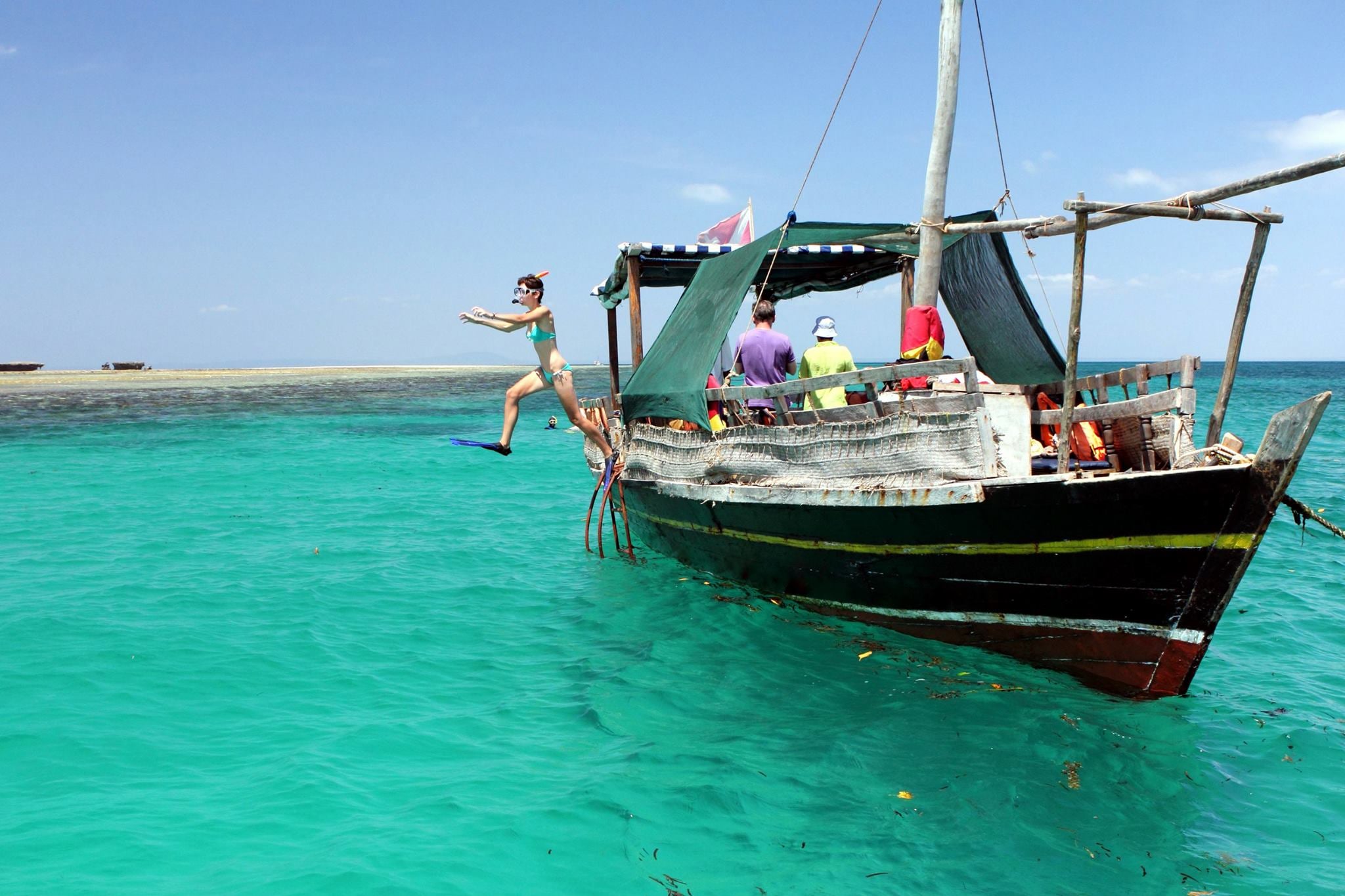
Boat trips to Wasini Island and the nearby Kisite-Mpunguti Marine National Park are widely recommended as a top full-day excursion from Diani Beach. A typical 8-hour trip involves a 1.5-hour drive to Shimoni, a traditional dhow cruise for dolphin spotting, snorkeling in clear blue waters, and a Swahili seafood lunch on the island.
13-days-best-kenya-safari-and-beach-itinerary
11-days-best-kenya-wildlife-safaris-and-kenya-beach-holiday-combo
10-days-kenya-wildlife-safari-and-kenya-beach-holiday-at-diani-beach
10-days-unforgettable-kenya-wildlife-safari-to-diani-beach-kenya-ocean-coastline
8-days-honeymoon-kenya-safari-tour-bush-to-beach-vacation
What to Expect
- Dolphin Watching: High chances of spotting bottlenose and humpback dolphins in the open ocean.
- Snorkeling: Exploring vibrant coral reefs and tropical fish inside the protected marine park.
- Cultural & Nature Walks: Visiting Wasini Island's community-run coral gardens and boardwalks.
- Historical Stops: Optional brief visits to the historic Shimoni Slave Caves on the mainland prior to the boat departure.
Pros and Cons
- Pros: Exceptional marine life, warm crystal-clear water, delicious fresh seafood, and an authentic cultural experience.
- Cons: Total travel time includes a 1.5-to-2-hour road transfer each way to Shimoni before getting on the boat; shared budget tours can occasionally feel crowded
Is a boat trip to Wasini Island genuinely worth it from Diani Beach?
If you are staying in Diani Beach, booking a day trip to Wasini Island is undeniably one of the single best excursions you can make on the southern Kenyan coast. While Diani offers world-class white sand and luxurious beach resorts, Wasini provides an immersive contrast that blends pristine nature with rich Swahili heritage. The journey takes you out of the resort bubble into protected ocean waters where marine life thrives without fear of fishing nets. You spend the morning sailing across turquoise channels, watching pods of wild dolphins play alongside wooden dhows, and floating over coral reefs buzzing with hundreds of tropical fish species. Afterward, stepping onto Wasini Island feels like stepping back in time—there are no cars or paved roads, only footpaths winding past coral stone houses and ancient baobab trees. Topped off with a feast of freshly caught crab and fish prepared in fragrant coconut spices, it transforms a simple beach holiday into an unforgettable African coastal adventure that satisfies nature lovers, foodies, and culture seekers alike.
What makes Kisite-Mpunguti Marine National Park so special?
Established in 1978, Kisite-Mpunguti is one of Kenya’s oldest and best-protected marine sanctuaries, covering roughly 39 square kilometers of open ocean, coral reefs, and small uninhabited islands. What sets Kisite apart from other snorkeling spots along the East African coast is its strict enforcement as a no-take marine park. Because all fishing, anchoring on coral, and harvesting are strictly prohibited within Kisite’s core boundary, the underwater ecosystem has flourished into a dense, healthy underwater jungle. Marine visibility here frequently exceeds 20 to 30 meters during the clear water season, offering aquarium-like conditions. Over 250 recorded species of fish inhabit these hard and soft coral gardens, ranging from giant sweetlips and juvenile reef sharks to vibrant parrotfish and clownfish. Additionally, the park serves as a crucial feeding ground and sanctuary for green sea turtles and resident dolphin populations. Floating in these warm, calm waters gives you a rare glimpse of what the Indian Ocean looked like centuries ago before industrial fishing and coastal development.
What does a typical Wasini Island Day trip itinerary look like?
A standard excursion is an action-packed, full-day event lasting around nine to ten hours from start to finish. Your day begins early with a hotel pickup in Diani between 6:30 AM and 7:00 AM, followed by a scenic one-hour drive south through rural coastal villages to the historic fishing town of Shimoni. At Shimoni Jetty, you board a traditional wooden Swahili dhow, where the crew welcomes you with fresh tropical fruits, spiced Swahili tea, and mineral water. By 8:30 AM, you set sail across the Wasini Channel, keeping a sharp eye out for wild dolphins leaping through the waves. Around mid-morning, the dhow anchors at Kisite Marine Park for two to three hours of world-class guided snorkeling over pristine coral reefs. Around 1:00 PM, you sail to Wasini Island for a lavish, multi-course Swahili seafood lunch at a cliffside restaurant overlooking the ocean. The afternoon is reserved for a guided cultural stroll through Wasini village or the boardwalk coral gardens before sailing back to Shimoni and returning to Diani by 5:30 PM.
How far is Wasini Island from Diani Beach?
Wasini Island is located approximately 45 to 50 kilometers (roughly 28 to 31 miles) south of Diani Beach, positioned near the Tanzanian border along Kenya’s remote southern coast. The travel distance involves two distinct legs: a terrestrial road journey and a short ocean crossing. The drive from your resort in Diani along the main southern coastal highway down to Shimoni Jetty takes about one hour to one hour and fifteen minutes, depending on traffic and vehicle type. This drive is visually engaging, taking you past sprawling coconut palm plantations, traditional mud-and-thatch homesteads, roadside fruit stands, and dense coastal scrubland. Upon arriving in Shimoni, the remaining distance to Wasini Island is about three kilometers across the protected Wasini Channel. Crossing this stretch on a traditional dhow boat takes roughly 30 to 45 minutes, depending on wind conditions, tide levels, and whether your boat stops along the way to observe dolphin pods playing in the channel currents.
How do you get from Diani Beach to the boat departure point?
Reaching the departure point at Shimoni Jetty is remarkably straightforward because virtually all organized tour operators include door-to-door ground transportation in their package price. Your driver will collect you directly from your hotel, resort, or private rental villa anywhere along the Diani strip early in the morning. Transport generally takes place in comfortable air-conditioned safari vans, mini-buses, or private 4x4 Land Cruisers equipped with large windows for viewing the rural landscape. If you book a private tour, you will enjoy a dedicated vehicle and driver, allowing you to set your own pickup schedule and stop along the way for photographs. If you opt for a shared group tour, the van will make a few quick pickups at neighboring resorts before heading south. Upon arriving at Shimoni, your driver guides you directly to the jetty, handles all Kenya Wildlife Service park permits and marine fees, and hands you over to your dhow captain and boat crew for a smooth departure.
Will I actually get to see wild dolphins during the trip?
While wild animal encounters can never be guaranteed with 100% certainty, your chances of seeing wild dolphins during a Wasini Island boat trip are extraordinarily high—typically sitting between 80% and 90% year-round. The calm, warm waters of the Wasini Channel and Kisite-Mpunguti Marine Park serve as a primary nursery and feeding ground for several resident dolphin species, most notably Indo-Pacific bottlenose dolphins and humpback dolphins. Experienced Swahili dhow captains have spent decades navigating these waters and know precisely which tidal currents and channels the pods frequent at different times of the morning. As the dhow sails out from Shimoni Jetty toward open water, lookouts keep a keen watch for dorsal fins and water splashes. It is very common for energetic pods to swim right alongside the bow of the boat, leaping through the wake and riding the bow waves, offering fantastic photo opportunities before you even put on your snorkeling gear.
Is swimming with or chasing dolphins permitted?
Ethical wildlife practices are strictly enforced in Kisite-Mpunguti Marine Park to ensure the safety and well-being of the resident dolphin pods. Responsible boat captains follow guidelines set by the Kenya Wildlife Service (KWS) and local marine conservation societies, which forbid chasing, encircling, or aggressively pursuing dolphins with motorized vessels. Captains are trained to slow down, drop engines into neutral, and allow the animals to approach the boat voluntarily on their own terms. While you are not allowed to jump into the water to actively chase or touch dolphins, opportunistic encounters frequently happen while you are snorkeling on the reef. If a curious pod decides to swim near your snorkeling zone, you can stay calm in the water and watch them glide beneath you. Maintaining a respectful distance prevents stress on mothers and calves while ensuring these wild creatures continue to feel safe in their natural marine sanctuary.
What marine creatures can I spot while snorkeling?
Snorkeling at Kisite-Mpunguti Marine Park feels like stepping inside a massive, naturally heated tropical aquarium with incredible biodiversity. Beneath the surface, you will glide over vast gardens of hard and soft corals, home to over 250 species of marine life. Among the most common sightings are green sea turtles and hawksbill turtles, which lazily graze on sea grass beds and often swim right alongside snorkelers. Brightly colored reef fish are everywhere: clownfish darting in and out of anemones, vibrant blue parrotfish crunching on coral, delicate angelfish, butterflyfish, lionfish, and schools of yellow-striped snapper. If you look closely into rocky crevices, you might spot moray eels, blue-spotted stingrays resting on the sandy bottom, or masterfully camouflaged octopuses. Depending on the season, lucky visitors may even spot harmless nurse sharks, manta rays, or migrating humpback whales breaching in the deeper ocean channels between July and October.
Can non-swimmers or absolute beginners participate in snorkeling?
Non-swimmers and absolute beginners can enjoy this excursion without worry or fear. Tour operators catering to Wasini Island are exceptionally experienced in accommodating guests who have never worn a mask or entered deep open water. Every dhow carries high-quality life jackets in various sizes, as well as inflatable buoyancy vests and large foam life rings. Before anyone enters the water, the crew provides a step-by-step briefing on how to fit your mask, breathe comfortably through the snorkel, and clear water if needed. During the actual snorkeling session, experienced Swahili boatmen and marine guides enter the water with you. They hold onto floating life rings that non-swimmers can comfortably cling to while being gently guided across the best coral patches. The clear water visibility and warm temperatures mean you can float effortlessly at the surface while enjoying full, unobstructed views of the reef life below.
What types of boats are used for the excursion?
The traditional Swahili dhow is the classic, iconic vessel used for Wasini Island excursions, offering a blend of authentic coastal culture and relaxed ocean cruising. These handcrafted wooden boats are built using centuries-old East African maritime designs, featuring broad wooden hulls and large canvas sails that are raised when wind conditions allow. Modern dhows used for tourism are fully retrofitted with reliable marine outboard engines to ensure timely schedules regardless of the breeze. They feature spacious shaded seating decks to protect guests from the equatorial sun, flat open bow areas perfect for sunbathing, marine safety equipment, life jackets, and basic toilet facilities onboard. For travelers seeking speed or exclusive privacy, some luxury operators also offer modern motorized speedboats or sleek catamaran yachts, but the traditional wooden dhow remains the most popular and atmospheric way to experience the Wasini Channel.
What is included in a standard Wasini tour package?
A comprehensive Wasini Island tour package takes care of almost every operational detail from door to door, allowing you to relax completely. Standard bookings include round-trip hotel transfers in an air-conditioned vehicle or safari van from Diani Beach to Shimoni Jetty. They also cover official Kenya Wildlife Service marine park entrance fees, which are required to enter Kisite-Mpunguti Marine Reserve. Once at the jetty, your package provides dhow boat transportation managed by an experienced captain and crew, along with professional marine guides who accompany you into the water. All necessary snorkeling equipment—including sanitized masks, snorkels, swim fins, and life jackets—is provided onboard. To keep your energy high, crews serve complimentary mineral water, soft drinks, and fresh tropical fruit platters such as pineapple, watermelon, and sweet bananas throughout the morning sail. At midday, a multi-course Swahili seafood lunch is served at an island restaurant on Wasini Island. Finally, packages feature a guided walking tour through historic Wasini village or the community-managed coral garden boardwalk before returning you to Diani.
How much does a Wasini Island day trip usually cost?
Pricing for a Wasini Island day trip varies depending on whether you choose a budget shared group excursion, a mid-range package, or a luxury private dhow charter. Budget-friendly shared group tours typically range from $70 to $95 USD per adult. These group options usually include shared van transport from Diani Beach, marine park entrance fees, standard dhow sailing, snorkeling gear, and a basic Swahili fish and crab lunch. Mid-range to premium tours cost between $100 and $145 USD per person. They offer smaller group sizes, private vehicle transfers, higher-end dhows with shaded lounging decks, upgraded seafood menus featuring giant lobsters, and specialized snorkeling guides. If you prefer a private charter for your family or group, prices range from $160 to $250+ USD per person. Private charters give you complete control over your departure time, route, itinerary, and menu preferences. Children under twelve typically receive a 30% to 50% discount, while infants under three usually travel free of charge with most registered coastal tour operators.
What is the Swahili seafood lunch like?
Lunch on Wasini Island is widely celebrated as a highlight of the entire coastal experience, combining fresh ocean ingredients with aromatic East African spices. Hosted at open-air, cliffside restaurants overlooking the ocean, the meal is served in a relaxed Swahili style. The feast typically begins with a fragrant bowl of fish or coconut soup, accompanied by warm Swahili flatbreads known as chapati. The main platter features freshly caught mangrove crab and tender white fish fillets grilled over wood fires, drizzled in rich garlic butter or coconut sauce. Accompanying side dishes include traditional coconut rice, cassava, vegetable curries, and fresh seaweed salad harvested locally by island women. For dessert, guests enjoy platters of ripe seasonal tropical fruits alongside traditional spiced Swahili tea infused with ginger, cardamom, and cinnamon. Eating fresh seafood on a shaded wooden terrace while listening to the waves crash against the coral rocks below creates a memorable dining atmosphere that perfectly caps off a morning of active ocean snorkeling.
Are vegetarian, vegan, or chicken options available?
Yes, tour operators and island restaurants easily accommodate vegetarians, vegans, non-seafood eaters, and those with specific dietary restrictions, provided you give advance notice during booking. Coastal Swahili cuisine inherently excels at plant-based and non-seafood cooking thanks to its heavy reliance on coconut, aromatic spices, legumes, and fresh vegetables. Guests opting out of seafood are served delicious alternative main courses, such as authentic Swahili vegetable pilau rice, rich coconut-infused lentil dhal, or mixed vegetable curries cooked with garlic and ginger. Vegan guests can enjoy chapati, coconut rice, fresh avocado salads, fried plantains, and tropical fruit platters. For meat eaters who simply do not enjoy seafood, operators readily prepare marinated grilled chicken breast or chicken pilau seasoned with local spices. The kitchen staff on Wasini Island take great pride in ensuring that every guest—regardless of their dietary preferences or food allergies—receives a generous, freshly prepared, multi-course meal equal in quality to the traditional seafood feast.
Can I order premium items like extra lobster or crab?
While standard tour packages include a generous serving of fresh mangrove crab and grilled fish, you can easily upgrade your meal to include premium deep-sea lobster or extra seafood platters. Most operators offer a lobster upgrade for an additional fee ranging between $15 and $30 USD per person, depending on market availability and seasonal catch sizes. If you select this upgrade, local fishermen harvest fresh slipper or spiny lobsters from local waters early in the morning. The lobsters are then split, seasoned with garlic, lime, and crushed sea salt, and flame-grilled over open wood coals right before serving. You can also request extra portions of deep-sea crab, calamari, or jumbo prawns. To guarantee availability, it is best to request seafood upgrades when booking your tour in Diani Beach so the island chefs can source the fresh catch from local fishermen before your dhow docks at Wasini Island.
What should I wear on the excursion?
Dressing appropriately for a Wasini Island excursion involves balancing ocean comfort with local cultural sensitivity. You should wear your swimsuit underneath lightweight, breathable clothing like shorts, cotton t-shirts, linen shirts, or a casual sundress in the morning. This makes transitioning from the boat into the water seamless. Lightweight slip-on shoes, flip-flops, or sturdy water sandals are ideal for moving around the wet dhow deck and stepping off onto shallow beaches. Crucially, when you leave the boat to take a walking tour through Wasini village, you must dress respectfully out of courtesy for the conservative Swahili Muslim community. Men should wear shorts and a shirt, while women should cover their shoulders and knees using a lightweight sarong, kaftan, or scarf. Avoid walking through the village in revealing swimwear or bare torsos. Finally, bring a wide-brimmed sun hat, UV-blocking polarized sunglasses, and a light jacket or long-sleeved shirt to protect yourself from wind and equatorial sun exposure during the dhow sail.
What essential items should I pack for the day?
Packing smart ensures a comfortable day on the water and the island. Start with a dry bag or waterproof backpack to protect your electronics, camera gear, and spare clothing from ocean spray. Essential sun protection items include reef-safe sunscreen (to protect fragile coral ecosystems), polarized sunglasses with a strap, a wide-brimmed sun hat, and lip balm with SPF protection. Pack a soft microfiber beach towel, a change of dry clothes for the afternoon drive home, and a pair of water shoes or sturdy sandals to protect your feet from sharp coral rocks when wading ashore. Bring a waterproof phone pouch or underwater action camera to capture aquatic wildlife photos while snorkeling at Kisite Marine Park. Finally, keep some local Kenyan Shillings (KES) or USD cash on hand in small denominations. Cash is required for tipping your dhow crew and driver, purchasing handcrafted souvenirs from local artisans, or paying entrance fees for optional community sites like the Shimoni Slave Caves.
Do I need to bring my own snorkeling gear?
No, it is not necessary to bring your own snorkeling equipment because reputable tour operators supply all required gear as part of the package price. Before departing Shimoni Jetty, the boat crew distributes sanitized masks, snorkels, and swim fins available in various sizes to fit both adults and children. Floatation vests and life jackets are also provided for extra buoyancy and safety. However, if you already own personal snorkeling gear that fits your face comfortably, bringing it along ensures a leak-free seal and familiar fit. Personal gear also eliminates any concerns about shared equipment hygiene. If you wear prescription eyeglasses, consider bringing your own optical mask, as standard tour equipment only features plain glass lenses. If you require prescription masks, inform your operator during booking; high-end operators can sometimes arrange corrective lenses to ensure you get clear, sharp views of the underwater marine life.
What is the best season of the year for a Wasini boat trip?
The absolute best time of year for a Wasini boat trip is during the dry summer season, which runs from October through March. During these months, the ocean is remarkably calm, winds are gentle, skies are clear and sunny, and underwater visibility in Kisite-Mpunguti Marine Park reaches its annual peak at 20 to 30 meters. October through December offers particularly exceptional conditions for calm sailing and vibrant underwater photography. The monsoon rainy season occurs between April and June, bringing heavy rainfall, rougher sea swells, and reduced water visibility due to river runoff and sediment. While tours still run on calm weather days during the rains, condition clarity is less predictable. July through September marks a shoulder season characterized by cooler coastal breezes, slightly choppier waters, and moderate temperatures. This winter period is nonetheless popular because it coincides with the annual migration of humpback whales through coastal channels.
When is the best time to see humpback whales near Wasini?
The best window for spotting majestic humpback whales near Wasini Island is between late July and October, with peak sightings occurring throughout August and September. Every year, hundreds of humpback whales undertake an arduous migration from the freezing, food-rich waters of Antarctica, traveling north along the East African coast to the warm, shallow equatorial waters of Kenya. They utilize the calm, sheltered channels around Kisite-Mpunguti Marine Park and Shimoni as nursery grounds to mate, give birth, and nurse their newborn calves before returning south. During these months, dhow passengers frequently witness awe-inspiring displays of mother whales swimming alongside their newborn calves, slapping their massive tail flukes on the water, and breaching fully out of the ocean. Combining a standard dolphin-watching and snorkeling itinerary with seasonal humpback whale sightings makes visiting Wasini during the August-September window an unforgettable experience for marine wildlife enthusiasts.
How do tides and weather impact the day's itinerary?
Tides and weather play a central role in shaping your Wasini Island dhow excursion, transforming the coastal landscape throughout the day. The Indian Ocean experiences significant semi-diurnal tide changes, shifting water levels by up to four meters every six hours. During low tide, shallow coral platforms around Kisite Marine Park dry out, revealing shimmering white sandbars in the middle of open water where dhows anchor so guests can swim, walk, and take stunning photographs. High tide, conversely, offers deeper swimming channels and allows dhow boats to glide effortlessly over outer reef structures without risk of scraping bottom corals. Water visibility is also impacted; low tide often provides calmer, clearer snorkeling conditions because wave action drops over protective outer reefs. Weatherwise, calm morning breezes favor comfortable sailing and active dolphin spotting. Tour operators carefully align departure times with local tide charts to ensure you hit the marine park at peak visibility and reach the island when village footpaths are easily navigable.
What is the historical Shimoni Slave Caves tour?
Located just 200 meters from Shimoni Jetty on the mainland, the historic Shimoni Slave Caves offer a sobering yet essential glimpse into East Africa’s complex past. "Shimoni" translates from Swahili to "the place of the hole," referring to a natural underground cavern system extending several kilometers inland. Originally revered as sacred spiritual sites (kayas) by local indigenous communities, these dark coral caves were repurposed during the 18th and 19th centuries as holding pens for enslaved people captured across East Africa. Victims were chained inside the damp subterranean chambers before being forced onto dhows bound for the famous slave markets of Zanzibar. Today, guided tours led by local community historians walk you through the dimly lit chambers, pointing out iron shackles embedded in ancient coral walls and explaining the harrowing human stories preserved within. Entrance fees directly fund local primary school development and community healthcare projects, turning a painful historical site into a meaningful engine for modern community empowerment.
What is the Wasini Island Coral Garden and boardwalk?
The Wasini Island Coral Garden is a unique ecological attraction featuring ancient fossilized coral formations jutting out of mangrove wetlands like weathered gray sculptures. Centuries ago, these structures were submerged living reefs that became elevated above sea level due to tectonic shifts and receding ocean levels. Today, visitors explore this surreal landscape via an elevated wooden boardwalk that weaves through mangrove forests, salt flats, and fossilized coral outcrops. The site is managed entirely as an eco-tourism project by the Wasini Women's Group. Entrance fees go directly into a community fund that finances local clean water projects, island sanitation, and secondary school scholarships for village youth. A guided walk across the boardwalk takes about 30 to 45 minutes, offering fantastic vantage points for birdwatching, photography, and learning about mangrove conservation. Visiting the Coral Garden allows travelers to directly support grassroots female empowerment while discovering one of the most unusual geological environments along the Kenyan coastline.
Are there cars or motorized transport on Wasini Island?
One of the most charming aspects of Wasini Island is its complete absence of motorized transportation. There are no cars, trucks, motorcycles, or paved roads anywhere on the island. The narrow, winding alleys linking the island's small settlements—principally Wasini and Mpunguti villages—are paved with sand and crushed coral rag, designed solely for foot traffic and handcarts. Local residents move about entirely on foot or rely on small wooden fishing canoes to travel along the coastline. This lack of engine noise, exhaust fumes, and traffic creates an exceptionally peaceful, slow-paced atmosphere that feels worlds removed from modern city life. Transporting fresh water, building materials, fish catches, and food supplies across the island is done using wheelbarrows, wooden handcarts, or sturdy donkeys. For visitors, walking along these tranquil coral paths under towering baobab trees provides a rare opportunity to disconnect, slow down, and experience an authentic, eco-friendly way of living that has remained largely unchanged for generations.
Is the trip suitable and safe for families with young kids?
Yes, a Wasini boat trip is an incredible, family-friendly day out that children of all ages thoroughly enjoy. Kids are naturally thrilled by the prospect of sailing on a real wooden dhow, spotting pods of wild dolphins jumping alongside the boat, and floating in warm, shallow ocean waters. Boat crews and marine guides are remarkably patient, accommodating, and vigilant with young travelers, providing child-sized life jackets, floating safety rings, and gentle hands-on assistance during snorkeling sessions. To make the trip smooth for young children, parents should take a few practical precautions. Ensure kids wear high-SPF reef-safe sunscreen, wide-brimmed sun hats, and UV-protective rash guards, as equatorial sun reflecting off open water can be intense. Keep them well-hydrated with water and fruit snacks provided onboard. Because the excursion spans approximately nine hours from morning pickup to evening drop-off, bringing favorite comfort items, underwater action cameras, and light snacks will keep younger children content throughout this memorable coastal adventure.
Should I choose a private tour or a shared group tour?
Choosing between a private tour and a shared group excursion depends on your budget, travel style, and desire for flexibility. Shared group tours offer fantastic value for money, making them ideal for solo travelers, couples, or budget-conscious vacationers. You travel in a safari van with other holidaymakers and join a larger dhow cruise, which creates a vibrant, social atmosphere where you can meet fellow travelers. On the other hand, booking a private tour grants complete exclusivity and tailored freedom. You enjoy private vehicle transfers from Diani, an uncrowded dhow reserved solely for your party, and flexible timing for snorkeling and dining. Private tours allow you to request custom menu additions—such as extra lobster platters—and spend more time dolphin watching without adhering to a rigid group schedule. For families with small children, photography enthusiasts, or honeymooners seeking a romantic, peaceful day at sea, the added privacy and personalized care of a private charter make it well worth the extra investment.
What cultural etiquette should I follow when visiting Wasini Island?
Wasini Island is home to a traditional Swahili Muslim community whose customs and cultural values have been preserved for centuries. Practicing respectful cultural etiquette during your island visit ensures a warm, welcoming interaction with local villagers. The most crucial rule concerns dress code: while swimsuits, bikinis, and trunks are completely fine on the dhow boat and while snorkeling in Kisite Marine Park, you should dress modestly before stepping ashore into Wasini village. Both men and women should cover their shoulders and legs down to the knees using lightweight shirts, trousers, or traditional sarongs (kangas). Additionally, always ask for polite permission before taking photographs of local residents, especially women and elderly villagers. Avoid publicly consuming alcohol or playing loud music while walking through the village footpaths. Embracing a polite, respectful demeanor—greeting locals with a warm "Jambo" or "Habari"—opens doors to authentic conversations and genuine Swahili hospitality.
How does tipping and souvenir buying work on the island?
Tipping and purchasing local handicrafts on Wasini Island provide vital direct economic support to coastal families. Tipping is voluntary but warmly appreciated by dhow captains, boat crews, marine guides, and van drivers who work hard to ensure your safety and comfort. A customary tip ranges from $5 to $10 USD (or 500 to 1,000 Kenyan Shillings) per guest, usually pooled in a tip box or handed to the lead captain at the end of the day. When exploring Wasini village and the Coral Garden boardwalk, local artisans and women’s cooperatives display handmade souvenirs, including carved coconut wood kitchenware, woven palm leaf baskets, beadwork jewelry, and colorful Swahili kanga wraps. Bargaining is accepted practice, but it should always remain friendly, fair, and respectful—remembering that a few extra shillings mean far more to a local artisan than to an international traveler. Carrying small denominations of cash in local currency (KES) makes purchases and tipping easy and hassle-free.
What eco-friendly rules apply in Kisite Marine Park?
Kisite-Mpunguti Marine National Park is a strictly protected marine sanctuary governed by the Kenya Wildlife Service (KWS) to conserve delicate coral reefs and aquatic life. To preserve this underwater paradise for future generations, visitors must adhere to strict eco-friendly rules. Touching, standing on, or kicking coral heads is strictly prohibited, as corals are living organisms easily killed by physical contact. Snorkelers should maintain good buoyancy control or wear floatation vests to float safely above reef structures. Collecting shells, corals, or marine artifacts—dead or alive—is illegal and subject to heavy fines. Feeding fish or marine mammals is forbidden, as it disrupts natural foraging habits and ecosystem balances. Additionally, guests are urged to wear reef-safe, biodegradable sunscreen that lacks harmful chemicals like oxybenzone, which bleach coral reefs. Finally, dispose of all trash responsibly in bins onboard the dhow, ensuring zero single-use plastic or litter enters ocean waters.
How do I choose and book a reliable tour operator from Diani?
Selecting a trustworthy, professional tour operator is essential for a safe, seamless, and memorable Wasini Island excursion. Look for fully licensed, established ground operators like Roads of Adventure Safaris, who specialize in high-quality East African travel logistics and coastal day trips. A reliable operator should offer complete pricing transparency, explicitly confirming that all KWS marine park fees, hotel transfers, professional guides, safety gear, and lunch inclusions are covered without hidden surcharges. Verify that the company maintains clean, well-serviced vehicles and seaworthy dhows fitted with certified life jackets, first-aid kits, and working marine engines. Check recent traveler reviews on platforms like TripAdvisor or Google to gauge punctuality, guide expertise, and seafood quality. Booking through a premier operator like Roads of Adventure Safaris ensures dedicated customer support, flexible booking terms, and ethical marine practices—guaranteeing that your journey from Diani Beach to Wasini Island is executed with total safety, comfort, and local authenticity.
Booking Kenya Diani beach holidays with us Roads of Adventure safaris
Booking your Diani Beach holiday with Roads of Adventure Safaris lets you combine coastal relaxation on white sand shores with thrilling wildlife game drives across Kenya and East Africa
