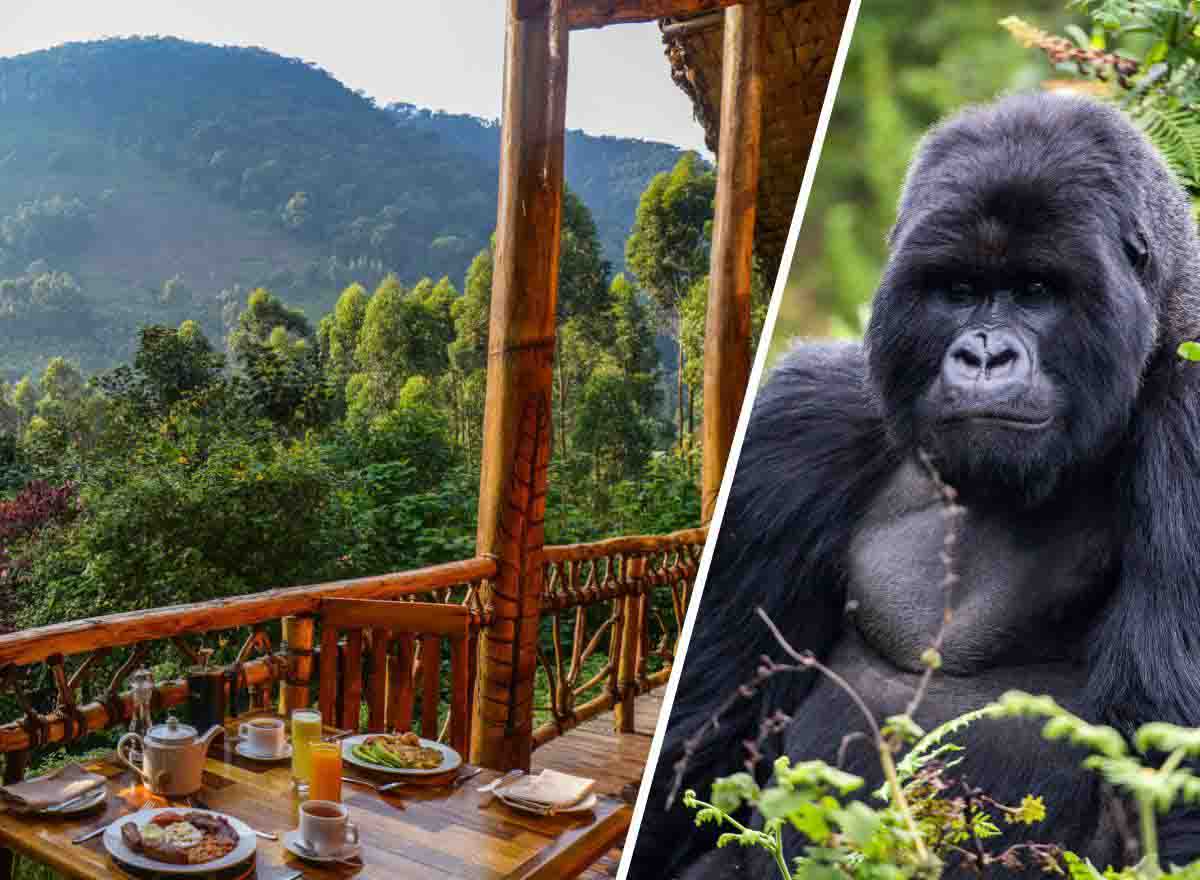
Bwindi Impenetrable National Park and Mgahinga in Uganda, Volcanoes National Park in Rwanda, or Virunga in Congo. Permits cost $400 to $1,500, hikes last 1 to 6 hours, and you get one magical hour with the family. Did you know these gentle giants share about 98% of our DNA, build a fresh bed of leaves to sleep in every single night, and that dominant silverbacks get their cool silver hair only after turning 12 years old?
3-days-bwindi-gorilla-trekking-tour-and-batwa-forest-dweller-cultural-visit
7-days-best-uganda-wildlife-safari-and-culture
7-days-best-uganda-safari-tour-to-popular-safari-parks
7-days-perfect-road-trip-uganda-safari-tour
7-days-best-uganda-birding-safari-tour
7-day-uganda-safari-to-kidepo-valley-via-jinja-and-sipi-falls
7-days-murchison-falls-uganda-safari-trip-via-ziwa-rhinos-kidepo-valley-and-jinja
10-days-uganda-rwanda-primate-safari-vacation-and-game-drive-safari
10-days-best-uganda-big-five-safaris-and-primate-experience
10-days-best-uganda-birding-safari-and-wildlife-experience
10-days-best-of-uganda-and-rwanda-all-big-five-animal-and-gorilla-trekking
10-days-uganda-safari-all-big-five-gorilla-and-chimpanzee-tracking-adventure
10-days-budget-uganda-safari-holiday-vacation-tour-road-trip
What exactly is Africa gorilla trekking and why is it so special?
Africa gorilla trekking is a profound, life-changing journey into ancient rainforests to spend an hour with wild mountain gorillas. You hike through dense foliage, guided by expert rangers who track footprints and broken branches until you find a habituated family. It is incredibly special because these giants share roughly 98% of our DNA, meaning you will see shockingly human expressions, sibling squabbles, and tender maternal moments. Unlike a standard safari where you sit in a vehicle, this is an active, foot-based pilgrimage. Facing a 400-pound silverback with nothing but misty air between you is an unmatched, humbling privilege.
Which countries offer the best Africa gorilla trekking experiences?
You can experience Africa gorilla trekking in Uganda, Rwanda, and the Democratic Republic of Congo. Uganda is fantastic for budget-conscious adventurers, offering two distinct parks, Bwindi Impenetrable National Park and Mgahinga Gorilla National Park. Rwanda provides a luxury, seamless experience at Volcanoes National Park, located just a three-hour drive from its international airport. The Democratic Republic of Congo offers raw, off-the-beaten-path treks in Virunga National Park for mountain gorillas and Kahuzi-Biega National Park for lowland gorillas, though travelers must carefully monitor regional travel advisories before booking.
How much does a permit cost for Africa gorilla trekking in 2026?
Permit prices vary significantly by country. For Rwanda, a single permit costs $1,500, positioning it as a high-end, luxury conservation destination. Uganda offers a middle ground, with permits priced at $800 for foreign non-residents. The Democratic Republic of Congo is the most economical option, typically charging around $400 to $500 for a permit. While these prices seem steep, remember that this money directly funds habitat protection, anti-poaching patrol units, veterinary care, and vital community development projects surrounding the parks.
Why are Africa gorilla trekking permits so expensive?
The high cost of Africa gorilla trekking permits is a deliberate, highly successful conservation strategy. Mountain gorillas are endangered, and managing their survival requires intense resources. Your permit fee pays for 24/7 armed park rangers who protect the families from poachers, track health issues, and clear illegal snares. Additionally, a significant percentage of the fee goes directly to local communities. This funds schools and clinics, turning former poachers into passionate conservation champions who view the gorillas as an invaluable resource to protect.
How far in advance should I book my Africa gorilla trekking permit?
You should secure your Africa gorilla trekking permit roughly 4 to 12 months before your planned travel dates. Because park authorities enforce a strict limit of eight visitors per gorilla family per day to protect the animals from stress and human illnesses, daily availability is incredibly low. Demand skyrockets during the dry summer and winter months. If you try to book a last-minute permit for July or January, you will likely find them completely sold out, meaning you would miss out on this bucket-list adventure.
Can I do Africa gorilla trekking on a budget?
Yes, you can manage Africa gorilla trekking on a budget by choosing Uganda or the Democratic Republic of Congo over Rwanda. Opting for Uganda saves you $700 on the permit alone. To cut costs further, look for budget campsites or community-run guesthouses right outside the park boundaries. Traveling during the rainy low season sometimes yields lodge discounts. Booking a local tour operator rather than an international agency keeps your money in the local economy while securing fair, uninflated prices for transport and guiding.
What is the minimum age limit for Africa gorilla trekking?
The official minimum age for Africa gorilla trekking is 15 years old. This strict rule is strictly enforced across Uganda, Rwanda, and Congo for safety and conservation reasons. The hike can be physically grueling, requiring stamina that younger children may lack. Furthermore, kids are more likely to carry common childhood illnesses that could devastate a gorilla family's immune system. Children may also react unpredictably with loud noises or sudden running if a large silverback makes an unexpected movement, which could trigger a defensive charge.
Is the Democratic Republic of Congo safe for Africa gorilla trekking?
Safety in the Democratic Republic of Congo fluctuates, making it vital to check your government's latest travel advisories before planning your Africa gorilla trekking trip there. Virunga National Park boasts some of the most dramatic volcanic landscapes and dedicated rangers on earth, but the region faces periodic instability from rebel groups. When the park is open, security protocols are elite, often including armed military escorts for tour groups. If you crave raw adventure and want to support vital conservation, it is an option, but it requires flexibility and heightened caution.
What happens if I get sick right before my Africa gorilla trekking experience?
If you wake up with a cold, flu, diarrhea, or a heavy cough on the morning of your trek, you will not be allowed to go. Because gorillas are genetically so close to humans, they catch our respiratory infections easily, and a simple human cold can easily turn fatal for an entire gorilla family. Park authorities screen guests before departure. If you are turned away for illness, Uganda and Rwanda typically offer a partial or full permit refund policy to encourage honesty, ensuring tourists do not hide contagious symptoms.
Can I do Africa gorilla trekking independently without a tour operator?
While you can theoretically purchase an Africa gorilla trekking permit directly from government wildlife authorities, you cannot simply walk into the rainforest by yourself. You must be accompanied by official park rangers and trackers. Booking through a local tour operator is highly recommended. They handle the complex logistics, arrange high-clearance 4x4 transport over rough dirt roads, secure your accommodation, and ensure you arrive at the park headquarters on time for the mandatory early-morning safety briefings.
How physically fit do I need to be for Africa gorilla trekking?
You need a moderate to good level of physical fitness for Africa gorilla trekking. This is not a casual walk in a manicured park; it involves hacking through tangled roots, slick mud, and dense undergrowth on steep volcanic slopes. Elevations can exceed 8,000 feet, making breathing noticeably tougher. Treks can last anywhere from one hour to six grueling hours depending on where the family moved overnight. Regularly practicing hiking, stair climbing, or cardio workouts a few months before your trip will make your mountain experience far more enjoyable.
What does a typical day look like on an Africa gorilla trekking safari?
Your day starts before dawn with an early breakfast at your lodge. By 7:00 AM, you arrive at the park headquarters for a briefing on gorilla etiquette and safety guidelines. You are assigned to a specific gorilla family based on your physical fitness level. By 8:30 AM, you hit the trail with your rangers, trackers, and porters. You hike through the wild jungle until the advanced trackers locate the family. Then, you spend exactly one hour watching them, hike back to the base, and celebrate with a celebratory certificate ceremony.
How long does the actual hike take during Africa gorilla trekking?
The duration of the hike during Africa gorilla trekking is beautifully unpredictable. It can take anywhere from 45 minutes to six hours or more. Advanced trackers head into the forest at the break of dawn to locate where the gorilla family nested the night before. If the family stayed close to the park boundary, your walk will be short and sweet. If they migrated deep into the interior looking for fresh bamboo shoots, you are in for a long, demanding, all-day mountain trek.
Should I hire a porter for my Africa gorilla trekking adventure?
Yes, hiring a local porter is highly recommended, even if you are in peak athletic shape. For a fee of around $15 to $20, a porter will carry your heavy backpack containing your water, lunch, and camera gear. More importantly, they provide a steady, helping hand to pull you up muddy inclines or stabilize you on slippery ridges. Hiring a porter provides direct, meaningful financial support to local families living on the park borders, showing communities that live-gorilla tourism brings tangible economic benefits to their households.
What should I pack to wear for Africa gorilla trekking?
When packing for Africa gorilla trekking, prioritize protection over fashion. Wear lightweight, long-sleeved shirts and sturdy, long trousers to guard against stinging nettles, sharp branches, and insects. Thick gardening gloves are a life-saver for gripping thorny vines along the trail. Bring sturdy, waterproof hiking boots with excellent ankle support and deep tread. Pack a high-quality rain jacket because it can pour at any moment, and don't forget tall gaiters or thick socks to tuck your pants into, keeping safari ants out.
What kind of camera gear do I need for Africa gorilla trekking?
For Africa gorilla trekking, bring a versatile camera setup that performs well in dark, low-light environments. The dense canopy creates a dim environment, and flash photography is strictly banned because it can terrify or anger the gorillas. A DSLR or mirrorless camera with an adjustable 24-70mm or 70-200mm lens with a wide aperture (like f/2.8) is ideal. This lets you capture both wide family shots and stunning close-up portraits without needing to carry a massive, heavy tripod, which is not permitted on the trail.
Are there toilets available during Africa gorilla trekking?
There are no modern toilets or facilities once you step past the park boundary into the wild rainforest for Africa gorilla trekking. You must use nature’s toilet. If you need to relieve yourself along the trail, you must inform your ranger. They will dig a deep hole in the soil with a machete and instruct you to bury your waste and toilet paper completely. This protocol keeps the ecosystem pristine and prevents wild animals from digging up human waste, which can spread dangerous diseases through the forest.
What is the food and water situation during Africa gorilla trekking?
You must bring all your own sustenance for Africa gorilla trekking. Your lodge will pack you a robust lunchbox, usually filled with sandwiches, fruit, chicken, and snacks to keep your energy up during a long climb. It is vital to carry at least two to three liters of clean drinking water in your backpack. There are no clean water sources or shops inside the jungle. Remember that eating or drinking when you are directly in front of the gorillas is strictly forbidden to prevent drops that could introduce human bacteria.
When is the absolute best time of year for Africa gorilla trekking?
The best time for Africa gorilla trekking is during the dry seasons, which run from June to September and December to February. During these months, the forest trails are significantly less muddy, making the steep climbs much safer and less exhausting. It also rains less frequently, protecting your expensive camera gear. However, gorillas can still be tracked year-round. The rainy seasons (March to May and October to November) bring heavier downpours, but they also mean lower lodge prices and fewer tourists on the trails.
How close will I actually get to the primates during Africa gorilla trekking?
The official safety rule requires you to maintain a distance of at least 7 meters (about 23 feet) from the primates during Africa gorilla trekking. This boundary protects them from human airborne germs and gives the wild animals their personal space. However, gorillas do not read the rulebook. Playful juveniles are incredibly curious and might walk right up to you, or a silverback might brush past you on a narrow trail. If this happens, stay calm, avoid direct eye contact, and let your ranger guide you back safely.
Are mountain gorillas dangerous or aggressive during Africa gorilla trekking?
Mountain gorillas are remarkably gentle, peaceful giants and are not inherently dangerous during Africa gorilla trekking. The families you visit have undergone a rigorous, multi-year "habituation" process, meaning they are fully accustomed to seeing humans and view us as neutral observers. They spend their days lounging, grooming, and munching on leaves. They will only show aggression if they feel provoked, threatened, or if a tourist makes sudden movements or screams. If a silverback beats his chest, your experienced rangers will easily calm the situation down.
What happens if a silverback charges during Africa gorilla trekking?
If a silverback charges during Africa gorilla trekking, the golden rule is to stand your ground and never run away. Running triggers their natural wild instinct to chase you down. A charge is almost always a bluff designed to test your intentions or assert dominance. You must follow your ranger's instructions instantly: look down to show submission, crouch low to the ground to appear smaller, and make soft, low grunting noises to reassure the silverback that you are peaceful. The gorilla will almost always stop short and walk away.
What rules must I follow when I am standing with the gorillas?
When you encounter the family during Africa gorilla trekking, you must follow strict guidelines. Keep your voice down to a low whisper to avoid startling them. Do not use flash photography under any circumstances. Never eat, drink, or smoke near them, as dropped crumbs can introduce human illnesses. If you need to sneeze or cough, turn your head away and cover your face to protect them from germs. Avoid staring directly into a silverback’s eyes, as they can interpret a prolonged stare as a challenge.
What is the difference between tracking mountain gorillas and lowland gorillas?
The main differences involve their physical appearance, habitat, and tracking locations. Africa gorilla trekking for mountain gorillas happens at high altitudes in the misty volcanic cloud forests of Uganda, Rwanda, and eastern Congo. Mountain gorillas have thick, long, shaggy black coats to survive freezing mountain temperatures. Lowland gorillas, tracked in places like Odzala-Kokoua or Kahuzi-Biega, live in lower, warmer flat forests. They are slightly smaller, have shorter, brownish-grey hair, and tend to move faster through the trees, making tracking them a completely different experience.
How do park trackers find the primates every morning?
The success rate for finding the primates during Africa gorilla trekking is over 99%, thanks to a smart, dedicated system. Advanced teams of park trackers head out into the forest at dawn, starting at the exact spot where the gorilla family built their nests the previous evening. Gorillas build a completely fresh bed of leaves and branches to sleep in every single night and rarely travel more than a kilometer a day, allowing trackers to easily follow fresh footprints, discarded food peelings, and dung.
What is the gorilla habituation experience, and how does it differ?
Available exclusively in Uganda’s Bwindi Impenetrable National Park, the Gorilla Habituation Experience allows you to spend four hours with a gorilla group instead of the standard one hour. You accompany researchers and trackers who are actively training a wild gorilla family to tolerate human presence. It costs $1,500 and is a deeper, more educational form of Africa gorilla trekking. Because the family is not fully habituated yet, they may be shyer or more reclusive, offering an authentic look at raw conservation science.
How does Africa gorilla trekking benefit local indigenous communities?
Africa gorilla trekking acts as a powerful economic lifeline for local indigenous communities, including the Batwa people. A set percentage of all permit revenue is funneled into community funds to build local schools, hospitals, and water systems. Furthermore, tourism creates direct employment opportunities for guides, park rangers, porters, and lodge staff. By transforming wildlife conservation into a profitable venture for local residents, communities now fiercely protect the forest and its wildlife, effectively wiping out historical bushmeat poaching in the region.
How many mountain gorillas are left in the wild today?
There are currently just over 1,000 mountain gorillas left alive in the wild today. While that number seems dangerously low, it actually represents a spectacular global conservation triumph. In the 1980s, due to severe poaching and habitat loss, their numbers had plummeted to around 250 individuals, and scientists feared imminent extinction. Thanks to the intense funding generated by Africa gorilla trekking tourism, their populations have steadily rebounded, making them one of the few conservation success stories where numbers are actively rising.
Can I see other wildlife while on an Africa gorilla trekking safari?
Yes, these ancient rainforests are incredibly biodiverse, and an Africa gorilla trekking safari will expose you to an array of unique wildlife. You will likely spot rare L'Hoest's monkeys, black-and-white colobus monkeys, and vibrant olive baboons. Bwindi and Volcanoes national parks are paradise for birdwatchers, housing hundreds of species, including the spectacular Rwenzori Turaco. If you are incredibly lucky, you might even cross paths with elusive forest elephants, giant forest hogs, or various species of colorful forest butterflies.
How do I choose between Uganda and Rwanda for my trek?
Choosing between Uganda and Rwanda for Africa gorilla trekking comes down to your budget and travel style. Rwanda is perfect if you want a quick, seamless, luxury experience; its roads are pristine, and the drive from Kigali to Volcanoes National Park is short, though permits cost $1,500. Uganda is ideal for an affordable, adventurous, and deep wilderness experience. Its $800 permits save you money, and the parks offer incredibly diverse landscapes, though the drives from the main airport are longer and bumpier.
Booking Africa gorilla trekking with us Roads of adventure safaris
To book your Africa gorilla trekking safari directly with Roads of Adventure Safaris, you can contact their team via Phone/WhatsApp at +256 701 041 637 or email them at info@roadsofadventuresafaris.com.
Based in Kampala, Uganda, Roads of Adventure Safaris is a fully licensed tour operator specializing in custom budget, mid-range, and luxury primate tracking across both Uganda and Rwanda. They handle all your complex logistics, including securing highly competitive $800 USD Uganda Wildlife Authority gorilla permits, arranging 4x4 transport with pop-up roofs, and matching you with top-rated safari lodges.
