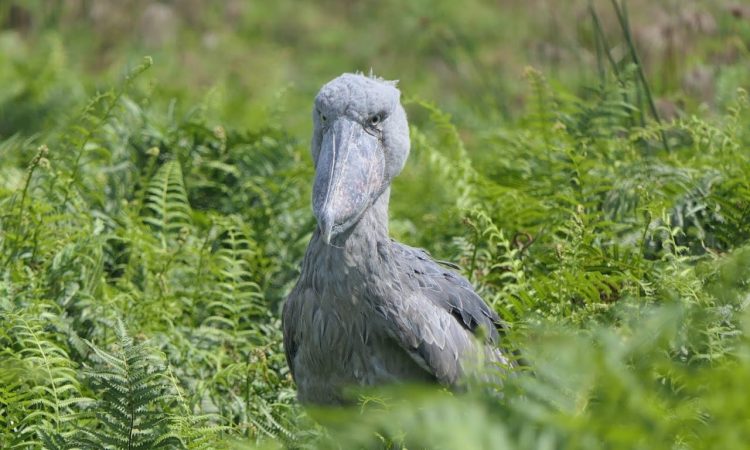
Africa is home to more than 2,500 species of birds, making it a birder's absolute paradise. Whether you are hunting for the prehistoric Shoebill in Uganda, tracking endemic raptors across the Serengeti, or spotting vibrant bee-eaters, the continent offers an immersive, humbling, and unforgettable connection with nature's feathered wonders.
5-days-uganda-bird-watching-safari-lake-victoria-shores-and-lake-mburo
1-day-perfect-mabamba-swamp-shoebill-stork-uganda-birding-safari
7-days-best-uganda-birding-safari-tour
9-days-classic-uganda-birding-safari-tour
10-days-best-uganda-birding-safari-and-wildlife-experience
30-days-best-uganda-birding-safari-extravaganza-and-wildlife-safari
What makes Africa one of the premier global destinations for birdwatching?
Africa stands out globally due to its extraordinary habitat diversity, housing over 2,500 recorded bird species across its biomes. From dense tropical rainforests and papyrus swamps to arid deserts and open savannahs, the continent provides critical breeding grounds and feeding corridors. The high density of endemics alongside mass seasonal migrations creates unmatched species richness. On a well-planned Africa birding safari, birders can observe iconic species like rollers, turacos, bee-eaters, and raptors living alongside classic big game, turning every game drive into a multi-layered wildlife observation experience.
How many bird species can travelers realistically expect to see across the continent?
While the African continent holds approximately 25% of the world's total bird species, individual yield depends on the itinerary length, region, and season. An intensive two-week trip through a species-dense country like Uganda or Tanzania can yield between 400 and 600 distinct species. Beginners on a general game drive typically log 150 to 250 species without targeted effort. Joining a specialized Africa birding safari guided by local ornithological experts maximizes sightings by visiting diverse micro-habitats ranging from highland forests to lowland wetlands.
Why is Uganda considered the ultimate location for spotting the Shoebill?
Uganda hosts over 1,090 recorded bird species, making it a cornerstone for African avian exploration. Its permanent papyrus wetlands—most notably Mabamba Swamp, the Lake Albert Delta, and Murchison Falls National Park—provide the ideal habitat for the prehistoric Shoebill (Balaeniceps rex). These large, solitary birds rely on shallow, oxygen-poor water channels to hunt lungfish and catfish. A specialized Africa birding safari in Mabamba utilizes traditional wooden canoes to glide quietly through narrow channels, allowing birders to view these rare, shoe-billed waders up close without disrupting their natural hunting routine.
What are Albertine Rift endemics and why are they so sought after?
The Albertine Rift represents the western branch of the East African Rift System, running through Uganda, Rwanda, Burundi, and eastern Democratic Republic of Congo. Isolated mountain ranges and ancient forest refugia have created over 24 restricted-range bird species found nowhere else on earth. Targets include the Regal Sunbird, Grauer's Broadbill, Rwenzori Turaco, and Archer's Robin-Chat. Enthusiasts planning an Africa birding safari specifically target high-altitude reserves like Bwindi Impenetrable Forest and Nyungwe National Park to tick off these rare montane specialists.
How does the Palearctic migratory season affect avian sightings?
Between November and April, millions of migratory birds travel thousands of miles from Europe and Asia to overwinter across sub-Saharan Africa. During this green season, local resident species display bright breeding plumage and active courtship behaviors, while migrant swallows, waders, warblers, and raptors swell total species counts. Though vegetation can be denser due to seasonal rains, an Africa birding safari scheduled during these months delivers peak species diversity, active vocalizations, and incredible dynamic displays across savannas and wetlands.
Which ecosystems in Tanzania produce the highest species counts?
Tanzania boasts over 1,156 recorded species spread across varied geological formations. Key hotspots include Lake Manyara for flamingos and pelicans, the open grasslands of the Serengeti for secretarybirds and larks, and the ancient Eastern Arc Mountains for isolated forest endemics. The alkaline soda lakes of the Rift Valley supply abundant algae that sustain vast waterfowl populations. Including these varied biomes on an Africa birding safari provides a full cross-section of East Africa’s resident raptors, ground dwellers, and forest specialists.
What makes Kruger National Park a prime location for raptor observation?
Kruger National Park in South Africa covers nearly two million hectares and features nearly 500 recorded bird species. The park is especially famous for its high concentration of diurnal and nocturnal birds of prey, including Martial Eagles, Bateleurs, Tawny Eagles, and Lappet-faced Vultures. Open savanna woodlands and tall riverine trees along the Sabie and Olifants rivers provide optimal nesting sites and perches. A well-planned Africa birding safari in Kruger allows travelers to observe predator-prey dynamics and carcass interactions among scavengers at close range.
How do water-based excursions in the Okavango Delta differ from land drives?
The Okavango Delta in Botswana creates an oasis of permanent channels, floodplains, and islands supporting over 450 species. Navigating these waters via silent traditional dugouts (mokoros) or small motorboats provides access to shy wetland specialists that land vehicles cannot reach. Highlights include the elusive Pel's Fishing Owl, African Skimmer, Wattled Crane, and Malachite Kingfisher. Incorporating water channels into an Africa birding safari delivers quiet, low-angle photographic angles and up-close views of papyrus-dwelling birds.
What specialized optics and equipment should birders pack for the field?
A successful birding trip requires reliable optics tailored to varying light conditions. Compact 8x42 or 10x42 waterproof binoculars deliver the best balance of field-of-view, magnification, and light transmission in thick forest canopy. A high-magnification spotting scope mounted on a sturdy tripod proves invaluable for wide open plains and wetland shores. Carrying field guides (or digital offline applications like Roberts or eBird), a headlamp for night excursions, and dry bags for gear protection ensures your Africa birding safari runs smoothly across changing weather conditions.
How do professional local birding guides improve sighting success?
Avian field identification relies heavily on call recognition (birding by ear), subtle plumage variations, and deep knowledge of micro-habitats. Local professional guides possess years of field experience and know exact territorial boundaries for skulking or rare species. Roads of Adventure Safaris utilizes expert resident spotters who can quickly locate hidden species that untrained eyes easily pass by. Partnering with a skilled specialist on your Africa birding safari saves valuable time and drastically increases your total checklist count.
What are the typical cost ranges for private versus group itineraries?
Costs for birding trips vary depending on accommodation comfort, transport type, and park fees. Budget group departures utilizing public campsites or basic lodges generally range from $200 to $350 per person per night. Customized private trips featuring specialized vehicles, expert local spotters, and mid-range to luxury forest lodges range from $500 to over $1,200 per night. Booking a structured Africa birding safari through a registered regional operator like Roads of Adventure Safaris ensures transparent pricing covering logistics, permits, and expert guide fees.
Why is Kibale National Park famous for tracking the Green-breasted Pitta?
Kibale National Park in western Uganda is a premier destination for forest birding, hosting over 375 species alongside its famous chimpanzee population. Its primary draw for serious twitchers is the elusive Green-breasted Pitta (Pitta reidii), a shy forest floor inhabitant known for its brief, explosive display calls at dawn during the rainy breeding season. Spotting this gem requires early morning walks through moist evergreen forest. Adding Kibale to an Africa birding safari itinerary gives birders their highest statistical chance of seeing this prized species.
How does weather influence bird behavior during the green season?
Rainy conditions trigger territorial signaling, nest building, and display flights among resident bird species. Insects proliferate during wet months, supplying an abundant food source for growing chicks and incoming winter migrants. While mid-day downpours require flexible schedules and waterproof gear covers, the overcast skies and high activity levels immediately following a shower create exceptional conditions. Planning an Africa birding safari during shoulder or wet seasons yields brilliant photographic light, active vocalizations, and unique behavioral observations.
What are the main operational differences between forest and savanna birding?
Savanna birding involves wide open vistas, long-distance spotting, and observing large ground birds or perched raptors from a 4x4 vehicle. In contrast, forest birding demands patient foot travel along trail networks, focusing on canopy levels and dense undergrowth. Forest species move quickly through mixed-species feeding flocks and often rely on subtle calls for identification. Balancing open plain game drives with guided forest walks during an Africa birding safari ensures exposure to both high-volume savanna views and rewarding forest tracking.
Which nocturnal bird species can travelers target during night drives?
Night game drives in permitted reserves unlock a completely different avian dimension. Spotlights reveal eyeshine from various owl species, including the Verreaux's Eagle-Owl, African Wood Owl, and Pearl-spotted Owlet. Ground-dwelling nightjars—such as the Square-tailed, Freckled, and Fiery-necked Nightjars—frequently rest on sandy tracks. Including night drives on an Africa birding safari provides opportunities to observe active hunting behaviors and hear nocturnal territorial calls that remain silent during daylight hours.
How do fixed bird hides enhance photography and behavioral observation?
Specially designed bird hides placed near permanent waterholes, riverbanks, or forest clearings allow observers to sit comfortably without altering animal behavior. Because birds view the hide structure as a neutral element in the landscape, they approach closely for drinking, bathing, and preening. Photographers benefit from eye-level shooting angles, stable support surfaces, and protection from harsh sunlight. Utilizing hides during an Africa birding safari yields natural, intimate portraits of shy species without causing environmental disturbance.
What conservation threats currently impact African avian populations?
African birds face significant pressures from habitat fragmentation, wetland drainage for agriculture, deforestation, climate shifts, and powerline collisions affecting large raptors and cranes. Conserving key areas like Important Bird and Biodiversity Areas (IBAs) requires sustainable funding generated directly by eco-tourism. Choosing an eco-conscious Africa birding safari contributes directly to habitat protection, park ranger salaries, and community conservation initiatives that safeguard critical habitats for future generations.
How can travelers participate in citizen science while on the trail?
Modern birders play an active role in conservation data collection by logging their field sightings on global digital platforms like eBird and iNaturalist. Recording location coordinates, species counts, breeding observations, and audio recordings provides ornithologists with real-time distribution maps and population trends. Submitting accurate checklists during an Africa birding safari helps monitoring agencies track migratory patterns, assess environmental impacts, and identify priority zones requiring formal protection.
What draws massive flocks of flamingos to the Great Rift Valley lakes?
Lakes Nakuru, Bogoria, and Elementaita in Kenya, alongside Lake Manyara and Lake Natron in Tanzania, are shallow alkaline soda lakes. These saline environments support high concentrations of spirulina algae and microscopic brine shrimp. Lesser Flamingos feed on the blue-green algae, while Greater Flamingos filter bottom sediments for small crustaceans. Visiting these soda lakes on an Africa birding safari presents one of nature's great visual spectacles—pink ribbons of thousands of flamingos feeding along the water's edge.
What species make pelagic birding trips off the Cape coastline so popular?
The nutrient-rich waters surrounding South Africa's southern coastline—where the Atlantic and Indian oceans meet—create world-class conditions for seabirds. Day trips departing from Cape Town target open-ocean species that follow commercial fishing trawlers. Highlight species include multiple albatrosses (Shy, Black-browed, and Wandering), petrels, shearwaters, and skuas. Combining offshore pelagic excursions with land-based park drives creates a comprehensive Africa birding safari covering both marine and terrestrial biomes.
How do hornbills and seed-dispersing birds maintain forest health?
Hornbills, turacos, barbets, and bulbuls serve as crucial forest gardeners across sub-Saharan ecosystems. By consuming wild fruits and dispersing seeds miles away from parent trees, these birds maintain plant diversity and aid natural forest regeneration. Observing seed-dispersal behaviors during an Africa birding safari highlights the intricate ecological links between avian survival and overall forest ecosystem health.
What makes Bwindi Impenetrable Forest a premier montane birding destination?
Bwindi Impenetrable National Park in Uganda ranges from 1,160 to 2,607 meters in elevation, creating diverse micro-climates across its UNESCO World Heritage site. It holds over 350 bird species, including 23 of Uganda's 24 Albertine Rift endemics. Prime sectors like Ruhija provide access to rare species like Grauer's Rush Warbler and Shelley's Crimsonwing. Roads of Adventure Safaris frequently integrates Bwindi into custom itineraries, allowing travelers on an Africa birding safari to combine high-altitude birding with gorilla trekking.
How do private concessions compare to public national parks for birding?
Private concessions border major national parks but restrict vehicle numbers and visitor access. This low-density setup allows off-road tracking where permitted, extended stationary observations, and flexible night drives that public parks often prohibit. Guides in private reserves can turn off engines for quiet listening sessions without traffic interference. Incorporating private concession stays into an Africa birding safari maximizes quiet observation time and enhances photographic opportunities.
What health and safety precautions should birders take in tropical climates?
Field birding often involves walking through long grass, marsh edges, and humid forest trails. Travelers should wear lightweight, long-sleeved clothing in neutral tones (khaki, beige, or green) to protect against insects, thorns, and sun exposure. Carrying insect repellent, staying hydrated, taking recommended malaria prophylactics, and wearing sturdy waterproof boots ensures a safe experience. Following your guide's safety briefing on an Africa birding safari guarantees smooth operations in areas inhabited by large wildlife.
What is the ethical protocol for using audio playback to locate birds?
Audio playback—playing recorded bird calls to draw out shy species—is a tool that requires strict restraint. Overuse causes unnecessary stress, disrupts natural feeding or nesting routines, and exposes birds to predators. Ethical guides restrict playback to short bursts, avoid playing calls near active nests, and refrain from using it for near-threatened or heavily targeted endemics. Adhering to ethical field protocols on an Africa birding safari keeps bird welfare as the top priority.
What makes the Secretarybird such a distinct target on savanna plains?
The Secretarybird (Sagittarius serpentarius) is a uniquely adapted raptor endemic to open grasslands. Standing over four feet tall on long leg stalks, it hunts on foot rather than from the air, stomping venomous snakes, lizards, and small mammals with powerful terrestrial strikes. Watching a Secretarybird stalk across open grasslands is a memorable highlight on an Africa birding safari, showcasing one of the continent's most specialized terrestrial predators.
How does combining primate tracking with birding create a complete trip?
Combining mountain gorilla or chimpanzee tracking with targeted birding provides a rich, multi-faceted rainforest experience. Locations like Bwindi and Kibale in Uganda or Nyungwe in Rwanda host both habituated primate groups and dense concentrations of forest endemics. Roads of Adventure Safaris designs balanced schedules where primate walks occur during optimal morning hours, followed by afternoon birding along forest edges and river trails on a seamless Africa birding safari.
How do local community guides support habitat preservation?
Local community guides living adjacent to national parks bring unmatched local knowledge to every excursion. Eco-tourism generates direct revenue for local households, turning former poachers or farmers into dedicated conservation stewards. When birders hire local site specialists—such as the community boatman at Mabamba Swamp—their spending directly incentivizes wetland preservation. Supporting community-led initiatives on an Africa birding safari ensures long-term protection for vital habitats.
How should beginner birders prepare for fast-paced forest birding?
Forest birding can initially feel challenging due to dense foliage, shadowy light, and fast-moving mixed flocks. Beginners should practice quick binocular alignment and focus techniques at home before departing. Learning common bird family characteristics (such as distinguishing sunbirds from flycatchers) helps narrow down options quickly in the field. Working closely with an experienced guide on an Africa birding safari builds confidence and speeds up identification skills in complex forest biomes.
How do travelers choose an ethical local tour operator for their trip?
Selecting a reputable tour operator ensures high-quality logistics, expert guides, and responsible environmental practices. Look for licensed local operators registered with national tourism boards and guide associations. Roads of Adventure Safaris provides dedicated ground handling, customized 4x4 vehicles, and experienced ornithological guides tailored to private or group preferences. Partnering with a proven local operator guarantees a safe, well-organized, and highly rewarding Africa birding safari.
Booking Africa birding safari with us Roads of Adventure safaris
Roads of Adventure Safaris offers tailored birding itineraries across East Africa's premier avian habitats. To secure your specialized bird-watching expedition, you can coordinate your booking through our direct planning and reservation channels
