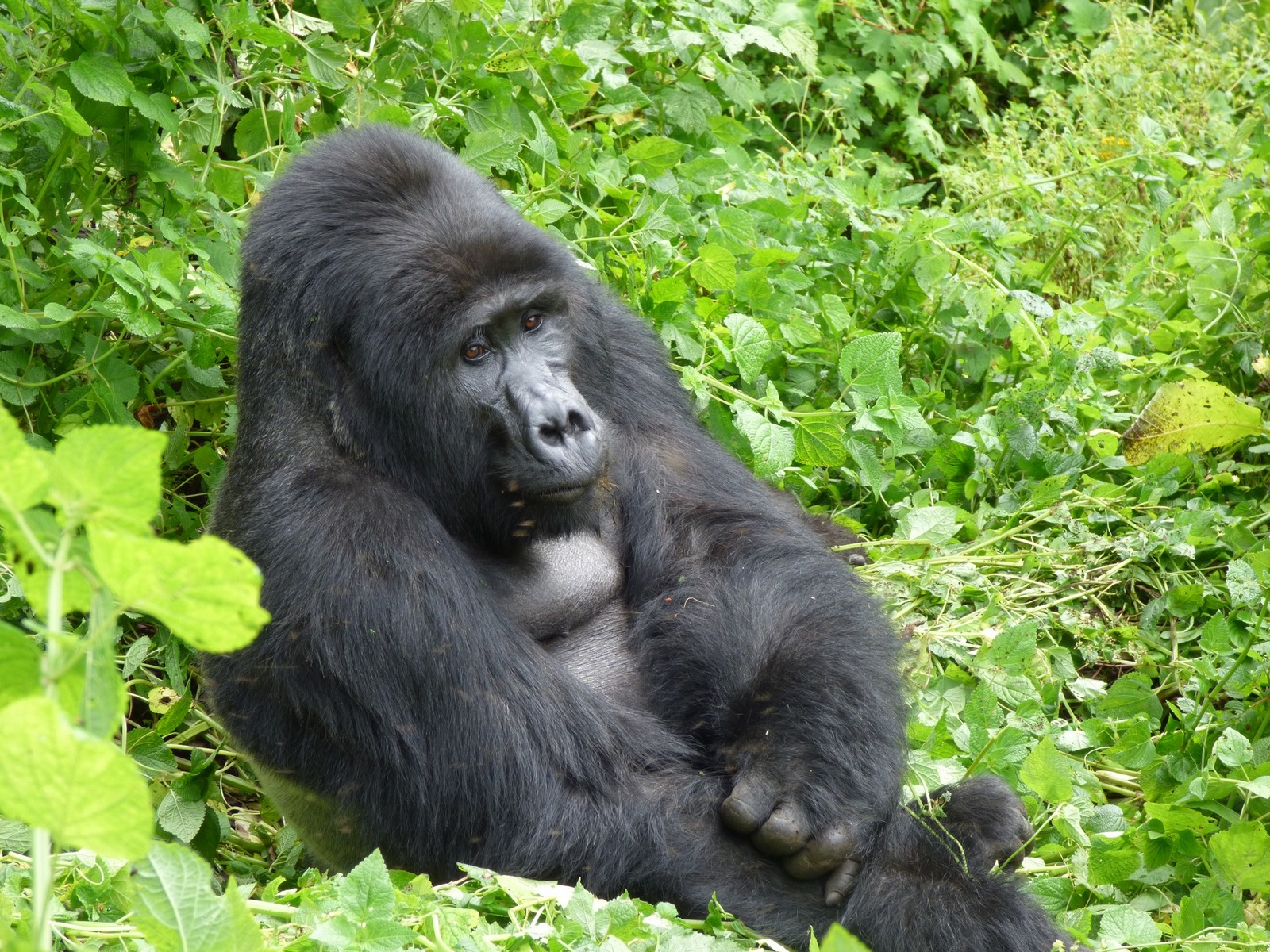
This 9 Days Rwanda Uganda safari, gorilla trekking from Kigali presents an unforgettable journey through two East African nations. Starting in Kigali, the route dives straight into the dense jungles of Bwindi Impenetrable National Park and Volcanoes National Park for prime primate encounters. Travelers will experience wildlife drives and quiet forest walks during this 9 Days Rwanda Uganda safari, gorilla trekking from Kigali. Every stage of the 9 Days Rwanda Uganda safari, gorilla trekking from Kigali is meticulously planned to showcase natural habitats. Local expert guides lead all treks within the 9 Days Rwanda Uganda safari, gorilla trekking from Kigali to ensure safety. Participants on the 9 Days Rwanda Uganda safari, gorilla trekking from Kigali get to see mountain gorillas up close. This 9 Days Rwanda Uganda safari, gorilla trekking from Kigali ends back in the city, leaving visitors with lasting memories of the 9 Days Rwanda Uganda safari, gorilla trekking from Kigali.
Tour highlights for 9 Days Rwanda Uganda safari, gorilla trekking from Kigali
- Kigali genocide memorial tour
- Scenic rolling hills drive
- Volcanoes national park arrival
- Golden monkey forest trek
- Iby’Iwacu cultural village dance
- Cyanika border crossing journey
- Lake Bunyonyi canoe ride
- Bwindi forest gorilla trek
- One hour gorilla encounter
- Ishasha tree climbing lions
- Kasenyi savanna game drive
- Kazinga channel boat cruise
- Kibale forest chimpanzee tracking
- Bigodi wetland sanctuary walk
- Fort Portal tea plantations
- Kigali craft market shopping
- Rwanda Uganda border return
Day 1: Arrival and Transfer
Arrival at Kigali International Airport marks the beginning of your journey. Your guide will meet you and provide a brief overview of the travel plans. You will take a short city tour, visiting historical sites like the Genocide Memorial to learn about local heritage. After the tour, the drive proceeds toward the northern border, heading into the mountains. The route winds through green hills and tea plantations, offering views of the countryside. You will stop for lunch along the way, enjoying fresh local produce. Crossing the border into Uganda leads you directly to the edge of the forest. Check into your lodge for dinner and rest. The evening provides time to prepare gear for the following morning. The quiet surroundings set the tone for the entire journey.
Day 2: Bwindi Impenetrable National Park
Morning begins early with a hot breakfast before proceeding to the park headquarters. Rangers provide a detailed safety briefing regarding the forest rules and the gorilla families. The group will then enter the thick vegetation, led by an armed guide and trackers. Moving through the dense undergrowth takes physical effort, as you navigate vines and steep terrain. Trackers follow fresh signs, such as broken branches and nesting sites, to locate the animals. Upon finding the habituated group, visitors spend exactly one hour observing these large primates in their natural habitat. You can watch them feed, groom, and interact with the young. Afterward, the group returns to the starting point to receive certificates of completion. The afternoon is reserved for resting at the lodge. Dinner is served as darkness falls over the jungle.
Day 3: Second Trekking Experience
A second morning in the forest offers another opportunity to locate a different gorilla family. The procedure remains similar, with an early breakfast followed by registration and a new briefing. Guides take a different path, allowing for varied scenery and new observations within the ecosystem. The terrain might challenge you, but the reward is spending another hour with these gentle giants. Photographers have more time to capture clear shots without rushing. After the encounter, the team heads back to the lodge for a warm lunch. The afternoon allows time for a community walk or visiting the local Batwa people to learn about traditional forest life. Dinner concludes the day, accompanied by the sounds of the wilderness. Preparation for the border crossing back to Rwanda takes place in the evening.
Day 4: Border Crossing to Volcanoes National Park
The morning involves packing up and departing from Bwindi for the journey back to Rwanda. The drive offers scenic views of changing landscapes, moving from dense forests to agricultural terraces. Arriving at the border requires standard passport checks and processing. Once inside Rwanda, the road leads straight to Musanze, a town situated at the base of the Virunga Mountains. The afternoon provides a chance to relax at a local cafe or visit the Dian Fossey Fund museum. Dinner is served at your accommodation, which often features views of the towering volcanic peaks. Resting well is crucial, as the following day requires significant physical activity in high-altitude environments. The cool mountain air ensures a comfortable night.
Day 5: Golden Monkey Tracking
Dawn breaks with cool temperatures around the mountain bases. After breakfast, you will report to the park office for a briefing on golden monkey behavior. These active primates inhabit the bamboo zone on the lower slopes of the volcanoes. The trek involves hiking through bright, green bamboo forests where sunlight filters through the thin stalks. Golden monkeys are highly energetic, leaping between branches and foraging for food on the forest floor. Visitors are permitted one hour to watch and photograph their bright coats and quick movements. Returning to the lodge takes the better part of the afternoon. Lunch is followed by an optional tour of the local twin lakes, Ruhondo and Burera, where boat rides offer peaceful views of the water. Dinner and overnight stay are provided at the lodge.
Day 6: Dian Fossey Tomb Hike
Today’s activity focuses on the historical conservation efforts in the region. The hike leads to the Karisoke Research Center ruins and the gravesite of Dian Fossey. Trekking up the slopes between Mount Karisimbi and Mount Bisoke takes several hours. The trail passes through different vegetation zones, from Hagenia woodland to moorland. Guides share stories about the early days of primate research and the ongoing protection work. Reaching the site gives visitors a deeper connection to the conservation history of the mountain gorillas. The descent requires careful footing on the volcanic soil. Back at the lodge, the afternoon is free for leisure. You can review photos, read a book, or chat with other travelers about their experiences.
Day 7: Mount Bisoke Hike
This day involves a full-day hike to the summit of Mount Bisoke, an active volcano with a crater lake at the top. The climb begins early, passing through thick stinging nettles and dense forest vegetation. As elevation increases, the air becomes thinner and the surrounding views expand. Reaching the rim of the crater takes several hours, depending on individual pace. At the top, hikers can look down into the deep crater lake and take panoramic photos of the entire Virunga range. The descent is steep and requires attention to avoid slipping on loose gravel. Returning to the base usually takes the entire afternoon. Once back at the lodge, a hot shower and a large meal help restore energy levels for the final days of the trip.
Day 8: Cultural Village Tour
The final full day in the mountains allows for a slower pace and cultural immersion. The morning features a visit to the Iby'iwacu Cultural Village, managed by former poachers who now protect the environment. Here, locals demonstrate traditional practices, including banana beer brewing, grinding grain using manual stones, and archery. Visitors can participate in these activities and watch traditional music and dance performances. This engagement provides insight into Rwandan traditions and the local way of life. The afternoon allows for packing and relaxing, with time to purchase local crafts and souvenirs. Dinner provides a final opportunity to taste Rwandan cuisine. The quiet evening offers a chance to reflect on the mountain environment and the diverse wildlife encountered during the trip.
Day 9: Departure from Kigali
The final morning begins with a relaxed breakfast before the drive back to Kigali. The journey takes about two hours, passing through rural settlements and terraced farming hills. Upon arrival in the city, there is time to visit local markets for last-minute shopping. You can also explore local art galleries showcasing paintings and crafts from East Africa. Lunch is served at a popular city restaurant, featuring international dishes and local staples. Afterward, your driver transfers you to the airport in time for your departure flight. This marks the end of the journey through the mountain habitats. The experience leaves visitors with a comprehensive understanding of the natural landscapes and conservation efforts in the region.
1. Is it possible to do a 9 Days Rwanda Uganda safari, gorilla trekking from Kigali?
Embarking on a 9-day cross-border safari that begins in Kigali and winds through Uganda's top national parks is not only completely possible, but it is also one of the most logistically brilliant routes in East African travel. The geographic proximity of Kigali International Airport (KGL) to southwestern Uganda completely bypasses the grueling, bumpy 9-to-10-hour road journey required if you were to clear customs in Entebbe and drive southwest across Uganda.
By starting your journey in Rwanda’s clean and vibrant capital, you can enjoy a smooth, 4-to-5-hour scenic drive north through rolling terraced hills before crossing into Uganda via the Cyanika or Katuna border posts. This itinerary perfectly blends the world-class, seamless urban infrastructure of Rwanda with the sheer biological diversity and sprawling savannahs of Uganda.
Furthermore, designing a 9-day framework allows you to absorb the best of both worlds without feeling rushed. You have the freedom to curate a highly diverse itinerary that doesn't just focus on primates, but gives you a rich taste of classic African savannah systems, crater lake regions, and deeply moving cultural encounters.
Your tour operator handles the vehicle documentation, and because the route is a well-established tourism corridor, border officials are highly accustomed to safari vehicles. You essentially land in a modern hub, explore Rwanda’s compelling history, and transition smoothly into the wilder, deeper heart of Uganda's rainforests and game channels. It provides an efficient, stress-free, and incredibly scenic introduction to the region.
2. What are the key destinations included in this 9-day itinerary?
A classic 9-day itinerary starting from Kigali is meticulously structured to maximize wildlife diversity while keeping drive times manageable. After an initial pickup and an insightful city tour of Kigali, the journey typically snakes northward. The first major wilderness destination is often Volcanoes National Park in Rwanda, or travelers cross directly into Uganda’s southwestern cornerstone: Bwindi Impenetrable National Park. Bwindi is an ancient, dramatic primordial rainforest that holds roughly half of the world's remaining wild mountain gorilla population, split across distinct sectors like Rushaga, Ruhija, Buhoma, and Nkuringo.
Moving north from the thick gorilla forests, the itinerary transitions beautifully into the open rift valley plains of Queen Elizabeth National Park. This park is famous for its varied ecosystems, including the Ishasha sector—famed for its rare, tree-climbing lions that lounge lazily in the sprawling branches of fig trees—and the Kasenyi plains, teeming with elegant Uganda kobs, elephants, and cape buffaloes.
Continuing further north, the journey leads into Kibale Forest National Park, globally recognized as the "Primate Capital of the World." Kibale is home to an astonishing 13 distinct primate species, highlighted by a dense, habituated population of wild chimpanzees.
Finally, as the loop curves back down toward the border or concludes, many itineraries weave in Lake Bunyonyi. Known as the place of many little birds, Bunyonyi is a spectacularly deep, island-studded freshwater lake framed by terraced hillsides, offering the perfect, peaceful setting for relaxation, canoeing, and reflection after days of intense, demanding jungle trekking.
3. Do I need a specific visa for a 9 Days Rwanda Uganda safari, gorilla trekking from Kigali?
Navigating immigration for a multi-country African safari used to mean stacking separate, expensive visas, but this cross-border route is seamlessly facilitated by a single document: the East Africa Tourist Visa (EATV). This joint visa initiative is a game-changer for regional travel, allowing tourists to enter the Republic of Kenya, the Republic of Rwanda, and the Republic of Uganda using a single entry permit.
The most critical operational rule of the East Africa Tourist Visa is that you must apply through the immigration portal of the country where your journey begins. Because this specific 9-day safari originates in Kigali, you must apply online through Rwanda's official immigration website (Irembo) or select it upon arrival at Kigali International Airport.
The visa costs $100 USD, is valid for 90 consecutive days, and grants you multiple-entry access between the participating nations. This means you can freely cross from Rwanda into Uganda, explore the parks, and even return to Kigali for your departure flight without your visa expiring or becoming invalid.
However, be aware that the visa automatically expires the moment you cross outside the borders of these three specific countries (for example, if you pop into the Democratic Republic of Congo or Tanzania). Additionally, ensure that your passport has at least six months of validity remaining from your date of entry and contains at least two blank pages. Having a digital or printed copy of your EATV confirmation, alongside your yellow fever vaccination certificate, ensures that your border crossings at Katuna or Cyanika take only a matter of minutes.
4. How much is a gorilla trekking permit for this safari?
The gorilla trekking permit is the single most significant fixed cost of your entire safari, and the pricing structure highlights a stark strategic contrast between the tourism models of Rwanda and Uganda.
In Rwanda, the government has consciously positioned Volcanoes National Park as an ultra-premium, high-end eco-tourism destination. Consequently, a standard mountain gorilla trekking permit in Rwanda costs $1,500 USD per person for international non-residents. This premium fee heavily funds the surrounding communities and intensive, round-the-clock anti-poaching and veterinary protection for the Volcanoes gorilla families.
Across the border in Uganda, the Uganda Wildlife Authority (UWA) offers a highly competitive option. A standard gorilla trekking permit in Uganda is priced at $800 USD per person for international non-residents. Furthermore, Uganda has introduced low-season discounted permits priced at $600 USD specifically for the months of April, May, and November, offering phenomenal value for budget-conscious or flexible travelers.
Country
Peak Season Permit (USD)
Low Season Permit (USD)
Primary Trekking Location
Rwanda
$1,500
$1,000 (With strict park-combination rules)
Volcanoes National Park
Uganda
$800
$600 (Applicable in April, May, & November)
Bwindi Impenetrable & Mgahinga
By landing in Kigali and trekking in Uganda's Bwindi Forest, you effectively save $700 to $900 USD per permit while retaining the logistical ease of the short drive from Kigali. Uganda also uniquely offers a "Gorilla Habituation Experience" for $1,500 USD, which grants you an immersive four hours with a semi-habituated family alongside researchers, rather than the standard one-hour viewing window.
5. How long does the actual gorilla trekking take?
Gorilla trekking is a dynamic, unpredictable wilderness adventure rather than a curated zoo walk, and the total duration can range anywhere from 30 minutes to over 7 hours. The exact time depends entirely on the location, movement, and daily behavior of the specific, habituated gorilla family you are assigned to track.
Every morning, team park trackers head into the dense rainforests at the crack of dawn to locate the exact spot where each gorilla group nested the previous night. They then follow the trampled vegetation and feeding trails to track their real-time movements.
When you arrive at the park headquarters for your morning briefing, you are placed into a small group of up to eight people. Park rangers intentionally gauge the visible physical fitness of the travelers before assigning groups; those with mobility challenges are typically assigned to gorilla families known to stay closer to the park boundaries, while highly fit hikers are assigned to families that have moved deep into the high-altitude interior.
The hike itself involves navigating through thick undergrowth, tangled vines, slippery mud, and steep ridges. Once your ranger guide makes visual contact with the gorilla family, the clock officially begins: you are granted exactly one hour to stand quietly in their presence. This strict time limit is an international conservation standard designed to minimize human stress on the primates and lower the risk of transmitting human pathogens to these highly vulnerable, critically endangered apes.
6. Do I need a specific permit to cross the border?
When undertaking a cross-border safari between Rwanda and Uganda, you do not need to purchase or secure a specific, standalone document called a "border permit." Instead, your legal entry and exit are entirely governed by your personal travel documentation and the vehicle permits managed by your tour operator.
For you as an individual traveler, the absolute essentials at the immigration desks are a valid passport and your pre-arranged East Africa Tourist Visa. Additionally, border officials will ask to see your valid Yellow Fever Vaccination Certificate, which is a mandatory health requirement for cross-border transit between these two nations.
From a logistics standpoint, the border crossing involves pulling up to the customs station (usually Cyanika if you are heading to the southern sectors of Bwindi like Rushaga, or Katuna if you are heading toward the Eastern sectors like Ruhija). You will disembark from your safari vehicle, walk through the immigration hall to stamp out of Rwanda, walk across the designated border zone, and stamp into Uganda.
While you are managing your passports, your professional safari guide handles the complex vehicle logistics. Safari vehicles crossing international borders must carry valid cross-border logbooks, international insurance (such as the COMESA yellow card), and commercial tourist vehicle licenses. Because these administrative steps require specialized knowledge and local registration, it is highly discouraged to attempt this as a self-drive trip; relying on an established tour operator ensures that the vehicle clearing process is handled seamlessly while you wait in the immigration lounge.
7. What is the physical fitness requirement for a 9 Days Rwanda Uganda safari, gorilla trekking from Kigali?
Gorilla trekking is an active, physically demanding expedition that requires a reasonable, baseline level of cardiovascular fitness and steady balance. You will be hiking at relatively high altitudes—often ranging between 2,000 and 3,500 meters (roughly 6,500 to 11,500 feet) above sea level—where the air is noticeably thinner. The terrain inside Bwindi Impenetrable Forest and Volcanoes National Park lives up to its name; there are no paved walkways or clear, flat trails. Instead, you will be walking through dense, tangled jungle vegetation, stepping over massive slick roots, and climbing steep, muddy slopes that can become incredibly slick during sudden tropical downpours.
Despite these challenges, you do not need to be an elite marathon runner or an expert mountaineer to participate. The morning briefings are designed specifically to sort trackers by physical capability. If you communicate openly with your guide about your physical limits, knee issues, or respiratory conditions, they will match you with a closer gorilla group.
Furthermore, you can utilize invaluable local support systems. At the trailhead, you can hire a local porter for a standard fee of $15 to $20 USD. These porters are extraordinarily strong individuals from the local community who will carry your heavy camera backpacks and physically pull or steady you on the steep, muddy declines. For travelers with severe mobility impairments or physical disabilities, parks even offer a specialized "African helicopter" service—a securely constructed sedan chair or stretcher woven from local materials, allowing a team of porters to smoothly carry you through the jungle forest to ensure no one misses this bucket-list experience.
8. Can I use a Ugandan gorilla permit to trek in Rwanda?
No, gorilla permits are completely non-transferable, non-interchangeable, and strictly country-specific. A gorilla permit purchased through the Uganda Wildlife Authority (UWA) can only be deployed within Uganda’s designated borders—specifically inside Bwindi Impenetrable National Park or Mgahinga Gorilla National Park. Conversely, a permit issued by the Rwanda Development Board (RDB) is strictly valid only for Volcanoes National Park.
This strict separation is rooted in the independent conservation, legal, and financial structures of the two sovereign nations. Each country manages its own wildlife conservation funds, sets its own independent pricing tiers, and allocates tracking slots based strictly on the specific number of habituated gorilla families residing within its national boundaries.
Because demand for these permits is incredibly high and daily visitor numbers are capped at eight people per gorilla family to protect primate health, each permit is printed with your exact passport details, full name, and your designated tracking date. You cannot arrive at the briefing headquarters in Rwanda's Kinigi office and present a Ugandan permit voucher, nor can you swap permits with another traveler at the last minute.
If your 9-day itinerary includes trekking in both countries to compare the experiences, your tour operator must purchase two completely separate permits for you well in advance. Misunderstanding this rule can lead to heartbreaking disruptions to your travel plans, making it imperative to triple-check that your tour vouchers precisely match the specific park locations outlined in your master daily itinerary.
9. What should I pack for a 9 Days Rwanda Uganda safari, gorilla trekking from Kigali?
Packing for a combined primate and savannah safari requires a careful balance between rugged, protective jungle gear and lightweight, breathable clothing for open-vehicle game drives. For the intense days of gorilla and chimpanzee trekking, your clothing choices should focus heavily on skin protection against stinging nettles, sharp thorns, and biting insects.
The Ultimate Trekking Packing List:
- Sturdy, broken-in hiking boots with deep treading and excellent ankle support.
- Long-sleeved shirts and thick trousers (lightweight safari layers work best; avoid bright blues and blacks, which actively attract biting tsetse flies).
- Thick hiking socks that you can explicitly tuck your trousers into to prevent safari ants from crawling up your legs.
- Heavy-duty leather gardening gloves, which allow you to safely grab onto thorny branches or wet vines when scrambling up slippery mud tracks.
- A lightweight, breathable, waterproof rain poncho or shell jacket, as tropical downpours can happen instantly, even during the designated dry seasons.
For your classic savannah game drives in Queen Elizabeth National Park, pack neutral, earth-toned clothing (khakis, greens, and tans) to blend into the landscape. Do not forget a wide-brimmed sun hat, high-UV sunglasses, and premium, DEET-based insect repellent.
For your electronics, bring a high-quality camera equipped with a versatile telephoto zoom lens (such as a 70-200mm or 100-400mm) to capture stunning close-ups from the safety zones. You must turn off your camera's flash completely, as sudden flashes of artificial light can startle the gorillas and trigger an aggressive defensive charge from a silverback. Finally, pack a durable dry-bag to protect your delicate camera bodies and lenses from moisture.
10. Is it safe to do this cross-border safari?
Yes, undertaking a cross-border safari between Rwanda and Uganda is exceptionally safe, and the entire region stands as one of the most stable, secure, and highly managed tourism corridors on the African continent. Both nations recognize that international tourism is a critical pillar of their national economies and conservation funding, prompting them to invest heavily in specialized infrastructure to protect international travelers and wildlife habitats.
The national parks, including Volcanoes, Bwindi, Kibale, and Queen Elizabeth, are actively managed and heavily patrolled by the Uganda Wildlife Authority (UWA) and Rwanda Development Board (RDB) park rangers. These rangers are highly trained, disciplined, and well-armed professionals who live within the park sectors. They conduct daily anti-poaching sweeps, track the movements of wild animals, and accompany every single tourist group from the moment you step off the trailhead until you return to your vehicle.
Furthermore, the tourism sectors work in close coordination with specialized tourism police forces and national military units to maintain absolute security across the borders. The border crossings at Cyanika and Katuna are peaceful, modern, and highly organized commercial hubs.
When traveling with a reputable local tour operator, you also gain the security of a knowledgeable local guide who is in constant radio communication with park bases, monitors local travel alerts in real time, and utilizes exceptionally well-maintained 4x4 safari land cruisers. By following standard international travel precautions—such as using hotel safes for your valuables and listening closely to your ranger's safety instructions during wildlife encounters—you can look forward to a worry-free journey.
11. What is the best time of year for a 9 Days Rwanda Uganda safari, gorilla trekking from Kigali?
While gorilla trekking and wildlife viewing can be successfully conducted year-round, the absolute best times to embark on this 9-day cross-border safari are during the region's two distinct dry seasons: June to September (the long dry season) and December to February (the short dry season).
During these optimal windows, rainfall is significantly reduced, which transforms the entire experience. The hiking trails inside Bwindi's impenetrable rainforest and Kibale's dense canopy are far less muddy, allowing you to maintain firm footing on steep mountain inclines. Furthermore, the thick tropical undergrowth naturally dies back a bit, providing clearer sightlines for wildlife photography.
In savannah parks like Queen Elizabeth National Park, the dry season changes animal behavior to your advantage. As smaller watering holes throughout the bush dry up completely, massive herds of elephants, cape buffaloes, and prides of lions are forced to congregate around permanent water sources, such as the shores of the Kazinga Channel. This makes wildlife tracking incredibly predictable and highly rewarding during scheduled boat cruises and morning game drives.
The alternative months—April, May, and November—constitute the rainy seasons. While the rains can make tracking more physically exhausting due to deep mud and slick hillsides, traveling during these shoulder months has unique perks. The landscapes are lush and vibrant emerald green, the parks are delightfully uncrowded, and you can take advantage of Uganda’s discounted $600 USD gorilla permits alongside significantly reduced rates at luxury eco-lodges.
12. Can children go gorilla trekking on this safari?
No, children under a certain age cannot participate in primate tracking; both Rwanda and Uganda strictly enforce a minimum age limit of 15 years old for mountain gorilla trekking and wild chimpanzee tracking. This policy is an unyielding, non-negotiable international conservation law designed with two primary priorities in mind: safety and primate health.
From a health standpoint, mountain gorillas and chimpanzees share approximately 98% of their DNA structure with human beings, making them highly susceptible to human viruses and bacterial infections. Children frequently carry common childhood illnesses, cold viruses, and airborne flu strains that their immune systems can easily manage, but which could easily decimate an entire wild gorilla family lacking those specific antibodies.
From a safety and behavioral standpoint, the jungle environment demands absolute emotional control and physical stamina. The treks can last for many hours in hot, humid, and muddy conditions that can easily overwhelm a young child. More importantly, when you finally encounter a gorilla family, you are standing just meters away from massive, powerful wild animals. If a dominant silverback gorilla decides to beat its chest, vocalize loudly, or perform a mock charge to display its dominance, visitors must remain completely still, quiet, and drop their gaze as instructed by the rangers. A young child's natural, instinctual reaction to panic, scream, or run away could be misinterpreted by a protective silverback as a direct threat or a challenge, potentially triggering a dangerous situation.
13. What happens if I get sick and cannot trek?
Because mountain gorillas share an incredibly close genetic makeup with humans, they are highly vulnerable to human respiratory illnesses, flus, common colds, and stomach viruses. If you wake up on the morning of your scheduled trek exhibiting visible symptoms of a communicable illness—such as persistent coughing, heavy sneezing, a severe runny nose, or a fever—the park authorities reserve the absolute right to cancel your trek to protect the gorillas from cross-infection.
If you are disqualified from tracking due to illness, the financial refund and cancellation policies differ notably between the two nations' wildlife authorities:
- Rwanda (Rwanda Development Board): Rwanda enforces a highly supportive medical refund policy. If you are officially declared unfit to trek by a certified medical doctor at the park headquarters, the RDB will typically offer a 50% refund of your permit fee, or work closely with your tour operator to reschedule your tracking date to a later window once you have recovered, provided tracking slots are available.
- Uganda (Uganda Wildlife Authority): Uganda’s standard policy states that permits are non-refundable for late cancellations. However, if an official medical assessment proves you cannot trek due to a sudden communicable disease, UWA may review the case to offer a partial refund or allow a permit reschedule to an alternate date within the high-season structure, though this is treated on a case-by-case basis and requires formal medical documentation.
To mitigate these heavy financial risks, it is highly recommended to purchase comprehensive travel insurance that explicitly covers safari cancellations and primate permit forfeitures due to medical emergencies.
14. What are the accommodation options on this safari?
The accommodation network along the Kigali-to-Uganda safari loop is world-class, offering exceptional options across luxury, mid-range, and budget tiers to suit your travel style.
For travelers seeking high-end luxury, the properties are spectacular architectural marvels built out of local stone and volcanic rock, designed to offer sweeping panoramic views while leaving a minimal ecological footprint. In Rwanda, iconic lodges like the Volcanoes Virunga Lodge offer premium clifftop villas looking out over the twin lakes and the dramatic Virunga chain. Across the border in Uganda, luxury properties like Sanctuary Gorilla Forest Camp, Bwindi Lodge, and Clouds Mountain Gorilla Lodge provide private chalets, personal butler services, gourmet dining, and open fireplaces to warm up during chilly rainforest nights.
If you prefer mid-range comfort, options like Silverback Lodge, Engagi Lodge, or Bakiga Lodge offer beautifully designed, comfortable en-suite cottages, hot showers, stunning forest views, and exceptional local hospitality at a fraction of the luxury cost.
For budget-conscious travelers, there are numerous clean, highly secure community-run eco-camps, safari tents, and locally owned guesthouses located right outside the main park gates. These properties provide simple, comfortable beds, fresh local meals, and basic amenities, ensuring you are rested and perfectly positioned for your early morning trek. No matter which tier you choose, almost all properties cater wonderfully to dietary restrictions, offer complimentary boot-cleaning services after muddy jungle hikes, and feature central lounge areas where you can swap stories with fellow travelers by the fire.
15. What other activities can be done on this 9-day itinerary?
While standing face-to-face with a 400-pound silverback gorilla is undeniably the crowning jewel of this 9-day journey, the itinerary is brilliantly balanced by a rich tapestry of diverse landscapes and unique wildlife encounters.
In Queen Elizabeth National Park, your days will include traditional savannah game drives to spot leopards, elephants, and massive herds of buffaloes. A standout highlight here is a boat cruise along the Kazinga Channel, a natural waterway connecting Lake Edward and Lake George. This cruise offers a front-row seat to one of the world's highest concentrations of hippos, massive Nile crocodiles basking on the banks, and an array of colorful waterbirds.
Heading into Kibale Forest, you can pair your standard chimpanzee tracking with a Bigodi Wetland Sanctuary swamp walk, a community-run boardwalk trail that is a paradise for birdwatchers and offers regular sightings of rare primates like the Great Blue Turaco and the photogenic Red Colobus monkey.
For a deeper connection with the local people, you can participate in a guided Batwa cultural trail experience in Bwindi. The Batwa pygmy people were the original, indigenous hunter-gatherer inhabitants of the rainforest before it was gazetted as a national park. Walking through the forest with Batwa elders allows you to see how they used traditional bows and arrows, harvested wild honey, and utilized forest plants for medicine. Finally, you can unwind with a peaceful dugout canoe ride or a swimming excursion in the bilharzia-free, island-dotted waters of Lake Bunyonyi.
Booking 9 Days Rwanda Uganda safari, gorilla trekking from Kigali with us Roads of Adventure safaris
Booking a 9-day Rwanda and Uganda safari with Roads of Adventure Safaris is the perfect way to combine iconic primate tracking and wildlife viewing. Starting in Kigali, this cross-border adventure typically features gorilla trekking in Volcanoes National Park (Rwanda) and Bwindi Impenetrable National Park (Uganda), alongside chimpanzee tracking and savanna game drives.
