This premier 9-day cross-border fly-in safari seamlessly connects the misty rainforests of Rwanda with the classic savannah plains of Tanzania. Designed for travelers seeking maximum wildlife exposure, this fast-paced itinerary balances the intimate tracking of endangered mountain gorillas in Volcanoes National Park with expansive game drives across Tanzania’s legendary northern safari circuit. By utilizing regional flights and local bush planes, you bypass grueling overland transit to unlock the region's best habitats. You will explore Tarangire’s elephant-rich baobab woodlands, descend into the volcanic ecosystem of the Ngorongoro Crater, and track resident apex predators across the endless grasslands of the Serengeti National Park. This comprehensive journey delivers unparalleled access to Africa’s iconic Big Five, showcasing dramatic landscapes and rich biodiversity guided by expert local tracking teams throughout.
Day 1: Arrival in Kigali
Your East African adventure begins at Kigali International Airport (KGL), the pristine capital gateway of Rwanda. Upon clearing customs, your private driver-guide will greet you and handle your luggage. You will transfer through the clean, orderly city streets to your upscale hotel for check-in. This evening serves as a restful introduction to the region. Your guide will conduct a comprehensive pre-safari briefing detailing the upcoming primate tracking logistics, weather expectations, and necessary packing adjustments for the damp volcanic terrain. Take this time to adjust to the altitude, check your camera gear, and enjoy a quiet dinner featuring local Rwandan coffee. Rest well tonight, as tomorrow marks the transition from urban scenery into the rural, terraced highlands that characterize the country's dramatic southwestern geography.
Day 2: Volcanoes National Park
After an early breakfast, you will check out and begin a scenic 2.5-hour drive northwest toward Musanze. The winding route offers sweeping views of Rwanda’s signature steeply terraced green hillsides. You will arrive at your lodge near Volcanoes National Park in time for a fresh lunch. In the afternoon, you will visit the Gorilla Guardians Cultural Village, a community-run initiative located right outside the park boundaries. This interactive center, managed largely by former poachers, showcases traditional Rwandan ways of life, including ancient archery, herbal medicine preparation, and rhythmic drumming demonstrations. It provides vital historical context regarding local conservation efforts before your trek. You will return to your mountain lodge for a hearty dinner and an early night's sleep before tomorrow's wilderness excursion.
Day 3: Gorilla Trekking in the Jungle
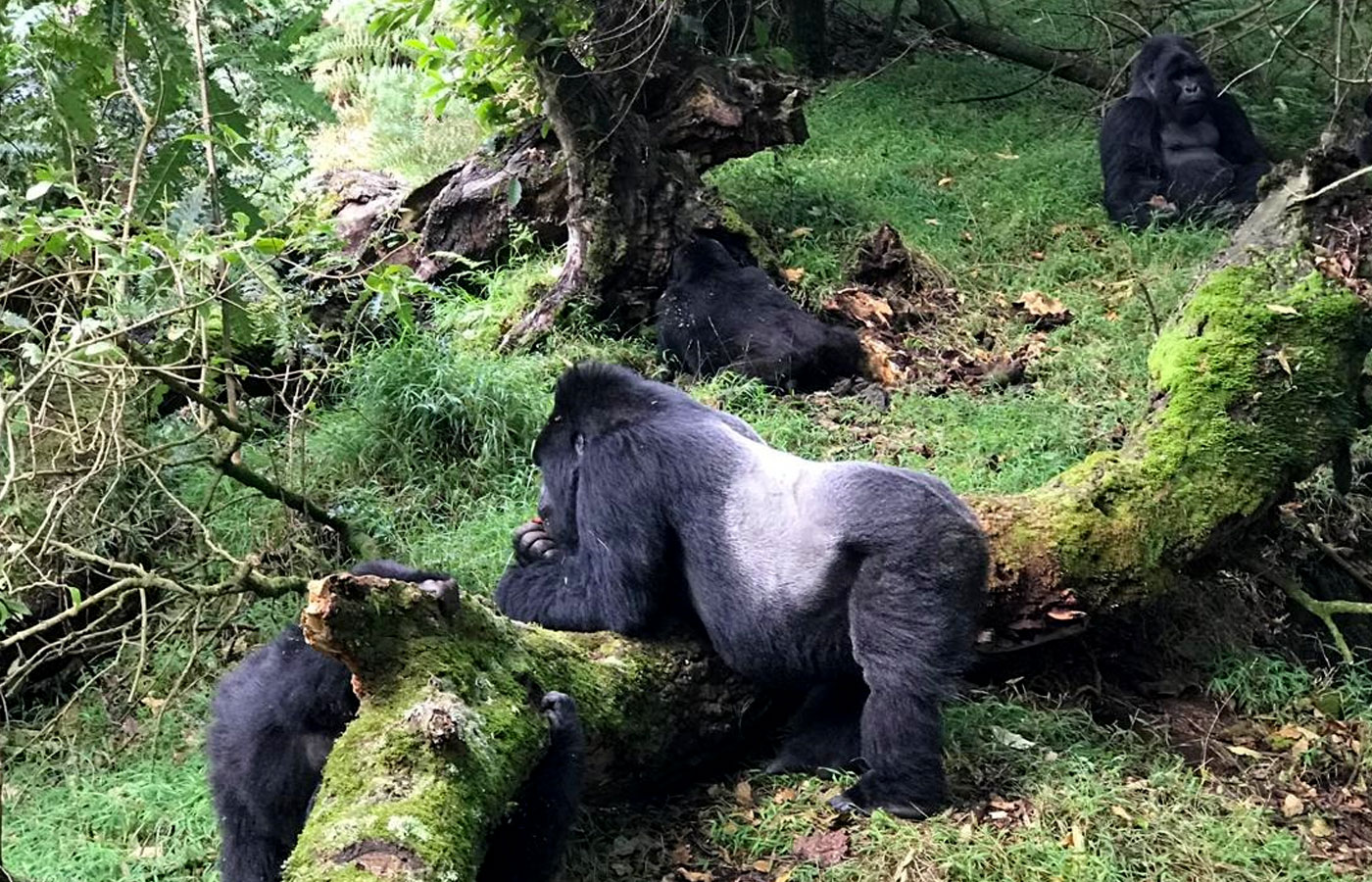
Your morning begins at 6:30 AM with a transfer to the Kinigi park headquarters. While enjoying hot local coffee, you will be assigned to a specific habituated gorilla family based on your physical fitness level. Your lead ranger will provide an essential safety briefing regarding wildlife etiquette and conservation boundaries. You will then drive to the trailhead and hike into the dense bamboo forests of the Virunga Mountains. The trek involves navigating steep, muddy slopes and can last anywhere from 2 to 6 hours. Once your tracking team locates the group, you will spend exactly one hour standing just meters away from these gentle giants. Watching the silverback guard his family is an unforgettable wildlife experience. Afterward, return to the lodge to celebrate.
Day 4: Fly from Kigali to Tanzania
You will leave the Virunga mountains behind after breakfast for a 2.5-hour road transfer back to Kigali International Airport. Here, you will board a regional flight across Lake Victoria to Kilimanjaro International Airport (JRO) near Arusha, Tanzania. Upon arrival, a local Tanzanian guide will facilitate your immigration process and guide you to a waiting 4x4 safari Land Cruiser. Depending on timing, you will either drive 3 hours overland or board a scheduled bush plane straight to Tarangire National Park. As you enter this distinct ecosystem, the landscape transforms from dense jungle into dry, golden savannah dotted with ancient trees. You will check into your safari camp in the heart of the park, enjoying dinner under the expansive African night sky.
Day 5: Tarangire National Park
Today features comprehensive morning and afternoon game drives through Tarangire National Park, an ecosystem famous for its massive elephant populations and giant baobab trees. You will track wildlife along the Tarangire River, the primary permanent water source drawing thousands of animals during dry periods. Keep your binoculars ready to spot migratory herds of wildebeests, zebras, elands, and impalas gathering along the muddy banks. The park is also an excellent habitat for predators; your guide will scan the low tree branches for resting leopards and check the shaded riverine thickets for pride lions. Between game drives, you will enjoy a picnic lunch at a designated viewpoint overlooking the river plains, watching waterbucks and olive baboons interact below before returning to your lodge.
Day 6: Ngorongoro Crater Floor
You will depart Tarangire early, driving through the lush agricultural highlands of Karatu toward the Ngorongoro Conservation Area. Upon reaching the rim, your 4x4 vehicle will descend 600 meters down the steep gravel roads onto the enclosed crater floor. This ancient volcanic caldera spans 260 square kilometers, forming a self-sustaining haven that shelters roughly 30,000 animals. The flat grasslands offer prime viewing opportunities for the entire Big Five in a single afternoon. Your main tracking priority is spotting the highly endangered black rhinoceros, which finds safety within this protected natural sanctuary. You will also see massive tuskers, pods of hippos wallowing in Lake Magadi, and spotted hyenas hunting alongside resident lion prides, before ascending to the rim for dinner.
Day 7: Serengeti National Park
Leaving the crater rim, you will drive northwest toward the world-renowned Serengeti National Park. The route takes you through the shifting desert landscapes of the Olduvai Gorge region before entering the park through the Naabi Hill Gate. The endless, iconic plains stretch out as far as the eye can see, dotted with granite kopjes where lions love to sunbathe. Your afternoon consists of an en-route game drive through the Seronera Valley, the central heart of the park. This rich valley features reliable water sources that sustain high concentrations of resident leopards, cheetahs, and hyenas year-round. You will arrive at your luxury tented camp just before sunset, enjoying a traditional campfire briefing before dinner.
Day 8: Full Day in the Serengeti
Your entire day is dedicated to exploring the vast Serengeti ecosystem. Your guide will structure the morning and afternoon game drives around current wildlife movements, tracking the massive columns of the Great Migration if your travel dates align with the seasonal river crossings or calving cycles. You will scan the golden grasslands for hunting cheetahs, watch prides of lions stalking herds of buffalo, and look for leopards resting in the branches of sausage trees along the Seronera River. The open terrain allows for clear photography and dynamic behavioral observations. At midday, you will rest at a secure picnic site to enjoy lunch in the wild. You will return to camp by dusk for a final celebratory dinner.
Day 9: Serengeti to Kilimanjaro
On your final safari morning, wake up early for a brief sunrise game drive to witness nocturnal predators concluding their night hunts. After a relaxed breakfast back at camp, you will pack your bags and transfer to the nearest wilderness airstrip, such as Seronera Airstrip. You will board a scheduled morning bush flight, soaring high above the Great Rift Valley landscape back to Kilimanjaro International Airport (JRO). The scenic flight provides a spectacular final aerial perspective of the vast plains you just explored. Upon landing at the main airport, you can check into a day room to refresh, complete some last-minute souvenir shopping for local Tanzanian beadwork, and board your international flight home, concluding your safari.
Is it difficult to handle the different physical demands?
The physical transition between these two countries catches many people off guard because they require completely different types of energy. In Rwanda, your safari is active, muddy, and vertical. You are on your feet, pushing through dense, tangled bamboo, scrambling over wet roots, and testing your stamina at high altitudes to find the gorillas. It is an intense, muscle-burning workout, but the sheer adrenaline keeps you moving. Once you fly into Tanzania, the physical demands drop instantly, shifting into a classic, stationary style of travel. Here, your days are spent sitting inside a 4x4 vehicle for long periods, absorbing the bumps of the dirt roads during extended game drives. To stay comfortable, your best strategy is to pack worn-in, ankle-supporting hiking boots and gardening gloves for the Rwandan jungle to protect your hands from stinging nettles. For Tanzania, bring loose, breathable layers and a soft travel pillow to support your lower back during the long, dusty drives across the Serengeti. It is a beautiful balance of active exploration and vehicle-based tracking that keeps you engaged without wearing you out completely.
Do I need two different visas for this trip?
Yes, you will need to secure two completely separate entry visas because Rwanda and Tanzania do not share a joint tourism immigration agreement. For the first leg of your journey, you can easily obtain a Rwandan tourist visa online through the official Irembo portal or purchase it directly upon arrival at Kigali International Airport for $50 USD. For the second leg, Tanzania requires its own distinct tourist visa, which also costs $50 USD for most nationalities, though it is $100 USD for US citizens. While you can technically get the Tanzanian visa on arrival at Kilimanjaro International Airport, the queues at that specific border crossing can be notoriously long and exhausting after a regional flight. To keep your transit day entirely stress-free, we highly recommend applying for the Tanzanian electronic visa (e-visa) online at least three weeks before you depart. Having both digital documents printed out alongside your yellow fever card ensures you breeze through passport control checkpoints with a smile, leaving you with more energy to focus on the spectacular wildlife ahead.
What are the strict luggage limits on bush flights?
When you combine these two destinations using light regional aircraft, packing becomes an exercise in smart editing. The small bush planes that fly between Arusha, the Serengeti, and Kilimanjaro enforce a strict luggage limit of 15 kilograms (33 pounds) per person, and this must include your hand luggage and camera gear. More importantly, hard-shell suitcases with wheels are strictly banned because the aircraft cargo holds are compact and oddly shaped; all gear must be packed in soft-sided, flexible duffel bags. This can feel daunting when you are trying to pack heavy hiking layers for Rwanda’s chilly mountains alongside lightweight safari clothing for Tanzania’s hot plains. The secret to surviving this limit is utilizing the quick overnight laundry services available at almost all the luxury safari camps. Focus on high-performance, lightweight technical clothing that can be layered easily, wear your heaviest hiking boots on the transit flights to save bag weight, and leave any non-essential city clothes or heavy luggage safely stored with our team at the Arusha airport base.
How do I get permits for the gorillas?
Securing your gorilla tracking permit is the absolute structural anchor of this entire 9-day itinerary. The Rwanda Development Board strictly limits the number of daily permits to Volcanoes National Park to protect the mountain gorillas from human diseases and environmental stress. These permits cost $1,500 USD per person, are entirely non-refundable, and lock you into a specific calendar date. Because global demand is incredibly high, these permits routinely sell out eight to twelve months in advance, especially during the dry winter and summer months. As your local tour coordinator, we manage this entire bureaucratic process directly on your behalf, purchasing the physical permits from the government headquarters the exact moment your trip deposit is confirmed. We never recommend booking flights or locking in Tanzania luxury lodges until we have successfully secured and verified your primate permits in Kigali. Once those precious documents are officially registered in your name, the rest of the travel dates, bush flights, and Serengeti camp reservations fall into place seamlessly.
What is the best time of year to visit?
To experience the absolute best of both worlds, you should plan this cross-border journey during the dry season window from July to October. In Rwanda, these months bring drier forest trails, making the steep volcanic slopes significantly less muddy, less slippery, and much easier to hike. Simultaneously, this dry window aligns perfectly with the peak of wildlife viewing in Tanzania. As the water holes dry up across the Serengeti and Tarangire, massive concentrations of elephants, lions, and plains game are forced to gather predictably around permanent rivers, offering spectacular tracking opportunities. If you travel between July and August, you also stand an excellent chance of witnessing the dramatic Great Migration herds moving through the northern Serengeti. If you prefer avoiding the peak season crowds and securing lower lodge rates, January and February are also fantastic alternatives; the Rwandan trails remain relatively dry, and you can witness the wildebeest calving season in the southern Serengeti plains, which draws plenty of active predators.
Are there any strict age limits for children?
If you are planning to travel as a family, it is important to know that Rwanda enforces a strict, non-negotiable minimum age limit of 15 years old for gorilla trekking. This conservation rule is rigidly maintained to protect the endangered primates from childhood illnesses, to which they have no immunity, and to ensure safety, as younger children may panic or vocalize if a giant silverback approaches. While Tanzania’s big five safaris have no official age restrictions and are wonderfully welcoming to children of all ages, the long, bumpy game drives and hours spent inside a vehicle can be quite taxing for toddlers. For families traveling with teenagers over fifteen, this combined itinerary is an extraordinary, deeply educational bonding experience. If you do choose to travel with younger children, we can easily customize the trip by arranging professional, trusted child-minding services and engaging cultural activities at the Rwandan lodge while the adults head up into the volcanic forest to complete the gorilla trek.
Is a yellow fever vaccine mandatory for entry?
Yes, carrying a valid, physical Yellow Fever yellow booklet is an absolute legal requirement for this specific cross-border route. While Rwanda does not typically demand proof of vaccination if you are arriving directly from Europe or the US, Tanzania treats Rwanda as a yellow fever endemic country. Because you are flying directly from Kigali into Kilimanjaro International Airport, the Tanzanian health officials will meet you right on the tarmac to inspect your official international certificate of vaccination before letting you proceed to the immigration desks. You must receive this vaccination shot at an authorized travel clinic at least 10 days before your departure date for it to be legally recognized at the border. Beyond the yellow fever requirement, you must schedule a visit with a travel doctor to secure malaria prophylactics, as both the lowland savannahs of the Serengeti and the river banks of Tarangire are active malaria zones where preventative medication and insect repellent are essential.
What types of safari vehicles will I use?
Throughout this multi-country expedition, you will experience two distinct styles of specialized safari transport, each tailored perfectly to the local regulations and terrain. In Rwanda, your road transfers to the volcanic mountains are conducted in comfortable, enclosed 4x4 vehicles with large windows, ensuring you stay warm and dry during the rainy mountain drives. Once you touch down at Kilimanjaro airport in Tanzania, you will step into a classic, custom-engineered stretched 4x4 safari Land Cruiser. This vehicle features a specialized pop-up roof that opens completely, allowing you to stand up safely and enjoy unobstructed, 360-degree views and flawless photography of the wildlife during game drives. Both vehicles are fully equipped with power charging sockets for your camera batteries, a cooler stocked with chilled bottled water, and long-range radio systems. Most importantly, you will have a dedicated local guide in each country, ensuring you benefit from deep, hyper-local tracking expertise and cultural insights specific to each distinct region.
How much cash should I bring along?
Even though your luxury accommodation, regional flights, park fees, and tracking permits are entirely pre-paid, you will definitely want to carry a modest amount of physical cash. We recommend traveling with approximately $500 to $700 USD per person in cash. It is absolutely vital that these US dollar bills are crisp, clean, completely unblemished, and printed in the year 2013 or newer, as banks and local businesses across East Africa routinely reject older or torn currency due to counterfeiting vulnerabilities. This cash is primarily used for tipping your tracking teams, lodge staff, and safari guides, who work incredibly hard to customize your experience. It is also perfect for purchasing authentic Maasai beadwork, local Tanzanian artwork, or premium Rwandan coffee at community cooperatives. While upscale safari lodges and city hotels easily accept major credit cards like Visa and Mastercard, they often apply an automatic 3% to 5% bank surcharge, making cash the smoothest option for daily tips and small local treasures.
Can I customize the destinations on this route?
This itinerary is entirely flexible and can be fully tailored to match your personal travel pace, budget, and specific wildlife interests. If you feel the 9-day schedule is a bit too fast-paced, we can easily add a relaxing rest day in Kigali to explore the city's vibrant art scene, or add an extra night on the rim of the Ngorongoro Crater to soak in the views. If your primary goal is tracking the Great Migration, we can adjust the specific zones of the Serengeti you visit—moving to the western corridor in May, the northern Mara River region in August, or the southern plains in February to match the seasonal movements of the herds. You can also upgrade the transit sections by switching out the longer road drives for scenic internal bush flights, maximizing your time spent on the ground watching wildlife. Just let us know your preferences, and we will craft a seamless custom flow.
Booking 9 Days Rwanda Tanzania safari with us Roads of Adventure safaris
Booking a 9-day Rwanda and Tanzania safari with Roads of Adventure Safaris requires cross-border planning. A typical itinerary begins in Kigali, Rwanda, features gorilla trekking in Volcanoes National Park, and flies to Arusha, Tanzania, for game drives across the Serengeti, Ngorongoro Crater, and Tarangire National Park
