This epic 10-day primate and great migration safari begins in Entebbe, Uganda, and ends in Nairobi, Kenya. It seamlessly combines tracking chimpanzees in Kibale, mountain gorilla trekking in Bwindi, and witnessing the dramatic wildebeest migration in the Masai Mara, before winding down with bird watching in Kenya's Great Rift Valley.
Day 1: Entebbe to Kibale National Park
Your East African adventure begins with a warm welcome at Entebbe International Airport (EBB). You will meet your driver-guide and embark on a scenic 5-to-6-hour drive west, passing through vibrant trading centers, rolling tea plantations, and the lush Ugandan countryside toward Fort Portal. Alternatively, opt for a quick domestic flight to Kasese Airstrip followed by a brief road transfer. After settling into your lodge bordering the primordial Kibale Forest, step out for an afternoon guided walking safari through the community-run Bigodi Wetlands Sanctuary. This swamp trail is a paradise for primate lovers and avid birdwatchers alike, offering high chances of spotting up to eight distinct monkey species—including the striking central African red colobus and grey-cheeked mangabey—alongside the iconic, iridescent great blue turaco. You will return to your lodge for dinner and overnight rest.
Day 2: Chimpanzee Tracking & Transfer to Bwindi
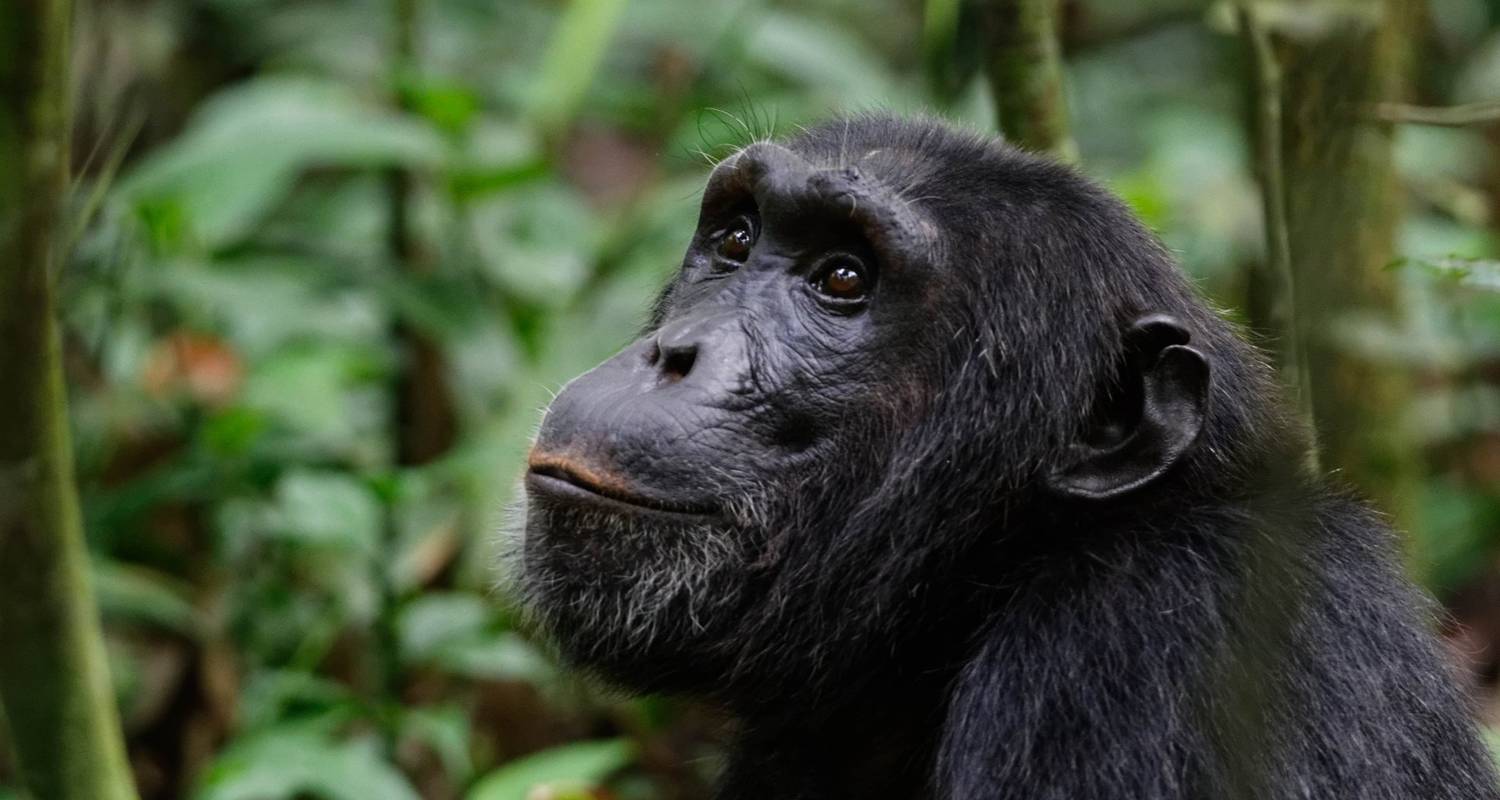
Wake up early for breakfast before heading to the park headquarters for an essential briefing on chimpanzee trekking etiquette. Kibale Forest boasts the highest density of primates in Africa, sheltering roughly 1,500 chimpanzees. Accompanied by experienced rangers, you will venture into the dense canopy to track a habituated troop, spending one exhilarating hour observing our closest evolutionary relatives swing through trees and vocalize loudly. After a rewarding lunch, you will begin a long but scenic 7-to-8-hour overland journey south to Bwindi Impenetrable National Park. Your route snakes directly through the scenic Queen Elizabeth National Park and the rolling Kigezi highlands, affectionately dubbed the "Switzerland of Africa" for its steep, terraced green hills. Arrive at your misty mountainside lodge late in the evening, just in time for a hearty dinner and a restful night's sleep.
Day 3: Gorilla Trekking in Bwindi Impenetrable Forest
Today brings the crown jewel of your Ugandan journey: a face-to-face encounter with wild mountain gorillas. Following an early morning safety and conservation briefing at the park station, you will be assigned to a specific gorilla family group based on your fitness level. Led by expert trackers, you will plunge into the steep, tangled, and misty valleys of Bwindi's ancient rainforest. The trek can last anywhere from 2 to 8 grueling yet deeply rewarding hours, depending on where the primates nested the previous night. Once found, all fatigue evaporates as you spend a magical, strictly timed 60 minutes quietly observing these gentle giants feed, play, and interact just meters away. It is an profoundly moving wildlife encounter. Afterward, hike back out of the forest to receive your trekking certificate and relax at your lodge.
Day 4: Bwindi to Kigali & Flight to Nairobi
After an early breakfast, bid farewell to Uganda's misty forests and embark on a smooth 4-to-5-hour cross-border road transfer south into Rwanda. Enjoy the dramatic, sweeping vistas of the Virunga Volcanoes as you cross the land border and journey directly toward the clean, vibrant capital city of Kigali. Depending on your flight schedule, take a brief emotional visit to the Kigali Genocide Memorial to honor the country's resilient history. Afterward, transfer directly to Kigali International Airport (KGL) to catch your afternoon regional flight across Lake Victoria to Jomo Kenyatta International Airport (NBO) in Nairobi, Kenya. Upon landing in the bustling Kenyan capital, a local representative will meet you and transfer you to a comfortable city hotel for a relaxed evening, preparing you for the savannah leg tomorrow.
Day 5: Nairobi to Masai Mara National Reserve
Your Kenyan safari kicks off with an early morning departure from Nairobi as you drive down the spectacular escarpment of the Great Rift Valley. Stop briefly at a panoramic viewpoint to snap photos of the expansive valley floor before continuing past Narok town to the legendary Masai Mara National Reserve. The drive takes approximately 5 to 6 hours, shifting from smooth tarmac to bumpy gravel as you approach the park gates. Arrive at your luxury tented camp in time for lunch and a brief rest. In the late afternoon, set out for your very first game drive across the iconic, golden savannah. Keep your eyes peeled for massive prides of lions, solitary leopards, and early glimpses of the thundering wildebeest herds that define this ecosystem.
Days 6–7: Full Days in the Masai Mara
Spend two immersive days exploring the vast, endless plains of the world-famous Masai Mara. Your days are flexible: choose to head out with picnic lunches for full-day game drives or split your time between early morning and late afternoon tracking sessions when predators are most active. If traveling between July and October, your primary focus will be tracking the dramatic Great Migration, witnessing hundreds of thousands of wildebeests and zebras braving crocodile-infested waters at the Mara River crossings. Look out for the region's famous apex predators—lions, cheetahs, and hyenas—who follow the herds closely. Between game drives, you can optionally choose to visit a traditional Maasai manyatta to learn about local indigenous culture, or book a breathtaking sunrise hot-air balloon safari over the teeming plains.
Day 8: Masai Mara to Lake Nakuru National Park
Leave the rolling plains of the Mara behind after breakfast and head northeast toward Lake Nakuru National Park, nestled on the floor of the Great Rift Valley. This journey takes roughly 5 to 6 hours over changing terrain. Arrive at your lodge for lunch before embarking on an afternoon game drive around the iconic alkaline lake. Lake Nakuru is internationally celebrated for its prolific birdlife, including seasonal flocks of pink flamingos and pelicans feeding in the shallows. Beyond avian wonders, this compact, fenced park serves as a highly successful sanctuary for both endangered black and white rhinoceroses. As you explore the fever tree woodlands and euphorbia forests, look out for rare Rothschild's giraffes, herds of cape buffalo, waterbucks, and elusive leopards resting in the branches.
Day 9: Lake Nakuru to Lake Naivasha
Enjoy a relaxed morning game drive in Nakuru before taking a short, scenic 2-hour drive south to Lake Naivasha, the highest and purest of the Rift Valley lakes. Arrive at your lakeside resort in time for lunch amidst manicured lawns where colobus monkeys play. In the afternoon, board a motorized boat for a tranquil cruise across the freshwater lake, passing wallowing pods of hippos and spotting majestic African fish eagles diving for prey. Your boat will drop you off at Crescent Island Game Sanctuary, a private island conservancy entirely free of large predators. Here, you will enjoy an intimate, guided walking safari right alongside roaming herds of giraffes, zebras, waterbucks, wildebeests, and impalas, offering a peaceful and unique perspective after days spent inside a 4x4 safari vehicle.
Day 10: Lake Naivasha to Nairobi
On your final morning, wake up to the beautiful sounds of Naivasha's thriving birdlife. Enjoy a leisurely breakfast on the lodge terrace overlooking the water, soaking in your final views of the Great Rift Valley. Mid-morning, check out and begin the smooth 2-to-3-hour drive up the escarpment back to Nairobi. Depending on your flight schedule, your guide can stop at the famous Karen Blixen Coffee Garden or the Kazuri Beads factory for some last-minute artisan souvenir shopping. Indulge in a celebratory farewell lunch or dinner at the world-renowned Carnivore Restaurant to toast to your incredible dual-country adventure. Afterward, transfer directly to Jomo Kenyatta International Airport (NBO) for your evening departure flight home, concluding an unforgettable 10-day African primate and migration expedition.
Is it exhausting to combine these two countries together?
It is an absolute whirlwind, but completely manageable if you pace yourself right. The most demanding stretch comes right at the beginning, where you transition from the intense physical tracking of primates in Uganda’s thick, mountainous rainforests straight into long drives. By the time you catch the regional flight to Kenya, the pace shifts beautifully. The savannah safaris in the Masai Mara and the tranquil lakes of the Great Rift Valley are much more physically relaxing, as you spend your days sitting comfortably in a 4x4 vehicle or gliding on a boat. To keep from wearing out, we always recommend drinking plenty of water, wearing worn-in hiking boots for Bwindi, and utilizing the longer drive times to unplug, watch the passing scenery, and rest your legs. It is a diverse, high-energy trip, but the contrast between the misty jungles and the wide-open plains keeps your adrenaline pumping and your spirits high. Most travelers find that the sheer excitement of seeing mountain gorillas one day and the Great Migration a few days later completely eclipses any travel fatigue.
What visa do I need for this cross-border safari?
You will want to secure the East Africa Tourist Visa before you fly out. This brilliant, single joint visa costs $100 USD and grants you multi-entry access to Uganda, Rwanda, and Kenya, saving you the massive headache, paperwork, and extra expenses of buying three separate national visas along the way. Because your trip kicks off in Entebbe, you must apply for it online through the official Republic of Uganda immigration portal well in advance of your departure. When filling out the forms, simply upload your flight itinerary showing your route through Uganda, across the land border into Rwanda for your flight, and onwards into Kenya. Just a quick heads-up: make sure your passport has at least six months of validity left from your date of entry and contains at least three consecutive blank pages. Having this electronic document printed out and ready at the border checkpoints turns what used to be a stressful, bureaucratic border crossing into a quick, smiling passport stamp so you can keep moving.
Can I fly between Bwindi and the Masai Mara?
You cannot fly directly between them, but you can absolutely cut down on driving. To bypass the long overland road transfers, you would take a domestic flight from Kihihi or Kisoro airstrips near Bwindi back up to Entebbe International Airport. From Entebbe, you would board a regional flight over to Nairobi's Jomo Kenyatta International Airport. Once you are in Kenya, you can hop on a scheduled bush flight from Wilson Airport straight onto the dirt airstrips of the Masai Mara. While utilizing these internal flights slashes your travel time down from days to mere hours and saves you from bumpy roads, it does come with two major trade-offs: it significantly increases your overall safari budget, and bush planes have very strict luggage limits—usually around 15 kilograms (33 pounds) in soft-sided bags. If you prefer a seamless, comfortable journey without the long days on the road, flying is the ultimate upgrade. However, the classic overland route through Kigali remains a beautiful way to see the changing countryside.
How do luggage limits work across both activities?
Managing luggage on a combined trip takes a bit of clever strategy. For your gorilla and chimpanzee treks in Uganda, you will need rugged, heavy-duty gear: thick layers, waterproof rain jackets, and sturdy hiking boots. But if you choose to take domestic bush flights down to the Masai Mara or Lake Nakuru, those small aircraft enforce a strict 15-kilogram limit, and they will reject hard-shell suitcases completely. The secret to surviving this is packing light, using a durable, soft-sided duffel bag, and taking full advantage of the quick turnaround laundry services offered at almost all the luxury safari camps. Focus on packing versatile, high-performance clothing that you can layer up in the chilly, misty mornings of Bwindi and peel off when the hot Kenyan savannah sun hits in the afternoon. If you have extra travel gear, heavy city clothes, or souvenirs you don't need on safari, you can easily arrange to leave them safely stored at your hotel in Nairobi.
What is the best season to book this trip?
To catch both of these iconic wildlife highlights at their absolute peak, you should aim for the dry window between July and October. This timing is magical for both destinations. In Kenya, this is the prime season to witness the dramatic Great Migration, when millions of wildebeests and zebras blanketing the golden plains of the Masai Mara face off against hungry crocodiles at the Mara River crossings. Simultaneously, the dry weather makes the steep, tangled slopes of Uganda’s Bwindi Impenetrable Forest significantly less slippery and easier to navigate, while the thinner vegetation in Kibale makes spotting chimpanzees high up in the canopy much simpler. Because this is the undisputed peak season for East African tourism, gorilla and chimpanzee permits sell out up to a year in advance, and the best safari camps book out fast. If you prefer a quieter experience with fewer crowds and lower lodge rates, the short dry season in January and February is also fantastic for primate trekking, though you will miss the migration.
Are yellow fever vaccinations required for this itinerary?
Yes, a valid Yellow Fever vaccination certificate is completely mandatory for this specific itinerary. Because you are crossing land borders and traveling seamlessly between Uganda, Rwanda, and Kenya—all of which sit firmly within the African yellow fever endemic zone—border immigration officials will strictly check your physical yellow fever yellow card before letting you enter. You must get this vaccination shot at an approved travel clinic at least 10 days before arriving in East Africa to ensure it is legally valid and active in your system. Beyond yellow fever, you will want to schedule a visit with your travel doctor to discuss taking malaria prophylactics, as both the Ugandan forests and the Kenyan savannahs are malaria risk zones. We also highly recommend staying up to date on routine shots like Hepatitis A and B, Tetanus, and Typhoid. Taking these medical precautions early gives you total peace of mind, ensuring you stay healthy and fully energized to enjoy every moment of your adventure.
How do I get permits for the primates?
Securing your primate permits is the very first thing you must do when planning. The Uganda Wildlife Authority (UWA) issues a strictly limited number of gorilla permits ($800 USD) and chimpanzee permits ($250 USD) per day to protect these endangered animals from stress and disease. Because demand is incredibly high worldwide, these permits disappear rapidly, often up to a year in advance for the peak dry months. As a local tour operator, we handle this entire booking process directly for you, purchasing the permits in your name the moment your safari deposit is confirmed. It is important to know that these permits are completely non-refundable and tied to specific dates, making them the structural anchor of your entire 10-day itinerary. Once your permits are secured in Kampala, we design the rest of your travel dates, flights, and luxury lodge bookings smoothly around them, ensuring your dream face-to-face encounter with the mountain gorillas is completely locked in and guaranteed.
What vehicle is used for this cross-border safari?
Because this trip crosses international borders, you will actually use two distinct, specialized vehicles. For the Ugandan leg, you will travel in a rugged, custom-built 4x4 safari Land Cruiser or a 4x4 safari van, featuring a pop-up roof for wildlife viewing on your way to the forests. When you cross the border into Rwanda and fly out to Kenya, you will be met at the airport by a fresh, locally based Kenyan 4x4 safari Land Cruiser and a new local driver-guide. Both vehicles are explicitly modified for the African terrain, equipped with heavy-duty suspension, charging sockets for your camera batteries, a fridge for cold drinks, and large windows. Having separate local guides in each country is a massive advantage; your Ugandan guide knows every secret corner of the rainforests, while your Kenyan guide has deep, intimate knowledge of the Mara's resident lion prides and the birdlife of the Rift Valley, giving you the best possible expertise throughout.
Can children join this specific combined safari?
This specific combined itinerary is best suited for older children and teenagers due to strict age limits. The Uganda Wildlife Authority enforces a strict minimum age requirement of 15 years old for gorilla trekking and 12 years old for chimpanzee tracking to ensure safety and conservation standards. The jungle treks can be physically punishing, involving hours of hiking through thick brush, steep mud, and high altitudes that can easily overwhelm younger children. However, if you are traveling with younger kids, we can easily customize the itinerary to keep them engaged. While you are trekking, we can arrange safe, guided community walks, cultural visits, or junior ranger activities at the lodge. Once you cross over into Kenya, the Masai Mara and Great Rift Valley lakes are incredibly family-friendly for all ages, offering exciting open-vehicle game drives, beautiful boat rides, and walking safaris among gentle giraffes on Crescent Island that children will absolutely cherish forever.
How much cash should I carry with me?
While your luxury lodges, meals, permits, and transport are all pre-paid, you will still want to carry some cash for personal expenses. We highly recommend bringing around $400 to $600 USD in cash, explicitly split into crisp, clean, unblemished bills printed from the year 2013 or newer, as older bills are widely rejected across East Africa due to counterfeiting fears. This cash will be incredibly useful for tipping your safari guides, park rangers, trackers, and lodge staff, who work tirelessly to give you an unforgettable experience. It is also perfect for buying beautiful, hand-woven local crafts, premium Ugandan coffee, or Maasai beadwork along the way. While major safari lodges and upscale gift shops in Nairobi and Kampala accept credit cards (Visa and Mastercard are most common), they often attach a 3% to 5% bank processing surcharge. Having US dollars or converting a small amount into Uganda and Kenya Shillings makes small daily transactions smooth and stress-free.
Booking 8 Days Uganda Kenya combined safari with us Roads of Adventure safaris
Booking your 8-day Uganda and Kenya safari with Roads of Adventure Safaris involves securing critical permits and internal flights. Typically, this itinerary features 4 days tracking mountain gorillas in Bwindi Impenetrable Forest and chimpanzees in Kibale, followed by 4 days of game drives in Kenya's Masai Mara
