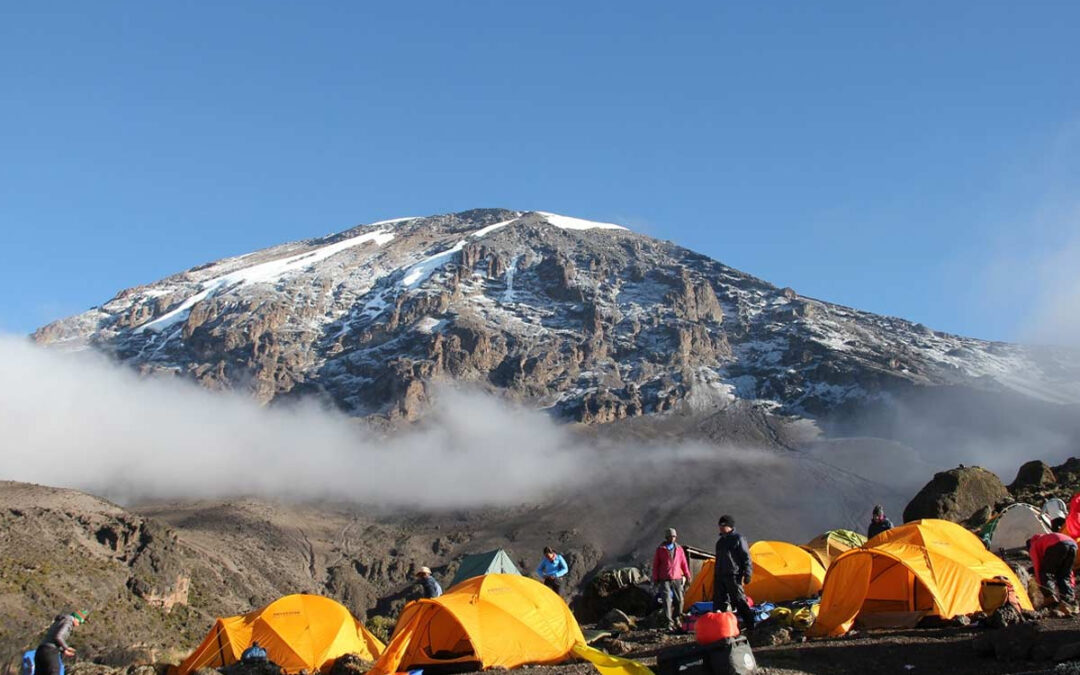
The 7 Days Ultimate Kilimanjaro climb via the most successful Lemosho route is designed for physically fit individuals seeking a high-efficiency path to Uhuru Peak. This 7 days Kilimanjaro itinerary balances duration and physiological demand, ensuring participants gain sufficient altitude while maintaining a manageable schedule. By starting at the Londorossi Gate on the western flank, the 7 Days Ultimate Kilimanjaro climb via the most successful Lemosho route minimizes initial congestion, allowing for a focused start. The track ascends through distinct climate zones, including lush rainforest, open moorland, and alpine desert, before the final arctic push. Because this trek is compressed into one week, it requires a steady pace and strong personal stamina. Throughout the 7 Days Ultimate Kilimanjaro climb via the most successful Lemosho route, professional support crews handle all camp management and meal preparation. Participants will find that the 7 Days Ultimate Kilimanjaro climb via the most successful Lemosho route offers a structured, intense, and rewarding experience for those ready to challenge their limits.
Tour highlights for 7 Days Ultimate Kilimanjaro climb
Western mountain trail access
Lush rainforest canopy trekking
Shira Plateau moorland hike
Lava Tower acclimation climb
Barranco Wall rock scramble
Alpine desert terrain crossing
Uhuru Peak summit ascent
Arctic glacier field reach
Professional mountain crew support
Midnight summit challenge start
Morning crater rim sunrise
Private mess tent service
Daily health check monitoring
Portable toilet tent access
Expert porter logistics team
Official summit certificate award
Scenic western slope views
Day by day 7 Days Ultimate Kilimanjaro climb
Day 1: Londorossi Gate to Mti Mkubwa
The 7 Days Ultimate Kilimanjaro climb via the most successful Lemosho route begins with a drive to Londorossi Gate at 2,250 meters. After completing park entrance procedures, you begin the trek through the dense, humid rainforest. The path is narrow and surrounded by large ferns and towering trees. You will hike for approximately 3 hours, covering 6 kilometers to reach Mti Mkubwa Camp at 2,750 meters. This first day involves a modest elevation gain of 500 meters. The crew will have the tents assembled upon your arrival. Evening temperatures are comfortable, usually staying around 12°C. You will consume a hearty dinner before attending a briefing on the following day’s ascent. This initial stage allows you to acclimatize to the tropical climate and start the physical movement required for the journey ahead.
Day 2: Mti Mkubwa to Shira 1 Camp
Today, you leave the rainforest and enter the heath and moorland zone. The path climbs steadily through tall shrubs and heather. You will hike for about 6 hours, covering 8 kilometers as you move from 2,750 meters to 3,500 meters. The landscape changes as the dense canopy gives way to open, volcanic slopes. Upon reaching Shira 1 Camp at 3,500 meters, you get your first clear look at the Shira Plateau. The air is noticeably cooler, with temperatures dropping to 5°C. Hydration is critical, and you should aim to drink 4 liters of water today. The transition to this altitude requires a slow, deliberate pace. The support team will provide warm water for washing, and you will spend the night in tents, beginning your adaptation to the thinning atmosphere.
Day 3: Shira 1 Camp to Moir Hut
The 7 Days Ultimate Kilimanjaro climb via the most successful Lemosho route continues across the Shira Plateau. You will hike for 5 hours, covering 10 kilometers. Starting at 3,500 meters, you ascend to Moir Hut, situated at 4,150 meters. This is a significant elevation gain of 650 meters. The terrain is rocky and largely devoid of tall vegetation, characteristic of the alpine desert zone. Moir Hut is a secluded spot nestled at the base of the Lent Hills. You will notice the cold more acutely tonight, with temperatures near 0°C. Staying hydrated and eating nutrient-dense meals is essential for your recovery. The afternoon is reserved for rest, and you may take a short walk to higher ground to help your body process the change in oxygen levels.
Day 4: Moir Hut to Lava Tower to Barranco Camp
Today is vital for your success. You hike to the Lava Tower at 4,600 meters, gaining 450 meters in altitude. After lunch at this high point, you descend to Barranco Camp at 3,950 meters. The total distance is 10 kilometers, taking roughly 7 hours. This "climb high, sleep low" strategy is the core of the 7 Days Ultimate Kilimanjaro climb via the most successful Lemosho route. The environment is harsh and desolate, with rock and scree dominating the view. Descending to 3,950 meters is a proven way to aid your recovery after reaching the higher altitude of the tower. You will arrive at camp feeling the physical toll of the day, but the lower elevation for sleeping will significantly help your body stabilize for the final push.
Day 5: Barranco Camp to Karanga Camp
The morning begins with the Barranco Wall, a 250-meter rocky ascent. You will use your hands and feet to navigate the path, which takes about an hour. Once at the top, you follow the southern circuit for 5 kilometers. The route involves crossing several ridges and valleys, leading to Karanga Camp at 3,995 meters. The hike takes about 4 hours. The terrain is a mix of dust and loose stone. Arriving at 3,995 meters, you will have the afternoon for rest. Your guides will monitor your heart rate and oxygen saturation. This day is crucial for maintaining stamina. The varied elevation changes throughout the day prepare your system for the final approach to the base of the summit. You will have a warm dinner and prepare for the penultimate day of the trek.
Day 6: Karanga Camp to Barafu Camp
Today, you hike 4 kilometers in 3 hours to reach Barafu Camp at 4,675 meters. This is the final staging point before the summit attempt. The climb is steep, consisting of compacted volcanic ash and stone. As you enter the arctic zone, temperatures drop rapidly, often reaching -5°C or lower. You will arrive by early afternoon, leaving time to organize your gear for the midnight departure. Your headlamp, extra layers, and water bottles must be checked. You will attempt to sleep early, as the summit push requires a midnight wake-up call. The physical demand of being at 4,675 meters is high, and your appetite may decrease; however, you must consume enough calories to fuel the upcoming ascent.
Day 7: Barafu Camp to Uhuru Peak to Mweka Gate
The final day starts at midnight. You hike 17 kilometers over 14 hours. The path rises 1,220 meters to reach the 5,895-meter Uhuru Peak. This involves steep switchbacks through freezing temperatures. After taking pictures at the summit, you begin a long descent of 2,800 meters to Mweka Gate at 3,100 meters. The journey passes through the arctic, alpine desert, and moorland zones. This is the most demanding part of the 7 Days Ultimate Kilimanjaro climb via the most successful Lemosho route. You reach the gate by afternoon, sign the register, and receive your certificate. After a final drive to your hotel, you conclude your mission. You have successfully navigated the mountain and completed the entire itinerary, marking a definitive end to your high-altitude expedition.
1. What makes Lemosho the "Ultimate" route?
The Lemosho Route is widely recognized as the most scenic and pristine trail on Mount Kilimanjaro, earning its reputation as the "Ultimate" path for those who seek both challenge and natural beauty. Unlike other routes that begin on the lower, more crowded eastern slopes, Lemosho commences on the remote western side of the mountain. This starting point ensures that you spend the initial days of your journey in a truly untouched wilderness. You will hike through lush, ancient rainforests where the canopy is dense and the wildlife is active, before emerging onto the expansive and stunning Shira Plateau.
The route's "ultimate" status also comes from its masterful design. It allows for a gradual, measured ascent that takes you through the most dramatic transitions of the mountain’s geography. As you progress, you pass iconic landmarks such as the Lava Tower—an imposing volcanic formation—and the Barranco Wall, which provides an engaging, non-technical rock scramble. Eventually, Lemosho merges with the Machame route as you approach the final summit push, offering the best of both worlds: the tranquility of the early western ascent and the classic, high-altitude challenges of the mountain's southern face. For trekkers who prioritize an immersive experience, solitude in the wilderness, and a path that showcases every facet of Kilimanjaro’s diverse ecosystem, Lemosho stands unrivaled. It is not merely a climb to the top; it is a comprehensive tour of the mountain’s unique geology and biological zones.
2. How long is the 7-day Lemosho trek?
The 7-day Lemosho itinerary is a highly efficient, direct route that covers approximately 56 kilometers (about 35 miles) from the moment you step off your transport until you finish at the final exit gate. This distance is deliberately calculated to maximize your time on the mountain while ensuring you hit key altitude benchmarks necessary for a safe and successful summit attempt.
While the total horizontal distance may seem shorter than the 8-day version—which involves more lateral trekking across the plateau and adds up to about 70 kilometers—the 7-day version is physically concentrated. By taking a more direct line, you spend less time in the lower-altitude zones and more time focusing on the critical acclimatization phases required for a rapid ascent. It is important to note that "length" on Kilimanjaro is a deceptive metric. Because you are climbing through extremely steep terrain, rocky scree slopes, and thin air, every kilometer requires significantly more energy than it would at sea level. The 56-kilometer trek is a robust challenge that requires sustained physical effort every single day. This specific itinerary is tailored for individuals who possess a strong base level of fitness and are confident in their body’s ability to adapt to high-altitude pressure changes within a shorter, one-week window. It is the perfect balance of distance and duration for the time-conscious climber.
3. Why choose the 7-day over the 8-day option?
Choosing between the 7-day and 8-day Lemosho itinerary is a matter of balancing your experience with your physical profile and time constraints. The 7-day itinerary is fundamentally different in its approach; it omits the long, forest-based trek of the first day by utilizing a vehicle drop-off on the Shira Plateau. This allows you to start your hike at an altitude of approximately 3,414 meters (11,200 feet). By bypassing the lower tropical sections, the 7-day route puts you directly into the high-altitude moorland zone from the very first step.
This option is a fantastic choice for highly fit hikers who are confident in their ability to acclimatize quickly. If you have previous high-altitude experience and have demonstrated that your body handles rapid elevation gain well, the 7-day route allows you to reach the summit faster and with a more intense, focused physical schedule. It is ideal for those whose vacation time is limited but who still want the superior scenery and remote start that the Lemosho route provides. However, this pace is more demanding on the cardiovascular system. While the 8-day option is gentler and offers a more gradual introduction to the mountain, the 7-day itinerary is an "express" version of the adventure. It requires a high level of discipline, excellent pre-trip physical training, and a strong mental commitment to keep moving steadily through the steeper, thinner-air environment from day one.
4. What is the summit success rate?
Summit success on Mount Kilimanjaro is intrinsically linked to the acclimatization profile of the chosen route. The Lemosho route, thanks to its steady, well-planned ascent, offers some of the highest success rates of any trail on the mountain. The 7-day version of this trek yields an impressive 85% summit success rate, a figure that is remarkably high given the condensed timeframe. The 8-day option, by providing that extra day of physiological buffer, typically pushes those success rates to between 90% and 95%.
These statistics are not just numbers; they represent the reality of high-altitude physiology. Success on Kilimanjaro is rarely about athletic speed; it is almost entirely about how well your body adapts to the decrease in oxygen pressure as you gain elevation. The 7-day Lemosho itinerary is successful because it is specifically designed to hit all the right "acclimatization landmarks" without wasting unnecessary time. Even on the 7-day schedule, you follow the principle of "climbing high, sleeping low," which allows your body to optimize oxygen transport. When traveling with a reputable outfitter that prioritizes slow, steady pacing—the legendary pole pole—climbers are able to minimize the impact of altitude. While 85% is a very strong success rate, it still necessitates that climbers arrive in peak physical condition. The higher success rate of the 8-day option is an insurance policy, but for the well-trained hiker, the 7-day route provides a highly efficient and successful path to the summit.
5. What kind of shape do I need to be in?
You do not need to be an elite mountaineer or a professional athlete to climb Mount Kilimanjaro, but you do need to be in good physical condition. The 7-day Lemosho route is a demanding endurance event, and your level of preparation will directly influence your enjoyment of the trek. You should have a solid foundation in hiking or backpacking, as the most important skill you can possess is the ability to walk comfortably for several hours at a time on uneven, steep, and rocky ground.
To prepare, you should start a structured training regimen 3 to 6 months before your departure. The most effective training is "hike-specific." Focus on stair-stepping, using a treadmill on a high incline, or walking on hilly trails in your local area while wearing a weighted daypack. This will build the specific leg endurance and core stability required to manage the rocky trails of the Lemosho route. Aerobic exercise, such as running, cycling, or swimming, is also vital, as it builds the cardiovascular efficiency your heart and lungs will rely on at high altitude. Remember that you will be walking for up to 8 hours a day, so it is not just about raw power; it is about stamina. If you arrive with strong, conditioned legs and a healthy heart, you will be much better prepared to face the fatigue and thinning air. Physical fitness serves as your "cushion" on the mountain; the fitter you are, the more your body can focus on acclimatizing rather than simply trying to survive the day’s exertion.
6. Will I suffer from altitude sickness?
Altitude sickness, or Acute Mountain Sickness (AMS), is a possibility for anyone venturing above 2,500 meters. On the 7-day Lemosho route, you will be spending significant time at altitudes where the oxygen concentration is low, so it is important to be aware of the symptoms. Common signs include mild headaches, nausea, fatigue, loss of appetite, and difficulty sleeping. These are normal responses to a hypoxic environment and do not always mean you must turn back, but they must be monitored closely.
Your best defense against altitude sickness is the Swahili pace: pole pole, which means "slowly, slowly." By keeping your movement steady and unhurried, you prevent your body from falling into "oxygen debt," where your muscles work faster than your lungs can supply oxygen. The 7-day route is designed to help you "climb high, sleep low," a technique that naturally aids your acclimatization process. However, because this is a 7-day itinerary, you have less time for your body to adjust than on longer routes, making your pace and hydration even more critical. Your guides are highly experienced professionals who monitor your blood oxygen levels and heart rate daily. They are trained to distinguish between a manageable headache and the early signs of more serious altitude issues. If you communicate your symptoms honestly and follow the instructions of your guides, you can usually manage mild discomfort and continue your journey to the summit.
7. What are the day-to-day temperature ranges?
Mount Kilimanjaro is a vertical cross-section of Earth's climate, and the temperature fluctuations you will experience are extreme and dramatic. You begin your expedition in the tropical rainforest zone, where temperatures are comfortably warm and humid, generally ranging from 21°C to 27°C (70°F to 80°F). It is lush, vibrant, and feels like a typical summer day in the tropics.
However, as you ascend, the climate shifts rapidly. By the time you reach the higher camps, you move into the alpine desert and arctic zones, where temperatures plummet. During the day, it might be cool, but as soon as the sun dips below the horizon, the temperature drops rapidly toward freezing. On the final summit night, you will face the most intense cold of the trip. During the hours you are climbing in the dark to reach Stella Point, the temperatures typically range from -7°C to -12°C (10°F to 19°F), and this does not even account for the significant wind chill, which can make it feel much colder. This wide range means your packing strategy must be built around a "layering system." You need to be prepared to shed clothes when the sun is beating down on the plateaus, and to add every single layer you own when you are standing in the freezing dark on the crater rim.
8. What gear do I need to bring?
Proper gear is your primary protection against the mountain's harsh, changing environments. Because you will face temperatures ranging from tropical to arctic, your clothing must be organized into a "layering system." You will need moisture-wicking base layers to keep your skin dry, thermal mid-layers (such as high-quality fleece or down) to trap heat, and a windproof/waterproof outer shell to protect you from the intense weather at high altitude.
Beyond clothing, your sleeping system is non-negotiable. You need a cold-rated sleeping bag—typically 0°F (-18°C) or lower—to ensure you can stay warm inside your tent when the temperature outside drops well below freezing. A good pair of broken-in trekking boots is essential; they should be waterproof, supportive, and comfortable enough for long hours on rocky trails. Do not wait until you arrive in Tanzania to break them in; walk in them for weeks beforehand. You should also bring high-quality, adjustable trekking poles. These are vital for saving your knees during the steep descents and provide extra stability when moving over uneven terrain. Finally, a durable 30-35L daypack is the right size to carry your daily essentials—water, snacks, extra layers, and your camera—without putting too much weight on your back. Choosing high-quality gear is one of the most important investments you can make for your Kilimanjaro expedition.
9. Where do I sleep on the mountain?
Accommodation on the Lemosho Route is entirely in four-season, high-altitude mountain tents. Unlike the Marangu Route, which offers permanent wooden hut structures, the Lemosho experience is an authentic "expedition" style. You will sleep in durable, weather-resistant tents that are specifically engineered to withstand the extreme conditions found on the mountain, including freezing temperatures, high winds, and heavy precipitation.
Most professional tour operators provide you with a high-quality foam or inflatable sleeping pad to provide an insulating barrier between you and the cold ground. This is critical for retaining your body heat throughout the night. One of the major benefits of hiring a professional, reputable operator is the infrastructure they provide. In addition to your sleeping tent, most companies will set up a separate, larger dining mess tent where you will take your meals. This serves as a vital social and recovery space. Furthermore, for those who value privacy and hygiene, many professional operators now offer the option of a separate, portable chemical toilet tent for your group’s exclusive use. This is a game-changer for many trekkers, as it prevents you from having to use public long-drop facilities, especially at night or in the freezing cold. You are living in a mobile camp that follows you up the mountain, providing a consistent, clean, and organized environment despite the challenging surroundings.
10. Can I get evacuated if there is an emergency?
The Lemosho Route is widely recognized for having the best emergency access and evacuation logistics of any trail on Kilimanjaro. This is a significant safety advantage that contributes to the peace of mind many climbers feel when choosing this path. Because the route crosses the Shira Plateau and utilizes areas that are more accessible by service vehicles compared to the narrow, rocky trails on the southern side of the mountain, it is much easier to manage medical emergencies.
If a climber needs to be evacuated for health reasons—such as severe altitude sickness or an injury—there is a road network that can be utilized. Between Shira Camp 1 and Shira Camp 2, climbers can be accessed by 4x4 vehicles and transported quickly down to the lower slopes and into a medical facility in Moshi or Arusha. This level of access is a major upgrade compared to routes where an evacuation would have to be performed by manual stretcher-carry, which is slow and physically taxing for both the patient and the rescuers. While you should always prioritize your health and follow the advice of your guides to avoid reaching a critical state, knowing that you are on a route with superior emergency logistics provides an added layer of security. It is one of the many logistical reasons why Lemosho is such a popular choice for high-altitude trekkers who want the most well-supported experience possible.
11. What is the food like on the climb?
On the Lemosho Route, you are supported by a full crew, which includes a professional mountain cook whose entire job is to provide you with the calories you need to succeed. Nutrition is the fuel for your summit attempt, so expect hearty, calorie-dense meals that are designed to keep your energy high. Even at high altitudes, where appetite often decreases, your cook will prepare appealing, warm meals that are easy to digest.
Breakfast is substantial to get you moving, typically including hot porridge, eggs, toast, and fresh fruit. Lunches and dinners are usually structured as warm, multi-course meals. You will often have soup to start, which is a key part of your hydration, followed by carbohydrates like rice, pasta, or potatoes, and cooked proteins like chicken, meat, or lentils. Fresh vegetables are also provided, which is a testament to the effort of your porters who carry these fresh goods up the mountain. Drinking enough fluid is just as important as the food, and your crew will keep you provided with plenty of hot tea, coffee, and cocoa, which are great for morale. Being well-fed is vital to your success, as your body is burning thousands of calories per day while fighting the cold and the elevation. If you have specific dietary restrictions, such as being vegetarian or vegan, reputable operators can easily accommodate these needs, provided you notify them well in advance.
12. How do I get drinking water?
Water is the lifeblood of your Kilimanjaro trek, and you need to be drinking 2 to 3 liters (or even more) daily to stay hydrated and facilitate acclimatization. On the Lemosho Route, your water is sourced from high-mountain streams. Once collected, it is immediately boiled by your support crew to kill any pathogens. Many companies also use additional filtration systems to ensure the water is safe for you to drink.
For your daily hydration on the move, you should carry a 2 to 3-liter hydration bladder (like a CamelBak) inside your daypack. This allows you to take small, frequent sips throughout the day without having to stop, which keeps your hydration levels consistent. You should also carry an extra insulated water bottle (such as a Nalgene with a thermal cover) for backup. In the arctic zones near the summit, water can freeze inside the hose of a bladder, so having a bottle as an insurance policy is a smart move. Many climbers also bring electrolyte tablets to drop into their water. These are excellent for replacing the salts you lose through sweat and can make the water taste more pleasant. Your guides will consistently monitor how much you are drinking and will remind you to fill up at camp before each day’s start. Taking ownership of your hydration is one of the most effective ways to manage your performance on the trail.
13. What is summit night like?
Summit night is the most physically demanding, coldest, and mentally challenging part of your entire expedition. It is a unique experience—you will wake up around midnight, dress in your warmest layers, and head out into the freezing darkness. Because of the extreme altitude, the summit push is done at a very slow, methodical pace. You will walk by headlamp for 6 to 8 hours, moving steadily against the mountain's incline.
The climb is an exercise in pure willpower. You are pushing toward Stella Point, which sits at 5,730 meters, while fighting off the effects of the thin air, which can make you feel sleepy, lightheaded, or exhausted. It is common to feel like you cannot take another step, but this is when your guides are most valuable; they are there to talk you through the hardest moments and ensure you maintain a safe pace. As the first light of dawn begins to paint the sky, the transformation of the landscape is incredible. Reaching Stella Point is a massive milestone, but you are not done yet. There is still a short, final push along the crater rim to reach the true summit, Uhuru Peak, at 5,895 meters. Standing at the highest point in Africa as the sun rises over the clouds is an emotional and unforgettable reward for the months of training and the night of intense effort. It is the ultimate test of your endurance, and the feeling of achievement is unparalleled.
14. What are the best months to climb?
The timing of your Kilimanjaro trek is crucial, as the weather patterns on the mountain are dictated by two main rainy seasons. To maximize your chances of having a successful, enjoyable, and scenic climb, it is highly recommended that you target the Tanzanian dry seasons. The first window is from mid-December through early March. These months offer the best temperatures; it is generally warmer on the mountain, and the skies are famously clear. This is an ideal time for photographers or for those who prefer more comfortable hiking conditions.
The second major window is the long dry season, which runs from late May through September. While these months are typically colder than the earlier window, they offer extremely reliable, dry, and stable weather. You are far less likely to encounter rain or snow, and the trails are generally in the best condition. It is a trade-off: you will deal with more cold, but you will have the most predictable weather patterns. It is best to avoid the "long rains" (April and May), as the trails become exceptionally muddy and the higher altitudes can be miserable with constant clouds and moisture. The "short rains" in November can also be unpredictable. By aiming for these two dry windows, you are putting yourself in the best possible position to experience the clearest views, the driest paths, and the most successful summit attempt.
15. Do I need to tip the crew?
Tipping is a customary and essential part of the culture on Mount Kilimanjaro. The trekking crew—the lead guides, assistant guides, camp cooks, and the large team of porters—works incredibly hard under difficult, high-altitude conditions to ensure your success. For many of these individuals, the tips received from clients form the most significant part of their income.
Tipping is typically handled as a group at the end of the expedition. You should expect to pool your tips with your fellow trekkers, with the total amount usually ranging from $200 to $300 per climber. The amount you choose to give often depends on your group size, the length of the trek, and your personal satisfaction with the service provided. Many reputable operators will provide a breakdown of how the tip should be divided—a larger portion usually goes to the lead guide, with a balanced distribution to the assistants, cooks, and the porter team. It is best to have this money prepared in US dollars, specifically in newer, clean, crisp bills. Tipping is not just about the money; it is a genuine way to show appreciation for the human effort that went into your journey. It fosters goodwill, recognizes the hard work of the local crew, and is a deeply expected gesture that contributes to the livelihood of the mountain community.
16. Where does the trek begin and end?
Your Kilimanjaro adventure starts and ends in the vibrant Tanzanian town of Moshi, which serves as the primary gateway for mountain expeditions. Moshi is well-connected to international travelers and provides a comfortable base to finalize your gear, attend your pre-climb briefing with your lead guide, and rest before your journey begins. Most tour operators will handle your accommodation in Moshi, providing a seamless transition to the mountain.
On the morning your trek begins, you will be met by your team and transported by vehicle to the starting point of your itinerary, such as the Londorossi Gate. This drive is often your first look at the beautiful Tanzanian countryside as you approach the mountain’s western flank. Once your 7-day trek concludes at the Mweka Gate, you will be met by a vehicle and driven back to your hotel in Moshi. This moment of return is usually one of the most rewarding parts of the trip—you will be exhausted, proud, and ready for a long, hot shower and a real bed. It is at the hotel that you will typically receive your official summit certificate, a souvenir that serves as proof of your hard-earned success. This start-to-finish support is what makes the Kilimanjaro experience so accessible. You are taken care of from the moment you leave your hotel to the moment you return, ensuring that your only responsibility is the climb itself.
Booking 7 Days Ultimate Kilimanjaro climb with us Roads of Adventure safaris
To book your 7-Day Ultimate Kilimanjaro climb (typically via the scenic Machame or Lemosho routes) with Roads of Adventure Safaris, you can reach out directly through their official site.
