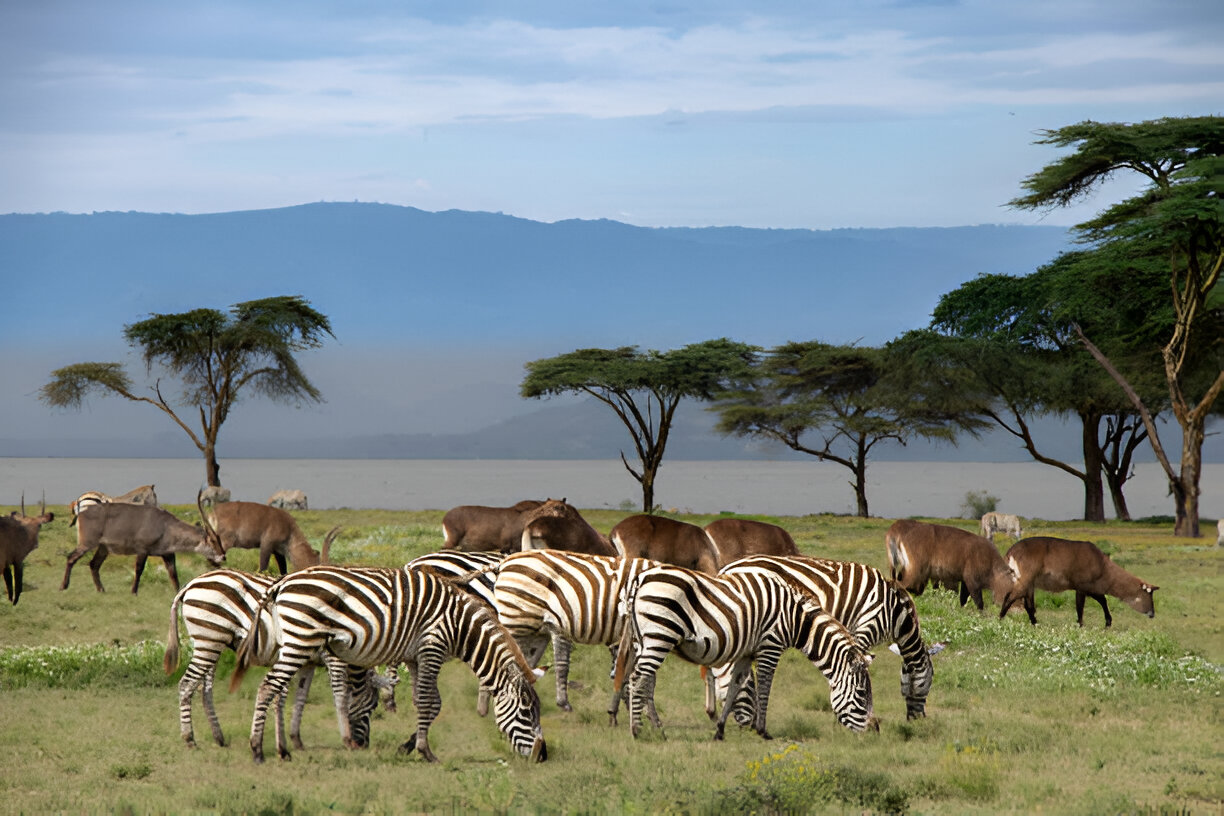
This popular 7-day Kenya wildlife safari highlights itinerary covers the country's premier wildlife ecosystems: the Maasai Mara, Lake Nakuru, and Amboseli National Park. You will experience the legendary Big Five, millions of migrating wildebeests (seasonal), massive elephant herds, and spectacular birdlife.
Tour highlights for 7 days Kenya wildlife safari
Massive elephant herds
Mount Kilimanjaro views
Dawn predator tracking
Great Rift Valley
Freshwater boat safari
Crescent Island walk
Pink flamingo shorelines
Endangered rhinoceros sanctuary
Legendary savannah plains
Thrilling migration viewing
Traditional Maasai culture
Sunrise game drive
Day by day 7 days Kenya wildlife safari
Day 1: Arrival & Transfer to Amboseli National Park
Your unforgettable 7 Days popular Kenya wildlife safari holiday itinerary begins the moment you touch down at Jomo Kenyatta International Airport in Nairobi. Your expert driver-guide will welcome you warmly and help load your bags into your private 4x4 safari vehicle. From the bustling capital, you will embark on a scenic four-hour drive south through typical African landscapes and local market towns, watching urban areas fade into vast Maasai plains. You will arrive at your Amboseli lodge in time for a fresh lunch and a brief rest. In the late afternoon, set out for your first official game drive. The iconic park is world-famous for its massive elephant herds walking against the stunning backdrop of Africa's highest peak, the snow-capped Mount Kilimanjaro. Keep your camera ready as lions, giraffes, and various antelopes move through the marshes while the setting sun paints the sky in shades of deep orange and gold.
Day 2: Full-Day Amboseli Exploration
The second day of your 7 Days popular Kenya wildlife safari holiday itinerary is completely dedicated to exploring the diverse habitats of Amboseli National Park. You will head out at dawn when the predators are most active, watching the golden light hit the plains while tracking lions and spotted hyenas returning from their night hunts. This park is famous for hosting exceptionally large concentrations of free-ranging elephants, including impressive tuskers that walk calmly alongside your vehicle. After a midday break at the lodge to escape the intense heat, you will pack a picnic lunch and drive out toward the dry bed of Lake Amboseli. Here, shimmering mirages dance across the horizon, revealing herds of zebras, wildebeests, and gazelles. Sharp-eyed cheetahs often use the low brush to stalk their prey across the open ground. Wrap up the day with a sundowner drink, enjoying the peaceful atmosphere of this ancient ecosystem.
Day 3: Amboseli to Lake Naivasha
After an early breakfast, check out of your lodge to continue your 7 Days popular Kenya wildlife safari holiday itinerary with a drive toward the Great Rift Valley. This journey takes approximately five to six hours, climbing up the escarpment and offering spectacular panoramic views of the valley floor before descending toward Lake Naivasha. Upon arrival, check into your beautiful resort on the lakefront and enjoy a fresh lunch. In the afternoon, you will board a small boat for a relaxing safari across the freshwater lake. You will glide past large pods of snorting hippos submerged in the water while watching incredible birdlife, including African fish eagles diving for prey. The boat will drop you off at Crescent Island Game Sanctuary, where you can enjoy a unique walking safari. Because there are no large predators on the island, you can safely walk alongside giraffes, zebras, and waterbucks.
Day 4: Lake Naivasha to Lake Nakuru National Park
Your 7 Days popular Kenya wildlife safari holiday itinerary heads further north today into the beautiful Lake Nakuru National Park. The drive is short and easy, taking about an hour and a half through local farming communities. As you enter the park gates, you will immediately begin an en-route game drive toward your lodge. Lake Nakuru is a stunning rift valley soda lake, famous for attracting thousands of bright pink flamingos that line the shorelines. Beyond the incredible birdlife, this park serves as a vital, heavily guarded sanctuary for endangered black and white rhinoceroses. You will spend the afternoon exploring the acacia woodlands and rocky cliffs, which provide excellent opportunities to spot elusive leopards resting in the branches. The park is also home to rare Rothschild's giraffes, large herds of Cape buffaloes, and playful olive baboons, making for an incredibly diverse and rewarding afternoon of wildlife viewing.
Day 5: Lake Nakuru to Maasai Mara National Reserve
Today marks a major highlight of your 7 Days popular Kenya wildlife safari holiday itinerary as you depart for the world-renowned Maasai Mara National Reserve. Following an early breakfast, you will embark on a five to six-hour drive through the scenic Great Rift Valley floor, watching the landscape open up into vast, rolling grasslands. You will arrive at your luxury safari camp or lodge in time for a late lunch and check-in. In the late afternoon, head out for your opening game drive across this legendary savannah. The Maasai Mara boasts the highest concentration of terrestrial wildlife on earth, and within minutes, you are likely to spot prides of lions lounging on the ridges, cheetahs scanning the plains, and thousands of grazing wildebeests and zebras. Return to your camp at twilight for a warm dinner around an open fire, listening to the wild night come alive.
Day 6: Full-Day Maasai Mara Game Drive
Spend a thrilling, full day exploring the endless plains of the Maasai Mara on this leg of your 7 Days popular Kenya wildlife safari holiday itinerary. You can choose to start your morning with an optional hot air balloon safari at dawn, drifting silently over the savannah before enjoying a champagne bush breakfast. Alternatively, set out with a picnic lunch for an extensive game drive reaching deep into the reserve near the Mara River. This ecosystem is home to Africa's legendary Big Five: lions, leopards, elephants, buffaloes, and rhinos. If you visit between July and October, you will witness the Great Wildebeest Migration, watching millions of animals brave crocodile-infested waters in search of green pastures. In the afternoon, you can choose to visit a traditional Maasai village to learn about their ancient pastoralist culture, vibrant beadwork, and jumping dances, adding a wonderful human connection to your wildlife safari.
Day 7: Maasai Mara to Nairobi & Departure
On the final day of your 7 Days popular Kenya wildlife safari holiday itinerary, enjoy one last early morning game drive in the Maasai Mara to watch the sunrise over the golden plains. This is an excellent time to catch predators on a final hunt before the heat of the day sets in. Return to the lodge for a hearty breakfast before packing your bags for the return journey. You will embark on a five-hour scenic drive back to Nairobi. Alternatively, you can choose a quick and convenient 45-minute domestic flight from the Mara airstrip directly to Wilson Airport. Your driver-guide will meet you to coordinate a farewell lunch at a local restaurant before transferring you straight to Jomo Kenyatta International Airport for your evening international flight back home, officially concluding your incredible seven-day wildlife holiday in Kenya.
1. What are the best months to guarantee clear views of Mount Kilimanjaro from Amboseli?
While Amboseli National Park can be visited year-round, capturing the iconic vista of massive elephant herds moving against a clear, snow-capped Mount Kilimanjaro requires precise seasonal timing. The best months for high visibility are the dry seasons: June to October and January to February. During these windows, lower atmospheric moisture reduces persistent cloud cover, offering clean dawn horizons.
On Day 1 and Day 2 of your 7-day itinerary, your expert driver-guide will heavily prioritize early morning departures. This is because Kilimanjaro behaves predictably; morning radiant heat causes moisture to rise from the plains, typically shrouding the summit in thick clouds by 9:00 AM. Visiting during the peak dry months also forces wildlife to congregate predictably around the park’s permanent swamps, which are fed by underground runoff from the mountain itself.
2. Why is a 4x4 Land Cruiser preferred over a standard safari van for this specific route?
The transit route for this 7-day itinerary covers diverse terrains, transitioning from smooth tarmac highways to rugged, unpaved tracks. A customized 4x4 Toyota Land Cruiser is highly recommended over a standard 2WD safari van due to its superior clearance, advanced suspension systems, and heavy-duty four-wheel-drive capabilities.
On Day 1, the four-hour drive south to Amboseli introduces rough terrain as you approach the park gates. Later, the transits on Day 3 (Amboseli to Naivasha) and Day 5 (Nakuru to Maasai Mara) cross severe corrugated dirt roads along the Great Rift Valley floor. A Land Cruiser minimizes the physical fatigue of these long transits, absorbs the impact of deeply rutted tracks, and ensures you do not get stuck in deep mud or soft volcanic dust during off-road game drives.
3. What safety protocols apply during the Crescent Island walking safari?
The walking safari on Day 3 at Crescent Island Game Sanctuary offers an intimate, on-foot encounter with wildlife. Although the island lacks large predators like lions or leopards, strict safety protocols must be maintained. Guests must always walk with a resident guide, move in a single-file line, and strictly avoid sudden movements or loud vocalizations that could startle the animals.
Rule
Metric / Action
Rationale
Safe Distance
Keep 10–15 meters away
Prevents defensive charging from large herbivores.
Wind Direction
Stay downwind when possible
Prevents human scent from alerting or agitating wildlife.
Footwear
Closed, thick-soled boots
Protects against sharp acacia thorns and hidden reptiles.
Strict Boundary
Return to boats by 5:45 PM
Hippos leave the water at dusk to graze on the shore.
4. How does the avian ecosystem of Lake Naivasha differ from Lake Nakuru?
Though both lakes are prominent Great Rift Valley water bodies visited on Day 3 and Day 4, they feature entirely distinct water chemistry, supporting completely different avian ecosystems. Lake Naivasha is a freshwater lake, supporting submerged macrophytes, papyrus fringed swamps, and healthy fish populations. This attracts fish-eating raptors and diving birds, most notably the African fish eagle, pelicans, cormorants, and kingfishers.
In contrast, Lake Nakuru is a highly alkaline soda lake characterized by high concentrations of carbonates and specialized blue-green algae (Arthrospira fusiformis). This hyper-saline environment is the primary feeding ground for millions of lesser and greater flamingos, which use their specialized, upside-down bills to filter algae from the water. Nakuru's muddy shorelines also host numerous migratory wading birds, creating a starkly different ornithological experience.
5. What conservation efforts protect the rhinos in Lake Nakuru National Park?
Lake Nakuru National Park, featured on Day 4 of your 7-day safari, was designated as Kenya's first official premium rhino sanctuary in 1987. To combat severe poaching, the entire 188-square-kilometer park is secured by a high-voltage electric fence and monitored 24/7 by heavily armed Kenya Wildlife Service (KWS) rangers.
The park employs a combination of microchip horn implants, satellite tracking collars, and intensive foot patrols to monitor individual black rhinos (browsers inhabiting dense acacia brush) and white rhinos (grazers found on open lake grasslands). The sanctuary acts as a critical breeding nucleus; when the population approaches the park's carrying capacity, selected rhinos are carefully translocated to restock other protected national parks and private conservancies across East Africa.
6. What is the optimal camera gear configuration for a 7-day Kenyan safari?
To capture high-quality wildlife images across the diverse environments of Amboseli, Naivasha, Nakuru, and the Maasai Mara, your camera gear needs to be versatile.
- Camera Body: A DSLR or mirrorless body with fast autofocus and a high burst rate (minimum 10 frames per second) to track fast-moving predators or birds in flight.
- Lenses: A dual-body setup is optimal to avoid changing lenses in dusty conditions. Body one should sport a telephoto zoom (such as a 100-400mm or 200-600mm) for long-range wildlife close-ups. Body two handles a wide-angle zoom (like a 24-70mm) for expansive landscape frames, especially the Kilimanjaro backdrops on Day 1 and wide Maasai Mara plains on Day 6.
- Accessories: Bring a lens blower brush, protective UV filters, extra batteries (cold mornings drain them quickly), and a beanbag to stabilize your lens on the vehicle's pop-up roof rim.
7. How does the Great Wildebeest Migration loop function between July and October?
If your 7 Days popular Kenya wildlife safari holiday itinerary is scheduled between July and October, your full-day exploration on Day 6 places you at the epicenter of the Great Wildebeest Migration. Driven by a search for fresh, mineral-rich pastures, over 1.5 million wildebeests, accompanied by hundreds of thousands of zebras and gazelles, move clockwise through the Serengeti-Mara ecosystem.
By July, drying grasses in Tanzania's northern Serengeti push the herds north across the political border into Kenya's Maasai Mara. This requires them to cross the crocodile-infested Mara River. On Day 6, your guide will scout strategic river crossing points, where you can watch the intense, chaotic spectacles of the herds plunging down steep embankments and braving strong currents and predators to reach the green northern grazing plains.
8. What cultural etiquette should be observed during a Maasai village visit?
The optional cultural excursion to a traditional Maasai homestead (Manyatta) on Day 6 offers a wonderful human connection to your wildlife safari, provided it is approached with mutual respect.
Always wait for your driver-guide to introduce you to the village elder before entering the communal thorn-fence perimeter. Never point your camera at any community member without receiving explicit, verbal permission first. When entering their low-ceilinged earth houses, politely decline or accept offered seats as instructed by your local host. If you wish to purchase authentic beadwork or hand-carved walking sticks, do so at the designated village market area, keeping negotiations friendly and good-natured rather than aggressive.
9. How do you prepare logistically for an early morning hot air balloon safari?
The optional hot air balloon safari on Day 6 in the Maasai Mara requires seamless logistical preparation. The experience begins with a very early wake-up call around 5:00 AM.
Your safari vehicle will transfer you in the dark to the designated launch site by 6:00 AM. Because temperatures on the savannah are quite chilly before sunrise, you should wear warm, windproof layers, long trousers, and closed shoes. Avoid loose scarves or hats that could fly into the burners. After a comprehensive safety briefing from your certified pilot regarding basket entry and landing positions, you will take off at dawn. The flight lasts roughly one hour, drifting silently over the Mara River and savannah, and concludes with a traditional champagne bush breakfast right where the balloon lands.
10. What are the luggage weight restrictions for domestic safari flights?
If you opt for the 45-minute domestic flight from the Maasai Mara airstrip back to Nairobi's Wilson Airport on Day 7 instead of the 5-hour drive, you must adhere to strict luggage regulations.
Regional safari airlines operating light aircraft (such as Cessna Caravans or Dash 8s) enforce a strict maximum baggage limit of 15 kilograms (33 pounds) per passenger. This allowance includes both checked baggage and carry-on hand luggage. Furthermore, all luggage must be packed in soft-sided duffel bags with no rigid frames or wheels. This requirement exists because the aircraft cargo holds are uniquely shaped, compact, and packed tightly by hand; rigid, hard-shell suitcases cannot fit and will be rejected at check-in.
11. What are the key habitat differences between Amboseli and the Maasai Mara?
While both parks host Africa's famous megafauna, they feature radically different underlying geomorphology and plant ecology. Amboseli National Park is a low-lying, semi-arid basin characterized by a dry, salty lakebed composed of volcanic ash. Its defining feature is a series of permanent, lush green swamps fed directly by melting snows filtering through the volcanic rock of Mount Kilimanjaro, creating a stark contrast between dusty plains and emerald marshes.
The Maasai Mara National Reserve, visited on Days 5 and 6, sits at a higher altitude (ranging from 1,500 to 2,180 meters above sea level). It consists of an expansive, rolling savannah biome dominated by fertile red oat grass, undulating hills, and thick riverine forests along the Mara and Talek rivers. This vast, open grassland network supports much higher numbers of resident and migratory grazers than Amboseli's restricted basin.
12. Why are late afternoon game drives highly productive for predator sightings?
The late afternoon game drives scheduled on Days 1, 2, 4, and 5 are strategically timed to capitalize on predator biology and hunting patterns. Apex predators like lions, leopards, and spotted hyenas are primarily nocturnal or crepuscular, meaning they are most active during the cooler twilight hours and nighttime.
During the midday heat, these large cats rest in dense thickets, drainage ditches, or up in shady tree branches to conserve energy and regulate their body temperatures. As the sun drops lower in the sky and temperatures cool, their metabolic activity rises. Herbivores like zebras and antelopes become vigilant, and predators begin to stretch, groom, communicate, and plan their evening stalks, making them far easier to spot moving out in the open.
13. What health and medical preparations are required for this 7-day Kenyan route?
A safe safari along this specific route requires careful health and medical planning well before your arrival on Day 1.
- Malaria Prophylaxis: The entire route, particularly the low-lying areas of Lake Naivasha, Lake Nakuru, and the Maasai Mara, is situated in malaria-endemic zones. Consult a travel physician to secure prescription prophylactics (such as Atovaquone/Proguanil or Doxycycline).
- Vaccinations: A Yellow Fever vaccination card is mandatory for entry into Kenya if you are arriving from or transiting through a country with risk of yellow fever transmission.
- Pack Essentials: Bring high-factor DEET insect repellent, broad-spectrum sunscreen, personal prescription medications, and simple anti-diarrheal remedies.
14. What unique ecological role does the Crescent Island peninsula play for Naivasha's wildlife?
Crescent Island is actually a partially submerged volcanic crater rim located on the eastern side of Lake Naivasha. This unique geography forms a secure terrain barrier, creating a safe sanctuary for a thriving population of plains game.
Because the island is separated from the mainland by deep trenches of water, large apex predators like lions and hyenas cannot establish territories here. This absence of predators has altered the daily behavior of resident herds of giraffes, waterbucks, elands, and zebras. They graze calmly without the high-stress vigilance behaviors typically seen on the open savannah. The sanctuary serves as an important, low-stress breeding ground, and its surplus wildlife occasionally swims across shallower channels to repopulate the broader lake ecosystem.
15. How does the "En-Route" game drive on Day 4 maximize your viewing time?
The transit from Lake Naivasha to Lake Nakuru National Park on Day 4 utilizes an "en-route game drive" strategy to turn a standard travel day into an active wildlife viewing experience.
Instead of driving directly to your lodge via main park transit tracks, your driver-guide opens the 4x4 vehicle's pop-up roof immediately upon entering the main gate of Lake Nakuru National Park. As you travel through the southern acacia woodlands toward your accommodations, you actively track wildlife, scanning the brush for endangered white rhinos or leopards. This approach eliminates unproductive transit time, ensures you are exploring the park during prime daylight hours, and maximizes your chances of spotting rare species before you even check in and unpack your bags.
Booking 7 Days popular Kenya wildlife safari holiday with us Roads of Adventure safaris
Booking a 7-day Kenya wildlife safari with Roads of Adventure Safaris takes you through iconic destinations like the Masai Mara, Lake Nakuru, and Amboseli. The adventure typically features Big Five tracking, breathtaking Great Rift Valley landscapes, and optional cultural visits to the Maasai
