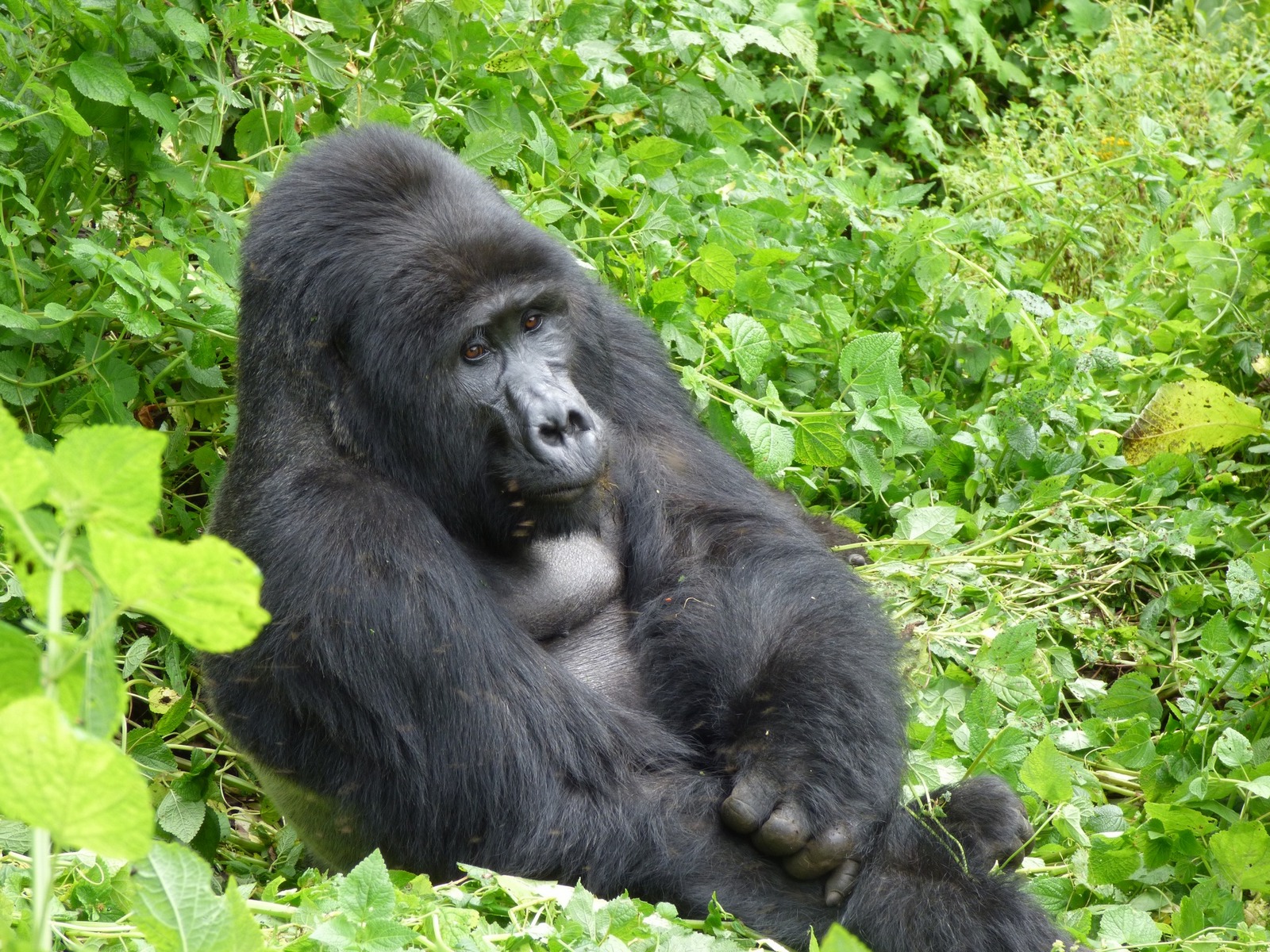
There is a massive difference between reading about mountain gorillas and standing a few feet from them in the wild. This 7 Days Uganda Rwanda gorilla trekking trip lets you experience this contrast firsthand by visiting two entirely different environments. In Rwanda’s Volcanoes National Park, you will walk through open, airy bamboo forests against a backdrop of volcanic peaks. Then, you will cross into Uganda’s Bwindi Impenetrable Forest, where the canopy is dense, ancient, and deeply green. Doing both treks back-to-back gives you a rare perspective on how these primates live in different landscapes. Beyond the gorillas, this route is a classic East African journey. You will connect with local traditions, wind down by the quiet waters of Lake Bunyonyi, and search for savannah wildlife in Queen Elizabeth National Park. It is a busy but well-planned loop that starts and ends in Kigali, keeping travel times practical.
Day 1: Arrival in Kigali & Transfer to Volcanoes National Park
Once you touch down at Kigali International Airport (KGL), your guide will meet you to get the journey started. Before heading into the mountains, you will take a quick drive through the city to visit the Kigali Genocide Memorial—a deeply moving place that helps you understand Rwanda's history. From there, it is a 2.5 to 3-hour drive to Volcanoes National Park in Musanze. The road winds through terraced hillsides and small farming towns, giving you a real look at rural life. You will check into your lodge near the Kinigi park headquarters just as the evening air starts to cool. Use this time to unpack, double-check your hiking boots, and get used to the altitude, which sits at over 2,000 meters. Dinner is a quiet affair, letting you rest up for tomorrow's early start.
Day 2: First Gorilla Trek in Rwanda & Cultural Visit
Breakfast is early today, around 6:30 AM, so you can make it to the Kinigi headquarters by 7:00 AM. Over coffee, the park rangers will brief your small group of eight and match you with a gorilla family. By 8:00 AM, you are on the trail. The hike through the bamboo can take anywhere from 2 to 6 hours, but once you find the group, the tracking rules allow for one quiet hour together. Watching them eat, play, and interact is incredibly grounding. In the afternoon, you will visit the nearby Gorilla Guardians Cultural Village (Iby'Iwacu) for a couple of hours. Here, locals share their traditions through drumming, dancing, and historical storytelling. You will head back to your lodge around 5:30 PM to relax, pack your bags, and prep for the border crossing tomorrow.
Day 3: Cyanika Border Crossing & Transfer to Bwindi
After breakfast, you will check out at 8:00 AM and head north toward the Cyanika border crossing. Crossing from Rwanda into Uganda is usually straightforward, taking about 30 to 45 minutes with an East Africa Tourist Visa. Once you are stamped through, the landscape changes. You will drive through the Kisoro region, winding around steep hillsides with the Virunga Volcanoes framing the background. It is about an 80-kilometer drive in total, taking roughly 3 to 4 hours to reach Bwindi’s southern sectors. You will arrive at your Ugandan lodge in time for a warm lunch. The afternoon is yours to unwind. You can take a casual walk through the local village, chat with the residents, or simply sit on the veranda with a hot cup of Ugandan tea.
Day 4: Second Gorilla Trek in Bwindi Impenetrable National Park
Today is your second trek, and Bwindi is a whole different ballgame. After an early breakfast, you will arrive at the park headquarters by 7:45 AM. The rangers will walk you through the safety guidelines before you head into the forest at 8:30 AM. Unlike Rwanda's open bamboo, Bwindi is a thick, ancient rainforest with steep ridges and tangled roots. The hike can take between 2 and 7 hours, making it a proper physical challenge. But when you finally sit with the gorilla family for your designated hour, the effort is entirely forgotten. Seeing them navigate this dense jungle is a completely different experience from day two. Afterward, you will hike back, collect your certificate, and return to the lodge for a warm shower and a hearty dinner.
Day 5: Travel to Lake Bunyonyi & Canoe Exploration
You can sleep in a little later today, enjoying breakfast at 8:30 AM before checking out. From Bwindi, it is a scenic 2 to 2.5-hour drive covering 75 kilometers to Lake Bunyonyi. This deep, peaceful lake is dotted with 29 islands and is free of bilharzia, hippos, and crocodiles, making it incredibly safe. After checking in and having lunch by the water, you will jump into a traditional wooden dugout canoe for a 2-hour guided trip. Your local guide will point out the islands and share the dark history of Punishment Island. The rest of the afternoon is yours to spend exactly how you like. You can go for a swim, walk along the terraced ridges, or just watch the birds from the dock as the sun goes down.
Day 6: Drive to Queen Elizabeth National Park & Savannah Game Drive
At 7:30 AM, you will leave the lake behind and drive north toward Queen Elizabeth National Park. The 160-kilometer journey takes about 4 to 5 hours, transitioning from steep highlands to wide-open savannah plains. You will enter through the southern Ishasha sector—famous for its tree-climbing lions—before heading to your lodge for lunch. At 3:30 PM, you will head out on a 3-hour afternoon game drive. This park is packed with life; with a ranger by your side, you will search the grasslands for elephants, buffaloes, Ugandan kobs, and maybe even a leopard resting in the branches. You will be back at the lodge by 6:45 PM, enjoying dinner in the middle of the quiet savannah.
Day 7: Kazinga Channel Boat Cruise & Return Transfer to Kigali
Your final morning starts with breakfast at 6:30 AM, followed by a 9:00 AM boat cruise along the Kazinga Channel. This 2-hour ride is a highlight, bringing you incredibly close to massive pods of hippos, sunbathing crocodiles, and hundreds of colorful water birds. After the boat docks, you will begin the journey back to Rwanda. The drive to Kigali is about 270 kilometers and takes roughly 6 to 7 hours, crossing back through the Katuna or Mirama Hills border. Your guide will take you straight to Kigali International Airport in time for your evening flight home. You will head to departures tired but carrying some of the most incredible wildlife memories possible, concluding a truly unforgettable week in East Africa.
What travel documents do you need for Cyanika border?
To cross the Cyanika border smoothly from Rwanda into Uganda, you will need a passport with at least six months of validity remaining and a few blank pages. The most convenient and cost-effective entry document for this itinerary is the East Africa Tourist Visa (EATV), which costs $100 USD and allows multiple-entry travel between Rwanda, Uganda, and Kenya, provided you apply for it through the country of your first entry (Rwanda, in this case). Additionally, you must present a physical Yellow Fever vaccination certificate, as health officials on both sides of the border strictly enforce this requirement. Keep your return flight itinerary handy as well, as border agents occasionally ask to see proof of onward travel before stamping you through.
How does gorilla trekking in Bwindi compare to Rwanda?
While both Volcanoes National Park in Rwanda and Bwindi Impenetrable National Park in Uganda offer deeply moving encounters with mountain gorillas, the physical landscapes and overall trekking experiences are quite distinct. Volcanoes National Park features relatively open bamboo forests and clear volcanic paths, which often makes hiking a bit more straightforward and allows for clearer, sunlit photography in open spaces. Bwindi, on the other hand, is an ancient, dense, and tangled rainforest characterized by steep ridges, thick undergrowth, and slippery clay slopes where rangers must literally slash a path through the vines using machetes. While a trek in Bwindi is generally more physically demanding and requires a higher level of endurance, it offers an incredibly raw, wild, and authentic jungle adventure that makes finding the gorillas feel like a true expedition.
Why is Lake Bunyonyi considered safe for swimming?
Unlike the vast majority of lakes in East Africa, Lake Bunyonyi is widely celebrated as an incredibly safe natural swimming pool because it is completely free from bilharzia (schistosomiasis), a common water-borne parasite carried by freshwater snails. Furthermore, the lake does not support populations of dangerous aquatic wildlife like hippos or Nile crocodiles, which are common hazards in nearby water bodies. This safety is largely due to the lake's high altitude of roughly 1,960 meters and its extreme depth—reaching up to 900 meters in some areas, making it the second-deepest lake on the African continent. While the fresh, cool water is highly inviting and safe from disease and predators, swimmers should still exercise caution and wear a life jacket, as the sheer depth and lack of shallow shorelines can easily exhaust inexperienced swimmers.
What is the dark history behind Punishment Island's name?
Among the 29 islands dotting Lake Bunyonyi, Akampene, universally known as Punishment Island, carries a tragic and sobering history rooted in historical Bakiga culture. Up until the mid-20th century, premarital pregnancy was considered a severe taboo that brought intense shame and financial ruin to a family, as it cost them the traditional bride price of livestock. To punish unmarried pregnant girls and deter others, families would row these young women out to this tiny, tree-barren island and abandon them to starve or drown, as most did not know how to swim. However, a fascinating loophole existed: poor men who could not afford a traditional dowry would often row out to the island under the cover of night to rescue the abandoned girls and take them as wives. This brutal practice eventually died out with the introduction of Christian missionary influence and changing societal laws in the region.
Where can you see tree climbing lions in Uganda?
To witness the rare and fascinating sight of tree-climbing lions, you must travel to the Ishasha sector, which lies in the remote southern reach of Queen Elizabeth National Park. While lions are occasionally spotted in trees in other parts of Africa, Ishasha's resident prides are famous for making this a daily habit, routinely lounge-bathing in the low, sturdy branches of local sycamore fig and acacia trees. Wildlife biologists believe this unique behavior is a clever adaptation to escape the blistering heat of the ground, catch a cool breeze, and avoid biting tsetse flies that swarm the tall savannah grasses. Additionally, these elevated perches give the lions an exceptional vantage point to scan the open plains for grazing prey like Ugandan kobs, offering travelers a truly spectacular and unique safari photo opportunity.
What wildlife can you see on Kazinga Channel cruises?
A boat cruise along the Kazinga Channel, a 32-kilometer natural waterway connecting Lake Edward and Lake George, offers one of the most concentrated and spectacular wildlife viewing experiences in Africa. As you glide along the water, you will get incredibly close to massive, grunting pods of hippos cooling off in the shallows and giant Nile crocodiles sunning themselves on the muddy banks. Huge herds of elephants and Cape buffaloes frequently gather at the water's edge to drink, bathe, and wallow in the mud, seemingly indifferent to the passing boats. The channel is also a world-class haven for birdwatchers, boasting hundreds of colorful species including yellow-billed storks, African fish eagles, pink-backed pelicans, and vibrant kingfishers darting across the water.
How long is the drive from Queen Elizabeth to Kigali?
The journey from the northern sectors of Queen Elizabeth National Park back to Kigali covers approximately 320 kilometers and typically takes between 6 to 8 hours to complete. Although the distance might seem modest, the driving time is extended by the region's winding, mountainous terrain as you ascend from the low-lying savannah plains into the steep, terraced highlands of southwestern Uganda. Additionally, crossing the international border back into Rwanda via the Katuna or Mirama Hills checkpoints requires stopping to clear customs, process passport stamps, and inspect vehicles, which can add anywhere from 45 to 90 minutes to the trip depending on daily traffic. Because of these variables and the potential for occasional mountain road delays, it is highly recommended to start this journey early in the morning to ensure you arrive at Kigali International Airport comfortably in time for an evening departure.
Which Bwindi sectors are closest to the Cyanika border?
Bwindi Impenetrable National Park is massive and managed through four distinct trekking sectors, but travelers entering from Rwanda via the Cyanika border should focus exclusively on the park's southern sectors to minimize travel time. The closest and most popular is the Rushaga sector, which features the highest number of habituated mountain gorilla families in the entire park and is highly accessible after a scenic drive of about 3 to 4 hours from the border. Just adjacent is the Nkuringo sector, which is famous for offering highly physical climbs and stunning, panoramic views of the entire Virunga Volcano range. Choosing either of these southern sectors saves you from a grueling, full-day drive across rough mountain roads to the northern sectors like Buhoma, ensuring you arrive at your lodge relaxed and ready for the trek.
What should you pack for a Bwindi gorilla trek?
Packing the right gear is absolutely vital for a successful and comfortable trek through the steep, wet, and unpredictable terrain of Bwindi's ancient rainforest. Your most important asset is a pair of sturdy, broken-in, waterproof hiking boots with deep tread and excellent ankle support to handle slippery mud and steep ridges. You should wear lightweight, long-sleeved shirts and durable long trousers tucked securely into your socks to protect your skin from stinging nettles, sharp thorns, and biting safari ants. Additionally, packing a pair of tough gardening gloves will allow you to grab onto branches and vines for balance, while a high-quality rain jacket, insect repellent, and a lightweight daypack with plenty of drinking water and a packed lunch are essential for a day in the jungle.
Can you cross East African borders with one visa?
Yes, you can seamlessly cross between Rwanda and Uganda using a single travel document known as the East Africa Tourist Visa (EATV). This joint visa initiative was created by the governments of Kenya, Rwanda, and Uganda to eliminate red tape and encourage regional tourism by allowing travelers to move freely between the three partner states for up to 90 days. The visa costs $100 USD and allows for multiple entries within the three-country zone, saving you both money and precious time at border crossings compared to buying individual single-entry visas. The only strict rule to keep in mind is that you must apply for the EATV through the consulate or online portal of the country you will enter first, and the visa automatically expires if you step outside of the three participating nations.
Booking 7 Days Uganda Rwanda gorilla trekking with us Roads of Adventure safaris
Booking a 7-day Uganda and Rwanda gorilla trekking tour with us at Roads of Adventure Safaris is an incredible way to experience the raw beauty of East Africa. Typically, a mid-range adventure like this runs between $23,00 and $8,500 per person.
Our journey usually kicks off in vibrant Kigali before heading into the misty forests of Rwanda’s Volcanoes National Park for your first gorilla encounter. From there, we’ll cross the border into Uganda’s breathtaking Bwindi Impenetrable National Park, giving you the rare, unforgettable chance to track these magnificent giants in two distinct, world-class habitats.
