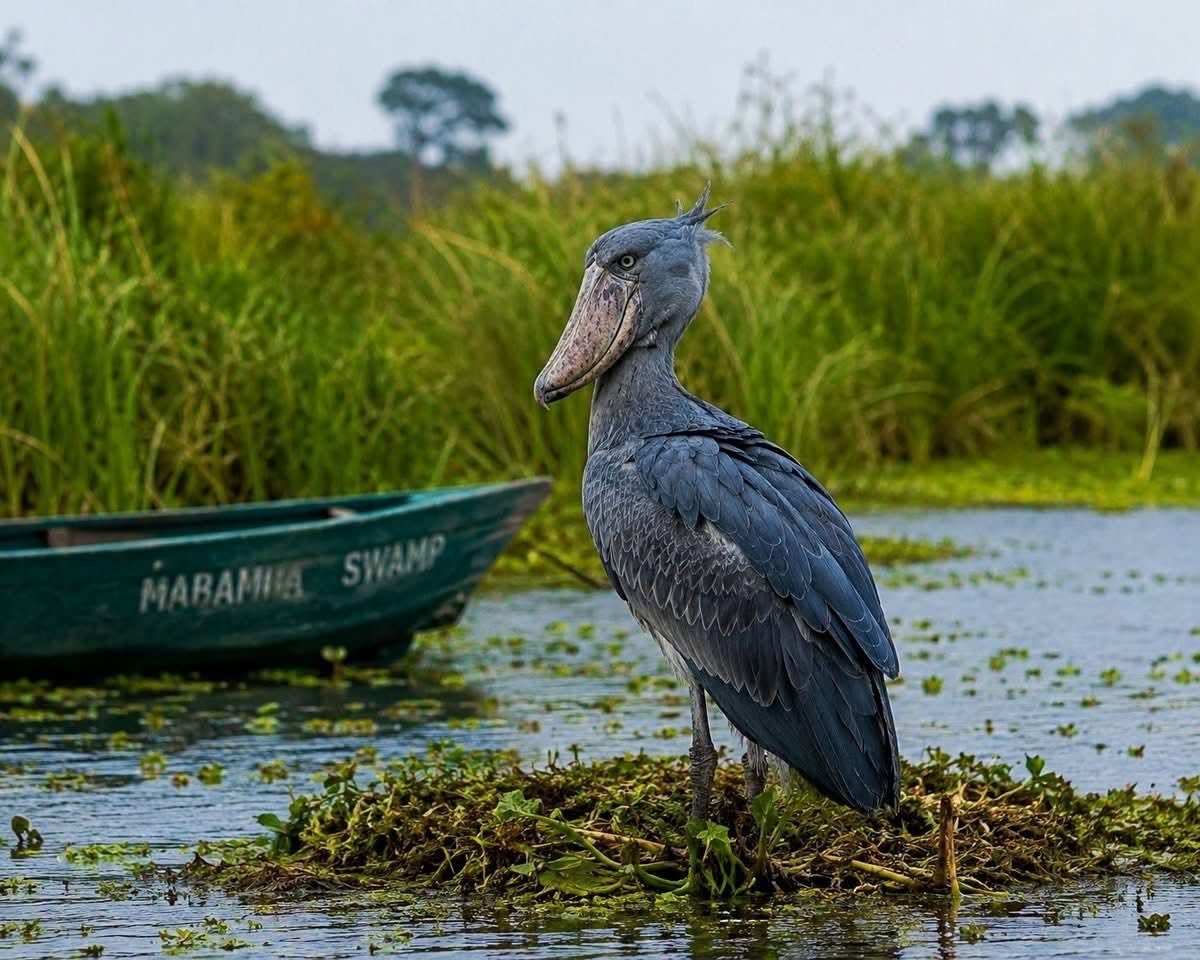
The 6-Day Uganda Photography & Birding Special offers a focused journey designed specifically for wildlife photographers and birding enthusiasts targeting Kidepo Valley National Park. Kidepo stands out as one of East Africa's prime avian habitats, housing over 475 recorded bird species, including rare semi-arid specialists and migratory raptors. By pairing early morning light tracking with strategic positioning near seasonal waterholes, this itinerary ensures optimal conditions for crisp wildlife shots and rare bird sightings. Open savannas and mountain backdrops allow for unobstructed angles of grazing herds and predators. Guided by specialized naturalists who understand focal lengths, positioning, and animal behavior, you move through key habitats at an easy pace. It is an ideal route for dedicated photographers seeking quiet fields, rich species counts, and quality field time.
Day 1: Arrival in Entebbe/Kampala, Briefing & Gear Check
Arrive in Entebbe or Kampala, meet your lead specialist guide, and transfer to your hotel. Spend the afternoon reviewing camera equipment, setting up beanbags for vehicle mounts, and going over your species target list. Enjoy a detailed safety and itinerary briefing over dinner before resting ahead of your flight to the northern frontier.
Day 2: Fly to Kidepo Valley & Golden Hour Savanna Session
Take a morning flight straight to Apoka Airstrip in Kidepo Valley. After settling into your lodge, meet your local spotter for an afternoon photography session in the Narus Valley. Work with the low golden sun to photograph grazing buffalo herds, elephants, and raptors perching on dead acacia branches before returning to camp for dinner.
Day 3: Full Day Raptor & Big Cat Photography in Narus Valley
Spend a full day working the Narus Valley waterholes during early morning and late afternoon light. Target lions resting on granite kopjes alongside specialized dry-country birds like the Abyssinian roller, secretary bird, and ostrich. Take a long midday break at the lodge to back up memory cards, recharge battery units, and clean lens glass.
Day 4: Kidepo Sand Riverbed & Northern Birding Trail
Drive north toward the dry Kidepo Riverbed and Kanangorok Hot Springs. Focus your lenses on specialized species living in the Borassus palm woodland, such as the black-breasted barbet and Karamoja apalis. The wide, white sand banks provide clean, minimal backgrounds for capturing birds in flight and small mammal movements along the South Sudan border.
Day 5: Dawn Hide Photography & Bush Walk Tracking
Start before sunrise at a designated ground hide near permanent water, capturing animals as they drink in low dawn light. Later, join an armed ranger for a slow-paced walking safari to photograph insects, foot tracks, and small bush birds up close. End your day with a sunset photography drive across open grassy plains.
Day 6: Sunrise Birding Drive & Domestic Flight to Entebbe
Conduct a quick sunrise drive along park tracks to catch early active songbirds and predatory cats before breakfast. Pack your optical gear, check out of your lodge, and transfer to Apoka Airstrip. Fly back to Entebbe International Airport in the afternoon, connecting directly to your homebound international flight or evening hotel stay.
Why is Kidepo Valley National Park considered a premier destination for birding and wildlife photography?
Kidepo Valley National Park offers a rare combination of high avian diversity, dramatic semi-arid landscapes, and uncrowded safari tracks. Located in Uganda’s far northeast, it boasts over 475 recorded bird species, including roughly 20 dry-country specialists not found anywhere else in the country. Raptors, bustards, rollers, and hornbills are particularly abundant across the open savannas. For photographers, the park’s unobstructed terrain framed by Mount Morungole provides clean backgrounds without dense scrub blocking your view. Because animal concentrations gather around permanent water points in the Narus Valley, positioning for clear shots of big cats, elephants, and large buffalo herds is significantly easier than in busier parks. The low visitor density means you can spend time framing shots without vehicle interference.
What camera equipment and lenses should I pack for this specialized 6-day itinerary?
To maximize photography opportunities across open savannas and riverbeds, pack a combination of telephoto and wide-angle lenses. A primary telephoto lens in the range of 300mm to 600mm (or a 100-400mm zoom) is essential for isolating distant raptors, flight action, and skittish wildlife without disrupting their natural behavior. A wide-angle or standard zoom lens (such as a 16-35mm or 24-70mm) captures panoramic landscape shots with Mount Morungole as a backdrop. Bring two camera bodies if possible to avoid lens changes in dusty field conditions. Essential accessories include beanbags for vehicle window stability, extra high-capacity memory cards, additional batteries, a monopod for walking safaris, and lens cleaning kits to manage airborne dust.
How does the flight from Entebbe to Apoka Airstrip benefit photographers and birders?
Flying directly from Entebbe to Apoka Airstrip reduces travel time from a 10-to-12-hour overland road trip to a smooth two-hour flight. This preserves your energy and eliminates physical fatigue before starting intensive field sessions. More importantly, arriving directly in the center of the park on Day 2 allows you to settle into your lodge early and hit the tracks in time for the late afternoon golden hour. Flight transfers also save precious camera gear from extended vibration and dust exposure along unpaved rural highways. It maximizes your field time in Kidepo's key birding sectors while staying strictly within a 6-day timeframe.
What key bird species can photographers expect to target in the Narus Valley?
The Narus Valley is Kidepo’s primary water basin and birding hub. Key species include the ostrich, secretary bird, Abyssinian ground hornbill, and the brightly colored Abyssinian roller. Photographers can also target a high concentration of raptors such as the bateleur, martial eagle, lappet-faced vulture, and dark chanting goshawk perching atop dead acacia limbs. Water-loving species like the Goliath heron, black coucal, and various kingfishers populate the rank grasses and permanent pools. The combination of open grassland and acacia woodland makes tracking perched or flying birds simple, allowing for sharp flight shots and feather-textured close-ups.
Why is golden hour lighting critical for wildlife photography in Kidepo's savanna?
Golden hour occurs during early morning right after sunrise and late afternoon before sunset when the sun rests low on the horizon. In Kidepo, low-angle sunlight casts warm, soft tones across yellow savanna grasses and granite kopjes, eliminating harsh shadows common during midday heat. This lighting brings out the textures of mammal coats, raptor plumage, and mountain silhouettes. Predators like lions and leopards are also far more active during these cooler windows, giving photographers action shots of hunting, grooming, or walking rather than sleeping under dense bushes.
What makes the Kidepo River sandbed and Kanangorok Hot Springs unique for birding?
Unlike the permanent green pools of the Narus Valley, the northern Kidepo River region features a dry white sand bed flanked by Borassus palm woodlands. This habitat supports specialized bird species, including the black-breasted barbet, Karamoja apalis, chestnut sparrow, and four-banded sandgrouse. The wide, pale sandbed creates clean, uncluttered backgrounds for photography, allowing isolated bird subjects to pop against minimal, neutral backdrop tones. Kanangorok Hot Springs near the South Sudan border also attracts specialized wildlife and raptors soaring over open desert-like terrain.
How are safari vehicles customized to assist birding and wildlife photographers?
Safaris booked with specialized operators utilize 4x4 vehicles fitted with pop-up roofs and drop-down side windows. The open roof structure provides clear, elevated 360-degree sightlines for tracking birds in flight or spotting lions resting on granite outcrops. Vehicle window frames accommodate weighted beanbags to steady telephoto lenses without setting up bulky tripods inside. Vehicles also carry multi-point power inverters so photographers can charge battery packs between field sessions. Experienced driver-guides know how to position the vehicle relative to the sun and animal movements to give you optimal lighting and angles.
What bird species are unique to Kidepo Valley and found nowhere else in Uganda?
Kidepo is home to over 20 dry-country bird species that do not occur in any other national park in Uganda. Headline species include the ostrich, which roams freely across the open northern plains, and the Karamoja apalis. Other localized specialties include the rose-ringed parakeet, Clapperton’s spurfowl, yellow-billed shrike, black-breasted barbet, stone partridge, and fox kestrel. For avid birders maintaining world lifelists, visiting Kidepo is essential for ticking off these specialized Horn of Africa and semi-arid Sahelian species without traveling into more restrictive border territories.
What safety and operational rules apply during the Day 5 guided bush walking safari?
The guided walking safari on Day 5 takes place under the supervision of armed park rangers from the Uganda Wildlife Authority. Walkers move in a single-file line behind the lead ranger, who maintains constant situational awareness for big game like buffaloes or elephants resting in high grass. Voice levels must be kept low to avoid startling wildlife or flushing target birds. Photographers are advised to use light monopods or handheld lens setups rather than heavy gear so they can move easily across uneven ground. Staying close to your ranger ensures a safe, educational, and low-impact tracking session.
How does midday light affect photography in Kidepo, and how is it managed?
Midday sunlight in Kidepo’s semi-arid climate is intense, creating harsh contrast, blown-out highlights, and deep shadows. Heat haze rising off open savanna tracks can also distort telephoto sharpness over long distances. The 6-day itinerary manages this by scheduling a midday rest break at the lodge between morning and afternoon sessions. Photographers use this time to back up memory cards, clean lens glass, and recharge batteries. If shooting during harsh light, photographers are guided to focus on black-and-white compositions, shaded bush thickets, or macro photography of tracks and insects.
What is the best time of year to undertake this photography and birding safari?
Kidepo offers great wildlife viewing year-round, but the best time for birding and photography spans from November to April. During these months, Palearctic migratory birds arrive from Europe and Asia, swelling total bird populations and bringing vibrant breeding plumage. Late dry-season months (November to February) concentrate game around remaining Narus Valley waterholes, creating reliable predator-prey photography ops. The short rains in March and April bring lush green landscapes, clear skies free of dust haze, and dramatic cloud formations ideal for scenic wide-angle shots.
How does dawn hide photography work on Day 5 of the itinerary?
Ground hides are strategically placed near permanent waterholes or natural animal routes within Kidepo. Photographers enter the hide before dawn under cover of darkness to avoid scaring approaching animals. As daylight breaks, animals approach the water to drink, unaware of human presence. Sitting at ground level allows for low-angle perspectives where the lens is level with the water’s surface, creating dramatic reflections and intimate eye-level portraits of drinking mammals and waterbirds. Hides provide shelter from the wind and keep your gear steady for razor-sharp morning shots.
How do I protect delicate camera gear from dust and heat during safari drives?
Kidepo’s dry climate generates fine airborne dust along unpaved tracks. To protect your equipment, keep cameras enclosed in padded dustproof bags or wrapped in soft protective cloths when driving between sightings. Avoid changing lenses in the field while inside an open vehicle; instead, keep dedicated focal length lenses attached to separate camera bodies. Bring air blowers, microfiber clothes, and sensor cleaning kits to clear dust off front elements at night. Keep spare batteries cool inside your daypack away from direct sunlight to preserve charge capacity.
What non-birding wildlife photography targets can I expect during this safari?
While birding is a major focus, Kidepo is home to 77 mammal species. Photographers will have opportunities to shoot large herds of Cape buffaloes—often numbering over a thousand individuals—alongside African elephants, Rothschild’s giraffes, plains zebras, and Jackson’s hartebeests. Predators include lions (frequently photographed sunning on granite kopjes), leopards, spotted hyenas, black-backed jackals, and cheetahs. Rare mammals like the bat-eared fox and caracal are also present, adding variety to your wildlife photo portfolio.
How do specialized driver-guides assist in locating target birds and positioning for shots?
Specialized safari guides possess trained eyes for spotting cryptically colored birds and tracking hidden wildlife calls. They understand bird calls, perching habits, and territorial behaviors, helping predict where a target species will land. For photographers, a skilled guide understands camera mechanics—positioning the 4x4 so the sun illuminates your subject while keeping a safe distance so animals remain calm. Their field knowledge ensures you spend less time searching aimlessly and more time capturing sharp, well-composed images.
Booking 6-Day Uganda Photography & Birding with us Roads of Adventure safaris
Booking the 6-Day Uganda Photography & Birding Safari with Roads of Adventure Safaris is an exceptional choice for capturing the country’s diverse avian life and stunning landscapes. This specialized itinerary is strategically crafted around prime photographic angles, early morning lighting, and slow-paced field birding