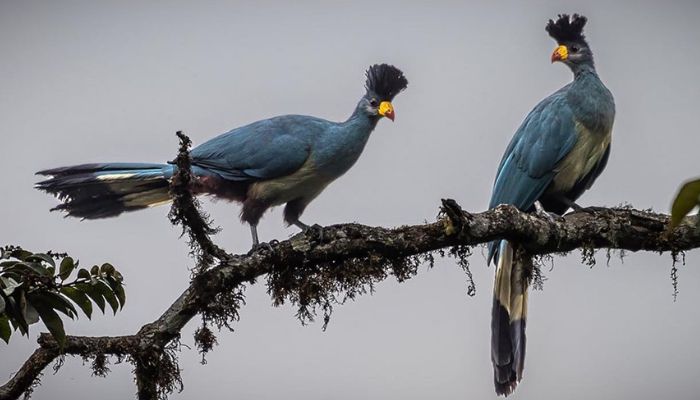
Going for an incredible 10-day Rwanda Birding Safari means offering yourself a chance to spot over 700 bird species across diverse habitats, from eastern savannahs to the Albertine Rift montane forests. This cross-country birding journey hits prime hotspots like Akagera National Park and Nyungwe National Park, targeting regional endemics and rare waterbirds
10-Day Albertine Rift Endemics
This 10-day Albertine Rift endemics route will focus only on endemic and highly specialized bird species restricted to Rwanda’s montane forest habitats and their immediate ecological zones. You will start in Kigali, then you will move toward the humid Nyungwe montane forests, where canopy birds and forest specialists will dominate daily targets. Uwinka and surrounding trails will guide you to priority species such as Ruwenzori Turaco, Red-collared Mountain Babbler, and Archer’s Robin-Chat. You will then bird the Kamiranzovu Swamp trail, where wetland edges will add rarer forest-wetland associates. After that, you will shift to Volcanoes National Park, staying on suitable slopes to pursue Handsome Francolin and Dusky Crimsonwing. Finally, you will move to Akagera for a short savanna birding window that will support additional restricted Albertine-aligned species before your departure to Kigali. You will plan each day around habitats, weather, and listening points, staying ready for rapid changes in forest bird activity.
Day 1 — Kigali Arrival & Set-Up
You will arrive in Kigali and complete check-in, then you will settle for a focused start to your birding schedule. After you will unpack, you will review your endemic targets and habitat map, aligning your priorities for Nyungwe and Volcanoes National Park. You will organize field notes, charging plans, and backup protection for rain and humidity. In the afternoon, you will complete a short orientation walk if timing will allow, using quiet observation to help you recognize local call patterns before the forest days. You will also confirm departure logistics for tomorrow’s transfer. Evenings will be used for checklist preparation, confirmation of trail options, and a simple review of likely montane forest micro-habitats. Your day will end with early rest so you will start Day 2 with energy and a clear plan.
Day 2 — Transfer to Nyungwe via Marshland Edge Birding
You will travel from Kigali to Nyungwe National Park, and birding will happen during marshland and wetland edge stops that will precede montane forest habitat. You will scan reeds, drainage lines, and low thickets, and you will use repeated listening pauses to capture quiet calls. As the landscape will change, you will adapt your search to cover type, moving from open wetland to denser forest edge vegetation. You will keep your focus on specialized species likely to respond to humid conditions and stable cover. You will then continue to the Uwinka access area and settle near your base. In the late afternoon, you will do a short trail check for evening activity, identifying starting points you will revisit tomorrow. You will finish the day with habitat-based notes that will support efficient birding on Days 3 and 4.
Day 3 — Uwinka Full-Day Search: Turaco, Babbler, Robin-Chat
You will bird the Uwinka area across a full day, targeting Ruwenzori Turaco, Red-collared Mountain Babbler, and Archer’s Robin-Chat. You will prioritize turaco searches first by checking canopy movement and verifying vocalizations from stable listening points. For Red-collared Mountain Babbler, you will move slowly through mid-story and understory pockets where foraging clusters will recur. Archer’s Robin-Chat will be searched through careful ground-level scans along shaded pathways and leaf-litter zones, paired with short listening intervals. You will structure the day into planned loops so you will reduce unnecessary travel through dense forest. After each loop, you will pause to compare call notes with your sightings. By late afternoon, you will adjust routes toward the most active micro-habitats. You will end with a final sweep for lingering vocal activity and you will prepare your target plan for Day 4.
Day 4 — Uwinka Full-Day Re-check: Confirm Targets in Multiple Hotspots
You will continue full-day birding in the Uwinka area, with a refined plan based on what you will record on Day 3. You will keep Ruwenzori Turaco as a primary goal, revisiting canopy sections and listening points where calls will carry clearly. You will pursue Red-collared Mountain Babbler by checking understory feeding routes, especially in consistent cover bands and stream-adjacent vegetation. Archer’s Robin-Chat will be targeted again through careful scanning of shaded trails and ground cover, using repeated pauses so you will not miss brief appearances. You will rotate between faster scanning sections and slow listening periods. You will also record which micro-habitats will produce the best results for each target, then you will focus more time there. By afternoon, you will concentrate effort where sightings will be most probable. You will finish the day with a compact checklist review and a short evening trail check.
Day 5 — Kamiranzovu Swamp Trail Birding
You will bird Kamiranzovu Swamp trail, focusing on wetland edge conditions and the transitions between swamp vegetation and nearby forest cover. You will begin early with quiet movement along the trail, and you will concentrate on species that will show stronger presence in moist, shaded pockets. You will scan sedges, low shrubs, and drainage lines, then you will confirm calls using short listening stops. As light will change through the morning, you will re-check the best sections where activity will concentrate. You will plan your movement to cover the main swamp segments once, then revisit the strongest observation points after midday. If weather will shift, you will maintain your listening routine during brief shelter periods rather than stopping completely. You will compile habitat notes and route outcomes at day end, then you will prepare for the next transfer toward Volcanoes National Park.
Day 6 — Transfer to Volcanoes National Park via Lake Kivu Stops
You will transfer from Nyungwe region to Volcanoes National Park, and birding stops will occur along the Lake Kivu route. You will stop only at habitat points that will offer real birding value, such as water-adjacent areas, wooded fringes, and sheltered hillside cover. You will scan for open-water species during appropriate viewpoints, then you will check nearby trees and thickets where specialized woodland birds may appear. As elevation and vegetation will shift, you will transition your expectations from lake edges to montane slopes. You will arrive at Volcanoes National Park and you will settle, then you will do a short orientation walk to identify safe access points for the next two days. You will end by organizing your slope trail plan for Handsome Francolin and Dusky Crimsonwing, using early evening call checks where possible.
Day 7 — Volcanoes Slopes: Handsome Francolin & Dusky Crimsonwing
You will bird the slopes of Volcanoes National Park with Handsome Francolin as a primary objective. You will focus on ground cover and listening stations along suitable trail segments, using careful, slow movement so you will not miss subtle signs of presence. You will verify calls and movement patterns before you will commit to extended searching in one section. Dusky Crimsonwing will be targeted through mid-story and canopy-adjacent searches in areas where slope conditions will support consistent activity. You will structure the day into two main loops, and you will alternate scanning with quiet listening intervals. When you will hear calls without immediate confirmation, you will adjust your approach angle and you will try again from nearby positions. Midday will be used for route refinement based on what will have been productive so far. You will end with an evening sweep from a familiar junction so your records will compare cleanly with earlier checks.
Day 8 — Volcanoes Slopes Re-targeting: Confirm Francolin & Crimsonwing
You will continue on Volcanoes National Park slopes with focused repetition for Handsome Francolin and Dusky Crimsonwing. You will first re-check the ground cover zones that will match the calls and sightings you will have recorded on Day 7. You will use frequent short stops, allowing birds to re-appear after disturbance and helping you track movement more accurately. Dusky Crimsonwing will be pursued by scanning at the height and cover types where it will most consistently feed, then by returning to the same slope faces after listening confirmation. You will keep your routes efficient by targeting the best-performing trail segments rather than covering new areas without evidence. If a target will remain elusive, you will switch to a nearby listening point with similar micro-habitat conditions. You will end the day with a structured checklist update and a summary of hotspots you will use for the final transfer day.
Day 9 — Transfer to Akagera National Park
You will transfer to Akagera National Park and shift your birding focus from montane forest specialties to savanna habitat conditions. During travel, you will keep stops limited and purposeful, stopping only where habitat will justify a short scan for birds tied to water and cover corridors. After arrival, you will settle and you will conduct an orientation check around your lodge area to understand which routes will be most productive. In the late afternoon, you will start light savanna birding by focusing on grassland edges, scattered trees, and water-adjacent zones. You will scan systematically, then you will use brief listening pauses to help confirm calls before you will record species confidently. You will record habitat notes for your morning plan, including likely feeding zones and movement lines across the plains. You will finish the day prepared for an effective early start on Day 10.
Day 10 — Morning Savanna Birding & Return to Kigali
You will spend the morning in Akagera National Park birding savanna habitats during peak early activity. You will focus on open areas, grassland edges, and water-adjacent trees, using slow scanning and quiet listening pauses to confirm vocal detections. You will aim for savanna specialists that will fit the morning window, while you will keep your records aligned with the route theme of endemic and restricted Albertine-linked species when habitat will support them. As the morning will progress and light will strengthen, you will concentrate on areas where bird movement will increase due to feeding and insect activity. You will then return for packing and you will check your records against your daily plan for completeness. You will depart back to Kigali with a final roadside scan if time will allow, then you will arrive and complete check-out. You will close with a habitat summary log based on what you will record across the ten days.
10-Day Savannah and Forest Combo
This 10-day Savannah and Forest Combo route will combine east Africa wetland birding with Rwanda’s southwestern forest bird searches. You will begin in Kigali, then you will move to Akagera National Park where papyrus-lined water edges will shape daily targets. Across Days 2 and 3, you will focus on species strongly tied to wetland cover, including the Shoebill Stork and Papyrus Gonolek, while you will also scan for raptors that will patrol open ground and water corridors. Next, you will shift west to Nyungwe National Park, where misty forest conditions will support canopy movement and specialized understory birds. Days 5 and 6 will be built around canopy walkways and trail-based birding, with time for repeated listening points and habitat-focused scanning. You will then travel to Volcanoes National Park for Albertine endemics, followed by Golden Monkey trekking and a Lake Kivu boat cruise. Each day will stay tied to habitat, weather, and practical movement for reliable detections.
Day 1— Kigali Start & Overnight
You will start your trip with pick-up in Kigali and you will head to your overnight base for check-in. After you will settle, you will review the route order: east-side wetlands first, then Nyungwe forest, and finally Volcanoes and Lake Kivu. You will confirm departure times for early birding starts and you will organize equipment for humid mornings and possible rain. If time will allow, you will do a short orientation walk in nearby greenery to settle your focus on calls, flight patterns, and basic identification routines before the longer field days. In the evening, you will prepare checklists and note which habitats you will prioritize in Akagera, including papyrus edges, open water margins, and raptor scan zones. You will finish the day with an early rest so your next days will begin with consistent, quiet effort and careful observation.
Day 2— Akagera Birding: Papyrus Water Edges & Raptors
You will bird Akagera National Park with a strong focus on papyrus and wetland edge habitats where specialized birds will concentrate. In the morning, you will move slowly along water-associated sections, scanning tall reeds and papyrus margins while using short listening pauses to confirm presence. You will look for the Shoebill Stork by checking stable water zones and vegetated margins where it will remain settled. You will also target Papyrus Gonolek by searching papyrus edges and dense cover lines, watching for repeated movement along the same strips of vegetation. Throughout the day, you will scan open areas for raptors that will use thermals and perches over the water corridor. Midday will be used for repositioning to the best observation points rather than rushing. You will end by compiling field notes by habitat type so Day 3 will build directly on today’s results.
Day 3— Akagera Full-Day: Confirm Shoebill & Papyrus Gonolek
You will continue birding in Akagera National Park for a second full day, prioritizing the same wetland habitats while adjusting to the patterns you will record today. You will keep Shoebill Stork as a main objective by revisiting the most consistent water zones and the vegetated margins where it will likely remain present or return after disturbance. You will target Papyrus Gonolek by checking papyrus edge bands at multiple angles, using quiet pauses so vocalizations will carry clearly. You will also track raptors through the day by scanning flight routes over open water and grass patches, recording species, height, and direction. You will structure your movement into two or three observation blocks, each with a planned start time and a return route. By late afternoon, you will finalize a habitat-based log and you will prepare for the transfer toward Nyungwe National Park and forest conditions.
Day 4 — Transfer to Nyungwe with Scenic Lunch
You will transfer from Akagera region to Nyungwe National Park and you will keep the day focused on travel efficiency with a scenic lunch break. During the journey, you will stop where vegetation transitions will create useful viewing points, especially where woodland cover will connect to wet habitats. You will arrive at Nyungwe and you will settle near your base so your next days will begin on time for early birding. After check-in, you will do a short light forest edge walk to orient to trail density, canopy structure, and suitable listening spots for the following morning. You will note which trails will likely provide the best canopy movement and which areas will be easier for long stationary scans. You will also confirm safety and route planning for canopy walkways and forest trails. Your day will end with organized gear and a clear schedule for Days 5 and 6.
Day 5— Nyungwe Canopy Walkways: Forest Specialists
You will bird Nyungwe National Park using canopy walkways as a primary strategy for forest detection. In the early morning, you will move along the canopy route and you will scan slowly across gaps in foliage, focusing on movement, call direction, and repeating flight lines. You will use listening points at walkway sections, matching calls to likely height zones and understory-to-canopy transitions. After the walkway session, you will shift to forest trails where specialized birds will move through mid-story and understory. You will keep your route focused, revisiting productive junctions and shaded corridors rather than covering new ground continuously. You will take short breaks to reduce fatigue and keep attention steady on subtle vocal activity. By afternoon, you will refine your trail selection based on what will be active. You will finish the day with a checklist update and notes tied to canopy height, slope direction, and humidity levels.
Day 6 — Nyungwe Forest Trails: Repeat Hotspots & Listening
You will continue birding in Nyungwe National Park across forest trails, building on the productive hotspots found on Day 5. You will repeat the best walkway-adjacent areas first, then you will head into trail sections that will match understory behavior and feeding rhythms. You will search systematically by moving in small segments, pausing often for vocal confirmations and re-checking micro-habitats such as stream-side cover, dense thickets, and mixed canopy edges. You will maintain quiet movement so calls will remain detectable and sightlines will stay clear. Midday will be used for targeted repositioning rather than long rest, keeping your day aligned with peak activity windows. If you will miss a target call during a traverse, you will return to the closest junction with similar cover and repeat the listening sequence. You will end the day by summarizing which habitats will produce the most consistent detections. Then you will prepare for the transfer to Volcanoes National Park on Day 7.
Day 7 — Transfer to Volcanoes National Park
You will transfer to Volcanoes National Park and you will keep birding dependent on the habitat you will pass en route. You will plan stops around vegetation transitions and sheltered roadside cover where you will likely find montane-associated birds. You will continue until you will arrive at Volcanoes, then you will settle and prepare for the Albertine endemics schedule. In the late afternoon, you will complete a short orientation walk on nearby accessible slopes to identify safe observation points and listening positions. You will confirm trail starting points and the likely conditions for morning birding. Your plan will emphasize slow scanning, careful listening, and reduced unnecessary movement so tomorrow’s searches will begin efficiently. You will end the day by arranging your field gear for higher-elevation forest conditions and by reviewing your target list for Day 8, keeping focus on Albertine restricted species and montane habitat structure.
Day 8— Volcanoes Birding: Albertine Endemics on Slopes
You will bird Volcanoes National Park with a clear focus on Albertine endemics, targeting montane forest and slope habitats that will support specialized species. You will start early by moving to productive listening points and by scanning at the correct height levels for each target category. You will search slowly along trails, using short pauses that will increase detection of quiet calls and brief movement. You will focus on likely foraging cover, including dense understory zones and canopy-adjacent edges, then you will revisit the best segments more than once within the day. As you will hear vocalizations, you will adjust direction and angle so your sightlines will improve. You will record observations with time and habitat notes so your route will remain structured and efficient. Midday will be used to reposition within the same micro-habitat types rather than shifting broadly. You will finish the day with a checklist review and plan adjustments for Golden Monkey trekking and Lake Kivu activities on Day 9.
Day 9 — Golden Monkey Trekking & Lake Kivu Boat Cruise
You will spend the day combining Golden Monkey trekking with Lake Kivu water-based birding. In the morning, you will start trekking for Golden Monkeys and you will remain attentive to the timing of troop movement, while you will keep birding notes focused on adjacent canopy and slope cover. During pauses, you will scan for forest and edge birds that will appear with the trekking route. After trekking, you will shift to Lake Kivu for a boat cruise. On the water, you will search open-water zones, shorelines, and sheltered bays for birds active around the lake margin. You will keep your observations tied to wind direction, shoreline cover, and water activity, since bird presence will change with light and movement. You will record key sightings and habitat notes throughout. You will end the day prepared for a final morning session on the lake and then your departure to Kigali on Day 10.
Day 10— Final Lake Kivu Morning & Departure to Kigali
You will begin with a final morning session at Lake Kivu, focusing on bird activity that will rise in early light. You will scan shorelines, sheltered inlets, and water-adjacent trees, using quiet, steady observation from suitable viewpoints. You will prioritize raptor and water-edge movement patterns, then you will confirm vocalizations whenever they will occur. As the morning advances, you will adjust your position to match shifts in bird feeding behavior along the shoreline. You will keep records organized by habitat so your final summary will connect the forest, papyrus, and lake segments of the route. After the morning birding session, you will pack and you will complete departure plans to Kigali. En route, you will allow short stops only where habitat will justify brief scanning. You will arrive in Kigali and you will complete check-out, then you will finalize your overall species list and habitat outcomes for the full 10 days.
10-Day Ultimate Primate and Birding Safari
This 10-day ultimate primate and birding safari will blend Rwanda’s most acclaimed national parks with guided tracking of gorillas and chimpanzees, alongside focused birding each day. You will start in Kigali with a short city tour and travel into Nyungwe National Park, where forests will support lively birdwatching along the edges and inside the canopy. You will then move to Lake Kivu for lake-shore birding and a boat ride to Amahoro Island, before heading to Volcanoes National Park for mountain gorilla trekking. Between primate activities, your itinerary will include birding routes shaped by habitats, including forest fringes, canopy viewpoints, waterfall areas, and volcanic foothills. Throughout the journey, you will travel in comfort, follow a clear daily plan, and receive naturalist-led guidance designed to help you spot prime species and understand the landscapes that shelter them.
Day 1: Arrival in Kigali + City Birding
On Day 1, you will arrive in Kigali and you will meet your driver-guide for check-in support and a smooth transfer to your lodge. After settling in, you will take part in a Kigali city tour that will focus on key viewpoints and cultural highlights. Your guide will keep the pacing relaxed so you will remain comfortable after travel and you will prepare for the birding days ahead. In the late afternoon, you will enjoy short birding walks around areas close to your lodge, where urban trees, gardens, and open pockets will hold resident and seasonal species. You will use binoculars to scan likely perching sites and you will practice listening for calls in different microhabitats. By evening, you will review tomorrow’s plan, confirm transport timing, and receive a clear reminder of what to pack for forest work and early departures.
Day 2: Transfer to Nyungwe National Park
On Day 2, you will transfer from Kigali to Nyungwe National Park. The route will move from city landscapes into greener highlands, and the scenery will shift toward misty, forested terrain as you will approach the park region. Upon arrival, you will check in and you will take time to rest before your first birding session. Your guide will then lead you on birding along forest edges and nearby habitat transitions, where layered vegetation will support active feeding and vocal activity. You will focus on scanning understory movement, fruiting trees, and shaded corridors that birds will use for foraging. Your guide will also explain how altitude and forest structure will influence what you will see, and you will build daily birding habits that will support accurate identification. In the late afternoon, you will continue with a shorter, quieter session where calls and short bursts of movement will guide your search. You will return for dinner and an early preparation for chimpanzee trekking.
Day 3: Chimpanzee Trekking + Forest-Fringe Birding
On Day 3, you will go for chimpanzee trekking in Nyungwe National Park. After the briefing, rangers will guide your group as you will follow signs of chimp activity such as feeding remains, calls, and movement patterns. Once chimpanzees will be located, you will observe from the permitted positions while you will remain respectful of all tracking and ranger instructions. You will spend time watching feeding, vocalizing, and social behavior as you will learn how chimp activity will affect the surrounding forest. After the trek, you will continue with afternoon birding along forest fringes. This session will focus on birds that will use borders between forest and openings, including species that will shift between canopy, bamboo breaks, and undergrowth edges. You will use both visual scanning and listening to identify by call and behavior. You will end the day at your lodge with dinner, recap notes, and a clear plan for canopy and waterfall habitat birding on the following day.
Day 4: Canopy Walk + Waterfall Habitat Birding
On Day 4, you will visit the canopy area and you will spend time at the lookout points during the best light for spotting birds in the treetops. From above, you will observe how birds will move between fruiting zones, shaded gaps, and mixed-flock activity areas. Your guide will help you read canopy structure and you will focus on identifying likely species by shape, flight style, and feeding behavior. After the canopy session, you will shift toward waterfall habitat birding, where humidity, mist, and near-water conditions will support different groups of birds compared with higher, drier sections. You will scan along valley lines, follow call directions carefully, and concentrate on movement near stream corridors and damp vegetation patches. This day will include short stops for steady observation so you will not rush sightings and you will keep a calm focus. By evening, you will return to your lodge area and you will review the next transfer to Lake Kivu so your birding schedule will stay well organized.
Day 5: Transfer to Lake Kivu
On Day 5, you will transfer from Nyungwe National Park to Lake Kivu. The drive will bring you down toward lakeshore landscapes, and the habitats you will pass will change from dense forest highlands into open water country with cultivated areas and shoreline vegetation. After arrival, you will check in and you will rest briefly before beginning birding. Your afternoon session will be centered on lakeshore habitats where water-associated species will become more frequent. You will focus on reeds, sheltered inlets, floating or shoreline vegetation, and perching sites along calmer stretches of water. Your guide will help you scan effectively for birds that will feed in groups or that will appear briefly when conditions will be right. You will also use listening for calls around water edges and you will track any visible flight paths that will lead to sightings. If time and weather will allow, you will include a relaxed second shoreline sweep later in the day. You will finish with dinner and a brief logistics update for the boat ride to Amahoro Island on Day 6.
Day 6: Boat Ride to Amahoro Island + Shoreline Birding
On Day 6, you will take a boat ride to Amahoro Island and you will bird along shoreline habitats during calmer observation windows. After boarding, you will move across the lake while your guide will point out likely species zones based on water conditions, shore visibility, and vegetation cover. As you will reach Amahoro Island, you will follow a planned walking route that will cover key sighting areas without rushing, so you will remain attentive to birds that will appear intermittently. You will focus on shoreline feeding, perching behavior, and birds moving between cover and open water. The session will emphasize both scanning and listening, since some species will be easier to detect by call before they will be visible. You will take short breaks for observation and you will note habitat differences between island edges, sheltered bays, and vegetated margins. In the afternoon, you may return for additional shoreline birding if the day’s timing will fit. You will then return for dinner and rest, ready for the transfer to Volcanoes National Park.
Day 7: Transfer to Volcanoes National Park
On Day 7, you will transfer from Lake Kivu to Volcanoes National Park. The journey will move into Rwanda’s volcanic region, and the landscape will become more rugged and higher in elevation. As you will approach the park area, you will notice changes in vegetation and climate that will shape what birds will show during your next sessions. After arrival, you will check in and you will have time to rest before your evening birding. Your guide will lead you to suitable observation areas near the lodge or along accessible park-adjacent sections, focusing on habitat types that will introduce a new bird list compared with Lake Kivu and Nyungwe. You will concentrate on volcanic forest edges, bamboo zones where applicable, and hillside vegetation that will host active movement and calls. You will listen carefully for vocalizing species and you will scan likely perching areas at different heights. This day will also include a logistics briefing for your gorilla trekking day on Day 8, including expected timings and ranger guidance. You will end the day with an organized plan for early morning activity.
Day 8: Mountain Gorilla Trek + Iby’iwacu Birding
On Day 8, you will go mountain gorilla trekking in Volcanoes National Park. After the briefing, rangers will guide you as you will track gorillas through forest and hillside terrain, following signs of recent movement. Once gorillas will be found, you will observe them from the designated positions while you will follow all rules set by park staff. You will stay patient as trail conditions and visibility will influence how long you will remain in the sighting area. After the gorilla portion, you will focus on birding around Iby’iwacu and nearby observation points. This session will emphasize volcanic habitat birds that will differ from earlier regions, with attention to understory cover and open viewpoints where bird activity will increase. You will scan for birds moving between trees and edges, and you will use calls to guide your search toward active areas. You will keep your pace manageable and remain attentive to habitat transitions. You will return to the lodge for dinner and rest, and you will review Day 9’s foothills route for more targeted birding.
Day 9: Sabinyo Foothills Birding
On Day 9, you will bird the Sabinyo foothills, focusing on hillside habitats that will support a mix of highland species. The day will begin with early observation, since birds will be most active during cooler hours and visibility will often be better. Your guide will lead you between selected viewpoints and habitat sections where you will have clear lines of sight over vegetation edges and slopes. You will concentrate on birds associated with rocky patches, transitional woodland, and pockets of open cover where feeding and calls will carry more effectively. Throughout the session, you will alternate scanning with listening so you will identify birds by vocal cues even when movement will be partially hidden. Your route will adapt to weather and bird response, and you will prioritize the most productive habitat zones as activity will appear. You will keep notes on behavior and key identification features such as posture, flight style, and call patterns. By late day, you will return for dinner and overnight rest. You will also confirm your transfer plan for Kigali on Day 10.
Day 10: Return to Kigali + Departure
On Day 10, you will transfer back to Kigali for departure. After breakfast, you will leave Volcanoes National Park and you will begin the journey toward the city. En route, you will include practical stops and you will keep your birding brief but focused, concentrating on roadside vegetation and habitat transitions where birds will appear between higher-elevation and settlement areas. Your guide will watch for likely species that will be more common as the landscape will flatten, including birds that will favor cultivated edges and urban greenery. The drive timing will support an on-time arrival, and you will have room for comfort stops as needed. As you will approach Kigali, the scenery will shift again and your surroundings will offer a different bird mix compared with the parks. Once you will arrive, you will complete check-in or airport coordination and you will receive final guidance based on your flight schedule. You will conclude the safari with a clear handover and a settled departure plan, carrying memories of primate tracking and birding across Rwanda’s key habitats.
10-day Eastern Wetlands and Kigali Outskirts safari
This 10-day Eastern Wetlands and Kigali Outskirts safari will focus on aquatic, swamp, and woodland birdlife in Rwanda’s most rewarding habitats. You will begin at the Bugesera wetland area, where you will search for waterbirds along marsh edges and open water channels. From there, you will spend two full days birding extensively around marshlands and the Akagera River, using habitat-based routes that will help you concentrate on the birds most likely to appear at each stop. You will then transfer to Akagera National Park main reserve, where game-drive time and boat trips will guide your search for wetland specialists, including the elusive Shoebill and a range of kingfishers and other river species. Midway through the journey, you will move to the Rugezi Marsh for Albertine Rift birds, followed by focused birding along swamp edges. In Kigali, you will add woodland birding and complete your trip with a meaningful visit to the Kigali Genocide Memorial before departure.
Day 1: Arrival + Bugesera Wetlands Birding
On Day 1, you will arrive in Kigali and you will transfer to the Bugesera birding wetland area. After check-in and rest, you will begin birding along wetland edges where water and grasses will create natural observation zones. Your guide will plan short walks and stationary scanning points based on tide-like changes in activity driven by light, wind, and shoreline conditions. You will look for waterbirds that will use shallow water, reed beds, and open pools, and you will focus on spotting movement before attempting closer identification. The session will include listening as well as visual searching, since calls will guide you toward active microhabitats. You will also receive a briefing on daily birding routines, including how you will approach marsh viewing without disturbing wildlife. In the evening, you will return for dinner and you will prepare for deeper exploration around marshlands and the Akagera River on the next days.
Day 2: Marshlands + Akagera River Birding
On Day 2, you will bird extensively around marshlands and the Akagera River system. Your day will be structured around habitat sections, starting with accessible shorelines and moving to areas where birds will concentrate as feeding activity increases. You will spend time scanning open water for fish-eating birds and watching reed-lined stretches where smaller wetland species will appear. Your guide will help you read bird behavior, including typical flight paths, perching habits, and feeding patterns that will support accurate identification. You will focus on kingfishers and other aquatic birds, using both calls and body shape for confirmation. You will also check likely roosting zones where birds may pause before moving back to feeding areas. Lunch and breaks will keep your energy steady so you will remain attentive through changing conditions. By late day, you will follow your sightings back toward the best evening observation points for additional species. You will return for dinner, notes, and a clear plan for the next day’s continued birding.
Day 3: Marshlands + Akagera River Birding
On Day 3, you will continue extensive birding around the marshlands and the Akagera River. You will begin early to target peak activity, then you will adjust your route as birds will respond to light and weather. Your guide will concentrate on productive shoreline sections, including reed banks, sheltered inlets, and exposed perches that will make identification easier. This day will give you more time to build confidence with wetland species by comparing flight style, feeding behavior, and call patterns. You will keep an eye out for larger wetland birds and for birds that will appear briefly when conditions will be favorable. The route will prioritize repeated habitat types so you will see how the same places will host different species at different times. You will also review your target species list with your guide so you will know which calls and visual cues to prioritize. Late in the day, you will return to the best observation areas for final sightings. You will end with dinner and rest as you prepare for the transfer to Akagera National Park main reserve on Day 4.
Day 4: Transfer to Akagera National Park Main Reserve
On Day 4, you will transfer from the Eastern wetland area into Akagera National Park main reserve. The journey will move you from marsh habitat toward a broader ecosystem where woodland, open plains, and river-adjacent areas will shape bird distribution. After check-in, you will rest briefly and you will then begin birding in suitable park zones near your lodge and selected accessible tracks. Your guide will help you identify which habitat type you will be in—woodland edge, open grass, or water-adjacent areas—so you will understand why particular birds will appear. The birding session will also act as a transition day, as your next two days will include full-day game drive time and boat trips dedicated to wetland specialists. You will focus on woodland species and river-associated birds that will connect your earlier wetland sessions with what you will see inside Akagera. In the evening, you will receive a briefing on next day logistics and you will review safety guidance for longer drives and boat activities. You will end ready for the expanded itinerary on Day 5.
Day 5: Full-Day Game Drive + Boat Trip for Shoebill
On Day 5, you will spend the day combining a full-day game drive with a boat trip designed for wetland bird searching. Morning game-drive time will focus on areas where birds will use open sightlines and tree cover, allowing you to spot a variety of woodland and river-edge species. As you will drive, your guide will guide attention to perches near water, flight corridors, and any bird activity near marshy pockets. After lunch and repositioning, you will begin the boat portion that will focus on the river and wetland zones where Shoebill sightings can become possible. You will take time to scan patiently across the water surface and reed lines, since the best detections will often come after calm observation and careful timing. You will also look for kingfishers and other fish-eating birds that will share feeding habitat. The boat trip will be planned for visibility and bird movement, and you will follow instructions to keep disturbance minimal. You will end with a return to camp or lodge for dinner and a recap of any species you will have confirmed.
Day 6: Full-Day Game Drive + Boat Trip (Shoebill & Kingfishers)
On Day 6, you will repeat the full-day structure, pairing game drives with a second boat trip to increase your chances of spotting Shoebill and key kingfisher species. Morning will begin with focused game-drive birding across suitable habitats, with stops planned around bird activity, such as perching zones, water-adjacent vegetation, and sheltered edges. You will concentrate on identifying birds by flight behavior, posture, and call notes so you will strengthen your field skills across the day. After the midday break, you will go out by boat for targeted wetland bird searching. This session will emphasize stillness and scanning discipline, since quiet observation will often be required for elusive birds. Your guide will help you assess likely feeding areas and safe viewing positions, then you will work through the habitat carefully. You will also track additional aquatic species that will appear around fish-rich areas or along reed margins. Evening will bring dinner and rest, along with updates for your next move toward Rugezi Marsh for Albertine Rift birdlife.
Day 7: Travel to Rugezi Marsh for Albertine Rift Species
On Day 7, you will travel from Akagera toward the Rugezi Marsh area, shifting from broad park wetlands and river systems into Albertine Rift wetland ecology. The journey will include check-in support and time to organize your birding kit for swamp-edge viewing. Once you will arrive near Rugezi, you will take a relaxed birding orientation session that will help you understand local habitat boundaries: swamp edges, grass-inundated pockets, and wooded margins. Your guide will point out which sections will hold the most expected Albertine Rift species and which conditions will influence detection. You will focus on woodland birds that will feed near wetland edges as well as water-associated birds that will use open, shallow areas. This day will also be a setup for more focused birding on Day 8, so your route will be designed to introduce the main microhabitats and rhythm of the marsh. You will end with dinner and rest, preparing for earlier starts and longer edge sessions the following day.
Day 8: Rugezi Swamp Edge Birding
On Day 8, you will focus on birding along the Rugezi swamp edges. The day will start early to target active calls and visible movement across the marsh boundary, then you will adapt your route based on bird response. Your guide will lead you to observation points that will offer scanning access over reed beds, grass patches, and nearby wooded fringes. You will search for Albertine Rift species that will use layered habitat edges, where birds will move between cover and short open foraging zones. Listening will be a key method, and you will concentrate on call recognition and quick visual confirmation when birds will appear. You will also track behavior cues such as frequent perching near the same spot or short flights between specific shrubs. If weather changes, you will adjust to keep visibility and bird activity in mind. Throughout the session, you will focus on steady identification and on understanding how swamp-edge vegetation will shape species distribution. In the late afternoon, you will return for dinner and you will confirm your transfer plan back to Kigali on Day 9.
Day 9: Transfer Back to Kigali
On Day 9, you will transfer back to Kigali after your Rugezi Marsh birding session. The day will begin with any final early bird checks near your accommodation, followed by departure planning so you will travel comfortably and on schedule. As you will move toward the city, the landscape will change from swamp habitat into cultivated and woodland areas near Kigali, which will create a new bird mix compared with the marsh. Your guide will include short stops where birding will remain possible along roadside vegetation, tree lines, and shaded corridors. You will focus on woodland and edge species that will suit calmer observation, using scanning for movement in canopy and mid-story. This will also give you time to review your sightings from the past week and to organize your identification notes before the final day. You will arrive in Kigali, check in, and have some time to rest. If timing will allow, you may enjoy a brief evening birding walk near nearby green areas. You will finish with dinner and preparation for the Kigali Genocide Memorial visit on Day 10.
Day 10: Kigali Genocide Memorial + Airport Departure
On Day 10, you will begin with a meaningful visit to the Kigali Genocide Memorial. You will plan the visit with care and respect, and you will follow guidance on entry times and visitor instructions. This portion of the trip will provide historical context and reflection that will complement the natural-focused safari days. After the memorial visit, you will return for any final preparations and you will proceed toward the airport according to your flight schedule. Along the way, your guide may include minimal roadside observation stops only if timing will allow, focusing on small woodland and urban-edge birds near greenery and tree-lined roads. The main emphasis on this day will remain on travel coordination and departure readiness. You will confirm your luggage and documentation, then you will complete airport procedures. As your safari concludes, you will carry the birding highlights from wetlands, marsh edges, river habitats, and woodlands across Rwanda, along with the experience of a significant moment in Rwanda’s history.
10-Day Cultural and Birding Circuit
Combine Rwanda’s living rainforest, volcano habitats, and lake scenery with its human stories through ten days of birding and heritage visits. You will land in Kigali, settle in comfortably, then travel toward Nyanza and the country’s royal legacy at King’s Palace Museum. From there, the circuit moves to Nyungwe National Park, where montane forest birds will stand out beside local guides who will explain traditions and landscape. Your route will continue to Lake Kivu for calm bird sightings and community interaction, then to Volcanoes National Park for species linked to forest edges and volcanic slopes. Cultural moments will run through the itinerary, including dance and craft focused stops that will connect place names with lived history. Each day will include birding planning, local movement, and scheduled cultural time, so your observations will stay grounded in context. The pace will remain steady, with guides shaping routes around weather and bird activity, while you will keep time for conversation, viewing, and learning in Rwanda.
Day 1 — Arrive in Kigali
You will arrive in Kigali and complete airport and transfer formalities before checking into your hotel. After settling in, you will take time to review your birding plans for the next days, including expected habitats and the best times for field movement. Later, you will enjoy a gentle orientation walk nearby, focusing on early signs of urban bird life and the feel of the city. Your guide will share practical advice on clothing, hydration, and how to recognize common calls you may hear around Kigali. In the evening, you will rest for an early start tomorrow. If time allows, you will ask questions about Rwanda’s regional geography, since each transfer will connect you to a new ecological zone. You will keep your schedule flexible for comfort and for smooth departures.
Day 2— Nyanza Transfer and King's Palace Museum Birding
You will transfer from Kigali toward Nyanza, with stops arranged to match bird activity along the route. You will look for woodland and edge species as the landscape shifts, and you will pause at safe viewpoints for careful observation and photography planning. By mid-afternoon, you will reach Nyanza and visit King’s Palace Museum. You will learn how royal history shaped settlement patterns, leadership roles, and cultural values that still influence community life today. During the museum time, your guide will explain key artifacts and the meaning behind traditional symbols. After the visit, you will take short birding walks near available habitat, keeping a calm pace to read the sounds of the day. You will return to lodging and prepare for the next transfer, reviewing target species and daily route timing with your guide.
Day 3 — Transfer to Nyungwe National Park
You will begin the day with a transfer toward Nyungwe National Park, moving from lowland transitions into higher, cooler forest country. Along the road, you will plan brief birding stops where vegetation remains intact, since these pauses will support quick sightings and better field rhythm. As you approach the park, your guide will explain how montane forest conditions will influence calls, movement, and visibility. After check-in and orientation, you will settle in with time to confirm start times and safety procedures for rainforest outings. In late afternoon, you will take a light birding session on the edges or nearby trails, focusing on vocal activity and mixed species flocks when they appear. You will also spend time discussing local livelihoods and the protected area’s role in community support. You will end the day rested, ready for deeper forest walks tomorrow.
Day 4 — Nyungwe Rainforest Birding for Ruwenzori Batis
You will enter the Nyungwe rainforests with early guidance aimed at locating Ruwenzori Batis. Your route will move through shaded forest sections where your guide will listen for the pattern of calls before you search visually. You will use quiet movement, steady scanning, and slow adjustments to account for canopy light and dense foliage. As you focus on Ruwenzori Batis, you will also record other forest birds that share the same strata, including small insectivores that will feed during similar hours. Midday will include a break with water and notes, while your guide will connect bird behavior to forest structure and seasonal food sources. In the afternoon, you will continue with shorter loops when bird activity shifts, so your observations will remain accurate. You will finish the day with a recap of key sightings, habitat details, and next-day targets for morning repetition.
Day 5 — Nyungwe Birding for Blue-headed Sunbird
You will spend the day in Nyungwe rainforest, focusing on Blue-headed Sunbird and the flowering or fruiting areas that support nectar and insect feeding. You will begin with morning searching when bird movement will increase, and you will keep a quiet pace to follow birds through the understory and mid-canopy. Your guide will use location cues, perches, and call notes to guide each attempt, and you will adjust your position to avoid blocking views. During the day, you will also observe related forest species that will appear during the same feeding windows. You will take structured breaks for hydration and note-taking, and you will record weather changes that will affect visibility. In the afternoon, you will continue with targeted searching along trails planned for access and safety. You will end the day with a clear list of confirmed and probable species, along with guidance for the transfer to Lake Kivu.
Day 6 — Lake Kivu Birding and Cultural Interactions
You will transfer to Lake Kivu, with travel pauses planned for bird sightings in transitional habitats. You will look for species typical of lake edges and nearby woodlots, and you will note how temperatures and humidity will change your best observation times. After reaching your lodgings, you will settle in and review the day’s sequence with your guide. Later, you will go birding around suitable viewpoints near the water, focusing on calm surfaces, reed beds, and shoreline vegetation. Your route will remain flexible based on wind and bird movement. After field time, you will join cultural interactions designed to connect the region’s heritage with daily life around the lake. You will listen carefully to community stories, learn about food preparation or craft roles, and ask questions respectfully. You will return in the evening with time to rest and prepare for the climb toward Volcanoes National Park tomorrow.
Day 7 — Transfer to Volcanoes National Park
You will travel from Lake Kivu toward Volcanoes National Park, shifting into a landscape defined by volcanic slopes and montane forest. Along the way, you will plan short birding stops, focusing on roadside vegetation, forest edges, and overlook points that can reveal feeding activity. Your guide will explain how elevation will shape species presence and how cloud cover can alter visibility. After arrival, you will complete check-in and review rules for protected area movement. In late afternoon, you will take a gentle birding session on accessible trails, scanning for birds associated with bamboo and forest margins. You will also focus on calls, since many species will reveal themselves through sound before you see them. This day will emphasize settling into the park routine, packing items for early mornings, and keeping your schedule steady. You will end with notes on habitat type and guidance for tomorrow’s combined birding and cultural program.
Day 8 — Birding in Volcanoes and Cultural Dance Performance
You will begin with birding inside Volcanoes National Park, using morning conditions to search along forest edges and within suitable habitat corridors. Your guide will lead quiet tracking, and you will pause often to confirm sightings through calls and clear visual marks. You will focus on forest and bamboo zone birds, while also tracking movement between understory and mid-canopy. After a field session, you will take a planned break and review the day’s list of observed species. In the afternoon, you will shift toward cultural programming, including a dance performance that will reflect regional storytelling and community identity. You will watch attentively and you will learn how dance relates to themes such as work, seasons, and shared values. If time allows, you will ask questions about meanings behind gestures and rhythms. You will return to the lodge with time to rest and organize your gear for the Golden monkey trek.
Day 9 — Golden Monkey Trek and Transfer to Kigali
You will start with the Golden monkey trek, with early planning focused on meeting guides, following safety instructions, and moving as a group through the forest. During the trek, you will keep a calm, observational approach as monkeys move between feeding areas. Your guide will explain how to track direction changes while you will keep space and respect rules for wildlife viewing. After the trek ends, you will spend time consolidating notes on sightings and habitat features you will have noticed during the walk. You will then transfer back toward Kigali, with comfort stops arranged along the route. As you travel, you will review upcoming plans for the final day’s craft focus and departure timing. In the evening, you will settle at your hotel, rest, and prepare for final purchases. You will keep your pace moderate to support recovery and smooth departure logistics tomorrow.
Day 10 — Kigali City Crafts and Departure
You will enjoy a final morning in Kigali with time for city crafts and heritage focused shopping. You will visit craft areas where local makers will present works connected to regional materials, styles, and community livelihoods. You will browse at your own pace, and your guide will help you understand common design meanings, including themes used in woven goods or carved pieces. If you want, you will ask about the making process and the local role of artisans within family or cooperative structures. After completing purchases, you will review your travel schedule and confirm transfer timing for departure. You will also take a short final look around the city to notice how Kigali connects modern life with cultural roots. Then you will head to the airport with enough buffer for check-in procedures. You will depart with a clear record of birding days, species notes, and heritage moments that will have shaped the circuit across Rwanda
What are the top key birding locations to consider on 10 Days Rwanda birding safari
Your 10-day Rwanda birding safari will take you through a remarkable tapestry of habitats, showcasing the country's incredible avian diversity. You will explore Akagera National Park, a vibrant savannah and wetland ecosystem where you will look for the elusive Shoebill Stork, Papyrus Gonolek, and Red-faced Barbet. Moving to the high-altitude montane forests, you will venture into Nyungwe Forest National Park, a premier birding hotspot sheltering over 30 Albertine Rift endemics; here, you will seek out the stunning Ruwenzori Turaco, Regal Sunbird, and Red-collared Mountain Babbler. Your journey will also lead you to Volcanoes National Park, where the bamboo zones will offer sightings of the Handsome Francolin and Archer’s Robin-Chat. Additionally, you will bird along the scenic shores of Lake Kivu and the lush Twin Lakes of Burera and Ruhondo, adding an array of beautiful waterbirds and lakeside species to your growing checklist.
When is the best time for 10 Days Rwanda birding safari
You will find that birdwatching in Rwanda is highly rewarding year-round, but certain months will offer truly exceptional conditions for your expedition. The optimal period for your safari will be between December and January, as well as from October to March. During these months, the local resident birds will be joined by thousands of Palearctic migratory species fleeing the harsh European winters, drastically increasing the variety of birds you will encounter. If your focus is combining forest birding in Nyungwe with smooth trekking, the primary dry season from June to September will also be an excellent choice, as less slippery trails will make navigating the dense rainforests much easier. January specifically will see birds becoming highly vocal and active, providing you with fantastic acoustic tracking and clear photographic opportunities throughout the diverse national parks.
What to pack for 10 Days Rwanda birding safari
To ensure a comfortable and highly successful birding expedition, you will need to pack specialized gear tailored for both savannah and dense rainforest environments. You will definitely require a high-quality pair of binoculars and a camera equipped with a powerful telephoto lens to capture crisp images of distant species. For clothing, you will pack lightweight, neutral-colored layers, including long-sleeved shirts and sturdy trousers to protect against insects and thorny vegetation. Reliable, waterproof hiking boots with excellent grip will be absolutely essential for navigating the muddy trails of Nyungwe and Volcanoes National Park. You will also include a durable raincoat or poncho, a wide-brimmed safari hat, eco-friendly insect repellent, and a waterproof backpack cover to shield your electronic gear from sudden equatorial downpours. A field guidebook to East African birds will complete your essential checklist.
Where to stay on 10 Days Rwanda birding safari
Throughout your 10-day expedition, you will relax in a carefully selected mix of comfortable mid-range and luxury lodges positioned right on the edge of prime birding habitats. In Kigali, you will stay at welcoming city hotels like the Four Points by Sheraton or Kigali Serena Hotel. As you venture into Akagera National Park, you will spend your nights at Akagera Game Lodge or the eco-friendly Ruzizi Tented Camp, where morning bird calls will greet you right at your doorstep. In the majestic Nyungwe Forest, comfortable properties such as the Nyungwe Top View Hill Hotel or the luxurious One&Only Nyungwe House will serve as your base. While exploring the northern volcanic region, you will be accommodated at scenic lodges like Five Volcanoes Boutique Hotel or Mountain Gorilla View Lodge, offering stunning vistas of the Virunga volcanoes and immediate access to the high-altitude forest trails.
Booking 10 Days Rwanda birding safari with us Roads of Adventure safaris
When you choose to book your 10-day Rwanda birding safari with Roads of Adventure Safaris, you will secure a flawlessly organized, professional itinerary designed by passionate experts. We will handle all of your logistical needs, including acquiring official park entry fees, birding permits, and optional primate trekking passes for tracking mountain gorillas or chimpanzees. You will travel in a comfortable, custom-designed 4x4 safari vehicle equipped with a pop-up roof for optimal wildlife viewing. Throughout the entire circuit, you will be accompanied by our highly skilled, English-speaking specialist birding guides who possess deep knowledge of Rwanda's unique avian habitats and vocalizations. From the moment you land at Kigali International Airport until your final departure, Roads of Adventure Safaris will ensure you enjoy a seamless, deeply enriching, and unforgettable African birding adventure.
.
