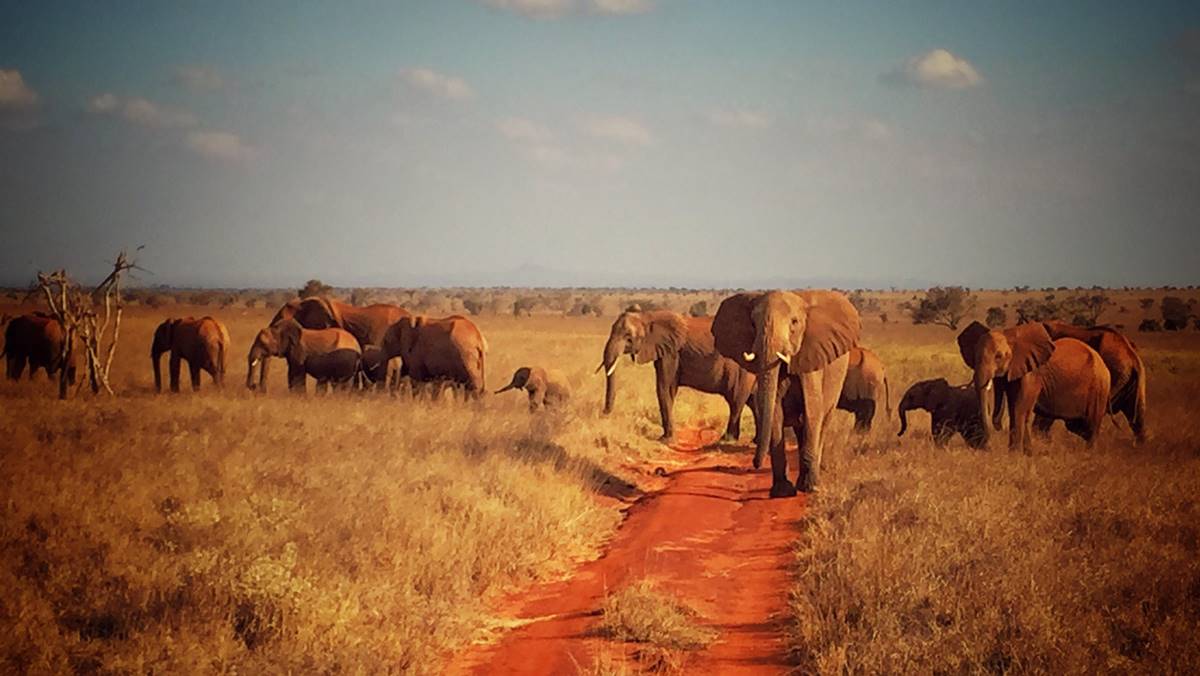
A 3-day safari in Tsavo (East/West) offers spectacular red-dust elephants, volcanic landscapes, and scenic, dense game viewing. Key itineraries include focusing on Tsavo East’s biodiversity, combining both parks for variety, or blending wildlife with local culture. Prime spots include Mzima Springs, Aruba Dam, and the Lugard Falls
3-days-tsavo-east-and-taita-hills-kenya-wildlife-safari-itinerary
3-Day Tsavo East Intensive
This 3-Day Tsavo East Intensive is a journey into the rugged, prehistoric heart of Kenya’s largest national park, a theater of wild nature defined by its vastness and its legendary "Red Elephants." This itinerary is specifically designed for the explorer who craves the raw, unpolished beauty of the African bush, where the horizon feels infinite and the wildlife remains untamed. You will traverse the heat-shimmering Yatta Plateau—the world’s longest lava flow—and witness the dramatic contrast of iron-red soil against the deep blue of the sky. The focus is on the park’s unique geological landmarks, such as the massive Mudanda Rock, and its vital water sources like the Aruba Dam, which act as magnets for thousands of thirsty animals. This is a high-impact, soulful safari that offers a visceral connection to the land, providing a stark and beautiful narrative of survival in one of the most iconic wildernesses on Earth.
Day 1: Entry into the Theater of the Wild
Your expedition begins with a morning drive from the coast or Nairobi, entering Tsavo East through the historic Buchuma or Manyani gates. As you cross the threshold, the landscape immediately transforms into a sprawling, semi-arid savanna of scrubland and baobab trees. After a fresh lunch at your lodge, you head out for an afternoon game drive. The primary objective is your first encounter with the "Red Elephants," whose distinctive color comes from dust-bathing in the park's iron-rich volcanic soil. You will scan the plains for the "Big Five," including the famous maneless lions of Tsavo, and watch as herds of Cape buffalo congregate near the seasonal waterholes. As the sun dips, casting long shadows across the red earth, you return to camp for a traditional dinner under a vast, star-studded sky.
Day 2: Aruba Dam and the Mudanda Monolith
Today is an intensive, full-day exploration of Tsavo East’s most vital landmarks. Carrying a picnic lunch, you head toward the Aruba Dam, a massive reservoir that serves as the primary watering hole for thousands of animals. You will spend the morning observing the constant drama of predator and prey at the water's edge. Following this, you traverse the plains to reach Mudanda Rock, an inselberg that stretches over 1.6 kilometers. You will climb to the top of this natural lookout to witness a spectacular panorama of the park and watch elephants drinking from the natural dam below. The afternoon is spent tracking cheetahs on the open Galana plains and exploring the riverine thickets along the Voi River, ensuring a comprehensive understanding of this rugged ecosystem before returning to your lodge at sunset.
Day 3: Dawn Patrol and the Yatta Horizon
The final morning is dedicated to a "Dawn Patrol" game drive, capitalizing on the cool air when the park’s predators are at their most mobile. This is the prime window to catch a leopard returning to a baobab tree or a pride of lions finishing a night's hunt. The early morning light provides a crystalline view of the distant Yatta Plateau, offering a serene atmosphere for final photography. You will conduct a final sweep of the northern corridors, looking for any elusive species like the lesser kudu or the hirola. After a hearty breakfast back at the lodge and a final check-out, you begin the journey back, carrying with you the indelible memory of the thundering red giants and the raw, ancient power of Kenya’s most expansive wilderness.
3-Day Tsavo West Explorer
This 3-Day Tsavo West Explorer is a journey into a dramatic, volcanic wilderness where the raw power of the earth is visible in every jagged crater and ancient lava flow. Unlike the flat plains of its eastern neighbor, Tsavo West is a "Land of Lava, Springs, and Man-Eaters," offering a rugged, mountainous terrain that feels prehistoric and untamed. This itinerary is specifically designed for the adventurous spirit who seeks to explore the intersection of geology and biology. You will witness the miracle of crystal-clear water gushing from volcanic rocks at Mzima Springs and track the elusive black rhino within the dense thickets of the Ngulia Sanctuary. From the charred, black landscapes of the Shetani lava fields to the emerald oases hidden within the hills, this safari provides a visceral, high-impact encounter with one of Kenya’s most geologically diverse and legendary national parks.
Day 1: Entry into the Land of Lava
Your expedition begins with a morning drive from Nairobi, traversing the scenic highlands before descending into the rugged gateway of Tsavo West. As you enter the park, the landscape shifts into a dramatic tapestry of green hills and ancient volcanic cones. After checking into your lodge and enjoying a fresh lunch, you head out for an afternoon game drive. The focus today is navigating the dense acacia woodlands to spot the park's famous "red-dusted" elephants and the elusive leopards that thrive in this rocky terrain. As the sun sets behind the Ngulia Hills, the volcanic soil takes on a deep crimson hue, providing a cinematic backdrop for your first encounters with the "Big Five." You return to camp for a quiet dinner, falling asleep to the nocturnal symphony of one of Africa’s most mysterious wildernesses.
Day 2: Mzima Springs and the Rhino Sanctuary
Today is a deep dive into the park’s most vital and protected ecosystems. You begin at Mzima Springs, where millions of gallons of crystal-clear water bubble up from beneath the lava rocks, creating a lush paradise for hippos and crocodiles. You can observe the aquatic life from a unique underwater viewing tank, offering a rare perspective on these prehistoric giants. After a midday rest, the late afternoon is dedicated to the Ngulia Rhino Sanctuary. This 90-square-kilometer fenced area is a critical stronghold for the endangered black rhino. Your guide will skillfully navigate the thickets as the sun begins to cool, increasing your chances of spotting these armored giants as they emerge from the shadows. It is a day of profound contrasts, moving from the serenity of the springs to the high-stakes conservation of the rhino hills.
Day 3: Shetani Lava Fields and Volcanic Vistas
The final morning focuses on the park’s spectacular geological heritage. You head out at dawn to visit the Shetani Lava Fields, a jagged, eight-kilometer-long blackened landscape formed by a volcanic eruption only a few centuries ago. Walking on the charred earth and exploring the nearby lava caves offers a visceral sense of the earth’s raw power. Following this, you visit the Chaimu Crater, where you can take a short, guided hike to the rim for panoramic views of the vast plains stretching toward Mount Kilimanjaro. After a final sweep for any elusive wildlife—perhaps catching a glimpse of a klipspringer on the rocky outcrops—you return for breakfast and check-out. The drive back to Nairobi concludes a journey through a landscape where fire and water have conspired to create one of Kenya’s most hauntingly beautiful safari destinations.
3-Day Tsavo East & Taita Hills Combo
This 3-Day Tsavo East & Taita Hills Combo is a brilliantly paced expedition that bridges the gap between the vast, sun-baked plains of Kenya’s largest national park and the exclusive, verdant hills of a private sanctuary. You begin in the "Theater of the Wild," Tsavo East, home to the legendary red-dusted elephants and the world's longest lava flow. Here, the landscape is raw, prehistoric, and immense. The journey then transitions to the Taita Hills Wildlife Sanctuary, a lush, mountainous corridor that serves as a vital bridge for migrating wildlife. A highlight of this itinerary is the unique opportunity to stay in world-famous stilted lodges that overlook active salt licks and waterholes, providing 24-hour wildlife viewing from the comfort of your room. It is a safari of stunning contrasts—moving from the heat-shimmering horizons of the eastern savanna to the cool, elevated forests of the hills, offering a comprehensive and diverse narrative of Kenya’s southern wilderness.
Day 1: Entry into the Red Savanna
Your journey begins with an early departure for Tsavo East National Park. Upon entry, the landscape opens into a dramatic expanse of iron-red soil and ancient baobab trees. After a fresh lunch at your lodge, you head out for an afternoon game drive. The focus is the park’s famous "Red Elephants," which take on their distinctive hue from the volcanic dust. You will scan the plains for the "Big Five," including the unique maneless lions of Tsavo and large herds of Cape buffalo. As the sun begins to set over the Yatta Plateau, the sky turns a deep indigo, providing a cinematic backdrop for your first encounters with the wild. You return to camp for a traditional dinner, falling asleep to the nocturnal symphony of the African bush under a vast canopy of stars.
Day 2: From the Plains to the Stilted Hills
The morning starts at first light with a final game drive in Tsavo East, exploring the riverine thickets along the Voi River where leopards often lounge. After a hearty breakfast, you begin the scenic drive toward the Taita Hills Wildlife Sanctuary. This private 28,000-acre sanctuary offers a stark contrast to the flat plains, characterized by rolling hills and grassy valleys. After check-in and lunch—often at the iconic Sarova Salt Lick Game Lodge—you head out for an afternoon game drive. This area is a crucial wildlife corridor, and you’ll likely spot giraffes, waterbucks, and zebras congregating near the sanctuary’s permanent water sources. The evening concludes with a "sundowner" experience, watching the sunset over the Taita Hills before returning to your stilted lodge for a unique night-time wildlife viewing experience.
Day 3: Sanctuary Dawn and the High-View Farewell
Your final morning is dedicated to a "Dawn Patrol" game drive within the Taita Hills Sanctuary. The cool, elevated air provides a refreshing atmosphere as you track predators, such as lions and cheetahs, which are often more active in these highland corridors. This is a prime time for birdwatching, with the sanctuary hosting over 300 species. You will visit the sanctuary's various waterholes, where wildlife activity is concentrated in the early hours. After a final sweep of the valley and a hearty breakfast with a view, you begin the journey back to your departure point. As you descend from the hills, you carry with you the indelible memory of the red giants of the plains and the intimate, elevated encounters of the sanctuary, marking the end of a diverse southern adventure.
3-Day Tsavo East & West Twin Park Safari
This 3-Day Tsavo East & West Twin Park Safari is a high-octane expedition through the "Theater of the Wild," offering a comprehensive exploration of Kenya’s largest protected ecosystem. This 3 days Tsavo itinerary bridges two distinct worlds: the vast, iron-red savannas of Tsavo East and the rugged, volcanic landscapes of Tsavo West. You will begin in the east, tracking the legendary "Red Elephants" and traversing the heat-shimmering Yatta Plateau, before moving into the mountainous west, a land of ancient lava flows and emerald oases. This "Twin Park" approach allows you to witness the dramatic diversity of the southern circuit, from the prehistoric hippos of Mzima Springs to the elusive black rhinos of the Ngulia hills. It is a safari of immense scale and geological wonder, designed for the traveler who wants to experience the full spectrum of the African wild—where the raw power of fire and water has sculpted a sanctuary for the "Big Five."
Day 1: The Red Savanna and the Yatta Horizon
Your adventure begins with an early entry into Tsavo East, a sprawling wilderness defined by its infinite horizons and iron-rich volcanic soil. After a fresh lunch at your lodge, you head out for an afternoon game drive. The focus today is the park’s iconic "Red Elephants," which take on their fiery hue from the local dust. You will scan the plains for large herds of Cape buffalo and the unique maneless lions that have made Tsavo legendary. As you drive along the Voi River, keep your eyes peeled for leopards lounging in the ancient baobab trees. The day concludes with a breathtaking sunset over the Yatta Plateau—the world’s longest lava flow—providing a cinematic backdrop for your first evening under the vast, star-studded Kenyan sky.
Day 2: Trans-Park Transit and Mzima Springs
After a sunrise game drive in the east, you begin the scenic transit toward Tsavo West National Park. The landscape shifts dramatically from flat plains to rolling green hills and jagged volcanic cones. After checking into your new lodge, you visit the world-famous Mzima Springs. Here, millions of gallons of crystal-clear water gush from beneath lava rocks, creating a lush paradise for hippos and crocodiles. You can observe the aquatic life from an underwater viewing tank, offering a rare, face-to-face perspective with these prehistoric giants. The late afternoon is spent exploring the Shetani lava flows, a jagged black landscape that serves as a stark reminder of the region's volcanic past, before returning to your lodge for a quiet dinner in the "Land of Lava and Springs."
Day 3: Dawn Patrol and Volcanic Vistas
The final morning is dedicated to a "Dawn Patrol" game drive in Tsavo West, capitalize on the crisp air when predators are most mobile. This is a prime time to track the endangered black rhino in the thickets of the Ngulia Sanctuary or spot a cheetah scanning the plains from a volcanic outcrop. The early morning light provides a crystalline view of the distant Mount Kilimanjaro, offering a serene atmosphere for final photography. You will conduct a final sweep of the Chaimu Crater and the whistling thorn bushes, looking for any elusive species like the lesser kudu. After a hearty breakfast and a final check-out, you begin the journey back, carrying with you the dual legacy of the thundering red giants and the raw, volcanic power of Kenya’s twin wildernesses.
3-Day Budget-Friendly Tsavo East Safari
This 3-Day Budget-Friendly Tsavo East Safari is a high-value, high-impact escape designed for those who want to swap the turquoise waters of the Kenyan coast for the iron-red dust of the "Theater of the Wild." Departing from Mombasa, Diani, or Watamu, this road-trip-style safari offers an affordable entry into one of Africa’s largest and most legendary wilderness areas. By utilizing a shared safari van and staying in well-located camps just outside or within the park, you maximize your time on the savanna without the luxury price tag. The focus is on the raw, unpolished beauty of Tsavo’s vast plains, home to the famous "Red Elephants," maneless lions, and the shimmering Yatta Plateau. This itinerary is perfect for travelers who prioritize frequent game drives and authentic wildlife encounters, providing a visceral connection to the land where the horizon feels infinite and the pulse of the African bush is felt in every mile.
Day 1: Coast to the Crimson Savanna
Your adventure begins with a sunrise pickup from your coastal hotel in Mombasa or Watamu. As you leave the tropical palms behind, the air turns crisp and the soil transforms into a deep, volcanic ochre. You enter Tsavo East through the Buchuma Gate, immediately beginning your search for wildlife as you transit to your camp for lunch. After a brief rest, you head out for an afternoon game drive. The primary objective is your first sighting of the iconic "Red Elephants," whose distinctive color comes from bathing in the park's mineral-rich red earth. You will scan the plains for Cape buffalo, zebras, and the famous Tsavo lions. As the sun sets, painting the sky in shades of violet and gold, you return to your camp for a communal dinner and a night under the expansive African stars.
Day 2: Full-Day Exploration of the Voi Plains
Today is a deep dive into the heart of Tsavo East, utilizing a full-day game drive to maximize your sightings. Carrying a picnic lunch, you head toward the Aruba Dam, a massive reservoir that serves as a vital magnet for thousands of animals in this semi-arid landscape. You will spend the morning observing the constant drama of predator and prey at the water's edge, looking for cheetahs on the hunt or hippos jostling in the mud. Midday is spent under the shade of a giant baobab tree, enjoying your meal with a view of the endless horizon. The afternoon continues with an exploration of the riverine thickets along the Voi River, a prime spot for leopards. This intensive approach ensures you cover the park's vastness and witness the full spectrum of its rugged biodiversity.
Day 3: Dawn Patrol and Return to the Blue
The final morning is dedicated to a "Dawn Patrol" game drive, the most productive time for spotting predators like lions and hyenas before they retreat from the rising sun. The early morning light provides a crystalline view of the Yatta Plateau—the world’s longest lava flow—offering a serene atmosphere for final photography. You will conduct a final sweep of the northern corridors, looking for elusive species like the lesser kudu or the fringe-eared oryx. After a hearty breakfast and a final check-out, you begin the drive back toward the coast. As the red dust of the savanna fades and the salty breeze of the Indian Ocean returns, you arrive at your hotel by late afternoon, carrying the indelible memories of the thundering red giants and the raw power of Kenya’s largest wilderness.
1. What are the top highlights of a 3-day Tsavo East wildlife safari trip?
A 3-day expedition into Tsavo East is defined by its immense scale and prehistoric atmosphere. The primary highlight is encountering the legendary "Red Elephants." These giants are not a different species but appear a vibrant terracotta color due to dust-bathing in the park's iron-rich volcanic soil. Seeing a herd of these crimson titans crossing the scrubland against a deep blue sky is the park's most iconic visual.
Another major highlight is the Yatta Plateau, which holds the title of the world's longest lava flow. Stretching over 290 kilometers, it forms a dramatic backdrop to the park’s northern horizon. Visitors also prioritize Mudanda Rock, an inselberg that acts as a natural catchment area. Climbing this 1.6-kilometer-long rock provides a "God’s-eye view" of the plains and the natural dam below, where elephants often congregate to drink.
The Aruba Dam is the park's biological heart. Built across the Voi River, it creates a massive reservoir that draws thousands of animals during the dry season. Finally, the park is famous for its maneless lions. Unlike the bushy-maned lions of the Mara, Tsavo’s males often lack manes entirely due to the intense heat and thorny vegetation, offering a unique look at feline adaptation. Over three days, the sheer vastness of the park allows for a "true wilderness" feel that smaller parks cannot replicate.
2. Is it possible to visit both Tsavo East and West in three days?
Yes, a "Twin Park" safari is a highly popular way to experience the diversity of the Tsavo ecosystem in just 72 hours. While the parks were once a single entity, they are now separated by the Nairobi-Mombasa highway, and each offers a completely different aesthetic. A 3-day itinerary typically allocates Day 1 to the flat, open savannas of Tsavo East and Day 2 to the rugged, volcanic hills of Tsavo West, with Day 3 serving as a final morning drive before departure.
This combination is favored because it provides a "best of both worlds" experience. In the East, you get the wide-open vistas and high-density elephant sightings. In the West, you get dramatic geological features like lava flows and the lush oasis of Mzima Springs. It is important to note that this is an "intensive" itinerary. You will spend a significant amount of time in the vehicle as you transit between the two parks, making it best suited for travelers who prioritize seeing a variety of landscapes over a relaxed pace.
To make this work effectively, most operators recommend staying at a lodge near the Voi or Manyani gates on the first night and moving to a lodge in the heart of Tsavo West for the second. This minimizes the transit time across the highway "gap." If you are a photography enthusiast or a first-time visitor, this "duality" safari is arguably the best way to spend three days in the region.
3. Which is better for spotting red elephants in 3 days: East or West?
While both parks are home to the "red-dusted" giants, Tsavo East is undisputed as the better choice for seeing them in large numbers over a 3-day period. The terrain in the East is characterized by flat, semi-arid plains and shorter grass, which provides significantly better visibility. The iron-rich volcanic soil—the source of the red pigment—is also more prevalent across the vast Voi and Galana plains of the East.
In Tsavo East, elephants congregate in massive herds, sometimes numbering in the hundreds, particularly around the Aruba Dam and the Voi River. Because the landscape is so open, you can spot these crimson herds from miles away. This makes for spectacular photography, as there is little dense vegetation to obscure your view of their massive tusks and distinctive skin texture.
Tsavo West, by contrast, is very mountainous and covered in dense acacia thickets. While the elephants there also dust-bathe in the red soil, they are much harder to track and often appear in smaller, more fragmented family groups. If your primary goal is to witness the "Red Elephant" phenomenon in its most dramatic and concentrated form, the open horizons of Tsavo East will provide a much higher success rate within your limited 3-day window.
4. Can I do a 3-day Tsavo safari starting directly from my Diani beach hotel?
Absolutely. In fact, starting from Diani Beach (or Mombasa/Watamu) is one of the most common ways to experience Tsavo. Because the park’s main gates are relatively close to the coast, you can swap the Indian Ocean for the African savanna in just a few hours. A 3-day safari from Diani typically involves a 6:00 AM pickup, driving through the scenic Shimba Hills and Kwale before joining the main highway to the Buchuma Gate of Tsavo East.
The drive from Diani to Tsavo East takes roughly 3 to 4 hours. This proximity allows you to be on your first game drive by late morning on Day 1. This "Beach to Bush" transition is incredibly efficient for travelers who want a high-impact wildlife experience without having to return to Nairobi.
A typical 3-day Diani-based itinerary includes two nights in Tsavo East or one night in East and one in the Taita Hills Wildlife Sanctuary. On Day 3, you conduct a final morning game drive and arrive back at your beach hotel by late afternoon—often in time for a sunset swim. This convenience makes Tsavo the "go-to" safari destination for coastal tourists, offering a world-class wildlife experience that fits perfectly into a beach-focused holiday.
5. What time do game drives start on a 3-day Tsavo West safari itinerary?
In the volcanic terrain of Tsavo West, timing is dictated by both temperature and the behavior of the resident predators. A standard 3-day itinerary follows a strict "Early Bird" schedule. Morning game drives almost always begin at 6:00 AM or 6:15 AM. The goal is to be out of the lodge gates just as the first light touches the Ngulia Hills.
The early start is critical for two reasons. First, this is when the park’s leopards and lions are most active; once the sun begins to bake the dark volcanic rocks, the heat becomes intense, and predators quickly retreat into the deep shade of the thickets. Second, the early morning offers the highest probability of seeing Mount Kilimanjaro clearly before the midday clouds form.
Afternoon game drives typically start at 4:00 PM, once the peak heat of the day has subsided. These drives usually last until 6:30 PM, coinciding with the park's mandatory closing time at sunset. This late-afternoon window is when herbivores like giraffes and rhinos begin moving toward waterholes. Over three days, you will usually complete four to five of these timed drives, ensuring you are in the field during the "Golden Hours" when the lighting is best for photography and the wildlife is most mobile.
6. How long does the drive take from Nairobi for a 3-day Tsavo safari?
The drive from Nairobi to Tsavo is a significant undertaking, covering approximately 240 to 280 kilometers depending on which gate you use. On average, the journey takes between 5 to 6 hours. While the distance isn't extreme, the Nairobi-Mombasa highway is a major artery for commercial trucks, and traffic congestion can frequently add time to the trip.
For a 3-day itinerary, travelers usually depart Nairobi very early (around 5:30 AM or 6:00 AM) to beat the city traffic. You typically enter Tsavo West via the Mtito Andei Gate or Tsavo East via the Manyani Gate. The road is well-paved, but the constant presence of heavy logistics vehicles means you must account for a slower pace than a standard highway drive.
Because nearly 12 hours of your 3-day trip are spent in transit to and from the city, many travelers opt for the Standard Gauge Railway (SGR) "Madaraka Express" instead. The train stops at Mtito Andei (for Tsavo West) and Voi (for Tsavo East), cutting the travel time to about 3 to 4 hours in climate-controlled comfort. Your safari guide then meets you at the train station. Whether you drive or take the train, the journey takes you from the high-altitude bustle of Nairobi down into the low-lying, semi-arid plains of the south.
7. Are there, on average, 3 days enough for a best safari in Tsavo East?
For the majority of travelers, 3 days (2 nights) is considered the optimal amount of time for a comprehensive Tsavo East experience. Because the park is so vast—covering nearly 13,000 square kilometers—you cannot see "everything" in a lifetime, let alone a weekend. However, three days allows you to cover the park's major distinct regions without feeling rushed.
In 72 hours, you have enough time to explore the Voi River area, spend a full day at the Aruba Dam, and venture north toward the Galana River and Lugard Falls. A shorter 2-day trip is often dominated by the drive to and from the park, leaving you with only one "quality" game drive. Conversely, stay longer than three days, and the semi-arid landscape can start to feel repetitive unless you are a specialized researcher or hardcore birdwatcher.
Three days also provides the necessary flexibility for wildlife sightings. If the lions are elusive on Day 1, you have a second full day to track them. It also allows for a "Slow Safari" pace—meaning you can sit at a waterhole for two hours watching elephants interact, which is the true essence of the Tsavo experience. In summary, 3 days provides the depth, variety, and relaxation required to truly appreciate the scale of Kenya’s largest national park.
8. Do 3-day safari itineraries include a visit to the famous Mzima Springs?
Yes, a visit to Mzima Springs is almost always the "anchor" event of the second day in any Tsavo West or "Twin Park" itinerary. It is widely considered the park’s most beautiful attraction and a highlight of the entire southern circuit. The springs are a geological marvel: millions of gallons of crystal-clear water gush out from beneath the volcanic Chyulu Hills, filtered naturally by the lava rock.
The itinerary includes a guided nature walk (accompanied by an armed ranger) along the shaded banks of the springs. The primary feature is the underwater viewing tank, which allows you to step below the water line and look through reinforced glass. From here, you can watch hippos and crocodiles swimming in their natural environment—a perspective that is virtually impossible anywhere else in Africa.
For a 3-day trip, Mzima Springs offers a refreshing "tactile" break from being inside a vehicle. The lush, emerald-green forest surrounding the springs provides a stark contrast to the charred, black lava fields nearby. Because the springs are the only permanent water source for miles, the surrounding trees are filled with vervet monkeys and vibrant birdlife, making it a "must-do" stop that takes about 1.5 to 2 hours to fully explore.
9. Which luxury lodges are available during a 3-day Tsavo West National Park safari?
For those seeking a high-end 3-day experience in Tsavo West, the park offers several world-class lodges that blend "bush chic" with colonial-era elegance. Because Tsavo West is mountainous, these lodges are often built on ridges or hillsides to maximize the views of the savanna and Mount Kilimanjaro.
Kilaguni Serena Safari Lodge: This is one of Kenya’s most historic luxury lodges. Its defining feature is a massive stone terrace that overlooks two active waterholes. You can enjoy a gourmet dinner while watching elephants, buffalo, and even leopards come to drink just meters away. It is widely considered to have the best "lodge-based" wildlife viewing in the park.
Severin Safari Camp: This is a high-end tented camp that offers an "Out of Africa" feel. It features "Kenyan-style" luxury, including a beautiful spa (the Kenbali Spa) and private verandas with views over the plains toward the volcanic craters. It is situated in an area known for good leopard sightings.
Finch Hattons Luxury Tented Camp: For the ultimate luxury seeker, this camp is named after the legendary explorer Denys Finch Hatton. It features opulent tents with copper bathtubs, private decks, and a world-class "star-gazing" terrace. Staying here transforms a 3-day safari into a sophisticated retreat, focusing as much on fine dining and wellness as it does on the "Big Five."
10. Is the 3-day safari in Tsavo East good for seeing the big five?
Tsavo East is an excellent location for seeing four of the "Big Five," but it is important to manage expectations regarding the rhinoceros. The park has healthy populations of elephants, lions, buffalo, and leopards.
- Elephants: You will see hundreds. They are the park's main attraction.
- Lions: Tsavo is famous for its maneless lions. While they are less "habituated" than those in the Mara, a 3-day itinerary usually results in several high-quality sightings, especially near the Voi River.
- Buffalo: They are ubiquitous, often seen in massive "super-herds" of 500 or more near the Aruba Dam.
- Leopards: They thrive in the riverine thickets. While elusive, a skilled guide can usually find them lounging in baobab or acacia trees.
The Rhino is the challenge. In Tsavo East, rhinos are largely confined to the Ngulia Rhino Sanctuary (which is actually in Tsavo West) or the highly protected areas of the park that are often off-limits to standard tourism to prevent poaching. Therefore, if your heart is set on seeing all "Big Five" in one park, you are better off choosing a "Twin Park" itinerary that includes Tsavo West, which has a dedicated sanctuary where rhino sightings are much more common. However, for the other four members, the open plains of the East provide some of the most dramatic sightings in Kenya.
11. Are 3-day safari packages to Tsavo inclusive of all meals and park fees?
When booking a standard 3-day Tsavo package with a reputable operator, the price is almost always "Full Board" and "All-Inclusive." However, it is vital to read the fine print, as "All-Inclusive" in the safari world usually excludes alcoholic beverages and personal tips.
What is typically included:
- Park Entrance Fees: Currently, these are approximately $52 to $80 per day for non-resident adults. On a 3-day trip, this covers two 24-hour cycles.
- All Meals: This includes breakfast, lunch, and dinner. Depending on your Day 2 schedule, lunch may be served at the lodge or provided as a "picnic box" for a full-day game drive.
- Transport & Guide: This covers the 4x4 vehicle, fuel, and the professional driver/guide.
- Drinking Water: Most operators provide bottled water in the vehicle during game drives.
What is typically excluded:
- Drinks: Soft drinks and alcohol at the lodge are usually billed to your room.
- Tips: Gratuities for your driver (approx. $10-$20 per day) and lodge staff are customary but optional.
- Cultural Visits: If you visit a local village, there is usually a separate entrance fee of $20-$30 paid directly to the community. By ensuring these costs are bundled, your 3-day trip becomes a "worry-free" experience where you can focus entirely on the landscape.
12. What wildlife can be seen on a 3-day safari near Aruba Dam?
The Aruba Dam is arguably the most productive wildlife viewing spot in Tsavo East. Because it is the only permanent water source for a vast area of the southern park, it functions as a "living theater" of African wildlife, especially during the dry months (July-October).
On a 3-day safari, you will likely spend several hours at the dam. You can expect to see thousands of animals congregating here. Massive herds of red elephants waded into the water to drink and play, while pods of hippos remain submerged in the center. The dam attracts high numbers of Cape buffalo, zebras, and impalas, which in turn attract predators.
The dam is a prime location for spotting lions and cheetahs, who use the surrounding scrub as cover to ambush thirsty prey. Birdwatchers will also find it spectacular; the water attracts everything from the massive saddle-billed stork and Goliath heron to thousands of lesser flamingos and migratory waterfowl. Because the dam is so open, it offers unobstructed "long-distance" views, allowing you to see different species interacting across the shoreline. It is the one location in Tsavo East where you are guaranteed "action" at almost any hour of the day.
13. Can a 3-day itinerary be tailored for families with young children in Tsavo?
Yes, Tsavo is actually one of the best parks for families because of its accessibility and the "visual drama" of its landscape. To make a 3-day itinerary child-friendly, operators usually implement a "Slow Safari" strategy.
Kid-Friendly Tweaks:
- Shorter Game Drives: Instead of the standard 4-hour drives, the itinerary can be broken into 2-hour "bursts" to accommodate shorter attention spans.
- Lodges with Pools: Staying at a lodge like Voi Safari Lodge or Kilaguni Serena is essential, as children can spend the midday heat swimming while still watching animals at the lodge's waterhole.
- Educational Stops: A visit to Mzima Springs is usually a hit with kids because of the underwater viewing tank—it feels like a "natural aquarium."
- SGR Train Travel: Taking the train from Nairobi or Mombasa instead of driving is much easier for children, as they can move around and use the restroom, making the 3-day trip less taxing.
Most lodges in Tsavo also offer "triple rooms" or family suites. Guides in the region are generally excellent with children, often teaching them how to track "spoor" (animal tracks) or identify "the little five" (ant lions, rhino beetles, etc.). Because the park is so large, children get a real sense of adventure without the "crowded" feel of more touristy parks.
14. Is it possible to see the Shetani lava fields in a 3-day trip?
Yes, the Shetani Lava Fields are a staple feature of the second day in any Tsavo West itinerary. "Shetani" means "devil" in Swahili, and the name reflects the local legend that the black, jagged landscape was formed by the devil emerging from the earth. Geologically, it is a massive field of chilled volcanic rock that flowed from the nearby Chyulu Hills only about 200–500 years ago.
On a 3-day trip, your guide will take you to the edge of the flow, where you can actually get out of the vehicle and walk on the charred earth. It feels like stepping onto another planet. The jagged rocks are razor-sharp, and the landscape is eerie and silent.
Nearby, you can also explore the Shetani Caves, which are underground tunnels formed by cooling lava. These caves require a flashlight and a bit of adventurous spirit to enter. For travelers interested in geology or photography, the contrast of the black lava against the yellow savanna grass and the blue sky is spectacular. It takes about 45 minutes to 1 hour to visit, making it an easy and high-impact addition to your 3-day wildlife schedule.
15. What is the best month to book a 3-day Tsavo National Park safari?
The "best" month depends on whether you prioritize wildlife density or scenic beauty.
The Peak Season (July to October): This is the best time for wildlife sightings. These are the driest months, meaning the grass is short and the animals are forced to congregate around the permanent water sources like the Aruba Dam and Mzima Springs. If you want to see the highest number of elephants and predators in 3 days, book during these months.
The "Green" Season (November to December & April to June): This is the best time for scenery and photography. After the rains, the red dust disappears, and the park turns a lush, vibrant green. The air is crystalline, providing the best views of Mount Kilimanjaro. This is also the best time for birdwatching, as migratory species arrive from Europe. While wildlife is harder to spot in the thick vegetation, the park is less crowded, and lodge prices are often lower.
The Hot Season (January to March): This is a great "middle ground." It is dry and hot, which is good for wildlife viewing, but the park is quieter than the July-August peak. Ultimately, for a 3-day trip where you want "guaranteed" sightings, September and October are generally considered the gold standard.
Booking Kenya wildlife safari with us Roads of Adventure safaris
Roads of Adventure Safaris offers customized, mid-range to luxury Kenya wildlife safaris, featuring popular destinations like Masai Mara, Amboseli, and Lake Nakuru with expert-guided game drives for the Big Five. They provide diverse packages, including 6, 7, and 10-day itineraries with options for, luxury tented camps or lodges.
