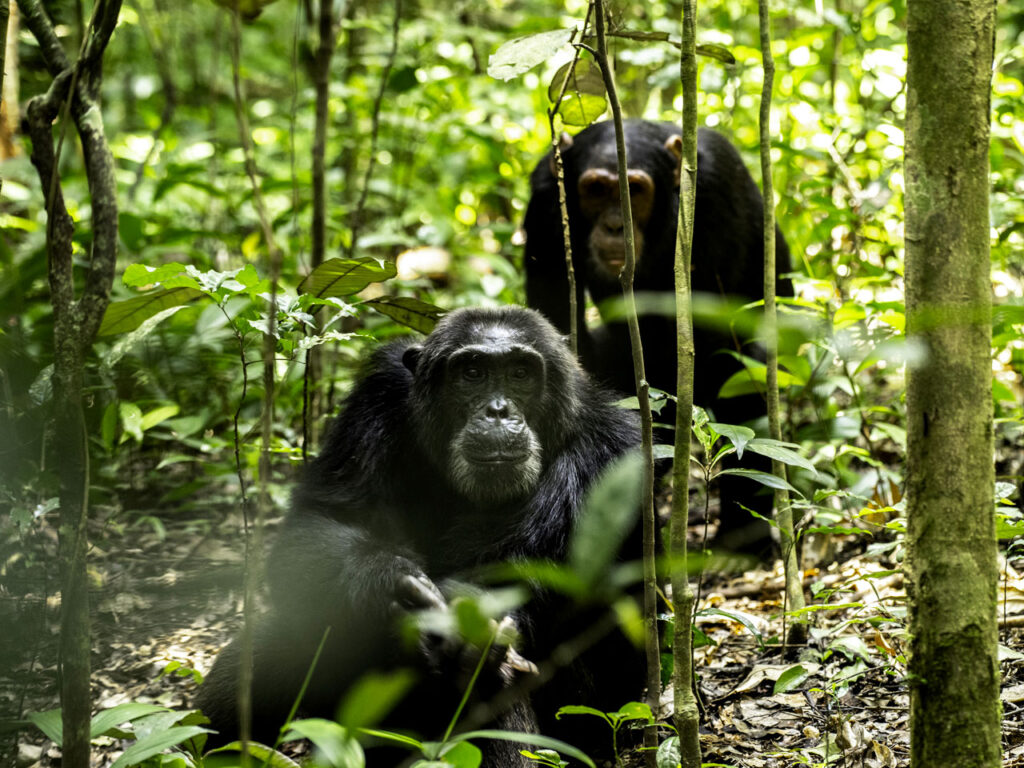
3-day itineraries in Rwanda's Nyungwe Forest National Park (approx. 5–6-hour drive from Kigali) center on an early morning (approx. 5:00 AM) chimpanzee tracking experience. Ideal 3-day plans combine this with the 200m Canopy Walkway, scenic waterfall hikes, and cultural visits to tea plantations or the Huye Ethnographic Museum
3-days-luxury-honeymoon-chimpanzee-tracking-and-canopy-walk-in-nyungwe
3-days-budget-chimpanzee-tracking-in-nyungwe-forest-park
3-days-nyungwe-chimpanzee-tracking-and-lake-kivu-relaxation
3-days-best-rwanda-canopy-walk-and-nyungwe-chimpanzee-tracking-adventure
3-Day Classic Chimpanzee & Canopy Tour
The 3-Day Classic Chimpanzee and Canopy Tour offers a breathtaking escape into Rwanda’s Nyungwe National Park, one of the oldest and best-preserved montane rainforests in Central Africa. This "Most Popular" itinerary is a sensory masterpiece, combining high-altitude adrenaline with deep cultural immersion. From the misty, emerald-green slopes of ancient trees to the sprawling, manicured tea estates of Gisakura, the tour showcases the incredible biodiversity of the Albertine Rift. Guests find themselves suspended 70 meters above the forest floor on the famous Canopy Walkway and eye-to-eye with playful chimpanzees in their natural habitat. Beyond the wildlife, the journey through the southern province offers a window into Rwanda's history and heritage. This perfectly balanced three-day circuit is designed for those seeking a profound connection with nature, providing a comprehensive look at the primates, rare birdlife, and stunning landscapes that make Nyungwe a crown jewel of Rwanda's sustainable tourism.
Day 1: Cultural Heritage and the Road to Nyungwe
Your adventure begins with a scenic drive southward from Kigali, winding through the "Land of a Thousand Hills." The first major highlight is a stop in Huye to visit the Ethnographic Museum. This architectural gem houses one of Africa's finest collections of archaeological and anthropological artifacts, offering deep insights into Rwanda’s pre-colonial history and traditional craftsmanship. After a local lunch, the journey continues toward Nyungwe National Park. As you approach the forest, the air turns crisp and the vegetation becomes increasingly dense and prehistoric. Arriving at your lodge near the Gisakura area, you’ll be greeted by the sights of L'Hoest's monkeys often lingering near the forest fringe. The evening is spent in the tranquil atmosphere of the rainforest, enjoying a warm meal and a briefing for the upcoming primate encounter, all while the sounds of the jungle provide a rhythmic backdrop for your first night in the wild.
Day 2: Primate Tracking and the Canopy Walkway
The day starts at dawn with an exhilarating chimpanzee tracking experience. You’ll head to the park headquarters or the isolated Cyamudongo Forest, where habituated chimp communities reside. Guided by expert trackers, you’ll follow their boisterous vocalizations through the thick undergrowth. Spending an hour with these intelligent primates as they feed and socialize is a life-changing encounter. After a midday break and lunch, the adrenaline ramps up with the Canopy Walkway. This 160-meter-long suspension bridge hangs 70 meters above a deep ravine, offering a bird's-eye view of the ancient forest canopy. From this vantage point, you can spot rare butterflies, colorful orchids, and various bird species like the Great Blue Turaco. The perspective from above the trees is unmatched, providing a sense of the forest's vastness and the complexity of its ecosystem before you return to the lodge for a well-earned evening of relaxation.
Day 3: Tea Plantation Walk and Return to Kigali
On your final morning, enjoy a peaceful stroll through the vibrant green Gisakura Tea Estates. These manicured plantations create a stunning contrast against the dark, wild edges of the Nyungwe forest. A guided walk through the fields allows you to learn about the tea-growing process, from the delicate picking of the "two leaves and a bud" to the drying techniques that make Rwandan tea world-renowned. It’s a serene way to reflect on the trip while enjoying panoramic views of the rolling hills. You might even spot colobus monkeys playing in the trees bordering the plantation. Following the walk, you’ll begin the drive back to Kigali. The return journey offers one last chance to admire the terraced hillsides and bustling village markets of the southern province. You’ll arrive back in the capital by late afternoon, marking the end of a compact but deeply rewarding exploration of Rwanda’s natural wonders.
3-Day Luxury Chimpanzee Experience & Relaxation
For the traveler seeking the pinnacle of refinement within the wild, this 3-day luxury escape to Nyungwe National Park offers an unparalleled fusion of adventure and opulence. Centered around the world-renowned One&Only Nyungwe House, the journey transforms a traditional safari into a holistic retreat. Here, the rugged beauty of Rwanda’s ancient montane rainforest meets five-star hospitality, featuring private decks overlooking emerald tea plantations and personalized wellness programs. This itinerary is meticulously curated for those who wish to encounter the majestic chimpanzees at dawn and return to the comfort of a heated infinity pool and gourmet farm-to-table dining by dusk. It is more than a trek; it is a sensory immersion into the "Green Heart of Africa," where every detail—from the private butler service to the forest-inspired spa treatments—is designed to provide deep rejuvenation and a sophisticated connection to the natural world.
Day 1: Private Transfer & Arrival at One&Only
Your journey begins with a VIP private transfer from Kigali, traveling in a luxury 4x4 vehicle through Rwanda’s spectacular terraced landscapes. Upon arrival at the edge of Nyungwe Forest, you will check into the prestigious One&Only Nyungwe House, a sanctuary of style nestled within a working tea plantation. After a warm welcome with locally grown tea, spend your afternoon settling into your villa, where floor-to-ceiling windows bring the forest canopy into your living space. You may choose to enjoy a guided walk through the surrounding tea estate or simply relax on your private deck, spotting white-and-black colobus monkeys in the distance. As evening falls, indulge in a multi-course dinner prepared by world-class chefs, featuring ingredients sourced directly from the lodge’s organic garden. The day concludes by the crackling fire of the lodge’s lounge, setting a serene tone for the adventures ahead.
Day 2: Elite Chimpanzee Trekking & Tailored Nature
The morning belongs to the forest’s most famous residents. Following an early breakfast, you will be escorted to the trekking start point for an exclusive Chimpanzee Trekking experience. Guided by expert rangers and accompanied by your private guide, you will venture into the ancient forest to locate a habituated community. Witnessing their complex social dynamics and hearing their echoing "pant-hoots" through the mist is a profound experience. After returning to the lodge for a refreshed lunch, the afternoon is yours to tailor. You might opt for a private nature walk to discover rare orchids and birdlife or participate in a "Tea to Cup" experience to learn the art of Rwandan tea. For those seeking stillness, the afternoon can be spent by the infinity pool, where the forest edge meets the water, providing a tranquil space to reflect on the morning’s encounter with the wild.
Day 3: Spa Rejuvenation & Scenic Return
On your final day, the focus is entirely on relaxation and wellness. Enjoy a leisurely breakfast on your terrace as the morning mist rises off the trees. Before departure, visit the One&Only Spa, where treatments are inspired by African botanicals and the surrounding rainforest. A signature massage or a forest-air yoga session provides the perfect physical and mental reset. After a final gourmet lunch overlooking the rolling hills, your private driver will begin the scenic journey back to Kigali. The return drive offers a final opportunity to appreciate the "Land of a Thousand Hills" from the comfort of your luxury vehicle. You will arrive in Kigali by late afternoon, feeling deeply rejuvenated and carrying the unforgettable memories of a trek that balanced the raw power of the jungle with the highest standards of modern luxury.
3-Day Active Primates & Hiking Adventure
The 3-Day Active Primates and Hiking Adventure is a high-energy expedition designed for those who want to feel the pulse of Nyungwe National Park under their boots. This itinerary moves beyond the standard sightseeing, plunging deep into the rugged terrain of one of Africa’s oldest rainforests. Covering a vast altitudinal range, Nyungwe provides a challenging yet rewarding playground for trekkers, where ancient ferns and towering mahoganies frame every trail. This journey is a "double-primate" feature, offering the rare opportunity to track both the charismatic chimpanzees and the strikingly beautiful, large groups of acrobatic Ruwenzori Colobus monkeys. Between primate encounters, the adventure is punctuated by steep ridge climbs and descents into mist-shrouded valleys to witness hidden volcanic waterfalls. It is a physically engaging circuit that rewards the bold with the purest air in Rwanda and a profound sense of accomplishment amidst the vibrant, green cathedrals of the Albertine Rift.
Day 1: Arrival & The Igishigishigi Skyline
Your adventure begins with an early departure from Kigali, heading west toward the dramatic landscapes of the Nyungwe forest. After a scenic drive through the rolling hills of Nyanza and Huye, you will arrive at the park's Uwinka Visitor Center in time for an afternoon trek. Your first challenge is the Igishigishigi Trail, a 2.1-kilometer loop that offers a spectacular introduction to the park’s topography. The highlight of this hike is the integrated Canopy Walkway, a 160-meter suspension bridge that hangs 70 meters above the forest floor. Walking across the swaying bridge provides a thrilling perspective of the deep valleys and the massive trees that support this complex ecosystem. It is the perfect warm-up for the days ahead, allowing you to acclimatize to the altitude while enjoying bird’s-eye views of rare butterflies and primates jumping through the upper branches before settling into your lodge for the night.
Day 2: The Primate Double-Header
Day two is the ultimate endurance test for primate lovers, starting well before dawn. You will head into the dense undergrowth for Chimpanzee Tracking, navigating steep slopes and thick vines to locate our closest cousins. The pace is often fast as the chimps move quickly through the canopy, making the successful find incredibly rewarding. After a quick forest lunch and a brief rest, the adventure continues with Colobus Monkey Tracking. Nyungwe is unique for hosting "mega-groups" of over 300 Ruwenzori Colobus monkeys—the largest in Africa. Unlike the vocal chimps, these monkeys are a visual spectacle, their long white hair flowing as they perform death-defying leaps between trees. Spending the afternoon observing these social acrobatics provides a comprehensive look at the forest’s diverse primate hierarchy. You will return to your accommodation in the evening, undoubtedly exhausted but exhilarated by the day’s double encounter.
Day 3: The Isumo Waterfall Trek & Departure
On your final morning, you will tackle one of the park’s most beautiful trails: the Isumo Waterfall Hike. This roughly 10-kilometer round trip takes you through lush tea plantations before diving into the deep, dark rainforest. The trail descends steeply into a verdant ravine where the air is thick with moisture and the sound of rushing water grows louder with every step. At the base, you are rewarded with the sight of the Isumo Waterfall, a powerful 17-meter cascade surrounded by prehistoric tree ferns and moss-covered rocks. The hike back up is a vigorous climb that serves as a final physical salute to the forest. After a well-earned lunch, you will begin the journey back to Kigali. The drive provides a peaceful transition from the wild, misty mountains back to the city, arriving in the capital by late evening with the spirit of the rainforest still fresh in your mind.
3-Day Cultural & Conservation Focus
The 3-Day Cultural and Conservation Focus itinerary is a thoughtfully designed journey that connects Rwanda’s royal history with its modern-day environmental stewardship. This route is ideal for travelers who want to understand the soul of the "Land of a Thousand Hills," moving beyond the forest trails to engage with the communities that serve as the front-line guardians of Nyungwe National Park. By blending a visit to the ancient seat of the Rwandan monarchy with an immersion into the daily lives of the people living on the forest's edge, this tour highlights how culture and nature are inextricably linked. You will witness firsthand how conservation efforts have transformed local livelihoods, turning former poachers into protectors. This itinerary offers a meaningful perspective on Rwanda’s journey, proving that the preservation of its legendary chimpanzees and ancient mahoganies is only possible through the strength and heritage of its people.
Day 1: Royal Traditions and the Road South
Your expedition begins with a departure from Kigali toward the southern heartlands. The primary highlight today is a stop in Nyanza, the historical seat of the Rwandan kingdom. Here, you will tour the King’s Palace Museum, a magnificent reconstruction of the traditional royal residence. You’ll learn about the intricate social hierarchy of the ancient monarchy and meet the iconic Inyambo (long-horned royal cows), known for their grace and the traditional songs sung to them by their keepers. This cultural immersion provides essential context for the Rwandan identity before you continue into the mountains. As the landscape shifts into the high-altitude rainforest of Nyungwe, the air cools and the scenery becomes lush and prehistoric. You will arrive at your lodge near Gisakura by late afternoon, perfectly positioned to witness the mist rolling over the tea estates that buffer the park’s boundary.
Day 2: Primate Conservation and Community Spirit
The morning is dedicated to the park’s most famous conservation success: the habituated chimpanzees. You will head into the forest at dawn to track these intelligent primates, observing the incredible work rangers do to monitor and protect them from snares and habitat loss. Seeing the chimps thrive in their natural environment is a testament to Rwanda’s strict conservation policies. In the afternoon, the focus shifts to the human element of this ecosystem with a Gisakura community tour. You will visit local cooperatives to see how the community benefits from tourism through beekeeping, traditional medicine demonstrations, and handicraft weaving. This interaction offers a rare opportunity to hear stories from the elders about their relationship with the forest and to see how sustainable agriculture and tea farming provide a viable alternative to forest encroachment, fostering a harmonious balance between people and wildlife.
Day 3: The Art of the Forest & Return to Kigali
On your final morning, the pace slows to accommodate the finer details of the rainforest. You can choose between a guided birdwatching session or a nature photography walk. Nyungwe is home to over 300 bird species, including 29 endemics found only in the Albertine Rift; with a specialized guide, you may spot the vibrant Ruwenzori Turaco or the elusive Red-collared Babbler. For photographers, the morning light filtering through the ancient ferns and mossy branches offers endless inspiration. This quiet morning allows for a final, deep breath of the purest air in Africa before beginning the scenic transfer back to Kigali. The return journey provides time to reflect on the deep connections you’ve made with both the wild residents and the resilient people of the south. You will arrive in the capital by late afternoon, enriched by a comprehensive understanding of Rwanda’s cultural and natural treasures.
3-Day Budget-Friendly Plan
The 3-Day Budget-Friendly Plan is designed for the savvy explorer who prioritizes raw experience over luxury. By utilizing local guesthouses and strategic transport, this itinerary proves that the wonders of Nyungwe National Park are accessible to those on a tighter budget. In 2026, Rwanda’s park fee structures offer incentives for longer stays, and this plan leverages those efficiencies while focusing on the park’s most iconic activities. This journey doesn’t sacrifice the quality of wildlife encounters; instead, it places you at the heart of the action in the Gisakura area, where the forest's edge is your backyard. It is the perfect choice for backpackers, students, or solo travelers who want to stand in the presence of chimpanzees and walk high above the forest canopy without the five-star price tag, proving that the "Green Heart of Africa" is as welcoming as it is wild.
Day 1: Transfer & The Twilight Forest
Your journey begins with a transition from Kigali to the western edge of Nyungwe. For the budget-conscious, this typically involves a private vehicle hire or the Volcano Express bus to Huye or Nyamagabe, followed by a short taxi link to Gisakura. Upon arrival, you’ll check into one of the area’s reliable budget hubs, such as the Gisakura Guest House or Kitabi Eco Center. These lodges offer clean, basic rooms and hearty communal meals that are perfect for meeting fellow travelers. After settling in, enjoy an evening nature walk on a nearby trail like the Karamba Trail. This relatively flat path is one of the best spots for birdwatching and spotting the endemic L'Hoest's monkeys. It’s a low-cost, high-reward introduction to the rainforest’s atmosphere, allowing you to stretch your legs and breathe in the crisp mountain air before the main adventure begins.
Day 2: Cyamudongo Chimps & The Canopy Walk
Day two is the centerpiece of your trip, starting with an early morning Chimpanzee Trekking expedition in the Cyamudongo Forest. This small, isolated patch of rainforest is famous for its high success rate in spotting chimps. For international visitors in 2026, the permit fee is approximately $150, which includes your guide and rangers (note that a mandatory park entrance fee of $100 per night also applies). Following the trek, you’ll head to the Uwinka Visitor Center for the Canopy Walkway (approx. $40). This suspension bridge offers a world-class view 70 meters above the ravine for a fraction of the cost of luxury lodge excursions. By choosing these "standard" activities over private habituation tours, you experience the best of the park’s biodiversity while keeping costs predictable. You’ll return to your guesthouse in the evening for a local Rwandan dinner and a night of rest.
Day 3: Morning Serenity & Return Journey
On your final morning, take advantage of the park’s proximity to the local community. You can enjoy a leisurely breakfast and a self-guided walk through the emerald-green Gisovura tea fields that surround the guesthouse. This is a free and beautiful way to capture photos of the mist lifting off the tea plants against the dark forest backdrop. If your budget allows for one last activity, a short morning hike to the nearby Kamiranzovu Wetland offers a chance to see rare orchids and specialized marsh birds. By mid-morning, you will begin your return journey to Kigali. Whether you are driving or taking the bus, the route back offers one last look at the breathtaking terraced hills of southern Rwanda. You’ll arrive back in the capital by late afternoon, having successfully navigated one of Africa’s most prestigious national parks with a focus on value and authentic adventure.
What Is Included in a 3-Day Nyungwe Chimpanzee Tour?
A standard 3-day package is designed to be a comprehensive, "turnkey" experience. Typically, it includes private round-trip transportation from Kigali in a 4x4 safari vehicle, fuel, and the services of a professional English-speaking driver-guide. For accommodation, most packages cover two nights at a lodge or guesthouse near the Gisakura or Uwinka areas, with meals provided on a full-board basis. The core of the package consists of the necessary legal permits: a chimpanzee tracking permit and a canopy walk permit. Additionally, the package price includes mandatory park ranger fees and the expertise of specialized trackers who head out at dawn to locate the primates. Some operators also bundle in a cultural stop at the King’s Palace in Nyanza or a tea plantation visit, ensuring all logistical and conservation costs are managed in one upfront fee.
How Much Does a Chimpanzee Permit Cost in Nyungwe?
In 2026, the cost of a chimpanzee tracking permit for foreign non-residents is $150 USD per person per trek. However, it is vital to note that Rwanda recently restructured its pricing to include mandatory daily park entrance fees that are separate from activity permits. For an international visitor, the park entry fee is $100 USD for the first night, $150 for two nights, and $200 for three nights. Therefore, a traveler on a 3-day/2-night safari should budget $300 USD for the combined cost of the chimp permit and the two-night park entry. Foreign residents living in Rwanda or the East African Community (EAC) enjoy a discounted permit rate of $75 USD, while EAC citizens pay approximately 25,000 RWF (about $20 USD). These fees are reinvested into anti-poaching patrols and community development projects.
Where Does the Trek Take Place?
Chimpanzee tracking in Nyungwe primarily occurs in two distinct sectors: the Main Nyungwe Block (accessible from Uwinka) and the Cyamudongo Forest. Cyamudongo is a small, 4-square-kilometer "island" forest patch located about an hour's drive from the main park entrance, entirely surrounded by tea plantations. Despite its small size, it is the preferred location for many 3-day tours because the chimpanzee community there is well-habituated to humans, and the limited forest area often leads to higher sighting success rates. The main Nyungwe block offers a more expansive, "true wilderness" feel but requires more intensive hiking. Your guide will typically receive a report from the advance trackers on which location offers the best chance of a sighting on your specific morning, ensuring you head to the most active primate zone.
What Is the Best Time for Tracking?
While Nyungwe is a rainforest and can receive rain at any time, the long dry season from June to September is considered the peak time for tracking. During these months, the forest trails are firmer and less slippery, making the often-steep climbs more manageable. Sightings are also more frequent as chimpanzees tend to stay lower in the canopy or move to specific fruiting trees, making them easier to spot. The short dry season from December to February is another excellent window. Conversely, the rainy seasons (March–May and October–November) offer a different reward: food is abundant, so the chimps don't have to travel as far, often meaning shorter hikes to find them. However, trekkers during these months must be prepared for thick mud and heavy downpours, requiring high-quality waterproof gear and a bit more physical resilience.
How Early Does the Trek Start?
Punctuality is critical for a successful primate encounter, as chimpanzees are most active and vocal at daybreak. Trekkers are expected to be at the park reception centers—either Gisarkura or Uwinka—by 4:30 AM or 5:00 AM for a pre-trek briefing. During this time, rangers explain the rules of the forest and provide information on the specific troop you will be tracking. By 5:30 AM, you are usually in your vehicle heading to the forest edge or starting your hike. Starting this early allows trackers to catch the chimpanzees as they wake up and descend from their nests. Being "early birds" ensures you are in position before the primates move deep into the valleys or high into the canopy to feed, providing the best opportunities for photography and observation in the soft morning light.
How Long Do You Spend with the Chimps?
To ensure the welfare of the primates and minimize their stress, the Rwanda Development Board (RDB) enforces a strict one-hour limit for the actual encounter. This "golden hour" begins the moment your group makes initial contact with the chimpanzee troop. During this time, you can observe their complex social behaviors, such as grooming, feeding, and the boisterous "pant-hoot" vocalizations that echo through the forest. The one-hour rule is a standard conservation practice across East Africa, designed to prevent the animals from becoming overly habituated or agitated by human presence. It also serves as a public health measure, reducing the risk of cross-species disease transmission. While the hour passes quickly, the intensity of the experience and the proximity to these intelligent apes make it a profoundly memorable highlight of any Rwandan safari.
How Long Does the Whole Trek Take?
The total duration of the trekking experience is highly unpredictable and depends entirely on the movement of the chimpanzees. On average, a trek can last anywhere from 2 to 6 hours. This includes the time spent driving to the trailhead, the hike into the forest to locate the troop, the one hour of observation, and the hike back out. If the chimps are feeding near the forest edge, you might be back at your lodge by mid-morning. However, if they have moved deep into the ravines in search of specific fruits, you should be prepared for a physically demanding half-day adventure. Because the terrain in Nyungwe is characterized by steep ridges and dense undergrowth, the pace of the trek is always dictated by the slowest member of the group and the agility of the primates.
What Is the Age Limit for Chimpanzee Tracking?
The official minimum age for chimpanzee tracking in Rwanda is 15 years old. This rule is strictly enforced by the RDB, and passports are checked at the park headquarters during the morning briefing. The age limit is set for several practical reasons: first, the terrain is often too steep and rugged for younger children to navigate safely for several hours; second, chimpanzees are wild and powerful animals that can be intimidated or provoked by the unpredictable movements or high-pitched noises of children. Finally, younger children have developing immune systems and are more likely to carry common childhood illnesses that could be fatal to the chimpanzees. For families traveling with younger children, the Canopy Walkway is a great alternative, as it is open to children as young as six (with adult supervision).
What Should I Bring for the Trek?
Preparation is key to enjoying the rainforest environment. Essential gear includes sturdy, waterproof hiking boots with good grip for slippery slopes and long trousers tucked into socks to protect against stinging nettles and ants. Long-sleeved shirts are recommended to prevent scratches from thorns and to ward off insects. You should carry a lightweight, high-quality rain jacket or poncho, as the weather in Nyungwe can change in minutes. A small daypack is necessary to carry at least two liters of water and a packed lunch or snacks provided by your lodge. Don't forget insect repellent with DEET and a pair of gardening gloves, which can be surprisingly helpful for grabbing onto branches or vines during steep descents. Lastly, ensure your camera has a full battery and a large memory card, but leave the flash off.
Can I Use Flash Photography?
The use of flash photography is strictly prohibited during chimpanzee tracking. Chimpanzees have highly sensitive eyes, and the sudden, bright burst of a flash can startle, blind, or even provoke an aggressive response from the primates. It also disrupts their natural behavior, which is exactly what conservationists and researchers try to avoid. Because the forest floor can be quite dark under the thick canopy, photographers are encouraged to use cameras with good low-light performance and to increase their ISO settings to achieve a faster shutter speed. If you are using a smartphone, ensure the "Auto-Flash" setting is disabled before you approach the troop. Taking photos without flash ensures a respectful and safe encounter for both the visitors and the animals, allowing for a more authentic documentary-style record of your journey.
How Many People Can Join a Group?
To maintain an intimate experience and minimize the environmental footprint, the number of permits issued per day is strictly limited. Typically, a maximum of 8 visitors is allowed per tracking group for a specific habituated troop. This small group size ensures that everyone has a clear view of the chimpanzees without crowding the animals or the forest trails. It also allows the park rangers and guides to provide personalized information and ensure that all safety protocols are followed. In Nyungwe, there are currently two main habituated groups (one in the main forest and one in Cyamudongo), meaning only 16 to 24 permits are generally available each day. Because of this limited supply, it is highly recommended to book your tour and permits several months in advance, especially if you plan to travel during the peak dry seasons.
Is the Canopy Walk Included?
While the canopy walk is a separate activity with its own fee ($40 USD for international visitors in 2026), most 3-day "Classic" or "Popular" safari packages do include it as a standard feature. On the second day of a typical itinerary, the morning is dedicated to chimpanzee tracking, and the afternoon is reserved for the canopy walk. This timing is intentional, as it allows trekkers to return from the forest, have lunch, and then head to the Uwinka Visitor Center for the 2:00 PM or 3:00 PM canopy briefing. The canopy walkway consists of three suspension bridges, the longest being 90 meters, hanging 70 meters above the forest floor. Including this in the itinerary provides a complete "vertical" experience of the park—from the floor where you find the chimps to the treetops where you find rare birds and panoramic views.
What Is the Success Rate of Finding Chimpanzees?
Finding chimpanzees in a vast, 1,000-square-kilometer rainforest is never a 100% guarantee, but the success rate in Nyungwe is impressively high, generally cited between 80% and 90%. This high reliability is thanks to the "advance trackers"—park employees who enter the forest at 4:30 AM to locate the nests where the chimps slept the night before. They then radio the location to your guide. The success rate is notably higher in the Cyamudongo Forest due to its smaller size, which makes it harder for the troop to "disappear." However, it is important to remember that these are wild animals; factors like heavy rain, a sudden move to a distant fruiting tree, or a group conflict can occasionally make them elusive. Approaching the trek with a sense of adventure and an appreciation for the entire forest ecosystem ensures a rewarding trip regardless of the sighting duration.
Is There a Minimum Fitness Level?
While you don't need to be an elite athlete, a moderate level of physical fitness is required for chimpanzee tracking. Unlike gorilla trekking, which can sometimes take place on flatter bamboo slopes, chimp tracking in Nyungwe often involves navigating steep, muddy ridges and "off-trail" scrambles through thick vegetation. The altitude (between 1,600m and 2,900m) can also make breathing more labored for those not used to high elevations. If you have mobility issues or heart conditions, the trek may be too strenuous. However, for the average active traveler, the excitement of the search usually provides enough adrenaline to overcome the physical challenge. If you are concerned about your fitness, you can hire a porter at the park entrance for a small fee; they are invaluable for carrying your bag and offering a steady hand on the most difficult sections of the trail.
How Does the 3-Day Itinerary Work?
The 3-day circuit is the most efficient way to see the park's highlights without feeling rushed. Day 1 is the transition day; you leave Kigali in the morning, stop for a cultural tour at the King's Palace or the Ethnographic Museum in Huye, and arrive at your lodge by late afternoon for a "forest briefing" and dinner. Day 2 is the high-intensity day, starting with a 4:30 AM wake-up call for chimpanzee tracking. You return to the lodge for lunch and then head back to the park for an afternoon canopy walk or a short nature trail. Day 3 is for reflection and departure; many travelers enjoy a morning walk through the Gisakura tea plantations or a waterfall hike before beginning the 5-to-6-hour drive back to Kigali, arriving in the capital in time for an evening flight or a final dinner in the city.
Booking 3 days Nyungwe with us Roads of Adventure safaris
Booking a 3-day Chimpanzee and Canopy Walk safari with Roads of Adventure Safaris offers a comprehensive, 4x4-driven adventure into Rwanda's premier rainforest. This package typically starts and ends in Kigali and includes primate tracking and the famous canopy walk
