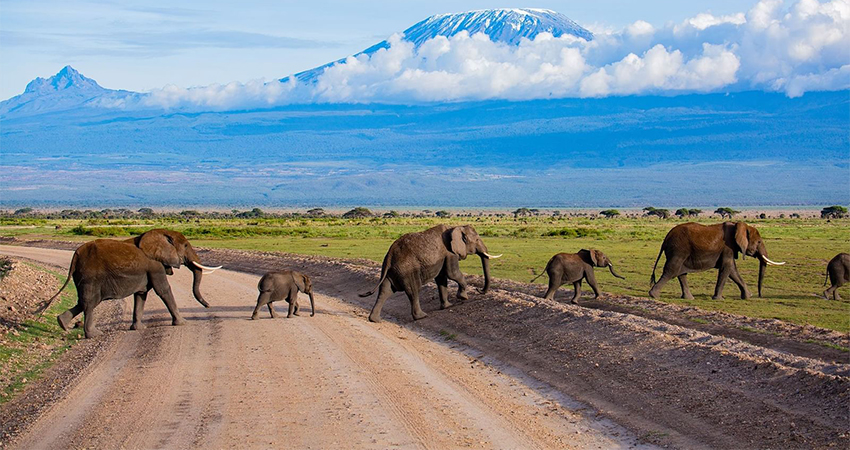
A 3-day Amboseli safari from Nairobi typically features morning and afternoon game drives focused on large elephant herds and Kilimanjaro views. Best itineraries include a mix of driving and relaxation, often visiting Observation Hill and staying in Kimana or inside the park
3-days-best-amboseli-tour-package
4-days-luxury-amboseli-national-park-from-nairobi
2-days-best-amboseli-safari-in-kenya
3-Day Classic Amboseli Highlights
This 3-Day Classic Amboseli Highlights safari is the quintessential introduction to Kenya’s "Land of Giants," a landscape where the rhythm of life is dictated by the presence of Africa’s largest elephants. Situated at the foot of the snow-capped Mount Kilimanjaro, Amboseli offers a visual drama found nowhere else on earth—the sight of massive tuskers moving across the dusty plains against the backdrop of the world’s tallest free-standing mountain. This itinerary is specifically designed for first-timers who wish to witness the unique contrast between the park’s arid, shimmering horizons and its lush, emerald swamps. By focusing on the high-density wildlife zones of the Ol Tukai and Enkongo Narok marshes, you are guaranteed spectacular sightings of the "Big Five" alongside buffaloes, hippos, and over 400 species of birds. It is a compact, high-impact journey that captures the soul of the African wilderness, providing a serene yet powerful encounter with nature’s most iconic inhabitants.
Day 1: Nairobi to the Shadow of Kilimanjaro
Your adventure departs from Nairobi, heading southeast across the Athi Plains toward the border of Tanzania. As you approach Amboseli National Park, the silhouette of Mount Kilimanjaro begins to dominate the horizon. Upon arrival and check-in at your lodge, you’ll enjoy a late lunch before heading out for your first afternoon game drive. This is the prime time to catch the massive elephant herds returning from the marshes to the safety of the acacia woodlands. The low-angled sun provides the perfect lighting for photography, especially if "Kili" emerges from its afternoon cloud cover. You will spend the evening scanning the plains for lions and cheetahs before returning to camp for dinner under a starlit sky, falling asleep to the distant, rhythmic trumpeting of the park’s legendary giants.
Day 2: Full-Day Swamp and Summit Exploration
Today is an intensive, 12-hour immersion into Amboseli’s diverse ecosystems. Carrying a picnic lunch, you head deep into the park to explore the Enkongo Narok and Ol Tukai swamps. These permanent wetlands are the lifeblood of the park, drawing hippos, buffaloes, and thousands of elephants that spend the day belly-deep in the cool water. A highlight is ascending Observation Hill, a volcanic summit that provides a breathtaking 360-degree panorama of the entire park, including the shimmering salt flats of Lake Amboseli. From this vantage point, you can track the movement of the herds as they traverse the landscape below. Your afternoon is spent tracking predators that lurk in the tall grasses at the swamp’s edge, ensuring a comprehensive wildlife experience before heading back to the lodge at sunset.
Day 3: Dawn Patrol and Return to Nairobi
The final morning is dedicated to the "Dawn Patrol," a game drive starting at first light when predators are most active and the mountain is typically at its clearest. The early morning chill provides a crisp atmosphere as you look for hyenas returning from their night hunts or a pride of lions enjoying the first rays of sun. This is often the best window for that "postcard" photograph of an elephant framed by the snows of Kilimanjaro. After a final sweep of the lake’s edge, you return to the lodge for a hearty breakfast and check-out. The drive back to Nairobi offers a final look at the Maasai lands and the changing Kenyan landscape. You arrive in the city by late afternoon, carrying with you the indelible memory of the majestic giants and the "Roof of Africa."
3-Day Photography Focus: Land of Giants
This 3-Day Photography Focus is a masterclass in light and composition, meticulously designed for those who view the savanna through a lens. In Amboseli, the "Land of Giants," the stakes are high and the rewards are monumental. The itinerary prioritizes the "Golden Hours"—those fleeting windows of dawn and dusk when Mount Kilimanjaro sheds its mantle of clouds and the snow-capped Kibo peak glows in shades of violet and gold. You won't just be watching wildlife; you will be waiting for the precise moment a matriarch elephant breaks the horizon line against the roof of Africa. Every game drive is timed to maximize the soft, directional light that defines world-class wildlife photography. From the shimmering heat haze of the salt flats to the deep emerald tones of the marshes, this safari is about patience, perspective, and the pursuit of the perfect frame in one of the most photogenic landscapes on Earth.
Day 1: Sunset Backdrops and Mountain Silhouettes
Your photographic journey begins with a late morning arrival, allowing you to settle in before the harsh midday sun begins to soften. After a briefing on the park's unique light patterns, you head out for a dedicated sunset game drive. The objective today is "The Backdrop." Your guide will position the vehicle to capture the massive tuskers of Amboseli as they trek across the dusty plains, using the 5,895-meter silhouette of Kilimanjaro as a towering anchor for your compositions. As the sun dips lower, the sky transforms into a palette of burnt orange and deep indigo, offering the perfect opportunity for silhouette photography. You will experiment with low-angle shots of elephants against the glowing sky, capturing the texture of their skin and the sheer scale of the landscape before returning to camp under the first stars.
Day 2: The Snow-Cap Shot and Predator Portraits
The day starts at 6:00 AM, the "Blue Hour," when the air is still and the mountain is typically at its clearest. This is the prime window for the iconic "Amboseli Shot"—massive elephants walking through the yellow fever trees with the sun hitting the glaciers of Kilimanjaro. You will spend the morning focusing on wide-angle environmental portraits and high-speed action shots of water birds in the marshes. After a midday break to review your files and recharge equipment, you head out for a late afternoon session. The focus shifts to the "Big Cats." You will track lions or cheetahs, utilizing the golden light to highlight the amber of their eyes and the detail of their fur. This "two-session" approach ensures you avoid the flat midday light, focusing entirely on the most dramatic visual moments of the day.
Day 3: Dawn Patrol and the Last Light
Your final morning is a race against the rising sun. You head out in the pre-dawn mist to catch the "Last Light" of your expedition. This session is about capturing the "mood" of the park—the breath of a buffalo in the cold air, the reflection of a heron in a still swamp, or the soft pastel hues of the lake bed before the heat sets in. This is the time for high-contrast, artistic shots that tell the story of Amboseli’s raw, prehistoric beauty. You will conduct a final sweep of the Enkongo Narok marshes, looking for unique behavioral shots of hippos or elephants interacting in the water. After a late breakfast and a final equipment pack, you begin the drive back to Nairobi. You return with a digital portfolio of the world’s most famous giants, framed by the legendary "Roof of Africa."
3-Day Amboseli Cultural Escape
This 3-Day Amboseli Cultural Escape is a masterfully balanced journey that pairs the raw majesty of Kenya’s wildlife with the vibrant heritage of the people who have guarded these lands for centuries. Set against the iconic, snow-draped backdrop of Mount Kilimanjaro, this safari goes beyond the lens of a camera to offer a deep, human connection to the savanna. You will traverse the dust-blown plains in search of Amboseli’s "Land of Giants"—the world-famous elephant herds—before stepping into the private world of a Maasai Manyatta. This itinerary is designed for the traveler who seeks a holistic African experience, where the thrill of tracking lions is harmonized with the rhythmic songs and ancient wisdom of the Maasai people. From the emerald swamps teeming with hippos to the red-shuka-clad warriors dancing under the African sun, this escape provides a profound understanding of how life, culture, and nature coexist in the shadow of Africa's tallest peak.
Day 1: Arrival and the First Shadow of Kili
Your journey departs from the bustle of Nairobi, heading southeast toward the Loitokitok plains. As you approach Amboseli, the clouds often part to reveal the magnificent, snow-capped dome of Mount Kilimanjaro. After checking into your lodge and enjoying a fresh lunch, you head out for your first afternoon game drive. The focus today is the "Big Five" and the park’s legendary elephant bulls, known for having some of the largest tusks in Africa. As the sun begins to set, the light turns a soft honey-gold, perfect for viewing giraffes and zebras silhouetted against the mountain. The air cools rapidly, and you return to camp for dinner, listening to the distant, haunting calls of hyenas. This initial foray establishes the breathtaking scale of the landscape and the prehistoric beauty of the giants that call it home.
Day 2: Marshland Marvels and Maasai Traditions
The morning begins at first light with a game drive focused on the Enkongo Narok marshes. This is the park's lifeblood, where you’ll witness hippos jostling for space and elephants wading belly-deep in the reeds. After a midday break, the focus shifts from wildlife to humanity as you visit an authentic Maasai Village. You will be welcomed by the Adumu (jumping dance) and invited to learn about their pastoralist lifestyle, traditional medicine, and intricate beadwork. Sitting with the elders offers a rare insight into how the Maasai coexist with the predators you tracked just hours earlier. This cultural immersion provides a vital layer of context to your safari, revealing the resilient spirit and vibrant traditions of the "People of the Cattle" before you return to your lodge for a final evening under the stars.
Day 3: Dawn Patrol and the Journey Home
Your final day starts with a "Dawn Patrol" game drive, capitalizing on the crisp morning air when predators are most active and the mountain is typically at its clearest. This is your last chance to spot a leopard in the acacia thickets or a pride of lions returning from a night hunt. The early morning light provides a crystalline view of the glaciers on Kilimanjaro’s peak, offering a final opportunity for iconic photography. After a hearty bush breakfast and a final sweep of the lake bed to see the shimmering salt flats, you begin the drive back toward Nairobi. As you ascend away from the plains, you carry with you a dual legacy: the memory of the thundering giants and the rhythmic chants of the Maasai, marking the conclusion of a truly soulful African escape.
3-Day Luxury Lodge Safari
This 3-Day Luxury Lodge Safari is a refined retreat into the "Land of Giants," meticulously crafted for those who seek the thrill of the wild without sacrificing the comforts of a high-end sanctuary. Rather than chasing the clock, this itinerary invites you to synchronize your pulse with the rhythmic ebb and flow of the African savanna. From your base in an exclusive tented camp or luxury lodge—often situated on a private conservancy—you will experience the majesty of Mount Kilimanjaro in total serenity. The focus here is on "slow safari": observing the social complexities of Amboseli’s massive elephant families from a private veranda and enjoying gourmet sundowners as the snow-capped peak turns violet at dusk. It is an invitation to witness the raw power of nature while enveloped in world-class hospitality, providing a restorative escape where the silence of the bush and the luxury of the lodge create a truly soulful experience.
Day 1: Arrival and the Magic Hour
Your journey begins with a private transfer from Nairobi, sweeping you away from the city toward the shimmering plains of Amboseli. Upon arrival at your luxury lodge, you are welcomed with a chilled drink and a gourmet lunch overlooking the marshlands. After a brief siesta in your plush suite, you head out for a late afternoon game drive. The "Magic Hour" in Amboseli is transformative; the golden light bathes the massive "tusker" elephants in a warm glow as they trek toward the acacia woodlands. Your guide will find a secluded spot for sundowners, allowing you to toast to the "Roof of Africa" as Mount Kilimanjaro emerges from the clouds. You return to the lodge for a candlelit, three-course dinner, falling asleep to the distant, comforting sounds of the African night.
Day 2: The Rhythm of the Savanna
Today is designed to balance world-class wildlife viewing with deep relaxation. You start with a sunrise game drive, catching the predators while the air is still crisp and the mountain is at its most visible. After witnessing the morning activity around the Enkongo Narok swamps, you return to the lodge for a decadent brunch. The midday hours are yours to enjoy: lounge by the infinity pool, watch zebras congregate at the lodge's private waterhole, or indulge in a spa treatment. In the late afternoon, you venture out again, perhaps tracking a pride of lions or observing the elegant movement of giraffes against the volcanic horizon. This relaxed pace allows you to appreciate the finer details of the ecosystem, concluding another perfect day with a private bush dinner under the sprawling canopy of stars.
Day 3: Serene Farewell and Departure
On your final morning, the pace remains unhurried. You may choose to enjoy a long, leisurely breakfast on your private deck, watching the savanna wake up, or head out for one last short game drive to visit your favorite elephant herd. The early light provides a final, crystalline view of Kilimanjaro’s glaciers, offering a serene backdrop for reflection. After a final sweep of the shimmering lake bed, you bid farewell to the lodge staff and begin your private transfer back to Nairobi. The drive home is a chance to process the incredible sights and sounds of the past three days. You arrive in the city by late afternoon, feeling profoundly refreshed and carrying the indelible image of the majestic giants roaming freely in the shadow of Africa's tallest peak.
3-Day Amboseli and Tsavo West Adventure
This 3-Day Amboseli and Tsavo West Adventure is a high-octane expedition designed for the traveler who wants to witness the dramatic diversity of Kenya’s southern safari circuit. This 3 days itinerary bridges two iconic ecosystems: the "Land of Giants" in Amboseli and the "Land of Lava" in Tsavo West. You will begin in the shadow of Mount Kilimanjaro, where massive elephant herds roam the dusty plains and emerald swamps. From there, the journey shifts to the rugged, volcanic landscapes of Tsavo West, a park defined by its ancient lava flows, natural springs, and red-dusted wildlife. This is an extended-scope safari that balances the open, panoramic views of Amboseli with the dense, mysterious woodlands of Tsavo. It offers a rare opportunity to see the "Big Five" across two vastly different terrains, providing a comprehensive and visually stunning narrative of the African wild, where every turn reveals a new geological or biological wonder.
Day 1: Amboseli’s Giants and Kilimanjaro Views
Your adventure begins with an early departure from Nairobi, driving southeast toward the border. As you enter Amboseli National Park, the immense silhouette of Mount Kilimanjaro serves as your constant compass. After a fresh lunch at your lodge, you head out for an afternoon game drive. The focus today is the park’s legendary "tuskers"—some of Africa's largest elephants—which are often seen wading through the Enkongo Narok marshes. You will also track buffaloes, hippos, and prides of lions that frequent the swamp edges. As the sun sets, the mountain often sheds its cloud cover, offering that iconic silhouette of giants against the snow-capped peak. You return to camp for dinner, captivated by the scale of the savanna and the prehistoric beauty of the elephants that dominate this arid landscape.
Day 2: From Marshlands to the Shetani Lava Flows
The morning starts at first light in Amboseli, capturing the predators during their most active hours while the mountain is at its clearest. After a hearty breakfast, you bid farewell to the giants and begin the scenic drive toward Tsavo West National Park. The transition is striking; the flat plains give way to rolling hills and ancient volcanic cones. After checking in and enjoying lunch, you explore the rugged beauty of Tsavo, including a visit to the Shetani Lava Flows, a jagged black landscape formed by a volcanic eruption centuries ago. The afternoon game drive focuses on Tsavo’s unique "red elephants," colored by the local volcanic soil, and the elusive leopards that thrive in the park's dense thickets. The day concludes at your lodge, overlooking the rocky escarpments of this wild, untamed frontier.
Day 3: Mzima Springs and the Return Journey
Your final day focuses on the hidden gems of Tsavo West. You head out at dawn for a game drive, visiting the famous Mzima Springs. Here, millions of gallons of crystal-clear water bubble up from beneath the lava rocks, creating a lush oasis for hippos and crocodiles. You can observe the aquatic life from a unique underwater viewing tank, a serene contrast to the dry savanna. After exploring the springs and scanning the volcanic ridges for klipspringers and birds of prey, you return to the lodge for breakfast. The journey back to Nairobi offers a final look at the Chyulu Hills and the vast Kenyan interior. You arrive in the city by late afternoon, carrying with you a dual legacy of the shimmering plains of Amboseli and the raw, volcanic power of Tsavo.
1. What is the best itinerary for a 3-day Amboseli safari?
The most effective itinerary for Amboseli is structured around the park's unique diurnal rhythm and the behavior of its famous inhabitants. On Day 1, the journey begins with a morning departure from Nairobi. Arriving by midday allows you to enjoy a "lunch with a view" before heading out for an afternoon game drive. This is the prime time to witness the "commute" of the giants; elephant families begin moving out of the cooling marshes and toward the acacia woodlands for the night.
Day 2 is the heart of the experience, utilizing a full-day game drive strategy. By leaving at sunrise with a picnic lunch, you maximize your time in the high-density wildlife zones. You spend the morning traversing the Enkongo Narok and Ol Tukai swamps, where the biodiversity is at its peak. Midday is spent at Observation Hill, providing a 360-degree panorama of the park and its shimmering salt flats. This full-day immersion ensures you catch predators like cheetahs or lions that might be active during the "quieter" late-morning hours while other tourists have returned to their lodges.
Finally, Day 3 focuses on the "Dawn Patrol." This is statistically the best time for photography, as Mount Kilimanjaro is most likely to be cloud-free at sunrise. You spend two hours tracking the early morning activity before returning for breakfast and the 4-5 hour drive back to Nairobi. This 3-day "Classic Circuit" provides a perfect balance of intensive wildlife viewing, landscape photography, and the serene pacing required to appreciate one of Africa's most iconic vistas.
2. When is the best time to book a 3-day Amboseli trip?
Timing is everything in Amboseli, as the landscape shifts dramatically between seasons. The dry season (June to October) is widely considered the gold standard for a 3-day trip. During these months, the park is arid, and the vegetation is sparse, making it significantly easier to spot predators like lions and cheetahs. More importantly, the wildlife is forced to congregate around the permanent groundwater swamps, creating a high-density "theater" of animals that ensures spectacular sightings in a short timeframe.
Furthermore, the dry season offers the highest probability of seeing Mount Kilimanjaro. During the rainy months, the mountain is often shrouded in thick clouds for days at a time. Between June and October, the mornings are crisp and clear, offering that postcard-perfect view of the snow-capped Kibo peak. This is also the best time for photography, as the lack of rain means less haze and more dramatic golden-hour lighting.
Alternatively, the short dry season (January and February) is excellent for those interested in birdwatching and newborn animals. While the park is slightly greener, it remains accessible, and the crowds are thinner than in the peak July-August window. If your goal is to maximize sightings of the "Big Five" and ensure the mountain makes an appearance, the dry winter months are your best bet. Booking at least six months in advance for these peak periods is highly recommended to secure the best lodges with unhindered views of the plains.
3. What animals can I see in 3 days at Amboseli?
Amboseli is world-renowned as the "Land of Giants," and in three days, you are virtually guaranteed to see its most famous residents: the African elephants. These are not just any elephants; Amboseli is home to some of the oldest and largest "tuskers" on the continent. Because they are habituated to vehicles, you can observe their complex social interactions—from matriarchs leading the herd to young calves playing in the mud—at remarkably close range.
Beyond the giants, the park’s groundwater marshes draw an incredible diversity of wildlife. You will see large pods of hippos submerged in the cooling waters and massive Cape buffalo grazing at the swamp edges. The open plains are home to zebras, wildebeest, and the elegant Maasai giraffe. For predator enthusiasts, Amboseli has a healthy population of lions and cheetahs. Cheetahs, in particular, favor the open salt flats where they can use their speed to hunt gazelles.
Birdlife is equally staggering, with over 400 species recorded. You will see everything from the massive ostrich and Kori bustard to vibrant kingfishers and thousands of flamingos in the seasonal Lake Amboseli. While the leopard remains the most elusive member of the "Big Five" here due to the park's sparse tree cover, a 3-day itinerary allows your guide enough time to check the thickets near the park gates where they occasionally hide. In short, the compact nature of Amboseli ensures that you see a higher concentration of varied species in 72 hours than in almost any other Kenyan park.
4. Can I see Mt Kilimanjaro on a 3-day safari?
Yes, Amboseli is the premier destination for viewing Mount Kilimanjaro, the highest peak in Africa. However, seeing the mountain is a game of patience and timing. Kilimanjaro creates its own weather system; during the day, the heat causes moisture to rise, often forming a thick belt of clouds around the mountain by 10:00 AM. In a 3-day itinerary, you have three distinct "windows of opportunity" to catch the mountain at its clearest.
The early morning (6:00 AM to 8:30 AM) is the most reliable time. As the sun rises, it hits the glaciers of the Kibo peak, turning the snow shades of pink and violet before the clouds begin to form. This is why the "Dawn Patrol" game drives are so essential. There is also a secondary window in the late evening just before sunset, when the air cools and the clouds often "drop," revealing the silhouette of the mountain against a darkening sky.
It is important to manage expectations: even in the dry season, the mountain can be shy. Having three days on the ground significantly increases your odds compared to a day trip. If the mountain is hidden on Day 1, you still have two more mornings to catch that iconic shot of an elephant walking across the savanna with the snow-capped peak in the background. Many lodges in the area are specifically designed with east-facing views, allowing you to monitor the mountain’s visibility from the comfort of your veranda.
5. Is 3 days enough for a safari in Amboseli National Park?
For most travelers, 3 days (2 nights) is considered the "sweet spot" for Amboseli National Park. Because the park is relatively compact—covering roughly 392 square kilometers—a 3-day itinerary allows you to explore almost every major ecosystem within its boundaries, from the dry bed of Lake Amboseli to the lush Enkongo Narok marshes.
On a 3-day trip, you aren't rushing. You have enough time for four to five game drives, which is ample for checking off the "Big Five" and spending quality time observing the intricate behaviors of the elephant herds. A shorter, 2-day trip often feels like a transit exercise, as the 4-hour drive from Nairobi leaves you with only one full game drive. Conversely, stay longer than three days, and you may find yourself revisiting the same tracks, as the park’s layout is straightforward.
A 3-day stay also allows for a rhythm of relaxation. You can spend the midday hours of Day 2 enjoying your lodge’s pool or watching wildlife from a viewing deck, which is essential for avoiding "safari burnout." This duration also provides the flexibility to include a cultural visit to a Maasai village without sacrificing your wildlife viewing time. In summary, 3 days provides the depth needed to truly "know" the park, its landscapes, and its residents, making it the perfect choice for families, photographers, and first-time safari-goers alike.
6. Where should I stay during a 3-day Amboseli trip?
Choosing where to stay in Amboseli depends on whether you prioritize unhindered views or exclusive access. There are two primary options: staying inside the national park or in the private conservancies on the border.
Inside the Park: Lodges like Ol Tukai Lodge or Amboseli Serena are situated in the heart of the action. The primary advantage here is proximity; you are already in the middle of the marshes when the sun rises, meaning no transit time at the gate. These lodges are often built on "islands" of acacia trees surrounded by wetlands, offering 24/7 wildlife viewing from your room. You can literally watch elephants and buffalo grazing just yards from your balcony.
Private Conservancies: Staying in a conservancy like Selenkay or the Kimana Sanctuary offers a more exclusive, luxury experience. These areas have a limited number of vehicles and allow for activities forbidden in the main park, such as night game drives and guided bush walks. While you are further from the main marshes, these lodges often feature private waterholes that draw animals in a more intimate setting.
For a 3-day trip, most first-timers prefer staying inside the park or very close to the Kimana Gate. This ensures that every minute of your limited time is spent in the high-density wildlife zones. Regardless of the location, look for "Mount Kilimanjaro view" as a specified feature of the room; there is nothing quite like waking up to the sight of the "Roof of Africa" before your morning coffee.
7. What is the highlight of a 3-day Amboseli itinerary?
While the entire experience is breathtaking, the undisputed highlight of a 3-day Amboseli safari is the "Land of Giants" spectacle. This refers to the sight of hundreds of elephants congregating in the emerald-green swamps against the cinematic backdrop of Mount Kilimanjaro. This specific combination of the world’s tallest free-standing mountain and its largest land mammals creates a visual scale that is unique to this park.
A specific moment that stands out for many is the visit to Observation Hill. As the only elevated point in the park, it allows you to step out of your vehicle (a rarity in national parks) and look down upon the entire ecosystem. From here, you can see the white salt flats of the lake bed, the dark green ribbons of the marshes, and the moving grey dots that are elephant herds. It provides a "God’s eye view" of the circle of life, where you can witness a predator stalking its prey or a hippo family jostling in the mud from miles away.
The other highlight is the photographic clarity. Because the park is dusty and open, the golden hour light is particularly dramatic. The "highlight" for many is that one perfect shot—a lone bull elephant with massive tusks walking across the plains as the first light of dawn hits the snows of Kilimanjaro. It is a scene that has defined African wildlife photography for decades, and witnessing it in person is the defining memory of the trip.
8. Do I need a 4x4 for a 3-day Amboseli safari?
While the main road from Nairobi to the Amboseli gate is well-paved and smooth, a 4x4 Safari Land Cruiser is highly recommended for the actual game drives within the park. Amboseli is famous for its "black cotton soil" and its fine volcanic dust. During the dry season, the tracks can become heavily corrugated and deeply "powdered" with dust; a standard 2WD vehicle will struggle with traction and comfort.
During the rainy season, a 4x4 is not just recommended—it is essential. The soil in Amboseli turns into a thick, sticky clay that can trap even experienced drivers. A 4x4 vehicle with high clearance and a pop-up roof provides three major advantages:
- Visibility: The elevated seating and pop-up roof allow for a 360-degree view, which is vital for spotting animals in the tall swamp grasses.
- Access: It allows you to navigate the loop trails around the marshes and the steeper climb up Observation Hill safely.
- Stability: The heavy-duty suspension of a Land Cruiser absorbs the bumps of the corrugated tracks, making a 12-hour game drive significantly less tiring.
Most reputable safari operators use Land Cruisers as standard. If you are booking a budget tour, you may be offered a safari van; while these are capable in the dry season, they lack the "go-anywhere" confidence and superior viewing height of the Cruiser. For a 3-day investment, the extra cost of a 4x4 is worth it for the improved photography angles and the peace of mind that you won't get stuck in the middle of a buffalo herd.
9. What does a 3-day Amboseli safari cost?
The cost of a 3-day Amboseli safari can vary widely based on your level of luxury and whether you choose a private or group-joining tour. In 2026, you can generally categorize the costs into three tiers:
Budget ($350 - $500 per person): This typically involves a group-joining safari in a specialized van. You stay in "tented camps" located just outside the park boundaries. These are comfortable, featuring permanent beds and en-suite bathrooms, but they lack the premium views and luxury amenities of the higher-tier lodges. Meals are included, but you share the vehicle with 5-6 other travelers.
Mid-Range ($600 - $900 per person): This is the most popular option. It usually features a private 4x4 Land Cruiser for your group and accommodation in well-established lodges inside the park (like Serena or Ol Tukai). You benefit from better locations, higher-quality food, and a dedicated guide who can tailor the game drives to your specific interests (e.g., photography or birdwatching).
Luxury ($1,200 - $2,500+ per person): For this price, you are looking at fly-in safaris to exclusive camps in private conservancies. These lodges feature world-class dining, private plunge pools, and high-end bush experiences like sundowners and guided walks.
The price usually includes accommodation, all meals, transport, and guide fees. The Park Entrance Fees (approx. $70-$100 per day for non-residents) are sometimes excluded in budget quotes, so always verify if they are bundled in. When you consider the logistics, fuel, and expert knowledge provided, a 3-day safari offers remarkable value for a world-class wildlife experience.
10. Is a cultural visit included in the 3-day itinerary?
A visit to a Maasai Manyatta (village) is a very common optional add-on for a 3-day Amboseli itinerary. Because the park is surrounded by Maasai communal lands, these villages are easily accessible and require only a small detour from the main safari tracks. While most 3-day "wildlife-focused" packages don't automatically include the entrance fee (usually $20 - $30 per person), your guide can easily arrange a visit on Day 2 or Day 3.
The experience typically lasts about an hour and includes:
- The Welcome: A traditional dance and song by the warriors and women of the village.
- The Boma: A walk through the homestead, where you can see the mud-and-dung houses and learn about the tribe's pastoralist lifestyle.
- Fire-making: A demonstration of how to start a fire using traditional wood friction.
- The Market: A chance to see and purchase authentic beadwork directly from the women who made it.
While some travelers find these visits "touristic," they are a vital source of income for the local communities and provide a necessary human context to the conservation story. Seeing how the Maasai coexist with the lions and elephants you’ve been tracking offers a profound new perspective. In a 3-day itinerary, the best time for a cultural visit is the afternoon of Day 2, after your game drive, providing a perfect cultural "cap" to your wilderness adventure.
Booking 3days Amboseli safari with us Roads of Adventure safaris
Book a thrilling 3-Day Amboseli Safari with Roads of Adventure Safaris for an unforgettable journey into "Elephant Country." Depart from Nairobi to witness vast herds of elephants roaming against the stunning backdrop of Mt. Kilimanjaro. Our packages include expert guides, comfortable 4x4 transport, and daily game drives to spot big cats, buffaloes, and rich birdlife. Experience a perfect mix of adventure and comfort, featuring serene sundowners and breathtaking sunset views from Observation Hill. Whether looking for luxury or budget, we ensure high-quality, memorable wildlife encounters. Secure your spot today for a spectacular Kenyan safari experience!
