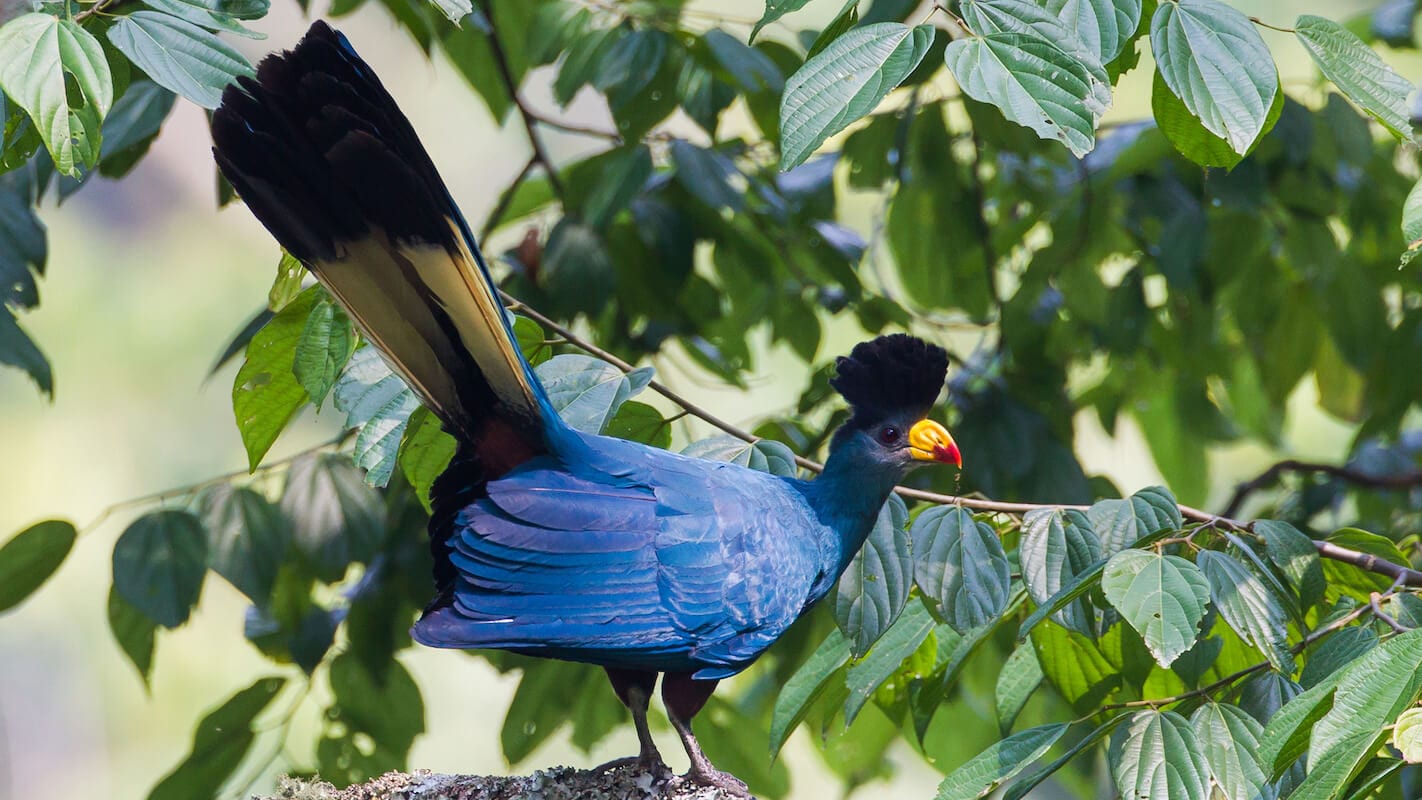
A 15-day birding safari in Uganda—the "Pearl of Africa"—offers the chance to spot over 1,000 recorded bird species across diverse ecosystems. These five distinct itinerary ideas highlight the best wetlands, savannahs, and primary forests to maximize your checklist.
15-days-best-uganda-birding-safari-and-wildlife-adventure
15 Days Ultimate Albertine Rift Endemics Tour
The Albertine Rift is a birder’s paradise, representing one of the most biodiverse regions in Africa. This 15-day expedition is meticulously designed for serious ornithologists and nature enthusiasts eager to cross off the most elusive and highly localized endemics from their lists. Traversing from the papyrus-fringed wetlands of the central plateau to the high-altitude montane forests of the southwest, this tour offers an unparalleled opportunity to encounter rarities in their natural habitats. Our focus centers on the "big hitters" of the region, including the legendary African Green Broadbill and the near-mythical Shelley’s Crimsonwing. Alongside these treasures, you will explore lush forest corridors and misty valleys, home to unique species such as the Rwenzori Turaco and Archer’s Robin-Chat. With expert local guidance and immersive field time, this journey balances strenuous trekking with rewarding, quiet observation, ensuring you experience the best birding Uganda has to offer in this spectacular, high-altitude sanctuary.
Day-by-Day Itinerary
Day 1: Arrival in Entebbe
Upon arrival at Entebbe International Airport, you will be met by your professional birding guide and transferred to your accommodation. Depending on your arrival time, we may enjoy a relaxed afternoon birding session at the Entebbe Botanical Gardens or the shores of Lake Victoria. This serves as an excellent introduction to the diverse Ugandan avifauna, where we might spot the Great Blue Turaco, Orange-tufted Sunbird, and various kingfishers. We will review our itinerary and conduct a briefing regarding the birding challenges and highlights of the coming two weeks.
Day 2: Mabamba Swamp & Entebbe Birding
We start early for a motorized canoe trip through the winding papyrus channels of Mabamba Swamp. This is arguably the most reliable site globally to encounter the prehistoric-looking Shoebill Stork. As we navigate the wetlands, we will also search for other papyrus specialties, including the Papyrus Gonolek, Lesser Jacana, and the White-winged Warbler. After a morning of wetland birding, we return for lunch and spend the afternoon birding the Entebbe peninsula, targeting species like the Grey-headed Gull and various weavers.
Day 3: Transfer to Mpanga Forest
We depart for the lush Mpanga Forest, a beautiful patch of medium-altitude rainforest. This site is excellent for forest-dwelling species that are often harder to see elsewhere. We will spend the day walking the well-maintained trails, keeping an eye out for the Black-and-white Shrike-flycatcher, African Firefinch, and the elusive Blue-breasted Kingfisher. The forest floor and mid-canopy are bustling with activity, offering perfect opportunities to photograph forest birds in a tranquil setting before we begin our journey further west toward the Albertine Rift.
Day 4: Birding to Lake Mburo
Today we travel toward Lake Mburo National Park, stopping at various birding hotspots along the way. The habitats shift from forest to acacia woodland, providing a change in the species list. We will target the Coqui Francolin, Emerald-spotted Wood Dove, and the Bare-faced Go-away-bird. The park’s diverse terrain, including rocky outcrops and seasonal swamps, makes it a haven for raptors and weavers. We will settle into our lodge overlooking the lake, listening to the evening chorus of the African Scops Owl.
Day 5: Lake Mburo Exploration
A full day in Lake Mburo allows us to explore the savannah and lake margins. We will take a boat cruise in the afternoon to look for the African Finfoot and White-backed Night Heron. Terrestrial species to look for include the Southern Red Bishop, Lilac-breasted Roller, and the Spot-flanked Barbet. The park's open landscape provides great visibility for birding, and the presence of impala and zebra adds to the general wildlife experience. We spend the night at our lodge, preparing for the ascent into the higher altitudes.
Day 6: Drive to Kisoro & Echuya Forest
We head toward the far southwest, stopping at the Echuya Forest Reserve. This mid-altitude forest is a critical stop for birders targeting Albertine Rift endemics. Echuya acts as a bridge between the larger forests, hosting species like the Regal Sunbird, Blue-headed Sunbird, and the Rwenzori Batis. The air gets cooler as we approach Kisoro, where the dramatic volcanic peaks of the Virunga Mountains dominate the horizon. We will conduct some light birding along the forest edge before checking into our hotel.
Day 7: Mgahinga Gorilla National Park
We spend the entire day exploring the lower slopes of Mgahinga, specifically the Gorge Trail between Mount Sabinyo and Mount Gahinga. This unique afro-montane habitat is home to the stunning Rwenzori Turaco and the secretive Kivu Ground Thrush. We will scan the bamboo and hypericum zones for the Archer's Robin-Chat and the Dusky Turtle Dove. The scenery here is breathtaking, and the birding is equally rewarding as we search for range-restricted species that are unique to these volcanic highlands.
Day 8: Full Day in Mgahinga
A second day in Mgahinga allows us to reach deeper into the forest, searching for species we might have missed previously. We focus our efforts on the high-altitude specialties like the Stripe-breasted Tit and the Mountain-masked Apalis. The "Golden Monkey" trekking zone often provides excellent undergrowth, where we might flush the Handsome Francolin. This region is particularly quiet, allowing us to listen for the distinctive calls of the various mountain warblers and flycatchers that inhabit this cool, mist-covered mountain ecosystem.
Day 9: Transfer to Ruhija (Bwindi)
After a final morning of birding in the shadow of the volcanoes, we begin the scenic drive to the Ruhija sector of Bwindi Impenetrable National Park. Ruhija is widely considered the "Holy Grail" of African birding. En route, we will make stops in areas of scrub and forest edge that host the Doherty’s Bush-shrike and the Strange Weaver. As we ascend the road to Ruhija, the elevation increases significantly, setting the stage for some of the rarest birds on the African continent.
Day 10: Mubwindi Swamp Trek
Today we tackle the legendary Mubwindi Swamp trail. This is a challenging hike but essential for seeing the African Green Broadbill, one of the world's most sought-after birds. We start at dawn, descending through the ancient forest, listening for the characteristic calls of the Grauer’s Warbler and the Grauer’s Swamp Warbler. This is our primary opportunity to locate the Broadbill and other high-altitude specialties in this pristine, moss-draped environment. We return to our lodge in the late afternoon for a well-earned rest.
Day 11: Ruhija Forest Birding
We spend the day birding the main road and surrounding trails in Ruhija. This area is famous for its feeding flocks, where one can see a multitude of species in a short time, including the Rwenzori Batis, Mountain Illadopsis, and various sunbirds like the Northern Double-collared Sunbird. We will keep a sharp eye out for the elusive Shelley’s Crimsonwing, which occasionally frequents the seeding grasses along the roadside. The high-altitude forest here is dense, mysterious, and home to an incredible density of Albertine endemics.
Day 12: Gorilla Trekking / Birding
While today is traditionally reserved for optional Gorilla trekking, the day can also be dedicated to deep-forest birding. If trekking, you will spend time with the mountain gorillas, enjoying the forest in a more intimate way. If birding, we will focus on finding the Chapin’s Flycatcher and the Red-throated Alethe. Regardless of the choice, the experience of being in Bwindi is profound. The afternoon will be spent compiling our lists and enjoying the peaceful atmosphere of the Bwindi canopy.
Day 13: Drive to Buhoma
We depart Ruhija for the Buhoma sector, descending to a lower altitude. We bird the "Neck," a stretch of forest between Ruhija and Buhoma that is excellent for the Black Bee-eater, Cassin’s Flycatcher, and the White-headed Wood-hoopoe. The change in elevation brings different species, such as the Grey-throated Barbet and various greenbuls. We will arrive in Buhoma by late afternoon, settling into a lodge situated right on the forest edge, which often provides excellent birding right from the veranda.
Day 14: Buhoma Forest Birding
Our final day of serious birding takes place in the Buhoma sector. We will walk the trails to find any remaining target species, such as the Petit’s Cuckoo-shrike or the elusive Lagden’s Bush-shrike. The forest here is lush and provides a final chance to photograph the spectacular avian life of the Albertine Rift. We will enjoy a slow pace, reflecting on the highlights of the tour and ensuring we have enjoyed the magical atmosphere of this ancient, UNESCO-listed forest.
Day 15: Return to Entebbe / Departure
We begin our long drive back to Entebbe, making stops for breakfast and lunch. This is a day for relaxation and reminiscing about the incredible species we have encountered. Depending on your flight time, we will stop at the equator for a photo opportunity and a final quick birding check in the surrounding scrub. Upon arrival in Entebbe, we will assist with your transfer to the airport for your evening flight, marking the end of your 15-day Albertine Rift birding adventure.
15 Days Great Savanna & River Birding Circuit
This 15-day expedition is a masterclass in African birding, specifically curated for those who wish to combine the thrills of a classic "Big Five" wildlife safari with the pursuit of a massive avian checklist. The route focuses on Uganda’s dramatic river systems, vast acacia savannas, and protected wetlands, which harbor an extraordinary concentration of raptors, water birds, and localized specialties. From the prehistoric Shoebill Stork in the papyrus swamps of Lake Victoria to the regal Abyssinian Ground Hornbill prowling the northern plains, this itinerary offers diverse habitats at their most productive. You will explore the mighty Nile, the rocky outcrops of Murchison Falls, and the rich acacia woodland of Lake Mburo. This is an immersive journey designed for high-volume birding, featuring river cruises, extensive game drives, and guided walks, ensuring you maximize your sightings of both elusive predators and iconic water-dependent species.
Day-by-Day Itinerary
Day 1: Arrival in Entebbe
Arrive at Entebbe International Airport, the gateway to your Ugandan adventure. After clearing customs, you will be met by your specialist birding guide and transferred to your lodge near the shores of Lake Victoria. Spend the afternoon exploring the lush Entebbe Botanical Gardens, where you can begin your checklist with species like the Great Blue Turaco, Orange-tufted Sunbird, and various weavers. This relaxed start allows you to acclimatize while enjoying a preview of the birdlife.
Day 2: The Shoebill Hunt at Mabamba
We depart early for Mabamba Swamp, an Important Bird Area (IBA) globally recognized for the Shoebill Stork. Navigating the papyrus channels in motorized canoes, we focus on locating this elusive, prehistoric bird in its natural environment. Beyond the Shoebill, expect to spot the Lesser Jacana, Papyrus Gonolek, and various herons. After an exhilarating morning on the water, we return for lunch before preparing for our journey north.
Day 3: Transfer to Ziwa Rhino Sanctuary
We head north toward Ziwa Rhino Sanctuary. This transit day is interspersed with roadside birding stops, targeting savanna species like the African Harrier-Hawk and various raptors. Upon arrival at the sanctuary, we engage in a guided tracking experience to see the rhinos. The habitat here—a mosaic of savanna and swamp—is excellent for the Abyssinian Ground Hornbill and various bustards, offering a fantastic transition into the wild landscapes of the north.
Day 4: Arrival in Murchison Falls National Park
We complete our drive to Murchison Falls, Uganda’s largest national park. Entering via the southern gate, we stop at the top of the falls to witness the Nile River forcing its way through a narrow seven-meter gap. The surrounding rocky cliffs provide habitat for the Rock Pratincole and various swifts. We settle into our lodge, taking in the spectacular panoramic views as the evening begins to hum with the sounds of the African wilderness.
Day 5: Murchison Falls - Delta & River Birding
A morning boat cruise to the Nile Delta is the highlight for water-bird enthusiasts. This area is a prime site for the Saddle-billed Stork, African Skimmer, and a variety of kingfishers and bee-eaters. In the afternoon, we head out on a game drive in the northern sector, where the open grasslands provide perfect hunting grounds for raptors like the Martial Eagle and the Bateleur. Keep your binoculars ready for the rare Pel's Fishing Owl near riverine trees.
Day 6: Murchison Falls - Savanna Exploration
We dedicate a full day to the northern plains. Birding here is prolific, with the chance to see the Abyssinian Ground Hornbill, Silverbird, and various sunbirds. We will also search for the Dusky Babbler and Black-billed Barbet. The interaction between game and birdlife is fascinating; massive herds of buffalo and elephants often attract cattle egrets and tick-birds, creating a vibrant, living landscape that makes for an unforgettable photographic experience.
Day 7: Drive to Masindi
We depart Murchison Falls and make our way toward Masindi. Along the route, we stop at the Budongo Forest edge, a transition zone known for its high bird diversity. We look for species like the Yellow-throated Leaflove and various flycatchers. This day acts as a buffer in our itinerary, allowing us to catch up on any species missed in the park and providing a more leisurely pace as we transition back toward the central region.
Day 8: Birding the Royal Mile
We spend the day at the famous "Royal Mile" in the Budongo Forest. This is widely considered one of the best forest birding sites in East Africa. We target the Nahan’s Francolin, Chocolate-backed Kingfisher, and the rare Ituri Batis. The tall canopy and well-maintained tracks make spotting elusive forest birds much easier. The density of birdlife here is remarkable, and we will carefully track mixed-species flocks moving through the mid-strata of the forest.
Day 9: Transfer to Kibale Forest
We travel to the Kibale Forest area, renowned as the primate capital of the world. En route, we scan the countryside for open-country birds and raptors. Upon arrival, we visit the Bigodi Wetland Sanctuary. The boardwalks here provide excellent access to swamp-dwelling species, including the Great Blue Turaco, Papyrus Gonolek, and White-winged Warbler. The blend of forest edge and wetland creates a unique ecological niche that is highly productive for avian sightings.
Day 10: Kibale Forest & Bigodi Exploration
Today is split between the forest and the wetland. In the morning, we bird the forest trails, targeting the Green-breasted Pitta and various species of hornbills. In the afternoon, we return to the Bigodi area to focus on any missed targets or to enjoy the sheer variety of birds living on the forest fringe. The combination of dense canopy and open swamp gives us a diverse day list, showcasing the versatility of this incredible region.
Day 11: Transfer to Queen Elizabeth National Park
We journey south toward Queen Elizabeth National Park. As we descend into the Albertine Rift Valley, the landscape opens up into vast savanna plains. We make several stops along the way to observe raptors perched on utility lines and acacia trees. We arrive at our lodge in the late afternoon, just in time to watch the sunset over the Kazinga Channel, which is already teeming with water birds and large mammals.
Day 12: Kazinga Channel & Kasenyi Plains
This morning, we head to the Kasenyi Plains for a game drive, focusing on ground birds like the Black-rumped Buttonquail and various larks. In the afternoon, we take a boat cruise on the Kazinga Channel. This is one of the most productive birding sites in Africa; expect to see the African Skimmer, Saddle-billed Stork, and hundreds of hippos. The sheer concentration of birds and animals along the shoreline is a spectacle that defines this tour.
Day 13: Journey to Lake Mburo
We head toward Lake Mburo National Park, the only park in Uganda where you can see the Red-faced Barbet. We will stop at the equator for the customary photo and a quick birding session. Upon arrival, we enjoy an afternoon game drive, as Lake Mburo is home to unique savanna species like the Tabora Cisticola and the Black-collared Barbet. The park’s smaller size allows for more intimate and focused birding in the acacia woodland.
Day 14: Lake Mburo - Forest & Swamp
A final full day is dedicated to Lake Mburo’s diverse habitats. We enjoy a morning nature walk, which allows us to see smaller birds like the Red-faced Barbet up close. In the afternoon, we take a final boat cruise on the lake to search for the elusive African Finfoot and the White-backed Night Heron. This is a perfect, relaxed end to our birding route, offering a chance to finalize our checklists and soak in the tranquil beauty.
Day 15: Return to Entebbe
We depart Lake Mburo for the drive back to Entebbe. We make a final stop at the Mpigi wetlands or local scrub areas if time permits, hoping for any last-minute additions to our massive trip list. After arriving in Entebbe, we enjoy a farewell dinner and recap our highlights before your transfer to the airport for your evening flight. This concludes our 15-day journey through Uganda’s spectacular savanna and riverine ecosystems.
15 Days Primate & Forest Birding Special
This immersive 15-day journey is specifically crafted for those who cherish the synergy between primatology and ornithology. By focusing on Uganda’s premier forest ecosystems, this 15 day itinerary bridges the gap between the excitement of tracking man’s closest relatives and the quiet, rewarding pursuit of rare forest avifauna. From the prehistoric Shoebill in the papyrus-choked Mabamba Swamp to the elusive Green-breasted Pitta within the depths of Kibale’s tropical canopy, this tour traverses the country’s most significant biodiversity hotspots. You will navigate the dense, mid-altitude forests of the west and the expansive wetlands of the Albertine Rift. Whether you are observing a family of chimpanzees in their natural habitat or scanning the foliage for the iconic Great Blue Turaco, this expedition offers a profound connection to nature. With a blend of high-altitude trekking and immersive forest walks, every day provides a unique opportunity to document rare species in some of the most beautiful landscapes in East Africa.
Day-by-Day Itinerary
Day 1: Arrival in Entebbe
Upon your arrival at Entebbe International Airport, you will be met by your specialist birding guide and transferred to your boutique hotel. The remainder of the day is at your leisure, allowing you to settle in and enjoy the tranquil atmosphere. If time permits, we will take a gentle introductory walk through the Entebbe Botanical Gardens. This serves as a perfect orientation to Uganda’s avifauna, where we may spot the Great Blue Turaco and various sunbirds, setting a relaxing tone for the adventure ahead.
Day 2: Mabamba Swamp Exploration
We start early for a motorized canoe excursion into the heart of the Mabamba Swamp. This wetland is one of the most reliable sites for viewing the elusive Shoebill Stork. As we navigate the narrow papyrus channels, we will also search for the Lesser Jacana, Papyrus Gonolek, and various swamp-dwelling kingfishers. We return to our hotel in the afternoon to finalize gear and prepare for our departure to the western forests, ensuring we are well-rested for the upcoming days.
Day 3: Transfer to Fort Portal
We travel westward toward the vibrant town of Fort Portal, the gateway to the "Primate Capital of the World." The drive offers stunning scenery, passing through tea plantations and rolling hills. We will make several stops in forested patches along the way to observe common forest species and raptors. This transit day allows for gradual acclimatization to the altitude and provides a relaxing introduction to the lush, volcanic landscape that defines the region surrounding the Kibale Forest.
Day 4: Kibale Forest Birding
Today we dedicate our efforts to the dense forests of Kibale National Park. Known for its incredible bird diversity, the park is home to over 370 species. We will focus our search on the highly sought-after Green-breasted Pitta, a highlight for many birders. Walking the forest trails, we will also listen for the calls of the African Emerald Cuckoo and scan the canopy for hornbills and turacos. The humid, shaded environment makes for excellent, focused birding.
Day 5: Chimpanzee Tracking & Birding
This morning, we participate in an unforgettable chimpanzee tracking experience at Kanyanchu. Watching these primates in their natural habitat is a powerful experience. In the afternoon, we continue our birding efforts in the forest fringe, looking for species like the Yellow-spotted Barbet and various greenbuls. The combination of primate encounters and birding creates a rich, multifaceted day. We return to our lodge to reflect on the day's sightings and enjoy the sounds of the forest.
Day 6: Bigodi Wetland Sanctuary
We head to the Bigodi Wetland Sanctuary, a community-run project that is essential for birding in this area. Walking along the raised boardwalks, we look for the Great Blue Turaco, Papyrus Canary, and a host of other wetland specialists. The sanctuary’s unique position at the edge of the Kibale Forest creates an ecotone that supports an extraordinary array of birdlife. It is a fantastic opportunity to see birds at close range in a highly accessible environment.
Day 7: Transfer to Queen Elizabeth National Park
We depart for Queen Elizabeth National Park, crossing the equator and enjoying the dramatic shift in scenery as the landscape opens into the savanna of the Albertine Rift. We will stop to scan for raptors and open-country birds along the way. Upon arrival, we settle into our lodge, which offers sweeping views of the plains. The anticipation builds for the bird-rich habitats of the Kazinga Channel, which we will explore in the coming days.
Day 8: Kazinga Channel & Kasenyi Plains
A full day dedicated to the biodiversity of Queen Elizabeth National Park. In the morning, we explore the Kasenyi Plains to look for ground birds and raptors. In the afternoon, we take a boat cruise along the Kazinga Channel, one of the best birding spots in the country. We expect to see the African Skimmer, various storks, and a massive density of water birds alongside wallowing hippos and crocodiles, providing a quintessential African safari experience.
Day 9: Ishasha Sector Exploration
We drive toward the southern Ishasha sector of the park, famous for its tree-climbing lions. While our focus remains on birding, the landscape here is excellent for the African Finfoot and other riverine species. The drive itself is a birding safari, as we watch for species that frequent the acacia woodlands and river corridors. We stay overnight in Ishasha, enjoying the remoteness and the unique, quiet birding atmosphere that this sector offers during the early morning hours.
Day 10: Drive to Bwindi Impenetrable Forest
We continue our journey to the Bwindi Impenetrable National Park, ascending into the mist-covered mountains of the southwest. The change in altitude marks our entry into prime Albertine Rift endemic territory. We stop for birding in the mountain passes, looking for species like the Mountain Buzzard and various bush-shrikes. Arriving at our mountain lodge, we are greeted by cooler temperatures and the anticipation of exploring one of the most important forests in Africa.
Day 11: Gorilla Trekking (Optional) or Birding
Today offers the choice of a life-changing gorilla trekking experience or a dedicated day of deep-forest birding. Those trekking will spend time with a mountain gorilla family, a deeply moving encounter. Those opting for birding will explore the forest trails, focusing on high-altitude specials and regional endemics that are unique to Bwindi. Both options provide an immersive experience in this ancient, UNESCO-listed forest, ensuring an unforgettable day in the heart of the Albertine Rift.
Day 12: Ruhija Sector Birding
We move to the high-altitude Ruhija sector, renowned for its extraordinary birding. This area is the best place to find the African Green Broadbill and a variety of other rare, localized species. We spend the day birding along the main trails, with our expert guide helping us spot the Grauer’s Warbler and the Mountain-masked Apalis. The misty atmosphere and the density of life here make Ruhija a highlight for even the most experienced ornithologists.
Day 13: Birding at the Neck
We head toward the Buhoma sector, stopping along the way at "the Neck," a narrow corridor of forest that is exceptionally productive for birding. This area is famous for the Black Bee-eater, Cassin’s Flycatcher, and the White-headed Wood-hoopoe. We take our time here, enjoying the diverse mix of species that congregate in this transitional zone. We reach Buhoma by late afternoon, settling into our lodge surrounded by the sights and sounds of the primeval forest.
Day 14: Buhoma Forest Trails
Our final full day in the forest is spent exploring the Buhoma trails. We search for any remaining target species, such as the Lagden’s Bush-shrike or the elusive Red-throated Alethe. We also take a moment to reflect on our journey through the diverse ecosystems of Uganda. The walk is taken at a leisurely pace, allowing for photography and quiet observation, ensuring we maximize every minute in this magnificent, biodiversity-rich environment before our departure.
Day 15: Return to Entebbe
We begin our drive back to Entebbe, a journey that traverses the scenic countryside once more. We make stops for breakfast and lunch, and perhaps a final check of the roadside scrub for any last-minute additions to our trip list. Upon arriving in Entebbe, we enjoy a final group dinner, recapping the incredible primate encounters and birding milestones of the past two weeks. You are then transferred to the airport for your evening flight home.
15 Days Semuliki & Rwenzori Foothills Route
This specialized 15-day expedition is designed for the discerning birder seeking to unlock the mysteries of the Congo-Guinea biome within the borders of Uganda. The Semuliki Valley, often referred to as the "True Birder’s Haven," acts as an extension of the vast Ituri Forest, hosting spectacular Central African species that are found nowhere else in East Africa. By combining the humid lowlands of Semuliki with the dramatic altitudinal gradients of the Rwenzori foothills and the rich wetlands of the Kazinga Channel, this route offers an unparalleled density of avian life. You will navigate ancient riverine forests, traverse mist-covered montane slopes, and scan papyrus swamps for the legendary Shoebill and the vibrant Papyrus Gonolek. With a focus on ultra-rare "Congo-specials" like the Nkulengu Rail and Long-tailed Hawk, this itinerary provides the time and expert guidance necessary to locate some of the continent's most elusive and highly sought-after birds.
Gorilla Sights
Day-by-Day Itinerary
Day 1: Arrival in Entebbe Arrive at Entebbe International Airport, where you will be met and transferred to your accommodation. Depending on your arrival time, we will spend the afternoon birding at the Entebbe Botanical Gardens. This lush, established garden on the shores of Lake Victoria is home to numerous sunbirds, weavers, and the Great Blue Turaco, providing a gentle introduction to Ugandan birdlife before we venture into the more challenging lowland forests of the west.
Marvel Gorilla Adventure+ 1
Day 2: Mabamba Swamp & Transfer to Fort Portal We head early to the Mabamba Swamp, an Important Bird Area (IBA) globally famous for the Shoebill Stork. Using motorized canoes, we navigate the papyrus channels to locate this prehistoric giant. Afterward, we embark on the scenic drive to Fort Portal, the base for our explorations of the Rwenzori region. We will stop for opportunistic birding in the diverse habitats along the route, searching for raptors and common savanna species.
Mamaland Safaris
Day 3: Transfer to Semuliki National Park We depart for Semuliki National Park, a remote corner of Uganda that serves as a unique ecological link to the Congo Basin. As we descend into the rift valley, the temperature rises and the vegetation shifts to true lowland tropical forest. Upon arrival, we settle into our lodge and enjoy an evening walk around the forest edge, listening for the distinctive calls of hornbills and the various forest-dwelling nightjars that emerge at dusk.
Semuliki National Park
Day 4: Semuliki Forest - Lowland Specials Our first full day in Semuliki is dedicated to the primary forest trails. We focus on the Congo-Guinea biome species that define this park. Target birds include the Black-and-white-casqued Hornbill, Piping Hornbill, and the elusive Capuchin Babbler. The dense, humid undergrowth here is home to a staggering variety of birds, and our expert local guide will help us navigate the tracks to find these localized, high-value species hidden within the thick canopy.
Day 5: Seeking the Nkulengu Rail & Long-tailed Hawk Today we delve deeper into the forest, targeting the crown jewels of Semuliki. The Nkulengu Rail is our primary goal, often heard calling from the swamps and dense thickets near the Semuliki River. We will also scan the high canopy and forest clearings for the rare Long-tailed Hawk. This is a day for patient, quiet observation, as we immerse ourselves in the remote, ancient forest environment that few birders have the privilege to explore.
Semuliki National Park
Day 6: Semuliki River & Hot Springs We take a walk toward the Sempaya Hot Springs, an area that provides unique forest-edge birding. The mix of thermal activity and riverine vegetation attracts species like the Spot-breasted Ibis and various kingfishers. The river itself serves as a corridor for avian movement, and we will spend the afternoon watching the banks for herons and storks. This location offers a different perspective of the park, combining geologic wonder with prolific bird activity.
Semuliki National Park
Day 7: Birding the Rwenzori Foothills We transition to the foothills of the "Mountains of the Moon," the legendary Rwenzori range. The lower slopes offer a shift in habitat, featuring montane forest and well-tended farmlands that are excellent for the Archer’s Robin-Chat and various sunbirds. We will bird along the Mubuku River, enjoying the crisp mountain air and the dramatic backdrop of the peaks, while searching for species restricted to these unique, high-altitude slopes.
Day 8: Full Day Rwenzori Exploration A full day in the Rwenzori foothills allows us to explore deeper into the forest zone. We focus on finding the Rwenzori Turaco and other Albertine Rift endemics that reside in this transitional ecosystem. The trail takes us through bamboo and montane forest patches, where the silence is broken by the calls of bush-shrikes and flycatchers. This is a physically rewarding day, offering some of the most spectacular mountain scenery in all of Africa.
Day 9: Transfer to Queen Elizabeth National Park We depart the Rwenzoris and head south to Queen Elizabeth National Park. As we enter the park, the landscape opens into sweeping savanna. We make stops along the way at crater lakes, which are hotspots for water birds, including flamingos and various ducks. We arrive at the Mweya Peninsula in the late afternoon, where the birding is excellent right from the lodge, with views of the Kazinga Channel inviting us for the next phase of our journey.
Day 10: Kazinga Channel & Kasenyi Plains This morning, we explore the Kasenyi Plains for ground-dwelling birds and raptors, including the Martial Eagle. In the afternoon, we take a boat cruise on the Kazinga Channel, a world-class birding site. Here we will target the African Skimmer, various kingfishers, and the iconic Papyrus Gonolek, which hides within the thick reeds. The channel's density of birdlife, set against a backdrop of bathing hippos and crocodiles, is a highlight of any Ugandan safari.
All Uganda Safaris
Day 11: Ishasha Sector & Riverine Forest We travel to the Ishasha sector of the park, famous for its tree-climbing lions and its riverine forests along the Ntungwe River. We search for the African Finfoot and other elusive riparian species. The habitat here is a mosaic of acacia woodland and riverine corridors, supporting a different set of birds than we saw in the northern sector. We stay in the heart of the savanna, enjoying the sounds of the bush under the starry night sky.
Rwanda Safaris
Day 12: Birding Toward Kibale Forest Area We begin our return toward the north, heading back toward the Kibale forest area. This day is utilized to "mop up" any species we may have missed or to enjoy the scenic drive through the rift valley. We stop at various wetlands and agricultural zones, which often attract a surprising variety of raptors and insectivorous birds. We arrive in the late afternoon, preparing for our final days in the lush mid-altitude forests.
Day 13: Bigodi Wetland Sanctuary We spend the day at Bigodi, one of the best wetland birding sites in the country. The boardwalks provide excellent access to see the Papyrus Gonolek at close range and the majestic Great Blue Turaco. This sanctuary is also a prime site for observing primates, which are often active alongside the birds. The relaxed pace and the sheer abundance of birdlife make this a deeply enjoyable experience for any birder.
Beyond Travel Africa
Day 14: Final Forest Birding On our last full day, we dedicate our time to the forest fringes of the Kibale region. We look for any final targets, such as the Black-billed Turaco or various greenbuls. This is a time to reflect on our journey, finalize our trip lists, and enjoy the sights and sounds of the Ugandan forest one last time. We will enjoy a slow pace, ensuring we capture photographs and memories of these beautiful, high-altitude species.
Mamaland Safaris
Day 15: Return to Entebbe We make the final drive back to Entebbe, traversing the rolling hills of the central region. We stop for lunch and a final birding scan of the local scrubland for any late-trip additions. Upon arrival in Entebbe, we enjoy a farewell dinner to celebrate the successful tracking of some of the most elusive birds in Africa. You are then transferred to the airport for your evening flight, concluding your 15-day Semuliki and Rwenzori birding adventure.
15 Days Comprehensive "Grand Slam" Birding Safari
Introduction
Welcome to the ultimate Ugandan birding expedition. Designed for the serious birder, this 15-day "Grand Slam" circuit is a high-speed, intensive journey through the heart of the Albertine Rift and beyond. From the papyrus-fringed shores of Mabamba to the dense, mist-covered montane forests of Bwindi, we have curated a route that hits every major ecological zone in the country. This itinerary is specifically optimized to maximize your species count, targeting Uganda’s most coveted avian treasures—including the legendary Shoebill, the elusive Green-breasted Pitta, and the rare African Green Broadbill. You will traverse savannahs, wetlands, and ancient rainforests, guided by experts who understand the nuances of behavior, habitat, and timing. Prepare for an immersive, fast-paced adventure that bridges the gap between rare sightings and total ecological immersion. Get your binoculars ready—the birding adventure of a lifetime begins now as we chase the continent’s most spectacular feathered icons across the Pearl of Africa.
Daily Itinerary Details
Day 1: Entebbe Arrival Your arrival in Entebbe marks the beginning of a swift, high-intensity birding tour. After clearing customs, you will be transferred to your accommodation, which doubles as an excellent introductory birding site. Spend the afternoon wandering through the tranquil botanical gardens or the lodge grounds, which are home to a surprising array of species. Keep your binoculars handy to spot the Great Blue Turaco, various hornbills, and vibrant weavers. This day is designed for acclimation and gear preparation. Your guide will conduct a comprehensive briefing to review the 15-day strategy, focusing on the specific habitat transitions you will experience. This is the moment to ensure your camera equipment, field guides, and optics are in perfect working order for the demanding schedule ahead. It is a relaxed but vital start to ensure you are energized and ready to hit the field at dawn tomorrow for your first major target.
Day 2: Mabamba Swamp Today, we head directly to Mabamba Swamp, one of the most reliable sites globally to spot the iconic Shoebill. This papyrus-dominated wetland is an extraordinary habitat for a host of avian wonders. You will board a small wooden canoe, navigating the intricate channels where the prehistoric-looking Shoebill waits patiently for lungfish. Beyond this primary target, keep your eyes peeled for the Papyrus Gonolek, Malachite Kingfisher, and various swamp-dwelling warblers. The tranquility of the swamp offers a stark contrast to the busy days ahead. It is a fantastic opportunity to sharpen your identification skills early in the trip. Once the Shoebill is secured, we will scan the surrounding reeds for other specialties. After a productive morning, we will begin our transit toward the northwest, positioning ourselves for the next leg of our journey through the diverse landscapes of Uganda’s interior.
Day 3: Murchison Falls – Savannah Birding We transition into the vast plains of Murchison Falls National Park. This morning, we cross the Nile to explore the northern savannahs, a paradise for raptors and localized dry-country birds. Our primary focus here is the majestic Martial Eagle, often spotted scanning the horizon from the tops of scattered trees. The park’s diverse ecosystem, ranging from riverine forest to open acacia scrub, provides an incredible variety of sightings. Keep your lists ready for species like the Secretary Bird, Abyssinian Ground Hornbill, and the stunning Northern Carmine Bee-eater. The sheer scale of the park is impressive, and the birdlife is abundant. We will spend the day driving the tracks, stopping frequently for raptors, bustards, and francolins. The presence of the powerful Nile River adds an element of drama, providing a backdrop for a day filled with high-energy birding across these iconic, sprawling African grasslands.
Day 4: Murchison Falls – Delta & River Today is dedicated to the Nile Delta, a critical wetland habitat where the river flows into Lake Albert. This boat trip is essential for spotting the Shoebill in a completely different, water-based context, offering unique photographic opportunities. We will also scan the riverbanks for the rare African Skimmer, which often breeds on the sandy islets during the dry season. The riverbanks are alive with activity, featuring Wire-tailed Swallows, Pied Kingfishers, and various herons. We will also watch the skies for raptors and scavengers riding the thermals. The boat provides a vantage point that is impossible to replicate by road, allowing for closer observation of shy species. The afternoon will be spent birding the woodland edges near the Delta, where we hope to encounter various flycatchers and cisticolas. This water-based safari is a cornerstone of our species-gathering strategy, providing a serene yet highly productive day.
Day 5: Transfer & Budongo Forest We depart Murchison Falls, heading south to the legendary Budongo Forest. This forest is one of the most important birding areas in East Africa, known for its mix of Central African and East African species. We focus on the "Royal Mile," a famous stretch of road known for its exceptional birding. The canopy here hides the elusive Puvel’s Illadopsis, Chocolate-backed Kingfisher, and various woodpeckers. We will walk slowly through the forest, listening for the distinct calls of the many canopy-dwellers. The undergrowth is thick, requiring patience and sharp senses. This day acts as a bridge between the savannahs of the north and the montane forests of the west. Budongo offers a fantastic density of species, providing a high-octane birding experience before we move deeper into the Albertine Rift. We will stay overnight at a forest-adjacent lodge to ensure we are ready for a full day in the woods.
Day 6: Kibale Forest Kibale Forest is our primary target for the "holy grail" of Uganda birding: the Green-breasted Pitta. This elusive, forest-floor inhabitant requires an early start and absolute silence. We will work with specialized local trackers who know the bird’s habitual calling spots. Beyond the pitta, Kibale is famous for its primate population and rich forest bird community. You will likely encounter the Great Blue Turaco, various bulbuls, and sunbirds darting through the mid-canopy. Birding in Kibale is immersive; the dense vegetation and towering trees create a magical atmosphere. Even if the pitta proves difficult, the sheer variety of forest-dwelling species keeps the energy levels high. We will spend the entire day navigating the forest trails, focusing on high-activity areas. This is a day for intense observation, where every movement in the foliage could be a new addition to your grand slam checklist.
Day 7: Bigodi Wetland Sanctuary After the dense forest of Kibale, today is a bit more relaxed but no less productive. Bigodi Wetland Sanctuary is a community-managed project that provides a vital corridor for birds moving between forest patches. This swamp is the best place to find the Papyrus Canary, White-winged Warbler, and the elusive Blue-breasted Kingfisher. We will walk the boardwalks through the papyrus, which offer a unique perspective on wetland specialists that are otherwise very difficult to observe. The surrounding forest edge also hosts a variety of primates and bird species like the Black-and-white Casqued Hornbill. It is a fantastic site for photography, with lower light levels than the deep forest and clearer viewing lanes. We will spend the morning at the swamp and the afternoon catching up on identification and list consolidation, ensuring we are prepared for the transition to the vast landscapes of Queen Elizabeth National Park.
Day 8: Queen Elizabeth National Park Queen Elizabeth National Park is a mosaic of savannah, crater lakes, and wetland. We start with a morning game drive in the Kasenyi plains, looking for the Martial Eagle and other raptors. The afternoon is dedicated to the famous Kazinga Channel boat cruise. This is one of the best birding activities in Africa. From the boat, you can get incredibly close to African Skimmers, various terns, and large concentrations of waterbirds, including Yellow-billed Storks and African Fish Eagles. The channel connects Lake George and Lake Edward, acting as a magnet for wildlife. The sheer density of birds, combined with the backdrop of the Rwenzori Mountains, is spectacular. We will look for Pel's Fishing Owl along the riverbanks if time permits. This day is a major highlight, blending terrestrial savannah birding with a rich, aquatic experience that is guaranteed to boost your species count significantly.
Day 9: Ishasha Sector We head south to the Ishasha sector of Queen Elizabeth National Park, famous for its tree-climbing lions but equally impressive for its birdlife. This area, with its unique riverine vegetation and open plains, offers a different birding experience. We will scan the acacia trees for raptors and look for species like the Ross’s Turaco and various colorful kingfishers along the Ishasha River. The Brown-chested Lapwing is a key target here, often found in the open, short-grass areas. Ishasha feels more remote and wild, providing a more intimate birding experience compared to the busier parts of the park. We will take our time exploring the tracks, focusing on the interface between the forest and the savannah. The diversity of habitats in a small area makes Ishasha an excellent spot to find species that might have eluded us earlier in the trip, keeping our "Grand Slam" momentum strong.
Day 10: Bwindi Impenetrable Forest (Ruhija) We ascend into the high-altitude forests of Bwindi, specifically the Ruhija sector. This is the heart of the Albertine Rift and the best place to find restricted-range endemics. Our primary objective is the African Green Broadbill, one of the most sought-after birds in the world. We will prepare for a challenging trek into the Mubwindi Swamp, where this species resides. The forest here is cool, misty, and incredibly rich. We will look for the Rwenzori Turaco, Archer’s Robin-Chat, and various sunbirds, including the Regal Sunbird. Birding in the high-altitude forest is demanding but extremely rewarding. The species here are found nowhere else on earth. We will spend the day focusing on the trails, listening for the distinct vocalizations that signal the presence of these shy, montane specialists. It is a day that tests your physical stamina but offers unparalleled opportunities for rare sightings.
Day 11: Mubwindi Swamp & Ruhija Today is a deep dive into the high-altitude forests around Ruhija. We return to the tracks near Mubwindi Swamp to continue our search for the African Green Broadbill and other endemics. This forest is a haven for the Grauer’s Broadbill, and we will dedicate significant time to finding it. The atmosphere in the high canopy, filled with moss-draped trees and endemic flora, is unforgettable. We will also scan for the Mountain Masked Apalis, Striped-breasted Tit, and various starlings. Given the sensitivity of these birds, we will move slowly and quietly, letting the forest come to us. The birding here is slow but high-reward, with the potential to add several restricted-range species to our total list. This is the ultimate "Grand Slam" day for the mountain specialist. We will finish the day by reviewing our checklists and preparing for our descent to the mid-altitude forest of Buhoma.
Day 12: Bwindi (Buhoma) We shift our focus to the Buhoma sector of Bwindi, which sits at a slightly lower altitude. This area offers a different set of forest specialties compared to the high peaks of Ruhija. We will bird the main forest trail, keeping a lookout for the Black Bee-eater, Red-throated Alethe, and the stunning Blue-headed Sunbird. The forest floor here is alive with insect life, attracting a variety of robins and thrushes. The dense canopy is home to many species of greenbuls and warblers that are difficult to identify. We will spend the day walking the trails, benefiting from the expert knowledge of local guides who know the nesting sites of many forest residents. Buhoma provides a beautiful, lush setting for our final day in the Bwindi complex, allowing us to mop up any remaining targets we might have missed in the higher altitudes.
Day 13: Lake Mburo National Park We descend from the mountains and head toward Lake Mburo National Park, an acacia-dominated sanctuary. This is the only place in Uganda to easily find species like the Red-faced Barbet and Tabora Cisticola. The park’s mix of open savannah, woodland, and wetlands provides a perfect end-of-trip birding environment. We will enjoy a game drive, looking for the African Finfoot on the lake’s edges and various raptors in the acacia thickets. The White-backed Night-heron is another elusive species we will target near the water. Lake Mburo is significantly drier than the forests we have just left, offering a refreshing change of pace and scenery. The park’s compact size makes it excellent for birding, as we can quickly move between different micro-habitats. It is a productive day that adds a distinct set of savannah and woodland species to our growing list as we prepare for the final leg.
Day 14: Lake Mburo Wetland & Savannah Our second day in Lake Mburo allows us to explore the park’s diverse habitats more thoroughly. We will revisit the lakefront to catch any species we missed yesterday, such as the African Finfoot, which is often spotted in the overhanging vegetation. The acacia woods are perfect for a variety of woodpeckers, barbets, and shrikes. We will also spend time in the open grasslands, scanning for ground-dwelling birds like the Coqui Francolin and various larks. The afternoon offers a final chance for a boat safari, which provides an excellent perspective on the wetland birds. By now, our species list should be substantial, and we will use this time to target any specific "gaps" in our grand slam checklist. It is a relaxed, reflective day, allowing us to appreciate the diversity of Uganda one last time before we begin our journey back toward the capital.
Day 15: Return to Entebbe Our final day is a transit back to Entebbe, but the birding is not over yet. We will make strategic stops along the way, particularly at the Equator and any interesting roadside wetlands or forest patches we identified during our transit to the west. This is our last chance to add species to our list and reflect on the past two weeks. The drive is an opportunity to see the changing landscape of Uganda and enjoy the rural scenery. We will ensure we arrive in Entebbe with enough time for a final group meal, where we will conduct a final tally of our total species count. It has been a fast-paced, high-intensity adventure, and we will depart feeling accomplished, having successfully navigated the diverse habitats of the Pearl of Africa to achieve our Grand Slam goals.
1. Why is the Mabamba Wetland a mandatory first stop?
The Mabamba Wetland, situated on the edge of Lake Victoria near Entebbe, serves as the essential gateway for any serious birding expedition in Uganda. It is universally recognized as the premier location for witnessing the legendary Shoebill (Balaeniceps rex), a prehistoric-looking avian giant that remains the most coveted prize for global birdwatchers. The swamp's unique papyrus-choked channels provide the perfect, undisturbed habitat for these elusive birds to hunt lungfish in shallow, oxygen-poor waters. By scheduling Mabamba as the inaugural stop, you capitalize on the proximity to Entebbe, allowing birders to shake off international travel fatigue while securing a high-probability "must-see" species almost immediately. Beyond the Shoebill, the wetland is a stronghold for the Lesser Jacana, a bird often difficult to spot elsewhere, along with the vibrant Papyrus Gonolek, which flashes its bright colors against the dense green reeds. Starting here builds immediate momentum for the entire 15-day tour; if you can cross the Shoebill off your list within hours of arriving, the rest of the trip can focus on the more elusive forest and montane targets. Furthermore, the local community-led canoe initiative ensures that your visit directly supports conservation efforts, meaning your first "tick" also contributes to the protection of this vital ecosystem. The combination of logistical ease, high success rates for specialty species, and the sheer visual impact of seeing a Shoebill in the wild makes Mabamba non-negotiable for a professional birding itinerary.
2. Where is the best place to find the rare Green-breasted Pitta?
Kibale National Park is widely considered the ultimate destination for tracking the Green-breasted Pitta (Pitta reichenowi). This species is often referred to as the "holy grail" of African birding, not because it is non-existent, but because its camouflage and skulking behavior make it notoriously difficult to locate. Within the 15-day "Grand Slam" framework, Kibale offers the best ecological conditions to dedicate the necessary time for this pursuit. Unlike the wider savannahs where birding is conducted from a vehicle, finding the pitta requires a focused, early-morning trek into the heart of the primary rainforest. You are essentially looking for a bird that prefers the dark, shadowed forest floor, making expert local knowledge of its territorial calls and display rituals absolutely critical. In Kibale, our specialized local guides are well-versed in where the pitta has been calling in the days leading up to your arrival. While there is never a 100% guarantee with such an elusive species, the primary forest trails of Kibale provide the necessary silence, patience, and professional tracking support to maximize your odds. The pursuit itself is a highlight of the trip, forcing birders to slow down and immerse themselves fully in the sensory environment of the rainforest—listening for subtle clicks or whistles amidst the cacophony of primates and hornbills. Even if the pitta remains elusive, the forest walk acts as a gateway to other Kibale specialties, such as the African Pitta or the dazzling Great Blue Turaco, ensuring that the time spent here is never wasted, regardless of the ultimate outcome of the pitta hunt.
3. What makes the Bigodi Wetland Sanctuary special?
The Bigodi Wetland Sanctuary is a shining example of how community-based conservation can create a world-class birding destination. Located adjacent to Kibale National Park, this sanctuary acts as a vital biological corridor, linking the dense rainforest to the surrounding agricultural landscapes. What makes Bigodi uniquely special is its accessibility; the park has been fitted with an extensive, well-maintained network of boardwalks that allow birders to penetrate deep into the papyrus swamp without the need for traditional canoeing. This stable footing makes it far easier to photograph species that are otherwise hidden in the reeds. It is a premier location to spot the Great Blue Turaco, which is often seen feeding in the fig trees along the swamp edge, along with the Papyrus Gonolek and the White-winged Warbler. The sanctuary is also an excellent site for primate enthusiasts, as it hosts various monkey species that share the habitat, often providing secondary entertainment between bird sightings. Because the sanctuary is managed by the local Bigodi community, your visit provides a direct economic incentive for them to protect the swamp from drainage and poaching, turning the local populace into the most effective guardians of the habitat. This creates a deeply rewarding experience where your interest in birding translates into tangible development for the neighboring villages. Whether you are aiming for high-end photography or simply looking to add key wetland species to your growing list, the sanctuary’s combination of ease of movement, high biodiversity, and profound social impact makes it an indispensable stop on any comprehensive Ugandan birding circuit.
4. Which itinerary option is best for savannah specials?
For birders prioritizing the quintessential African savannah experience, the northern circuit incorporating Murchison Falls National Park is the absolute best option. While many visitors are drawn to the falls themselves, the birding potential in the surrounding plains is vast and unmatched. The northern bank of the Nile, in particular, offers an expansive, high-density environment for dry-country species that are simply not found in the lush forests of the west. A well-structured Murchison itinerary includes multiple game drives through the Buligi circuit, where the open acacia scrub and rolling grasslands act as a magnet for raptors. Here, the Martial Eagle—often seen perched on the highest branches of solitary trees—and the Bateleur are common sightings. However, the true "savannah magic" of Murchison is found on the river. By taking a boat cruise to the base of the falls or downstream toward the Nile Delta, you gain access to specialized riverine birds that are nearly impossible to view from land. This is where you find the African Fish Eagle in its natural element, the rare African Skimmer skimming the water's surface, and the brilliantly colored Red-throated Bee-eater nesting in the riverbanks. For those looking for nocturnal specialties, night drives along the northern tracks provide excellent opportunities to locate the Pel’s Fishing Owl, a bird that remains high on many checklists. The contrast between the riverine water-birding and the raptor-rich terrestrial savannah makes the Murchison leg of your 15-day tour the most productive section for rapidly increasing your species count, offering both high-octane action and the aesthetic beauty of the classic East African wilderness.
5. How does Queen Elizabeth National Park enhance the trip?
Queen Elizabeth National Park (QENP) is a vital, high-diversity hub that significantly elevates the quality and count of any 15-day birding safari. Its enhancement to the trip stems from its extreme ecological variation; within a single day, you can traverse open savannah, dense thickets, riverine forests, and vast lake systems. The park’s centerpiece for birders is the Kazinga Channel, a natural waterway connecting Lake George and Lake Edward. This channel supports one of the highest concentrations of waterbirds in Africa, making it a "must-do" for any serious list. From the deck of a boat, you can observe hundreds of African Skimmers, various species of Gull-billed and White-winged Terns, and large flocks of African Spoonbills and Great White Pelicans. It is also an ideal place for close-range photography of birds that are usually shy or distant. Beyond the water, the Kasenyi Plains provide a textbook example of savannah habitat, perfect for tracking down localized raptors, bustards, and francolins. The park also encompasses crater lakes and the Maramagambo Forest, allowing you to add forest-edge and crater-specific species like the Black Bee-eater to your list. The logistical ease of QENP means you spend less time in transit and more time in the field. By serving as a diverse, multi-habitat anchor in the middle of your itinerary, QENP bridges the gap between the northern savannahs and the southern montane forests, ensuring that your "Grand Slam" journey maintains a consistent and impressive pace of discovery throughout its entire 15-day duration.
6. Is Kidepo Valley National Park worth including?
Including Kidepo Valley National Park in a 15-day itinerary is a bold, ambitious choice that transforms a standard birding trip into a true "wilderness expedition." Kidepo is arguably the most remote and untouched park in Uganda, located in the far northeastern corner near the border with South Sudan. Because of its unique, semi-arid climate, it hosts a suite of "dry-country" specials that are found nowhere else in the country, such as the Pygmy Falcon, the Karamoja Apalis, and the Rufous Chatterer. The birding here feels entirely different from the rest of Uganda; it is vast, open, and rugged, with a stark beauty that is reflected in its unique avian population. However, from a logistics perspective, it is a significant challenge. Driving to Kidepo from Kampala or the western parks takes a considerable amount of time, which can compress the remainder of your schedule. To make it "worth it" within a 15-day window, I strongly recommend a fly-in safari to bypass the long transit, allowing you to spend more time on the ground birding the Narus Valley. If your clients are "mega-listers" who are desperate to secure these specific dry-country endemics, Kidepo is non-negotiable. If they prefer a broader, more relaxed pace across more established circuits, you might choose to focus on the western loop instead. It is a high-reward destination, but one that requires careful planning to ensure the rest of the 15-day "Grand Slam" itinerary does not suffer from burnout or excessive time behind the wheel.
7. What are Albertine Rift Endemics?
Albertine Rift Endemics are a select group of bird species that have evolved to live exclusively within the high-altitude forests of the Albertine Rift Valley, which stretches along the borders of Uganda, Rwanda, the Democratic Republic of the Congo, and Burundi. For a serious birder, these species represent the ultimate challenge and reward. Their limited range—often confined to very specific elevations—means that you cannot simply find them "anywhere" in East Africa; you must travel to the specific mountain pockets where they reside. Bwindi Impenetrable Forest, specifically the Ruhija sector, is widely recognized as the epicenter for these birds. Species such as the Rwenzori Turaco, Regal Sunbird, Grauer’s Warbler, and the Dusky Crimson-wing are part of this exclusive list. Because these forests are dense, misty, and steep, searching for these birds is a physically demanding endeavor. However, the thrill of tracking down a bird that can only be found in this tiny geographic sliver of the planet is what defines the "Grand Slam" experience. These birds are not just rare; they are biologically significant, acting as a living record of the region’s evolutionary history. A 15-day itinerary that prioritizes the Ruhija sector ensures that your clients have the necessary time to hike the trails, navigate the altitude, and wait patiently for these elusive mountain residents to emerge from the canopy. Including these endemics in your tour is what elevates a standard wildlife holiday into a world-class professional birding expedition, appealing directly to the most dedicated enthusiasts.
8. Why is Bwindi Impenetrable Forest a highlight?
Bwindi Impenetrable Forest is a highlight of any Ugandan tour, not only because it is one of the last strongholds for mountain gorillas, but because it is arguably the most important site for forest birding in East Africa. The forest’s sheer age and isolation have resulted in an incredibly high level of biodiversity, making it a critical habitat for both globally threatened species and localized endemics. From a birding perspective, Bwindi is legendary for yielding species that are virtually impossible to see anywhere else, including the rare Grauer’s Broadbill, the elegant Rwenzori Batis, and the enigmatic Chapin’s Flycatcher. The forest’s unique structure—ranging from mid-altitude to high-montane—means you are constantly encountering new species as you change elevation. Furthermore, the "impenetrable" nature of the forest makes every sighting feel like a genuine accomplishment. Walking the trails in Ruhija or Buhoma, birders are surrounded by the calls of countless sunbirds, bulbuls, and warblers that are difficult to identify, turning every hour into a masterclass in field identification. Beyond the birds, the opportunity to observe mountain gorillas adds a layer of prestige to the itinerary that is impossible to match in other birding destinations. Being able to combine world-class birding with a one-hour encounter with a habituated gorilla family provides a sensory and emotional experience that stays with clients long after they leave. It is the perfect marriage of raw natural adventure and scientific discovery, solidifying Bwindi as the "crown jewel" of the 15-day "Grand Slam."
9. Can I combine bird watching with gorilla trekking?
Absolutely—in fact, for a 15-day "Grand Slam" itinerary in Uganda, combining these two activities is not just possible; it is highly encouraged. Bwindi Impenetrable Forest is the primary location for both, and the logistics are remarkably well-integrated. A standard 15-day tour naturally leads you to the Buhoma or Ruhija sectors of Bwindi, both of which are world-class birding hotspots and designated gorilla trekking hubs. You can easily spend your morning trekking to see a habituated gorilla family, a life-changing encounter that lasts for one hour, and then spend the remainder of the afternoon birding the forest trails. Many of the most sought-after avian species in Bwindi are found in the very areas where the gorillas travel, meaning you are effectively birding while you track. This dual-purpose approach is highly efficient, allowing your clients to maximize their time and satisfy two of the greatest wildlife bucket-list goals in a single location. For your professional planning, ensure that the gorilla permit is secured well in advance, as they are limited and sell out months ahead. Furthermore, it is important to brief your clients that gorilla trekking is a physically demanding activity; they need to be prepared for potentially steep, muddy, and humid conditions. By framing the gorilla encounter as the "prestige" anchor of the trip and the birding as the "day-long pursuit," you provide a balanced, high-value itinerary that appeals to a wide range of interests while ensuring the primary goal—the highest possible species count—remains firmly in reach.
10. What special birds are found in Semuliki National Park?
Semuliki National Park is a unique biogeographical island, representing the easternmost extension of the vast Guinea-Congo lowland rainforest biome. Because of this, it hosts a collection of bird species that are characteristic of the West and Central African rainforests, making them utterly absent from the rest of East Africa. For a "Grand Slam" birding tour, Semuliki is a secret weapon; it is the only place in Uganda where you can realistically add these "Congo basin" specialists to your list. The park is renowned for being home to the Nahan’s Francolin, a species that is notoriously difficult to find, as well as the striking Black-casqued Wattled Hornbill, which is often heard long before it is spotted high in the canopy. The park’s dense vegetation and warm, humid climate create a different environment from the montane forests of Bwindi, adding another layer of diversity to your trip. Birding here requires a different set of skills—tuning your ears to the specific calls of the Congo basin—and the assistance of local guides who are intimately familiar with the forest’s hidden gems. While Semuliki can be a bit more remote and require a slightly different route, the reward is an unparalleled increase in your total species count, especially for those interested in regional endemics. If you are aiming for a truly comprehensive "Grand Slam" that touches on every major habitat and faunal zone in Uganda, Semuliki is the essential piece of the puzzle that ensures no part of the country’s unique avian heritage is left behind.
11. Why is Lake Mburo National Park essential for a checklist?
Lake Mburo National Park is a small but incredibly dense pocket of biodiversity that is absolutely essential for completing a comprehensive birding checklist. Despite being much smaller than parks like Murchison Falls or Queen Elizabeth, its unique combination of open acacia savannah, dry woodland, and vast, papyrus-lined wetlands makes it home to a specific set of birds that are hard to find elsewhere. It is widely considered the best place in Uganda to reliably spot the African Finfoot, an elusive, semi-aquatic bird that prefers the quiet, overhanging vegetation along the lake’s edge. Furthermore, the park’s acacia-dominated landscapes provide the perfect habitat for the Red-faced Barbet, a localized specialty, and the Brown-chested Lapwing, which is often found in the short-grass plains during the dry season. The compact nature of Lake Mburo is one of its greatest strengths; you can cover a wide range of habitats in a single day, moving from the lakefront to the woodland without losing time. This makes it an incredibly efficient "mop-up" destination for any species you might have missed during the more intense, forest-heavy parts of your trip. The park also features established photographic opportunities, including some of the best water-level viewing spots in the country, which are ideal for capturing high-quality images of wetland species. By including Lake Mburo at the end of your 15-day tour, you are effectively "topping off" your species list with key savannah and water-birds that would otherwise be missing, ensuring your final count is as high as possible before you head back to Entebbe.
12. When is the best time for a 15-day birding safari?
The ideal timing for a 15-day "Grand Slam" birding safari in Uganda is split into two primary windows: the dry seasons of January to March and June to September. These periods are widely preferred by professional guides because the weather conditions are most conducive to both bird activity and human transit. During these months, the tracks within the national parks—especially the more remote forest routes—are firm and accessible, meaning you spend significantly less time dealing with mud or bogged vehicles. Furthermore, the vegetation in the savannah areas is thinner during the dry season, making it vastly easier to spot raptors, bustards, and other ground-dwelling birds that might otherwise remain hidden. From a birding perspective, the dry season also coincides with the presence of Palearctic migrants, which adds a fascinating layer to your total species list as they mingle with the resident endemics. While the period from March to May is technically the "wet season" and offers the advantage of lush, vibrant landscapes and the possibility of viewing birds in breeding plumage, the trade-off is often difficult travel, challenging trails, and heavy rains that can stifle bird activity for days. For a high-speed, intensive tour where your primary goal is maximizing species counts and keeping to a tight, 15-day schedule, the reliability of the dry season is paramount. It allows you to maintain your momentum, reach the more remote parks like Kidepo or the deep forests of Bwindi with confidence, and enjoy the best possible light and visibility for your birding excursions throughout the entire trip.
13. Do I need specialized guides?
Yes, employing a specialized local birding guide is not just a luxury; it is a fundamental requirement for a successful 15-day "Grand Slam" safari. Birding in the diverse and dense environments of Uganda requires a level of expertise that goes far beyond general safari knowledge. A professional birding guide brings deep, localized understanding of species behavior, their specific territorial calls, and the optimal times of day to spot them. They are essentially "human field guides" who can recognize a rare bird by a single note of its song, enabling them to locate species that would remain completely invisible to the casual observer. During an intensive, fast-paced trip, your guide is responsible for managing the daily logistics to ensure you are in the right habitat at the right time—whether it’s knowing exactly where the Green-breasted Pitta is calling in Kibale or finding the Shoebill’s favorite perch in Mabamba. They also build relationships with local trackers and rangers, which is critical for accessing the most remote areas and staying informed about recent sightings. When you are on a "Grand Slam" mission, every hour counts; having a guide who knows the specific terrain allows you to avoid wasting time in unproductive areas. They act as your coach, your mentor, and your primary scout, significantly increasing your chances of success and ensuring that the high costs associated with such an intensive trip are fully justified by the results. Investing in a top-tier guide is the single most important decision you can make to elevate your safari from a standard tour to a world-class, professional expedition.
14. Are there photography hides available in the parks?
Yes, the availability of specialized photographic hides is an increasingly important feature in Ugandan parks and lodges, and they can be game-changers for a 15-day birding safari. These structures are specifically designed to allow photographers to get incredibly close to birds without causing any disturbance or stress, which is essential for obtaining high-quality, professional-grade shots of shy waterbirds or forest species. For instance, in areas like Lake Mburo or around the Mabamba wetland, some lodges and local conservation projects have invested in hides positioned near known nesting sites or feeding grounds. This allows for intimate, eye-level photographs of species that would otherwise flee the moment they saw a human. For a "Grand Slam" trip, where time is limited, these hides act as force multipliers; instead of spending hours trying to sneak up on a bird, you can sit quietly in a hide and have the action come to you. If your clients are specifically looking to build a high-quality portfolio during their trip, I strongly recommend planning your itinerary to include these specific locations. When vetting lodges, always ask if they offer, or have partner access to, established photography hides. Utilizing these tools allows your clients to capture the elusive details of plumage, behavior, and interaction that define world-class wildlife photography, adding a level of value to their experience that standard game drives simply cannot provide. It turns a "sighting" into a "masterpiece," and for many professional birders and photographers, these hides become the highlights of their entire 15-day tour.
15. How do I prepare my gear for a long birding trip?
Preparing your gear for a 15-day birding safari in Uganda is all about balancing high-end optical performance with durability in challenging environments. The most important tool in your arsenal is a pair of high-quality binoculars; I recommend 8x42 or 10x42 models from reputable brands like Swarovski, Zeiss, or Leica, as their low-light performance is absolutely critical when working in the dense, shaded canopy of the Bwindi or Kibale forests. You should also bring a specialized field guide, such as Birds of East Africa by Stevenson and Fanshawe, which is the gold standard for the region. Because you will be moving between different climates—from the hot, arid savannahs of the north to the cool, misty, high-altitude forests of the southwest—your clothing must be layered and neutral in color. Earth tones (tans, olives, or grays) are best to avoid startling birds. Reliability is key for camera gear: bring redundant storage, multiple batteries, and, most importantly, professional-grade waterproofing. Uganda can be incredibly humid and prone to sudden, heavy rain, so having robust, weather-sealed bags for your cameras and lenses is non-negotiable. I also suggest bringing a light, comfortable tripod or beanbag for stable shooting from the vehicle. Since you will be packing and unpacking constantly during a 15-day "Grand Slam" loop, keep your gear organized in modular, accessible pouches. Finally, remember that you are your own best advocate; test all your equipment—focus rings, lens cleaning kits, and batteries—before you arrive in Entebbe. Preparation is the difference between missing a once-in-a-lifetime shot because of a dead battery or a foggy lens and capturing the defining moment of your entire trip.
Booking 15 Days bird watching safari in Uganda with us Roads of Adventure safaris
Booking a 15-day bird-watching safari in Uganda with Roads of Adventure Safaris is a fantastic choice for spotting the country's incredible avian diversity, which spans over 1,000 species. Their packages are heavily customizable and can be tailored to match your specific birding interests and budget preferences
