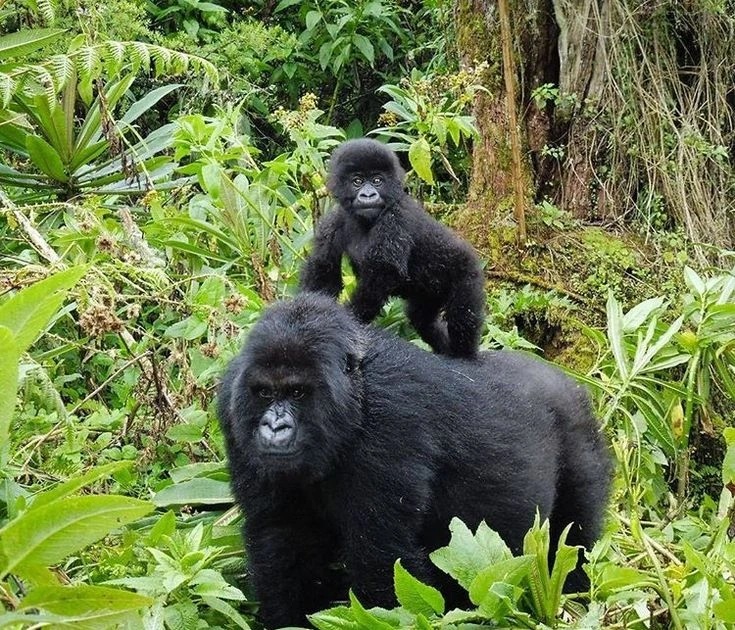
Combine Rwanda's dramatic mountain gorilla trekking in Volcanoes National Park with the sweeping savannahs of Kenya's Maasai Mara. The best 10-day itinerary balances these ecosystems, giving you 3 days for primates in Rwanda and 7 days for the Big Five in Kenya, requiring a short flight between the two countries
10-days-kenya-wildlife-safari-and-gorilla-safari-in-uganda
11-days-gorilla-trekking-and-kenya-safari-in-masai-mara-to-zanzibar-beach-holiday
10-days-luxury-gorilla-trekking-masai-mara-serengeti-and-ngorongoro-crater
10 Days Essential Primates & Classic Mara (Recommended)
10 Days Essential Primates & Classic Mara, this ultimate East African safari seamlessly bridges the misty rainforests of Rwanda with the golden, predator-rich savannahs of Kenya. Designed intentionally to eliminate exhausting, full-day overland drives, this high-impact itinerary maximizes your time on the ground where it matters most. You will transition effortlessly from an intense, face-to-face encounter with a mountain gorilla family in Volcanoes National Park to tracking the iconic Big Five across the boundless plains of the Maasai Mara. Utilizing convenient regional and domestic flights, you spend less time navigating transit corridors and far more time capturing wildlife, exploring rich cultural heritages, and soaking in breathtaking landscapes. Ideal for discerning travelers, birders, and photography enthusiasts alike, this curated journey balances raw, transformative wilderness encounters with urban exploration and exceptional comfort. It stands as the quintessential showcase of East Africa’s two most celebrated and complementary ecosystems.
Day 1: Arrival in Kigali (Rwanda)
Welcome to Rwanda. Upon landing at Kigali International Airport, your professional driver-guide will warmly welcome you, handle your luggage, and provide a brief orientation before transferring you to your hotel. Kigali is celebrated as one of the cleanest, safest, and most progressive cities on the continent, making it a highly pleasant entry point for your adventure. Depending on your arrival time, we highly recommend taking an optional afternoon visit to the Kigali Genocide Memorial. This deeply moving, beautifully curated site offers vital historical context regarding Rwanda’s inspiring journey of peace and national reconciliation. It provides a foundational understanding of the country's resilient spirit before you journey out into its wilderness. The rest of your evening is yours to unwind from your flights, enjoy a delicious dinner featuring local Rwandan coffee, and prepare for the incredible wildlife tracking days ahead.
Day 2: Kigali City to Volcanoes National Park
Your morning begins with a swift, guided introduction to Kigali's thriving contemporary culture. You will explore bustling local neighborhoods and visit innovative art galleries that showcase the incredible creative renaissance driving the city. Following lunch, you will embark on a scenic, comfortable two-and-a-half-hour drive winding north toward Musanze. This highway cuts through the spectacularly terraced, rolling green hills that give Rwanda its moniker, "The Land of a Thousand Hills." As the dramatic, mist-shrouded peaks of the Virunga Volcanoes chain begin to dominate the skyline, you will arrive at the base of Volcanoes National Park. This pristine block of high-altitude rainforest is a sanctuary for unique biodiversity and rare montane species. Check into your lodge, where you can listen to the evening sounds of the forest, enjoy a briefing on tomorrow's trekking protocols, and rest early for an unforgettable morning.
Day 3: Mountain Gorilla Trekking
An early breakfast prepares you for the highlight of your Rwandan journey. Arriving at the park headquarters, you will enjoy a traditional performance and a vital safety briefing while being assigned to a monitored gorilla family. Accompanied by expert trackers and armed rangers, you will trek into the dense bamboo forests, navigating tangled vines and muddy slopes. The trek can range from one to several hours, but the physical effort vanishes the moment you step into a clearing and meet your designated gorilla family. You have exactly one hour to watch them eat, play, groom, and interact just feet away. In the afternoon, you will transition to a cultural encounter at the Gorilla Guardians Cultural Village. This interactive site, run largely by reformed poachers, lets you try traditional archery, enjoy vibrant dance performances, and discover old forest survival techniques.
Day 4: Flight to Nairobi (Kenya)
Savor a final morning watching the mist lift off the Virunga volcanoes before a comfortable drive takes you back to Kigali. From there, you will catch a midday regional flight across the Great Rift Valley, touching down at Jomo Kenyatta International Airport in Nairobi, Kenya. Nairobi is a dynamic safari hub where urban energy directly borders wild savannahs. A private vehicle will transfer you to a premium city hotel to settle in.
Note: While the classic downtown Hilton Nairobi closed its doors after decades of service, excellent alternatives like the contemporary Hilton Garden Inn Nairobi Airport or upscale city properties offer exceptional comfort.
Spend your afternoon relaxing by the pool, sampling Kenya’s famous world-class cuisine, or picking up essential photography gear tips before jumping deep into the legendary savannahs tomorrow morning.
Day 5: Nairobi to Maasai Mara National Reserve
Your classic Kenyan safari begins with an early transfer for a rapid, scenic domestic flight directly into the Maasai Mara, or a dramatic drive descending the escarpment of the Great Rift Valley. Flying saves valuable travel time, landing you smoothly on a bush airstrip in the heart of Africa’s premier wildlife arena. The Maasai Mara’s vast, unrolling landscape of golden grasses and acacia trees is immediately breathtaking. After settling into your safari camp and enjoying a fresh lunch, you will head out for your first action-packed afternoon game drive. This is your introduction to Kenya's astonishing wildlife densities. Your expert guide will point out herds of zebras, shifting towers of giraffes, and defensive elephant families. As the sun sets, casting an orange glow over the plains, you might catch your first glimpse of apex predators starting their nightly hunts.
Days 6–8: Deep Exploration of Maasai Mara
These three full days are dedicated entirely to tracking the Mara’s legendary wildlife populations. With limitless flexibility, your daily game drives can be split into early morning and late afternoon sessions, or run as full-day expeditions carrying picnic lunches deep into remote corners of the reserve. Your guide will expertly track the region’s famous pride of lions, elusive solitary leopards hiding in riverine trees, and cheetahs scanning the plains from termite mounds. If your safari falls between July and October, your itinerary will shift toward the iconic Mara River. Here, you will patiently position your vehicle to witness the raw drama of the Great Wildebeest Migration, watching thousands of animals brave crocodile-infested waters in a spectacular display of survival. Every single drive offers fresh photographic opportunities, unique bird sightings, and unparalleled big game theater.
Day 9: Maasai Cultural Tour & Relaxation
After days of intensive game tracking, today offers a beautiful change of pace by balancing wildlife viewing with human history. In the afternoon, you will visit a traditional Maasai boma—a fortified village built from local materials. Here, the Maasai community will welcome you with vibrant, rhythmic singing and the famous Adumu jumping dance. You will walk through their homesteads, learn about their ancient pastoralist lifestyle, and discover how they successfully co-exist alongside the region’s apex predators. This encounter provides invaluable cultural depth to your African journey. Back at your camp, the remainder of your day is dedicated to pure relaxation. You can sit out on your private deck overlooking a river, sort through your wildlife photography, or sit around a roaring campfire sharing safari stories under a brilliant sky.
Day 10: Morning Drive & Nairobi Departure
Your final day begins at dawn as the first golden rays of sunlight pierce the horizon. Embark on a sunrise game drive, capturing the savannah at its most active moment when nocturnal predators wrap up their hunts and herbivores begin to move. Following a hearty bush breakfast, you will board your domestic flight back to Nairobi. A day room or a dinner reservation at a celebrated local restaurant can easily be arranged to help you freshen up and reflect on your experiences. Eventually, your driver will transfer you safely to Jomo Kenyatta International Airport for your international flight home, concluding an extraordinary ten-day journey filled with primate encounters, Big Five sightings, and unforgettable African landscapes.
10 Days Primates, Mara, & Lakes Escape
10 Days Primates, Mara, & Lakes Escape, this beautifully diversified East African itinerary expands on the classic big game circuit by integrating unique primate trackings, magnificent volcanic geology, and serene lakeside retreats. Designed for travelers who crave scenic variety alongside intense wildlife encounters, your journey strikes a perfect harmony between active exploration and peaceful wilderness escapes. You will step directly into the dramatic Albertine Rift to track rare mountain gorillas and vibrant golden monkeys before floating across the volcanic waters of Lake Kivu. From Rwanda, a quick regional flight drops you straight into Kenya’s most iconic landscapes. After chasing apex predators across the endless, golden savannahs of the Maasai Mara, your adventure concludes amidst the peaceful, acacia-fringed waters of Lake Naivasha. It is a visually spectacular, multi-country loop that delivers the ultimate blend of high-octane wildlife tracking, rich cultural immersion, and tranquil, nature-infused relaxation.
Days 1–2: Arrive in Kigali & Volcanoes National Park
Your safari begins with a smooth landing at Kigali International Airport, where your expert driver-guide will greet you and provide an overview of your journey. You will immediately leave the clean, vibrant capital behind for a scenic, two-and-a-half-hour drive winding north through terraced hillsides toward Musanze, the gateway to Volcanoes National Park. The next morning brings the ultimate wildlife thrill: mountain gorilla trekking. Following an early morning park briefing and a hot cup of local coffee, you will trek deep into the high-altitude bamboo forests. Guided by master trackers, you will navigate dense montane vegetation until you find your assigned gorilla family. Spending an hour watching these magnificent primates interact, play, and groom just feet away is a deeply moving, transformative experience that forms the unforgettable crown jewel of your Rwandan adventure.
Day 3: Golden Monkey Trekking & Cultural Village
Today offers a completely different, high-energy primate encounter as you head back into Volcanoes National Park to track the rare and endangered golden monkeys. These striking, playful primates are endemic to the Albertine Rift and live in large, hyperactive troops within the lower bamboo zones. Watching them leap effortlessly through the canopy, flash their rich orange coats, and forage for bamboo shoots provides a lively, fast-paced photographic contrast to yesterday's gentle gorilla encounter. In the afternoon, you will transition from wildlife to rich heritage at the nearby Iby'Iwacu Cultural Village. This immersive, community-run center offers a firsthand look at traditional Rwandan life. You can try your hand at archery, listen to the thumping rhythms of traditional Intore drumming, and learn about old forest medicine from reformed poachers who protect these mountains.
Day 4: Scenic Boat Cruise on Lake Kivu
After days of intensive forest trekking, you will take a beautiful, relaxing drive to Gisenyi, a picturesque resort town nestled on the northern shores of Lake Kivu. As one of Africa's Great Lakes, Kivu is a stunning, predator-free inland sea framed by the towering, smoky peaks of the Virunga volcanic chain. You will board a private motorized boat for a relaxing cruise across its deep blue waters, exploring hidden bays, secluded green islands, and quiet fishing villages. Along the way, you will spot varied waterbirds, watch local fishermen paddle traditional three-hulled canoes, and soak in the magnificent lakeside geology. The afternoon is yours to unwind at your waterfront lodge, stroll along sandy beaches, sip fresh passionfruit juice, and completely recharge your body before your journey transitions to the legendary savannahs of Kenya tomorrow.
Day 5: Fly from Kigali to Nairobi
Bid a fond farewell to Rwanda's emerald hills as your guide drives you back to Kigali International Airport for your regional flight across the Great Rift Valley to Nairobi, Kenya. Arriving at Jomo Kenyatta International Airport, a private vehicle will transfer you to your premium city hotel. Nairobi is a unique, dynamic safari capital where modern skyscrapers share a fence line with wild plains. Use this afternoon to unwind from your flight, adjust your camera gear, or explore the city’s thriving culinary scene. You might choose to sample world-class African fusion cuisine or simply relax beside a quiet garden pool. It serves as a comfortable, urban intermission that allows you to rest up and prepare for the expansive horizons and big game drama awaiting you in the Maasai Mara.
Days 6–8: Deep Exploration of Maasai Mara
These three full days are dedicated entirely to exploring the legendary Maasai Mara National Reserve, Africa’s premier wildlife arena. Your expert guide will lead you across rolling golden grasslands and beneath iconic umbrella acacias to track the region’s famous apex predators, including massive lion prides, scanning cheetahs, and leopards lounging in riverine trees. If you travel during the spectacular Great Migration months between July and October, your drives will focus heavily on the dramatic Mara River. Here, you will watch thousands of wildebeest and zebras gather nervously on the cliffs before braving crocodile-infested waters in an epic display of survival. Every morning and afternoon game drive reveals new photographic opportunities, from sweeping savannah sunrises to massive herds of elephants and Cape buffaloes moving across the open plains.
Days 9–10: Lake Naivasha Escape & Departure
Leave the open savannah behind and take a scenic drive down the floor of the Great Rift Valley to Lake Naivasha, a stunning freshwater jewel sitting at an elevation of 1,884 meters. Surrounded by yellow-barked fever trees, this tranquil oasis is a premier birding paradise hosting over 400 species, including majestic African fish eagles. You will enjoy a peaceful boat safari past wallowing hippo pods and embark on an unforgettable walking safari on Crescent Island, where you can walk freely alongside giraffes and zebras without vehicle barriers. After a final, relaxing night on the lakeshore, you will take a smooth two-hour drive back to Nairobi. A day room will be arranged for you to freshen up before your evening transfer to the airport for your international flight home.
10 Days Ultimate Wilderness & Conservation Route
10 Days Ultimate Wilderness & Conservation Route
This 10 Days Ultimate Wilderness & Conservation Route is specifically designed for dedicated wildlife enthusiasts who want to experience exclusive conservancies and deep wilderness exploration. By avoiding overcrowded tourist tracks, this itinerary prioritizes private land leases and pristine ecological zones across Rwanda and Kenya. You will begin with an intensive great ape encounter in the volcanic rainforests of the Albertine Rift before flying north into Kenya’s semi-arid rugged landscapes. Here, you will track rare, desert-adapted species that cannot be found in southern safari parks. The final leg of your expedition places you inside the Maasai Mara’s most exclusive private concessions, where strict vehicle limits ensure completely solitary wildlife sightings. Seamlessly linking bush flights and high-level conservation projects, this loop offers maximum field time alongside top researchers and indigenous trackers.
Days 1–2: Volcanoes National Park Gorilla Trekking
Your journey begins with an efficient airport pickup in Kigali, driving north through towering terraced hills toward Musanze. The next morning brings your premier conservation activity: tracking endangered mountain gorillas inside Volcanoes National Park. Following a dawn briefing on forest safety and primate health protocols, you will walk directly into the high-altitude bamboo canopy. Expert park trackers will guide you through thick vegetation until you locate your assigned gorilla family. Spending one hour standing just meters away from a massive silverback and his nursing family offers a profound look at successful regional conservation work. Your permit fees contribute directly to protecting this ancient forest ecosystem and supporting surrounding human communities.
- Terrain: Strenuous high-altitude rainforest hiking.
- Accommodation: Eco-lodge situated along the park boundary.
Day 3: Fly to Samburu National Reserve
Leave the misty volcanic forests early for a scenic drive back to Kigali to board your morning flight to Nairobi's Wilson Airport. From there, you will immediately catch a scheduled bush flight heading north over Mount Kenya, landing on a dusty airstrip in Samburu National Reserve. The landscape changes dramatically from lush green hills to semi-arid acacia scrub and red dirt plains split by the Ewaso Nyiro River. Your local guide will welcome you with a chilled drink and transfer you to your riverfront lodge. In the late afternoon, set out for your first game drive to observe how wildlife congregates around the vital permanent water sources in this dry northern environment.
- Transit: One regional flight and one domestic bush flight.
- Accommodation: Luxury tented camp along the Ewaso Nyiro River.
Days 4–5: Samburu Special Five Exploration
Dedicate two full days to tracking the unique wildlife species endemic to northern Kenya, collectively known as the "Samburu Special Five." Your guide will scan the arid brush to locate the endangered Grevy's zebra with its narrow stripes, the striking reticulated giraffe, the blue-necked Somali ostrich, the elegant gerenuk standing on its hind legs to eat leaves, and the fine-striped Beisa oryx. You will also track large herds of desert-adapted elephants bathing in the brown river waters and watch for lions and leopards resting on smooth granite kopjes. The dry climate makes wildlife tracking highly predictable, as animals rarely stray far from the river banks, ensuring exceptional, crowd-free photography opportunities.
- Wildlife Focus: Grevy's zebras, reticulated giraffes, gerenuks, and leopards.
- Activities: Morning and late afternoon semi-arid game drives.
Day 6: Fly to Maasai Mara Private Conservancy
Board a morning bush flight from the dusty northern plains directly into the lush, rolling grasslands of the Maasai Mara ecosystem. You will land inside an exclusive private concession, such as the Mara Naboisho or Olare Motorogi Conservancy, completely bypassing the busier public reserve sections. Private conservancies operate under strict sustainability models that limit the number of guest beds per acre, ensuring you never encounter vehicle crowds around wildlife sightings. Check into your low-impact luxury canvas pavilion and enjoy lunch overlooking the plains. In the late afternoon, head out on an exclusive game drive where your guide has the legal freedom to drive carefully off-road to track apex predators.
- Transit: Direct domestic bush flight across Kenya.
- Accommodation: Exclusive conservancy luxury tented camp.
Days 7–9: Exclusive Conservancy Tracking & Night Safaris
Spend three full days engaging in off-the-beaten-path wildlife exploration within the private Mara concessions. Because these lands are managed in partnership with local Maasai communities, your safari activities extend far beyond standard daytime game drives. You will participate in guided walking safaris, stepping out on foot alongside armed rangers to decipher animal tracks and learn about savannah ecology from a ground-level perspective. Each afternoon drive transitions seamlessly into a nocturnal night safari, utilizing red-filtered spotlights to observe elusive predators like leopards, hyenas, and caracals actively hunting in the dark. This private layout guarantees solitary, high-quality encounters with the Mara’s resident lion prides and massive migratory herds.
- Concession Benefits: Off-road tracking, bush walking, and night safaris.
- Meals: Full board gourmet dining served in the wilderness.
Day 10: Fly to Nairobi & Departure
On your final morning, embark on a short sunrise game drive to capture your last photographs of the savannah as the wildlife wakes up. Return to camp for a fresh breakfast before your guide transfers you to the local conservancy airstrip. Board your light aircraft for a scenic flight back to Wilson Airport in Nairobi. A private transfer vehicle will meet you upon landing to carry you across the city to Jomo Kenyatta International Airport, providing plenty of time to check in for your evening international flight departure home. This completes your ultimate ten-day wilderness loop through East Africa’s premier conservation sanctuaries.
- Transit: 45-minute domestic flight and airport ground transfer.
- Final Step: International flight check-in for your journey home.
10 Days Rwanda Adventure & Great Rift Valley Tour
10 Days Rwanda Adventure & Great Rift Valley Tour
This meticulously designed 10-day cross-border expedition offers a sweeping look at East Africa’s most contrasting and beautiful landscapes. Perfect for adventurous travelers, your route balances the dense, mist-shrouded volcanic rainforests of Rwanda with the expansive, sun-baked savannahs and volcanic springs of Kenya. You will begin with a poignant cultural immersion and an intense, unforgettable mountain gorilla trek in the Albertine Rift. From there, a regional flight connects you directly to Kenya's legendary safari circuit. You will explore the ancient, rugged, and semi-arid wilderness of the Tsavo ecosystem—famed for its distinct geology and uniquely colored wildlife—before heading west to track apex predators across the endless, rolling grasslands of the Maasai Mara. By carefully balancing driving distances with strategic regional flights, this comprehensive itinerary ensures you spend less time in transit and maximum time observing world-class wildlife spectacles across two incredible nations.
Days 1–2: Arrival, Kigali Tour & Gorilla Trekking
Your journey begins at Kigali International Airport, where your expert driver-guide will welcome you and transfer you into Rwanda’s clean, vibrant capital city. You will embark on a meaningful tour of the Kigali Genocide Memorial, gaining a vital understanding of the nation's resilient history and inspiring path toward reconciliation. Following lunch, take a scenic two-and-a-half-hour afternoon drive winding north through terraced green mountains to Volcanoes National Park. The next morning brings your ultimate primate adventure. After a dawn briefing on forest safety at the park headquarters, you will trek into the dense bamboo canopy alongside expert trackers. Standing just meters away from a wild mountain gorilla family, watching them groom, play, and interact in their natural habitat, is a profoundly moving, bucket-list experience that beautifully anchors the start of your African tour.
Day 3: Fly from Kigali to Nairobi
Bid farewell to the emerald ridges of Rwanda as you make a comfortable return drive to Kigali for your midday regional flight across the Great Rift Valley. You will land at Jomo Kenyatta International Airport in Nairobi, Kenya’s bustling, cosmopolitan safari hub. A private vehicle will meet you on arrival and transfer you to your premium city hotel to settle in and unwind. Nairobi is unique for its vibrant blend of urban energy and close proximity to wild spaces. Use this afternoon to relax by the pool, enjoy a hot cup of world-famous Kenyan tea, or prepare your camera gear for the classic savannah landscapes ahead. In the evening, enjoy a delicious dinner featuring local specialties, resting up for tomorrow's journey into Kenya's massive and historic eastern wilderness zones.
Days 4–6: Tsavo East & West National Parks
You will leave the capital early, journeying into the legendary Tsavo ecosystem, one of the largest protected wildlife sanctuaries on Earth. Split by the main highway, Tsavo East offers vast, flat semi-arid plains, while Tsavo West features a dramatic, volcanic landscape of rocky hills and lava flows. Over three days, you will explore both distinct sectors. In Tsavo East, you will track the park's famous "red elephants," whose skin takes on a striking ochre hue from dusting themselves in the region's vibrant, iron-rich soil. In Tsavo West, you will take a guided foot safari to Mzima Springs, a stunning oasis where millions of gallons of crystal-clear water filter daily through volcanic rock, creating pools where you can observe hippos and crocodiles from an underwater viewing chamber.
Days 7–9: The Legendary Maasai Mara
You will transition from the rugged eastern scrub to the world-renowned Maasai Mara National Reserve, either via a scenic drive along the Great Rift Valley escarpment or a convenient domestic bush flight. The Mara’s classic, sweeping savannahs and scattered acacia trees host an unparalleled density of wildlife. For three full days, your expert guide will navigate the rolling grasslands to track the region’s prolific apex predators, including massive, cooperative lion prides, cheetahs scanning for prey from termite mounds, and leopards resting in riverine branches. If you travel between July and October, your daily drives will position you near the Mara River to witness the raw, heart-stopping drama of the Great Migration crossings, where hundreds of thousands of wildebeest brave crocodile-infested waters in their search for fresh grazing pastures.
Day 10: Return to Nairobi & Departure
Your final day begins at first light as a spectacular African sunrise illuminates the open plains. Embark on a final, early morning game drive to catch predators wrapping up their nocturnal hunts and large herds of elephants moving through the morning mist. Return to your safari camp for a hearty breakfast before boarding your domestic flight or taking a comfortable private drive back to Nairobi. A day room can easily be arranged for you to freshen up, repack your bags, and sort through your incredible wildlife photography. In the evening, your driver will transfer you safely to Jomo Kenyatta International Airport for your international flight home, concluding an extraordinary ten-day adventure showcasing the very best forest and savannah ecosystems of Rwanda and Kenya.
10 Days Fly-In Luxury Safari
10 Days Fly-In Luxury Safari
This ultra-premium, aviation-optimized expedition is tailored for travelers who want to eliminate time-consuming overland transfers and maximize pristine tracking hours. By replacing bumpy highways with light aircraft charter and scheduled bush flights, you effortlessly link the towering volcanoes of Rwanda with Kenya's three most iconic, complementary ecosystems. You will glide seamlessly from an intimate great ape encounter in Volcanoes National Park to the classic elephant corridors of Amboseli, beneath the snowcapped peak of Mount Kenya at Lewa, and finally into the predator-rich savannahs of the Maasai Mara. Staying in exclusive, low-impact luxury tented camps and private concessions, this fast-paced loop ensures unparalleled comfort, VIP airport ground handling, and maximum field time. It is the definitive East African showcase for photographers, conservation enthusiasts, and luxury seekers alike.
Days 1–2: Volcanoes National Park Gorilla Trekking
Your luxury safari begins with a warm meet-and-greet at Kigali International Airport, where a private vehicle will transfer you north through Rwanda's beautifully terraced hills toward Musanze. The following morning is dedicated to a world-class primate encounter: tracking endangered mountain gorillas in Volcanoes National Park. After a personalized dawn briefing on forest conservation protocols, you will head into the high-altitude bamboo canopy alongside expert park rangers. Your physical trek culminates in a breathtaking, closely monitored one-hour encounter standing just meters away from a wild gorilla family as they play, forage, and interact. Your premium permit fees directly fund regional habitat preservation and vital community development projects.
- Terrain: Strenuous high-altitude rainforest hiking.
- Accommodation: Ultra-luxury eco-lodge with sweeping volcanic views.
Day 3: Fly from Kigali to Nairobi
Enjoy a final morning watching the mist rise off the Virunga volcanoes before a comfortable private transfer brings you back to Kigali. Board your midday regional flight across the great expanse of the Rift Valley, landing at Jomo Kenyatta International Airport in Nairobi. A luxury vehicle will greet you upon arrival, whisking you away to a premium city hotel. Nairobi serves as a sophisticated, dynamic intermission on your journey where modern culinary scenes meet wild spaces. Take this afternoon to relax by the heated pool, enjoy a massage at the spa, or fine-tune your long-range camera lenses and settings in anticipation of the diverse Kenyan savannah landscapes awaiting you tomorrow morning.
- Transit: Private road transfer and one regional flight.
- Accommodation: Premium luxury city hotel (e.g., Villa Rosa Kempinski or Hemingway's Nairobi).
Day 4: Flight to Amboseli National Park
Leave the bustling capital behind as you transfer to Nairobi’s Wilson Airport to board a light aircraft flight straight to Amboseli National Park. As your plane descends over the dry, dusty plains, the towering, snowcapped massif of Mount Kilimanjaro opens up on the horizon, providing Africa's most iconic wildlife backdrop. Touch down on the bush airstrip where your lodge's open-sided 4x4 vehicle awaits. You will head out on a late afternoon game drive, tracking Amboseli's world-famous, historically studied elephant eco-system. Watch massive, multi-generational herds of tuskers moving gracefully through the yellow fever tree woodlands and seasonal marshes against the majestic volcanic backdrop.
Amboseli National Park
- Flight Time: Approximately 40-45 minutes from Nairobi.
- Wildlife Focus: Large elephant herds, hippos, and abundant birdlife.
Days 5–8: Aerial Circuit: Amboseli, Lewa & Maasai Mara
Over these four high-impact days, you will utilize quick, scenic bush flights to hop across Kenya's premier conservation zones. You will fly north from Amboseli over Mount Kenya to touch down in the exclusive Lewa Wildlife Conservancy. Lewa is a pioneering, private UNESCO World Heritage sanctuary renowned for its highly successful rhino breeding programs. Here, you will track massive populations of endangered black and white rhinos alongside the world's largest concentration of rare Grevy's zebras. After an immersive, crowd-free stay at a private concession lodge, another brief, smooth flight carries you west directly into the heart of the Maasai Mara National Reserve, completely eliminating days of exhausting road transit.
Elewana Collection
- Transit: Scheduled luxury bush flights bridging southern, central, and western Kenya.
- Key Wildlife: Black and white rhinos, Grevy's zebras, and resident big cats.
Day 9: Full Day in the Maasai Mara
Dedicate this entire day to a deep exploration of the legendary Maasai Mara, Africa's most prolific big game arena. Your day is fully flexible: opt for early morning and late afternoon drives or a single, full-day expedition carrying a gourmet picnic lunch to the banks of the Mara River. Your expert guide will read tracking signals to locate the Mara’s famous, cooperative lion prides, scanning cheetahs, and elusive leopards resting in riverine trees. If you travel during the Great Migration months between July and October, you will position your vehicle to witness the raw, heart-pounding drama of thousands of wildebeests braving crocodile-frequented waters in an epic display of survival.
- Activities: Full-day custom 4x4 safari with local Maasai guides.
- Meals: Luxury bush breakfast and sunset sundowners on the plains.
Day 10: Charter Flight to Nairobi & Departure
Your final safari morning begins with a peaceful sunrise game drive to capture your closing images of the savannah as the wildlife wakes up. Return to your luxury camp for a fresh, hearty breakfast before your guide transfers you to the local airstrip. Board your scheduled light aircraft charter flight for a highly scenic journey back to Jomo Kenyatta International Airport in Nairobi. A private airport representative will meet your aircraft to assist with your luggage, check-in, and smooth navigation through security, ensuring a relaxed transition onto your international flight home after an extraordinary, fast-paced ten days in the wild.
- Transit: 1-hour domestic flight and international airport transfer.
- Final Step: International departure flight check-in.
1. How should I split my 10 days between Rwanda and Kenya?
Allocating your time effectively across a compressed 10-day timeline requires balancing the physical, focused nature of primate tracking with the wide-ranging vehicular exploration of the savannah. A standard, highly optimized split maps out 3 to 4 days in Rwanda, leaving the remaining 6 to 7 days for Kenya. This pacing is designed around the reality that gorilla tracking is a singular, intensive objective, whereas the Maasai Mara demands multiple consecutive days on the ground to map predator movements, explore distinct migratory sectors, and absorb the sheer volume of biodiversity.
In Rwanda, a 3-to-4-day allocation allows you to land in Kigali, absorb the city’s poignant cultural and historical context, and make the 2.5-hour overland transit north to the Virunga volcanoes without feeling rushed. It provides a crucial buffer night at high altitude before your strenuous trekking day, ensuring you are well-rested.
Transferring to Kenya for the remaining 6 to 7 days ensures you do not compromise your classic big-game safari experience. Because the Maasai Mara is an expansive ecosystem, spending less than 3 or 4 full days inside the reserve drastically reduces your chances of witnessing rare wildlife behaviors, such as solitary leopard hunts, cheetah family dynamics, or dramatic river crossings. Furthermore, this distribution accounts for the inevitable transit day required to fly between Kigali and Nairobi, leaving you with a clean, unhurried block of time to experience Kenya’s premier wilderness without constant repacking.
2. What is the best route and flight connection?
To construct a seamless, logistically sound itinerary that cuts out dead transit days, you should always format your route from west to east: flying into Kigali International Airport (KGL) in Rwanda to initiate the trip, and departing out of Jomo Kenyatta International Airport (NBO) in Nairobi, Kenya. Attempting to reverse this route often introduces unnecessary friction into your tracking schedule, as the physical exertion of gorilla trekking is far better suited to the beginning of an African journey when your energy levels are at their peak.
[Fly In] Kigali (KGL) ──(Road: 2.5h)──> Volcanoes NP
│
(Road: 2.5h)
▼
Nairobi (NBO) <──(Direct Flight: 1.5h)── Kigali (KGL)
│
(Bush Flight: 45m)
▼
Maasai Mara ──(Bush Flight: 45m)──> Nairobi (NBO) [Fly Out]
Once you wrap up your mountain gorilla experience in Volcanoes National Park, you will take the smooth, paved road back down to Kigali. From KGL, you should book a direct commercial regional flight to Nairobi's Jomo Kenyatta International Airport (NBO). This route is operated daily by regional carriers like RwandAir and Kenya Airways. The flight takes approximately 1.5 hours, meaning if you board a midday departure, you will land in Nairobi with ample time to settle into a city hotel, dine, and rest.
From Nairobi, the best way to access the Maasai Mara is via a domestic light aircraft flight from Wilson Airport (WIL) or directly from NBO's domestic terminals, rather than enduring a bumpy, 5-to-6-hour overland drive down the Great Rift Valley escarpment. These quick bush flights take only 45 minutes to land directly on the gravel airstrips servicing your specific safari camp. When your safari concludes, you simply take a matching bush flight back to Nairobi to seamlessly connect with your international departure flight home.
3. Do I need to book my gorilla permits in advance?
Yes, booking your gorilla permits well in advance is an absolute necessity. It is the single most critical logistical component of your entire East African safari. Unlike a traditional savannah game drive where an unlimited number of vehicles can theoretically enter a public reserve, mountain gorilla tracking is an exceptionally regulated, high-security conservation activity. To protect the wild gorilla families from environmental stress and human disease transmission, the Rwanda Development Board (RDB) enforces strict carrying capacity limits.
Only a select number of habituated mountain gorilla families are open to public viewing daily, and each family is strictly limited to a single group of eight visitors per day for exactly one hour. This means there are only a limited number of permits available for the entire country on any given calendar date.
Booking Window: Due to this absolute cap on daily entry, permits during the peak dry seasons (June to September and December to February) routinely sell out 3 to 6 months—and sometimes up to a year—in advance.
If you attempt to book a permit last-minute or show up at the park headquarters in Kinigi hoping to purchase one on arrival, you will almost certainly be turned away. Securing your permit must be the very first step you take; you should never lock in international flights or lodge reservations until your tour operator or the RDB has explicitly confirmed and issued your tracking dates.
4. How much do Rwanda gorilla permits cost?
Gorilla tracking permits in Rwanda are priced at $1,500 USD per person for all international foreign non-residents. This premium pricing structure is a deliberate, highly successful component of Rwanda's "high-end, low-volume" sustainable tourism strategy, which prioritizes absolute habitat preservation over mass commercial tourism.
While the upfront cost is significant, it is important to understand exactly where this capital is allocated. The $1,500 permit fee is not merely an entry ticket; it functions as a direct investment into the survival of the species.
- Conservation Funding: A massive portion of the fee funds the intensive, round-the-clock protection of the park, covering the salaries of dedicated wildlife veterinarians, expert trackers, and armed anti-poaching rangers who monitor and safeguard each gorilla family daily.
- Community Support: Exactly 10% of all permit revenue is funneled directly into the local communities surrounding Volcanoes National Park through a dedicated revenue-sharing program. This capital builds local schools, clean water clinics, and paved roads, while financing community-led agricultural projects. By ensuring that local residents tangibly benefit from gorilla tourism, the government has successfully turned former poachers into passionate conservation guardians, driving the mountain gorilla's remarkable population recovery.
5. What are the best months for this combined safari?
To experience both ecosystems at their absolute finest, you should align your travel dates with East Africa’s primary dry seasons, which run from June to September and December to February. Because you are bridging two entirely different geographic environments—a high-altitude montane rainforest and an open equatorial savannah—the weather directly dictates the ease of your wildlife viewing and your physical comfort.
Season
Months
Rwanda (Volcanoes NP)
Kenya (Maasai Mara)
Peak Dry
Jun - Sep
Clearer trails, easier footing, lighter rain
Great Migration crossings (July-Oct); peak predator action
Short Dry
Dec - Feb
Great visibility, excellent birding, firm ground
Excellent resident game, clear skies, ideal photography
Long Rains
Mar - May
Muddy slopes, dense undergrowth, heavy downpours
Lush green plains, low crowds, seasonal newborn wildlife
The long dry window from June to September is widely considered the absolute pinnacle for a combined itinerary. In Volcanoes National Park, the forest floor receives less rain, meaning the volcanic mud trails are significantly firmer, less slippery, and easier to navigate.
Meanwhile, in the Maasai Mara, this dry window triggers the legendary Great Wildebeest Migration. Between July and October, millions of wildebeest, zebras, and gazelles flood the Mara plains from the Serengeti, culminating in dramatic, heart-stopping river crossings. Furthermore, as the seasonal waterholes dry up across the Mara, resident wildlife and apex predators are forced to congregate around permanent water sources like the Mara and Talek rivers, creating highly predictable, spectacular game viewing conditions.
6. Where will I stay for gorilla trekking?
For your gorilla tracking leg, you will stay in the northern Musanze district, specifically clustered around the town of Kinigi, which sits directly on the misty fringes of Volcanoes National Park. Because tracking briefings initiate promptly at 7:00 AM at the park headquarters, staying within a 10-to-30-minute driving radius of the main gates is essential to eliminate stressful, early morning road transits.
The accommodation landscape in this region is world-renowned, catering to a wide spectrum of comfort levels while keeping a sharp focus on ecological sustainability. For travelers seeking ultra-luxury, flagship eco-lodges offer architectural marvels that blend into the landscape. Properties like Wilderness Bisate feature iconic, spherical thatched forest villas nestled inside an eroded volcanic cone, providing private decks that look directly out onto the Bisoke and Karisimbi peaks. Similarly, Singita Kwitonda Lodge features sustainable, high-design lounges situated right on the park buffer zone, offering private heated plunge pools and indoor fireplaces.
If you are seeking excellent mid-range comfort, well-established properties provide a warm, authentic safari base. Lodges like Mountain Gorilla View Lodge or Five Volcanoes Boutique Hotel offer private, stone-walled cottages equipped with log-burning fireplaces to cut through the chilly mountain nights, private en-suite bathrooms, and dedicated muddy-boot cleaning stations where staff meticulously clean and dry your hiking footwear immediately after your trek.
7. What is included in the Masai Mara leg?
A standard, professionally managed leg within the Maasai Mara is highly inclusive, designed to offer an immersive, worry-free deep dive into the savannah. Your daily schedule is anchored by twice-daily game drives in customized, open-sided or pop-up roof 4x4 safari vehicles. The first drive departs at the break of dawn to capture predators like lions and leopards while they are still active on their nightly hunts. The second drive heads out in the golden light of the late afternoon, concluding just as the sun drops below the horizon.
06:00 AM ──> Sunrise Game Drive (Predator tracking)
10:00 AM ──> Bush Breakfast / Return to Camp for lunch
04:00 PM ──> Afternoon Game Drive (Big Five exploration)
06:30 PM ──> Wilderness Sundowners & Roaring Campfire
Beyond the vehicles, your stay includes all gourmet meals, frequently served as elegant bush picnics beneath isolated acacia trees or multi-course dinners back at camp. Evenings are highlighted by the classic safari tradition of "sundowners"—stopping in a scenic wilderness spot to enjoy refreshing drinks as the African sky turns deep orange.
Most premium itineraries also incorporate a guided cultural visit to an authentic Maasai boma (village). Here, you step inside a traditional, thorn-fenced homestead to learn about ancient pastoralist survival strategies, co-existence with apex predators, and witness the rhythmic Adumu jumping dance. In private conservancies, your stay further includes guided bush walks on foot with armed rangers and night game drives utilizing red-filtered spotlights.
8. Will I get to see the Great Migration?
Witnessing the Great Wildebeest Migration is entirely dependent on precise seasonal timing. This monumental event is not a static tourist attraction; it is a fluid, year-round migratory loop driven entirely by rainfall patterns and the search for fresh grazing pasture across the vast Serengeti-Mara ecosystem.
To see this wildlife spectacle within your Kenyan leg, you must schedule your 10-day safari between July and October. By early July, the dry conditions in the southern Serengeti push the massive herds northward. Over a million wildebeest, accompanied by hundreds of thousands of zebras and Thompson's gazelles, pour across the border into the Maasai Mara.
During this high-stakes window, the plains transform into a moving sea of black hide, creating an intense feeding frenzy for the Mara’s resident lion prides, hyena clans, and cheetah coalitions. This is also the period for the iconic, high-drama Mara River crossings.
You can sit patiently in your safari vehicle along the riverbanks, watching herds gather by the thousands on steep cliffs before a single animal takes a leap of faith into the water. The ensuing chaos—as animals battle intense river currents, steep mud banks, and massive, lurking Nile crocodiles—is one of the most raw, spectacular displays of survival on Earth. If you travel outside this July-to-October window, you will still encounter completely exceptional, world-class resident big game, but the migratory herds will have moved back south.
9. What should I pack for gorilla trekking?
Packing for Volcanoes National Park requires a technical approach because you are entering a dense, high-altitude equatorial rainforest where the weather can shift from hot sun to a freezing tropical downpour in a matter of minutes. The underlying rule is complete skin coverage to protect your body from stinging nettles, sharp branches, and biting insects.
- Footwear: Sturdy, ankle-high, waterproof hiking boots with deep rubber lugs are non-negotiable. You will be walking off-trail on steep, slick mud slopes; running shoes or lightweight sneakers lack the ankle support and traction required. Pair these with thick wool hiking socks.
- Layered Clothing: Wear lightweight, moisture-wicking long-sleeved shirts and durable, long hiking trousers. Avoid jeans, as they absorb water and dry incredibly slowly. Pack a high-quality, breathable, fully waterproof rain jacket or technical poncho.
- Protection Gear: Bring a pair of tough, thick gardening gloves. When navigating steep terrain, you will naturally reach out and grab whatever vegetation is nearby; thick gloves protect your hands from painful stinging nettles (Urtica massaica).
- Pack & Accessories: A lightweight, waterproof daypack is essential to carry your camera gear, extra layers, and the packed lunch provided by your lodge. Bring a wide-brimmed safari hat, high-factor sunscreen, and a premium insect repellent containing DEET. Gaiters are also highly recommended to prevent mud and safari ants from crawling up your trousers.
10. Do I need an East African Visa?
If your itinerary is focused exclusively on a combined loop through Rwanda and Kenya, the most streamlined and cost-effective entry method is the East Africa Tourist Visa (EATV). This specialized, joint regional visa was established to foster tourism across the East African Community, allowing international travelers to explore multiple nations under a single document.
Key Details of the EATV:
- Cost: $100 USD.
- Validity: Valid for up to 90 days from the date of issue.
- Entry Type: Multiple entries between the participating nations.
There is a critical immigration rule you must follow when applying for the EATV: You must apply through the official immigration portal of the country that serves as your very first point of entry. Since this specific 10-day itinerary initiates with your arrival at Kigali International Airport, you must apply for the East Africa Tourist Visa via Rwanda’s official electronic platform (Irembo).
Once issued, the visa allows you to clear immigration smoothly in Kigali, travel north for your trekking, and then cross directly into Kenya via your commercial flight to Nairobi without paying any additional single-country visa fees. However, you must note that the EATV is strictly a continuous regional document. The moment you step outside the borders of the participating nations (for example, if you take a spontaneous side trip to Tanzania or return home), the visa automatically expires.
11. Is a COVID-19 or yellow fever vaccination required?
Navigating health regulations across international borders requires strict adherence to official ministry guidelines to prevent unexpected entry denials at border controls.
Regarding COVID-19, entry protocols have completely normalized across both nations. Travelers arriving at Kigali International Airport (KGL) or Jomo Kenyatta International Airport (NBO) are no longer required to show proof of COVID-19 vaccination certificates or present negative pre-departure PCR/Antigen test results. Screening has transitioned to passive temperature checks; only travelers exhibiting clear, active flu-like symptoms on arrival may be guided to a dedicated health kiosk for a rapid antigen test at their own expense.
In stark contrast, the Yellow Fever vaccination certificate remains strictly mandatory. Both Rwanda and Kenya maintain a firm stance on this tropical vector-borne disease. You must present an official, valid International Certificate of Vaccination (the classic yellow card) at passport control.
This is especially critical when flying from Rwanda into Kenya, as you are moving between two recognized yellow fever endemic zones. Ensure you receive your Yellow Fever shot at a licensed travel clinic at least 10 days before your departure date, as the vaccine requires this window to become fully effective in your system and recognized as legally valid by border immigration officers.
12. What are the physical fitness requirements for trekking?
Gorilla tracking is a physically demanding wilderness activity that occurs in an unpredictable, untamed mountain environment. There are no paved boardwalks, manicured trails, or vehicle access points inside the interior of Volcanoes National Park. Once you leave the park boundary, you are walking directly into a high-altitude rainforest situated between 2,000 and 3,000 meters (6,500 to 10,000 feet) above sea level. The thin mountain air makes standard cardiovascular exertion feel noticeably more taxing.
The duration of your trek can last anywhere from 1 to 6 hours, completely dependent on where your assigned gorilla family slept the previous night and how fast they are moving in search of fresh bamboo shoots. You will hike through tangled undergrowth, step over slick moss-covered roots, and climb steep, muddy volcanic ridges.
While a moderate level of physical fitness is highly recommended, you do not need to be an elite athlete to participate. The Rwanda Development Board handles this beautifully through a personalized morning sorting process.
During the 7:00 AM briefing, park rangers evaluate trackers based on age, self-reported fitness levels, and general mobility. They will intentionally assign you to a gorilla family that matches your physical capabilities—allocating closer, gently situated families to those with limited mobility, and reserving the deep-forest, high-altitude groups for avid hikers. Furthermore, you can hire a local porter at the trailhead for a small fee (~$20 USD) to carry your daypack and provide a steady hand over treacherous terrain.
13. How long do I get to spend with the gorillas?
Once your expert trackers guide you through the final wall of dense vegetation and you make visual contact with your assigned mountain gorilla family, you are permitted exactly one hour (60 minutes) in their direct presence. This time limit is an absolute, non-negotiable international conservation standard enforced across the entire Virunga massif.
The one-hour cap is implemented for critical scientific and behavioral reasons:
┌────────────────────────────────────────┐
│ THE 60-MINUTE VISIT LIMIT │
└───────────────────┬────────────────────┘
│
┌────────────────────────┴────────────────────────┐
▼ ▼
┌─────────────────────────┐ ┌─────────────────────────┐
│ DISEASE PREVENTION │ │ BEHAVIORAL INTEGRITY │
├─────────────────────────┤ ├─────────────────────────┤
│ Minimizes the window │ │ Prevents habituated │
│ for airborne pathogen │ │ families from altering │
│ transmission to apes. │ │ wild foraging patterns. │
└─────────────────────────┘ └─────────────────────────┘
Furthermore, it minimizes the psychological stress that a continuous human presence could inflict on the wild animals, ensuring that the silverback always maintains his natural dominance and protective family structure.
While an hour may sound brief on paper, the sheer intensity of the encounter makes it feel incredibly expansive. Because the gorillas are fully habituated to the silent presence of human observers, they behave completely naturally. You will spend those 60 minutes watching infants tumble down bamboo stalks, mothers carefully grooming their young, and the massive, 400-pound silverback resting calmly right in front of you. Your guide will keep a precise digital timer, whispering a gentle 10-minute warning before quietly leading your group back out of the clearing.
14. What are the luggage limits on domestic safari flights?
When you transition to the Kenyan leg of your safari and board light aircraft domestic flights to the Maasai Mara, you must completely re-evaluate your packing strategy. These regional bush routes utilize small, specialized turboprop aircraft, such as the Cessna Caravan or De Havilland Twin Otter. These small planes operate with rigid weight-and-space constraints to ensure safe takeoffs from short, unpaved gravel airstrips in the bush.
- Weight Cap: The absolute maximum baggage allowance is 15 kg (33 lbs) per person. This weight limit is strictly inclusive of both your main checked luggage and your smaller carry-on daypack combined.
- Style Restrictions: You must use soft-sided duffel bags constructed from canvas or nylon. Hard-shell suitcases with rigid plastic frames, aluminum handles, or built-in wheels are strictly banned. The luggage compartments in light aircraft are compact, irregular spaces; baggage handlers must be able to physically manipulate and squeeze every bag into the plane's underbelly. A rigid suitcase that cannot bend will simply be left behind on the tarmac.
If you are traveling with heavy professional camera bodies, massive telephoto lenses, or cannot meet this weight restriction, you should arrange with your safari operator to store your excess international luggage at your city hotel in Nairobi, picking it up upon your final return from the bush. Alternatively, you can purchase an additional freight seat on the domestic flight to double your personal weight allowance.
15. Are there any restrictions when with the gorillas?
To ensure your face-to-face encounter with the mountain gorillas remains safe and respectful, the Rwanda Development Board mandates strict behavioral rules that every visitor must follow. Because humans and gorillas share approximately 98% of the same genetic DNA, these magnificent primates are highly susceptible to human respiratory and airborne pathogens; a simple human cold or common flu virus can devastate an entire wild gorilla family.
- Distance & Protection: You must maintain a strict, minimum physical distance of 7 meters (21 feet) from the gorillas at all times. If a curious young infant intentionally approaches you, you must slowly and quietly step back to re-establish the buffer. Additionally, all visitors are required to wear a clean, blue surgical mask the moment you approach the family to minimize aerosol transmission.
- Health Self-Reporting: If you wake up on the morning of your trek with an active cough, a fever, or a contagious stomach bug, you are ethically obligated to report it to the park authorities. To support this, the park will kindly refund your permit cost or reschedule your trek once you recover.
- No Food or Drink: Eating, drinking, or smoking within a 200-meter radius of the gorilla family is strictly prohibited. Dropping a single piece of fruit or a stray wrapper could introduce dangerous foreign bacteria or cause aggressive behavioral changes among the animals.
- Camera Restrictions: Camera flashes are strictly forbidden. The sudden, intense burst of light can easily startle a protective silverback, triggering a defensive charge. Keep your camera set to silent electronic shutter mode, speak only in low whispers, and avoid making direct,
Booking Rwanda gorilla trekking and Kenya wildlife safari with us Roads of Adventure safaris
Booking a combined Rwanda gorilla trek and Kenya wildlife safari with Roads of Adventure Safaris involves contacting their team to customize your dates, lodge preferences, and itinerary. Because permits and flights sell out quickly, starting your booking at least 6 months in advance is highly recommended.
