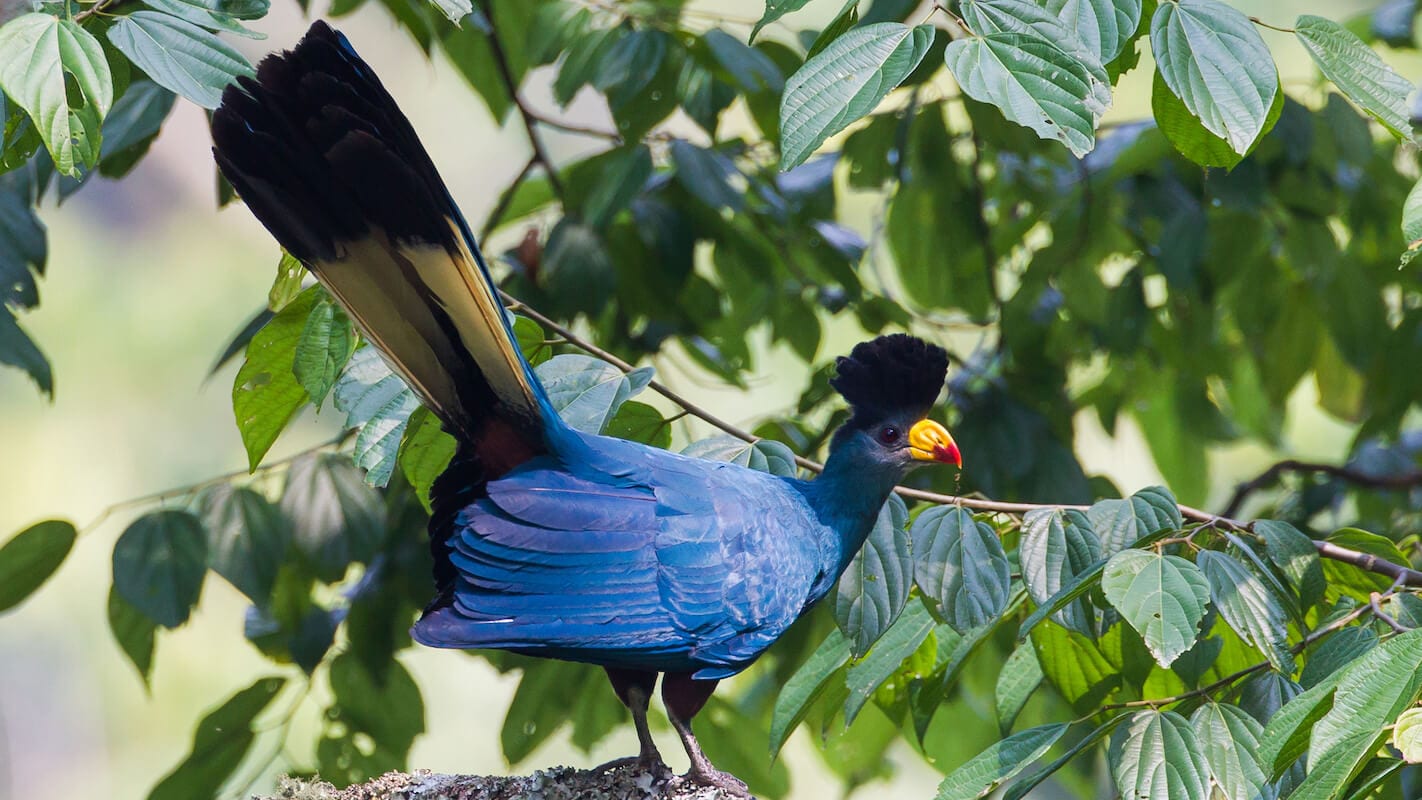
A 10-day birding safari in Uganda offers access to over 1,000 bird species across diverse ecosystems. The five best itinerary ideas target specific avian hotspots, including the elusive Shoebill, Albertine Rift endemics, and papyrus endemics, while seamlessly blending in iconic wildlife and primate viewing
10-days-best-uganda-birding-safari-and-wildlife-experience
11-days-uganda-birding-safari-and-primate-experience
12-days-uganda-birding-tour-looking-for-rift-valley-endemic-birds-west-circuit
9-days-classic-uganda-birding-safari-tour
10 Days Albertine Rift & Savannah Classic (Queen Elizabeth + Bwindi + Kibale)
This 10-day itinerary offers a masterclass in East African biodiversity, striking the perfect balance between the dense, endemic-rich cloud forests of the Albertine Rift and the classic, big-game savannahs. Tailored specifically for keen birders who refuse to compromise on iconic primate encounters, this route targets Uganda’s most legendary avian specialties while placing you face-to-face with chimpanzees and mountain gorillas. From navigating quiet wetland channels on a traditional dugout canoe to scanning the mist-shrouded forest canopies, each day is strategically optimized to maximize your checklist and deliver breathtaking wildlife photography opportunities.
Day 1: Mabamba Swamp Exploration
Your birding adventure begins on the shores of Lake Victoria with an early morning boat cruise through the labyrinth of papyrus channels in Mabamba Ramasit Wetland. The primary target is the prehistoric-looking Shoebill Stork, which hunts lungfish in the shallow waters. As local community guides skillfully maneuver your wooden canoe, you will also scan the reeds for papyrus specialists like the Papyrus Gonolek, Blue-headed Coucal, Swamp Flycatcher, Lesser Jacana, and the striking Malachite Kingfisher. The air is filled with the calls of Winding Cisticolas and Purple Swamphens. After an exhilarating morning on the water, you will return to dry land for a brief lunch and a chance to log your first major targets. In the afternoon, you will transfer to your lodge near Entebbe or Kampala to rest, prepare your camera gear, and review your birding checklist for the journey ahead.
Day 2: Journey to the Primate Capital
Leaving the central wetlands behind, you will embark on a scenic drive westward through lush green countryside, bustling trading centers, and rolling tea plantations toward Kibale National Park. This journey transitions you from the Lake Victoria basin to the edge of the Albertine Rift Valley, offering changing landscapes along the way. Keep your binoculars handy during roadside stops, as you may spot the Great Blue Turaco or the Eastern Grey Plantain-eater in the forest patches lining the route. Arriving at the edge of Kibale’s ancient tropical rainforest by mid-afternoon, you will check into your lodge amidst the canopy soundscape. Spend the remainder of the evening relaxing or taking an optional short walk around the lodge grounds, where the calls of African Grey Parrots and Black-and-white Casqued Hornbills provide a welcoming symphony to Uganda's primate capital.
Day 3: Tracking the Mythical Green-breasted Pitta
An early morning start takes you deep into the moist evergreen forest of Kibale in search of one of Africa’s most elusive avian treasures: the Green-breasted Pitta. Guided by specialized park rangers, you will head into the undergrowth before dawn, listening for the distinctive, brief flap-and-hop display call of the male pitta. Spotting this brilliantly colored, secretive jewel against the dark forest floor is an unmatched triumph for any serious birder. While searching the lower canopy, look out for other forest specialties including the African Broadbill, Western Nicator, and Brown-chested Alethe. The afternoon shifts focus to the park's legendary primates, as you head out for an exciting chimpanzee tracking excursion. Watching a troop of wild chimpanzees feed, vocalize, and groom in their natural habitat provides a thrilling, high-energy finish to a spectacular day of forest exploration.
Day 4: Papyrus Endemics of Bigodi Wetland
Dedicate your morning to Bigodi Wetland Sanctuary, a community-run jungle swamp on the edge of Kibale that serves as an absolute haven for primates and wetland birds. Walking along the established boardwalk trails and viewing platforms, you will search for colorful specials like the Ross’s Turaco, Yellow-billed Barbet, Hairy-breasted Barbet, and the elusive White-tailed Ant Thrush. Bigodi is particularly famous for its papyrus endemics, giving you an excellent chance to spot the Papyrus Yellow Warbler. The sanctuary is also home to eight species of primates; expect frequent sightings of Central African Red Colobus, Guereza Colobus, and Grey-cheeked Mangabeys leaping through the branches. In the afternoon, you will take a guided forest nature walk along the park boundary trails, targetting canopy-dwelling sunbirds and flycatchers before settling in for a peaceful evening briefing.
Day 5: Descent into Queen Elizabeth Savannah
Today you leave the tropical rainforest and drive south, descending into the Great Rift Valley to Queen Elizabeth National Park. This journey treats you to magnificent views of the Rwenzori Mountains before the landscape opens up into sweeping acacia savannahs and crater lakes. Upon entering the park, the bird life changes dramatically from forest dwellers to raptors and grassland specialists. Keep your eyes trained on the skies for Martial Eagles, Bateleurs, and Rüppell's Vultures soaring overhead. A late afternoon game drive through the Kasenyi plains offers your first classic safari views, where herds of Uganda Kob, African bush elephants, and Cape buffalo graze against the sunset. Scan the track edges for the African Crake, Flappet Lark, and the beautifully patterned Temminck's Courser running through the short grass.
Day 6: Kazinga Channel Cruise & Savannah Game Drive
Your morning begins with a rewarding sunrise game drive, navigating the park’s tracks to spot lions returning from night hunts or leopards resting in thickets. The grassland birding is exceptional, with chances to check off the Black-bellied Bustard and White-tailed Lark. In the afternoon, you will board a boat for a world-class launch cruise along the Kazinga Channel, a natural waterway connecting Lake Edward and Lake George. The channel banks are packed with elephants, hippos, and Nile crocodiles, alongside an incredible concentration of waterbirds. You will cruise past breeding colonies of Great White Pelicans, Yellow-billed Storks, and African Skimmers skimming the water's surface. Look closely at the muddy shallows for the Pied Kingfisher, Gull-billed Tern, and various migratory plovers, making this a spectacular, low-effort photography session.
Day 7: Ishasha Tree-Climbing Lions to Bwindi
Travel southward through the remote Ishasha sector of Queen Elizabeth National Park, a region world-famous for its unique tree-climbing lions. As you scan the massive branches of ancient fig trees for resting prides, keep your binoculars ready for savannah edge birds like the Double-toothed Barbet, Greater Honeyguide, and White-headed Barbet. After searching the sector, you will begin your ascent out of the hot rift valley floor into the cool, misty Kigezi highlands, heading toward the Ruhija sector of Bwindi Impenetrable National Park. The transition from flat savannah to dramatic, steeply terraced mountainsides is visually stunning. Arriving in Ruhija, situated at a high altitude, you will immediately feel the cooler mountain air and notice a brand-new array of montane bird calls welcoming you to the cloud forest.
Day 8: The Mubwindi Swamp Trail Quest
Prepare for an intensive, high-reward birding trek along the steep trails down to the ancient Mubwindi Swamp, located deep within the high-altitude forest of Ruhija. This specific trail is the premier location in Uganda to search for the Vulnerable and highly sought-after African Green Broadbill. Walking quietly through the dense canopy, your expert birding guide will listen for its soft, buzzing call. This trail is also an absolute goldmine for Albertine Rift endemics; you will actively hunt for the Regal Sunbird, Archer's Robin-Chat, Grauer's Broadbill, Strange Weaver, and the striking Rwenzori Batis. The forest undergrowth holds treasures like the Neumann's Warbler and Mountain Illadopsis. Though the hike can be physically demanding, the reward of ticking off some of Africa's rarest and most restricted-range forest birds makes every step completely worthwhile.
Day 9: Mountain Gorilla Trekking in Bwindi
Today offers a profound shift from avian wonders to one of the earth's most powerful wildlife encounters: tracking endangered Mountain Gorillas. After an early morning briefing at the park headquarters, you will enter the dense, tangled jungle of Bwindi with an experienced team of trackers and rangers. Forging your way up forested slopes and through thick vines, the trek can take anywhere from one to several hours. The moment you find the gorilla family and spend an unforgettable hour observing them—watching playful infants, grooming females, and the quiet majesty of the massive Silverback—is utterly life-changing. In the afternoon, enjoy a relaxed, guided community birding walk along the forest fringe, looking for the Black-billed Turaco and various colorful sunbirds while processing the incredible morning encounter.
Day 10: Equator Crossing & Transfer to Entebbe
Your final day begins with a morning checkout as you start your return journey back to Entebbe. The drive takes you through the beautiful rolling hills of Mbarara and past the open acacia woodlands of Lake Mburo, offering a few final chances to spot roadside birds like the Long-crested Eagle or Bare-faced Go-away-bird. You will make a scheduled stop at the Equator line in Kayabwe for a fun geographical photo opportunity, a brief water demonstration, and a chance to browse the local artisan craft shops for souvenirs. Continuing on to Entebbe, you will arrive in the late afternoon or evening, perfectly timed for your outbound international flight or an overnight stay, concluding an epic ten-day journey through Uganda's ultimate primate, savannah, and birding highlights.
10 Days Albertine Rift Endemics Route (Bwindi & Mgahinga)
This specialized 10-day itinerary is explicitly crafted for hardcore "twitchers" and serious birders aiming to maximize their lifers within the Albertine Rift endemic hotspot. Focusing heavily on the high-altitude afro-montane zones of southwestern Uganda, this route targets hyper-localized, range-restricted species that cannot be found anywhere else in East Africa. From navigating the silent papyrus channels of Mabamba to trekking the cloud-forested slopes of the Virunga Volcanoes and the prehistoric valley of Bwindi, you will be accompanied by expert birding guides who know every distinct call and territorial perch. The addition of Lake Mburo ensures you efficiently round out your checklist with rare acacia-savannah and freshwater specialists. Prepare for an intensive, high-reward expedition where dense undergrowths, bamboo belts, and mist-shrouded canopies reveal Africa's rarest avian treasures.
Day 1: Arrival & Entebbe Botanical Gardens
Your elite birding expedition commences upon arrival at Entebbe International Airport, where you will be met by your specialized birding guide. Depending on your arrival time, you will head directly to the historic Entebbe Botanical Gardens on the windward shores of Lake Victoria. These sprawling, mature gardens offer a perfect, low-intensity introduction to Uganda’s avifauna. Walking beneath the massive forest canopy, you will instantly target colorful resident species like the Great Blue Turaco, Ross's Turaco, and the shimmering Double-toothed Barbet. Scan the lakeside thickets for the Orange-weaver, Golden-backed Weaver, and the majestic African Fish Eagle perched overhead. You may also spot the Bat Hawk darting past at dusk, along with Black-and-white Casqued Hornbills. This relaxed afternoon allows you to calibrate your optics, test your camera gear, and prep your target checklist before turning in for the night.
Day 2: Mabamba Shoebill Quest & Entebbe Birding
An early morning departure takes you to the famous Mabamba Ramasit Wetland, a vast papyrus swamp critical for conservation. Boarding a motorized wooden canoe, your local community guide will navigate the labyrinth of narrow channels to track down the prehistoric-looking Shoebill Stork. Watching this massive, enigmatic bird patiently stalking lungfish in the shallows is a true bucket-list triumph. Beyond the Shoebill, Mabamba is excellent for localized wetland specialists. Keep your eyes sharp for the striking Papyrus Gonolek, Blue-headed Coucal, Lesser Jacana, African Pygmy Goose, and White-backed Duck. Swamp Flycatchers and Malachite Kingfishers dart across the reeds constantly. Returning to dry land by midday, you will spend the afternoon birding surrounding woodland patches or resting at your lodge, logging your first major species and preparing for the long travel southward into the Albertine Rift montane ecosystem tomorrow.
Day 3: Scenic Transfer to Mgahinga Gorilla National Park
Today you embark on a highly scenic drive southward, navigating away from the flat lake basin and ascending steeply into the breathtaking, terraced Kigezi highlands. Your destination is Mgahinga Gorilla National Park, Uganda’s smallest yet most dramatically situated park, nestled against the jagged cones of three extinct Virunga Volcanoes. The drive itself offers roadside birding opportunities, where you can spot Long-crested Eagles and Augur Buzzards riding the mountain thermals. As you arrive at the park’s high-altitude border by late afternoon, the crisp, cool mountain air signals your entry into an entirely new avian zone. Check into your lodge tucked against the forest edge, where the surrounding afro-montane vegetation echoes with unfamiliar calls, prompting a detailed evening briefing with your guide to map out tomorrow’s highly anticipated target routes.
Day 4: High-Altitude Endemics along the Sabinyo Gorge
Dedicate the entire day to an intensive birding hike along the spectacular Sabinyo Gorge Trail, a pristine track that carves through the montane forest and bamboo belts of Mgahinga. This is the absolute premier site in Uganda to cross off crucial Albertine Rift endemics. Your primary target is the stunningly colorful Rwenzori Turaco, which leaps frantically among the bamboo canopy. You will also scour the dense undergrowth for the elusive Dusky Crimson-wing, Kivu Ground-Thrush, and the handsome Francolin. As you ascend into the giant heather zones, look out for the spectacular Scarlet-tufted Malachite Sunbird feeding on lobelias, alongside the Regal Sunbird and Archer’s Robin-Chat. The vocal but secretive Doherty’s Bush-shrike can be coaxed out of the thickets with patience. This is a physically demanding but immensely rewarding day for any serious lister's book.
Day 5: Transfer to Bwindi (Ruhija High-Altitude Sector)
Leaving the majestic Virungas behind, you drive north through the rugged, scenic "Neck" region of Echuya Forest, arriving at the high-altitude Ruhija sector of Bwindi Impenetrable National Park. Ruhija sits at over 2,300 meters above sea level and serves as the ultimate epicentre for Albertine Rift endemics in East Africa. Along the park boundaries and roadside forest fringes, you will immediately start birding for canopy specialists. Expect sightings of the Rwenzori Batis, Black-billed Turaco, Mountain Yellow Warbler, and the brilliantly hued Strange Weaver. The forest edge also pulses with sunbirds, including the Blue-headed and Purple-breasted Sunbird. After checking into your cloud-forest lodge, you will join your guide for a relaxed evening walk along the main trail to scout out active nesting sites and listen for twilight vocalizations before tomorrow's deep valley trek.
Day 6: The Legendary Mubwindi Swamp Trail Expedition
Today requires an early breakfast and sturdy hiking boots for the descent along the steep trails of the ancient Mubwindi Swamp. This dense, misty valley is globally famous among ornithologists as the most reliable home of the Vulnerable African Green Broadbill (also known as Grauer’s Broadbill). Spotting this tiny, leaf-green master of camouflage feeding quietly in the mid-canopy is the crowning achievement of the route. The swamp itself holds the highly localized, endangered Grauer’s Swamp Warbler hidden within the sedges. Throughout the forest understory and canopy, you will actively tick off other rare endemics like the Stripe-breasted Tit, Regal Sunbird, Mountain Masked Apalis, and Yellow-eyed Black Flycatcher. The trail can be slick and challenging, but walking out of this prehistoric forest with multiple world-class lifers makes every vertical step worth the effort.
Day 7: Secondary Forest Birding or Optional Gorilla Trekking
Ruhija offers so many specialized species that a second full day is crucial to sweep for any birds missed in the swamp. You will bird the high ridges and bamboo fringes, focusing on extreme rarities like the elusive Shelley's Crimson-wing, one of Africa's most enigmatic waxbills. You will also search the dense tangles for the pitta-like Neumann's Warbler and the Short-tailed Warbler. Alternatively, this day can be tailored to include an unforgettable Mountain Gorilla trekking experience, as Ruhija hosts several habituated families. Tracking these gentle giants through the dense undergrowth provides an astonishing wildlife interlude to your avian focus. In the late afternoon, you can enjoy relaxed birding around the park headquarters, targeting flycatchers, starlings, and the dazzling Black Bee-eater on exposed snags before processing your extensive forest checklist.
Day 8: Drive to Lake Mburo National Park
You descend out of the damp cloud forests of Bwindi and drive eastward into the dry, rolling acacia savannahs of Lake Mburo National Park. This transition completely alters your birding landscape, trading forest endemics for woodland, grassland, and freshwater specialists. Upon entering the park gates, the open tracks will instantly yield sightings of huge herds of Impala, Zebra, and Eland. Keep your binoculars raised for savanna birds like the Bare-faced Go-away-bird, Crested Francolin, and the spectacular Long-tailed Starling. A late afternoon game drive through the acacia woodland focuses on spotting the localized Red-faced Barbet, a regional specialty, along with Rufous-bellied Herons and Flappet Larks. The change in habitat ensures a massive surge in your overall species count as day turns to night.
Day 9: African Finfoot Boat Cruise & Savannah Walks
Your morning begins with a peaceful boat cruise on the tranquil waters of Lake Mburo. The ultimate prize here is the highly secretive African Finfoot, which hugs the shadows of overhanging riverine trees. You will also look for the rare White-backed Night-Heron, Shining-blue Kingfishers, and African Darters nesting in the thickets. In the afternoon, you will embark on an exciting guided walking safari—a unique feature of Lake Mburo—allowing you to approach wildlife on foot. Walking quietly through the acacia patches, you will search for the Brown-chested Plover (if visiting during its migratory window), Coqui Francolin, Tabora Cisticola, and the White-headed Barbet. This intimate bush experience allows you to get incredibly close to both birds and big game, providing exceptional photography angles under the golden African savannah sun.
Day 10: Final Savannah Drive & Return to Entebbe
On your final day, enjoy a brief sunrise game drive to capture any lingering savanna targets, such as the Black-bellied Bustard or the elegant Southern Ground Hornbill walking through the dew-covered grass. After a hearty breakfast, you will check out and begin the return drive to Entebbe. The route includes a classic stop at the Equator crossing in Kayabwe for a celebratory lunch, a brief geographical water demonstration, and a chance to buy handmade crafts. You will continue to Entebbe, arriving in the late afternoon to log your final birds, pack your bags, and head to the airport for your outbound flight, concluding a definitive, high-achievement Albertine Rift and southwestern Uganda birding expedition.
10 Days Northern Circuit & Savannah Special (Murchison Falls + Kidepo)
This 10-day Northern Circuit expedition is a photographer’s dream, pairing the raw, dramatic landscapes of Kidepo Valley with the iconic Nile riverine environments of Murchison Falls. Designed specifically for those who seek to capture both "Big Five" safari wildlife and the specialized arid-zone avian species of Uganda's rugged northeast, this route offers a stark and stunning contrast to the lush forests of the south. From the prehistoric Shoebill in hidden delta swamps to the rare Karamoja Apalis among the acacia-dotted plains of the Kidepo Valley, you will navigate landscapes that feel like the "true" wild of Africa. Accompanied by specialized guides and strategically timed for prime light and sightings, this itinerary ensures you return with an exceptional portfolio of imagery and a deeply enriched checklist of northern savannah specialties.
Day 1: Arrival and Ziwa Rhino Sanctuary
Upon arrival in Entebbe, you will depart for the Ziwa Rhino Sanctuary, a critical stop for rhino conservation and an excellent introduction to woodland birding. As you track the rhinos on foot through the savannah—providing unique, low-angle photography opportunities—your guide will help you spot resident birds like the Long-crested Eagle, Grey-headed Kingfisher, and the elegant African Paradise Flycatcher. In the afternoon, head to the nearby Lugogo Swamp. Here, you will board a traditional dugout canoe to search for the elusive Shoebill Stork, which is often found wading in the dense papyrus. The late afternoon golden hour is perfect for capturing the Shoebill against the reflective waters. You will spend the night at the sanctuary, enjoying the serene atmosphere of the African bush under a vast, star-filled sky.
Day 2: Arrival in Murchison Falls National Park
Departing early, you will head north toward the magnificent Murchison Falls National Park, Uganda’s largest protected area. As you enter the park, the landscape shifts into expansive golden grasslands broken by stands of Borassus palms—an iconic backdrop for landscape photography. After settling into your lodge, your afternoon will be dedicated to a sunset game drive in the Buligi area. This is prime time to capture the park’s healthy populations of Rothschild’s giraffe, elephants, and lions against the backdrop of the Albertine Rift Valley. Keep your camera ready for the Abyssinian Ground Hornbill, a striking and frequent resident of these plains. The soft, warm light of the evening across the savannah provides the perfect conditions to capture intimate portraits of wildlife before returning to your lodge for dinner.
Day 3: Murchison Falls Delta & Nile Boat Cruise
Start your morning with a sunrise game drive, focusing on the delta region where the Victoria Nile flows into Lake Albert. This is arguably the most photogenic section of the park, offering chances to photograph lions stalking through the tall grass or leopards resting in riverine trees. Midday is reserved for the spectacular boat cruise to the base of Murchison Falls. As you motor up the Nile, you will encounter massive Nile crocodiles and hippos—ideal subjects for action photography. For birders, the riverbanks are a goldmine; keep a sharp eye out for the Red-throated Bee-eater, which nests in the cliffs, as well as the African Skimmer and the Goliath Heron. The sheer power of the falls crashing through the narrow gorge provides a thunderous, misty finale to your day of exploration.
Day 4: Journey to the Remote Kidepo Valley
Today is a long but rewarding travel day as you venture into the far northeastern corner of Uganda toward Kidepo Valley National Park. Known as one of the most beautiful and remote wildernesses in Africa, Kidepo’s dramatic mountain scenery and endless plains offer a sense of isolation found nowhere else. You will pass through traditional Acholi and Karamojong villages, offering brief, authentic glimpses into local life. Upon arrival at the park gates, the transition from the lush Nile valley to the semi-arid, rugged topography of Kidepo is visually striking. Check into your lodge, which often overlooks the Narus Valley, and spend your first evening simply observing the valley from your deck, where elephants and buffaloes often gather in the cooling dusk—a perfect setup for your first Kidepo sunset shots.
Day 5: Narus Valley Wildlife Exploration
Dedicate your entire day to exploring the Narus Valley, the park’s permanent water source and the primary hub for wildlife activity. With its rolling grasslands and rocky outcrops, this area provides a dramatic stage for photography. You will search for Kidepo’s famous predators, including lions often found resting on the granite boulders, and cheetahs, which are easier to spot here than anywhere else in Uganda. For birders, this is the best location to tick off species such as the Ostrich—Uganda's largest bird—and various raptors like the Martial Eagle. The morning and evening hours offer the best light for capturing the contrast between the dusty plains and the jagged peaks of the surrounding mountains. With fewer tourists and vast space, you will have plenty of room to frame your subjects in the expansive wilderness.
Day 6: Kidepo Valley & Cultural Immersion
Today you head deeper into the Kidepo Valley to explore the Kanangorok Hot Springs. The landscape here is flatter and drier, reminiscent of the semi-desert regions further north. This is the habitat for distinct northern dry-zone species; keep your binoculars and lenses ready for the beautiful Rose-ringed Parakeet, the rare Karamoja Apalis, and various brightly colored weavers. In the afternoon, you will participate in a cultural visit to a Karamojong manyatta (homestead). This is an incredible opportunity for portrait and lifestyle photography, as you learn about their fascinating cattle-herding traditions and resilient way of life. The combination of intense wildlife tracking and genuine cultural connection makes today the emotional and photographic heart of your northern expedition.
Day 7: Return Drive & Escarpment Birding
Begin your journey back toward the southwest, making your way through the scenic northern escarpment. This route is excellent for birding as the landscape shifts back through different vegetation belts. You will make strategic stops to search for birds that favor these transitional zones, such as the colorful rollers and various species of bee-eaters that utilize the roadside perches. The drive is long, but the changing terrain provides a different perspective on Uganda's geography, from the rugged mountains of the northeast to the more forested hills near the Budongo region. You will arrive at your lodge near the edge of Budongo Forest in the evening, ready to trade the open savannah for the cool, shadowed canopy of one of East Africa’s largest mahogany forests.
Day 8: Budongo Forest (Puvel’s Illadopsis Quest)
Spend your morning deep within the Kaniyo Pabidi sector of Budongo Forest. This area is world-renowned for hosting the rare and elusive Puvel’s Illadopsis, an enigmatic babbler that is endemic to this specific forest. Accompanied by a specialized guide who knows its distinct, high-pitched vocalizations, you will move slowly through the understory, scanning the leaf litter for this small, brownish-grey skulker. While searching, you will also encounter other forest specialties, including the Chocolate-backed Kingfisher, Yellow-footed Flycatcher, and various hornbills. The dense canopy and filtered light create an entirely different photographic environment from the open plains, challenging you to use your gear to capture birds in the dark, intricate undergrowth. Afternoon hours are best spent relaxing or reviewing the shots from your intensive forest trek.
Day 9: Forest Nature Walk & Final Murchison Afternoon
Enjoy a final morning nature walk in the Budongo Forest to catch any species you might have missed or to try for another glimpse of the elusive forest endemics. The forest is also home to a high density of chimpanzees, and you may hear their vocalizations echoing through the mahogany trees. After lunch, you will take a short drive back into the Murchison Falls area for one last sunset session. Whether you choose a final game drive to hunt for leopards or a quiet riverside session to photograph waterbirds in the evening glow, this is your time to fill any gaps in your photographic portfolio. Celebrate your journey with a final bush dinner, sharing stories of the rare birds and dramatic predator sightings that defined your northern circuit adventure.
Day 10: Return Flight to Entebbe
On your final day, you will enjoy a leisurely breakfast at the lodge, taking in the sights and sounds of the savannah one last time. Depending on your flight schedule, you will head to the nearby airstrip for your light aircraft transfer back to Entebbe. This flight offers a spectacular aerial view of the Nile, the falls, and the sweeping landscapes you have traversed over the past nine days—a fitting end to an epic safari. Upon arrival in Entebbe, you will have access to a day-use room to freshen up, organize your memory cards, and prepare for your international departure. You will leave with a deep appreciation for the remote beauty of northern Uganda and a collection of images that tell the story of one of Africa’s last true frontiers.
10 Days Western Forest & Swamp Route (Semuliki + Kibale)
This 10-day western expedition is meticulously curated for birders who wish to explore the unique Congo-Guinea biome transition zone. By bridging the gap between the lush canopy of Kibale Forest and the rare, lowland forest specials of Semuliki, this route delivers some of the most sought-after avian species in Africa. You will move from the papyrus-rich wetlands of Lake Victoria to the biodiversity hotspots of the Albertine Rift, targeting range-restricted forest specialists and elusive Congo Basin endemics. With a strategic focus on specialized trails—including the Kirumia Trail and the Sempaya hot springs area—this itinerary maximizes your encounter rate with rare hornbills, cuckoos, and babblers, ensuring an intensive and deeply rewarding experience for any serious ornithologist.
Day 1: Arrival & Entebbe Botanical Gardens
Begin your journey with a smooth arrival in Entebbe. After settling in, you will head to the Entebbe Botanical Gardens for a relaxed but productive afternoon of birding. These mature gardens, bordering the shores of Lake Victoria, serve as the perfect "warm-up" for your trip. Focus your binoculars on the canopy and shoreline for resident species such as the Great Blue Turaco, Eastern Grey Plantain-eater, and the African Fish Eagle. You will also look for the Orange-weaver and various sunbirds among the flowering shrubs. This gentle start allows you to calibrate your optics and shake off the travel fatigue while immersing yourself in the calls of the Ugandan lakeside avifauna, setting a tranquil tone for the adventure ahead.
Day 2: Mabamba Shoebill Quest
Dedicate your morning to a boat excursion into the labyrinthine channels of Mabamba Swamp, an Important Bird Area (IBA) of critical global significance. Navigating in a traditional wooden canoe, your local expert guide will maneuver through the papyrus to track down the prehistoric-looking Shoebill Stork. Seeing this massive, enigmatic bird in its natural habitat is an experience that defines the Uganda birding experience. Keep your eyes sharp for other wetland specialists, including the Papyrus Gonolek, Lesser Jacana, Blue-headed Coucal, and the Malachite Kingfisher. After a rewarding morning on the water, you will have a leisurely lunch and spend the afternoon reviewing your checklist or preparing your gear for the transition toward the western rainforests tomorrow.
Day 3: Drive to Kibale National Park
Today you depart the central region, driving westward toward the renowned Kibale Forest National Park. As you traverse the scenic landscape, you will observe the changing vegetation from agricultural zones to the dense, primary tropical rainforest. Keep a lookout for roadside raptors and forest-edge species like the Long-crested Eagle. Upon arrival at the forest fringe, you will spend your late afternoon exploring the vicinity of the Kanyanchu Visitor Center. The forest edge here is alive with the calls of various tinkerbirds and the occasional Black-billed Turaco. Check into your lodge tucked into the forest canopy, where the ambient sound of the jungle provides a dramatic and exciting backdrop for your first night in the primate capital.
Day 4: Kibale Forest & Bigodi Wetland
Spend your morning deep in the primary forest of Kibale, searching for canopy specialists such as the Green-breasted Pitta, African Broadbill, and a variety of monkeys including the Central African Red Colobus. The forest here boasts the highest concentration of forest birds in Uganda. In the afternoon, you will head to the Bigodi Wetland Sanctuary. This community-managed swamp is a haven for papyrus-dwelling birds and a variety of primates. Target the Papyrus Yellow Warbler, White-spotted Flufftail, and the elusive Blue-breasted Kingfisher. As you walk the boardwalks, keep your camera ready for the colorful Ross’s Turaco, which often feeds in the fruiting trees along the forest-swamp interface, making this a high-impact day for your species list.
Day 5: Journey to Semuliki National Park
You will travel north from Kibale to the dramatic Semuliki National Park. Located in the floor of the Albertine Rift Valley, Semuliki is unique as it is a direct extension of the Ituri Forest from the Congo Basin, hosting species found nowhere else in East Africa. The scenic drive takes you past the Rwenzori Mountains, providing incredible vistas. Upon arrival, you will head to the Sempaya area to begin your exploration of this distinct biome. The transition in birdlife is immediate; watch for species like the Piping Hornbill and Red-billed Dwarf Hornbill, which become common here. Settle into your lodge and enjoy the unique, humid atmosphere of this lowland forest, which promises an entirely different suite of species compared to the highland forests you just left.
Day 6: Congo Biome Specials at Sempaya
Today is dedicated to exploring the rich, lowland forests surrounding the Sempaya hot springs. Semuliki is home to over 400 species, including the elusive Congo-Guinea biome specials. Walk the forest trails with an expert local scout to track down the spectacular Black-casqued Wattled Hornbill, Yellow-throated Nicator, and the vibrant Red-billed Helmet-Shrike. If you are fortunate, you may spot the sought-after Lyre-tailed Honeyguide or the Black Dwarf Hornbill. The hot springs themselves create a unique micro-habitat, and the surrounding trees are often visited by a variety of malimbes and starlings. This area offers some of the most challenging but rewarding forest birding in the entire country, with every hour spent in the thicket potentially yielding a rare "lifer."
Day 7: Kirumia Trail Expedition
Dedicate this day to the famous Kirumia Trail, which cuts deep into the heart of the Semuliki Forest. This is widely considered the best trail for serious twitchers seeking the park’s most elusive residents. You will be looking for the Congo Serpent Eagle, Nkulengu Rail, and the Long-tailed Hawk—all prized species that reach their easternmost limit here. The trail is dense and immersive, offering a true "jungle" experience. Your guide will focus on the mid-story and canopy where birds like the Yellow-throated Cuckoo and the Capuchin Babbler forage. The sheer diversity of forest species encountered on this trail makes it a cornerstone of any western Uganda birding circuit. Return to your lodge for a final evening, celebrating a successful deep-forest exploration.
Day 8: Queen Elizabeth National Park
Depart Semuliki and travel south through the Kasese region to reach Queen Elizabeth National Park. This transition from the deep, dark forest to the bright, open savannah of the rift valley floor is stark. Your focus today is to diversify your checklist with grassland and water-associated species. Spend the afternoon near the Kazinga Channel, where you can spot African Skimmers, various plovers, and the abundant waterbird life like the Yellow-billed Stork and Great White Pelican. The open plains here are also excellent for raptors, including the Martial Eagle and Bateleur. Enjoy a classic sunset game drive, where you can photograph elephants and buffaloes against the backdrop of the Rwenzori Mountains, providing a different photographic mood compared to your forest days.
Day 9: Transfer to Lake Mburo National Park
Travel east toward the acacia-woodland habitat of Lake Mburo National Park. This park is the best place in Uganda to see species typical of the dry acacia savannah. Upon arrival, keep an eye out for the Red-faced Barbet, a regional specialty, as well as the Southern Ground Hornbill and Coqui Francolin. In the afternoon, embark on a boat cruise on Lake Mburo to target papyrus specialists and wetland birds that differ from those in the central region, such as the African Finfoot and the White-backed Night-Heron. The diverse habitat of the park, combining woodland, grassland, and lake, provides a wonderful variety to round out your ten-day expedition.
Day 10: Final Birding & Return to Entebbe
Spend your final morning with a guided walking safari or a final game drive to pick up any missed savannah species. The park’s acacia scrub is excellent for spotting the Black-headed Gonolek and various shrikes. After a hearty breakfast, begin the drive back to Entebbe. You will make a ceremonial stop at the Equator crossing in Kayabwe to reflect on your journey. Arriving in Entebbe by late afternoon, you will have time to organize your birding notes, store your gear, and refresh before your evening flight. You depart Uganda with a rich portfolio of forest and swamp species, having successfully navigated some of the most remote and rewarding birding habitats in East Africa.
10 Days Eastern Uganda & Mabira Explorer (Mabira + Mt. Elgon + Pian Upe)
This 10-day Eastern Uganda and Mabira Explorer route offers a remarkable shift in scenery from the lush, humid rainforests of the central region to the volcanic majesty of Mount Elgon and the stark, semi-arid plains of the northeast. Designed for specialists, this10 days itinerary balances dense-canopy forest birding with high-altitude Afro-montane trekking and the unique raptor-rich savannahs of Pian Upe. By including the water-associated habitats near the Nile and Lake Victoria, you ensure a diverse checklist that captures some of Uganda’s most range-restricted species. This route is strategically mapped to minimize transit fatigue while maximizing time in the field, providing a comprehensive survey of Eastern Uganda's ecological transition zones.
Day 1: Mabamba Wetland & Transfer to Mabira
Your journey begins with a morning mission to the Mabamba Swamp, a critical Ramsar site and the most reliable location to spot the prehistoric Shoebill Stork. Navigating the papyrus channels by canoe, you will also target the Papyrus Gonolek and Blue-headed Coucal. After a morning of wetland birding, you will drive east toward the Mabira Forest, one of Uganda’s largest remaining tropical rainforests. Arriving in the late afternoon, you will settle into your lodge situated right at the forest edge, allowing for an evening of gentle birding around the camp to spot the Great Blue Turaco and various colorful sunbirds.
Day 2: Mabira Forest Deep-Dive
Spend a full day exploring the diverse trails of Mabira Forest, a biodiversity hotspot teeming with over 300 bird species. Your primary targets here are the elusive Nahan’s Francolin, which skulks in the dense undergrowth, and the vibrant African Dwarf Kingfisher. As you traverse the forest paths, look for the Toro Olive Greenbul, Cassin’s Hawk-Eagle soaring above the canopy, and the tiny, active Tit Hylia. Mabira’s lush, stratified structure provides excellent photography opportunities for forest-interior species, including the Fire-crested Alethe and Red-capped Robin-Chat. The forest is also home to primates and butterflies, adding an extra layer of wonder to your avian-focused trek.
Day 3: Drive to Mount Elgon National Park
Today, you head further east toward the extinct volcanic giant, Mount Elgon. The drive takes you through scenic, rolling hills and agricultural landscapes before reaching the lush, green slopes of the mountain. Check into your lodge near the park boundary and spend the afternoon birding the forest fringes. You will start identifying Afro-montane specialists that define this highland ecosystem, such as the Baglafecht Weaver and Black-collared Apalis. The cooler, misty air at this altitude signals your transition into a different biological zone, setting the stage for the high-altitude birding targets of the following day.
Day 4: Afro-Montane Birding at Mount Elgon
Dedicate your day to the higher-altitude zones of Mount Elgon, a paradise for montane birding. Guided by experts, you will explore trails leading toward Sipi Falls and the forest/moorland interface. Targets here include the rare Jackson’s Francolin and the magnificent Lammergeier (Bearded Vulture), often seen soaring along the rocky cliffs. You will also scour the vegetation for the Weyns’s Weaver, Hunter’s Cisticola, and the White-starred Robin. The park’s unique altitudinal gradients ensure a high density of restricted-range species, providing a challenging yet deeply fulfilling experience for any serious "twitcher" looking to add highland specialties to their list.
Day 5: Journey to Pian Upe Wildlife Reserve
Depart the lush slopes of Elgon and head north into the arid heart of Pian Upe Wildlife Reserve. The landscape changes dramatically into expansive, golden savannahs broken by rocky kopjes and wooded valleys. This transition zone is vastly different from the forests you’ve just left, hosting a unique suite of dry-zone species. Upon arrival, enjoy an introductory game drive—Pian Upe is famous for its "wild" feel and large herds of roan antelope. As you bird the acacia-dotted plains, keep your eyes peeled for the Secretary Bird and Martial Eagle, which are frequent sightings in this remote, unspoiled wilderness.
Day 6: Pian Upe Savannah & Arid Specials
Spend the day birding the golden plains and riverine thickets of Pian Upe. This reserve is a prime spot to locate localized dry-zone specialties. Your main focus will be searching for Hartlaub’s Bustard, the Fox Weaver (often near wetland edges), and various raptors that patrol the thermals. The reserve’s relative isolation makes it an excellent place for quiet, focused observation. In the afternoon, explore the rocky outcrops to find colorful songbirds and the localized Jackson’s Hornbill. The combination of rare savannah raptors and arid-habitat songbirds makes this reserve one of the most exciting and under-explored birding destinations in East Africa.
Day 7: Transfer to Jinja & The Nile
Drive south back toward the Source of the Nile in Jinja, the adventure capital of Uganda. This transit takes you through the heart of the eastern districts, offering a chance to spot roadside species and raptors on the power lines. Check into your lodge along the banks of the Nile, where the riverine environment provides a new suite of water-associated birds. Spend your evening on a boat cruise near the source of the river, an iconic geographical landmark, and look for kingfishers, African Darters, and various heron species that utilize the Nile’s calm, nutrient-rich waters for foraging.
Day 8: Jinja Nile Birding & Riverine Life
Enjoy a full day of birding around the Nile and the shores of Lake Victoria in the Jinja region. Using a combination of boat and shore-based birding, you will target water-loving species such as the African Skimmer (if seasonal conditions allow), African Fish Eagle, and various terns. The riverine vegetation is also excellent for spotting the Blue-breasted Bee-eater and Northern Brown-throated Weaver. The tranquil pace of the Nile provides a relaxing yet productive birding experience, allowing you to capture high-quality photos of waterfowl and riverside raptors before your final return to the central region tomorrow.
Day 9: Lutembe Bay Migrant Spectacle
Travel back toward the Entebbe area, stopping at Lutembe Bay along the northern shores of Lake Victoria. As a world-class Ramsar site, Lutembe is famous for its massive congregations of Palearctic migrants, especially if your visit aligns with the migration season (August–April). You will scan the vast reed beds and floating islands for gulls, sandpipers, and the occasional vagrant. Even outside the peak migrant season, the bay is a reliable spot for resident waterfowl, including the White-faced Whistling Duck and various herons. This final stop is the perfect place to wrap up your checklist with a high volume of waterbirds and unique biome-restricted species.
What is the best route for a 10-day birding itinerary in Uganda?
For a 10-day birding expedition, the "Albertine Rift and Savannah Circuit" stands as the gold standard. This loop optimizes your time by transitioning from the central wetlands to the dense rainforests of the southwest and the open savannahs of the rift valley. Start in Entebbe with a crucial morning at Mabamba Swamp to secure the Shoebill Stork, then move westward. The route should prioritize Kibale Forest for its high-altitude forest specials and chimpanzee encounters, followed by a transition into the Queen Elizabeth National Park (QENP) for a massive spike in your species count. The highlight of this circuit is undoubtedly the time spent in the Ruhija sector of Bwindi Impenetrable National Park, which serves as the epicenter for Albertine Rift endemics. Concluding with the acacia-woodlands of Lake Mburo allows for a final sweep of dry-zone species before returning to Entebbe. This circuit is highly effective because it covers distinct biomes—wetland, tropical rainforest, montane forest, and savannah—each providing a completely different set of avian targets. By keeping the route compact, you minimize long-haul driving and maximize field time, which is essential when you have an ambitious daily target.
Where can I see the elusive Shoebill Stork in 10 days?
The Shoebill Stork is arguably the most sought-after avian "mega-target" in Africa, and in a 10-day itinerary, Mabamba Swamp remains the premier, most reliable location. Situated just west of Entebbe on the shores of Lake Victoria, Mabamba is a sprawling Ramsar site characterized by thick papyrus reeds and shallow water channels. The best strategy is to arrive at the site by 7:00 AM. You will transition from a motorboat into a traditional, small wooden dugout canoe, which allows your local community guide to navigate the narrow, silent channels where the Shoebill stalks lungfish. Because these birds are sedentary and have a relatively small, localized home range within the swamp, sightings here are incredibly high compared to anywhere else in the region. If you miss them at Mabamba due to weather or timing, secondary sites like the Murchison Falls Delta or the wetlands of Ziwa Rhino Sanctuary can serve as reliable backup options. However, for a 10-day trip, dedicating Day 1 to Mabamba ensures that your most significant target is ticked off early, allowing the rest of your safari to focus on a broader range of forest and savannah specialties without the pressure of a "must-find" bird looming over your schedule.
How many bird species can I realistically spot in 10 days?
In a focused 10-day birding safari, a realistic and rewarding target for a serious birder is between 350 and 450 species. Uganda is one of the most biodiverse countries in the world, boasting a national list of over 1,080 species, which is over 50% of Africa’s total bird population within a relatively small geographical area. To hit the upper end of that range, your itinerary must be aggressive and highly structured. You will need to switch between habitats daily—moving from the humid, canopy-rich forests of the west, where birding is slower and more detail-oriented, to the open savannahs of QENP or Lake Mburo, where you can log 100+ species in a single day of game driving. The variation in terrain is your greatest advantage; because you are visiting multiple life zones, you aren't just seeing the same species repeatedly. However, the quality of your count will largely depend on the expertise of your guide. A top-tier local guide who recognizes territorial calls and understands the behavior of skulking species—such as those found in Bwindi’s dense understory—will be the difference between a 300-species trip and a 450-species triumph. Always maintain an organized digital checklist, as the sheer pace of new sightings can make it easy to lose track.
Is Bwindi Impenetrable National Park good for bird watching?
Bwindi Impenetrable National Park is not just "good" for bird watching; it is widely regarded as the premier birding destination on the African continent. This ancient, mist-shrouded montane forest is a UNESCO World Heritage site and an absolute must for any serious birder. What sets Bwindi apart is its incredible role as a refuge for the Albertine Rift endemics—species restricted to this specific high-altitude mountain range. Out of the 24 identified Albertine Rift endemics, Bwindi hosts 23, including the legendary African Green Broadbill, a bird that many consider the "holy grail" of the region. The park is divided into several sectors, but for birders, the Ruhija sector is the undisputed champion. Situated at a high altitude, Ruhija offers access to the Mubwindi Swamp trail, where these rare, endemic species dwell in the dense, bamboo-mixed forest. Birding here is a physically demanding experience, often requiring steep, muddy treks, but the reward of seeing localized treasures like the Regal Sunbird, Archer’s Robin-Chat, and the Neumann's Warbler is unparalleled. If your goal is to add "rarities" to your life list, Bwindi provides a density of exclusive species that cannot be replicated anywhere else in East Africa.
What are the best months for a birding safari in Uganda?
Determining the "best" time for a birding safari involves balancing weather against avian activity. The peak birding window generally falls during the wetter months, specifically March to May and September to November. These periods coincide with the breeding seasons for many residents, meaning birds are at their most vocal, territorial, and colorful. Furthermore, these months are crucial for birders interested in Palearctic migrants, as many species travel down from Europe and Northern Asia to escape the northern winter, significantly boosting your daily checklist. However, these months also bring rain, which can make forest trails in Bwindi or Kibale treacherous and difficult to navigate. If your priority is comfortable hiking and reliable road access, the drier months of June to August are ideal. During this time, the weather is stable, the skies are clear for photography, and the forest tracks are dry, allowing for easier, faster movement through the undergrowth. While you may miss the peak migrant activity of the wetter months, the ease of access compensates by allowing you to reach more remote trail heads where resident specials thrive. Ultimately, for the highest species count, the transition periods (the "shoulder" seasons) often provide the best compromise, offering a mix of resident breeding activity and lingering migrants without the heaviest torrential downpours.
Can I combine birding with gorilla trekking in Bwindi?
Yes, combining world-class birding with gorilla trekking is the definitive Uganda experience. Bwindi Impenetrable National Park is the only place in the world where you can spend an hour with an endangered mountain gorilla family in the morning and spend the afternoon birding the forest fringes. In a 10-day itinerary, it is standard practice to allocate one full day to the trekking permit, as it is a physically taxing experience that requires your full energy. However, the trek itself should not be viewed as "time away" from birding. While your primary focus is finding the gorillas, the journey through the forest is an exceptional opportunity to spot canopy specialists like the Black-billed Turaco, various sunbirds, and hornbills that you might not otherwise see on the ground-level trails. Many birders choose to bird the Ruhija sector for two or three days to secure their endemics and then move to a sector like Buhoma or Rushaga for their gorilla trek. This dual-purpose strategy maximizes the value of your time in Bwindi. Just ensure that your tour operator confirms your trekking permit well in advance, as they are limited and sell out months ahead of time. This synergy between primate tracking and birding ensures that your safari is as diverse as it is productive.
What makes Queen Elizabeth National Park special for birders?
Queen Elizabeth National Park (QENP) is a birding powerhouse due to its unparalleled variety of habitats concentrated in one location. Stretching across the rift valley floor between Lake Edward and Lake George, the park encompasses open savannah, dense forest, wetlands, and crater lakes. This mosaic of ecosystems is responsible for a massive bird list that exceeds 600 species, representing roughly 60% of Uganda's total avian diversity. What truly makes QENP unique is the Kazinga Channel. This natural waterway connects the two lakes and acts as a magnet for wildlife. A boat cruise here is an absolute necessity, allowing you to observe waterbirds at extremely close range without the noise or vibration of a vehicle. You can easily spot the African Skimmer, various terns, waders, and the iconic African Fish Eagle in a single afternoon. Additionally, the park’s savannah tracks offer high-visibility birding for raptors like the Martial Eagle, Bateleur, and various vultures, which are easier to spot against the open grasslands. Because QENP is so ecologically varied, it acts as a "bridge" between the central forest birds and the northern arid-zone specials, making it a perfect inclusion in any 10-day circuit.
Which birding guide or tour operator should I use?
When planning a 10-day birding safari, the quality of your guide is the single most important factor. Birding in Uganda, particularly in thick forest habitats like Bwindi or Kibale, requires more than just a driver; you need a specialist who understands territorial bird calls, knows how to spot skulking species in low light, and has deep knowledge of the local habitat. Reputable local operators such as Acacia Safaris or Prime Uganda Safaris have built their reputations on exactly this—sourcing and employing top-tier, bird-specific guides. These guides are usually members of the Uganda Bird Guides Club and possess a high level of expertise in identifying species by sight and sound. When contacting an operator, explicitly state that you are a "serious birder" or "twitcher" rather than a generalist tourist. This ensures that you are paired with a lead guide who carries high-quality playback equipment (where permitted) and a comprehensive knowledge of current nesting sites. Avoid booking through generic "mass-tourism" agencies; birding demands a customized pace, dedicated 4WD transport, and flexible scheduling that only a specialized tour operator can consistently provide.
Are there water birds in Lake Mburo National Park?
Lake Mburo National Park is a hidden gem for water-associated birding, despite being primarily known for its acacia savannah and large herds of impala and zebra. The park is punctuated by several lakes and extensive, fringing wetlands that provide a perfect habitat for papyrus-specialized species. The most famous among these is the Papyrus Gonolek, which can often be heard calling from the dense reeds before it is seen. The wetland edges are also key areas for the White-winged Warbler and the elusive Brown-chested Lapwing, which is a rare but highly sought-after visitor to the area. Because the park is compact and features accessible boat launch points, you can explore these wetland zones with ease. The lake itself hosts a variety of herons, egrets, and cormorants, and the shoreline is frequently visited by the African Fish Eagle. The beauty of Lake Mburo is that you can transition from high-speed savannah birding to calm, meditative wetland birding in just a few minutes. If you are specifically targeting papyrus-restricted endemics, Lake Mburo is arguably the most user-friendly location in your 10-day circuit to tick these species off your list.
How do I pack for a 10-day birding safari?
Packing for a 10-day birding safari requires a balance between technical equipment and rugged field gear. First and foremost, bring a high-quality pair of binoculars—8x42 is generally considered the "gold standard" for birding, as it offers a wider field of view and superior light gathering in dense, dark forest environments like Bwindi. A 10x42 pair is also excellent if you prefer more magnification, but be aware of the slightly narrower field of view. For a field guide, Birds of East Africa by Terry Stevenson and John Fanshawe is essential. Clothing should be lightweight, breathable, and neutral-colored (greens, tans, or browns); avoid bright colors, which can startle birds. You will also need sturdy, waterproof hiking boots for the forest trails, which can be slick, and long-sleeved shirts and trousers to protect against stinging nettles and mosquitoes. For your camera, bring a lens with at least a 400mm reach to handle the range of distances you'll encounter—from intimate forest shots to distant savannah raptors. Finally, bring a small daypack, plenty of sunscreen, insect repellent, and a power bank to ensure your equipment remains charged. Since you will be traveling through diverse altitudes, dress in layers; the cool mornings in Ruhija are very different from the heat of the rift valley floor.
Where can I see chimpanzees and forest birds?
Kibale Forest National Park is the premier destination for combining chimpanzee tracking with high-density forest birding. Often referred to as the "Primate Capital of the World," Kibale protects a large block of primary tropical rainforest that hosts 13 species of primates, including the energetic and habituated chimpanzee communities. For a birder, Kibale is a sensory overload. The park’s primary forest canopy supports over 375 species, including many of the central-African specials that are difficult to find elsewhere. During your chimpanzee trek, your guide will often point out canopy-dwelling birds, but to get a serious count, you must dedicate time to the forest-edge trails. Kibale is particularly famous for the Green-breasted Pitta, an incredibly elusive and localized species that is the ultimate prize for any birder visiting this park. Because the forest is dense, birding here is slow and methodical; it is best done in the early morning when the canopy is most active. By splitting your time between the thrill of seeing a chimpanzee troop and the quiet patience required to spot forest endemics, you create a perfectly balanced day that captures both the majesty of Uganda's primates and the hidden brilliance of its avian life.
Will I need a 4x4 vehicle for this trip?
A 4WD safari vehicle is absolutely non-negotiable for a 10-day birding circuit in Uganda. Unlike general tourism, birding frequently takes you off the main "tourist roads" and into remote sectors of national parks, swamp edges, and rugged forest fringes where roads can be notoriously difficult. A specialized safari vehicle, such as a modified Toyota Land Cruiser with a pop-up roof, is the best tool for the job. The pop-up roof is essential for birding, as it provides 360-degree visibility and a stable platform for your binoculars and cameras while you are scanning the savannah or forest edges. Beyond the physical capability of the 4WD, the vehicle must be spacious enough to comfortably store your optics and gear. Many of the roads in the southwest, particularly leading into Bwindi or through the Kigezi highlands, are steep, winding, and prone to becoming muddy or washed out, especially during the wetter months. Attempting this in a standard 2WD vehicle would severely limit your ability to reach the most productive birding locations and would likely end in a breakdown or an aborted trip. Always ensure your tour operator provides a vehicle that is well-maintained and specifically configured for long-distance off-road travel.
What is the best way to bird-watch at Kazinga Channel?
The Kazinga Channel is a 32-kilometer-long natural waterway that links Lake Edward to Lake George, and the most effective way to experience its birdlife is by an afternoon boat cruise. This is not just a leisure activity; it is a vital birding tool. The boat allows you to approach the water's edge at a steady, non-threatening pace, which encourages birds to remain on their perches or in the shallows much longer than they would if you were approaching on foot or in a vehicle. You should aim for a private boat charter rather than a larger, crowded group cruise; a smaller boat gives you the flexibility to stop, hover, and maneuver for the best photographic angles. Keep your binoculars ready for the African Skimmer, a species that is frequently seen resting on the sandbanks. The channel is also excellent for kingfishers—such as the Pied, Malachite, and African Pygmy—as well as various species of storks, egrets, and raptors patrolling the shoreline. The soft light of the late afternoon provides the best conditions for both observation and photography, as the birds become more active and the contrast is less harsh. By using the boat as your "mobile hide," you can effectively clear dozens of species in just two or three hours.
Where can I find the African Finfoot?
The African Finfoot is one of the most enigmatic and secretive birds in the region, and Lake Mburo National Park is arguably your best chance to spot one in Uganda. The Finfoot is a shy, water-associated bird that prefers the quiet, shaded edges of forest-lined lakes, where it can easily blend into the overhanging vegetation. Because they are so good at hiding, your chances of seeing one from the shore are slim. The most effective way to find them is by taking a boat safari on Lake Mburo, specifically during the early morning or late afternoon when the water is calm and the bird is likely to be foraging near the bank. Your guide will slowly cruise along the forested shoreline, scanning the tangled branches and the root systems of the trees that dip into the water. Patience is key; you are looking for a slight movement or a splash in the shadows. Beyond the Finfoot, Lake Mburo is also a fantastic location to see the White-backed Night-Heron and various kingfishers, making a boat trip here a high-reward activity. If you are specifically chasing the Finfoot, ensure your guide is aware, as they will need to prioritize slow, silent navigation along the bank rather than just touring the open water.
What are Albertine Rift endemics?
Albertine Rift endemics are a select group of bird species that are exclusively found in the mountain ranges forming the western branch of the East African Rift Valley, which stretches through parts of Uganda, Rwanda, Burundi, and the DR Congo. For ornithologists and serious birders, these species represent the "crown jewels" of a trip to Uganda. The reason they are so special is their extreme range-restriction; you cannot find these birds anywhere else on the planet, making them an essential target for any world-list. Bwindi Impenetrable National Park and Mgahinga Gorilla National Park are the primary destinations for encountering these rarities, as the high-altitude, afro-montane forests here provide the specific ecological conditions these birds require to survive. Examples of these endemics include the Rwenzori Turaco, which is famous for its vibrant green and red plumage and its frantic behavior in the bamboo canopy, and the Grauer’s Broadbill, which is critically endangered and found in only a few select highland spots. Birding for endemics is a deliberate, focused effort that often involves trekking into the high-altitude "cloud forest" zones. It is a challenging but deeply rewarding experience, as it requires you to understand the specific vocalizations and territorial behaviors of each species. Successfully ticking off these endemics is what separates a general nature trip from a true, high-level birding expedition.
Booking 10 Days bird watching safari in Uganda with us Roads of Adventure safaris
Book your 10-day birding safari with Roads of Adventure Safaris to explore Uganda's top avian hotspots, such as Mabamba Swamp for the Shoebill and Bwindi Impenetrable National Park for Albertine Rift endemics. Their tailored packages include expert guides, permits, transport, and handpicked mid-range or luxury lodges.
