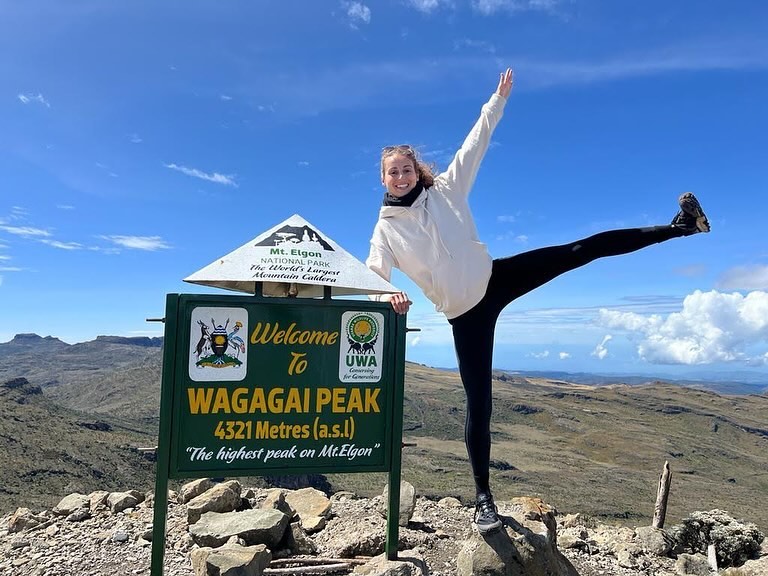
Trekking Mount Elgon on the 4-Day Mountain Elgon Trek Wagagai Peak and Masaba Summit is an unforgettable expedition across East Africa’s oldest solitary volcanic mass, covering a vast 80-kilometer diameter base. Known locally as Mundus ancestral home, this route combines raw wilderness with deep cultural roots. Pushing past 4,000 meters reveals a dramatic world of giant lobelias, Afro-alpine moorland, and breathtaking views over the world's largest mountain caldera. Trail conditions shift rapidly from humid montane forests to freezing high-altitude winds. Crossing this ancient volcanic rim allows you to reach two distinct high points: the sacred Masaba Summit (4,152m) and Wagagai Peak (4,321m). Guided by armed Uganda Wildlife Authority rangers and local porters, this four-day loop offers an authentic, untamed alternative to Kilimanjaro.
Day 1: Basecamp to Hunwick’s Camp
Your 4-Day Mountain Elgon Trek Wagagai Peak and Masaba Summit begins at the base camp near Bugiboni at 1,720 meters. Here, you meet your crew before tackling a 7.1-kilometer trail that gains 1,162 meters in altitude. You will steadily climb past terraced Arabica coffee and onion plots toward the 61-meter Nabunyifu Falls. Entering the montane forest zone, you navigate freshly cut switchbacks while listening for black-and-white colobus monkeys high in the canopy. Guides often share snacks like malewa—savory, smoked bamboo shoots cooked in groundnut sauce—to keep your energy up. As you ascend past 2,300 meters, thick vegetation gives way to towering tree ferns and giant heather bushes. After 4 to 5 hours of steady hiking, you arrive at Hunwick’s Camp at 2,882 meters along Mukoola Ridge. Settling into wooden cabins, you will enjoy hot posho and tea while watching dusk fall over the valley.
Day 2: Hunwick’s Camp to Masaba Camp
The second morning of your 4-Day Mountain Elgon Trek Wagagai Peak and Masaba Summit covers a 7.2-kilometer leg ascending to Masaba Camp. Gaining 863 vertical meters, you climb out of the dense canopy at 3,200 meters into open heathland and rolling Afro-alpine grasslands. Along the way, local guides share legends of the ancestral father Masaba, whose spirit is said to reside across these high volcanic shelves. Crossing cold mountain streams, you will pass through thick stands of Erica arborea (giant heather) before taking a short rest along the upper ridge. By mid-afternoon, you reach Masaba Camp at 3,745 meters, surrounded by wild groundsels and giant lobelias. You can opt for a short 1.2-kilometer acclimatization walk to the top of the 4,020-meter Masaba Table. Returning to camp early allows you to rest, drink plenty of water, and stay warm as temperature drops rapidly before nightfall.
Day 3: Masaba Summit, Wagagai Peak, and Descend
Summit day on this 4-Day Mountain Elgon Trek Wagagai Peak and Masaba Summit starts well before dawn under a brilliant starry sky. First, you tackle the rocky scramble to Masaba Summit (Jackson’s Peak) at 4,152 meters, catching the golden sunrise across the Ugandan borderlands. From there, you press forward across the alpine ridge to Wagagai Peak, reaching the ultimate summit of Mount Elgon at 4,321 meters. Standing on the crater rim gives you sweeping views of the massive 40-square-kilometer volcanic caldera floor. After taking photos at the summit post, you begin your 14-kilometer descent down the Sasa Trail. Dropping 849 vertical meters past exposed basalt cliffs, you reach Mude Cave Camp at 3,472 meters. Here, you will unwind with a steaming plate of rice and beef stew after an intense 8-hour trek.
Day 4: Descent to Basecamp
On the final day of your 4-Day Mountain Elgon Trek Wagagai Peak and Masaba Summit, you embark on a 15-kilometer descent back to the trail's base. Leaving Mude Cave Camp, the trail drops 1,752 meters, taking you back down through the moorland and giant bamboo belts. You will carefully navigate the infamous "Muddy Stairs"—slick, steep rock steps near Sasa River Camp—where trekking poles are essential. As the air grows warmer and humid, the trail opens back up to terraced farmlands filled with matoke banana groves and local homesteads. Reaching the Budadiri basecamp at 1,720 meters by early afternoon, you bid farewell to your ranger and porter crew. You will collect your official park trekking certificate before heading to Mbale for a celebratory meal and a well-deserved rest.
What physical fitness level is required for this four-day trek?
Trekking Mount Elgon over four days demands strong cardiovascular endurance and solid leg strength, though technical mountaineering gear isn't required. You will be covering distances between 7 and 15 kilometers daily, with steep ascents gaining over 1,100 vertical meters on the first day alone. The terrain features slick roots, rocky switchbacks, and uneven stone steps near Sasa River Camp. High-altitude walking above 3,500 meters thins the air noticeably, making every step feel heavier. If you regularly hike, jog, or do stamina training, your body will handle the physical load well.
How do trekkers safely manage altitude sickness on Mount Elgon?
Safety on Mount Elgon relies on a steady pace, consistent hydration, and built-in acclimatization stops. The itinerary slowly steps up your sleeping elevation from 2,882 meters at Hunwick’s Camp on Night 1 to 3,745 meters at Masaba Camp on Night 2 before pushing for the 4,321-meter summit. Drinking 3 to 4 liters of water daily keeps your blood oxygenated, while guides maintain a slow, deliberate cadence—often reminding you to go pole pole (slowly). Rangers also monitor trekkers for signs of acute mountain sickness like headaches or nausea, carrying basic first-aid supplies.
What essential gear should you pack for Mount Elgon’s weather?
Mount Elgon’s climate shifts rapidly from hot, humid rainforests to sub-zero high-altitude winds. You need a 3-layer clothing system: moisture-wicking base layers, an insulating fleece mid-layer, and a waterproof, windproof outer shell jacket. Sturdy, waterproof trekking boots with high ankle support are essential for muddy trails, along with thick woolen socks. Pack a zero-degree sleeping bag for cold nights at high camps, waterproof dry bags for your backpack gear, a high-lumen headlamp for summit morning, and reliable trekking poles to protect your knees during steep descents.
What typical meals and water sources are available along trails?
Trek chefs cook hearty, hot meals designed to keep your energy high throughout the expedition. Breakfasts usually feature warm porridge, eggs, toast, and fresh fruit alongside Ugandan coffee or tea. Dinners include carbohydrate-rich dishes like posho, rice, pasta, or potatoes paired with rich vegetable or beef stews. For snacks, guides often share traditional local foods like malewa (smoked bamboo shoots in peanut sauce). Mountain streams feed water points along the route, which your crew filters or boils before filling your water bladders every morning and evening.
Why are Uganda Wildlife Authority rangers required on this trek?
Uganda Wildlife Authority (UWA) armed rangers accompany every trekking group to guarantee park safety and provide local expert guidance. Mount Elgon spans a broad, remote wilderness border with Kenya, and rangers ensure visitors stay on designated paths. They are deeply knowledgeable about the mountain’s ecology, tracking wildlife like colobus monkeys and spotting rare alpine flora. Rangers also manage emergency logistics, coordinate support with local porters, and maintain direct radio contact with base operations in Budadiri and Mbale to keep the trek running smoothly and safely.
What is the best time of year to trek Mount Elgon?
The best months for trekking Mount Elgon are during the dry seasons: December through March, and June through September. During these periods, trail conditions are drier, reducing mud on lower forest paths and making the "Muddy Stairs" easier to navigate. Clear skies offer panoramic views across the 40-square-kilometer volcanic caldera and surrounding valleys. While Elgon can be climbed year-round due to its milder climate compared to higher East African ranges, the wet seasons bring heavy rain that slows down daily hiking times considerably.
What cultural significance do Masaba Summit and Wagagai Peak hold?
To the local Bamasaba people, Mount Elgon is not just a mountain; it is Mundus, the physical manifestation of their founding ancestor, Masaba. Masaba Summit (4,152m) is considered a sacred natural altar where elders historically communicated with ancestors and sought blessings. Wagagai Peak (4,321m), standing as the highest point, overlooks the ancient caldera floor. Standing on these summits connects trekkers to centuries of oral history, traditional folklore, and the deep cultural identity of the communities living around the mountain's fertile lower slopes.
How do local porters support trekkers on Mount Elgon?
Local porters from neighboring villages like Budadiri form the operational backbone of every Elgon expedition. Hiring porters creates vital income for mountain communities while making your hike significantly more manageable. Porters carry heavy camp supplies, cooking gear, tents, and personal duffel bags (up to 15 kg per trekker), allowing you to walk with just a light daypack containing water, rain gear, and personal snacks. Their native knowledge of the terrain, warm humor, and incredible physical endurance keep camp logistics seamless from start to finish.
How does Mount Elgon compare to climbing Mount Kilimanjaro?
Mount Elgon offers a raw, uncrowded alternative to Kilimanjaro at a fraction of the cost. While Kilimanjaro draws tens of thousands of climbers annually, Elgon sees far fewer visitors, giving you an intimate, peaceful mountain experience. Elgon’s lower peak elevation (4,321m compared to 5,895m) carries a much lower risk of severe altitude sickness, making it technically easier and logistically accessible. However, Elgon’s vast 40-square-kilometer volcanic caldera and dense forest biodiversity deliver a rich wilderness adventure that rivals Africa’s highest peaks.
What permits and paperwork are needed before starting the hike?
Before stepping onto the trail, trekkers must clear administrative requirements at the UWA park headquarters in Budadiri or Mbale. You will need a valid Mount Elgon National Park trekking permit, which covers park entry fees, UWA ranger guide services, and camping allowances. You must present your passport details and sign safety declarations before trail clearance is granted. Working with a registered local ground operator ensures all park permits, porter arrangements, and transit logistics are fully processed before your arrival at the trailhead.
Booking 4 Days Mountain Elgon trek with us Roads of Adventure safaris
Booking a 4-day Mount Elgon trek with Roads of Adventure Safaris is a fantastic way to experience Uganda’s rugged beauty. The classic Sasa Trail takes you up the mountain’s steepest, most rewarding route, winding through local villages and lush afro-alpine moorlands right to Wagagai Peak. You’ll kick off with a scenic drive from Kampala through Mabira Forest to Budadiri, where your hike to Sasa Camp begins. Over the next few days, you’ll trek through bamboo forests, rest up at Mude Cave, and conquer the 4,321-meter summit before descending back down to head home with incredible memories.
