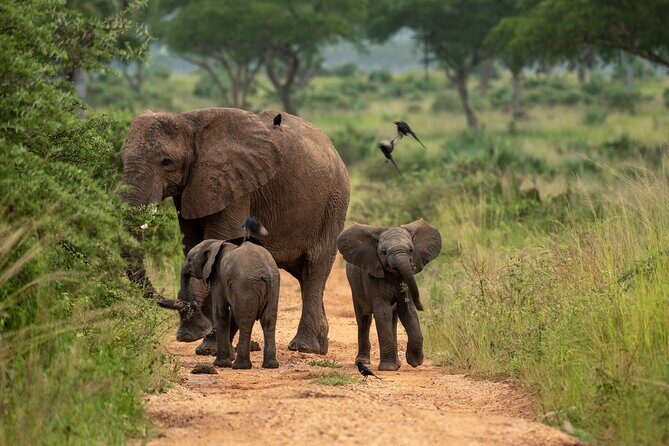
Discover the ultimate 3 Days Uganda photography safari to Murchison falls and Ziwa Rhinos. This Journey brings you face-to-face with endangered white rhinos on an unforgettable walking trek at the sanctuary. Day two transitions into dramatic landscapes as you cruise the Nile River to the base of the roaring falls, capturing vibrant birdlife, massive crocodiles, and bathing hippos. Day three allows for sweeping morning game drives across the delta, focusing your lens on lions, giraffes, and elephants before returning to Kampala. This carefully crafted Uganda photography safari itinerary provides unparalleled opportunities for breathtaking nature photography, ensuring you return home with iconic portfolio images.
Tour highlights for 3 Days Uganda photography safari to Murchison falls and Ziwa Rhinos
Track wild rhinos
See Murchison Falls
Sunrise game drives
Spot African lions
Nile boat cruise
Watch giant hippos
Golden hour photography
Luxury safari lodges
Scenic delta vistas
Day by day 3 Days Uganda photography safari to Murchison falls and Ziwa Rhinos
Day 1: Ziwa Rhino Trekking & Travel to the Park
Your unforgettable 3 Days Uganda photography safari to Murchison falls and Ziwa Rhinos begins with a scenic four-hour drive north from Kampala. The primary destination today is the Ziwa Rhino Sanctuary, a vital haven for conservation. Here, you will set out on an exhilarating guided trek on foot to track endangered southern white rhinos. For photographers, this experience is unmatched; walking alongside expert rangers allows you to capture stunning, eye-level portraits of these prehistoric giants against the raw bush background. After a rewarding lunch, you will continue the journey toward Murchison Falls National Park, entering a landscape rich with creative potential. As the evening light softens, you will arrive at your luxury lodge situated right along the Nile. This sets a perfect, tranquil tone for the creative journey ahead, promising exceptional wildlife and landscape shots over the next two days of your premium safari adventure.
Day 2: Nile River Cruise & Photography at the Falls
Day two of your 3 Days Uganda photography safari to Murchison falls and Ziwa Rhinos starts with a sunrise game drive across the northern delta. The golden morning light offers ideal conditions for capturing big cats, elephants, and massive herds of antelopes moving across the savannah. After a hot lunch at the lodge, you will embark on an afternoon boat safari heading up the historic Victoria Nile. This river cruise brings you up close to immense pods of snorting hippos, basking crocodiles, and some of the park’s 450 diverse bird species. The ultimate highlight is reaching the iconic "Devil's Cauldron," where the entire Nile forcefully collapses through an eight-meter gorge. Positioned safely at the base of the waterfall, you can use high shutter speeds to freeze the crashing foam and capture the dramatic mist rising against the canyon walls as the afternoon sun creates vibrant rainbows.
Day 3: Delta Sunrise & Departure
On your final morning, the 3 Days Uganda photography safari to Murchison falls and Ziwa Rhinos maximizes the magical golden hour with an early delta game drive. This is prime time to photograph apex predators concluding their nightly hunts amidst expansive savannah vistas. The low sun casts long shadows and bathes the classic African landscapes in warm, dramatic tones that look spectacular on camera. After a hearty breakfast back at your premium lodge, you will pack up your camera gear and begin the comfortable five-hour drive back to Kampala or Entebbe. Your driver guide will make a relaxing stop for lunch along the way, giving you a chance to review your memory cards. You will arrive back in the city by late afternoon, carrying an incredible digital portfolio of wild rhinos, powerful waterfalls, and stunning Ugandan wildlife to share with the world.
How does tracking rhinos on foot at Ziwa maximize eye-level photography?
Tracking southern white rhinos on foot at the Ziwa Rhino Sanctuary introduces a completely different creative dynamic compared to traditional vehicle-bound safaris. On Day 1 of your 3 Days Uganda photography safari to Murchison falls and Ziwa Rhinos, this unique experience removes the physical barrier of a safari truck window or popup roof. Walking through the brush alongside an expert ranger allows you to position yourself safely at absolute ground level with these prehistoric giants.
From a composition perspective, eye-level photography creates an intimate connection between the viewer and the subject. Instead of looking down on an animal from an elevated truck seat—which compresses the perspective and makes the animal appear smaller—shooting from the ground isolates the rhino against the natural bush landscape. This low angle emphasizes their immense physical scale, the rugged texture of their skin, and the impressive curve of their horns.
To maximize these shots, a telephoto zoom lens like a 70-200mm or a 100-400mm is ideal. It provides the flexibility to frame tight, detailed portraits of the rhino’s face while allowing you to back off for wider environmental shots that capture the animal within its habitat. Rangers understand light direction and animal behavior intimately; they will guide you to angles where the sun illuminates the rhino’s features rather than casting harsh shadows. For the best stability while walking, a lightweight monopod is highly recommended, as it offers quick support without the bulk of a traditional tripod, ensuring you can react instantly when a rhino steps into a clear, sunlit clearing.
What camera settings are ideal for capturing the raw power of the Devil's Cauldron?
Photographing the dramatic base of Murchison Falls, known as the "Devil's Cauldron," during the Day 2 afternoon boat cruise requires a firm understanding of shutter speed and exposure control. The Victoria Nile compresses violently through an eight-meter gap before dropping 43 meters, creating a massive, chaotic wall of frothing water and a permanent cloud of heavy mist.
To freeze the intense action of the crashing white water and individual airborne droplets, you will want to utilize a fast shutter speed of at least $1/1000$ of a second or higher. This high-speed approach sharpens the texture of the waterfall, turning the chaotic energy into a crisp, powerful still image. Because the white foam reflects a tremendous amount of light, your camera’s internal light meter can easily be tricked into underexposing the rest of the frame. To counter this, dialing in exposure compensation between $+0.3$ and $+1.0$ will keep your whites bright and prevent the surrounding dark canyon cliffs from falling into murky, muddy shadows.
Conversely, if you happen to have a neutral density (ND) filter and a stabilized lens or monopod, you can experiment with a slower shutter speed around $1/15$ or $1/30$ of a second. This introduces a creative, silky motion blur that conveys the continuous, rushing speed of the Nile. Given the persistent ambient spray bouncing off the rocks, keeping a clean microfiber cloth in your pocket is essential. Wipe your lens element between shots, and utilize a high-quality lens hood to protect the glass from stray water droplets that can cause soft, ruinous flare across your images.
How does the Day 2 northern delta game drive cater to wildlife action photography?
The sunrise game drive across the northern delta on Day 2 is a cornerstone of the 3 Days Uganda photography safari to Murchison falls and Ziwa Rhinos, specifically designed to place you in the path of active wildlife during the finest light of the day. As the sun clears the horizon, it bathes the open palm-studded savannah in a soft, warm golden glow that brings out the deep orange tones of the Ugandan kob and the intricate patterns of the endangered Rothschild’s giraffe.
For action photographers, this cool morning window is when predators are most likely to move. Lions concluding their nightly patrols or a leopard moving through the branches of a sausage tree require quick reflexes and optimized camera configurations. Setting your camera to continuous shooting mode (burst mode) and using continuous autofocus (AI Servo or Continuous AF) ensures that your lens tracks a moving animal dynamically, keeping the eyes sharp even if a predator suddenly bolts through the tall grass.
Because animals can pop up close to the vehicle or run parallel to the tracks, a dual-camera setup or a versatile super-zoom lens (like a 200-600mm) prevents you from losing precious seconds switching lenses. The open landscape of the delta allows for clean, uncluttered backgrounds, letting you shoot with wide apertures like $f/4$ or $f/5.6$ to create a beautiful, smooth background blur (bokeh) that makes the wildlife pop. Your private 4x4 safari vehicle provides a stable platform, and resting your long lens on a canvas beanbag draped over the popup roof frame provides excellent stabilization for tack-sharp action shots.
What are the best lenses to pack for this specific 3-day photography itinerary?
Selecting the right focal lengths for a fast-paced, 3-day photography itinerary involves covering everything from tight wildlife portraits to sweeping landscape vistas without overpacking. A successful kit for Murchison Falls and Ziwa focuses on versatility, speed, and reliable weather sealing to combat the fine savannah dust.
First, a telephoto zoom lens is your absolute workhorse for wildlife. A lens in the 100-400mm or 200-600mm range is indispensable for framing distant lions on the delta or safely capturing the rhinos at Ziwa. This focal range lets you crop in tightly on an animal's eyes or back out to include context. Paired with this, a fast mid-range zoom like a 24-70mm $f/2.8$ is the perfect choice for the afternoon boat cruise and the Top of the Falls nature walk. It handles the wider perspectives of the river canyon and performs beautifully in the shifting light as clouds pass over the gorge.
Finally, an ultra-wide-lens like a 16-35mm is critical for capturing the expansive savannah vistas and golden hour lighting on Day 3. The massive Ugandan skies and the winding paths of the Nile demand a wide field of view to convey the true scale of the landscape. If your camera body allows, carrying two separate bodies pre-mounted with your wide and long lenses eliminates the risky need to swap glass in the field, keeping your camera sensors perfectly clean and free from the destructive, powdery dust of the dirt tracks.
How can photographers manage harsh midday lighting between morning and afternoon excursions?
Midday in equatorial Uganda presents a distinct challenge for photographers on a 3 Days Uganda photography safari to Murchison falls and Ziwa Rhinos. Between 11:00 AM and 3:00 PM, the sun sits directly overhead, casting harsh, vertical shadows, washing out the rich colors of the landscape, and creating high-contrast highlights that can easily blow out details on your subjects.
Rather than putting your camera away during these hours, you can pivot your creative focus. The midday block is an exceptional time to capture macro photography or detailed abstracts around your luxury lodge. The textures of weathered wood, local architectural thatch, or the vibrant tropical flora and lizards around the property offer excellent close-up subjects. Because you are often under the shade of a lodge veranda, the light becomes beautifully diffused, acting like a giant softbox.
If you are out on the river or transitioning between zones, utilizing a circular polarizer filter is highly effective. Just like polarized sunglasses, this filter cuts through the harsh glare bouncing off the surface of the Nile River and deepens the blue tones of the sky, restoring saturation to the green vegetation along the banks. It is also an ideal time to download your morning images to a portable hard drive, clear your memory cards, and review your compositions. Adjusting your camera profiles to shoot in RAW format is vital during these high-contrast hours, as it preserves maximum dynamic range, letting you recover shadow details later in post-processing.
What bird photography techniques apply to the 450+ avian species along the Nile?
Murchison Falls National Park is an absolute paradise for bird photography, boasting over 450 recorded avian species. The afternoon boat safari on Day 2 serves as an incredible floating platform to capture these colorful subjects, ranging from the tiny, iridescent Malachite Kingfisher clinging to reeds to the massive, prehistoric Shoebill stork hiding in the quiet papyrus swamps.
Photographing birds from a moving boat introduces unique challenges, primarily camera shake and tracking erratic movement. To counter the gentle swaying of the boat and the sudden flight patterns of birds, you must prioritize high shutter speeds, keeping your settings at a minimum of $1/2000$ of a second for birds at rest and up to $1/3200$ of a second if you want to capture a fish eagle in mid-dive. Utilizing Zone or Expansion Autofocus modes helps your camera lock onto a bird in flight against a busy background of riverbank trees or cliffs.
Lighting along the river can be tricky, especially when tracking a bird that flies across areas of deep shade and bright sunlight. Shooting in Manual mode with Auto ISO enabled allows your camera to instantly adapt its exposure as the bird moves through different lighting environments, ensuring you don't lose the shot. Pay close attention to the background; by positioning yourself on the boat to shoot when a bird is framed against distant water rather than messy branches, you create a clean visual separation that highlights the intricate feather details and vibrant colors of Uganda’s incredible birdlife.
How does the Day 3 delta sunrise compare creatively to the Day 2 morning drive?
While both morning excursions explore the northern sector, the Day 3 delta sunrise focuses on a different creative perspective, shifting the spotlight toward dramatic golden hour landscape lighting and expansive savannah vistas. On Day 2, the primary goal was tracking moving predators and large game; on Day 3, the landscape itself becomes a central character in your visual narrative.
The low angle of the sun on your final morning creates long, elegant shadows across the classic African horizon, highlighting the undulating contours of the terrain. The air is often crisp and clear, frequently filled with a soft morning mist rising off the delta where the Victoria Nile flows into Lake Albert. This atmospheric mist scatters the early light, creating a dreamy, ethereal quality that is perfect for wide-angle landscape photography.
Creatively, this is the time to look for silhouettes. Framing a solitary acacia tree or a small herd of elephants marching across the ridge directly against the glowing orange sky produces powerful, graphic images. Instead of zooming in tightly on a single animal, pull back to a wider focal length to capture the vastness of the environment. This approach provides a beautiful sense of place, balancing the intimate wildlife shots from previous days with grand, sweeping compositions that summarize the wild, untamed spirit of the Ugandan wilderness as your photography safari draws to a close.
What step-by-step measures protect camera gear from savannah dust and river spray?
Maintaining the integrity of your photographic equipment is paramount during a fast-paced 3 Days Uganda photography safari to Murchison falls and Ziwa Rhinos. The open-top safari vehicles, dry dirt tracks, and intense mist generated by the massive waterfalls create an environment filled with elements that can easily damage electronic gear and sensitive optical glass.
To keep your equipment pristine, you should follow a disciplined protection routine throughout the trip:
1.Wrap gear during transit:Continuous.
Keep your camera bodies and lenses inside a sealed, padded bag whenever the vehicle is moving between tracking locations to shield them from the heavy dust kicked up by the tires.
2.Use protective sleeves in the field:While shooting.
Slip a form-fitting silicone skin or a simple rain cover over your camera setup while tracking rhinos on foot or cruising the Nile to block ambient dust and heavy waterfall spray.
3.Execute safe lens changes:As needed.
Never change lenses while the vehicle is moving or in high-wind areas. Turn the camera body downward, shield the mount with your body, and swap glass swiftly to prevent particles from settling on the sensor.
4.Perform a nightly clean down:Every evening.
Use a manual air blower to dislodge loose grit from lens barrels and dials, gently wipe the glass elements with a clean microfiber cloth, and store everything in an airtight dry bag with silica gel packs.
How do you compose compelling wildlife silhouettes against the Ugandan sky?
Creating powerful wildlife silhouettes is one of the most artistically rewarding techniques during the golden hour transitions of your 3-day safari. This style strips away color and fine texture, relying entirely on clean shapes, strong lines, and dramatic contrast to tell a compelling story of the African bush.
To achieve a clean silhouette, you need to find a subject that is positioned directly between your lens and the bright morning or evening sky. This often requires working closely with your private guide, who can maneuver the safari vehicle to place animals—such as a tall giraffe, a majestic elephant, or a perched bird of prey—on a ridge or an elevated track against the low sun.
Once your subject is positioned, switch your camera to spot metering and meter directly off the brightest part of the sky next to the animal. This intentionally tricks your camera into underexposing the subject, plunging the animal into a rich, deep black shape while preserving the vibrant oranges, reds, and yellows of the sky. Keep your aperture around $f/8$ or $f/11$ to ensure the edges of the animal and any surrounding landscape features, like classic acacia branches, remain perfectly sharp. Pay close attention to separation; wait for the animal to turn profile so its distinct shape is instantly recognizable, ensuring its limbs or trunk do not blend into a confusing, solid black mass.
Why is a private safari vehicle essential for a high-end photography itinerary?
For a professional or passionate amateur photographer, booking a private vehicle for your 3 Days Uganda photography safari to Murchison falls and Ziwa Rhinos is not just about luxury—it is a critical tool for creative success. Standard group safaris operate on rigid schedules and crowded seating, which can severely compromise your ability to capture world-class imagery.
In a private 4x4 safari vehicle, you have exclusive control over the physical space. With all seats dedicated to your party, you can store your various camera bodies, long lenses, and gear bags right next to you for immediate access. There is no competition for the best angle; you can move freely from left to right or stand up in the center of the open popup roof, ensuring a clear, uncompromised 360-degree line of sight whenever wildlife appears.
More importantly, a private vehicle grants you complete control over time and positioning. You can instruct your specialized driver guide to turn the engine off to eliminate vibrations during long telephoto shots, or request minor vehicle adjustments to perfectly align the morning light with a lion's face. If you wish to spend an hour waiting for a leopard to descend from a tree, you can do so without facing frustration from other travelers, allowing you to work your compositions thoroughly and capture truly unique behavior.
What are the best methods for photographing hippos and crocodiles from a boat safari?
Photographing large aquatic wildlife along the Victoria Nile on Day 2 requires adapting to a constantly shifting shooting environment. Hippos and crocodiles offer fantastic textural subjects, but because you are shooting from a floating platform that is continually moving with the river current, precision is key to getting sharp images.
When framing crocodiles basking on the muddy banks, look to highlight the incredible detail of their armored scales and sharp teeth. Since these reptiles often remain completely motionless, you can take your time to compose. Focus sharply on the eye closest to your lens, and use a relatively wide aperture like $f/5.6$ to create a clean separation from the muddy background. Look for moments when a crocodile opens its mouth to release heat; this behavior adds an intense, dynamic element to your wildlife portfolio.
Hippos present a different challenge because they spend most of their time submerged, with only their ears, eyes, and nostrils visible. Keep your shutter speed high—around $1/1500$ of a second—to be ready for sudden action. Capturing a hippo yawning or two males fighting in a territorial display requires watching for subtle behavioral clues, such as bubbles rising or a hippo shaking its head before emerging. Frame your shots slightly wider to capture the splashing water droplets, which add a beautiful sense of movement and drama to the frame.
How does the choice of luxury lodging impact your workflow and backup routines?
Choosing premier properties like Nile Safari Lodge or Paraa Safari Lodge provides a highly supportive infrastructure that directly benefits a modern photographer's daily digital workflow. After spending long hours shooting in the field, a luxury environment offers the power, space, and comfort needed to process and secure your valuable creative assets.
A critical advantage of these high-end lodges is the availability of reliable, 24-hour electricity. Whether powered by advanced solar arrays or quiet generators, these properties provide abundant charging stations right inside your private room or luxury banda. This ensures you can confidently recharge multiple camera batteries, power banks, and laptop computers overnight without any interruption. Furthermore, spacious writing desks and comfortable seating areas create an ideal, stress-free space to set up your laptop and review the day's take.
The luxury setting also allows for a disciplined data backup routine. After a heavy day of shooting RAW files on the Nile, you can relax on a veranda overlooking the river while transferring your images from high-speed memory cards to a primary laptop and a secondary rugged external drive. Having a peaceful, well-lit environment to clean your lenses, organize your files, and prepare your gear for the next morning's sunrise drive ensures that you remain organized, focused, and ready to capture every moment of your Ugandan safari.
What cultural photography opportunities exist along the Kampala-Murchison route?
While wildlife and dramatic landscapes are the headliners of the 3 Days Uganda photography safari to Murchison falls and Ziwa Rhinos, the overland transfers on Day 1 and Day 3 open up fantastic opportunities for authentic, compelling cultural photography. The journey takes you through vibrant towns, lush farming communities, and bustling roadside trading centers that showcase daily life in rural Uganda.
Roadside fruit markets offer a spectacular explosion of color and movement. Vendors beautifully stacking bright green matooke (cooking bananas), deep yellow pineapples, and brilliant red tomatoes create gorgeous, high-contrast subjects. When photographing these lively scenes, utilizing a mid-range focal length like a 50mm or 85mm allows you to capture environmental portraits from a respectful distance without interrupting the natural flow of daily business.
The golden rule of cultural photography in Uganda is mutual respect. Always have your private guide stop the vehicle, and ask for permission with a warm smile before taking a portrait of a local vendor or resident. Engaging in a brief conversation or purchasing some fresh fruit goes a long way in building rapport. Showing the subject the back of your camera screen after taking the shot often brings joint smiles, creating a shared, respectful experience that results in expressive, soulful portraits reflecting the genuine warmth and hospitality of the Ugandan people.
How should photographers prepare for the tropical weather and environmental conditions?
Successfully completing a 3-day photography safari in East Africa requires preparing yourself for the elements just as thoroughly as you prepare your camera gear. The climate in Murchison Falls is generally warm and tropical, with intense equatorial sunshine that demands careful personal care to maintain your energy and focus throughout long shooting sessions.
Lightweight, breathable clothing made of natural fibers is highly recommended to stay cool during extended game drives. Opt for long-sleeved shirts and trousers in neutral earthy tones—like khaki, tan, or soft green—to protect your skin from both the blazing sun and biting insects, such as tsetse flies, which are naturally drawn to dark blue and black fabrics. A wide-brimmed safari hat and polarized sunglasses are essential tools; the sunglasses protect your eyes from the bright glare of the savannah, allowing you to spot wildlife shapes more effectively before looking through your camera's viewfinder.
Staying hydrated is equally critical. Your private safari vehicle is stocked with chilled bottled mineral water, and you should drink continuously to prevent fatigue during warm morning treks. For your comfort during the on-foot rhino tracking at Ziwa, apply a high-quality, non-greasy sunscreen that won't slip into your eyes when you look through your camera, and use an effective insect repellent containing DEET to keep bugs at bay, ensuring you can concentrate entirely on capturing world-class imagery.
What ethical guidelines must photographers follow when documenting endangered wildlife?
Photographing endangered wildlife on a premium safari comes with an absolute responsibility to prioritize the welfare of the animals and their habitats above any individual image. As a visual storyteller documenting vulnerable species like the southern white rhino at Ziwa or the Rothschild’s giraffe in Murchison Falls, ethical practices ensure these animals remain protected and undisturbed.
First, always defer completely to the instructions of your expert rangers and guides. During the on-foot tracking at Ziwa, maintaining the mandatory safety distance (typically six to seven meters) is vital. Never attempt to provoke a reaction from an animal, make loud noises, or wave your arms to get them to look at your lens. A relaxed animal behaving naturally always results in a more authentic, compelling photograph than one showing signs of stress, alert ears, or defensive postures.
Second, be deeply mindful of digital footprint security. When sharing images of critically endangered species on social media or online portfolios, it is highly recommended to disable the GPS location metadata (EXIF data) embedded within your image files. Sophisticated poachers can exploit geo-tags to locate vulnerable animal groups. By practicing clean, ethical photography and working seamlessly with your guides, you help preserve Uganda’s spectacular ecosystems, ensuring your portfolio serves as a powerful tool for global wildlife conservation.
Booking 3 Days Uganda photography safari to Murchison falls with us Roads of Adventure safaris
Book a custom 3-day Murchison Falls photography safari with Roads of Adventure Safaris, a highly-rated local tour operator. Packages average $500 to $800 per person (for mid-range) and include a private 4WD safari vehicle, park fees, and a tailored photography itinerary
