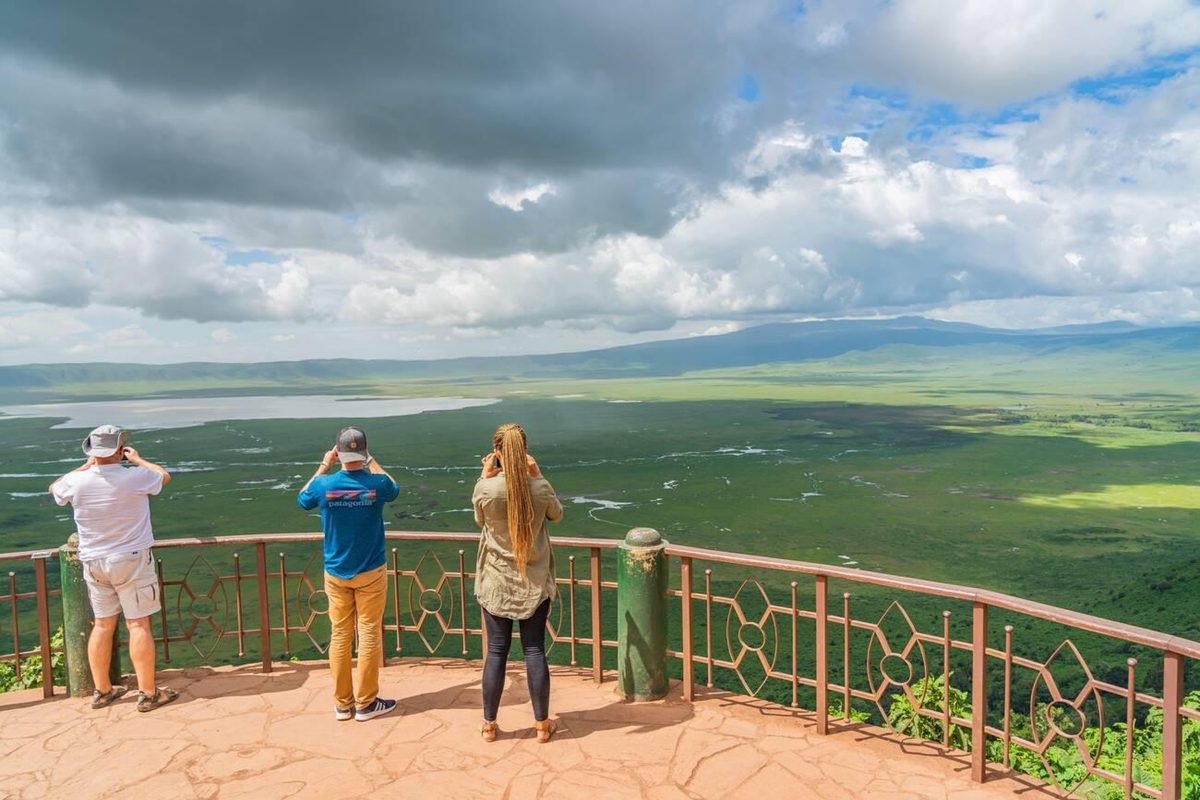
Planning a quick but incredibly rewarding safari in northern Tanzania? This private 3 Days Ngorongoro crater Tanzania tour from Arusha provides the perfect window into one of the world's most spectacular volcanic calderas. Traveling in a sturdy, private 4x4 land cruiser, you will cover the scenic highlands, stand on the edge of the ancient crater rim, and descend into a self-contained wilderness. This short escape is designed to showcase Africa's "Big Five"—including the rare black rhino—while keeping travel times highly manageable. Prices for this classic safari range from $900 to $1,800 per person, depending on whether you choose cozy mid-range cottages in nearby Karatu or luxury lodges perched right on the caldera rim. Let’s dive into the day-by-day plan to see how this short road journey brings the wild plains of Tanzania to life.
Day 1: Arusha to Ngorongoro Highlands
Your journey begins at 8:00 AM as your driver picks you up from your hotel in Arusha. You will drive 190 kilometers west along the paved B144 highway. The route winds past the busy farming village of Mto wa Mbu, where roadside stalls sell sweet red bananas, before climbing up the Great Rift Valley escarpment. After about four hours of driving, you will reach the Loduare Gate to enter the Ngorongoro Conservation Area. Stop briefly at the main viewpoint, where the vast, green caldera stretches out below, measuring 20 kilometers across. Next, you will check into your accommodation—either a quiet coffee farm estate in Karatu, like the Bougainvillea Safari Lodge, or a rim-side retreat. In the afternoon, you will walk along the forested rim trail with an armed ranger, or visit a traditional Maasai boma to learn about local culture, cattle herding, and mud-walled architecture before dinner.
Day 2: Full-Day Crater Game Drive
Wake up to an early breakfast at 6:00 AM to beat the mid-morning crowds. Your guide will navigate the steep, forested descent road, dropping 600 meters down to the caldera floor. This ancient basin spans 260 square kilometers and shelters 25,000 large mammals. Because the crater walls act as natural barriers, you will find resident prides of black-maned lions, massive old bull elephants with giant tusks, and large herds of wildebeest and zebras. Keep your binoculars ready as you search the flat grasslands of the Ngoitokitok Springs for the endangered black rhino. For lunch, your guide will unpack a picnic box near the Ngoitokitok Hippo Pool, where you can watch hippos submerge and grumble in the water. Afterward, drive through the yellow-fever acacia trees of the Lerai Forest to spot leopards and troops of baboons, before ascending back to your lodge as the afternoon sun begins to set.
Day 3: Crater View to Arusha
Enjoy a slow, relaxed morning watching the sunrise paint the highland forests in shades of gold. After a hearty breakfast at your lodge, you will begin your return journey toward Arusha. On your way out of the conservation area, your driver will make a final stop at the crater viewpoint to let you capture some last photographs of the majestic caldera. As you descend the highlands, you will stop at the lively town of Karatu or the cultural markets of Mto wa Mbu to browse handmade wood carvings, woven baskets, and colorful Tanzanian artwork. The 190-kilometer drive back east gives you plenty of time to review your wildlife photos and chat with your guide. You will arrive back in Arusha by mid-afternoon, where your driver will drop you off at your hotel or transfer you directly to Kilimanjaro International Airport for your evening flight home.
How far is the drive from Arusha to Ngorongoro?
The driving distance from central Arusha to the Ngorongoro Conservation Area’s Loduare Gate is exactly  (
( ). Under normal traffic and road conditions, this overland journey takes approximately
  in a standard safari vehicle. The first leg of the drive follows the smooth, paved B144 highway, which takes you through flat Maasai plains and bustling trade towns. The physical landscape changes dramatically as you leave the dry Rift Valley floor and begin climbing the lush, green slopes of the volcanic highlands.
For tour planning, this  journey is highly scenic and rarely feels tedious. You will watch Arusha's urban sprawl fade into vast agricultural plantations, eventually giving way to traditional Maasai settlements. However, we always advise travelers to prepare for a bumpy transition once they pass the park gate. While the highway from Arusha is fully tarmac, the roads inside the conservation area are unpaved, volcanic clay and gravel. This means the final stretch to your lodge on the crater rim will be a much slower, winding climb that requires a sturdy
  vehicle.
What is the cost of Ngorongoro crater fees?
Visiting the Ngorongoro Crater involves a combination of conservation entry fees and vehicle descent fees that must be paid in advance. For international visitors aged  and older, the daily conservation entry fee is
  (which is a base rate of
  plus the mandatory
  government VAT). For children aged between
  and
and  , the entry fee is reduced to
  , while toddlers under the age of can enter the conservation area entirely free of charge.
Importantly, if your safari itinerary includes driving down onto the crater floor, you must pay an additional Crater Service Fee of  per vehicle for each single descent. Because this fee is charged per vehicle rather than per person, sharing a safari Land Cruiser with family or friends makes the trip significantly more cost-effective. These government fees are valid for a single
  entry period and must be loaded onto a special electronic payment card before arriving at the Loduare Gate, as cash is not accepted by park rangers at the entrance.
How long should you spend on crater game drive?
A highly rewarding game drive on the crater floor takes between  . The Ngorongoro Crater is a self-contained ecosystem spanning
  (
( ), meaning you do not need to cover massive distances to find wildlife. Because the density of animals is so incredibly high, a single morning or afternoon is more than enough time to explore the major habitats, including the flat grasslands, the soda waters of Lake Magadi, and the shady Lerai Forest.
Starting your game drive at 6:00 AM when the gates open is highly recommended. Descending the steep crater wall in the early morning mist gives you about  of prime wildlife viewing before the equatorial sun gets too hot. By noon, you can enjoy a picnic lunch at the Ngoitokitok Hippo Pool while watching hippos splash in the water. Spending more than
  on the flat crater floor is rarely necessary, as you will likely have spotted most of the resident species—including elephants, lions, and wildebeest—by early afternoon, leaving you time to ascend for a warm dinner.
What wildlife can travelers spot inside the caldera?
The Ngorongoro Crater is home to over  large mammals, making it one of the most reliable wildlife viewing destinations in Africa. It is one of the absolute best places on the continent to see the complete Big Five (lion, leopard, black rhino, African elephant, and Cape buffalo) in a single day. The crater's flat open plains are home to healthy prides of black-maned lions, large clans of spotted hyenas, and massive herds of blue wildebeest, zebras, and Grant's gazelles.
The biggest highlight for most travelers is the chance to spot the critically endangered East African black rhino. Around  of these rare, prehistoric-looking creatures roam the open grasslands near the Lerai Forest, often visible through binoculars. You will also see massive, ancient bull elephants with tusks that nearly touch the ground, cruising through the yellow-fever acacia trees. Meanwhile, the shallow, alkaline waters of Lake Magadi host thousands of lesser flamingos, turning the lake's edges into a shimmering band of bright pink, contrasting beautifully with the dark green volcanic walls.
Where should tourists stay during their crater tour?
When planning your overnight stay, you have two main geographical options: the high-altitude crater rim or the nearby valley town of Karatu. Lodges built directly on the crater rim, such as the Ngorongoro Serena or the Ngorongoro Crater Lodge, sit at an elevation of over  (
( ). Staying here offers panoramic views of the caldera floor below and allows your vehicle to reach the descent gates within
  of waking up, beating the morning rush.
If you are looking for more affordable or spacious options, the bustling town of Karatu is located just  (
( ) outside the conservation area's main Loduare Gate. Karatu is surrounded by lush green coffee plantations and offers excellent mid-range lodges like the Bougainvillea Safari Lodge or the Acacia Farm Lodge. Staying in Karatu offers a warmer climate, lower room rates, and a relaxing, rustic farm atmosphere, though it does add a
  drive to your morning commute to reach the park entrance.
What is the best month to visit Ngorongoro?
While wildlife viewing is excellent year-round due to the non-migratory nature of the resident animals, the dry winter months of June to October are considered the peak season. during this dry window, the grass on the crater floor is eaten down short, making predators like lions, cheetahs, and serval cats incredibly easy to spot. Water sources also shrink, forcing large herds of wildebeest and zebra to congregate around the permanent freshwater springs.
However, the green season from November to May offers its own unique advantages. After the short rains in November, the dusty crater floor transforms into a vibrant, emerald-green carpet decorated with seasonal wildflowers. This is the calving season for many hoofed animals, meaning you will see plenty of newborn zebra foals and wildebeest calves. It is also the premier time for bird watching, as thousands of migratory birds arrive from Europe. Best of all, the green season has far fewer safari vehicles, offering a quiet, intimate safari.
Is a four-wheel-drive vehicle necessary for this?
Yes, a heavy-duty vehicle with high ground clearance is strictly mandatory for descending into the Ngorongoro Crater. The conservation authorities do not allow standard two-wheel-drive cars, small family SUVs, or city minivans past the descent gates. The roads leading down the  (
( ) caldera walls are steep, single-lane dirt tracks with sharp hairpin turns that can become incredibly slippery and muddy when it rains.
The industry standard for this terrain is a specially modified Toyota Land Cruiser featuring heavy-duty suspension, off-road tires, and a low-range four-wheel-drive gearbox. These vehicles are designed to handle the deep ruts and sandy river crossings on the crater floor comfortably. Furthermore, professional safari Land Cruisers are equipped with safari pop-up roofs, allowing passengers to stand up safely and enjoy unobstructed,  views of the wildlife and scenery. Choosing the right vehicle ensures a safe, smooth, and highly enjoyable day on the rough tracks.
What should visitors pack for the highland weather?
Packing for Ngorongoro requires preparing for two very different climates in a single day. While the crater floor can get warm, sunny, and dusty during the afternoon with temperatures reaching  (
( ), the high-altitude crater rim sits at () above sea level. At this elevation, the morning and evening temperatures routinely plunge to a chilly
  (
( ), often accompanied by damp, heavy mountain mist.
We highly recommend packing in versatile layers. Bring a warm fleece jacket, a windbreaker, long trousers, and a scarf for the cold, open-sided drive down the crater wall at sunrise. As the sun rises and warms the caldera floor, you can strip down to a light t-shirt. Neutral, earth-toned clothing like khaki, olive green, and brown is ideal for safari. Essential gear includes high-quality binoculars to spot distant black rhinos, a wide-brimmed sun hat, polarized sunglasses, and a good camera with a telephoto lens.
Are there cultural activities near the volcanic crater?
Yes, the Ngorongoro Conservation Area is a unique UNESCO World Heritage site because it is managed as a multiple-use land area where indigenous people coexist with wildlife. The Maasai tribe has lived in this region for generations, and you will frequently see young Maasai herders dressed in bright red shúkàs tending to their cattle, sheep, and goats along the dusty roads of the crater rim.
For an educational cultural experience, travelers can visit an authorized Maasai boma (village) along the road to the Serengeti. During a  visit, village elders will welcome you into their circular homestead made of mud and thatch. You will watch traditional jumping dances, hear tribal songs, and step inside a traditional Maasai home to learn about their nomadic lifestyle, social structures, and cattle-centric culture. To keep these interactions respectful, we recommend booking visits through your tour operator, ensuring entry fees directly support local school and clean water projects.
Can travelers visit the crater in one day?
While a single-day round-trip from Arusha to the Ngorongoro Crater floor is technically possible, we highly advise against it. Driving from Arusha to the crater and back takes a minimum of  on the road. If you attempt this in a single day, you will spend most of your daylight hours sitting in a vehicle, leaving you with only a rushed,
  window to see the wildlife during the hottest part of the day.
Arriving at midday means you will miss the magical morning hours when predators are most active. During the heat of the afternoon, lions and leopards tend to sleep deep in the shade of the Lerai Forest, making them very difficult to spot. Furthermore, the long drive back to Arusha in the evening is exhausting and requires driving in the dark, which can be hazardous. To truly enjoy this world-class destination, it is far better to schedule at least one overnight stay in Karatu or on the rim.
Booking 3 Days Ngorongoro crater Tanzania tour from Arusha by Roads of Adventure safaris
To customize your safari, you can reach out to the Roads of Adventure Safaris team directly through our contact page or company profile.
This popular 3-day Northern Circuit route typically pairs the Ngorongoro Crater with nearby gems like Tarangire or Lake Manyara. This combination ensures you see a fantastic variety of landscapes and wildlife in a short time. Prices generally range between $1,000 and $1,500 per person, covering your conservation fees, private transport, a professional guide, daily meals, and comfortable lodging. We look forward to helping you plan a memorable journey!
