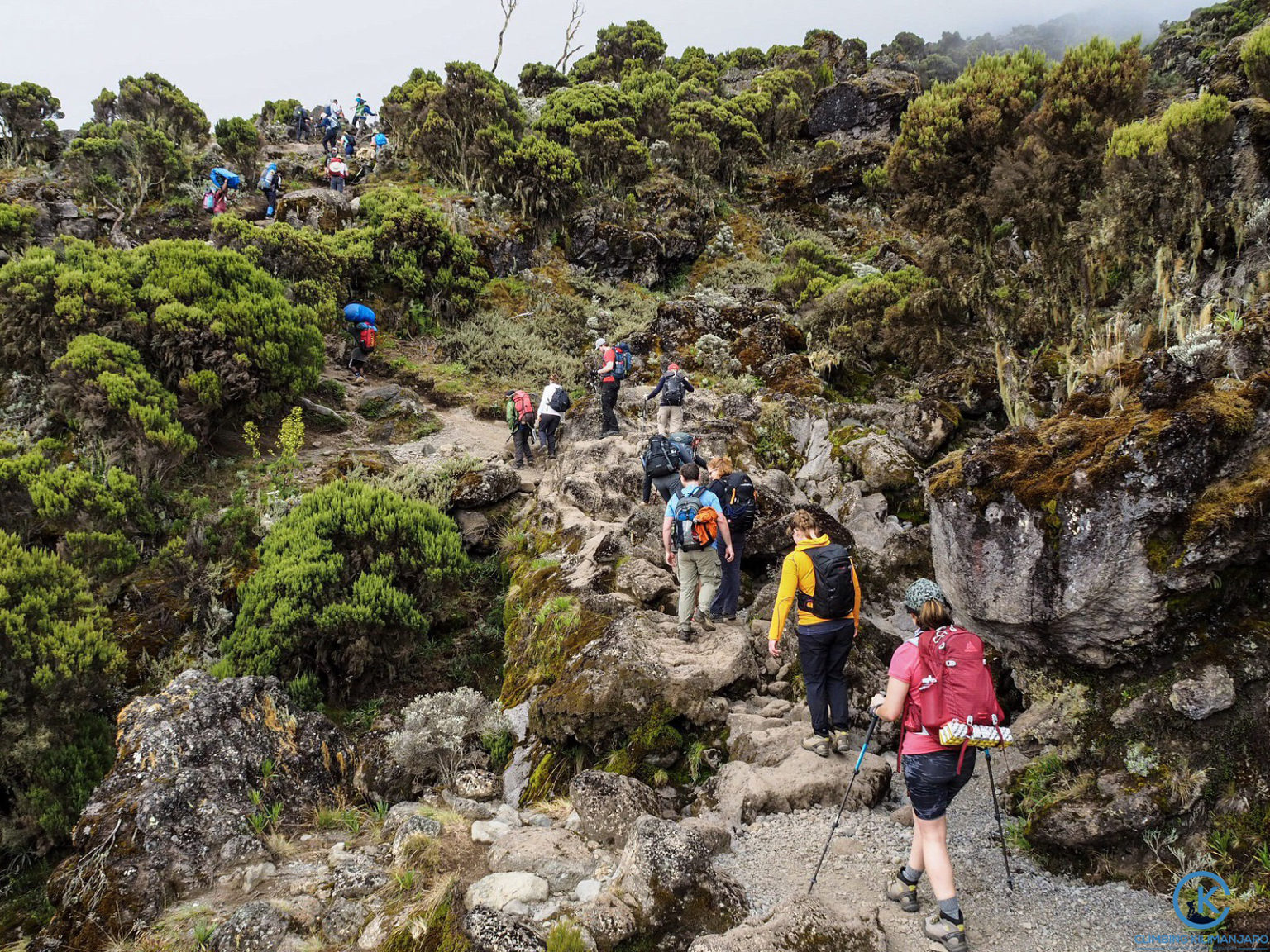
If you want to experience the awe-inspiring beauty of Africa’s highest peak without the grueling physical toll of a full summit bid, the short 3-day Kilimanjaro hike via the Marangu Route is your perfect escape. Ideal for casual trekkers and nature lovers, this non-summit itinerary offers a condensed but incredibly rich tasting menu of the mountain's diverse ecosystems. You will journey from deep, mist-shrouded rainforests up into the dramatic, otherworldly alpine moorlands. Along the way, you sleep in comfortable, classic A-frame wooden huts rather than tents, making it a highly accessible adventure. It is the ultimate way to stand on the slopes of an iconic volcano, breathe in the crisp mountain air, and witness the unique wildlife and dramatic vistas that make Kilimanjaro a world-renowned natural wonder.
Tour highlights for 3 Days Magical Kilimanjaro hiking safari
Lush tropical rainforest
Playful Colobus monkeys
Cosy wooden huts
Stunning alpine moorland
Giant groundsel plants
Majestic Mawenzi views
Beautiful cloud oceans
Official trek certificate
Day by day 3 Days Magical Kilimanjaro hiking safari
Day 1: Marangu Gate to Mandara Hut
Your Kilimanjaro hike kicks off at the historic Marangu Gate ( ), where the buzzing energy of guides and porters sets the stage. After a quick registration, you step straight into a vibrant, emerald-green montane rainforest. This zone is a sensory wonderland; the air is thick with the scent of damp earth, and moss draped from ancient trees creates a mystical canopy. As you enjoy a steady 3 to 4-hour trek covering
  , keep your eyes peeled for wildlife. For example, look up into the branches to spot black-and-white Colobus monkeys leaping through the canopy or the flashes of color from exotic birds like the Hartlaub's turaco. The day wraps up at the cozy Mandara Hut (
 ), where a warm, hearty dinner awaits you in a peaceful, wooden-cabin village tucked right into the clearing of the dense jungle.
Day 2: Mandara Hut to Horombo Hut
On Day 2, the landscape shifts dramatically as you leave the treeline behind. A 4 to 6-hour trek covering  pulls you out of the humid forest and pushes you into the vast heath and moorland zone. The terrain becomes beautifully stark and open, punctuated by Kilimanjaro’s signature botanical giants. You will hike alongside prehistoric-looking plants like the giant groundsels (Senecio) and spiked lobelias, which look like something out of a science fiction movie. Because the tree cover disappears, this leg of the Kilimanjaro hike treats you to jaw-dropping, unobstructed panoramas. On a clear day, you will stare directly at the jagged, volcanic peaks of Mawenzi and the snow-capped dome of Kibo rising in the distance. You will end your day ascending to Horombo Hut (
 ), a bustling mountain outpost offering front-row seats to spectacular high-altitude sunsets above the clouds.
Day 3: Horombo Hut to Marangu Gate
The final day of your Kilimanjaro hike is a long but rewarding descent that traces your steps all the way back down. You will cover a hefty  over 5 to 7 hours, dropping nearly
  in elevation. Walking backward through the eco-zones gives you a second chance to appreciate the stark contrast between the open alpine moorland and the dense tropical rainforest you walked through on Day 1. The air grows noticeably thicker, warmer, and richer with oxygen as you descend, making the hiking feel like a breeze. Upon arriving back at the Marangu Gate, you will officially sign out of the national park registry. As a tangible reward for your effort, you will receive an official trekking certificate from the park rangers—a perfect souvenir to celebrate your unforgettable journey on the slopes of Mount Kilimanjaro.
What fitness level do I need for this trek?
You don't need to be an Olympic athlete, but don't underestimate it either. This 3-day trek covers a total distance of 40 kilometers (about 25 miles) with a significant elevation gain. On Day 1, you climb from 1,860 meters to 2,700 meters, followed by another big push to 3,720 meters on Day 2. That means you are ascending nearly 2,000 vertical meters in just 48 hours. Because the Marangu Route features well-maintained, clear trails, you won't encounter any technical rock climbing or scrambling.
However, you will be hiking for 4 to 7 hours daily while carrying a daypack weighing around 5 to 7 kilograms. To enjoy the experience without burning out, your cardio endurance needs to be solid. I highly recommend preparing at least 4 to 6 weeks in advance. Focus on leg strength and aerobic capacity by doing weekly hikes or stairmaster sessions for 60 minutes. If you can comfortably walk 12 kilometers on hilly terrain back home without feeling completely wiped out, your body will handle the physical demands of this Kilimanjaro itinerary perfectly. Incorporating squats and lunges will also protect your knees during the steep 20-kilometer descent on Day 3.
How cold does it get at Horombo Hut overnight?
Prepare to layer up because things get incredibly chilly once the sun goes down! Horombo Hut sits at a lofty altitude of 3,720 meters (12,205 feet) above sea level. While daytime temperatures in the moorland can be quite comfortable, ranging between 10°C and 15°C (50°F to 59°F), the night is a completely different story. After sunset, the temperature regularly plummets down to anywhere between 0°C and -5°C (32°F to 23°F), especially during the dry winter months of July and August.
Because these wooden A-frame huts are unheated, the indoor air temperature closely mimics the freezing outdoor climate. To stay warm and get a good night's sleep, packing the right gear is absolutely essential. You will want a high-quality, four-season sleeping bag rated down to at least -10°C, alongside thermal base layers and a thick fleece or down jacket. A classic pro-tip used by local guides is filling a 1-liter Nalgene bottle with boiling water right before bed and slipping it into your sleeping bag. This simple trick provides hours of radiant heat, ensuring you stay cozy even when frost is forming on the ground outside.
Can I see the summit snows during this hike?
Yes, absolutely! Catching sight of those iconic glaciated peaks is one of the biggest rewards of this specific trek. While you won't step onto the actual summit glaciers at Uhuru Peak (5,895 meters), you get incredible front-row views of the mountain's upper reaches. On Day 1, the dense rainforest canopy completely blocks your view, but everything opens up beautifully on Day 2 as you cross the 3,000-meter threshold into the heather zone.
From that point onward, the jagged volcanic spires of Mawenzi Peak (5,149 meters) and the massive, snow-capped dome of Kibo Peak dominate the skyline. The best time for crystal-clear photography is typically early morning around 7:00 AM, right as you leave Horombo Hut, before the afternoon clouds roll in to blanket the mountain. Witnessing the stark contrast of white snow against the dark volcanic rock from 3,720 meters up is completely mesmerizing. It gives you a profound appreciation for the sheer scale of Kilimanjaro, proving you don't have to reach the very top to experience its majestic, high-altitude alpine beauty.
What kind of wildlife will I see on Day 1?
Day 1 is an absolute paradise for biodiversity lovers, as the Marangu Route cuts right through a lush, montane rainforest zone. This ecosystem receives up to 2,000 millimeters of rainfall annually, creating a dense, vibrant habitat teeming with unique wildlife. The undisputed stars of this zone are the black-and-white Colobus monkeys. You will frequently spot these primates putting on acrobatic displays, leaping up to 15 meters between the branches of ancient camphor trees.
You are also highly likely to encounter inquisitive Blue monkeys foraging near the trail. Birdwatchers should keep their eyes peeled and binoculars ready for spectacular local species. For example, look out for the brilliant green and red flashes of the Hartlaub’s turaco, or listen for the distinct, booming call of the silvery-cheeked hornbill. You might even spot smaller marvels, like the multi-colored chameleons hiding expertly on damp ferns. It is a sensory, living jungle experience where the sounds of chirping insects and rustling leaves accompany your entire 8-kilometer hike up to Mandara Hut. Paying close attention to the undergrowth can also reveal trails of industrious safari ants or beautiful wild orchids blooming in the shade.
How many kilometers will I walk over three days?
Over the course of this 3-day adventure, your boots will cover a grand total of 40 kilometers, which translates to roughly 25 miles of mountain terrain. To break down the numbers day by day: your journey begins on Day 1 with a gentle, introductory hike of 8 kilometers (5 miles) through the rainforest, taking about 3 to 4 hours. On Day 2, the challenge ramps up slightly as you tackle a 12-kilometer (7.5-mile) incline through the open moorland, taking 4 to 6 hours to reach Horombo Hut.
Day 3 is the big endurance test; you will cover a massive 20 kilometers (12.4 miles) in a single day as you complete the full descent back to the park gate. Because you are going downhill, this final stretch takes between 5 and 7 hours. While 40 kilometers might sound intimidating to a novice hiker, pacing is everything. The guides will constantly remind you to walk "pole pole" (slowly, slowly). This deliberate, steady speed protects your joints, manages your energy, and makes the cumulative distance incredibly manageable, ensuring you finish the trek feeling exhilarated rather than completely exhausted.
Is altitude sickness common on this shorter route option?
Altitude sickness, known medically as Acute Mountain Sickness (AMS), is definitely something to keep on your radar, even though this is a non-summit trek. AMS risks typically escalate once you pass the 2,500-meter mark, meaning both Mandara Hut (2,700 meters) and Horombo Hut (3,720 meters) sit well within the zone where symptoms can strike. Statistics show that roughly 30% to 50% of trekkers experience mild altitude symptoms when ascending rapidly above 3,000 meters.
Because this itinerary goes from 1,860 meters to 3,720 meters in just two days without a dedicated acclimatization day, your body has to adapt quickly to the thinning air. At Horombo Hut, there is about 35% less oxygen per breath compared to sea level. You might experience mild symptoms like a slight headache, mild dizziness, or brief shortness of breath during exertion. The golden rule to combat this is simple: hike slowly and stay hydrated. Your guides will monitor your oxygen saturation levels daily using a pulse oximeter. If your levels drop below 80% or severe symptoms emerge, the ultimate remedy is simply walking back down to a lower elevation.
What makes the Marangu Route huts unique and comfortable?
The Marangu Route is famously nicknamed the "Coca-Cola Route," primarily because it is the only path on Kilimanjaro that features permanent wooden huts instead of canvas camping tents. This makes it exceptionally comfortable, especially during rainy or freezing weather. At Mandara and Horombo, you will sleep in sturdy, A-frame wooden structures equipped with basic foam mattresses and pillows.
Mandara Hut features larger dorm-style complexes, while Horombo Hut offers smaller, cozier cabins that accommodate 4 to 8 hikers per room. In total, the Horombo encampment can host up to 120 trekkers, creating a vibrant, social alpine village atmosphere. These camps feature communal dining halls where you can enjoy hot meals together, and basic solar-powered lighting to help you organize your gear after dark. While you won't find luxury amenities like hot showers or flush toilets inside the cabins—you will be using communal facilities—being shielded from the howling wind and damp ground by solid wooden walls is a massive luxury. It provides a warm, dry sanctuary that allows your body to rest deeply and recover after a long day of hiking.
Why do I need a guide for this trek?
Hiring a licensed guide is actually a strict legal requirement enforced by the Kilimanjaro National Park Authority; you cannot step foot on the trail alone. This regulation is primarily for your safety and to support the local economy. Kilimanjaro is a massive mountain with volatile weather patterns that can change in a matter of minutes. Professional guides undergo rigorous training, holding certifications in wilderness first aid and mountain rescue.
They carry essential safety gear, including pulse oximeters and first-aid kits, checking your vitals every evening to ensure you are coping with the altitude. Beyond safety, your guide acts as a cultural ambassador and naturalist. For instance, they will point out hidden wildlife, explain the geological history of the volcanic peaks, and teach you Swahili phrases like "mambo" and "asante". Furthermore, your trekking package includes an incredible crew of porters and chefs. These unsung heroes carry the heavy load of food, gas, and luggage—up to 20 kilograms per porter—and prepare fresh, hot, three-course meals daily. Their hard work allows you to focus purely on the hike and soak in the experience.
What unique plants grow in the Kilimanjaro moorland zone?
The moorland zone on Kilimanjaro looks like a scene straight out of a fantasy novel, thanks to its bizarre and beautiful endemic flora. Once you cross into this ecosystem on Day 2, you will be surrounded by plants that have adapted uniquely to survive the extreme "daily summer, nightly winter" climate cycle. The most famous of these are the Giant Groundsels (Dendrosenecio kilimanjari), which can grow up to an impressive 5 meters (16 feet) tall.
These prehistoric-looking trees grow incredibly slowly, averaging only a few centimeters per year, meaning the large specimens you walk past are hundreds of years old. Alongside them, you will see Giant Lobelias (Lobelia deckenii), which look like large, spiky green pineapples on the ground. These plants have evolved a fascinating survival mechanism: at night, they close their leaves tightly to protect their core and secrete a watery fluid that freezes over, forming a protective ice shield that keeps the inner plant from freezing solid. Seeing these evolutionary marvels thriving against the stark, volcanic landscape at 3,500 meters is an unforgettable highlight of the trek.
How much water should I drink each day hiking?
Staying properly hydrated is the absolute golden rule of high-altitude trekking. You should aim to drink between 3 and 4 liters of water every single day of your hike. While that might sound like a massive amount, your body loses moisture at a much faster rate in high-altitude environments. The air at 3,720 meters is incredibly dry, and because your body is working harder to capture oxygen, your breathing rate increases significantly, causing you to exhale large amounts of water vapor without even realizing it.
Drinking plenty of fluids actively thins your blood, helps transport oxygen more efficiently through your system, and dramatically reduces the severity of altitude-related headaches. To make this manageable, I highly recommend using a 2-liter hydration bladder (like a CamelBak) for easy sipping while walking, paired with a 1-liter insulated water bottle for camp. Your crew will provide fresh mountain water every morning and evening, which is thoroughly boiled and filtered to ensure it is 100% safe to drink. If you find plain water boring after a while, dropping in an electrolyte tablet adds a welcome flavor boost while replenishing vital salts.
Booking Kilimanjaro hike with us Roads of Adventure safaris
Ready to turn your dream Kilimanjaro hike into a reality? Booking with Roads of Adventure Safaris is a breeze. Just connect with their main headquarters over in Seguku, Kampala, Uganda. You can give their friendly team a ring directly at +256 701 041637 or +256 773 796644. If you prefer writing, drop them an email at info@roadsofadventuresafaris.com to get a custom quote tailored just for you. Whether you want to conquer the iconic Machame Route or the scenic Lemosho Route, just share your ideal travel dates, group size, and preferred trail to secure your spot!
