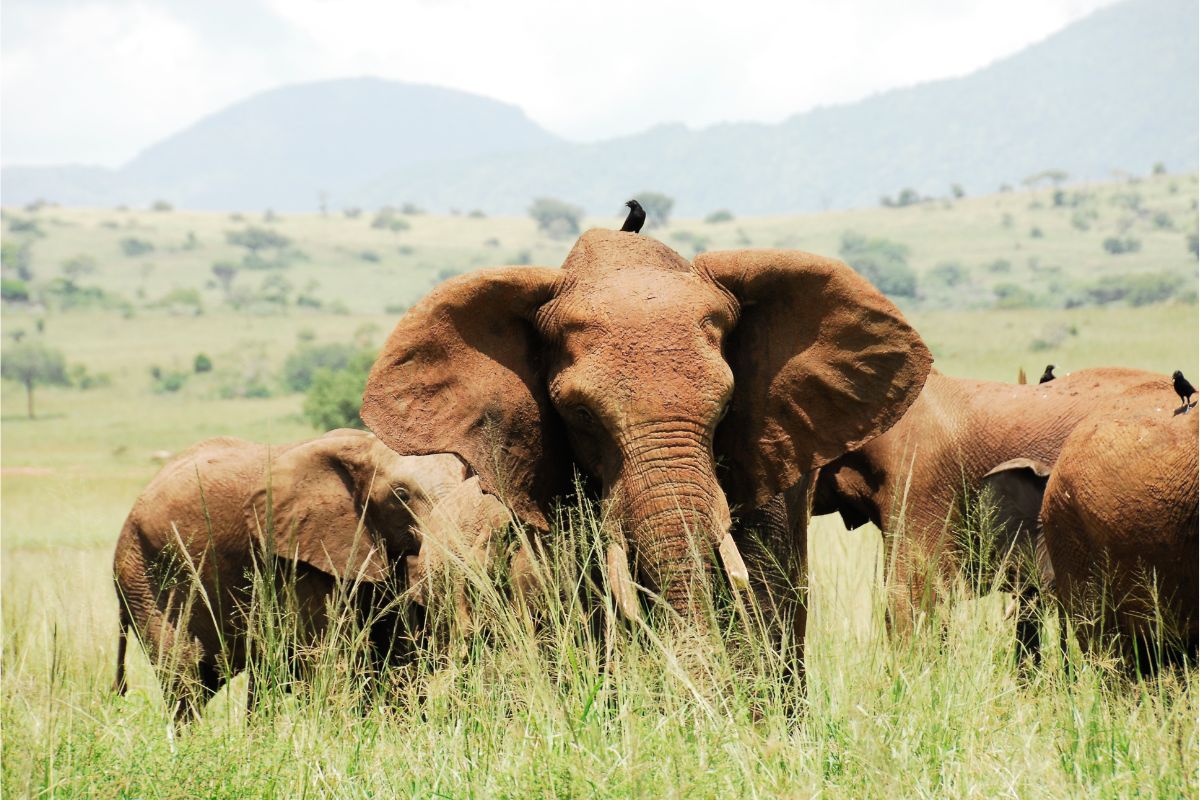
Embarking on a 3 Days Kidepo valley national park safari in Uganda from Gulu town takes you to one of Africa's most beautiful, unspoiled, and remote wilderness frontiers. Your expedition guarantees unforgettable wildlife encounters, stunning landscapes, and a rich cultural experience amidst towering mountains and sprawling savannah plains.
Tour highlights for 3 Days Kidepo valley national park safari in Uganda
Stunning mountain backdrops
Thrilling wildlife viewing
Massive buffalo herds
Rare cheetah tracking
Natural hot springs
Vibrant cultural encounters
Scenic wilderness drives
Beautiful African sunrises
Day by day 3 Days Kidepo valley national park safari in Uganda
Day 1: Departure from Gulu to Kidepo Valley National Park
Your journey for the 3 Days Kidepo valley national park safari in Uganda begins bright and early in Gulu town. Following a hearty breakfast, you will meet your professional driver-guide and set off on a scenic, adventurous drive through the rugged northern landscapes of the country. The 3- to 4-hour road trip passes through small towns, lush countryside, and vibrant communities, giving you a beautiful glimpse of rural life in northern Uganda. You will arrive at the park borders by mid-afternoon, where you will check into your booked lodge and enjoy a delicious lunch. Afterward, the adventure officially begins as you head out into the spectacular Narus Valley for a thrilling evening game drive. You will get the chance to spot massive herds of cape buffaloes, elephants, giraffes, and various antelopes before heading back to the lodge for a peaceful night's rest.
Day 2: Morning Wildlife Drives and Cultural Experiences
Rise before the sun for an early morning game drive, when the savannah is cool and predators are actively hunting. During this segment of your 3 Days Kidepo valley national park safari in Uganda, you will navigate the golden grasslands to track lions, leopards, and the incredibly rare cheetah. The journey will lead you toward the expansive Kidepo Valley near the South Sudan border, home to the Kanangorok Hot Springs and a unique ostrich farm. After an immersive morning of wildlife photography and bird watching, you will return to the lodge for a midday break and a hot lunch. In the afternoon, you will head to the nearby pastoralist Manyatta homesteads for an unforgettable Karamojong cultural encounter. Here, you will interact with local elders, learn about their nomadic cattle-keeping lifestyle, and perhaps even join in their famous traditional jumping dances.
Day 3: Final Game Drive and Return to Gulu Town
Your final morning of the 3 Days Kidepo valley national park safari in Uganda starts with an energizing sunrise breakfast with perfect views of the park's majestic mountain backdrop. You will then jump into your 4x4 safari vehicle for one last, comprehensive morning game drive through the sprawling plains. This is a fantastic opportunity to capture any missed wildlife moments, look for the park's endemic bird species, or take photographs of large groups of mammals gathering at the glittering streams. After this final immersion in the wilderness, you will exit the park and embark on the return journey back to Gulu town. You will have a stopover for lunch en-route, arriving back in the city in the late afternoon or early evening, which perfectly concludes your short, action-packed wilderness expedition
1. What is the standard travel itinerary for this 3-day safari?
The itinerary maximizes every minute of your short window. On Day 1, you depart Gulu early in the morning, traversing the changing northern landscape through Kitgum to arrive at Kidepo by mid-afternoon. You immediately jump into an introductory evening game drive in the Narus Valley to spot initial wildlife before catching a dramatic wilderness sunset.
Day 2 is the core of the experience, featuring an early morning game drive focused on active predators, followed by a mid-day rest. In the afternoon, you drive further north toward the South Sudan border to see the sand rivers and Kanangorok Hot Springs, wrapping up the day with a deeply authentic cultural interaction with the nearby Karamojong community.
Finally, Day 3 begins with one last brief sunrise game drive to catch any species you might have missed, after which you have breakfast, check out of your lodge, and embark on the 3-to-4-hour drive back to Gulu, arriving by mid-afternoon.
2. How long is the drive from Gulu to Kidepo, and what are the road conditions?
Choosing Gulu as your jumping-off point is a massive advantage. While travelers starting from Kampala face an exhausting 10-to-12-hour journey, the drive from Gulu Town to Kidepo Valley National Park is a highly manageable 3 to 4 hours covering roughly 220 to 250 kilometers.
The first leg of the trip takes you from Gulu to Kitgum along a smoothly paved, modern tarmac highway. Once you branch off past Kitgum toward the park's Lokumoit Gate, the terrain transitions into unpaved, gravel murram roads.
During the dry season, these roads are dusty but fast; however, during the rainy months, they can become deeply rutted, muddy, and slick. Seasonal rivers occasionally swell across low-lying bridges. Because of these variable wilderness conditions, utilizing a sturdy 4x4 safari vehicle with high ground clearance is absolutely essential to ensure you don’t get stuck en route.
3. What types of vehicles are best suited for this specific route?
A standard sedan or small two-wheel-drive vehicle will completely fail on this journey. The optimal choices are a customized 4x4 Safari Land Cruiser or a 4x4 Safari Van equipped with a pop-up roof. The permanent four-wheel-drive capability is mandatory for navigating the rugged, unpaved stretches between Kitgum and the park gates, especially when tackling steep tracks or slippery, muddy patches.
Furthermore, Kidepo’s game tracks can be rough, and a vehicle with excellent suspension drastically improves passenger comfort during long hours in the field. The pop-up roof feature is a game-changer for wildlife viewing. It allows you to stand safely inside the vehicle with an unobstructed, 360-degree panoramic view of the landscape, making it infinitely easier to spot hiding leopards, track distant lion prides, and capture crisp, steady photographs without glass or window frames blocking your shot.
4. What makes Kidepo Valley unique compared to other parks in Uganda?
Kidepo is frequently celebrated as Africa’s ultimate hidden wilderness because its isolation has kept it completely pristine and free from mass tourism mass crowds. Unlike the lush, green, forested parks of western Uganda that focus on primates, Kidepo offers an expansive, semi-arid, quintessential golden savanna ecosystem bounded by jagged, towering mountain ranges.
It boasts a sense of absolute solitude; you can drive for hours during your safari without encountering another vehicle, giving you an exclusive, intimate connection with nature. Furthermore, it holds incredible ecological significance, harboring over 28 mammal species that cannot be found anywhere else in Uganda. It is the only national park in the country where you can look out across the plains and view striking Rothschild giraffes feeding alongside herds of Burchell’s zebras in the exact same frame, creating a visual spectacle completely unique to this northern frontier.
5. Which exclusive wildlife species can only be found here?
If you are an avid wildlife enthusiast, this safari offers your only chance in Uganda to check off several rare, specialized carnivores and herbivores adapted to semi-arid environments. Kidepo is the exclusive home of the cheetah in Uganda, where the flat, open expanses allow this ultra-fast predator to hunt efficiently. It is also the only place in the country to see the caracal (a secretive, nocturnal lynx-like cat), the bat-eared fox, the hunting dog, and the striped hyena.
Among herbivores, you will encounter unique species like the Aardwolf, greater and lesser kudu, Chandre’s mountain reedbuck, and the tiny Guenther’s dik-dik. Even the birdlife features exclusive, massive species: Kidepo is the only destination in Uganda where wild Common Ostriches roam the plains naturally. Catching sight of these towering birds sprinting across the dry sand basins against a mountain backdrop is an unforgettable highlight of the trip.
6. What is the significance of the Narus Valley during game drives?
The Narus Valley is the undisputed beating heart of Kidepo’s wildlife viewing, and it is where you will spend the majority of your time on Day 1 and Day 2. Because Kidepo experiences a highly pronounced dry season, the Narus River is incredibly vital as the only permanent source of water across the entire park ecosystem. Consequently, animals are drawn out of the surrounding mountains and dry valleys, creating a massive, dense concentration of wildlife within this single basin.
The valley is globally famous for hosting the largest single herds of Cape buffaloes on Earth, sometimes numbering well over several thousand individuals moving as a giant, dusty wall of black. This endless buffet of prey naturally attracts dense populations of predators, making the Narus Valley the premier spot on your safari to witness lions lounging on prominent rocky kopjes (granite outcrops) and leopards patiently scanning the plains from the branches of sausage trees.
7. What will you experience at the Kidepo River and Kanangorok Hot Springs?
Driving north from the Narus Valley on Day 2 takes you into a completely different ecological zone defined by the Kidepo River jacketed by Borassus palm forests. For most of the year, the Kidepo River is not a flowing body of water at all, but rather a spectacular, wide sand river. Walking or driving across this glittering white sand bed feels like exploring an oasis in the middle of a desert landscape.
Continuing further north across the valley floor brings you directly to the Kanangorok Hot Springs, situated right on the volatile border of South Sudan. These natural, bubbling springs reach temperatures hot enough to boil an egg. Beyond the geological marvel of the thermal waters, this remote northern sector provides an incredible sense of frontier exploration, flanked by the dramatic, misty outline of the Lotukei Mountains looming just across the international border.
8. What does the cultural encounter with the Karamojong entail?
A 3-day safari out of Gulu isn't just about animals; it offers a profound window into one of Africa's most resilient cultural groups. On the afternoon of Day 2, you will visit a traditional Karamojong village, known locally as a Manyatta. A Manyatta is an intricate, defensive homestead constructed out of tightly woven thorn bushes, mud, and thatch, designed to protect families and livestock.
The Karamojong are traditional, proud pastoralists whose entire way of life, historical wealth, and folklore center deeply around their cattle. During your visit, community members welcome you into their homes to explain their intricate social structures, traditional body scarification practices, and daily survival strategies in a harsh climate. The experience culminates in a high-energy performance of their traditional jumping dance, accompanied by rich, polyphonic chanting, leaving you with a deep appreciation for their preserved heritage.
9. Who are the Ik people, and can they be visited on a 3-day trip?
The Ik are a highly isolated, fascinating indigenous ethnic group of hunter-gatherers who live in absolute seclusion at the very top of the rugged Mount Morungole. They are one of the most marginalized and culturally unique tribes in East Africa, having retreated high into the mountains to escape the fierce cattle raids of the surrounding plains tribes.
While visiting the Ik is an incredibly rewarding experience, it requires a strenuous, all-day mountain hike that takes between 6 to 8 hours of continuous trekking. Because a standard 3-day itinerary from Gulu only grants you one single full day inside the park (Day 2), a visit to the Ik is generally not feasible within this short timeframe. Attempting to squeeze it in would mean completely sacrificing your core game drives and hot springs visits. To meaningfully visit the Ik, you would need to extend your safari to at least a 4 or 5-day package.
10. What are the accommodation options inside and around the park?
Despite its extreme isolation, Kidepo caters beautifully to all budgets, and your choice determines your nightly basecamp. For luxury travelers, Apoka Safari Lodge sits squarely in the center of the Narus Valley, built into the natural rocky landscape with high-end canvas cottages and outdoor stone bathtubs overlooking wildlife watering holes.
For excellent mid-range comfort, options like Kidepo Savannah Lodge or Nga’Moru Wilderness Camp sit just outside the park boundaries. They offer elevated safari tents with comfortable beds and en-suite bathrooms, providing stunning panoramic views of the vast plains stretching toward the horizon.
Budget-conscious travelers can stay directly at the Apoka Rest Camp (UWA Bandas), operated by the Uganda Wildlife Authority. These are basic, clean, traditional African huts with shared bathroom facilities, offering an authentic, no-frills experience where animals frequently wander right past your front door at night.
11. When is the best time of year to undertake this Gulu-based safari?
Kidepo can be visited year-round, but the experience shifts dramatically between seasons. The absolute best time for a 3-day trip is during the dry season months of September to March. During this window, vegetation dries out completely, turning the tall grasses into short, golden stubble that makes spotting camouflaged leopards and distant lions remarkably easy. Water becomes scarce, forcing wildlife to stay permanently packed into the Narus Valley, guaranteeing spectacular game drives.
The wet season (April to August) brings lush, vibrant green scenery and dramatic, crisp air perfect for landscape photography. However, wildlife disperses widely into the mountains because water is available everywhere, and the tall savanna grasses can make animals harder to find. Furthermore, the unpaved roads can become slick and challenging, meaning your driver will need to navigate carefully.
12. What are the key park entry fees and regulatory costs?
Planning the financial logistics of your safari requires tracking standard Uganda Wildlife Authority (UWA) tariffs, which are typically bundled into your tour package. As of current regulations, individual park entrance fees are charged per 24-hour period spent inside the gates. For foreign non-residents, the fee sits at $40 USD per day, foreign residents pay $30 USD, while East African Community (EAC) citizens pay 25,000 Uganda Shillings daily.
Additionally, your tour operator must pay a vehicle entry fee depending on the registration type and weight of the 4x4 safari truck. Standard game drives are included in the basic entry, but if you opt for specific specialized experiences—such as hiring an armed UWA park ranger guide for custom tracking, embarking on a guided night game drive using spotlamps, or taking a walking safari—separate nominal fees apply per activity, which must be cleared at the Apoka visitor center before heading out into the bush.
13. What should you pack specifically for this northern wilderness environment?
Kidepo’s semi-arid, equatorial climate demands deliberate, practical packing. Because daytime temperatures routinely soar past 32°C (90°F), you need lightweight, breathable clothing in neutral earth tones like khaki, tan, and olive green; avoid bright colors which startle wildlife, and avoid blue or black, which actively attract biting tsetse flies. Bring a wide-brimmed sun hat, high-SPF sunscreen, and quality sunglasses to combat the intense northern sun.
Pack sturdy, closed-toe walking shoes or hiking boots for community visits and optional nature walks. Even though it is blistering hot by day, temperatures drop significantly in the wilderness at night, so a light fleece or windbreaker jacket is necessary for early morning open-roof game drives. Finally, do not forget a high-quality pair of binoculars to spot distant raptors and predators, a camera with a good telephoto lens, and heavy-duty insect repellent containing DEET.
14. Is it safe to travel along the Gulu-Kitgum-Kidepo route?
Historically, the Karamoja sub-region faced challenges with tribal cattle rustling, but today, Kidepo and the entire route from Gulu are incredibly safe and fully secure for international and domestic tourists alike. The Ugandan government, in close coordination with the Uganda Wildlife Authority (UWA) and the national army, has established a permanent, highly effective security presence throughout the region.
The roads connecting Gulu, Kitgum, and Kaabong are continuously monitored, ensuring peaceful transit for safari vehicles. Once inside Kidepo Valley National Park, safety protocols remain exceptionally strict. Every single game drive into remote sectors and every community walk is accompanied by highly trained, armed UWA park rangers whose primary directive is to ensure guest safety while managing proximity to wild animals. You can embark on this northern adventure with total peace of mind.
15. What are the main benefits of starting this safari from Gulu Town instead of Kampala?
The primary benefit of launching your safari directly from Gulu City is the drastic reduction in total travel time and physical fatigue. Squeezing a Kidepo safari into 3 days from Kampala is practically impossible by road; you would spend two full days doing nothing but driving 12 hours each way, leaving you completely exhausted with zero time to actually enjoy the park.
By starting in Gulu, your drive is cut down to a fast, breezy 3 to 4 hours. This means on Day 1, instead of arriving after dark, you roll into the park fresh and energized in time for a full afternoon game drive. It also saves you substantial money on vehicle fuel and driver fatigue. Additionally, Gulu serves as an excellent urban hub where you can easily stock up on specialized supplies, snacks, and cash from international ATMs before plunging into the remote Karamoja wilderness.
16. How does this short safari support local conservation and northern communities?
Every single booking for a 3-day Kidepo safari radiating out from Gulu plays a direct, measurable role in protecting this fragile wilderness and uplifting northern Uganda's economy. A mandatory 20% of all park entry fees collected by the Uganda Wildlife Authority is directly redistributed to the local communities living along the park borders. This money funds critical infrastructure projects, including building local health clinics, drilling clean water boreholes, and constructing primary schools.
Furthermore, hiring a Gulu-based tour operator, staying at nearby eco-lodges, and paying for community entry into the Karamojong Manyattas provides direct, sustainable employment for local guides, drivers, rangers, and artisans. When local communities see that living alongside a protected park brings tangible financial benefits and global appreciation for their culture, they become the first line of defense against illegal poaching, ensuring Kidepo remains wild for generations to come.
Booking 3 Days Kidepo valley national park with us Roads of Adventure safaris
Booking a 3-day Kidepo Valley National Park safari with Roads of Adventure Safaris takes you off the beaten track to one of Africa's most pristine wildernesses. You can choose between a rapid fly-in package or a scenic, all-inclusive 4x4 road trip
