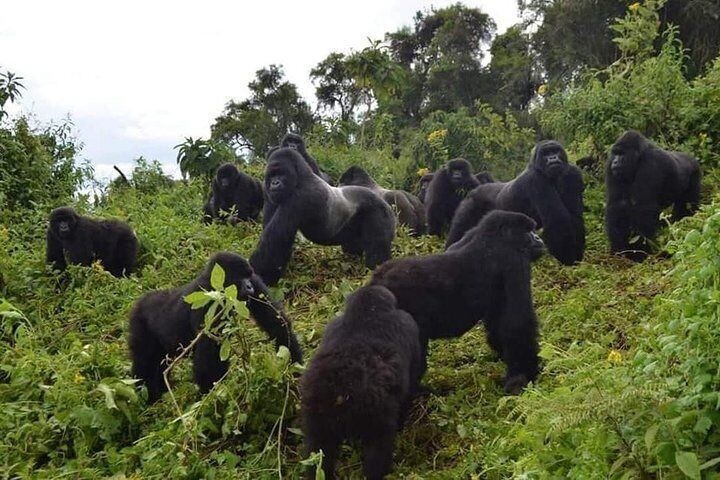
The 3-day Bwindi gorilla trek via Kigali is an ultimate, highly efficient adventure. It replaces the grueling 10-hour drive from Entebbe with a scenic 4 to 5-hour cross-border journey from Rwanda. It provides direct access to the great apes while saving significantly on the permit cost compared to trekking in Rwanda.
Tour highlights 3 Days Bwindi gorilla trekking tour via Kigali
Scenic drive through Rwanda
Border crossing into Uganda
Ancient misty rainforest hike
Expert guided wildlife tracking
Majestic mountain gorilla encounter
Unforgettable one hour interaction
Beautiful African landscape views
Day by Day 3 Days Bwindi gorilla trekking tour via Kigali
Day 1: Arrival & Transfer to Bwindi
Arrive at Kigali International Airport (KGL). Your driver/guide will pick you up for a scenic, 4 to 5-hour drive across the rolling hills of Rwanda and into the lush landscapes of southwestern Uganda. You’ll cross the border (ensure your East Africa Visa is arranged) and check into your chosen lodge in Bwindi.
Day 2: The Gorilla Trek
After an early morning breakfast, you'll head to the park headquarters for a mandatory pre-trek briefing. You will be assigned a specialized local guide and track into the misty, ancient rainforest. The hike takes anywhere from 30 minutes to 8 hours depending on the gorilla family’s location. Once located, you will spend exactly one unforgettable hour watching the gorillas play, feed, and interact.
Day 3: Departure
After a hearty breakfast at your lodge, you'll pack up and make the return journey to Kigali International Airport or your hotel in Rwanda to catch your departing flight.
1. Why start a Bwindi gorilla trek in Kigali instead of Kampala?
Starting a Bwindi gorilla trek from Kigali, Rwanda, is widely considered the superior logistical choice for international travelers aiming for efficiency and comfort. The primary driver of this preference is the drastically reduced travel time. When flying into Entebbe International Airport (near Kampala), trekkers face an arduous 8- to 9-hour drive across challenging Ugandan terrain to reach the Bwindi Impenetrable Forest. This journey is often exhausting and consumes a significant portion of a short 3-day itinerary.
Conversely, Kigali International Airport offers a much more accessible gateway. By landing in Rwanda, the transit time to the southern sectors of Bwindi—such as Rushaga or Nkuringo—is reduced to a manageable 4- to 5-hour drive. This route includes a scenic crossing of the border, allowing travelers to reach their destination with enough energy remaining to prepare for the trek the following morning.
Beyond the time savings, the road quality and the overall experience of the Kigali route are often smoother. Travelers can arrive in Rwanda, enjoy a comfortable evening, and cross into Uganda well-rested. This approach maximizes the limited time available on a 3-day safari, ensuring that the focus remains on the primary objective: the gorillas. By choosing the Kigali starting point, you effectively eliminate nearly half a day of tedious transit, allowing for a more relaxed, enjoyable, and less stressful experience in the heart of East Africa.
2. Do I need a visa for both Rwanda and Uganda?
Navigating border crossings for a multi-country gorilla safari can seem daunting, but it is streamlined by the availability of the East Africa Tourist Visa. Because your journey begins in Rwanda and takes you into Uganda, you are effectively entering two distinct sovereign nations, each with its own immigration requirements.
To legally enter both countries, you have two primary options. You can apply for individual visas for both Rwanda and Uganda separately, or you can opt for the single East Africa Tourist Visa. The latter is strongly recommended for most travelers. This special visa costs approximately USD $100 and is designed specifically for tourists visiting Rwanda, Uganda, and Kenya. It allows for multiple entries across these borders during its validity period, which is typically 90 days.
Applying for the East Africa Tourist Visa is generally done online through the official immigration portals of the country where you first arrive. It is essential to ensure your passport is valid for at least six months beyond your date of entry and contains enough blank pages for stamps. By obtaining this single document before you travel, you save the time and potential confusion of managing multiple visa applications at the border. It acts as a "golden ticket," facilitating a seamless transition between your arrival in Kigali and your trek in Bwindi. Always verify the current application procedures on official government websites shortly before your departure, as policies can shift, though the East Africa Tourist Visa remains the most reliable and convenient solution for this specific itinerary.
3. What is included in the cost of a 3-day tour?
A standard 3-day gorilla trekking package is designed to provide a comprehensive, stress-free experience, handling the complex logistics of cross-border travel and park regulations. While specific inclusions can vary by tour operator, most reputable agencies structure their packages to cover the essential components of your trip.
The most significant portion of your tour cost typically covers the Uganda Gorilla Tracking Permit. These permits are in high demand and are strictly regulated by the Uganda Wildlife Authority (UWA). By booking a package, the operator assumes the responsibility of securing this permit, which is a critical step in finalizing your travel dates.
In addition to the permit, the tour includes all ground transportation. This involves a private 4x4 safari vehicle—essential for navigating the sometimes muddy and rugged roads of the Bwindi region—and an experienced English-speaking driver/guide who is familiar with the local routes and border procedures. Accommodation for the two nights is also standard, ranging from comfortable mid-range lodges to high-end luxury tented camps, depending on your chosen tier of service. These accommodations usually include all meals, starting from your first night through to your final breakfast.
Furthermore, packages typically include border-crossing assistance. Your guide will often facilitate the immigration process at the Cyanika or Katuna border posts, ensuring you have the necessary documentation. Please note that while the package is extensive, it almost universally excludes international flights, personal travel insurance, visa fees (unless specified), tips for rangers and porters, and personal expenses like laundry or alcoholic beverages. It is always wise to review your specific booking confirmation to confirm exactly what is covered, ensuring no surprises arise during your adventure.
4. How much does a Uganda gorilla permit cost?
The cost of a gorilla trekking permit is a major factor in planning an East African safari, and understanding the pricing structure is essential for budgeting. For foreign non-residents, the price for a single gorilla trekking permit in Uganda is currently USD $800. This fee is paid directly to the Uganda Wildlife Authority (UWA) and serves as the primary funding mechanism for the conservation efforts, community development projects, and anti-poaching patrols that protect these critically endangered mountain gorillas.
When compared to its neighbor, Rwanda, Uganda offers a significant financial advantage. Rwanda, which has positioned its tourism industry toward a more exclusive, high-end market, charges USD $1,500 for a single trekking permit. By choosing to trek in Uganda, travelers can save USD $700 per person on the permit alone, which can be reallocated toward better accommodation, extended stay durations, or additional cultural experiences.
It is important to remember that the permit price covers more than just the opportunity to see the gorillas. It includes the services of a professional ranger guide, park entry fees for the day of the trek, and a contribution toward the protection of the gorilla habitat. Because these permits are limited—with only eight visitors allowed per habituated gorilla family each day—the price reflects the scarcity and the high value of the experience. It is a non-refundable investment in one of the most unique wildlife encounters on the planet. Always ensure your tour operator provides you with the official UWA permit confirmation number once you have paid your deposit, as this is your guaranteed ticket for the trek.
5. How far in advance should I book my gorilla permit?
Securing a gorilla trekking permit is the single most important step in planning your trip, and it must be approached with a "book early" mentality. Because the mountain gorilla population is protected and closely monitored, the Uganda Wildlife Authority (UWA) strictly limits the number of trekkers to ensure that human interaction does not disrupt the daily lives or health of the gorilla families. Only eight permits are issued per habituated family each day.
Given this extreme scarcity, it is highly recommended to book your permit at least 3 to 6 months in advance. If you are planning to travel during the peak seasons—which coincide with the drier months of June to August and December to February—the competition for these limited slots is intense. During these times, permits can sell out nearly a year in advance. Booking early does not just guarantee your participation; it also provides your tour operator with the necessary lead time to secure your preferred accommodation, which is often tied to the specific gorilla sector (Buhoma, Rushaga, Ruhija, or Nkuringo) where your permit is allocated.
If you wait too long, you risk having to change your entire travel schedule, choose less desirable dates, or even cancel your trip due to the lack of availability. Some travelers may find last-minute cancellations, but relying on this is incredibly risky and not recommended for an international trip. When you work with a tour operator, they will track availability in real-time. Once you decide on your travel window, provide your deposit immediately so the operator can secure the permit in your name. Proactive planning is the key to ensuring you don't miss out on this once-in-a-lifetime wildlife encounter.
6. How long is the actual gorilla trek?
The duration of a gorilla trek is one of the most unpredictable—and rewarding—aspects of the entire safari experience. There is no set time frame because the gorillas are wild animals that move through the dense, sprawling Bwindi Impenetrable Forest in search of food and nesting sites. The trek can be as short as 30 minutes if a family happens to be nesting near the forest edge, or it can last up to 8 hours if the trackers have to navigate deep, steep, and challenging terrain to locate them.
Typically, most treks average between 2 to 5 hours of hiking. Your day begins with a mandatory briefing at the park headquarters at 7:00 AM, where you are assigned to a specific group and a ranger team. The trackers usually head out ahead of the group to locate the gorillas based on their last known position from the previous night. Once the gorillas are spotted, the rangers communicate their location via radio, and you and your guide begin the final approach.
The reward for all your effort is the "one hour" rule. Once you finally make contact with the gorilla family, you are allowed exactly one hour to observe them. This time restriction is strictly enforced to minimize human disturbance. During this hour, you can watch them feed, groom, play, and interact within their social structure. While the anticipation of the hike is part of the adventure, the fleeting, magical hour spent in the presence of these gentle giants is the absolute highlight of the trip. Whether the trek takes thirty minutes or half a day, the experience of being just feet away from a silverback in his natural habitat is widely considered one of the most profound wildlife encounters on Earth.
7. How difficult is the hike?
The term "Bwindi Impenetrable Forest" is quite literal, and potential trekkers should be prepared for a physically demanding experience. The forest is characterized by rugged, steep, and often uneven terrain that can test even seasoned hikers. Unlike a manicured nature trail, these treks involve navigating through thick undergrowth, navigating muddy paths after rainfall, and climbing up and down the steep ridges of the valley.
The difficulty of the hike is significantly influenced by the location of the gorilla family on the day of your trek. Some families live in higher altitudes, while others stay closer to the park boundaries. If you are assigned a "hard" trek, you will face more challenging elevation gains and potentially longer walking distances. Factors like humidity, temperature, and your personal fitness level also play a significant role.
While you do not need to be an Olympic athlete to complete the trek, a moderate level of fitness is highly recommended. It is advisable to engage in some cardiovascular training—like walking on an incline—in the weeks leading up to your trip. If you feel nervous about the terrain, remember that the experience is paced according to the slowest member of the group, and your rangers are expert at finding the most accessible routes. They will often pause for breaks and assist you through particularly difficult patches. Being physically prepared will allow you to focus on the beauty of the forest and the excitement of the search rather than focusing solely on your exhaustion. By setting realistic expectations and preparing accordingly, you can turn a challenging hike into a rewarding and memorable accomplishment.
8. Is there an age limit for gorilla trekking?
Yes, there is a strict age limit for gorilla trekking in both Uganda and Rwanda, and this policy is non-negotiable. To participate in a trek, you must be at least 15 years old. This regulation is established by the wildlife authorities of both nations to ensure both the safety of the children and the health of the gorilla population.
There are several scientific and practical reasons for this age restriction. First, the hike itself can be extremely demanding. Bwindi Impenetrable Forest involves navigating steep, slippery, and uneven terrain that can be physically overwhelming for younger children. The forest is vast, and if a trek takes several hours in hot, humid conditions, a child may not have the stamina to complete the hike safely.
Second, the health of the gorillas is paramount. Mountain gorillas are highly susceptible to human-borne illnesses, and children are often more prone to common colds, coughs, or viral infections that could be catastrophic if transmitted to a primate population. A younger child might also struggle to maintain the mandatory behavioral protocols, such as remaining quiet and keeping a safe distance, which are vital for the safety of the group.
The age limit is strictly enforced, and you will be required to provide proof of age via your passport during the booking process or at the park headquarters before the trek. While this might be disappointing for families traveling with younger children, it is a necessary measure to protect the gorillas and ensure a controlled environment for the trekkers. If you are traveling with children under 15, many lodges offer kid-friendly activities, such as shorter nature walks or educational programs with the Batwa community, allowing the rest of the family to enjoy their trek while the children are kept engaged and safe.
9. What if I am not fit enough or have mobility issues?
It is a common concern among travelers that they may not be physically capable of trekking deep into the Bwindi Impenetrable Forest, but the park authorities have implemented several systems to ensure that almost everyone can witness the gorillas. If you have mobility issues or are concerned about your fitness, you do not have to give up on your dream of seeing the mountain gorillas.
One of the most valuable resources at your disposal is the local porter service. At the park headquarters, you can hire a professional porter for a small fee. These local individuals are incredibly strong, experienced, and familiar with every inch of the forest. They can carry your heavy camera equipment and backpack, and more importantly, they are skilled at providing a helping hand or stabilizing you during difficult, muddy climbs. Hiring a porter is not only a massive help to you but also a vital source of income for the local community, creating a positive impact through your visit.
For those with more severe mobility limitations, the park can arrange for a "sedan chair." This is a custom-built, lightweight seat carried by a dedicated team of porters. This service requires advance communication with your tour operator, as it involves organizing a larger support team. While it is a significant extra cost, it is a life-changing service that makes the trek accessible to those who might otherwise be unable to navigate the forest floor. Regardless of your physical condition, inform your tour operator well in advance so they can assign you a gorilla family that is known to be in a more accessible area. With the right support, you can successfully reach the gorillas.
10. How close can I get to the gorillas?
Observing mountain gorillas in the wild is a privilege, and the primary rule governing this interaction is the maintenance of a mandatory distance of at least 7 meters (approximately 23 feet). This rule is strictly enforced by the ranger guides who accompany every trekking party. This distance is not arbitrary; it is rooted in the fundamental need to protect the gorillas from human diseases.
Gorillas share roughly 98% of their DNA with humans, which makes them incredibly vulnerable to our common illnesses. A simple cold or respiratory infection that would be a minor inconvenience for a human can be life-threatening to a mountain gorilla. Because they live in a forest environment with limited access to modern medical intervention, a viral outbreak within a group could be devastating to their conservation.
Maintaining this distance also serves a behavioral purpose. It ensures that the gorillas feel comfortable and unthreatened by human presence, allowing them to carry on with their natural behaviors—such as feeding, grooming, and playing—without feeling the need to retreat or display defensive aggression. While there are occasions where a curious juvenile gorilla might approach closer than 7 meters, you are instructed to slowly back away to maintain the buffer. Do not attempt to touch or feed the gorillas under any circumstances. By respecting this distance, you are acting as an active partner in the conservation effort. Following these guidelines ensures that these magnificent animals can continue to thrive in their natural habitat, and it allows for a more ethical and respectful wildlife experience that you can look back on with pride.
11. Are mountain gorillas dangerous?
Mountain gorillas are widely misunderstood as aggressive beasts, when in reality, they are remarkably calm, gentle, and peaceful creatures. They are highly social animals that spend the majority of their day focused on foraging and maintaining the social bonds within their group. Attacks on humans are exceedingly rare, and they generally only occur if the gorillas feel their family is under direct threat.
To ensure your safety, every trek is accompanied by highly trained, armed rangers. These rangers are experts in gorilla behavior and are present not only for your protection against wildlife but also to manage the interactions. Before you enter the forest, your group will receive a comprehensive briefing on how to behave in the presence of the gorillas. You will be taught how to stay calm, avoid sudden movements, and move away slowly if a gorilla moves toward you. The most important lesson is to never look directly into a dominant silverback’s eyes for a prolonged period, as this can be interpreted as a challenge.
The rangers also monitor the group's body language constantly. They can tell when a gorilla is becoming agitated long before the average tourist might notice. If they observe signs of stress, they will signal for the group to retreat. Because you are visiting habituated gorilla families—groups that have undergone a long process to become accustomed to human presence—the gorillas are generally unfazed by your existence and will simply continue their daily routines. By following the instructions of your guides and maintaining a respectful distance, you will find that trekking to see the gorillas is a safe and deeply moving experience. The animals are far more interested in bamboo shoots and celery than they are in you.
12. Can I use a flashlight or flash photography?
Flash photography is strictly prohibited during your encounter with the gorillas. This rule is absolute and is emphasized multiple times during your pre-trek briefing. The primary reason is that a sudden, bright flash of light can startle or even threaten the gorillas. While they are habituated to human presence, they are still wild animals, and a bright light can cause them to become aggressive or defensive.
A defensive reaction from a dominant silverback, even if not meant to cause direct harm, can be terrifying and disruptive to the group. Furthermore, flash photography interferes with the natural atmosphere of the forest. The goal of the trek is to observe the animals in their natural state, and the use of artificial lights disrupts their behavior and ruins the experience for other trekkers.
You are encouraged to bring a camera, but it must be one that allows you to disable the flash. Modern digital cameras with high ISO capabilities perform well in the lower light levels of the forest canopy. If you are a photography enthusiast, it is recommended to practice shooting in low-light conditions before your trip to understand how to adjust your settings for the best results without needing a flash. If you have any doubt about whether your camera’s flash is fully disabled, ask your guide for help before you begin the trek. By adhering to this rule, you contribute to the safety of the group and help ensure the experience remains calm and respectful for the gorillas. Remember: patience is your best tool for getting the perfect shot, not your flash.
13. What happens if I have a cold or the flu?
If you arrive at the park headquarters with a cold, the flu, or any other infectious respiratory illness, you will be denied the opportunity to trek with the gorillas. This policy is non-negotiable and is strictly enforced by the park authorities. While this may feel devastating if you have traveled halfway across the world, it is the most critical rule for the survival of the mountain gorilla species.
Because humans and mountain gorillas share nearly 98% of their genetic makeup, we share many of the same biological vulnerabilities. Our common cold, influenza, or even COVID-19 can be fatal to gorillas. They have no natural immunity to many of the viruses that circulate in human populations, and a single infected trekker could inadvertently cause an outbreak that wipes out an entire group.
When you arrive at the park, you will be asked to fill out a health declaration form, and the rangers will monitor you for signs of illness. If you are visibly coughing, sneezing, or have a runny nose, you will be asked to stay behind. Some operators may offer you the chance to reschedule your trek for a later date if your health improves, but this depends on permit availability and your travel itinerary. Because of the high risk involved, it is often better to err on the side of caution. If you feel even slightly unwell, inform your tour operator or guide immediately. Do not attempt to hide symptoms or take medication to mask them. Your integrity in this moment is the best way to prove that you are a responsible tourist who values the long-term conservation of these endangered primates over your own personal adventure.
14. What should I pack and wear for the trek?
Packing correctly for a gorilla trek is the difference between a miserable hike and a comfortable, successful adventure. The Bwindi environment is a high-altitude rainforest, meaning the conditions can be cool, wet, and filled with stinging plants and insects. Your clothing should be functional and designed for protection.
Start with your base layers. Long-sleeved shirts and long trousers are essential to protect your skin from sharp thorns, stinging nettles, and insects. Choose quick-drying, moisture-wicking fabrics rather than cotton, as the humidity will make you sweat and it is often misty or raining. A good, lightweight rain jacket is absolutely non-negotiable, even if the forecast looks clear; rainforest weather is notorious for sudden downpours.
For your feet, you need sturdy, waterproof hiking boots with excellent ankle support. The trails are steep, muddy, and uneven, and you will be trekking through thick forest, not on manicured paths. High-quality socks are also important to prevent blisters. Many experienced trekkers also recommend gardening gloves. They sound strange, but they are incredibly useful for gripping branches or pulling yourself up steep sections of the trail without worrying about thorns.
Finally, do not forget the "essentials" bag: insect repellent, high-SPF sunscreen, a hat, and a small daypack for your water and packed lunch. Since the trek can last several hours, ensure you bring at least two liters of water to stay hydrated. A camera with extra batteries and a waterproof bag for your electronics will also prove invaluable. By dressing like a serious hiker, you ensure that your focus remains on the breathtaking beauty of the forest and the animals, rather than on a wet shirt or a nasty blister.
15. Where do I stay during the 3 days?
Your accommodation choice for a 3-day gorilla trek is primarily dictated by the specific "sector" of Bwindi where your trekking permit is assigned. Bwindi Impenetrable Forest is vast, and the park is divided into four distinct regions: Buhoma, Rushaga, Ruhija, and Nkuringo. Because the drive between these sectors can take several hours, it is vital to stay in an lodge that is close to your specific park entry point.
Options in these regions range from simple, budget-friendly bandas to ultra-luxury tented camps. In the Rushaga sector, for example, you might choose the popular Rushaga Gorilla Camp, which offers various levels of comfort, or you might look for high-end experiences like the Clouds Mountain Gorilla Lodge in the Nkuringo sector. Luxury lodges in these areas are often stunning, featuring private decks with panoramic views of the forest canopy, gourmet dining, and personalized service that allows you to relax completely after a long day of hiking.
Budget and mid-range options are also excellent, providing clean, comfortable, and authentic experiences. These lodges are often locally owned and offer a more rustic feel, with cozy communal areas where you can swap stories with other trekkers. Your tour operator will typically handle the booking based on your budget, but they must align the lodge with your permit location. Always confirm which sector your permit is for before finalizing your accommodation. Staying near the park entry point is key; it ensures you can reach the briefing area by 7:00 AM without having to wake up in the middle of the night. Whether you choose a luxury suite or a comfortable tent, the best lodges in Bwindi all prioritize a connection to the surrounding nature, letting you fall asleep to the sounds of the African forest.
16. What else can I do on a 3-day tour?
While the gorilla trek is the undisputed highlight of your 3-day tour, the journey provides several unique opportunities to deepen your understanding of East Africa’s history and culture. Since your itinerary begins with a drive from Kigali, many travelers choose to spend their first morning visiting the Kigali Genocide Memorial. It is a profoundly moving, respectful, and necessary stop that provides essential context for Rwanda's modern history, its recovery, and the resilience of its people. It serves as a somber contrast to the natural beauty you will see later, making the entire trip feel much more balanced and meaningful.
Once you cross into Uganda and complete your gorilla trek, there is still more to experience. Many visitors opt to visit the Batwa pygmies for a cultural community walk. The Batwa were the original inhabitants of the Bwindi forest before it was designated as a national park. They have a fascinating history as forest-dwellers and hunter-gatherers, and spending time with them is a powerful way to learn about their ancestral connection to the landscape. During these walks, you might learn about traditional medicinal plants, hunting techniques, and their music and dance.
If time permits, you might also find opportunities for bird watching or a gentle nature walk near your lodge to spot smaller primates like monkeys. These extra activities help turn a simple "trekking tour" into a more immersive experience. They allow you to connect with the local communities and gain a wider appreciation for the region beyond just the gorillas. When booking your tour, ask your operator what community activities are available in the sector where you will be staying. Engaging with the people and history of the region is the best way to make your 3-day safari a truly well-rounded, unforgettable adventure.
Booking 3 Days Bwindi gorilla trekking tour via Kigali with us Roads of Adventure safaris
Book a 3-day Bwindi gorilla tour via Kigali with Roads of Adventure Safaris for a highly efficient, shorter alternative to landing in Entebbe. The 3 to 4-hour scenic drive from Kigali to Bwindi Impenetrable National Park saves over 8 hours of road travel compared to driving from Kampala
