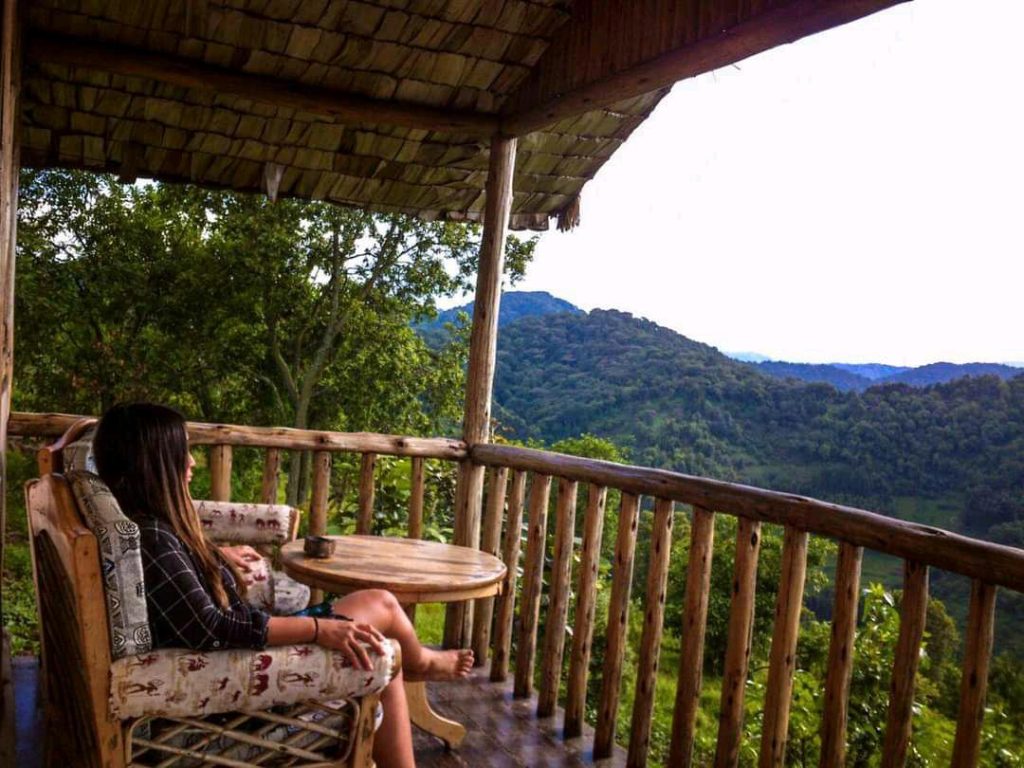
Experience a breathtaking wildlife encounter with a 3 Days Budget gorilla trekking safari in Bwindi Impenetrable National Park. Departing from Kampala or Entebbe, your journey takes you through lush hills to the misty jungle. Sleep at cozy budget properties like Gorilla Mist Camp and come face-to-face with endangered gorillas
Tour highlights for 3 Days Budget gorilla trekking safari
Scenic equator stop
Beautiful terraced hills
Misty jungle drive
Expert ranger briefing
Thrilling jungle trek
Mountain gorilla encounter
Primate watching hour
Official tracking certificate
Day by day 3 Days Budget gorilla trekking safari
Day 1: Entebbe/Kampala to Bwindi Forest
Your journey for a 3 Days Budget gorilla trekking safari begins with an early morning pickup from your accommodation in Kampala or Entebbe. You will board a comfortable 4x4 safari vehicle and travel southwest towards the picturesque town of Mbarara. En route, you will stop at the Uganda Equator for iconic photo opportunities and a fascinating water experiment. After a delicious lunch, you will wind through the stunning, terraced hillsides of Kigezi, often referred to as the "Switzerland of Africa." As you enter the verdant surroundings of Bwindi Impenetrable National Park, the anticipation builds. You will arrive at your destination in the late afternoon, checking into your accommodation. Gorilla Mist Camp provides comfortable, scenic lodging perfectly suited for nature lovers. You can unwind on your private veranda, enjoy a hearty dinner, and rest up for the exciting primate adventure ahead.
Day 2: Gorilla Trekking Adventure Day
On the second day of your 3 Days Budget gorilla trekking safari, wake up early to the sounds of the African wilderness. After a warm breakfast and packing your drinking water and a lunch box, head to the park headquarters for a crucial briefing by the local ranger guides. You will then be assigned to a habituated gorilla family and venture into the dense tropical rainforest. Trekking can take anywhere from 2-7 hours depending on the location of the apes. Hiking through the tangled vines and steep terrain is a physical adventure. Once you locate the magnificent mountain gorillas, the effort instantly fades. You will spend one magical hour watching them feed, play, and interact in their natural habitat. Afterward, you will trek back to the starting point to receive your tracking certificate and return to your lodge for a well-deserved rest.
Day 3: Return to Kampala/Entebbe
Day three marks the conclusion of your 3 Days Budget gorilla trekking safari. You will enjoy a relaxed breakfast at Gorilla Mist Camp before bidding farewell to the misty forest. The return journey to Kampala or Entebbe includes a scenic drive through rolling tea plantations and rural Ugandan villages. You will make another stop for lunch in Mbarara and have the opportunity to purchase local crafts and souvenirs at the equator line. Reflect on the incredible wildlife encounters as your driver transports you directly to your hotel or the airport, marking the end of a truly unforgettable and affordable adventure in the Pearl of Africa
1. What is the day-by-day itinerary for a 3-day budget gorilla safari?
A classic 3-day itinerary balances long-distance travel with an intense, rewarding trekking experience. Day 1 starts very early—typically by 6:30 AM—with a pickup from Kampala or Entebbe. You drive southwest across Uganda, crossing the Equator for photos and stopping in Mbarara for a quick lunch. The journey continues through the rolling hills of Kabale before climbing the steep dirt roads into Bwindi’s high-altitude Ruhija sector, arriving at Gorilla Mist Lodge by late evening for dinner. Day 2 is gorilla trekking day. Following a 5:00 AM breakfast, you transfer down to the nearby park headquarters for a briefing. You enter the dense rainforest with armed rangers, tracking a habituated gorilla family for 2 to 6 hours. After spending your permitted one hour with them, you head back to the lodge to unwind, followed by dinner and a restful night. Day 3 covers your return journey. After an early breakfast, you hit the road back to Kampala or Entebbe, stopping for lunch en route and reaching the city by late evening.
2. What are the accommodations and room amenities like at Gorilla Mist Lodge?
Gorilla Mist Lodge operates as a charming, mid-range eco-property that caters brilliantly to budget-conscious safari-goers seeking comfort over ultra-luxury. Perched on a quiet hill overlooking the misty valleys of the Ruhija forest canopy, the lodge offers spacious, clean, grass-thatched wooden cottages. Despite its budget-friendly positioning, rooms come with essential private en-suite amenities including flushing toilets, private bathrooms, and bathtubs or showers with hot running water—a true blessing after a long trek. Because Ruhija sits at a high altitude and gets quite chilly at night, beds are outfitted with heavy, warm linens. The staff often surprises guests by tucking hot water bottles into the beds during evening turndown service. Power is predominantly provided by solar energy, lighting up the rooms efficiently, while a central lounge offers a charging station for cameras and phones alongside shared Wi-Fi.
3. How does the specific location of Gorilla Mist Lodge benefit the gorilla tracking experience?
The primary advantage of staying at Gorilla Mist Lodge is its incredible proximity to the UWA Ruhija sector park headquarters. The lodge sits less than a 5 to 10-minute drive from the briefing point where all treks in this region commence. On a tight 3-day itinerary, this location is invaluable. Rather than waking up at 4:00 AM to endure a grueling, bumpy 2-hour mountain drive from an off-site town like Kabale or a different park sector, guests at Gorilla Mist Lodge can enjoy a relaxed wake-up call and a hot, sit-down breakfast before a short hop to the trailhead. This proximity significantly preserves your energy and mental stamina for the strenuous physical hike through the thick undergrowth that lies ahead.
4. What is the dining and food situation on this 3-day safari, especially on trek day?
Meals are completely integrated into a full-board stay at Gorilla Mist Lodge, emphasizing fresh, locally produced Ugandan ingredients cooked into comforting international and local dishes. Breakfast on Day 2 starts exceptionally early, offering a hearty spread of eggs made-to-order, sausages, pancakes, toast, fresh tropical fruit, and hot Ugandan tea or coffee designed to sustain your physical energy. Because the exact duration of a gorilla trek is completely unpredictable, the lodge kitchen prepares a packed lunch box for you to carry into the forest. This packed meal typically includes sandwiches, fried chicken, juice, fresh fruit, and snacks to be enjoyed during a mid-hike break in the jungle canopy. Evenings conclude back at the main lodge dining room with a multi-course dinner featuring warm vegetable soups and substantial main courses.
5. What gorilla families are found in the Ruhija sector, and how does assignment work?
The Ruhija sector of Bwindi is home to several distinct, fully habituated mountain gorilla families, including the Bitukura group, the Oruzogo group, and the Kyaguliro group (which is primary dedicated to research but occasionally open for tourism tracking). Each family has unique group dynamics, ranging from small units to large numbers led by prominent silverbacks. Gorilla family allocation happens early on Day 2 during the 7:30 AM park headquarters briefing. Park rangers distribute trekkers into small, strict groups of maximum 8 people per gorilla family. The assignment is based on factors like age, physical fitness level, and the current location of the gorilla nests as reported by early morning trackers. If you prefer an easier or more challenging hike, your guide can politely communicate this to the rangers during the briefing to try and align you with the most suitable family track.
6. How difficult is the gorilla trek in Ruhija, and what physical fitness is required?
Trekking in the Ruhija sector is considered moderately to highly challenging due to the terrain and high elevation. Ruhija is situated higher up than the neighboring Buhoma sector, with elevations ranging from 2,000 to over 2,500 meters above sea level. The hike involves traversing steep, slippery ridges, muddy valleys, and thick tangles of vines with no designated walking paths. The time spent searching for the gorillas can take anywhere from 2 to 6 hours depending entirely on where the animals moved the night before. While you do not need to be an extreme athlete, having a reasonable level of cardiovascular fitness, steady balance, and a determined mindset is highly recommended. Regular walking or light hiking in the weeks leading up to your safari will immensely improve your comfort during the trek.
7. What is the purpose of hiring a porter, and how much does it cost on a budget safari?
Hiring a local porter at the trailhead is highly recommended, even for travelers on a strict budget. Porters are members of the surrounding local communities, and hiring them provides a direct, highly impactful form of community tourism support. For a standard fee of approximately $15 to $20 USD (plus an optional tip), a porter will carry your heavy backpack containing your packed lunch, rain gear, and heavy camera lenses. More importantly, during steep climbs or muddy, slippery descents, porters offer a steady, physically supportive hand to pull or stabilize you over difficult obstacles. Relieving yourself of a heavy pack allows you to focus fully on navigating the tough terrain and enjoying the scenery safely, making it one of the most practical investments you can make on safari.
8. What are the strict rules and guidelines for interacting with mountain gorillas?
To ensure the protection of these endangered primates and the safety of tourists, the Uganda Wildlife Authority enforces strict rules during the encounter. Before entering the forest, you are briefed on basic protocols: you must maintain a minimum distance of 7 meters (about 23 feet) from the gorillas at all times to prevent the transmission of human diseases, as they share roughly 98% of our DNA. If you are feeling ill or carrying a communicable cold or flu, you must volunteer to step down from the trek. When you are with the gorillas, your observation time is strictly capped at one hour. You must keep your voice low, avoid sudden, mimicking movements, and never drop trash in the forest. Most importantly, flash photography is strictly prohibited, as the sudden bright light can startle or provoke an aggressive response from the silverback.
9. What are the road conditions like from Kampala to Bwindi's Ruhija sector?
The journey from Kampala to Gorilla Mist Lodge spans roughly 405 to 450 kilometers and takes between 8 to 10 hours of driving. The initial 85% of the drive follows smooth, well-tarmacked national highways via Masaka, Mbarara, and Kabale town, offering comfortable cruising through southwest Uganda’s beautiful landscapes. However, once you branch off the main highway past Kabale toward the Ruhija park gate, the road transitions into an unpaved, deeply rutted dirt road (murram) that winds steeply up into the mountains for about 2 to 3 hours. This final mountain section can be incredibly bumpy, dusty during the dry season, and slick or muddy when it rains. Because of these challenging final roads, utilizing a rugged 4x4 safari vehicle with good ground clearance is absolutely non-negotiable for safety.
10. What specific clothing should I pack for a Bwindi gorilla trek?
Packing the correct clothing is essential for protecting your skin against stinging nettles, sharp branches, and biting insects like safari ants. You must wear long-sleeved shirts and thick, long trousers—tucking your trousers directly into your socks prevents insects from crawling up your legs. Avoid delicate fabrics; instead, choose rugged, quick-drying trail clothing in neutral earth tones like khaki or green. A pair of broken-in, waterproof hiking boots with deep traction soles is vital for avoiding slips on muddy hillsides. Additionally, pack heavy-duty garden gloves to allow you to grab onto thorny branches for support without injuring your hands. Finally, bring a high-quality, lightweight waterproof rain jacket, as downpours can occur unexpectedly at any time in Bwindi’s tropical rainforest.
11. What extra medical and health preparations are needed for this safari?
Preparing for a Bwindi safari involves a few key health considerations. First, a yellow fever vaccination certificate is a mandatory entry requirement for entering Uganda. Because Bwindi is a high-altitude forest, it has a significantly lower mosquito population than the lowland savannahs, but the transit routes through central and western Uganda are malaria-endemic zones. Taking a prescribed malaria prophylactic is highly recommended. You should also pack a personal first-aid kit containing personal medications, rehydration sachets, muscle rub for post-trek soreness, anti-diarrhea tablets, and blister plasters for your feet. Ensure you carry strong insect repellent containing DEET to keep bugs at bay during forest walks, and drink exclusively bottled or purified water provided by your guide or Gorilla Mist Lodge.
12. How does the gorilla permit booking system work for a budget traveler?
The gorilla permit is the most significant single expense of the entire safari, costing $800 USD per foreign non-resident. Permits are strictly limited, with only 8 issued per habituated family each day, and they sell out many months in advance, particularly during peak dry seasons. For a budget safari, your tour operator secures this permit directly from the Uganda Wildlife Authority on your behalf before arranging your lodge stay. Because permit availability dictates the entire trip, you cannot change your trek date once it is locked in. Budget travelers should book their tour at least 3 to 6 months in advance to guarantee a permit for the central Ruhija sector near Gorilla Mist Lodge, preventing the need for expensive, early morning transfers from other sectors.
13. What is the best time of year to schedule a 3-day budget trek to Bwindi?
Bwindi can be visited year-round, but the dry seasons—from June to August and December to February—are the most popular. During these months, rainfall is less frequent, meaning the steep forest trails are drier and less slippery, making the trek physically easier. However, budget travelers might find unique advantages during the wet seasons (March to May and September to November). While heavy rain can make trekking muddier and tougher, the gorillas often descend to lower elevations where food is abundant, sometimes shortening the hike. Furthermore, mid-range lodges like Gorilla Mist Lodge may offer lower room rates during the off-peak season, allowing budget travelers to secure highly comfortable accommodations at a reduced cost.
14. What alternative activities can be done around Gorilla Mist Lodge on Day 2?
If you return from your gorilla trek early in the afternoon and have residual energy, the Ruhija area offers several excellent community and nature activities. Gorilla Mist Lodge can easily arrange a guided village walk through the local Bakiga community. This walk offers a fascinating cultural look at traditional homesteads, local banana beer brewing processes, and performances by local dance troupes. Ruhija is also globally renowned as a prime birdwatching destination. You can take a short, guided walk along the edge of the Mubwindi Swamp trail to spot rare endemic species like the African Green Broadbill, making it a spectacular afternoon add-on for bird lovers.
15. What electronics and camera gear should I bring on a Bwindi safari?
Photographing mountain gorillas in a dark, shaded rainforest canopy requires some specific preparation. A camera body with good low-light performance (high ISO capabilities) paired with a versatile telephoto zoom lens (such as a 70-200mm f/2.8 or f/4) is ideal, allowing you to capture crisp expressions from a safe 7-meter distance. Remember that flash photography is banned, so you must rely entirely on natural light filtering through the trees. Bring multiple fully charged camera batteries and extra high-speed memory cards, as you will likely take hundreds of photos within your designated hour. Since Gorilla Mist Lodge runs primarily on solar power, carry a high-capacity power bank to charge your phone and smaller devices in your room overnight.
16. Why choose a mid-range/budget lodge like Gorilla Mist Lodge over camping?
While camping or staying in basic dormitories outside the park boundaries might save a small amount of money upfront, opting for a dedicated property like Gorilla Mist Lodge offers far superior value for a 3-day itinerary. Gorilla trekking is an exhausting, physically demanding activity that leaves your muscles sore and your clothes damp or muddy. Having a solid, warm cottage with a comfortable bed, heavy blankets, and a private hot shower is essential for physical recovery and health. Furthermore, the lodge's secure setting, fully inclusive meal plans, and unbeatable 5-minute proximity to the briefing point eliminate logistical stress, ensuring your short, budget-friendly safari remains safe, relaxed, and highly memorable
Booking 3 Days Budget gorilla trekking safari with us Roads of Adventure safaris
Book your 3-Day Budget Gorilla Trekking Safari with Roads of Adventure Safaris. This compact itinerary immerses you in the pristine jungles of Bwindi Impenetrable National Park. Your journey includes an Equator stop, a guided trek to the mountain gorillas, and scenic drives through the Kigezi Highlands
