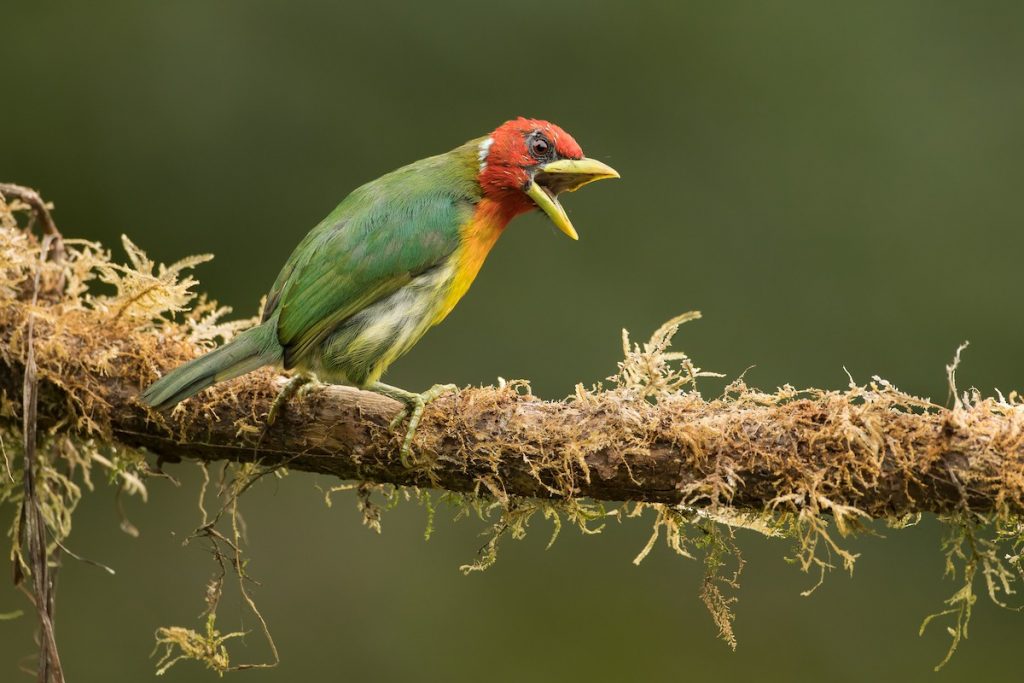
Embark on an unforgettable 3 Days Bird watching safari in Lake Mburo national park, Uganda’s finest compact savannah destination. Located just a short drive from Kampala, this vibrant park is a true haven for birding enthusiasts, boasting a remarkable checklist of over 350 bird species. The rich mosaic of acacia woodlands, seasonal wetlands, rolling hills, and tranquil lakes creates the perfect ecosystem for diverse avian life. During this specialized 3 Days Bird watching safari in Lake Mburo national park, you will have the rare opportunity to spot highly sought-after species. Look out for the elusive African Finfoot, the localized Red-faced Barbet, and the stunning Papyrus Gonolek hiding in the marshes. Along with incredible birdlife, you will encounter iconic wildlife like impalas, zebras, and elands. Whether you are a seasoned birder or a passionate nature lover, this short safari offers an immersive wilderness experience packed with spectacular sightings, expert guiding, and serene Ugandan landscapes. Book your trip today.
Tour highlights for 3 Days Bird watching safari in Lake Mburo national park
African Finfoot spotting
Red-faced Barbet search
Scenic boat cruise
Savannah game drives
Rubanga forest walk
Equator photo stop
Guided foot safari
Abundant wildlife viewing
Beautiful acacia woodlands
Expert birding guides
Day by day 3 Days Bird watching safari in Lake Mburo national park
Day 1: Kampala to Lake Mburo National Park & Afternoon Boat Cruise
Your 3 Days Bird watching safari in Lake Mburo national park begins with an early morning departure from Kampala. The scenic drive takes you southwest through lush countryside landscapes. You will stop at the Equator crossing for photos, curio shopping, and a brief refreshment. Arrive at the park in time for lunch and check into your safari lodge. In the afternoon, head out for an exciting boat cruise along the calm waters of Lake Mburo. This boat trip is a major highlight for water-associated avian species. Keep your binoculars ready to spot the rare, elusive African Finfoot swimming near the banks. You will also look for shining Kingfishers, African Fish Eagles, Herons, Cormorants, and the secretive White-backed Night-Heron. Watch closely for hippos wallowing in the water and large crocodiles basking along the shores. Return to your lodge for dinner and overnight under the African stars.
Day 2: Morning Savannah Birding Drive & Guided Rubanga Forest Walk
The second day of your 3 Days Bird watching safari in Lake Mburo national park focuses on deep wilderness exploration. Set off before sunrise for an extensive morning game drive through the open acacia savannah. This is the prime time to search for localized specialties like the Red-faced Barbet and the striking Brown-chested Lapwing. You will also spot Coqui Francolins, Rufous-bellied Herons, and Black-bellied Bustards feeding in the grasses. After lunch, embark on a guided forest walk through the dense canopy of Rubanga Forest. This unique habitat is an excellent spot for forest-dependent birds. Look out for the beautiful Narina Trogon, Green Pigeon, and the Double-toothed Barbet. The forest walk also rewards you with sightings of primates like vervet monkeys and olive baboons. Head back to the lodge as dusk settles for a relaxing evening, delicious local dinner, and overnight stay.
Day 3: Guided Morning Birding Foot Safari & Return to Kampala
On the final day of your 3 Days Bird watching safari in Lake Mburo national park, enjoy an early morning nature walk. Accompanied by an armed park ranger, you will explore the walking trails around the Rwonyo jetty area on foot. This foot safari offers a unique perspective, letting you get close to acacia-dwelling birds and morning wildlife. Search for the Spot-flanked Barbet, Yellow-breasted Apalis, and various Weaver birds busy building nests. You will also walk past herds of impalas and zebras grazing in the morning mist. After the walk, return to the lodge for a hearty breakfast and check out. Enjoy a final brief game drive as you exit the park gates. Drive back toward Kampala, stopping for a delicious lunch along the way, arriving late in the afternoon at your destination.
Which key bird species can I expect to spot during this safari?
During your specialized birding itinerary, your primary targets include several highly coveted regional specialties. The crown jewel of Lake Mburo waterbird sightings is the elusive African Finfoot, which is regularly spotted swimming quietly near the shaded riverbanks during the boat cruise. You will also search the dense acacia branches for the Red-faced Barbet, a range-restricted endemic that birders travel across the globe to see. In the extensive papyrus marshes fringing the lake, you will listen for the unmistakable duet of the Papyrus Gonolek and keep an eye out for the rare, prehistoric-looking Shoebill Stork. The park’s open savannah areas offer incredible sightings of the Brown-chested Lapwing, which migrates through the park, alongside the Coqui Francolin, Black-bellied Bustard, and the striking Rufous-bellied Heron. Acacia woodlands provide optimal habitats for the Spot-flanked Barbet, Bare-faced Go-away-bird, Yellow-breasted Apalis, and the vibrant Greater Blue-eared Starling. For forest-associated varieties, the dark canopy of Rubanga Forest provides sanctuary to the elusive Narina Trogon, Double-toothed Barbet, and African Green Pigeon. With an expert birding guide by your side, your final three-day checklist can easily exceed 120 unique species.
What is the best time of year to visit for bird watching?
While birding in Lake Mburo National Park is excellent all year round, the absolute best window is during the rainy seasons from March to May and September to November. During these months, the park is incredibly lush and green, triggering an abundance of insects, fruits, and seeds that prompt peak breeding activity among resident species. This is the ideal time to observe birds in their vibrant breeding plumage and witness intricate nesting behaviors. Furthermore, the period from November to April coincides with the arrival of Paleartic and Afrotropical migratory birds, drastically boosting the total species count with various waders, raptors, and flycatchers. However, heavy rains can occasionally make dirt tracks muddy, so traveling in a sturdy 4x4 vehicle is highly recommended. If you prefer easier navigation and minimal rainfall, the dry months of June to August and December to February are also highly productive. During dry seasons, water sources shrink, forcing birds and mammals alike to congregate densely around permanent water bodies like Lake Mburo, making them significantly easier to spot.
How much are the park entry and activity fees for this trip?
Budgeting accurately requires understanding the current pricing schedules enforced by the Uganda Wildlife Authority (UWA). For adult foreign non-residents, the standard park entry fee is USD 40 per person per 24-hour period, bringing your total entry fee cost to USD 80 for the three-day duration. If you are a foreign resident with a valid work permit, the fee is lowered to USD 30 per day, while East African citizens pay UGX 20,000 per day. Beyond entry, specific avian activities incur separate individual charges. The classic 2-hour afternoon boat cruise costs USD 30 per person for foreign non-residents. A standard daytime game drive or a guided nature walk/foot safari costs USD 20 to USD 30 per person depending on the specific trail system and ranger deployment. Additionally, your vehicle must pay an independent entry fee, which is approximately UGX 30,000 per entry for a Ugandan-registered 4x4 safari vehicle. Working with an established tour operator ensures these individual government tariffs are bundled seamlessly into your total package price.
Why is Lake Mburo National Park chosen over other parks for a short safari?
Lake Mburo National Park is uniquely preferred for short birding itineraries primarily because of its close proximity to Kampala and Entebbe. Situated just 230 km southwest of the capital, the park is reachable via a comfortable 4-hour drive along smooth, tarmac roads. This eliminates the need for long, exhausting domestic flights or grueling 10-hour road journeys required to reach distant parks like Kidepo or Queen Elizabeth. Despite its compact size of just 370 square kilometers, the park packs a massive ecological punch. It features five distinct lakes, extensive papyrus swamps, dry acacia woodlands, open savannah grasslands, and a tropical forest canopy. This extreme habitat diversity compressed into a small geographic footprint means birders can switch between water, savannah, and forest birding environments within minutes. Additionally, it is one of the few national parks in Uganda where visitors can safely step out of the vehicle and conduct intensive birding walks on foot, providing an intimate observation experience unmatched elsewhere.
What specialized gear should I pack for a dedicated birding safari?
To maximize your birding success, high-quality optical equipment is absolutely mandatory. You must pack a pair of lightweight, waterproof binoculars, with 8x42 or 10x42 configurations offering the best balance of magnification and field of view for spotting birds hidden in dense acacia canopies. Photographers should bring a DSLR or mirrorless camera paired with a telephoto lens of at least 300mm to 600mm to capture crisp images of shy waterbirds without disturbing them. Because you will participate in a guided foot safari and forest walks, pack sturdy, closed-toe walking shoes or light hiking boots with good grip. Clothing should be lightweight, breathable, and styled in neutral earth tones like khaki, green, or brown; avoid bright colors, white, and camouflage patterns, as they can startle wildlife or attract unwanted insects. Bring a wide-brimmed sun hat, high-SPF sunscreen, and a durable poncho for unexpected rain showers. Finally, download digital field guides such as the "Birds of East Africa" app or pack a physical guidebook to cross-reference your daily checklists alongside your expert guide.
Can I combine wildlife viewing with bird watching on this itinerary?
Yes, bird watching and classic big-game viewing complement each other perfectly throughout this entire 3-day itinerary. As you slowly cruise along the savannah tracks searching for ground-dwelling birds, you will be surrounded by the park’s abundant mammalian populations. Lake Mburo is famous for harboring Uganda’s largest population of Burchell's zebras and is the only park in the country where you can see the elegant Impala antelopes. It is also one of the premier locations to spot the massive Eland, Africa’s largest antelope species. During your daytime game drives, you will encounter large herds of Cape buffaloes, Defassa waterbucks, topis, warthogs, and recently translocated Rothschild’s giraffes browsing on acacia trees. Your afternoon boat cruise will bring you face-to-face with dozens of roaring hippos wallowing in the water and massive Nile crocodiles sunning themselves on the banks. Although elusive, lucky birders occasionally spot leopards resting on rocky outcrops during early morning drives.
What makes the afternoon boat cruise crucial for birders?
The afternoon boat cruise on Lake Mburo is arguably the most critical, unmissable highlight of the entire safari for any dedicated birder. Operating on the park's central freshwater lake, this two-hour vessel trip gives you gentle, silent access to the otherwise impenetrable papyrus reedbeds and swamp edges. This unique edge-habitat is where the highly secretive African Finfoot resides, a species that is virtually impossible to view from a standard safari vehicle. The boat's elevated viewpoint allows you to peer directly into the reeds to spot brilliant Malachite, Pied, and Giant Kingfishers hovering and diving for fish. You will cruise past colonies of nesting Weaver birds, majestic African Fish Eagles perched high on dead tree stumps, and preening African Darters. The quiet drift of the boat allows you to approach timid species closer than a human on foot ever could, providing unparalleled, vibration-free opportunities for crisp, professional-grade wildlife photography against the backdrop of the setting sun.
Is it safe to do a walking safari, and how does it benefit birding?
Conducting a walking safari in Lake Mburo National Park is entirely safe and highly advantageous for birders. Safety is guaranteed because every foot safari is strictly managed by the Uganda Wildlife Authority and accompanied by an armed, highly trained park ranger who is deeply knowledgeable about animal behavior. The park lacks large populations of dangerous predators like lions and elephants, making it the safest savanna environment for foot trekking in Uganda. For a birder, stepping out of the vehicle changes everything. The noise of a running engine is replaced by pure wilderness sounds, allowing you to auditorily track specific bird calls and songs echoing through the trees. Walking allows you to move slowly, pause under nesting sites, and carefully inspect dense thickets for tiny, skittish warblers, cisticolas, and apalises that are easily missed while driving. It provides the slow, methodical pace necessary to properly appreciate micro-habitats, vibrant butterflies, track animal prints, and spot beautifully camouflaged ground-nesters.
What are the accommodation options inside and around Lake Mburo?
Lake Mburo National Park offers excellent accommodation properties tailored to every individual budget level, split neatly between luxury, mid-range, and budget tiers. For a high-end luxury experience, Mihingo Safari Lodge is legendary, featuring private luxury tented cottages perched on a rocky kopje with spectacular infinity pools overlooking the valley. Another excellent luxury choice is Kigambira Safari Lodge, nestled right beside Lake Kigambira. Travelers seeking mid-range comforts will find excellent value at Arcadia Lodges Lake Mburo, which offers comfortable en-suite cottages with panoramic lake views, or Rwakobo Rock Lodge, situated on a scenic ridge just outside the park gate. For budget-conscious birders, the park features comfortable option frameworks like Eagle’s Nest Lodge, providing basic safari tents under thatched roofs with private verandas. Alternatively, the UWA-operated Rwonyo Rest Camp offers highly affordable traditional bandas and public campsites right inside the park, allowing you to sleep cheap while hearing the calls of nocturnal birds.
How long is the drive from Kampala, and what stops can be made?
The drive from Kampala or Zana to Lake Mburo National Park spans roughly 230 kilometers along the well-maintained, fully paved Masaka-Mbarara highway, taking approximately 3.5 to 4 hours of pure driving time. However, the journey is traditionally broken up with fascinating cultural and geographical stops that enrich your overall safari experience. The most popular stopping point is the Uganda Equator crossing at Kayabwe, located about 75 kilometers outside Kampala. Here, you can stand simultaneously in both the Northern and Southern Hemispheres, watch the famous water drainage demonstration, and take classic souvenir photographs. The Equator site also features excellent local cafes for a freshly brewed Ugandan coffee and clean restroom breaks. Further along the highway, you will pass through the expansive Lukaya wetlands, an excellent roadside birding spot where you can peer out for storks, egrets, and herons feeding in flooded fields. You will also pass through traditional long-horned Ankole cattle farms, giving you a wonderful glimpse into rural Ugandan life.
What is the significance of the Rubanga Forest walk for birders?
The Rubanga Forest walk on Day 2 provides a vital habitat transition that drastically expands your safari's total bird checklist. While most of Lake Mburo National Park consists of open savanna and dry acacia scrub, Rubanga is a small, true closed-canopy tropical forest located on the western side of the park. This shady, moist micro-climate attracts a completely unique community of forest-dependent avian species that do not step foot into the sunny grasslands. Walking quietly beneath the tall forest trees with an armed guide allows you to seek out forest treasures like the gorgeous Narina Trogon, famed for its brilliant green and crimson plumage. You will search the high canopy for the Double-toothed Barbet, African Green Pigeon, Grey Cuckoo-shrike, and the striking Red-headed Lovebird. The forest also echoes with the beautiful calls of greenbuls and flycatchers. Because it is small, you can easily explore its core trails in a couple of hours, making it a highly rewarding, low-effort trek for serious listers.
Are there opportunities for nocturnal birding or a night game drive?
Yes, Lake Mburo National Park is one of the few protected areas in Uganda where night game drives are actively permitted and highly successful. While a night drive is an optional activity that can be easily integrated into Day 1 or Day 2 of your itinerary, it is highly recommended for birders looking to log cryptic nocturnal species. Armed with powerful, filtered spotlights, your guide and UWA ranger will scan the darkness to find various species of Nightjars, including the Black-shouldered, Fiery-necked, and Pennant-winged Nightjars resting right on the dirt tracks. You will also scan tree branches for nocturnal raptors like the Verreaux's Eagle-Owl, African Scops-Owl, and Barn Owls out on the hunt. Beyond the unique birds, a night game drive dramatically raises your chances of encountering the park’s elusive nocturnal mammals. It is your best opportunity to see hunting leopards, spotted hyenas, African civets, serval cats, genets, and adorable white-tailed mongooses bounding through the grass.
What role do local expert birding guides play on this safari?
An expert local birding guide is the single most important factor determining the success of your safari. General wildlife guides are great at spotting big mammals, but a specialized birding guide undergoes years of rigorous training to master the calls, songs, behaviors, and precise habitats of hundreds of avian species. Many birds in Lake Mburo are small, dull-colored, or masterfully camouflaged within thick acacia thorns; a professional guide can instantly identify a bird by a single split-second chirp or flight pattern, saving you hours of frustrating searching. They know the exact localized territories of rare species, such as which specific thicket a Red-faced Barbet family currently inhabits, or where an African Finfoot likes to nest along the riverbanks. Furthermore, professional Ugandan birding guides carry high-quality spotting scopes, laser pointers, and audio playback devices used responsibly to safely call out shy birds without causing them stress, ensuring you get perfect, crisp views.
How does the park’s conservation history affect its current birdlife?
Lake Mburo National Park has a complex conservation history that directly shapes the diverse birding landscape you see today. Originally gazetted as a traditional hunting area in the 1930s, it was upgraded to a game reserve in the 1960s, and finally declared a national park in 1983. However, historical political instability and intense human-wildlife conflicts with the surrounding pastoralist communities led to parts of the park being downsized over the decades. Because local communities heavily grazed their iconic long-horned Ankole cattle inside the park boundaries in the past, it created a unique mix of open lawns and dense acacia regeneration. This specific mosaic of modified woody vegetation directly favored savanna birds that thrive in acacia scrub, like barbets and bush-shrikes. Today, excellent community conservation programs run by UWA have successfully eliminated major poaching. Eco-tourism revenue directly funds community schools and fencing projects, ensuring that local farmers actively protect the vital wetlands and woodlands that these precious birds call home.
What health and safety preparations are required before traveling?
Preparing for your safari involves simple, standard travel health protocols to ensure a smooth trip. Uganda requires all incoming international travelers to show proof of a Yellow Fever vaccination certificate upon arrival at the airport. Because Lake Mburo is located in a tropical environment, malaria is present; you should consult your doctor well before your departure date to obtain appropriate malaria prophylactics, and always sleep under the mosquito nets provided by your safari lodge. On the trail, your primary safety focus is defense against pesky insects like mosquitoes and biting tsetse flies, which can occasionally plague acacia woodlands. Pack a potent insect repellent containing at least 20-30% DEET or Picaridin. When doing forest or nature walks, always tuck your long trousers into your socks to prevent safari ants from crawling up your legs, and wear long-sleeved shirts to protect your skin from sharp acacia thorns. Finally, remember to stay hydrated by drinking only bottled mineral water provided in your safari vehicle.
Booking 3 Days Bird watching safari in Lake Mburo national park with us Roads of Adventure safaris
Book a 3-Day Bird Watching Safari in Lake Mburo National Park with Roads of Adventure Safaris to explore diverse habitats like the Rubanga Forest and Warukiri Swamps. The package includes specialized guided bird walks, park entrance fees, an expert guide, and a boat cruise to spot species like the African Finfoot and Shoebill Stork.
