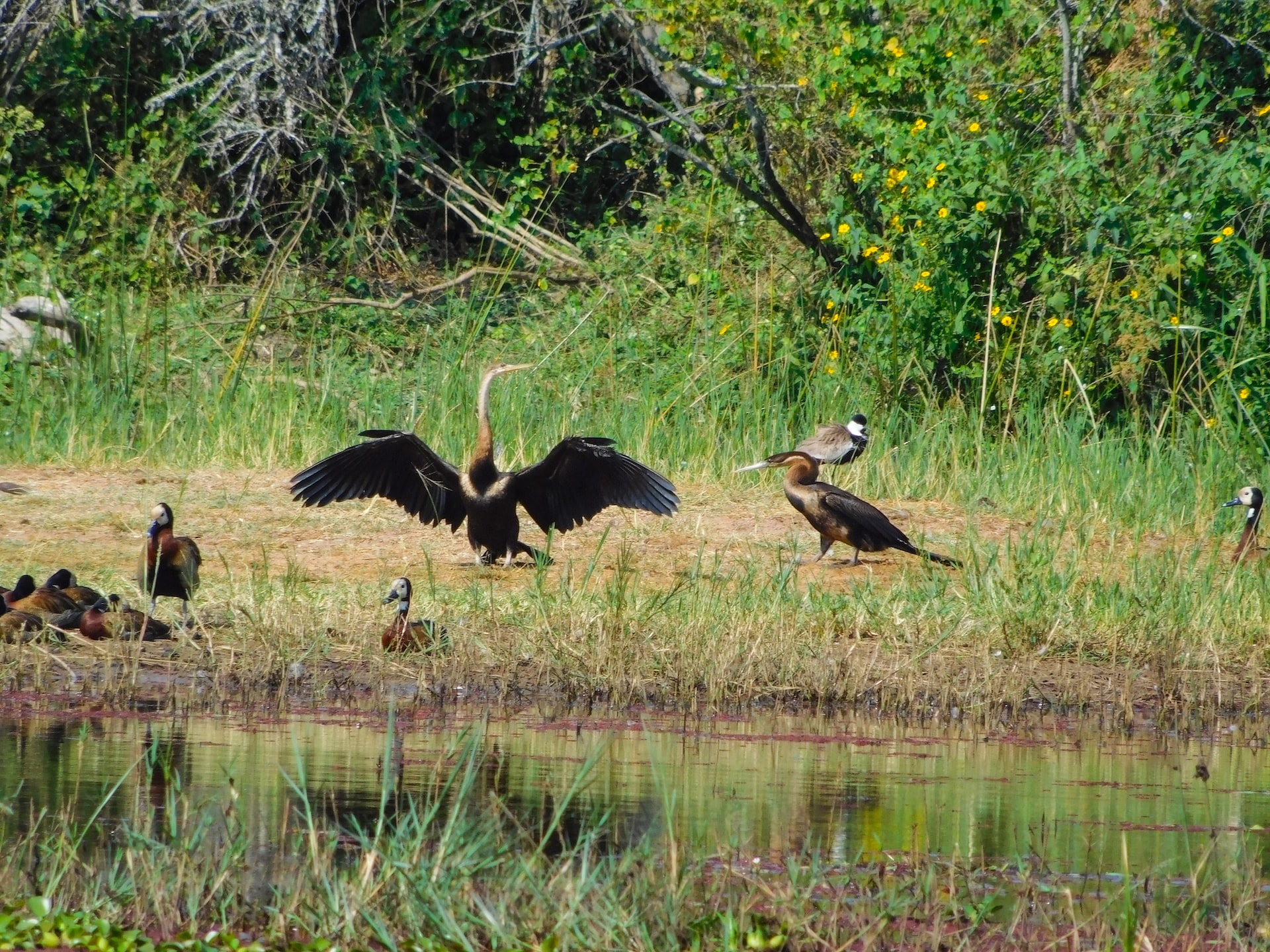
3 Days bird watching safari in Akagera national park will offer an exceptional experience for ornithologists and nature lovers exploring Rwanda. This vast protected area will feature a diverse mix of savannah, montane, and wetland habitats, which will host over 500 distinct bird species. The park will stand out as one of the premier birding destinations in East Africa, notably for its unique waterbirds and papyrus specialists. Visitors will observe rare species, including the elusive shoebill stork, the vibrant papyrus gonolek, and various majestic raptors soaring above the plains. Beyond the avian variety, travelers will routinely encounter diverse wildlife, including elephants, giraffes, buffaloes, and lions roaming the landscape. The layout of this safari will maximize viewing opportunities through guided game drives and quiet boat safaris along scenic lakes. Whether you are a seasoned birder checking off a life list or a casual traveler, this compact three-day itinerary will deliver truly comprehensive exposure to the rich biological diversity of the region, starting very conveniently from Kigali. This journey satisfies your passion.
Tour highlights for 3 Days bird watching safari in Akagera national park
Spot shoebill storks
Cruise Lake Ihema
See Big Five
Explore vast savannahs
Identify migrant species
Photograph unique wildlife
Track papyrus specialists
Visit birding wetlands
Day by day 3 Days bird watching safari in Akagera national park
Day 1: Kigali Transfer & Lake Ihema Boat Cruise
You will travel from Kigali early in the morning to begin your journey to Akagera National Park. The scenic drive will wind through Rwanda’s countryside, arriving at the park headquarters for registration by midday. After checking into your lodge, you will head directly to Lake Ihema for a private afternoon boat cruise. This water body will provide excellent birding opportunities along the forested fringes and papyrus swamps. You will look for specialized species like the African darter, blue-headed coucal, and the iconic shoebill stork. Giant kingfishers, herons, and African fish eagles will also appear frequently along the shores. Nearby, large pods of hippos and massive Nile crocodiles will bask in the warm afternoon sun. You will wrap up the evening with a quiet drive back to your camp, where you will enjoy dinner and listen to the nighttime sounds of the African bush environment. Your very first night remains peaceful.
Day 2: Full-Day Savannah Birding & Game Drives
You will spend the entire day exploring the diverse habitats found within the northern and southern sectors of the park. Your expert guide will navigate through acacia woodlands, rolling hills, and open savannah plains to maximize your avian checklist. You will track down key species like the lilac-breasted roller, crested barbet, red-faced barbet, and the beautiful black-headed gonolek. Migratory birds will also fill the skies depending on the exact season of your visit. Between bird sightings, you will encounter iconic African wildlife roaming across the open plains. Elephants, giraffes, zebras, topis, defassa waterbucks, and buffaloes will cross your path frequently throughout the day. If luck is on your side, you will even spot lions or a leopard resting under the shade of trees. You will enjoy a packed picnic lunch at a scenic viewpoint before resuming your comprehensive search for raptors. This full day will yield remarkable wildlife photographic opportunities.
Day 3: Morning Birding & Return to Kigali
You will conduct a final early morning birding session along the lakeshores to catch active species before the sun gets too hot. This dawn excursion will focus on capturing sights of small colorful sunbirds, weaver birds, and francolins waking up in the brush. You will return to the lodge for a hearty breakfast and complete your checkout procedures. Afterward, you will enjoy a relaxed exit game drive heading toward the southern gate of the park. Your guide will assist you in spotting any species missed on the previous days of the trip. You will then leave the reserve and begin your return road transfer back to Kigali city. You will arrive at your destination in the late afternoon, marking the end of your wildlife experience. This safari itinerary will conclude your memorable birding loop through eastern Rwanda successfully. You will definitely remember the unique wetland birds forever and ever now.
How many bird species are found in Akagera National Park?
Akagera National Park stands as one of Africa’s most diverse and remarkable birding destinations, boasting an incredible checklist of over 500 confirmed bird species. This immense variety is a direct result of the park’s unique geographical location, where the expansive rolling savannahs of East Africa meet the dense, humid ecological zones of Central Africa. This fascinating convergence creates a rich mosaic of habitats compressed into a relatively small area, allowing an astonishing array of avian life to thrive side-by-side.
The park is an essential stopover and permanent home for species ranging from massive, soaring savannah raptors to highly specialized papyrus endemics and vibrant waterbirds. For bird enthusiasts, walking or driving through Akagera is a constantly shifting experience; a single morning can bring sightings of rare, localized species that cannot be found anywhere else in Rwanda. The sheer density of birdlife means that your binoculars will rarely leave your eyes.
Among the hundreds of species, the park acts as a vital sanctuary for threatened and range-restricted birds. You will encounter everything from tiny, brilliantly colored sunbirds darting through acacia woodlands to heavy-bodied ground birds navigating the open grasslands. This incredible biodiversity has earned Akagera a well-deserved reputation as an Important Bird Area (IBA) recognized globally by conservationists. Whether you are a casual observer looking to spot iconic African species or a hardcore twitcher aiming to tick rare endemics off your life list, the sheer volume of species ensures that every excursion into the field is filled with fresh discoveries and rewarding sightings.
Can I see the Shoebill Stork on this 3-day safari?
Yes, the legendary and prehistoric-looking Shoebill Stork (Balaeniceps rex) can indeed be spotted in Akagera National Park, making it a dream destination for avid birdwatchers. The Shoebill is one of the most highly sought-after birds on the African continent, famous for its massive, clog-shaped bill, intense yellow eyes, and statuesque, motionless hunting style. While it is notoriously elusive and naturally shy, Akagera’s extensive wetland systems provide the perfect habitat for this magnificent giant, giving visitors a realistic chance of a sighting during a well-planned 3-day itinerary.
Your absolute best chances of encountering this rare bird are during a structured boat cruise on Lake Ihema or while exploring the fringes of the park's dense marshy papyrus swamps. Because these birds prefer deep, undisturbed swamps where they hunt for lungfish, tilapia, and even small water snakes, they are rarely seen from standard game-drive tracks. A boat safari allows you to drift quietly along the water's edge, scanning the tall stands of papyrus where the Shoebill often stands perfectly still for hours, perfectly camouflaged against the vegetation.
While sightings can never be 100% guaranteed due to the vastness of the marsh networks stretching along the Tanzanian border, utilizing the expertise of Akagera’s local park guides drastically increases your odds. These guides monitor the movements of the storks daily and know their favorite nesting and feeding grounds. Spotting a Shoebill emerging from the papyrus is an unforgettable, bucket-list moment that instantly elevates a 3-day safari from a standard wildlife viewing trip into an extraordinary avian expedition.
What are the key birding areas in the park?
Akagera National Park’s birding magic lies in its distinct geographical zones, each hosting an entirely different community of birds. To maximize a birding safari, you must explore three primary habitats: the freshwater lake shorelines, the dense papyrus swamps, and the sprawling open savannah plains and acacia woodlands. Moving between these ecosystems feels like entering completely different worlds, keeping the birding experience dynamic and constantly engaging.
The shorelines of the park's numerous lakes, particularly Lake Ihema and Lake Shakani, are teeming with waterbirds. Here, the shallow waters and exposed sandbanks provide rich feeding grounds for massive flocks of herons, egrets, ibises, and storks. Just beyond the open water lie the vast, tangled papyrus swamps, a highly specialized environment that requires patient scanning. This wetland network is the exclusive home of secretive swamp-dwellers that depend entirely on the papyrus ecosystem for survival, offering a rewarding challenge for birders looking for rare species.
In stark contrast, the northern and western sections of the park give way to rolling hills, broad acacia woodlands, and wide-open savannah plains. This drier terrain is dominated by a completely different cast of birds, including a spectacular variety of birds of prey, ground-dwelling bustards, and colorful bush-dwellers. By strategically routing your safari to spend time in each of these distinct zones, you ensure a balanced, high-yield birding checklist that covers the full spectrum of Akagera’s avian diversity.
When is the best time of year for bird watching in Akagera?
While Akagera National Park offers highly rewarding bird watching throughout the year, the absolute prime window falls between November and April. This period transforms the park into an absolute paradise for birders due to a combination of seasonal weather patterns, local breeding cycles, and international avian migration routes. During these months, the park’s resident populations are joined by millions of travelers from across the globe, creating an unparalleled density of birdlife.
A major highlight of this season is the arrival of Palaearctic migrants—birds traveling thousands of miles from Europe and Asia to escape the harsh northern winter. These temporary visitors fill the acacia trees and wetlands, adding dozens of unique species to the park's daily checklist. Furthermore, the arrival of the rains prompts Akagera’s resident bird species to enter their vibrant breeding seasons. During these months, male birds molt into their spectacular, brightly colored breeding plumage and display energetic courtship behaviors, making them much easier to spot and photograph.
The timing also coincides with the short rains (November-December) and the long rains (March-April), which turn the landscape a stunning, lush green. While the rains can occasionally make tracks muddy, they trigger an explosion of insect life and fresh vegetation, providing an abundance of food that keeps the birds highly active, vocal, and visible. If you visit outside this window, during the dry months from June to September, the birding remains excellent—especially for waterbirds clustering around shrinking waterholes—but the sheer volume and variety seen during the migratory months are unmatched.
What are some of the special birds to look out for?
When birding in Akagera, there are several "star species" that every visitor should actively look out for. These are birds that are either globally threatened, highly localized, or simply so visually spectacular that they command immediate attention. Chief among the wetland specialties is the striking Papyrus Gonolek. This secretive bush-shrike, with its vibrant yellow crown, jet-black body, and brilliant crimson breast, is a classic papyrus endemic that is highly prized by international birders due to its restricted habitat range.
In the more open areas, the iconic Grey Crowned Crane—Rwanda’s national bird—can frequently be seen foraging in pairs or small family groups through the damp grasslands. Its elegant golden crest and stately walk make it a favorite for photographers. For those scanning the skies and treetops, the magnificent African Fish Eagle is a constant presence, filling the air with its haunting, classic call of the African wilderness. You should also keep an eye out for the massive Saddle-billed Stork, easily identified by its towering stature and brightly colored red, yellow, and black bill.
Drier acacia woodlands hold their own treasures, most notably the rare Red-faced Barbet, an East African endemic with a very localized distribution. As you explore the water channels, a dazzling variety of kingfishers (such as the Malachite and Pied Kingfishers) and an array of elegant herons and storks will keep your camera clicking. Keeping a sharp lookout for these specific flagship species adds a thrilling element of discovery to every single hour spent out on the tracks or water.
Will I only be bird watching, or can I see mammals too?
An Akagera birding safari is never just about the birds; it is a holistic wildlife experience that seamlessly blends world-class birding with classic, big-game viewing. Because the park's diverse ecosystems support a massive array of life, your birding stops will naturally be shared with some of Africa’s most iconic mammals. Following years of intensive, successful conservation and reintroduction programs managed by African Parks, Akagera is now a proudly functioning Big Five destination.
As you scan the tree canopy for barbets and sunbirds, you are very likely to encounter large herds of African elephants moving through the woodlands or Cape buffaloes wallowing in the shallows. The open plains are alive with massive numbers of plains zebras, defassa waterbucks, topis, impalas, and the towering Masai giraffes moving gracefully against the horizon. For those with a keen eye, the park's predators—including thriving prides of lions and elusive leopards—are frequently spotted resting in the shade of acacia trees or tracking prey across the savannah.
The park's water bodies add another layer of mammalian excitement. A boat cruise focused on tracking waterbirds will simultaneously bring you face-to-face with pods of grunting hippos and massive Nile crocodiles basking on the muddy banks. In the northern reaches, the rare and highly protected black rhino roams the dense thickets. This incredible coexistence means that a single glance through your binoculars can easily frame a brilliantly colored kingfisher perched on a branch, with a herd of elephants grazing peacefully in the exact same background.
How do we get around the park for bird watching?
To truly experience the full scope of Akagera’s birdlife, your 3-day itinerary will utilize three distinct, highly effective modes of transport: specialized 4x4 safari vehicles, custom safari boats, and guided foot walks. This multi-dimensional approach is designed to get you safely into the heart of each unique habitat, ensuring that no species is out of reach due to terrain constraints.
The backbone of any safari is the classic game drive conducted in a robust 4x4 vehicle equipped with a pop-up roof or large, open windows. These vehicles allow you to cover massive distances across the southern, central, and northern savannah plains comfortably. The elevated vantage point is perfect for spotting raptors perched high in acacia branches or ground birds running through the tall grass. Your expert driver-guide can easily maneuver the vehicle to give you the perfect angle for stable photography and steady binocular viewing.
To access the park's hidden aquatic gems, you will switch to a motorized safari boat on Lake Ihema. Drifting quietly along the edge of the papyrus walls allows for an intimate, close-up look at nesting waterbirds, kingfishers, and herons that would be completely invisible from the shore. Finally, for an immersive, sensory experience, guided nature walks on foot offer the chance to slow down and explore the smaller bush-dwellers, sunbirds, and warblers. Walking accompanied by an armed park ranger allows you to focus on bird calls and tracking subtle movements in the thickets that a vehicle would simply pass by.
What is included in a standard 3-day birding package?
When booking a standard, professionally managed 3-day birding safari to Akagera National Park, packages are typically designed to be comprehensive and entirely hassle-free. This allows you to focus 100% of your energy on spotting birds and enjoying the wilderness without worrying about logistics, payments, or navigation. A reputable tour operator ensures that every core operational detail is locked in well before you depart from Kigali.
A standard package includes round-trip private transportation from your hotel or airport in Kigali using a dedicated 4x4 safari land cruiser or customized safari van. This vehicle stays with you for the entire duration of the trip, fueled and driven by an expert, licensed driver-guide who specializes in avian identification and wildlife spotting. All official park entry permits, vehicle entry fees, and conservation fees required by the Akagera Management Company are fully covered within the package cost.
Additionally, the package includes the highly recommended private boat cruise on Lake Ihema, which is vital for seeing waterbirds and the Shoebill. Your accommodation for the two nights inside or right on the edge of the park is included, typically on a full-board basis. This means all your daily meals—breakfasts at the lodge, packed picnic lunches to maximize field time, and multi-course dinners—along with clean drinking water provided in the vehicle throughout the day, are completely taken care of, leaving you with nothing to do but enjoy the journey.
Where will I stay during the 3 days?
Accommodations in and around Akagera National Park have evolved significantly, offering excellent choices tailored directly to your preferred travel style, budget, and comfort level. The park features three main lodges, each offering a distinct atmosphere and an incredible, immersive connection to the surrounding wilderness, meaning the birdwatching often starts right from your private veranda.
For travelers seeking a luxurious, eco-conscious retreat, Ruzizi Tented Lodge is an exceptional choice. Tucked away under a dense canopy of trees along the quiet shores of Lake Ihema, this intimate lodge features luxury safari tents set on elevated wooden walkways. The surrounding forest is alive with monkeys and birds, providing an incredible soundtrack to your stay. If you prefer a more traditional, solid-structure hotel experience with sweeping, panoramic views, Akagera Game Lodge sits high on a ridge overlooking Lake Ihema. This mid-range property offers comfortable rooms, a large swimming pool, and beautiful terraced gardens that attract a wide variety of colorful sunbirds and weavers.
For those craving an authentic, vintage safari vibe deep in the bush, Karenge Bush Camp operates as a seasonal, intimate canvas camp in the northern section of the park. Karenge focuses on a light ecological footprint with a high-quality, personalized service that makes you feel completely immersed in nature. Regardless of which lodge you select, all are strategically positioned to provide smooth, immediate access to the park’s main transit tracks, ensuring you can be out in the field at the crack of dawn when bird activity peaks.
Do I need to bring my own binoculars?
While some premium safari operators keep a basic spare pair of binoculars in their vehicles for emergencies, it is universally and highly recommended that you bring your own high-quality personal binoculars to ensure an optimal birding experience. In the world of bird watching, your optics are your primary tool; relying on shared gear or low-quality lenses can quickly lead to frustration when trying to identify small, fast-moving, or distant species in the field.
The ideal binocular specifications for an East African safari are 8x42 or 10x42. An 8x42 pair offers a wider field of view and a brighter image, which is incredibly helpful when tracking darting forest birds in low-light environments like thick acacia woodlands or dense papyrus. A 10x42 pair gives you extra magnification, which is perfect for identifying distant raptors or scanning open mudflats across a lake. Look for lenses that are waterproof and fog-proof to handle the early morning dew and sudden tropical showers.
Alongside binoculars, a good camera setup is essential if you want to take memories home. Due to the safety distances maintained from wildlife and the small size of birds, a smartphone camera will not be sufficient. A DSLR or mirrorless camera paired with a telephoto lens of at least 300mm (preferably 400mm or greater) will allow you to capture sharp, stunning close-ups of feathers and features. Taking the time to invest in and bring your own optical gear guarantees you won't miss a single detail of Akagera's vibrant birdlife.
Is it possible to do a night birding drive?
Yes, embarking on a night safari is one of the most exciting and unique activities available in Akagera National Park, offering a rare window into a completely different world. While standard day drives wrap up at sunset, a night drive allows you to venture out into the dark using a park vehicle equipped with powerful, filtered spotlights. This specialized activity is essential for anyone wanting to check nocturnal birds and elusive predators off their lists.
The night safari focuses heavily on spotting specialized nocturnal avian species that are virtually impossible to see during daylight hours. With the help of an experienced park spotter, you will scan the tracks and low branches for the reflective eyes of various nightjars, most notably the Black-shouldered Nightjar and the spectacular Square-tailed Nightjar. It is also the prime time to encounter various owls, including the Verreaux’s Eagle-Owl—Africa's largest owl—and delicate scops owls calling from the thickets.
Beyond the fascinating avian sightings, night drives dramatically increase your chances of spotting rare nocturnal mammals. You will look for wide-eyed bushbabies leaping through the trees, genets, civets, side-striped jackals, and free-roaming hyenas. If fortune favors you, a night drive might even reveal a leopard or lion on an active nocturnal hunt. A night drive typically lasts around two to three hours and adds an incredible sense of mystery and adventure to your 3-day birding itinerary, proving that the park never truly sleeps.
What should I pack for a birding safari?
Packing correctly for a 3-day birding safari requires a thoughtful balance between comfort, environmental protection, and practical utility. Because you will be spending long hours outdoors in a tropical climate that can shift from cool, misty mornings to intense midday sun, packing versatile, high-performance gear ensures you stay comfortable and focused on the birds.
Your clothing choices should feature lightweight, breathable, and quick-drying fabrics. It is highly recommended to wear neutral, earth-toned colors such as greens, khakis, tans, and browns. Avoid bright whites and neon colors, which can startle sensitive birds, and strictly avoid dark blue or black clothing, as these colors actively attract biting tsetse flies. Long-sleeved shirts and lightweight trousers are ideal for protecting your skin from the sun, sharp brush, and insects during guided walks. Sturdy, broken-in walking shoes or light hiking boots with good ankle support are essential.
For personal protection, pack a wide-brimmed sun hat, high-SPF sunscreen, and premium sunglasses. A high-quality insect repellent containing DEET is mandatory for keeping mosquitoes and flies at bay. Most importantly, do not forget to pack a recognized, comprehensive birding field guide for East Africa (such as Birds of East Africa by Stevenson and Fanshawe) or download digital field guide apps onto your phone. Having a physical or digital guide handy allows you to study field marks, maps, and color variations dynamically alongside your guide as you spot new species.
How far is Akagera from Kigali?
One of Akagera National Park’s greatest operational advantages is its incredible accessibility and close proximity to Rwanda’s capital city, Kigali. Situated along the eastern border of the country neighboring Tanzania, the park's main southern entrance gate is located roughly 100 kilometers from the center of Kigali. This relatively short distance makes it the most accessible Big Five savannah park from a major international airport hub in East Africa.
The journey from Kigali to Akagera typically takes between 2.5 to 3 hours of driving time. The first leg of the drive takes you smoothly along well-maintained, fully paved tarmac roads wind through Rwanda's iconic, breathtaking landscape of a "Thousand Hills." This scenic drive offers a beautiful look at local village life, vibrant markets, and manicured terraced agriculture. The final stretch leading up to the southern park entrance turns onto a well-graded gravel road, where the lush, cultivated hillsides beautifully transition into wild, expansive acacia bushland.
Because the drive is so short and straightforward, you do not lose a whole day of your safari to grueling transit. Departing Kigali early in the morning means you can easily arrive at the park gates, check into your lodge, and be sitting in a safari boat or out on a game drive looking for birds by mid-day. This unmatched accessibility makes a 3-day package incredibly efficient, maximizing every single hour of your vacation directly inside the wilderness rather than stuck on long, exhausting highway transfers.
Are Park entry fees and guide fees included?
Understanding how park fees and guide fees operate is crucial for a smooth safari experience. If you book your 3-day birding safari through a reputable, registered tour operator, all mandatory park entry fees, vehicle fees, and park guide fees are almost always completely bundled into your total package price. The operator handles these payments directly with the park administration ahead of time, allowing you to breeze straight through the gates upon arrival.
However, if you are planning a independent, self-drive, or self-booked safari, you must be prepared to pay all fees directly to the Akagera Management Company at the entrance gate. Park entry fees are structured per person, per day, and vary based on whether you are an international visitor, a resident, or a Rwandan citizen. There are also separate daily fees for your vehicle based on its weight and registration status. Activities like the Lake Ihema boat cruise, night game drives, and guided walking safaris carry independent, separate fees that must be booked and paid for in advance.
When self-driving, hiring an official park guide from the reception office is highly recommended and worth every penny. These specialized guides possess intimate, up-to-the-minute knowledge of bird locations, weather patterns, and mammal movements across the park's vast track network. It is important to note that Akagera operates entirely on a cashless payment system; all gate fees and activity bookings must be paid using international credit/debit cards (Visa/Mastercard) or local mobile money options.
Is Akagera safe for visitors?
Akagera National Park is exceptionally safe for international and domestic visitors alike, maintaining some of the highest safety and management standards on the entire African continent. The park's remarkable security is the direct result of a highly successful, long-term joint partnership between the Rwanda Development Board (RDB) and African Parks, a globally renowned non-profit conservation organization that manages national parks across Africa.
Together, they have implemented a highly rigorous, multi-layered security infrastructure. The entire western boundary of the park is fully secured by a continuous, well-maintained conservation fence that keeps large wildlife safely within the park and prevents unauthorized entry. The park is continuously patrolled by a dedicated team of highly trained, professional park rangers who utilize modern tracking technology, K9 anti-poaching units, and aerial surveillance to ensure the total integrity of the ecosystem and the safety of all guests.
When you are out exploring, you are always accompanied by experienced, professional guides and rangers who possess a deep, instinctive understanding of animal behavior and strict park regulations. They know exactly how to position vehicles and boats to give you incredible, close-up birding views while always maintaining a respectful, completely safe distance from large mammals like elephants, rhinos, and lions. By simply following your guide's basic instructions—such as staying inside the vehicle during game drives except at designated picnic spots—you can enjoy a completely relaxed, secure, and world-class wilderness experience.
Booking birding safari in Akagera park with us Roads of Adventure safaris
To book an exceptional birding safari in Akagera National Park with Roads of Adventure Safaris, expect to spend anywhere from $300 to $1,000 per person, per day. Their customizable itineraries generally include expert guides, private 4x4 transport, and special access to Lake Ihema boat charters for spotting rare papyrus species.
