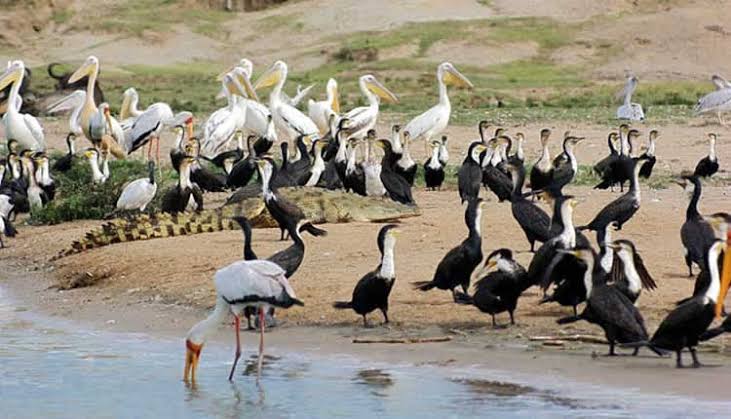
An unforgettable 3 Days bird watching safari in Queen Elizabeth national park offers an extraordinary opportunity to explore one of East Africa’s most diverse avian sanctuaries. Housing over 600 recorded bird species, this magnificent park is a paradise for birders, featuring an incredible tapestry of savanna, wetlands, crater lakes, and lowland forests. During this carefully curated expedition, you will traverse diverse ecosystems that attract both resident and migratory species, making it a premier global birding destination. Your journey begins with a scenic drive from Kampala, transitioning into thrilling game drives across the Kasenyi Plains and a tranquil boat cruise along the famous Kazinga Channel. Expert local guides will assist you in spotting rare, vibrant, and elusive species while you immerse yourself in Uganda’s breathtaking wilderness. Whether you are a seasoned ornithologist or a passionate nature enthusiast, this specialized itinerary guarantees remarkable sightings, stunning photographic opportunities, and deep insights into the region’s rich biodiversity.
Tour highlights for Days bird watching safari in Queen Elizabeth national park
Spectacular bird diversity
Kazinga water cruise
Vibrant flamingos gathering
Prehistoric shoebill tracking
Maramagambo forest walk
Scenic crater lakes
Kasenyi savannah drives
Tree climbing lions
Diverse avian habitats
Expert guided tracking
Day by day Days bird watching safari in Queen Elizabeth national park
Day 1: Journey to the Park and Evening Birding on Mweya Peninsula
Your 3 Days bird watching safari in Queen Elizabeth national park commences with an early morning departure from Kampala, driving southwest through Uganda's scenic countryside. You will pause at the Equator for photographs and enjoy a delicious lunch in Mbarara before entering the park’s northern gates. In the late afternoon, you will head straight to the Mweya Peninsula, a rich birding hotspot flanked by the Kazinga Channel and Lake Edward. Walking along the peninsula's tracks, you will scan the thickets and water edges for specialized species. Keep your binoculars ready for the African Fish Eagle, Yellow-billed Stork, Water Thick-knee, and the striking Great Blue Turaco. You might also spot Lesser Masked Weavers, Squacco Herons, and Nubian Woodpeckers darting through the lakeside vegetation. As dusk approaches, check into your safari lodge for a relaxing evening, surrounded by the peaceful nocturnal sounds of the African wilderness.
Day 2: Kasenyi Plains Savannah Drive and Kazinga Channel Boat Cruise
The second day of your 3 Days bird watching safari in Queen Elizabeth national park focuses on savanna and aquatic species. An early morning game drive across the vast Kasenyi Plains reveals birds that thrive in open grasslands. Look into the skies and acacia trees for the Secretary Bird, Grey Crowned Crane, Martial Eagle, Ruppell's Griffon Vulture, and the Black-bellied Bustard. After lunch, you will embark on the highlights of the safari: a two-hour launch cruise along the Kazinga Channel. This natural waterway hosts an incredible concentration of waterbirds. You will glide past thousands of Pink-backed Pelicans, African Skimmers, Pied Kingfishers, and Yellow-billed Oxpeckers riding on the backs of hippos. Watch the banks closely for the elusive Papyrus Gonolek hiding in the reeds, along with various plovers, cormorants, and storks, before returning to your lodge for dinner and overnight rest.
Day 3: Forest Birding in Maramagambo and Departure to Kampala
On the final morning of your 3 Days bird watching safari in Queen Elizabeth national park, you will venture into the shaded canopy of Maramagambo Forest. This expansive tropical forest offers a stark contrast to the open savannas, introducing you to unique forest-dwelling and canopy birds. Guided trails through the dark volcanic forest provide opportunities to spot the rare Chapin's Flycatcher, White-tailed Ant-thrush, Dark-backed Weaver, and the Shining-blue Kingfisher near the crater lakes. You will also listen for the distinct calls of various hornbills, greenbuls, and tinkerbirds moving through the high branches. After this rewarding morning walk, you will return to the lodge to pack your bags and check out. Enjoy a final lunch inside the park before embarking on the return journey back to Kampala or Entebbe, concluding your spectacular three-day avian adventure in Uganda.
Why is Queen Elizabeth National Park considered a premier birding destination in East Africa?
Queen Elizabeth National Park stands out as an absolute paradise for bird lovers, boasting a staggering checklist of over 610 bird species. To put that into perspective, that is one of the highest numbers you will find anywhere on the African continent within a single protected area. The secret behind this incredible biodiversity lies in the park's unique landscape. It isn't just one endless stretch of the same scenery; instead, it is a beautiful puzzle of different habitats packed closely together. When you spend three days here, you are moving through open savannahs, thick acacia woodlands, humid tropical rainforests, wide papyrus swamps, and even dramatic volcanic crater lakes.
This incredible variety means you can cross paths with completely different kinds of birds in a single afternoon. On your itinerary, you might start your morning watching massive birds of prey soar over the wide grasslands of the Kasenyi plains, and by the afternoon, you could find yourself under the cool, dark canopy of the Maramagambo Forest, looking for brilliant forest birds like the Black Bee-eater.
The park also sits right along the Albertine Rift Valley, making it a crucial resting stop and highway for millions of migratory birds traveling from Europe and northern Asia between November and April. When you combine this natural variety with the park's excellent trails and the passionate local guides who know every call by heart, you get a birding experience that feels alive, deeply rewarding, and incredibly high-yield for a short three-day journey.
What are the key birding hotspots to visit during a 3-day safari in QENP?
To get the absolute most out of a three-day safari, you need a smart plan that hits the park's distinct natural neighborhoods. Instead of rushing everywhere, a great birding route focuses on three core areas: the Kazinga Channel, the Kasenyi Grasslands, and the deep cover of the Maramagambo Forest.
You will likely want to start around the Mweya Peninsula and the Kazinga Channel. Mweya itself is full of thick bushes where colorful weavers build their nests, while the channel is famous for its dense concentrations of waterbirds. Floating along the water, you will see muddy banks packed with Great White Pelicans, African Spoonbills, and rare African Skimmers nesting on the sand.
Next, you will want to spend an early morning exploring the Kasenyi Plains. This is classic African savannah, where the golden grass hides ground-dwelling specialists. As the sun comes up, you can spot Flappet Larks performing their aerial displays, Yellow-throated Longclaws calling from low bushes, and large Black-bellied Bustards walking among the herds of Uganda Kob.
Finally, for a complete change of scenery, you head into the Maramagambo Forest. Walking beneath its heavy canopy introduces you to an entirely different world of forest birds, like the massive Great Blue Turaco and the stunning Blue-breasted Kingfisher. By focusing on these three distinct hotspots, your short trip will capture a complete and varied picture of the park's incredible birdlife.
How does the Kazinga Channel boat cruise enhance the avian checklist on a short safari?
The Kazinga Channel is a natural 40-kilometer waterway connecting Lake George and Lake Edward, and it is easily one of the most exciting places to watch birds in all of Uganda. Adding a slow, relaxed boat cruise here to your three-day safari is the ultimate way to boost your bird checklist quickly and effortlessly. Because the birds along the channel see boats every single day, they are incredibly relaxed. They won't fly away the moment you get close, which gives you the kind of clear, eye-level views and photo opportunities you could never get while walking along a marshy shore.
During a typical two-hour afternoon cruise, you can easily spot dozens of different water-loving species. The sandy shores are constantly alive with giant colonies of Pink-backed Pelicans, Yellow-billed Storks, and Goliath Herons. One of the absolute best highlights is watching the localized African Skimmer. These elegant birds fly incredibly low, skimming the water's surface with their long lower beaks to catch fish.
As the boat moves closer to the thick papyrus edges near the mouth of the river, the landscape changes to favor birds that love to hide in the reeds. If you keep a sharp eye out, you can spot the bright pink chest of the Papyrus Gonolek, the elusive White-winged Swamp Warbler, and colorful Malachite Kingfishers diving for their lunch. It is a relaxing, high-yield experience that makes expanding your bird list feel entirely effortless.
What forest-dwelling birds can be encountered in Maramagambo Forest on Day 2?
Spending the second day of your safari in the Maramagambo Forest takes you into a completely different world compared to the sunny grasslands. This dark, humid tropical forest stretches along the Kichwamba Escarpment, and its thick canopy is home to a wonderful collection of forest specialists, many of which are unique to the Albertine Rift region. Walking along the quiet, shaded trails near the volcanic crater lakes feels like stepping into a hidden wilderness.
The undeniable star of this forest is the Great Blue Turaco. These large, spectacular birds look like something out of a painting, with their vibrant blue bodies, yellow breasts, and bright red beaks. You will often see them bounding gracefully through the high branches. If you are lucky, you might also spot the rare Black Bee-eater, a stunning bird that contrasts deep black plumage with flashes of turquoise and bright scarlet under its chin.
Down in the middle layers of the forest and among the tangled undergrowth, the activity stays constant. You will want to look for the beautiful Blue-breasted Kingfisher, the Red-chested Cuckoo, and the unique Yellow-throated Nicator. Mixed flocks of smaller birds often move through the trees together, challenging you to spot different greenbuls and brightly colored sunbirds. Exploring Maramagambo adds a lovely sense of balance to a short safari, giving you a chance to appreciate the quiet, magical atmosphere of the rainforest.
Which unique savannah birds should birders look for on the Kasenyi Plains?
The Kasenyi Plains, located in the northeastern part of the park, feature the classic, wide-open African grass-and-woodlands that so many travelers dream about. Heading out here for an early morning drive on your first or third day is a must for finding specialized ground birds and open-country species that love the sun and live side-by-side with the park's large wildlife herds.
One of the grandest birds to look for in the tall grass is the Denham's Bustard, along with its smaller cousin, the Black-bellied Bustard. These stately birds pace carefully through the plains looking for insects. Down on the shorter grass or patches of bare earth, you might spot the well-camouflaged Temminck's Courser or the Flappet Lark. The Flappet Lark is a joy to watch because the males fly high into the sky and make a distinct, mechanical clapping sound with their wings to impress females.
Perched up on low acacia branches or balancing on strong blades of grass, the Yellow-throated Longclaw is always a favorite find. With its bright yellow front and bold black collar, it adds a beautiful splash of color to the landscape. You will also hear the steady calls of various cisticolas, which take a little patience to tell apart. Scanning these wide horizons ensures you capture the true spirit of the African savannah on your birding checklist.
How do seasonal migrations affect the bird species count in QENP?
When you plan a three-day birding safari, the time of year you visit can completely change the energy and the number of birds you see. Queen Elizabeth National Park serves as a massive, vital resting station and highway for millions of traveling birds. Because of this, the park's bird populations explode dramatically between November and April every year.
During these months, the resident birds are joined by an incredible wave of long-distance travelers. You get Palearctic migrants coming all the way from Europe and Northern Asia, alongside Afro-tropical migrants moving across the African continent. The park's saline crater lakes, like Lake Munyanyange, turn into bustling, noisy hubs. Thousands of migratory shorebirds, such as Curlew Sandpipers, Little Stints, and Common Greenshanks, gather on the muddy banks to feed on the abundant brine shrimp.
The sky above also fills with life. You will see vast numbers of Barn Swallows and Common Swifts sweeping low over the Kazinga Channel to catch insects, while migrant birds of prey like the Lesser Spotted Eagle and Eurasian Marsh Harrier patrol the skies over the grasslands. Visiting during migration season gives you a front-row seat to an international wildlife gathering, easily pushing your daily trip counts well past a hundred species.
What role do the saline crater lakes play in attracting specialized bird species?
The volcanic past of Queen Elizabeth National Park left behind a dramatic, crater-pitted landscape. Several of these unique, deep basins have filled over time to become highly saline explosion crater lakes. Because these lakes are incredibly salty and mineral-rich, they create a very specific, harsh environment that standard freshwater birds avoid—but for a specialized group of avian travelers, they are an absolute paradise.
The most famous and spectacular visitors to these alkaline waters are the flamingos. Depending on water levels, tens of thousands of Lesser Flamingos, along with smaller numbers of Greater Flamingos, gather along the edges of lakes like Munyanyange and Bunyampaka. They form a massive, shimmering pink ribbon against the dark volcanic soil, filter-feeding on the microscopic blue-green algae and tiny brine shrimp that thrive in the warm, salty water.
Aside from the flamingos, the sticky mudflats surrounding the craters are prime feeding grounds for a variety of fascinating wading birds. You can regularly watch Pied Avocets sweeping their long, upturned bills through the shallows, and Black-winged Stilts walking elegantly on their long pink legs. Taking a drive past these unique volcanic lakes adds a wonderful ecological story to your three-day safari, showing just how deeply the earth's geology shapes the wildlife above it.
Can the elusive Shoebill stork be sighted during a 3-day birding tour in QENP?
The legendary Shoebill stork is one of the most sought-after, bucket-list birds for anyone visiting East Africa. With its massive, wood-colored, shoe-shaped bill and intense, prehistoric stare, it looks like a creature from another era. While places like Mabamba Swamp are more famous for guaranteed sightings, you still have a real, genuine chance of encountering this magnificent giant during a three-day safari in Queen Elizabeth National Park if you explore the right wetlands.
To find the Shoebill here, you need to head toward the wild, southern Ishasha sector where the river flows into Lake Edward, or explore the vast papyrus swamps bordering Lake George in the north. These areas offer the undisturbed, quiet marshes that the Shoebill loves. It is a solitary hunter, often standing completely motionless in the shallow water for hours at a time, looking just like a statue until it suddenly lunges forward to catch lungfish, catfish, or water snakes.
Spotting a Shoebill on a short trip requires a bit of luck, clear weather, and the sharp eyes of an experienced local guide who keeps track of where they have been feeding. While they are never guaranteed because they love to hide deep in the reeds, spending time scanning the remote marshy edges is incredibly exciting. Seeing one stand up in the wild is a moment you will never forget.
What are the "Big Five" key birds of Queen Elizabeth National Park?
While traditional African safaris focus heavily on tracking large mammals, birding trips in Queen Elizabeth National Park have their own legendary "Big Five." These five species are chosen because they are beautiful, rare, or play an important role in the local ecosystems. Finding all five over a short three-day safari is a fantastic challenge that will take you across every single corner of the park.
First is the iconic Shoebill Stork, found hiding in the quiet papyrus swamps of the lake margins and loved for its massive, prehistoric bill. Next is the stunning Great Blue Turaco, which lives high in the forest canopy of Maramagambo and stands out with its bright turquoise feathers and vibrant red and yellow beak.
On the open grasslands and wetlands, you will want to look for the Grey Crowned Crane, which happens to be Uganda's elegant national bird, recognizable by its beautiful crown of stiff golden feathers. In the savannah woodlands, you will keep an eye out for the Long-crested Eagle, a striking bird of prey with a long, floppy black crest that blows in the wind. Finally, along the forest edges, you will listen for the loud, honking calls of the Black-and-white-casqued Hornbill, famous for the oversized casque on top of its beak. Tracking down these five flagship birds ensures you experience the absolute best of the park's diverse habitats.
How should a 3-day bird watching itinerary in QENP be structured for maximum species yield?
To get the absolute highest number of bird species on a short three-day trip, your schedule needs to be built around the birds' daily routines. This means being out in the field during the cool morning hours and late afternoons when birds are active, vocal, and busy feeding.
On your first day, it is best to start with an introduction to the park's open country. Spend your morning exploring the bushlands of the Mweya Peninsula to find colorful bee-eaters, mousebirds, and woodpeckers. In the afternoon, head down to the water for the classic Kazinga Channel boat cruise. This is the most efficient way to add dozens of waterbirds and shorebirds to your list in just two hours. As night falls, take a moment to look around the edges of your lodge for nocturnal nightjars.
Dedicate your second day to the forest and the unique volcanic lakes. Spend the cool morning hours walking the quiet trails of the Maramagambo Forest, looking for canopy birds like turacos and rare forest bee-eaters. In the afternoon, shift your focus to the saline crater lakes like Lake Munyanyange to witness the spectacular gatherings of flamingos and migratory shorebirds.
On your final day, make the most of your morning with a dedicated game drive through the Kasenyi Plains. This is your best chance to spot ground-dwelling savannah specialists like bustards, larks, and coursers before you wrap up your safari and head out of the park.
What nocturnal birding opportunities exist within QENP during an evening drive?
When the sun goes down over Queen Elizabeth National Park, a completely different world wakes up. While daytime birding is all about bright colors and loud songs, night birding introduces you to masters of camouflage and silent hunting. Incorporating a short evening drive or taking a quiet walk around your camp at dusk is a wonderful way to experience this nocturnal shift.
The dirt tracks and open woodlands around the Mweya Peninsula and Kasenyi are fantastic for finding nightjars. As darkness settles, these birds love to sit directly on the warm ground of the tracks. Their eyes glow bright orange in the headlights, and if you watch quietly, you can see Slender-tailed and Square-tailed Nightjars swoop into the air to catch insects before landing gently back on the dirt.
The thicker wooded areas and euphorbia trees are home to impressive owls. You will want to look up into the branches for the massive Verreaux's Eagle-Owl, a powerful predator that hunts small mammals at night. If you are incredibly lucky near the forested river edges, you might even catch a glimpse of the rare Pel's Fishing-Owl patrolling the water's surface for fish. Listening to the deep hoots and rhythmic night calls under the stars adds a beautiful, mysterious layer to your safari experience.
What essential gear and equipment should be packed for a 3-day birding safari in QENP?
Having the right gear can make all the difference on a short birding trip, helping you quickly spot and identify birds that might be hiding far out on the water or deep inside a thick forest canopy.
Your most important tool is a good pair of binoculars. For the wide-open views along the Kasenyi plains and the Kazinga Channel, an 8x42 or 10x42 binocular is perfect. It gives you enough magnification to see details far away while letting in plenty of light, which is crucial when you are trying to spot a dark bird under the heavy shade of the Maramagambo Forest. You will also want a comprehensive regional field guide, like The Birds of East Africa, or a dedicated digital birding app on your phone to help solve tricky identification questions on the spot.
For your clothing, stick to lightweight, breathable clothes in neutral colors like khaki, tan, or green to help you blend into the surroundings. Long-sleeved shirts and sturdy, closed walking shoes are essential for your forest walk in Maramagambo to protect you from biting insects and thick brush. Lastly, don't forget a wide-brimmed hat, good sunscreen, and a lightweight rain poncho, as tropical weather can surprise you with a sudden downpour at any time.
How do local birding site guides enhance the overall experience in QENP?
While exploring the park on your own is an adventure, partnering with a professional local birding guide changes everything. Identifying birds in East Africa can be beautifully complex, and local guides have spent years training their eyes and ears to understand the subtle rhythms of the park.
The biggest advantage of having a guide is their incredible ability to recognize bird calls. In dense places like the Maramagambo Forest or the thick papyrus along the Katunguru Bridge, you will almost always hear a bird long before you see it. A great guide can hear a tiny chirp in the bushes, instantly tell you what species it is, and then skillfully guide your eyes to the exact branch where it is resting, all without disturbing the bird.
Local guides also keep track of the birds' daily habits. They know exactly which acacia tree a pair of owls uses for their daytime naps, where the African Skimmers are currently nesting along the water, and which marshy corners have seen recent Shoebill activity. On a short three-day trip where every hour counts, their local knowledge saves you time and turns a simple drive into a deeply educational journey full of wonderful stories about the park's wildlife.
What are the key identification challenges birders face on a QENP safari?
With more than 610 species sharing the same park, you are bound to run into a few friendly identification puzzles during your three-day safari. It is all part of the fun of birding, requiring you to slow down, look closely at small details, and learn what makes each bird unique.
One of the classic challenges in the park comes from a group of small brown birds known as cisticolas. The park is home to several types, including the Croaking, Zitting, and Stout Cisticolas. They all look remarkably similar when sitting in the grass, so telling them apart often comes down to listening to their distinct songs or watching the unique ways they fly and dive through the air. Similarly, looking up at the little green birds and greenbuls in the high canopy of the Maramagambo Forest takes a patient eye to spot subtle differences, like a faint ring around the eye or the exact shape of a beak.
The park's 54 species of raptors and eagles present another great puzzle. Young birds of prey often look completely different from their parents, sporting variable brown feathers that can easily throw you off. To identify them, you learn to look at their shapes in the sky, how they hold their wings, and the patterns on their tails while they soar. Navigating these challenges makes your safari incredibly engaging and leaves you feeling like a much sharper observer by the end of the trip.
How does bird watching integrate with traditional big-game viewing in QENP?
One of the most beautiful things about a birding safari in Queen Elizabeth National Park is that it blends entirely seamlessly with classic wildlife viewing. You never have to choose between looking for birds or looking for big game; the two worlds live together perfectly, and searching for one almost always leads you right to the other.
When you are driving across the Kasenyi Plains early in the morning scanning the grass for larks and bustards, you will be doing so alongside herds of Uganda Kob, Cape Buffaloes, and families of elephants. You will quickly notice how connected they are. Yellow-billed Oxpeckers spend their days riding on the backs of buffaloes to pick off ticks, while Cattle Egrets walk right behind the elephants' feet to catch the insects stirred up by their heavy steps. Even the predators are connected to the birds; tracking a group of circling White-backed Vultures in the sky is often the best way to find a pride of lions resting near a kill.
This beautiful overlap comes together perfectly during the Kazinga Channel cruise. As your boat glides past nesting pelicans and colorful kingfishers, you will be floating right past pods of hippos yawning in the water and elephants coming down to the riverbank for a drink. Even in the southern Ishasha sector, looking up into the old fig trees for fruit-pigeons can reward you with the famous sight of the park's tree-climbing lions napping on the branches. It is a complete, rich African wilderness experience where spectacular birdlife and classic big game go hand in hand.
Booking Days bird watching safari in Queen Elizabeth national park with us Roads of Adventure safaris
Book a custom 2- to 5-day bird watching safari with Roads of Adventure Safaris in Queen Elizabeth National Park. The park features over 612 recorded bird species, including the Shoebill Stork, African Skimmer, and various kingfishers
