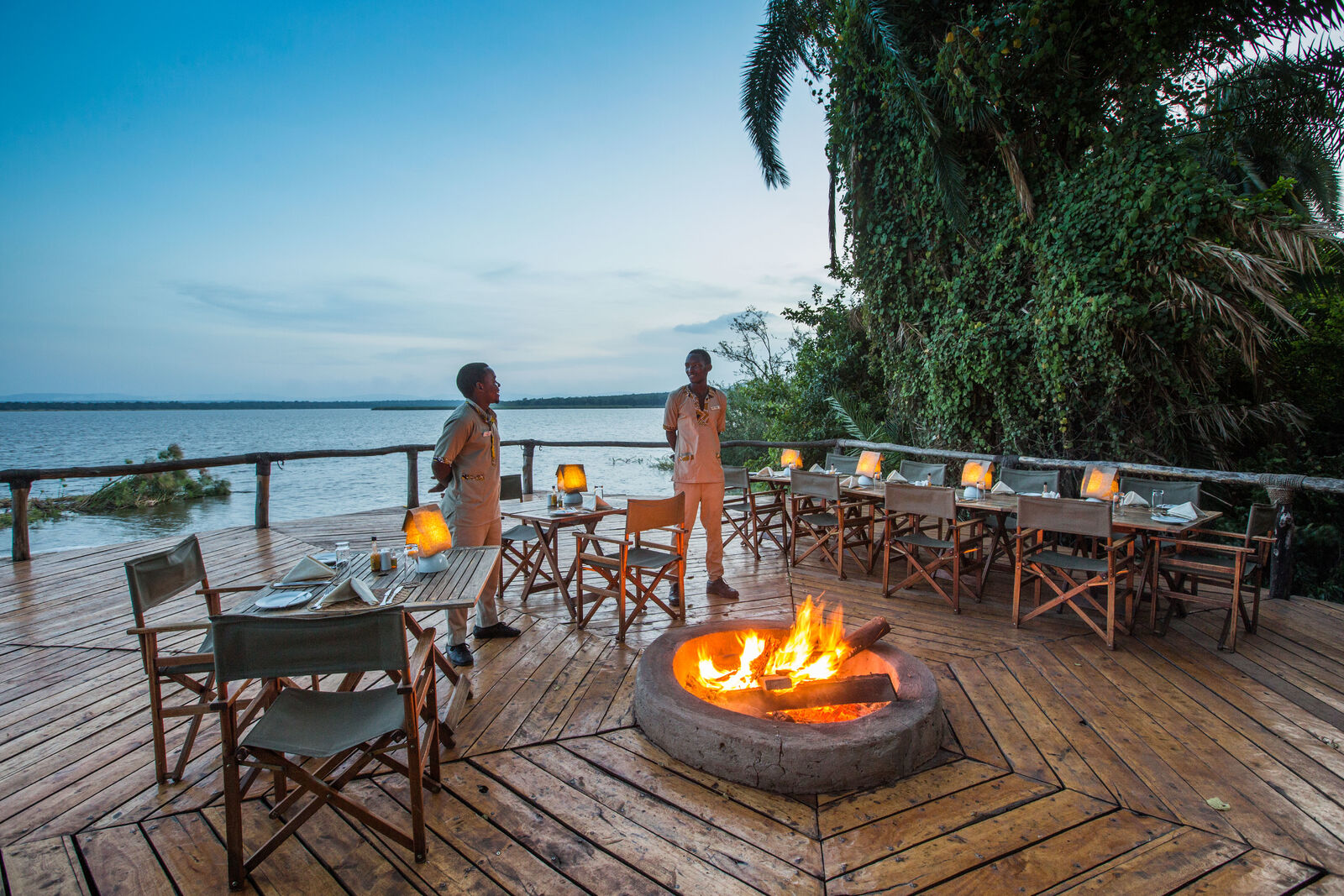
Jump on a 3 Days Akagera national park sleeping at Ruzizi Tented Lodge safari allows you to experience Rwanda's only savannah destination without sacrificing comfort. Situated in eastern Rwanda, this protected area spans rolling hills, open grasslands, and a complex network of lakes and papyrus swamps. Staying at Ruzizi Tented Lodge puts you directly on the edge of Lake Ihema, surrounded by riverine forest filled with palms and fig trees. This small, eco-friendly camp runs entirely on solar power and offers nine luxury tents connected by elevated wooden walkways. Because the lodge is fully managed by the park authority, your stay directly funds conservation and nearby community projects. Over these three days, you will search for the iconic Big Five—elephants, rhinos, lions, leopards, and Cape buffaloes—alongside over 480 species of birds. This 3 days Akagera national park safari itinerary balances classic game drives with peaceful water safaris to give you a complete look at Central Africa's largest protected wetland ecosystem. Prepare for a memorable wild experience.
Tour highlights for 3 Days Akagera national park
Lake Ihema cruise
Big Five tracking
Luxury canvas tents
Solar powered lodge
Open savannah plains
Scenic lakeside dining
Hippos and crocodiles
Northern wildlife herds
Community fence walk
Scenic valley views
Day by day 3 Days Akagera national park
Day 1: Drive to Akagera and Boat Cruise on Lake Ihema
Your journey begins with a two-and-a-half-hour drive from Kigali to the southern gate of the park. After completing the park registration, you will take a short drive to reach Ruzizi Tented Lodge and settle into your canvas home. Following lunch on the wooden terrace, you will head out for an afternoon game drive in the southern sector. This area features thick acacia woodlands and small lakes, providing excellent habitats for giraffes, zebras, and impalas. Keep an eye out for elephants feeding among the trees. As the sun sets, you will return to the lodge for a highlight of your stay: a boat cruise on Lake Ihema. Moving slowly through the water, you will see large pods of hippos surfacing nearby and giant Nile crocodiles basking on the banks. Waterbirds like fish eagles and herons are active during this hour, before you return for dinner by the bonfire.
Day 2: Full-Day Game Drive from South to North
An early breakfast prepares you for a full-day game drive traveling from the south to the north of the park. The landscape changes dramatically as you leave the woodlands behind and enter the wide, open plains of the Mohana and Kilala areas. This northern region holds the highest concentration of wildlife in Akagera. You will spend hours tracking apex predators like lions and elusive leopards, which are most active in the cooler morning hours. Massive herds of Cape buffaloes roam the plains, alongside elands, topis, and defassa waterbucks. You will stop at a designated, secure spot like the Mihindi campsite for a packed picnic lunch overlooking the water. In the afternoon, you will explore the hillsides and look for rhinos introduced to the plains. You will then return south, arriving back at Ruzizi in time to unwind on your private veranda before a relaxing dinner.
Day 3: Walk the Line or Community Tour and Return to Kigali
On your final day, you can choose a different perspective of the ecosystem. A popular option is the guided "Walk the Line" walking safari, where you walk along the park's 120-kilometer western fence line. This seven-kilometer trek takes about two hours, offering expansive views over the hills and a chance to learn how local community members work with the park to maintain security and reduce human-wildlife conflict. Alternatively, you can participate in a community cultural experience, visiting a nearby dairy farm or honey cooperative to see how tourism directly supports local livelihoods. After checking out of your tent, you will enjoy a final lunch at the lodge. You will then take a slow drive toward the gate, making your last wildlife observations before starting the journey back to Kigali, where your safari officially concludes. This marks the end of an immersive and highly memorable Rwandan wilderness journey.
What is the best time of year to book this specific itinerary?
The best time to experience this itinerary is during the dry seasons, which run from June to September and December to February. During these months, the savannah grasses thin out significantly, and the bush dries back. This makes tracking large predators like lions and leopards much easier, as they cannot easily hide in the low vegetation.
More importantly, the dry weather impacts wildlife movement. Animals gather around the remaining water sources, particularly the lakes along Akagera's eastern border and the swamp systems. This makes game viewing highly predictable; a drive around the lakeshore or near the northern plains will yield high volumes of animals.
The tracks throughout the park are mostly dirt and clay. During the dry months, these roads remain firm, allowing standard safari vehicles to navigate smoothly without the risk of getting stuck in deep mud. This ensures you can cover the long distance from the southern gate to the far northern plains on Day 2 without transport delays.
If you are a keen birdwatcher, however, the short rainy season from October to November or the long rains from March to May offer unique advantages. The landscape turns incredibly lush and green, and the park welcomes hundreds of migratory bird species from Europe and northern Africa.
While the rains can make some tracks slippery and require a sturdy 4x4 vehicle with a skilled driver, they also bring newborn animals, fewer tourists, and crisp, clear air that is perfect for photography. Ruzizi Tented Lodge remains open year-round, offering a cozy, rain-proof base even during the wettest months.
Is Akagera a safe destination for a family safari?
Akagera National Park is remarkably safe for families, thanks to strict management by African Parks in partnership with the Rwanda Development Board. The entire western boundary of the park is secured by an 120-kilometer electrified fence. This barrier keeps the wildlife safely inside the protected area and prevents animals from wandering into surrounding human communities, minimizing human-wildlife conflict.
Inside the park, safety is maintained through regular anti-poaching patrols and a specialized canine unit. The park authorities closely monitor predator movements to ensure both animals and visitors remain secure.
When staying at Ruzizi Tented Lodge with family, the design of the camp adds a layer of security. The entire lodge is connected by elevated wooden walkways. This means you walk above the ground level, which prevents direct encounters with smaller animals or reptiles that might move through the undergrowth.
The lodge is unfenced from the lake, meaning hippos or crocodiles can occasionally be seen near the water's edge, but trained guards monitor the camp grounds constantly, particularly at night, to escort guests safely to and from their tents.
For children, the park offers a highly educational environment. It is important to note that game drives involve long hours in a vehicle, especially the full-day drive to the north on Day 2. Families traveling with younger kids should plan frequent stretch breaks at designated picnic sites like Mihindi, where there are secure facilities.
The minimum age for the boat cruise on Lake Ihema is generally flexible when kids are supervised, but the "Walk the Line" walking safari on Day 3 has age restrictions due to the physical nature of the trek.
What kind of vehicle is required for this 3-day trip?
A 4x4 safari vehicle is absolutely essential for this trip, preferably a customized safari Land Cruiser or a heavy-duty 4x4 safari van with a pop-up roof. Even though the main road from Kigali to the park entrance is smooth, smooth asphalt, the roads inside Akagera National Park are entirely unpaved dirt tracks.
The terrain varies from rocky hill tracks in the south to clay-heavy soil on the northern plains. Without a high-clearance four-wheel-drive vehicle, you risk getting stuck or damaging the undercarriage of the car.
The vehicle needs to be in excellent mechanical condition because Day 2 of this itinerary involves a full-day, cross-park drive. You will cover dozens of kilometers from the southern sector to the northern Kilala plains and back.
A vehicle equipped with a pop-up roof or large sliding windows is critical for game viewing. When you spot a pride of lions or a herd of elephants, the pop-up roof allows you to stand up safely inside the vehicle and get an unobstructed, 360-degree view for photography without stepping out into the park.
If you choose to self-drive, you must ensure you have a reliable GPS or the park's official map, as some tracks on the northern plains can become confusing. However, hiring a vehicle that comes with a professional safari driver-guide is highly recommended.
Local guides know how to read the terrain, understand which tracks are passable after a sudden downpour, and communicate with park rangers via radio to locate elusive animals like the black rhino or leopard. This ensures your transit between Kigali, Ruzizi Lodge, and the northern plains is efficient and completely stress-free.
What are the electrical and charging capabilities at Ruzizi Tented Lodge?
Ruzizi Tented Lodge is an eco-friendly camp that runs entirely on solar energy. The lodge design maximizes sustainability while ensuring that modern travelers can keep their essential electronics functional throughout their stay.
Each luxury tent is equipped with solar-powered lighting, providing ample illumination for the bedroom and the en-suite bathroom areas. You will find standard electrical outlets inside your tent, which are linked to the solar inverter system.
These in-tent outlets are perfectly suited for charging low-wattage devices such as smartphones, tablets, camera batteries, and e-readers. Because Rwanda uses Type G (British three-pin) and Type C/J (European two-pin) plugs, it is highly recommended to pack a universal adapter.
The solar system provides stable power through the day and night, but guests are asked to be mindful of their energy consumption, especially during consecutive cloudy days when solar collection is reduced.
The lodge's solar infrastructure cannot support high-wattage appliances that generate heat through electrical resistance. This means hairdryers, straighteners, and travel kettles cannot be used in the tents, as they can trip the circuit breakers and drain the battery banks.
If you have specialized medical equipment like a CPAP machine, you should inform the lodge management in advance so they can ensure your tent’s power supply can accommodate it through the night.
For high-demand charging or if you have multiple large camera rigs, the main lodge lounge and dining area features additional charging stations powered by the primary solar array. This common area also offers a central space to back up photos and chat with fellow travelers while your gear charges.
How does the lodge handle dietary restrictions and food allergies?
Despite its remote wilderness location on the shores of Lake Ihema, Ruzizi Tented Lodge provides an exceptional dining experience that easily accommodates various dietary restrictions and food allergies.
Because all supplies must be brought into the park from Kigali, the kitchen operates on a set-menu basis for lunches and dinners, typically featuring a blend of international cuisine and local Rwandan flavors using fresh, seasonal ingredients.
To ensure your needs are met, it is vital to communicate any dietary restrictions at the time of booking. Whether you are vegetarian, vegan, gluten-free, lactose intolerant, or have specific allergies to nuts or shellfish, the culinary team is well-trained to adjust the menu.
When you arrive on Day 1, the lodge manager will typically review your dietary profile with you to confirm the adjustments for your upcoming meals, including the packed picnic lunch for your long journey on Day 2.
Breakfasts usually feature a mix of fresh tropical fruits, freshly baked bread, juices, Rwandan coffee or tea, and eggs cooked to order. For the full-day game drive on Day 2, the kitchen prepares high-quality, customized picnic boxes that cater directly to your dietary rules, replacing standard sandwiches or snacks with suitable alternatives.
Dinners are served in the main dining area or on the open-air wooden deck under the stars. The chefs take great pride in creating distinct, flavorful dishes for dietary guests rather than simply removing ingredients, ensuring that your culinary experience matches the luxury feel of the lodge.
What should I pack for a 3-day safari in Akagera?
Packing for a 3-day safari in Akagera requires balancing comfort on warm savannah drives with preparation for cooler mornings and outdoor walking. For clothes, stick to neutral, earthy tones like khaki, tan, olive green, and brown.
Avoid bright colors like white, which gets dirty instantly from the red African dust, and bright red, which can attract unwanted attention from wildlife. Crucially, avoid dark blue and black clothing, as these colors are highly attractive to tsetse flies, which can deliver a sharp bite.
Pack lightweight, breathable long-sleeved shirts and long trousers. These shield your skin from the intense tropical sun during daytime drives and protect you from mosquito bites and scratchy brush during the Day 3 walking safari.
A warm fleece jacket, sweater, or light windbreaker is essential; early morning game drives and the evening boat cruise on Lake Ihema can feel surprisingly chilly when the vehicle is moving. For footwear, bring a pair of broken-in hiking boots or sturdy sneakers with good grip for the fence walk, along with comfortable sandals to wear around the lodge.
Don't forget a small first-aid kit with personal medications, anti-diarrhea tablets, and rehydration sachets to keep you feeling your best throughout the trip.
Are malaria prophylactics necessary for this trip?
Yes, malaria prophylactics are highly recommended for anyone visiting Akagera National Park. Because the park is situated at a lower altitude than Kigali (ranging between 1,250 to 1,800 meters above sea level) and features a massive wetland ecosystem with lakes and papyrus swamps, it is considered a malaria-endemic zone.
You should consult a travel medicine clinic or your personal physician several weeks before your trip to secure the correct prescription medication, such as Atovaquone/Proguanil (Malarone), Doxycycline, or Mefloquine.
Preventing mosquito bites is your primary line of defense. Mosquitoes that transmit malaria are most active between dusk and dawn. This directly overlaps with the evening boat cruise on Day 1 and your relaxing dinners at Ruzizi Tented Lodge.
Apply an insect repellent containing at least 30% to 50% DEET to all exposed skin during these hours, and reapply it according to the product instructions. Wearing long-sleeved shirts, long pants, and socks in the evening adds an effective physical barrier.
Ruzizi Tented Lodge takes extensive measures to protect guests from mosquitoes. Every luxury tent is fully screened to prevent insects from entering, and the beds are fitted with large, high-quality mosquito netting that turn down service will set up for you each evening.
The lodge also uses eco-friendly insect control methods where possible. By combining your prescription prophylaxis with diligent use of repellent and the protective features provided by the lodge, the risk of contracting malaria during your 3-day safari is kept very low.
What kind of physical fitness is required for this itinerary?
This 3-day itinerary is generally accessible to travelers with a moderate level of physical fitness, as the vast majority of the time is spent sitting comfortably inside a safari vehicle or on a boat.
The primary physical challenge on Day 1 and Day 2 is "safari fatigue." Game drives involve spending several hours bouncing along uneven, bumpy dirt roads. This can be tiring for your core muscles and back, so it is important to stay hydrated and use the vehicle's grab bars to steady yourself.
The most physically demanding component of the itinerary is the optional "Walk the Line" walking safari on Day 3. This activity requires you to trek approximately 7 kilometers along the park's western hills, following the path of the electrified perimeter fence.
The terrain involves gentle hills, uneven ground, loose stones, and patches of long grass. The walk takes about two hours to complete and is conducted under the mid-morning sun, which can make it feel more strenuous.
If you have joint issues, severe back pain, or cardiovascular conditions, you can easily opt out of the walking safari. Instead, you can choose the community cultural tour, which involves light walking on flat ground around local homesteads and cooperatives.
At Ruzizi Tented Lodge, the elevated wooden walkways require a small amount of walking to get from your tent to the dining area, but the paths are flat and well-maintained. If you have mobility limitations, you can request a tent positioned closer to the main lodge building when booking to minimize walking distances.
How does the boat cruise on Lake Ihema differ from a standard game drive?
The boat cruise on Lake Ihema offers a completely different perspective on Akagera’s ecosystem compared to a standard land-based game drive. On a game drive, your view is framed by savannah trees and rolling hills as you scan the bush for mammals.
The vehicle keeps a respectful distance from water bodies, and your focus is largely on tracking terrestrial animals. It can be a fast-paced search for large predators and herds moving across the landscape.
In contrast, the boat cruise is a peaceful, slow-moving safari on the water. It allows you to glide silently within meters of the shoreline, giving you an intimate look at the park's rich aquatic life.
You will get incredibly close to large pods of hippos that spend their days submerged in the cool water, watching them grunt and display their massive jaws. Giant Nile crocodiles, some stretching several meters long, can be seen sunning themselves on the muddy banks, completely undisturbed by the boat's quiet motor.
For birdwatchers, the boat cruise is an absolute paradise that a game drive cannot replicate. You will sail past nesting colonies of waterbirds, including cormorants, darters, egrets, and open-billed storks.
It provides the absolute best opportunity to photograph the majestic African Fish Eagle diving for food or the rare, prehistoric-looking Shoebill stork hiding deep within the papyrus beds. The cruise concludes as the sun sets over the hills, casting a stunning golden reflection across the lake.
Can I see the entire "Big Five" during this 3-day trip?
Yes, it is entirely possible to see all members of the Big Five—lions, leopards, rhinos, elephants, and Cape buffaloes—during this 3-day itinerary, but it requires a combination of good timing, patience, and a bit of safari luck.
Akagera is officially a Big Five park once again, following the historic reintroduction of lions in 2015 and eastern black rhinos in 2017, followed by white rhinos in 2021. This makes it a complete savannah destination.
Among the Big Five, Cape buffaloes and elephants are the easiest to spot. Buffaloes travel in massive, thunderous herds numbering in the hundreds, particularly around the northern plains and the water sources.
Elephants are common throughout the park; you will often spot them feeding in family groups within the thick acacia woodlands of the south or moving toward the lakeshores in the late afternoon to drink and bathe.
Lions have thrived since their reintroduction and are frequently seen resting in the shade of trees on the northern Mohana plains on Day 2. Leopards, being solitary and nocturnal, remain the most difficult predator to spot.
Your best chance of seeing a leopard is during the cool, early morning hours of your Day 2 drive as they move along rocky ridges or balance on thick tree branches.
Rhinos are also a challenge; black rhinos prefer the dense bush of the south, while white rhinos roam the open grasslands of the north. Your expert guide will use their tracking skills and real-time ranger network to give you the absolute best chance of checking off all five species.
Booking 3 Days Akagera national park with us Roads of Adventure safaris
Thank you for choosing Roads of Adventure Safaris for your 3-day tour of Akagera National Park! This stunning park is Central Africa's largest protected wetland and Rwanda's only savannah refuge, making it a fantastic choice for spotting the Big Five
