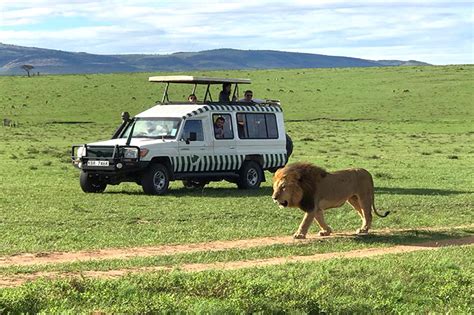
This 14-day combined Kenya and Tanzania safari is the ultimate East African adventure. By splitting your two weeks between Kenya's Maasai Mara and Tanzania's Serengeti and Ngorongoro Cratery, you can witness the Great Migration, see the Big Five, and soak in breathtaking savannahsThe journey begins in Kenya, moving from the diverse habitats of Amboseli to the rolling grasslands of the Masai Mara. You will then cross into Tanzania to traverse the vast Serengeti plains, explore the self-contained volcanic caldera of Ngorongoro, and visit the baobab-filled woodlands of Tarangire. This itinerary is built on the logistical realities of transboundary travel, utilizing regional air connections and specialized land cruisers to maximize time spent in the field. By focusing on the movement of the Great Migration and the resident predator populations, this 2 Weeks 14 Days Kenya Tanzania safari combined epic vacation offers an objective, in-depth perspective on the complex biological processes that define the East African wilderness and its ongoing conservation efforts.
Day 1: Arrival in Nairobi
Your 2 Weeks 14 Days Kenya Tanzania safari combined epic vacation starts at Jomo Kenyatta International Airport. Nairobi, situated at 1,795 meters above sea level, is your gateway. After clearing immigration, you will transfer to your hotel. This time is for adjusting to the altitude and confirming travel logistics. You will meet your lead guide to review the route, which covers key national parks across two countries. Proper preparation today ensures a smooth start for this extensive journey.
Day 2: Nairobi to Amboseli
You will travel 240 kilometers south to Amboseli National Park. Known for its open plains and proximity to Mount Kilimanjaro, which stands at 5,895 meters, the park is a prime location for viewing free-ranging elephant herds. You will conduct your first game drive in the afternoon, targeting the marshes where large mammals congregate to drink. This day sets a steady pace for the rest of your 2 Weeks 14 Days Kenya Tanzania safari combined epic vacation.
Day 3: Amboseli Exploration
Spend the full day in Amboseli, focusing on the 392-square-kilometer reserve. The park is famous for its elephant population, which has been studied for decades. You will spend hours observing these animals as they move between the woodlands and the alkaline flats. This depth of observation is a necessary part of your 2 Weeks 14 Days Kenya Tanzania safari combined epic vacation, allowing you to see the social dynamics of the herds in their natural habitat.
Day 4: Transfer to Masai Mara
Travel from Amboseli to the Masai Mara National Reserve, a distance of approximately 600 kilometers. This transition involves flying from the Amboseli airstrip to Wilson Airport, then connecting to the Mara. Covering 1,510 square kilometers, the Mara is the northern extension of the Serengeti ecosystem. By minimizing road time, you arrive in the Mara ready for an afternoon game drive, keeping to the schedule of your 2 Weeks 14 Days Kenya Tanzania safari combined epic vacation.
Day 5: Masai Mara Game Drives
Dedicate the day to exploring the Mara’s golden savannas. You will focus on the river systems, such as the Mara and Talek rivers, which are critical for the survival of the Big Five. Lions, leopards, and cheetahs are frequently sighted here due to the high density of prey species like wildebeest and gazelles. This intense wildlife focus is a central pillar of your 2 Weeks 14 Days Kenya Tanzania safari combined epic vacation, providing data-rich sightings for your records.
Day 6: Masai Mara Wildlife Tracking
Your second full day in the Mara is spent tracking specific wildlife behaviors. Your guide will interpret tracks and vocalizations to locate leopard dens or cheetah hunting grounds. The Mara supports over 95 species of mammals and 570 species of birds. This day is about documenting the biodiversity found within this specific 1,510-square-kilometer area, ensuring your 2 Weeks 14 Days Kenya Tanzania safari combined epic vacation remains a comprehensive study of the region’s varied wildlife populations.
Day 7: Cross into Tanzania
Cross the border into Tanzania to reach the Serengeti National Park. The Serengeti covers 14,750 square kilometers, making it significantly larger than the Masai Mara. You will drive toward the central Serengeti, known as the Seronera region, which acts as a transition zone between different habitats. This logistical move is a crucial component of your 2 Weeks 14 Days Kenya Tanzania safari combined epic vacation, positioning you for the next phase of your wildlife study in Tanzania.
Day 8: Serengeti Plains
Spend your first full day in the Serengeti. You will drive across the central plains, where the grass height is determined by local rainfall patterns. This area is the center of the annual wildebeest migration, involving over 1.5 million individuals. As part of your 2 Weeks 14 Days Kenya Tanzania safari combined epic vacation, you will examine the ecological impact of these migratory herds on the grasslands and the predatory response from local lion and hyena clans.
Day 9: Serengeti Wilderness
Continue your exploration of the Serengeti, moving toward the Western Corridor or Northern regions depending on the herd positions. The Serengeti’s landscape is largely defined by granite kopjes, which serve as vantage points for predators. You will spend the day recording observations of the resident wildlife that does not follow the migration cycle. This level of detail is essential for a thorough 2 Weeks 14 Days Kenya Tanzania safari combined epic vacation, highlighting the park’s immense scale.
Day 10: Ngorongoro Conservation Area
Drive to the Ngorongoro Conservation Area, a UNESCO World Heritage site. You will spend the afternoon at the rim, which sits at an elevation of 2,300 meters. The area is managed as a multiple-use land, where indigenous Maasai people coexist with wildlife. Understanding this land management system is a vital part of your 2 Weeks 14 Days Kenya Tanzania safari combined epic vacation, providing a broader context for the conservation challenges facing the northern Tanzanian circuit.
Day 11: Ngorongoro Crater
Descend 600 meters into the Ngorongoro Crater, a 260-square-kilometer volcanic caldera. This enclosure creates a unique micro-environment that hosts approximately 25,000 large mammals. You will focus on spotting the black rhino, a species heavily protected within the crater floor. This day provides the most concentrated wildlife viewing of your 2 Weeks 14 Days Kenya Tanzania safari combined epic vacation, allowing for a direct comparison of wildlife densities between the open Serengeti plains and this contained volcanic habitat.
Day 12: Tarangire National Park
Drive to Tarangire National Park, covering 2,850 square kilometers. This park is distinct for its high density of baobab trees and its significance as a dry-season refuge for large mammal herds. You will spend the afternoon examining the riverine forest and the swampy areas where elephants are known to gather. This shift in vegetation is an important observation for your 2 Weeks 14 Days Kenya Tanzania safari combined epic vacation, contrasting with the open grasslands of the previous days.
Day 13: Tarangire to Arusha
Complete your final game drive in Tarangire before driving to Arusha. Arusha serves as the administrative capital of the northern safari circuit. You will spend the afternoon reviewing your logs and preparing for your departure. This time allows for a retrospective look at the thousands of kilometers covered during your 2 Weeks 14 Days Kenya Tanzania safari combined epic vacation, summarizing the data and experiences gathered from Kenya through to the Tanzanian highlands.
Day 14: Departure
On your final day, you will transfer to Kilimanjaro International Airport for your international flight. Reflecting on the itinerary, you have visited four major national parks and one conservation area, spanning two countries. The journey has provided a comprehensive overview of East African wildlife ecology. This concludes your 2 Weeks 14 Days Kenya Tanzania safari combined epic vacation, leaving you with a structured, factual record of the diverse ecosystems and species encountered throughout this extensive two-week travel circuit.
1. How does the 14 Days Kenya Tanzania safari itinerary manage the logistical challenges of crossing international borders?
Navigating the border between Kenya and Tanzania requires careful planning to ensure a seamless transition for the 14 Days Kenya Tanzania safari. The process involves coordinating with reliable transport providers and air charter services to minimize downtime. When moving from the Masai Mara to the Serengeti, for instance, the itinerary utilizes specific border crossings like Isebania or Namanga, depending on the current wildlife locations. Travelers must have their passports, yellow fever vaccination certificates, and appropriate East African tourist visas prepared in advance. The ground team handles the shift from Kenyan-registered vehicles to Tanzanian-registered vehicles, ensuring that all permits are in order. By prioritizing regional flights where possible, the 14 Days Kenya Tanzania safari reduces the time spent on administrative tasks at border posts, allowing for more hours of game viewing. The professional guides are well-versed in these protocols, providing guests with clear instructions at every step of the transit process to maintain the flow of the journey.
2. What specific wildlife species are prioritized during the 14 Days Kenya Tanzania safari?
A primary focus of the 14 Days Kenya Tanzania safari is the observation of the "Big Five": lions, leopards, rhinoceros, elephants, and buffaloes. Throughout the expedition, guides prioritize tracking these species by analyzing footprints, vocalizations, and prey activity. In Amboseli, the focus is on the large herds of elephants, while the Masai Mara and Serengeti are targeted for high-density predator sightings, including cheetahs and spotted hyenas. Rare species like the black rhinoceros are prioritized in the Ngorongoro Crater, where their protection is strictly monitored. The 14 Days Kenya Tanzania safari also highlights migratory species, specifically the wildebeest and plains zebras that drive the annual cycle of the Great Migration. Additionally, observers can expect to see over 500 species of birds across the different ecosystems. By concentrating on these specific animal groups, the itinerary ensures that participants encounter a representative sample of East African biodiversity in its natural habitat.
3. How does the 14 Days Kenya Tanzania safari optimize game viewing time?
Optimization of time is central to the design of the 14 Days Kenya Tanzania safari. This is achieved through a combination of strategic lodge selection and the use of private bush airstrips. By staying in accommodations located within or immediately adjacent to the national park boundaries, participants eliminate long commutes to the wilderness zones. The itinerary follows a structured daily routine: early morning game drives commence at dawn when predators are most active, followed by midday rests to avoid the peak heat, and late afternoon drives to capitalize on the evening light. Furthermore, the 14 Days Kenya Tanzania safari utilizes specialized 4x4 land cruisers equipped for off-road maneuvering where permitted. These vehicles allow guides to follow wildlife off the main tracks, ensuring closer sightings. Constant communication between drivers via radio also allows the team to pinpoint active wildlife sightings in real-time, preventing wasted travel to empty areas.
4. What are the key environmental factors to consider during a 14 Days Kenya Tanzania safari?
Environmental variables play a decisive role in the outcome of a 14 Days Kenya Tanzania safari. Rainfall patterns are the most significant, as they dictate the seasonal movement of the migratory herds and the availability of water in parks like Tarangire. Dry seasons, typically from June to October, concentrate wildlife around perennial water sources, making sightings easier to predict. Conversely, the "green" seasons bring lush vegetation, which makes spotting smaller animals more challenging but offers superior opportunities for viewing newborns and lush landscapes. Participants on a 14 Days Kenya Tanzania safari must also be prepared for temperature fluctuations; high-altitude regions like the Ngorongoro Crater rim can drop to near-freezing at night, while the plains experience significant heat during the day. Understanding these environmental cycles allows participants to better appreciate the ecological balance of the savanna and the adaptive behaviors of the wildlife species observed throughout the trip.
5. How does the 14 Days Kenya Tanzania safari balance remote wilderness with accessibility?
The 14 Days Kenya Tanzania safari is designed to strike a balance between exploring remote, untamed wilderness and maintaining access to necessary infrastructure. While the Serengeti and Masai Mara offer vast, open-space experiences that feel worlds away from civilization, the itinerary utilizes established airstrips and well-maintained lodge networks to ensure safety and comfort. This allows travelers to experience the raw nature of the African bush without sacrificing access to medical support or reliable communications. Throughout the 14 Days Kenya Tanzania safari, the balance is maintained by keeping high-traffic areas at a distance while remaining within a reachable range of supply chains and emergency services. This approach ensures that while the sense of adventure remains high, the traveler is never truly isolated from a support structure. The use of expert, local guides further bridges this gap, providing a sense of security and depth of knowledge in even the most remote locations.
6. What role do local communities play in the 14 Days Kenya Tanzania safari?
Local communities, particularly the Maasai, are integral to the 14 Days Kenya Tanzania safari. These pastoralists have shared the savanna with wildlife for centuries, and many itineraries include guided visits to local villages to learn about their traditions, livestock management, and medicinal knowledge. This interaction provides critical context regarding the human-wildlife conflict and the challenges of conservation in communal lands. During the 14 Days Kenya Tanzania safari, these visits are conducted with respect for local privacy and customs, ensuring that the economic benefits of tourism reach the surrounding communities. By supporting local artisans at handicraft markets, participants directly contribute to the sustainability of these regions. The inclusion of community engagement programs helps demonstrate how human development and wildlife conservation can coexist, transforming the trip from a simple viewing experience into a broader lesson about the social fabric of the East African plains.
7. How are the regional flights integrated into the 14 Days Kenya Tanzania safari?
Regional air transfers are a critical component of the 14 Days Kenya Tanzania safari, serving to connect vast geographical distances that would otherwise take days to cover by road. These flights operate from small bush airstrips, allowing for a unique perspective of the landscape from the air. By flying between hubs like Nairobi, the Masai Mara, and the Serengeti, the 14 Days Kenya Tanzania safari ensures that participants spend the maximum amount of time on game drives rather than in transit. The logistics team carefully manages baggage weight restrictions, which are tighter on bush flights than on international travel, and coordinates ground transfers between the airstrips and the lodges. This integration ensures a seamless progression from one region to the next. The flights themselves become part of the experience, offering expansive aerial views of the rift valleys and volcanic ranges that define the geographic diversity of the two countries.
8. What equipment is recommended for documenting a 14 Days Kenya Tanzania safari?
Capturing the scale and detail of a 14 Days Kenya Tanzania safari requires specialized equipment. For photography, a DSLR or mirrorless camera with a versatile zoom lens, such as 100-400mm, is recommended to capture both distant wildlife and closer action. A sturdy beanbag is often more useful than a tripod for stabilizing cameras inside the game cruiser. Participants on a 14 Days Kenya Tanzania safari should also prioritize dust protection for their gear, as the savanna environment is dry and particulate-heavy. Extra batteries and high-capacity memory cards are essential, as charging opportunities in remote camps might be limited to specific hours. Binoculars with a minimum of 8x magnification are also indispensable for spotting camouflaged wildlife, such as leopards in trees or distant birds. By preparing the right gear, participants can effectively document the diversity of species and landscapes encountered throughout the two-week journey.
9. How is the dietary experience managed during a 14 Days Kenya Tanzania safari?
Catering for diverse dietary needs is a priority during the 14 Days Kenya Tanzania safari. Luxury lodges and tented camps are well-equipped to provide high-quality meals that accommodate vegetarian, vegan, gluten-free, and other specific dietary requirements, provided these are communicated in advance. Fresh, locally sourced ingredients form the basis of most menus, offering a fusion of international standards and regional specialties. Throughout the 14 Days Kenya Tanzania safari, the logistical team ensures that bush picnics—often held in spectacular outdoor locations—are hygienic and well-organized. Water consumption is carefully managed, with lodges providing treated or bottled water at all times. This commitment to nutritional quality and food safety allows travelers to focus on their experiences without health concerns. The meal service is often a highlight of the day, providing an opportunity for guests and guides to discuss their sightings in a relaxed environment after hours in the field.
10. Why is the Ngorongoro Crater a highlight of the 14 Days Kenya Tanzania safari?
The Ngorongoro Crater stands out as a unique feature within the 14 Days Kenya Tanzania safari due to its volcanic origin and self-contained ecosystem. As a 260-square-kilometer caldera, it acts as a natural enclosure for a high density of resident wildlife, meaning that many species remain within the crater year-round. This concentration allows for successful game viewing regardless of the migration patterns seen elsewhere. During the 14 Days Kenya Tanzania safari, the descent into the crater offers a dramatic transition from the high-altitude rim to the lush, game-rich floor. The crater is one of the few places in East Africa where the rare black rhino is frequently observed in a short time frame. Because of its geological and biological significance, it provides a distinct, concentrated experience that contrasts with the expansive, open plains of the Serengeti, making it a critical addition to the overall itinerary.
11. What safety measures are implemented during a 14 Days Kenya Tanzania safari?
Safety is the foundation of every 14 Days Kenya Tanzania safari. Experienced, certified guides lead all game drives and walking safaris, possessing expert knowledge of animal behavior and emergency protocols. Lodges and camps are selected for their high security standards, often employing guards to escort guests at night when animals enter the property. Vehicles are maintained to rigorous standards, including radio systems for constant communication with the main base and other drivers. Throughout the 14 Days Kenya Tanzania safari, travelers are briefed on strict park rules, such as remaining inside vehicles during game drives and not feeding wildlife. Medical kits are carried in every vehicle, and the itinerary is structured to maintain proximity to established air-evacuation networks if a major emergency arises. These measures ensure that travelers can focus on the adventure with the confidence that their physical well-being is being actively managed by professional personnel.
12. How does the 14 Days Kenya Tanzania safari approach conservation?
Conservation is a core theme woven into the fabric of the 14 Days Kenya Tanzania safari. The itinerary emphasizes visiting parks that are at the forefront of wildlife protection, such as the Masai Mara and Serengeti. By participating in this journey, travelers contribute to the tourism revenue that funds anti-poaching units, habitat restoration, and park maintenance. During the 14 Days Kenya Tanzania safari, guides provide insight into the specific threats facing endangered species like elephants and rhinos. They also discuss the importance of sustainable tourism practices, such as minimizing plastic waste and respecting wildlife distance protocols. Many of the camps visited during the tour are pioneers in eco-friendly operations, using solar power and water-recycling systems. This educational component ensures that participants leave with a better understanding of the global importance of the ecosystems they visited and the efforts required to protect them for future generations.
13. What is the typical daily pace of a 14 Days Kenya Tanzania safari?
The pace of the 14 Days Kenya Tanzania safari is intentionally balanced to be intense during game viewing hours and restorative during downtime. A typical day starts before sunrise, with a light breakfast followed by a long morning game drive when the animals are most active. After returning to the lodge for a hearty lunch and a period of rest, a second, shorter drive is taken in the late afternoon. This cadence avoids the harsh midday heat and ensures that travelers remain energized throughout the full two weeks. Because the 14 Days Kenya Tanzania safari covers so much ground, the pace is designed to be sustainable, preventing fatigue. Flexibility is built in, allowing participants to request a slower day if they need it. This structure ensures that the experience remains enjoyable and fulfilling, balancing the adrenaline of close wildlife encounters with the peaceful atmosphere of the African wilderness.
14. What are the best times of year for a 14 Days Kenya Tanzania safari?
The timing of a 14 Days Kenya Tanzania safari significantly influences the type of wildlife experience one encounters. Generally, the dry season—running from June through October—is considered optimal because the lack of water forces wildlife to congregate around permanent sources, making them easier to track and view. This period also coincides with the Great Migration in the Masai Mara and Serengeti. However, the "green" seasons, which follow the short rains in November and the long rains in April, offer a more dramatic, lush landscape and are excellent for birdwatching and viewing newborn animals. Each season presents a different set of advantages, and the 14 Days Kenya Tanzania safari is adaptable to the traveler’s preference. By understanding these seasonal variations, participants can align their expectations with the biological realities of the African savanna, ensuring they experience the specific types of events or sightings they find most compelling.
15. How should one handle the cultural differences on a 14 Days Kenya Tanzania safari?
Cultural awareness is vital to the success of a 14 Days Kenya Tanzania safari. East Africa is home to a diverse array of ethnic groups, each with its own customs, social norms, and expectations for respectful interaction. Guides are the primary bridge, offering advice on how to engage with local staff and community members. On a 14 Days Kenya Tanzania safari, simplicity and modesty in dress and behavior are generally appreciated, particularly when visiting local villages or towns. Learning a few words in Swahili, such as "Jambo" (hello) or "Asante" (thank you), goes a long way in fostering a warm connection with those encountered during the journey. Recognizing that the pace of life in the bush is different from the Western world helps maintain a positive mindset. By approaching these cultural differences with openness and respect, participants ensure that their journey is enriching for both themselves and the communities they interact with.
16. What is the educational value of a 14 Days Kenya Tanzania safari?
The educational value of a 14 Days Kenya Tanzania safari extends far beyond basic wildlife viewing. Participants learn about complex predator-prey relationships, the importance of ecosystem services, and the historical struggle for land management in East Africa. Expert guides turn every sighting into a lesson, explaining social behavior, territory marking, and the interdependency of savanna species. During the 14 Days Kenya Tanzania safari, travelers gain exposure to the challenges of modern conservation, including the pressures of climate change and illegal poaching. They also learn about the geography of the East African Rift, the impact of geology on vegetation, and the migratory history of the great herds. By the end of the trip, participants often develop a deep, factual understanding of ecological processes that is difficult to replicate in any other context. This transformation of knowledge makes the tour a deeply impactful intellectual experience in addition to being a recreational one.
Booking 14 Days Kenya Tanzania safari combined with us Roads of Adventure safaris
Booking a 14-day combined Kenya and Tanzania safari with Roads of Adventure Safaris is an ideal way to explore East Africa’s legendary savannahs, such as the Masai Mara and the Serengeti. They specialize in customizing multi-country adventures
