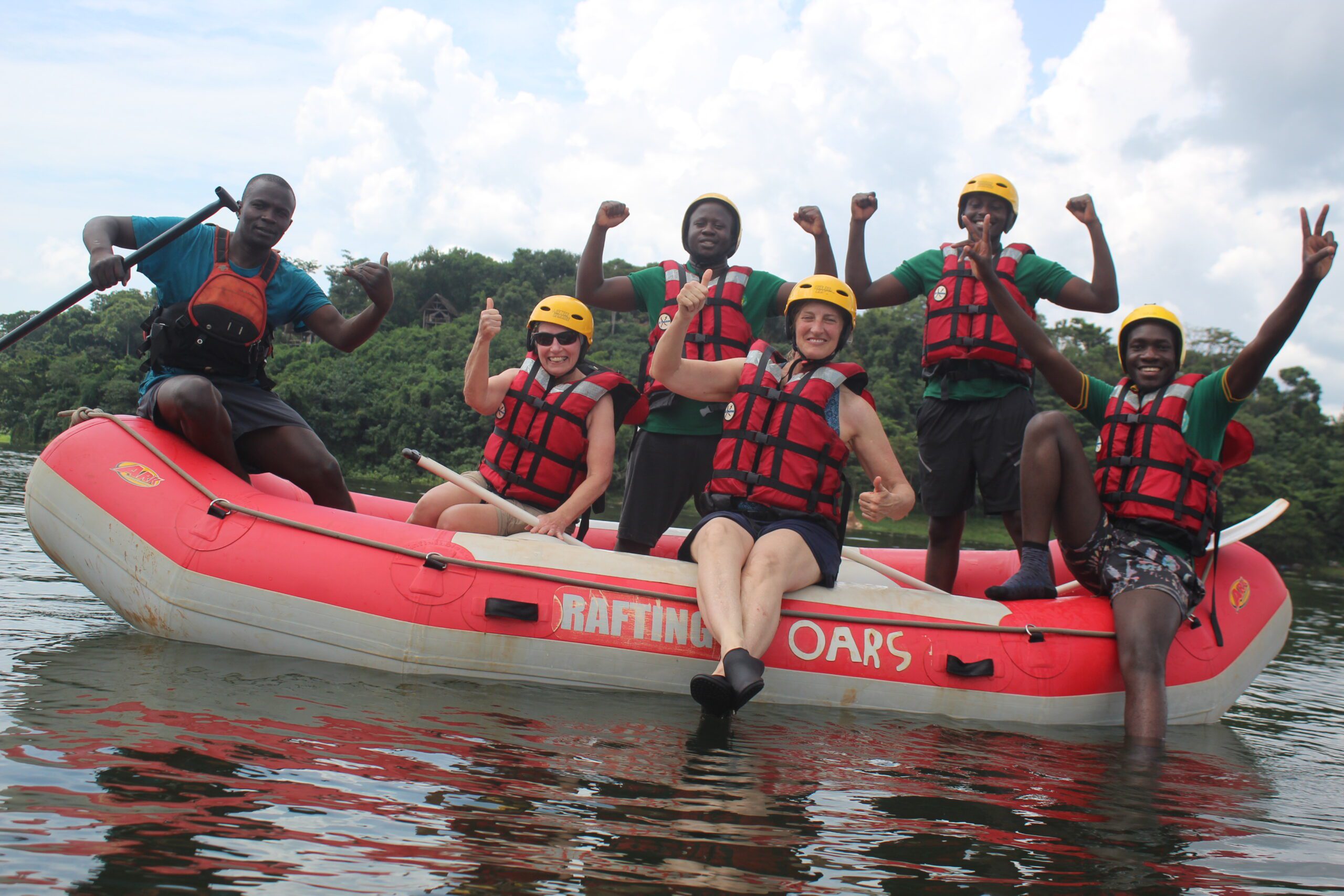
Jinja tour packages with white water rafting range from $150 to $450+ per person, depending on trip duration, lodging tier, and group size. A standard 2-day trip is excellent for a weekend getaway, while 3- to 5-day options allow time for extra adrenaline activities and nearby forest/waterfall hikes
Popular Jinja tour packages
2-days-jinja-white-water-rafting-tour-package
3-days-jinja-white-water-rafting-and-fishing-uganda-safari-tour
5-days-gorilla-trekking-and-jinja-white-water-rafting
5-days-perfect-uganda-honeymoon-safari-in-jinja
1-day-tubing-and-water-massage-jinja-tour-package
2-Day Jinja Adventure & Rafting
If you are looking for an action-packed escape from Kampala without burning through your limited travel days, this weekend itinerary hits all the right notes. It balances raw river action with peaceful wind-down moments in the forest and out on the water.
Your journey starts early on the first morning with a short drive out toward Jinja, stopping mid-route at Mabira Forest. Here, you step out of the vehicle and strap into a harness for a canopy zipline course through the upper rainforest layer. It gives you a bird's-eye view of ancient mahogany trees, red-tailed monkeys, and colorful forest birds. From there, you proceed into Jinja town, check into your accommodation, and catch your breath over lunch. As afternoon turns to evening, you head down to the river for a slow-paced boat cruise along the historic Source of the Nile. It is a relaxing way to cap off the day—watching kingfishers dive and monitoring lizards along the banks while the sun sets over Lake Victoria.
The second day is where things get serious. After a morning safety briefing and gear fitting with experienced river guides, you step onto the water for a full day of white-water rafting. You will navigate iconic rapids with names like Overtime, The Bad Place, and Superhole. The experience alternates between heart-in-your-mouth drops through massive rolling waves and quiet drifts through calm pools where you can jump in and float downstream. By late afternoon, you wrap up the river leg with a well-earned feast and cold drinks at the finish line before taking an evening transfer back to Kampala.
3-Day Adrenaline & Wildlife Tour
Stretching your trip into three days takes the rush out of the transfer days and gives you plenty of room to build your own adventure. Rather than fitting everything into a tight 48-hour window, this option leaves ample space to tailor the itinerary to what your group actually wants to do.
On the first day, you travel at a comfortable pace from Kampala to Jinja, settling into your lodge along the banks of the Nile. With the afternoon free, you can opt for a soft-adventure introduction—such as a guided sunset kayak session, sport fishing for Nile perch, or a casual town walk exploring local craft markets and old architecture. Dinner is enjoyed overlooking the river as you prepare for the main event the following morning.
Day two is dedicated entirely to the river. You spend five to six hours tackling the world-class rapids of the White Nile. Because you do not have to worry about driving back to Kampala the same evening, you can fully relax into the experience—enjoying the mid-river fruit snacks, laughing over flip stories with your raft crew, and celebrating at base camp afterward with a full barbecue meal.
The third day lets you pick your final surge of energy before heading home. Thrill-seekers can opt for a 44-meter bungee jump right over the Nile, while families or groups often choose a two-hour quad bike safari through local villages and along the riverbanks. Alternatively, horseback riding along the Nile offers a quiet, elevated way to explore the countryside. After a late lunch, you pack up and return to Kampala feeling energized rather than exhausted.
5-Day Jinja Eco-Adventure & Sipi Falls
This five-day circuit takes you beyond the standard weekend getaway, linking the energy of the Nile with the cooler, high-altitude landscapes of Mount Elgon. It is designed for travelers who want a complete regional experience that pairs water sports with mountain scenery and authentic local interactions.
The journey begins in the lowlands. Day one features a guided nature walk in Mabira Forest to spot habituated primates and rare forest birds, followed by an evening settling into your Jinja lodge. Day two delivers the core Nile experience: a full day of white water rafting down the river's biggest rapids. The contrast comes on day three, when you leave the river valley behind and drive east toward the volcanic slopes of Mount Elgon. As you gain elevation, the air cools, and red-clay roads wind past terraced hillsides until you reach the towering cliffs of Sipi.
Day four is the highlight of the highland leg. You embark on a guided four-hour hike visiting all three tiers of Sipi Falls. The trail takes you down gorge paths where mist hits your face, through natural rock caves behind the falls, and across local farmlands. In the afternoon, you visit a community Arabica coffee farm. Here, you walk through the entire production process alongside a local farmer—picking ripe red cherries, pulping, wood-fire roasting, and grinding the beans by hand before brewing your own fresh cup. Day five offers a gentle morning walk through the local Sabiny community before you begin the scenic drive back to Kampala, carrying fresh-roasted highland coffee and memories of Eastern Uganda's diverse landscapes.
Here are 10 common travel questions about trekking, wildlife safaris, and rafting across Uganda, answered with straightforward, practical insights.
Do I need to be a strong swimmer to go white water rafting in Jinja?
You do not need to be an expert swimmer or have previous white water experience to raft the Nile in Jinja. Every participant is fitted with a high-flotation personal flotation device and a helmet before stepping into the raft. The river guides conduct a mandatory safety briefing on dry land and in calm water before reaching the main rapids. You learn how to brace, hold onto safety lines, handle flips, and react if you fall out.
During the descent, safety kayakers and dedicated support boats escort the main fleet down the river. If your raft capsizes—which is common in Grade 5 sections—your life jacket brings you back to the surface almost immediately, and safety kayakers pull you out of the current. If you want white water excitement without intense flips, choose a Grade 3 option or a gentler family float where the waves are mild and suited for beginners.
What is the physical fitness level required for mountain gorilla tracking in Bwindi?
Gorilla trekking in Bwindi Impenetrable National Park requires moderate to high physical endurance. The forest features steep, unpaved terrain without clear trails, requiring you to navigate muddy slopes, dense thickets, and slippery roots. Tracking can take anywhere from two to six hours, depending on where the gorilla family moved overnight.
You do not need to be an elite athlete, but regular cardio conditioning—such as walking on inclined trails, stair climbing, or cycling—before your trip makes a significant difference. Park rangers adjust the pacing to accommodate the slowest member of the group, and porters are available for hire at park headquarters. Hiring a porter supports the local economy and provides someone to assist you on steep ascents while carrying your daypack.
How much do gorilla permits cost in Uganda, and when should I book them?
A gorilla trekking permit in Uganda costs $800 USD for foreign non-residents, $700 USD for foreign residents, and UGX 300,000 for East African citizens. This permit gives you access to the park, ranger guide service, and exactly one hour with a habituated gorilla family once located. For a longer encounter, the Gorilla Habituation Experience costs $1,500 USD and allows you to spend up to four hours with a semi-habituated group alongside researchers.
You should book your permits six to twelve months in advance, especially if you plan to travel during the dry seasons (June to September and December to February). Permits are strictly limited to eight visitors per gorilla group each day to minimize human impact and protect the animals from disease. Booking early ensures you secure your spot in your preferred tracking sector.
What is the difference between chimpanzee tracking in Kibale and gorilla tracking in Bwindi?
While both trips involve guided forest walks to observe wild primates, the experience, terrain, and behavior of the animals differ significantly. Kibale Forest sits on flatter ground compared to the steep, ridge-filled geography of Bwindi, making the walking easier on your knees and feet.
Chimpanzees are vocal, highly mobile, and spend much of their time moving quickly through the high canopy or traveling across the ground in loose troops. Following them involves fast-paced walking as rangers track their vocal calls. Mountain gorillas move at a slower, more predictable pace, spending most of their day feeding on low foliage or resting on the forest floor in close-knit family units. Gorilla sightings are typically quieter and more static, whereas chimpanzee encounters are dynamic and loud.
What gear should I pack for a 2-day Rwenzori Mountain hike to Sine Camp?
Packing for the Rwenzori slopes requires preparation for mud, rain, and rapid temperature drops. Essential footwear includes broken-in, waterproof hiking boots with good ankle support, paired with thick moisture-wicking wool socks. Lightweight rubber gaiters keep mud, forest debris, and water out of your boots on the lower trails.
Layering is critical for temperature control. Pack synthetic base layers, a fleece mid-layer, and a reliable waterproof, windproof rain jacket. Temperatures at Sine Camp (2,596 meters) drop quickly after dark, so bring thermal sleepwear, a warm beanie, and insulated gloves. Include a headlamp with spare batteries, quick-drying hiking trousers, a reusable water bottle, and dry bags to protect your electronics from heavy rain.
When is the best time of year to visit Uganda for wildlife safaris and hiking?
Uganda’s prime travel windows line up with its two dry seasons: June through September and December through February. During these months, forest trails in Bwindi, Kibale, and the Rwenzori range are drier and easier to navigate. Wildlife viewing in savannah parks like Queen Elizabeth and Murchison Falls improves as animals gather around permanent water sources and vegetation thins out.
The wet seasons (March to May and October to November) bring heavier rainfall, slick trails, and overcast skies. However, traveling during these months offers advantages: parks are less crowded, lodges often run low-season rates, and landscapes are lush and green. Bird watching is exceptional during the wet season as migratory species arrive across the region.
How safe is white water rafting on the Victoria Nile in Jinja?
White water rafting in Jinja has a strong safety record, supported by professional outfitters operating under International Rafting Federation (IRF) standards. Every raft is helmed by an experienced trip leader who has spent years reading the river’s currents, hydraulics, and seasonal volume changes.
Equipment meets international safety specifications, including high-buoyancy vests, heavy-duty helmets, and self-bailing inflatable rafts. An aggressive safety net surrounds every raft: a team of swift-water rescue kayakers paddlers ahead of the fleet to pull swimmers out of turbulent water, while motor-powered safety boats follow behind to pick up guests who prefer to bypass intense rapids.
What can I expect on the Bigodi Wetland Sanctuary walk in Kibale?
The Bigodi Wetland Sanctuary walk is a community-run conservation project that takes you along elevated wooden boardwalks and dirt paths through a papyrus swamp edge. The 4.5-kilometer trail offers a peaceful, slow-paced walk focused on bird watching, primate identification, and wetland botany.
Bigodi is home to eight primate species, including red colobus, black-and-white colobus, grey-cheeked mangabeys, and blue monkeys. For birders, it is a prime spot to observe the Great Blue Turaco alongside yellow-spotted barbets, kingfishers, and hornbills. Local guides from the surrounding village lead the tour, sharing insights into traditional medicinal plants and explaining how sanctuary admission fees fund nearby schools, clean water projects, and health clinics.
Why are the tree-climbing lions of Ishasha unique, and how easy are they to spot?
The lions in the Ishasha sector of southern Queen Elizabeth National Park are famous for spending hot afternoons resting high in the branches of fig and acacia trees. While lions elsewhere occasionally climb trees, Ishasha’s population does so as a regular habit—likely to escape the heat of the ground, avoid biting insects, and catch cool breezes sweeping across the savannah.
Sightings are not guaranteed, as these are wild animals roaming a vast open habitat. However, experienced safari guides track their movements by checking favored, broad-limbed fig trees along established park loops. Your chances increase by spending an afternoon game drive in the sector during the dry season, scanning the lower branches of mature trees where the lions rest during the heat of the day.
How long is the drive from Bwindi back to Entebbe, and what stops are made along the route?
The overland journey from Bwindi Impenetrable National Park back to Entebbe or Kampala takes roughly 8 to 10 hours, covering approximately 460 kilometers across winding mountain roads and smooth highways. Departing early in the morning allows you to clear the dirt mountain roads before main-road traffic builds.
The route passes through the terraced green hills of Kigezi, known as the "Switzerland of Africa," before descending into the cattle-ranching plains of Ankole. Drivers make a lunch stop near Mbarara before continuing to Kayabwe for the Uganda Equator stopover. At Kayabwe, you can cross between the Northern and Southern Hemispheres, watch simple water Coriolis effect demonstrations, browse hand-carved crafts, and stretch your legs before finishing the final leg to the city or airport.
Booking Jinja white water rafting with us Roads of Adventure safaris
Booking your Jinja white water rafting adventure directly with Roads of Adventure Safaris is straightforward and flexible. You can reserve your spot through their website or reach them via WhatsApp, email, or at their Kampala office on Entebbe Road. A 30% deposit secures your trip, with the balance due closer to your launch date.
Packages range from $80 to $160 per person, covering certified river guides, safety gear, rescue teams, meals, and Kampala transport. Choose from a fast-paced half-day run, a full-day Grade 5 thrill, or multi-day packages combining white water with Nile fishing, wildlife safaris, and gorilla trekking.
