This 18 Days Uganda wildlife safari, Rwenzori climb and birding opportunities itinerary links the nation's key biodiversity centers across various elevations. Uganda contains 1,080 recorded bird species, 395 mammal species, and half of the world's remaining mountain gorilla population. The journey transitions from the central wetlands and northern savannahs of Murchison Falls through the primate-dense canopy of Kibale Forest. It includes a 7-day high-altitude trek along the Rwenzori Central Circuit, reaching Margherita Peak at 5,109 meters above sea level. The route continues south through Queen Elizabeth National Park and the high-altitude montane forest of Bwindi Impenetrable, concluding at Lake Mburo. This route offers structured field observation across savannah, forest, alpine, and wetland habitats, delivering comprehensive coverage of Albertine Rift endemics, large mammals, and specialized ecosystems.
Day 1: Arrival and Birding in Entebbe
Arrive at Entebbe International Airport, located on the northern shore of Lake Victoria at an altitude of 1,150 meters. Complete immigration clearance before meeting your guide for transfer to your hotel. In the afternoon, conduct an introductory 3-hour birding session at the Entebbe Botanical Gardens, established in 1898. The 40-hectare site contains mature rainforest canopy, open grasslands, and Lake Victoria shoreline zones. Key avian targets include Great Blue Turaco, African Grey Parrot, Ross's Turaco, Eastern Grey Plantain-eater, and Meyer's Parrot. Water-associated species along the lake fringe include Pied Kingfisher, Long-tailed Cormorant, and Black-headed Heron. Canopy flowers attract Red-chested Sunbird, Superb Sunbird, and Olive-bellied Sunbird. Mammal sightings in the tree canopy include Guereza Colobus monkeys and Vervet monkeys. Overnight accommodation is in Entebbe, preparing for the northern transit the following morning.
Day 2: Rhino Tracking at Ziwa and Transfer to Murchison Falls
Depart Entebbe at 06:30 for a 170-kilometer drive north to Ziwa Rhino Sanctuary in Nakasongola District. The journey takes approximately 3.5 hours on paved roads. Participate in a 2-hour guided walking safari across 70 square kilometers of savannah woodland to track Southern White Rhinoceros on foot. Ziwa hosts over 30 rhinos, representing Uganda's primary breeding program. Birding during the trek yields White-crested Turaco, Bruce's Green Pigeon, Grey Kestrel, and Abyssinian Ground Hornbill. Following lunch at the sanctuary, continue 140 kilometers northwest for 2.5 hours to Murchison Falls National Park, entering via Kichumbanyobo Gate. Murchison covers 3,893 square kilometers of savannah, borassus palm forest, and riverine woodland. Check in at your lodge along the Victoria Nile for dinner and an orientation briefing on northern sector ecology.
Day 3: Game Drive and Victoria Nile Launch Cruise
Cross the Victoria Nile at 06:30 for a 4-hour morning game drive through the Buligi grassland tracks between the Victoria and Albert Niles. This 300-square-kilometer sector supports Rothschild's giraffes, African bush elephants, Cape buffaloes, Jackson's hartebeests, Oribis, and lions. Avian highlights include Abyssinian Ground Hornbill, Denham's Bustard, and Chestnut-crowned Sparrow-Weaver. Return to the lodge for lunch and rest. At 14:00, board a 3-hour boat safari departing Paraa jetty for the base of Murchison Falls, travelling 17 kilometers upstream. The riverbanks host large concentrations of Nile crocodiles, hippopotamuses, and elephants. Birding along the Nile cliffs yields Shoebill, Goliath Heron, African Skimmer, Giant Kingfisher, Red-throated Bee-eater, and Rock Pratincole. Disembark at the base of the 43-meter waterfall, where the Nile forces through a 7-meter gorge, before returning by boat.
Day 4: Transfer to Kibale Forest National Park
Depart Murchison Falls National Park after breakfast for a 360-kilometer transit south to Kibale Forest National Park. The route passes through the districts of Buliisa, Hoima, Kagadi, and Kyenjojo along the eastern Albertine Rift escarpment, taking 7 hours. Observe agricultural countryside, tea plantations, and rural communities along the way. Periodic road stops allow for mid-altitude birding, targeting Long-crested Eagle, Lizard Buzzard, Double-toothed Barbet, Black-and-white-casqued Hornbill, and Ross's Turaco. Kibale Forest covers 766 square kilometers at altitudes between 1,100 and 1,590 meters, containing evergreen and semi-deciduous rainforest. The park supports 13 primate species and over 375 bird species. Arrive at your lodge near Kanyanchu visitor center in the late afternoon. Complete permit validation, equipment checks, and safety briefings with park staff before dinner and overnight stay.
Day 5: Chimpanzee Tracking and Bigodi Wetland Sanctuary
Report to Kanyanchu Visitor Center at 07:30 for a park ranger briefing on chimpanzee tracking protocols. Kibale hosts approximately 1,500 chimpanzees (Pan troglodytes schweinfurthii). Track a habituated community through the moist evergreen forest for 3 to 4 hours, spending one hour observing group dynamics, feeding, and vocalization. Secondary primate species include Red Colobus, L'Hoest's Monkey, and Red-tailed Monkey. Rare bird targets inside the canopy include Green-breasted Pitta, African Pitta, and African Grey Parrot. In the afternoon, transfer 5 kilometers to Bigodi Wetland Sanctuary for a 3-hour guided walk along boardwalks through a papyrus swamp. Bigodi contains 8 primate species and 200 bird species. Key birding targets include Great Blue Turaco, Papyrus Gonolek, White-spotted Flufftail, Yellow-spotted Barbet, and Blue-headed Crested Flycatcher. Return to the lodge for dinner.
Day 6: Amabere Caves and Transfer to Kasese
Depart Kibale at 08:00 and drive 30 kilometers to the Amabere ga Nyinamwiru stalactite caves near Fort Portal. Spend 2 hours inspecting the limestone formations, waterfalls, and surrounding crater lakes, including Lake Nyabikere and Lake Kyambura. Mid-altitude forest birding around the waterfalls yields Mountain Wagtail, Great Sparrowhawk, Black-headed Waxbill, and Cinnamon-chested Bee-eater. Following lunch in Fort Portal, continue 75 kilometers south along the Fort Portal-Kasese road for 1.5 hours, parallel to the eastern flanks of the Rwenzori mountain range. Arrive at Nyakalengija base station (1,646 meters) in Kasese District. Meet the Rwenzori Mountaineering Services (RMS) team, including senior guides, porters, and cooks. Inspect mountaineering gear, verify personal equipment for high-altitude conditions, weigh luggage allowances, and receive a safety orientation before an early night.
Day 7: Rwenzori Trek – Nyakalengija to Nyabitaba Hut
Begin the Central Circuit trek from Nyakalengija trailhead at 1,646 meters elevation. Register at the park gate and cross the Mubuku River. The trail ascends 10 kilometers through farmland and montane forest along the Mahoma River valley, taking 5 hours to complete. The lower forest zone features tall canopy trees covered in epiphytes and mosses. Primate sightings include Guereza Colobus and Blue Monkeys. Avian species along this forest stretch include Rwenzori Turaco, Handsome Francolin, Rwenzori Batis, Stripe-breasted Tit, and Black-throated Apalis. Cross the confluence of the Mubuku and Bujuku rivers via wooden suspension bridges. Complete a steep final ascent up a forested ridge to reach Nyabitaba Hut at 2,651 meters. Settle into the wooden hut, review hydration levels with your mountain guide, and prepare for higher elevations.
Day 8: Rwenzori Trek – Nyabitaba to John Matte Hut
Depart Nyabitaba Hut at 07:30, descending through montane forest to cross the Kurt Shafer Bridge over the Bujuku River at 2,600 meters. Enter the bamboo forest zone, ascending steep, slippery rock faces. After 3 hours, transition into the giant heather and moss forest zone near Nyamuleju rock shelter at 3,300 meters. Clear weather provides views of Mount Stanley and Mount Speke. Birding highlights along the trail include Regal Sunbird, Archer's Robin-Chat, Stripe-breast Tit, Slender-billed Starling, and Lagden's Bush-shrike. Continue through boggy terrain featuring giant lobelias and groundsels along the Bujuku River valley. Arrive at John Matte Hut at 3,505 meters after 6.5 hours of trekking covering 13 kilometers. Change into dry thermal clothing, monitor peripheral oxygen saturation, and rest inside the alpine shelter.
Day 9: Rwenzori Trek – John Matte to Bujuku Hut
Leave John Matte Hut and cross the Bujuku River to enter the Lower Bigo Bog. Boardwalks assist passage across deep mud beds dominated by giant tussock grass, Carex sedges, and Giant Lobelia elata. Ascend through the Upper Bigo Bog to reach Lake Bujuku at 3,900 meters. The surrounding valley displays high-altitude afro-alpine vegetation, including Senecio johnstonii (giant groundsels). Avian species operating at this altitude include Scarlet-tufted Malachite Sunbird, Alpine Swift, Mountain Buzzard, and White-necked Raven. Trek around the southern shore of Lake Bujuku to arrive at Bujuku Hut, positioned at 3,962 meters between Mount Stanley, Mount Speke, and Mount Baker. Total distance covered is 11 kilometers in 5.5 hours. Prepare alpine gear, including harness, helmet, crampons, and ice axe, for the steep ascent toward Elena Hut the following day.
Day 10: Rwenzori Trek – Bujuku to Elena Hut
Depart Bujuku Hut at 08:00, ascending through the steep, muddy Groundsel Gully. Reach Scott-Elliot Pass at 4,372 meters, where the trail branches south to Kitandara Lakes and west toward the summit peaks. Take the right fork, climbing fixed metal ladders and scrambling over steep, exposed granite rock faces and scree slopes. The vegetation thins into lichens, alpine mosses, and bare rock. Observe high-altitude bird species such as Alpine Swift and White-necked Raven. Arrive at Elena Hut at 4,541 meters after 4.5 hours of physical climbing over a distance of 4.5 kilometers. Elena Hut serves as the primary base camp for Margherita Peak. Conduct a thorough safety briefing on glacier ropework, crampon fitting, and ice axe techniques. Rest early to prepare for a pre-dawn summit attempt.
Day 11: Summit Margherita Peak (5,109 m) to Kitandara Hut
Begin the summit climb at 02:00 under headlamps from Elena Hut. Ascend slippery rock slabs to reach the edge of the Stanley Glacier at 4,800 meters. Don crampons, harness, and rope teams to navigate crevasses across the ice field. Ascend the steep ice wall of the Margherita Glacier to reach Margherita Peak on Mount Stanley at 5,109 meters elevation—the highest point in Uganda and third-highest in Africa. After documenting the summit, descend the glacier back to Elena Hut for a brief rest and gear packing. Continue descending via Scott-Elliot Pass (4,372 meters) down to Kitandara Lakes. Arrive at Kitandara Hut at 4,023 meters after 11 hours of continuous alpine effort. The hut sits between Upper and Lower Kitandara Lakes, framed by Mount Baker.
Day 12: Rwenzori Descent – Kitandara to Guy Yeoman Hut
Depart Kitandara Hut at 07:30 and ascend a steep headwall for 1.5 hours to reach Freshfield Pass at 4,282 meters altitude. The pass offers views into the Democratic Republic of the Congo to the west. Cross open rocky terrain and lichen-covered boulders before beginning a long descent into the Mubuku River valley. Navigate through the vertical mud bogs of Kabamba, passing waterfall drop-offs and forests of giant groundsels and heather trees. Avian observations along the descent include Regal Sunbird, Rwenzori Turaco, Stripe-breast Tit, and Archer's Robin-Chat. Continue down steep rock steps along the riverbank to reach Guy Yeoman Hut at 3,261 meters elevation. Total trek time is 5.5 hours covering 6 kilometers. Rehydrate, clean gear, and rest in preparation for the final descent to Nyakalengija.
Day 13: Complete Rwenzori Trek and Transfer to Queen Elizabeth NP
Depart Guy Yeoman Hut at 07:00 for the final 14-kilometer descent down to Nyakalengija trailhead. The trail descends past Kichuchu rock shelter, crossing bamboo zones and montane forest ridges down to Nyabitaba Hut (2,651 meters). Continue down the ridge to the Mahoma River, arriving at Nyakalengija (1,646 meters) by 13:00 after 6 hours of hiking. Collect official trek certificates at the RMS headquarters and meet your safari driver. Drive 80 kilometers south for 1.5 hours to Queen Elizabeth National Park, entering the northern Kasenyi sector. Queen Elizabeth NP spans 1,978 square kilometers across the rift valley floor at 900 to 1,000 meters elevation. Check in at your lodge overlooking the Kazinga Channel for rest, showers, and dinner after 7 days on the mountain.
Day 14: Kasenyi Game Drive and Kazinga Channel Boat Cruise
Conduct an early morning 3.5-hour game drive across the Kasenyi savannah plains starting at 06:30. Track lions, leopards, African bush elephants, Cape buffaloes, Ugandan kobs, and giant forest hogs. Birding in the open savannah reveals Martial Eagle, Black-bellied Bustard, Temminck's Courser, Senegal Plover, and Rufous-naped Lark. Return to the lodge for lunch. At 14:00, transfer to the Mweya peninsula for a 2-hour launch cruise along the 32-kilometer Kazinga Channel, connecting Lake George and Lake Edward. The channel contains one of Africa's highest concentrations of hippopotamuses, alongside Nile crocodiles and watering elephant herds. Birding highlights along the shore include African Skimmer, Pink-backed Pelican, Great White Pelican, Saddle-billed Stork, African Fish Eagle, and Malachite Kingfisher. Return to the lodge for dinner and evening bird listing.
Day 15: Ishasha Tree-Climbing Lions to Bwindi Impenetrable Forest
Depart Kasenyi at 07:00 and drive 100 kilometers south through Queen Elizabeth National Park to the Ishasha Sector. Conduct a 2.5-hour game drive through open woodland to search for tree-climbing lions resting in fig tree branches (Ficus sycomorus). Additional wildlife includes Topis, Defassa Waterbucks, and Uganda Kobs. Birding in Ishasha yields Black Bee-eater, Blue-throated Roller, Broad-billed Roller, and Palm-nut Vulture. After lunch in Ishasha, continue 65 kilometers south into the Kigezi highlands, entering Bwindi Impenetrable National Park. The 2-hour drive ascends from 1,000 meters to 1,500–2,100 meters elevation. Bwindi encompasses 321 square kilometers of ancient montane rainforest, housing 459 mountain gorillas and 350 bird species, including 23 Albertine Rift endemics. Check in at your lodge near the park sector headquarters for briefing and dinner.
Day 16: Mountain Gorilla Tracking in Bwindi Impenetrable Forest
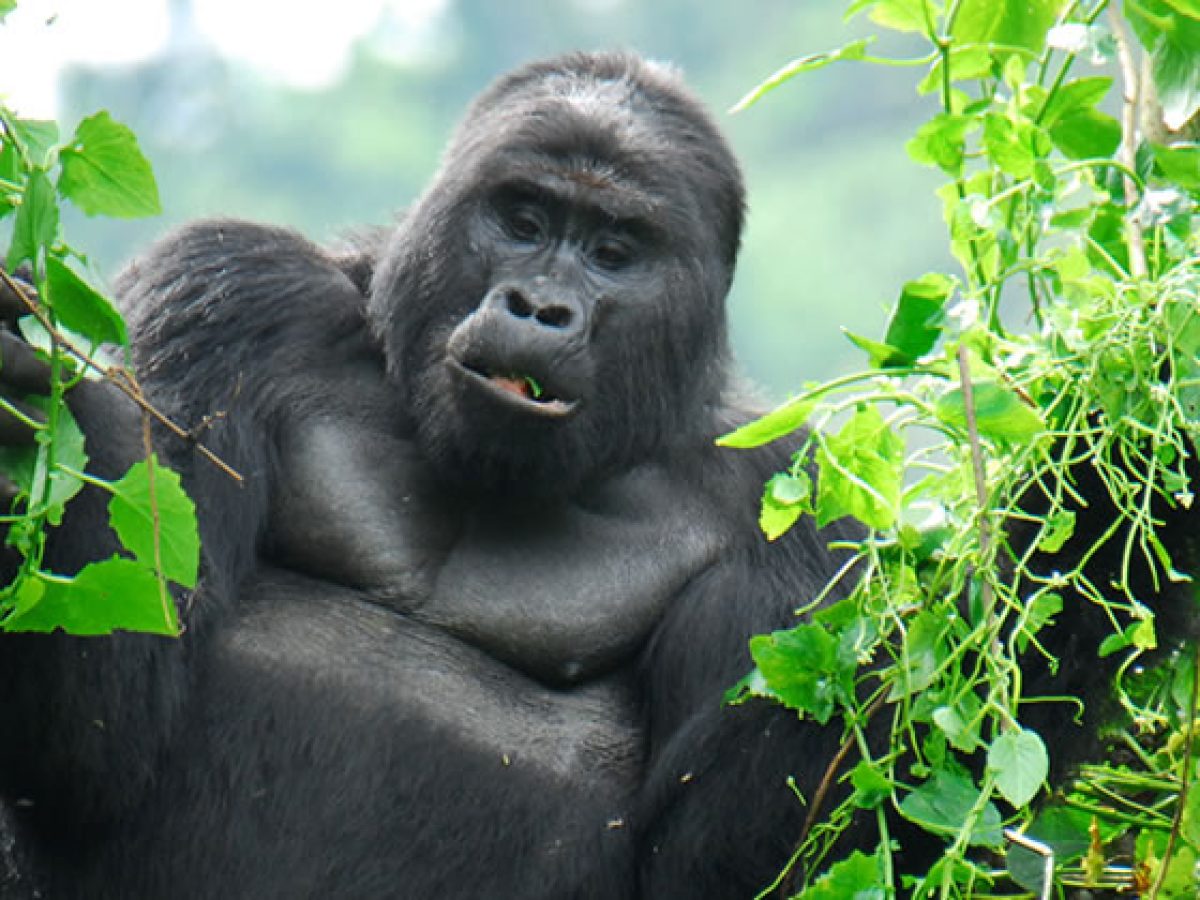
Report to the Bwindi park headquarters at 07:30 for registration and ranger briefing on gorilla tracking etiquette. Enter the dense rainforest at 08:00 to track one of the habituated mountain gorilla families (Gorilla beringei beringei). The trek duration ranges from 2 to 6 hours across steep ridges, dense undergrowth, and altitudes between 1,400 and 2,200 meters. Upon locating the gorilla family, spend exactly one hour observing feeding, juvenile play, and silverback behavior. Forest birding during the trek targets specialized Albertine Rift endemics, including Grauer's Broadbill, Neumann's Warbler, Regal Sunbird, Rwenzori Batis, Black-billed Turaco, and Archer's Robin-Chat. Return to the briefing point to receive your tracking completion certificate. Spend the late afternoon resting at the lodge or birding along the park perimeter trail before dinner.
Day 17: Transfer to Lake Mburo National Park and Night Game Drive
Depart Bwindi at 07:30 for a 240-kilometer drive east to Lake Mburo National Park via Kabale and Mbarara, taking 5 hours. Lake Mburo covers 260 square kilometers at an altitude of 1,220 to 1,828 meters, comprising acacia woodland, wetland swamps, and five lakes. Arrive at the park by 13:00 for lunch and lodge check-in. In the late afternoon, conduct a birding drive targeting Red-faced Barbet, Bare-faced Go-away-bird, Tabora Cisticola, Emerald-spotted Wood-Dove, and Coqui Francolin. Boat or swamp margins yield African Finfoot and White-backed Night-Heron. Following dinner, undertake a 2-hour nocturnal game drive using high-powered spotlights. Track nocturnal wildlife, including Leopards, White-tailed Mongooses, Spotted Hyenas, Bushbabies, Servals, and Nightjars (Pennant-winged and Black-shouldered). Return to the lodge for overnight stay.
Day 18: Walking Safari and Return Transfer to Entebbe
Meet an armed Uganda Wildlife Authority ranger at 06:30 for a 2-hour morning walking safari through the acacia savannah. Walk within close proximity of Plains Zebras, Impalas, Elands, Topis, Waterbucks, and Giraffes. Final birding along the trail yields Yellow-breasted Apalis, Crested Francolin, Brown-chested Lapwing, and Lilac-breasted Roller. Return to the lodge for breakfast and check-out. Depart Lake Mburo at 10:00 for a 230-kilometer drive back to Entebbe, taking 4.5 hours. Stop at the Equator crossing in Kayabwe at 0°00' latitude for lunch, geographical demonstrations, and souvenir shopping. Continue through Kampala to Entebbe International Airport, arriving by 16:30. Complete check-in procedures for your evening international flight, concluding the 18-day wildlife, mountaineering, and birding expedition across Uganda
Here are 10 key questions travellers often ask when planning this 18-day expedition, along with detailed, practical answers to help you prepare.
How physically demanding is the 7-day Rwenzori Central Circuit trek?
The Central Circuit is a serious high-altitude mountain trek that requires solid endurance, physical stamina, and mental grit. You will be hiking for 5 to 11 hours daily across steep ridges, slick wooden ladders, and notorious vertical mud bogs. Peak day is particularly intense: you wake at 02:00, strap on crampons, and navigate open ice crevasses to reach Margherita Peak at 5,109 meters before descending over 1,000 vertical meters to Kitandara. Unlike Kilimanjaro, where the paths are mostly defined trails, the Rwenzoris demand active scrambling over boulders, balanced footwork on slippery roots, and constant navigation through deep peat bogs. Prior high-altitude experience or dedicated pre-trip training—focusing on leg strength, stair-climbing with a loaded backpack, and cardio endurance—is strongly recommended. Being comfortable getting dirty, wet, and tired is half the battle. If you stay well-hydrated, pace yourself strictly, and listen closely to your local mountain guides, reaching the top of the "Mountains of the Moon" is completely attainable and immensely rewarding.
What specialized gear do I need for Margherita Peak versus savannah safaris?
Packing for this trip requires preparing for two entirely different climates: tropical savannahs and sub-zero arctic glaciers. For the savannah and forest sections, you need lightweight, breathable clothing in neutral tones (khaki, tan, olive), sturdy walking shoes, a wide-brimmed hat, insect repellent, and long sleeves to guard against tsetse flies and mosquitoes. For the mountain trek, technical layering is non-negotiable. You will need moisture-wicking thermal base layers, a fleece insulating mid-layer, and a heavy-duty waterproof jacket and pants to survive persistent rain and high humidity. High-altitude gear must include insulated waterproof gloves, a warm beanie, thermal socks, UV-blocking sunglasses, gaiters to keep mud out of your boots, and broken-in waterproof mountaineering boots. While Rwenzori Mountaineering Services provides specialized ice equipment like crampons, harnesses, helmets, and ice axes, bringing your own properly fitted harness and boots ensures better comfort and safety on the ice. A warm sleeping bag rated to at least -10°C is also essential for the unheated mountain huts.
How difficult is gorilla tracking in Bwindi, and what rules apply?
Gorilla tracking in Bwindi Impenetrable Forest is a moderate to strenuous activity depending on where the habituated family happens to be feeding that day. Because the gorillas move freely through dense jungle, your hike could last anywhere from 45 minutes to 6 hours over steep, muddy slopes with no clear trails. Park rangers clear paths using machetes, but you should expect uneven footing, thick tangle vegetation, and high humidity. Once your group locates the gorilla family, you are granted exactly one hour to observe them from a minimum safety distance of 7 meters. To protect these endangered primates—who share roughly 98% of our DNA—visitors must follow strict rules: masks may be required near the group, coughing or sneezing must be directed away, and anyone showing signs of contagious illness (like a cold or flu) will be turned away. Flash photography is strictly forbidden, as it can startle the silverback. Carrying a lightweight daypack, wearing garden gloves for gripping prickly foliage, and hiring a local porter are great ways to make the trek smooth and comfortable.
What makes birding in Uganda so exceptional during this itinerary?
Uganda is widely considered Africa’s premier birding destination, holding over 1,080 recorded species within an area roughly the size of Great Britain. This 18-day route spans an incredible range of distinct biomes, allowing you to build an enviable lifelist. You begin along the freshwater habitats of Lake Victoria, move into the northern savannahs and papyrus swamps of Murchison Falls, explore dense lowland rainforest in Kibale, and ascend into the unique Afro-alpine vegetation of the Rwenzoris before hitting the Albertine Rift montane canopy in Bwindi. This specific itinerary targets top-tier avian specialties, including the prehistoric Shoebill in the Nile swamps, the elusive Green-breasted Pitta in Kibale, the Red-faced Barbet in Lake Mburo, and regional Albertine Rift endemics like the Rwenzori Turaco, Grauer’s Broadbill, and Neumann’s Warbler. Having an experienced local birding guide is key—they recognize calls instantly and know the precise micro-habitats where shy species hide. Bringing crisp 8x42 or 10x42 binoculars and a waterproof casing for your optics will ensure you get clear looks even under heavy forest cover.
What are the mountain hut conditions like along the Rwenzori Central Circuit?
Accommodation on the Rwenzori Central Circuit consists of basic, unheated wooden mountain huts maintained by Rwenzori Mountaineering Services. Huts like Nyabitaba, John Matte, Bujuku, and Kitandara provide wooden bunk beds equipped with basic foam mattresses. You are required to bring your own high-rated winter sleeping bag and an optional inflatable sleeping pad for extra insulation and comfort. There is no electricity inside the huts, so high-lumen headlamps and extra power banks for your camera gear are absolute must-haves. Toilet facilities consist of rustic pit latrines located near each shelter. Water is collected directly from clean mountain streams and boiled by your support crew for cooking and drinking. Meals are prepared daily by experienced mountain cooks using non-perishable staples, fresh vegetables, carbohydrates, and hot soups to keep your calorie intake high. While the amenities are simple and rugged, sleeping in these cozy timber cabins surrounded by giant groundsels, mist, and rushing alpine streams creates an authentic, unforgettable wilderness experience.
When is the best time of year to undertake this combined trip?
The optimal windows for this combined safari and trek are during Uganda’s two drier seasons: December to February and June to September. During these months, trails in the Rwenzoris are significantly less muddy, mountain visibility is clearer, and glacier crossings on Mount Stanley are safer and more manageable. The savannah national parks like Murchison Falls, Queen Elizabeth, and Lake Mburo are also much easier to navigate in dry weather, as wildlife naturally congregates around remaining water sources, making game drives highly productive. Additionally, drier ground makes gorilla tracking in Bwindi and chimpanzee tracking in Kibale far less slippery. That said, because Uganda lies right on the Equator and features vast rainforests, rain can fall at any time of year—especially in high-altitude zones like the Rwenzoris and Bwindi. Traveling during the shoulder wet months (March–May or October–November) brings lusher scenery and brilliant birdwatching as migratory species arrive, but it requires extra patience for heavy mud and cloud cover on the peaks.
What health precautions and vaccinations are required for travel to Uganda?
Safety and health preparation are straightforward if planned well in advance. Proof of Yellow Fever vaccination is an mandatory entry requirement for Uganda, and border officials will check your yellow international vaccination card upon arrival at Entebbe Airport. Malaria risk is present across most lowland areas of the country, so taking a prophylactic medication recommended by your travel clinic (such as Atovaquone-Proguanil or Doxycycline) is strongly advised. You should also ensure routine vaccines—such as Tetanus, Hepatitis A, Hepatitis B, and Typhoid—are up to date. While on safari, practice good hygiene by using hand sanitizer, drinking strictly bottled or purified water, and avoiding raw foods washed in tap water. At high elevations in the Rwenzoris, acute mountain sickness (AMS) becomes the main health consideration. Ascending gradually, staying thoroughly hydrated with 3 to 4 liters of water daily, avoiding alcohol, and carrying Diamox (acetazolamide) under a doctor's guidance will help your body acclimatize smoothly as you climb above 3,000 meters.
How does luggage management work between the safari vehicle and mountain trek?
Managing your gear efficiently keeps travel hassle-free. During driving segments between national parks, your luggage stays safely stored in the back of your private 4x4 safari land cruiser. When you arrive at the Rwenzori trailhead at Nyakalengija on Day 6, you will split your gear into two separate bags. Equipment you don't need on the mountain—such as extra safari clothes, town shoes, and non-essential electronics—can be left safely in locked storage at the base station or inside your safari vehicle. For the 7-day climb, your gear will be packed into a durable, waterproof duffel bag carried by local RMS porters. Porters have a strict weight limit of 15 kg (33 lbs) per client to protect their health and safety on the steep trails. You will personally carry a comfortable 30- to 40-liter daypack containing your daily essentials: waterproof layers, warm gloves, water bottles, camera, snacks, and personal medication. This setup leaves you free to hike comfortably without carrying heavy loads.
What accommodation standards can I expect outside of the mountain huts?
Outside of the Rwenzori mountain huts, accommodation across Uganda ranges from comfortable, eco-friendly mid-range lodges to high-end safari camps located right inside or near the park boundaries. Mid-range options typically feature private canvas safari tents on raised wooden platforms or individual stone cottages fitted with thatched roofs. Rooms come equipped with comfortable beds, mosquito netting, en-suite bathrooms, flush toilets, and hot water showers—often heated by solar power or wood boilers. Most safari lodges feature communal dining halls, open-air lounges overlooking wilderness landscapes, and swimming pools perfect for unwinding after a dusty morning game drive. Electricity is usually powered by solar systems with generator backup, meaning charging stations for cameras and phones are readily available in main lounge areas or individual rooms. Meals are served as multi-course set menus or buffets featuring a mix of international dishes and fresh local ingredients. The hospitality across Ugandan lodges is exceptionally warm, friendly, and attentive.
How safe is traveling through Uganda, and how are transfers handled?
Uganda is widely recognized as a safe, peaceful, and welcoming travel destination for international visitors. National parks are actively managed and protected by armed rangers from the Uganda Wildlife Authority (UWA) and Tourism Police to ensure the safety of both visitors and wildlife. Your entire overland journey is conducted in a custom-built 4x4 safari vehicle driven by an experienced, English-speaking driver-guide who handles all navigation, park entry formalities, and regional communications. Driving conditions vary from smooth paved highways to bumpy, unpaved gravel roads near park entrances, making a rugged 4x4 vehicle essential for comfort and reliability. Long driving legs between parks offer great opportunities to absorb the vibrant countryside, colorful local markets, and rolling rural landscapes. By traveling with an established operator, maintaining common-sense awareness with personal belongings in urban areas, and respecting wildlife guidelines during walks and drives, your entire 18-day expedition will run smoothly and securely.
Booking 18 Days Uganda wildlife safari, Rwenzori climb and birding with us Roads of Adventure safaris
Booking 18 Days Uganda wildlife safari, Rwenzori climb and birding with us Roads of Adventure safaris
You can book your 18-Day Uganda Wildlife, Rwenzori Climb & Birding Safari directly through the official Roads of Adventure Safaris Website.
This comprehensive itinerary seamlessly blends high-altitude mountaineering up the Rwenzori Mountains (Africa's third-tallest peak at 5,109m) with rich birdwatching (targeting 1,065+ species) and classic savannah game drives.
