This 17-day combined itinerary covers a classic 7-day Mount Kilimanjaro hike (Machame Route) and an unforgettable Uganda mountain gorilla trekking experience, balanced with necessary travel and rest days between East Africa's premier destinations. The 17 Days Uganda gorilla trekking and Mountain Kilimanjaro climb offers a structured path through two of East Africa's most significant destinations. This itinerary begins with a seven-day ascent of Mount Kilimanjaro via the Machame Route, an established trail that emphasizes gradual altitude adjustment. Following this mountaineering effort, you will transition to Uganda, often referred to as the Pearl of Africa. This segment of the journey focuses on the dense forests of Bwindi Impenetrable National Park, where you will spend time with habituated mountain gorilla families. The final portion of the trip introduces you to the diverse ecosystems of Queen Elizabeth National Park and the Kibale Forest, providing exposure to savannah wildlife and chimpanzee populations. By connecting the high-altitude challenges of Tanzania with the forested habitats of Uganda, the 17 Days Uganda gorilla trekking and Mountain Kilimanjaro climb provides a comprehensive look at the continent's biological and geographical variety in one journey.
Tour highlights for 17 Days Uganda gorilla trekking and Mountain Kilimanjaro climb provides
Moshi trip gear check
Machame Gate Forest walk
Shira Plateau moorland trek
Lava Tower acclimatization climb
Barranco Wall rock scramble
Barafu base camp stay
Uhuru Peak summit push
Mweka Gate certificate collection
Entebbe regional flight arrival
Bwindi Impenetrable Forest trek
Mountain gorilla family encounter
Batwa indigenous community visit
Ishasha sector game drive
Tree climbing lion search
Kazinga Channel boat cruise
Hippopotamus and bird watching
Kibale Forest primate walk
Chimpanzee tracking in wild
Kampala city transit route
Entebbe final souvenir shopping
Day by day 17 Days Uganda gorilla trekking and Mountain Kilimanjaro climb provides
Day 1: Arrival in Tanzania
Your 17 Days Uganda gorilla trekking and Mountain Kilimanjaro climb starts at Kilimanjaro International Airport. Upon arrival, you will meet your representatives and travel to your lodge in Moshi or Arusha. The remainder of the day is dedicated to a formal briefing regarding your upcoming climb. Your lead guide will inspect your gear, discuss the safety protocols required for high-altitude movement, and ensure that your clothing and equipment are suitable for the environment. This time is important for physical and mental rest after your international flight. You will have a chance to organize your supplies, check that your packing list is complete, and prepare for the initial ascent scheduled for the next morning. It is a time for calm preparation, allowing you to enter the first phase of the 17 Days Uganda gorilla trekking and Mountain Kilimanjaro climb with focus.
Day 2: Machame Gate to Machame Camp
The second day of your 17 Days Uganda gorilla trekking and Mountain Kilimanjaro climb takes you to the Machame Gate. After completing the necessary park registration and meeting your support crew, the walk begins through the humid, lower forest. This trail is characterized by dense vegetation, ferns, and towering trees. You will maintain a slow, steady pace, which is the standard approach for the entire mountain ascent. After five to six hours of movement, you reach Machame Camp, situated at 3,000 meters. The crew will have established the campsite, and you will have time to settle in, eat a warm meal, and rest. This first day of walking serves to get your body accustomed to the physical routine of the mountain. It is a period of adjustment to the change in climate and elevation, setting the pace for the 17 Days Uganda gorilla trekking and Mountain Kilimanjaro climb.
Day 3: Machame Camp to Shira Cave
On the third day of the 17 Days Uganda gorilla trekking and Mountain Kilimanjaro climb, the landscape undergoes a clear transformation. As you leave the forest, the terrain transitions into heath and moorland. The vegetation becomes more sparse, featuring giant heathers and lobelias. You will climb toward the Shira Plateau, crossing a steep ridge that provides an initial perspective on the higher reaches of the mountain. The hike takes four to five hours, ending at the Shira Cave area at 3,840 meters. This location is more exposed than the previous camp, offering a clear view toward the Western Breach and the Kibo peak. During this phase, you continue to monitor your hydration and physical comfort as your body reacts to the increasing altitude. This day is a significant move upward, establishing the steady progression required for the 17 Days Uganda gorilla trekking and Mountain Kilimanjaro climb.
Day 4: Shira Cave to Barranco Camp
The fourth day of the 17 Days Uganda gorilla trekking and Mountain Kilimanjaro climb emphasizes the principle of high-altitude adaptation. You move from Shira Cave toward the Lava Tower, reaching an altitude of 4,600 meters. This climb serves to push your body to a higher elevation during the day, which helps prepare your system for the nights spent at lower campsites. After reaching the tower and resting, you begin a descent into the Great Barranco Valley. This shift is intentional, as sleeping at a lower elevation of 3,950 meters promotes recovery. The trek takes six to seven hours in total. The valley itself is sheltered and lush compared to the barren terrain of the morning. By following this route, you ensure your body is better prepared for the physical stress ahead in the 17 Days Uganda gorilla trekking and Mountain Kilimanjaro climb.
Day 5: Barranco Camp to Karanga Camp
Day five of your 17 Days Uganda gorilla trekking and Mountain Kilimanjaro climb begins with a scramble up the Great Barranco Wall. This section requires careful hand and foot placement but remains non-technical. Once you are at the top, the path traverses a series of ridges and valleys that lead toward the Karanga Valley. This walk takes four to five hours and covers relatively undulating terrain. Karanga Camp, situated at 4,040 meters, serves as a resting point to help your body manage the elevation. The afternoon is reserved for rest, hydration, and preparing for the next, more significant climb. This shorter day is a deliberate part of the itinerary, providing you with the energy needed to approach the base camp. It is a functional and steady stage within the 17 Days Uganda gorilla trekking and Mountain Kilimanjaro climb, focusing on efficient movement and recovery.
Day 6: Karanga Camp to Barafu Camp
On the sixth day of the 17 Days Uganda gorilla trekking and Mountain Kilimanjaro climb, the route takes you upward to Barafu Camp. Located at 4,680 meters, this site is perched on a rugged, rocky ridge. The hike lasts three to four hours and moves steadily through the alpine desert zone, where vegetation is minimal and the air is noticeably thinner. Upon reaching the camp, you will spend the rest of the day in a state of rest. This time is used for organizing your clothing layers, checking your headlamp and batteries, and consuming a nutrient-dense dinner. The camp environment is sparse, and you will focus on conserving your energy for the summit effort. This phase is about preparation and patience, as you wait for the midnight start time, which represents the climax of the 17 Days Uganda gorilla trekking and Mountain Kilimanjaro climb.
Day 7: Summit Night & Descent to Mweka Camp
This day is the most physically demanding period of the 17 Days Uganda gorilla trekking and Mountain Kilimanjaro climb. You start your final ascent at midnight, walking through the dark and the cold toward the summit. The trail consists of steep, loose material that requires a slow, persistent rhythm. You reach the Uhuru Peak at 5,895 meters in time for the morning light. After taking a brief moment at the summit, you begin the long descent back to Barafu for rest, and then continue down to Mweka Camp at 3,100 meters. The total movement time ranges from 11 to 15 hours. This day requires significant endurance and focus as you move from the extreme elevation down to a more comfortable, oxygen-rich environment. It is the final physical peak of the 17 Days Uganda gorilla trekking and Mountain Kilimanjaro climb, concluding your time on the mountain.
Day 8: Descend to Mweka Gate & Transfer to Moshi
On the eighth day of the 17 Days Uganda gorilla trekking and Mountain Kilimanjaro climb, you finish the descent from Mweka Camp to the Mweka Gate. This walk leads you back through the lower forest, where the climate becomes warmer. At the gate, you will sign out of the park and receive your certificates, which serve as formal recognition of your time on the mountain. From here, a transport service will take you back to your hotel in Moshi or Arusha. The primary focus of the day is cleaning up, resting your muscles, and celebrating the completion of the climb. This marks the end of the Tanzanian mountain phase of your 17 Days Uganda gorilla trekking and Mountain Kilimanjaro climb, allowing you to transition into a rest period before your travel to Uganda for the next part of your trip.
Day 9: Flight to Uganda
The ninth day of your 17 Days Uganda gorilla trekking and Mountain Kilimanjaro climb is dedicated to transit. You will check out of your hotel and transfer to Kilimanjaro International Airport for your regional flight to Entebbe, Uganda. Alternatively, depending on your flight bookings, you may travel through Kigali, Rwanda, followed by a road crossing into Uganda. Upon arrival in Uganda, you will be met by a transport representative and taken to your hotel for the evening. This day is important for recuperation, as it allows your body to recover from the physical exertion of the climb and adjust to the logistics of a new country. You can take this time to review your gear and prepare for the upcoming forest-based activities. It is a necessary logistical day to ensure the smooth progress of your 17 Days Uganda gorilla trekking and Mountain Kilimanjaro climb.
Day 10: Transfer to Bwindi Impenetrable National Park
Day ten of your 17 Days Uganda gorilla trekking and Mountain Kilimanjaro climb involves a transit to the southwest region of Uganda. You will take a domestic flight from Entebbe to either the Kihihi or Kisoro airstrips to minimize travel time on the road. From the airstrip, a short road transfer will bring you to your lodge near the edge of Bwindi Impenetrable National Park. This park is the primary habitat for the mountain gorillas you will visit the following day. Upon check-in, you have the remainder of the day to rest and familiarize yourself with the forest environment. The lodge will provide a briefing regarding the trekking procedures for the next morning. This is a day for settling into the local pace and climate, ensuring you are rested for the core primate experience of the 17 Days Uganda gorilla trekking and Mountain Kilimanjaro climb.
Day 11: Mountain Gorilla Trekking Day
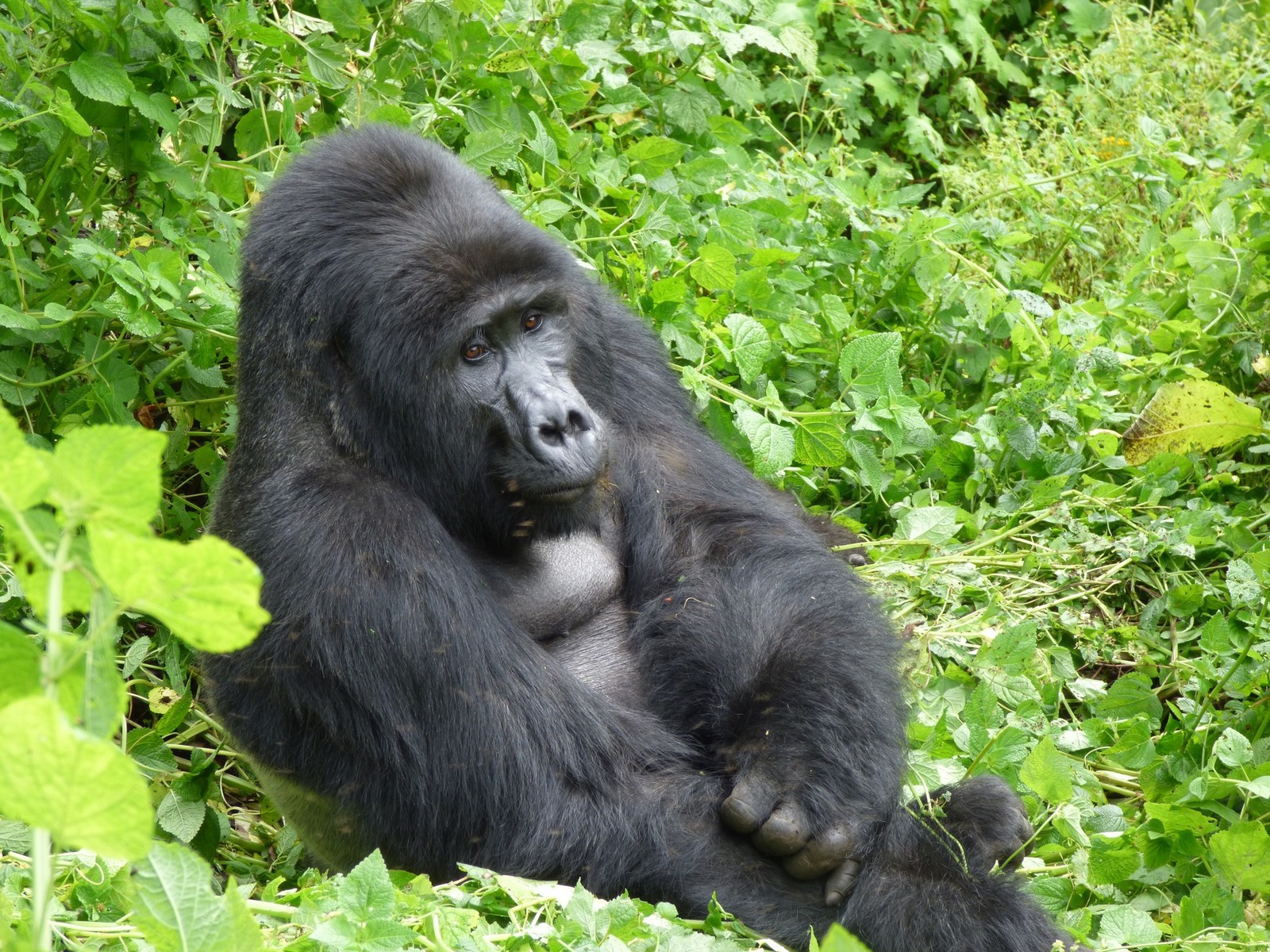
On day eleven of your 17 Days Uganda gorilla trekking and Mountain Kilimanjaro climb, you will take part in the main event. After arriving at the park headquarters for a mandatory briefing, you will enter the forest with your guides and trackers to locate the assigned gorilla family. The trek is conducted through dense, steep, and often muddy terrain. Once you find the gorillas, you are permitted to spend one hour observing them in their natural habitat. You will follow the guidance of the rangers to ensure the interaction remains safe and respectful for the primates. After the encounter, you return to the starting point and head back to your lodge. This day provides a unique opportunity to see the gorillas within the forest ecosystem, forming the central, most anticipated element of your 17 Days Uganda gorilla trekking and Mountain Kilimanjaro climb.
Day 12: Buffer / Optional Community Activities
The twelfth day of your 17 Days Uganda gorilla trekking and Mountain Kilimanjaro climb is a designated buffer day. Following the physical effort of the gorilla trek, this day is intended for rest and recuperation. You may spend the time at your lodge, or if you prefer active engagement, you can participate in community activities. This may include visiting the local Batwa indigenous community to learn about their traditions and historical use of the forest, or taking guided walks in the surrounding areas. The pace today is flexible, allowing you to recover from the previous days’ activities without the pressure of a fixed, strenuous schedule. This break is strategically placed to ensure you remain comfortable and focused during the final stages of the 17 Days Uganda gorilla trekking and Mountain Kilimanjaro climb, providing time to process the experiences you have had so far.
Day 13: Transfer to Queen Elizabeth National Park
On day thirteen of the 17 Days Uganda gorilla trekking and Mountain Kilimanjaro climb, you depart the Bwindi area and drive toward Queen Elizabeth National Park. The journey takes you through the Ishasha sector, which is recognized for its tree-climbing lions. You will perform a mini-game drive during this transit, allowing you to observe the savannah wildlife from the comfort of your vehicle. Upon arriving at the park, you will check into your lodge for the night. This transition moves you from the high-altitude forests of the south into the open grasslands and diverse ecosystems of the park. The change in environment provides a different perspective on Uganda’s wildlife, building on the experiences of the previous days as you continue the 17 Days Uganda gorilla trekking and Mountain Kilimanjaro climb.
Day 14: Game Drive & Kazinga Channel Boat Cruise
Day fourteen of your 17 Days Uganda gorilla trekking and Mountain Kilimanjaro climb is focused on exploring Queen Elizabeth National Park. Your morning begins with a game drive through the savannah, where you can search for elephants, buffaloes, and various antelope species. The afternoon schedule includes a boat cruise along the Kazinga Channel. This water-based activity offers a look at the large hippo populations and the many bird species that inhabit the shoreline. This combination of land and water travel provides a comprehensive overview of the park's biodiversity. By spending the day observing wildlife in their natural environment, you are engaging with the ecological diversity that Uganda is known for. It is a day of sustained wildlife viewing that complements the primate-focused activities of the earlier stages of the 17 Days Uganda gorilla trekking and Mountain Kilimanjaro climb.
Day 15: Transfer to Kibale Forest National Park
On the fifteenth day of your 17 Days Uganda gorilla trekking and Mountain Kilimanjaro climb, you transfer to Kibale Forest National Park. Known as a significant location for primate study, the Kibale Forest is home to a high density of chimpanzees. The drive allows you to observe the changing landscape as you move toward the primate capital. Upon arrival, you will check into your lodge, which is situated near the forest boundary. The evening provides time to rest and prepare for the tracking activity scheduled for the following morning. The environment here is lush and provides a quiet contrast to the savannah areas visited previously. As you approach the final stages of your journey, this day serves to prepare you for the last major primate encounter of the 17 Days Uganda gorilla trekking and Mountain Kilimanjaro climb.
Day 16: Chimpanzee Tracking & Transfer to Entebbe
Day sixteen of your 17 Days Uganda gorilla trekking and Mountain Kilimanjaro climb involves an early morning start for chimpanzee tracking in Kibale Forest. You will follow the forest trails to locate a chimpanzee community and observe their social behaviors. This activity requires moderate physical effort as you move through the forest. Once the tracking is finished, you will begin the transfer back to Kampala or Entebbe. This transit covers a significant distance, and you will arrive at your accommodation in the evening. This is the final full day of your trip, allowing you time to relax and reflect on the various regions you have visited, from the mountains of Tanzania to the forests of western Uganda, as you conclude your 17 Days Uganda gorilla trekking and Mountain Kilimanjaro climb.
Day 17: Flight Back Home
The seventeenth day of your 17 Days Uganda gorilla trekking and Mountain Kilimanjaro climb is your departure day. Depending on the timing of your international flight, you may have the morning to do some souvenir shopping in Entebbe or visit local attractions near the airport. You will then transfer to Entebbe International Airport for your flight home. This day marks the official conclusion of your journey. As you head to the airport, you can look back on the progress you have made, the landscapes you have crossed, and the wildlife encounters you have experienced. The structured nature of this itinerary ensures that all logistics have been managed, allowing for a steady and organized end to your 17 Days Uganda gorilla trekking and Mountain Kilimanjaro climb.
1. Is 17 days enough to do both activities?
Yes, a 17-day itinerary provides a balanced and logical timeframe to successfully complete both a Mount Kilimanjaro climb and a comprehensive tour in Uganda. The allocation of time is the key to managing the physical and logistical demands of such a journey. Typically, the Kilimanjaro portion requires 6 to 7 days on the mountain to ensure proper acclimatization and a safe summit push, followed by an additional day for descent and recovery.
Following the climb, the transition period of 1 to 2 days allows for international or regional flights and the necessary logistics to move from Tanzania into the Ugandan forest regions. The remaining 8 to 9 days are then perfectly situated for gorilla trekking, chimpanzee tracking, and wildlife viewing in parks like Queen Elizabeth or Kibale. This distribution prevents the schedule from feeling rushed. It grants you sufficient rest between the high-altitude exertion of the mountain and the humid, dense-forest trekking required to locate primate families. By keeping to this 17-day structure, you maintain a steady, manageable pace that accounts for the different physical environments while ensuring that you have adequate time to appreciate the unique wildlife encounters each destination offers without feeling pressured by a restrictive clock.
2. Where does this itinerary start and end?
The start and end points of this itinerary are designed to maximize efficiency and minimize unnecessary travel across East Africa. The journey typically begins at Kilimanjaro International Airport (JRO) in Tanzania. This gateway is the primary access point for climbers, providing immediate proximity to the town of Moshi or Arusha, where your mountain preparations, gear checks, and initial briefings take place. Starting here ensures you are well-positioned to head directly to the Machame or Lemosho gate to begin your ascent.
Conversely, the trip concludes after your final wildlife experiences in Uganda. Depending on the specifics of your domestic travel, you will typically finalize your itinerary in the vicinity of Bwindi Impenetrable National Park or Mgahinga Gorilla National Park. Once your gorilla trekking and regional activities are completed, your departure is usually facilitated through Entebbe International Airport (EBB). This airport serves as the central hub for international travelers leaving Uganda. By entering through Tanzania and exiting through Uganda, you create a linear, south-to-north route that eliminates the need for backtracking. This logistical flow is standard for combined East African itineraries, ensuring your time is spent on wildlife and wilderness rather than repetitive transit.
3. Which is the best Mount Kilimanjaro route?
Selecting the "best" route depends on your goals for acclimatization, success rates, and scenic immersion. The Machame Route, often referred to as the "Whiskey Route," is the most popular choice for a 7-day trek. It is highly regarded for its diverse ecological transitions and its excellent acclimatization profile, as it allows for a "climb high, sleep low" approach that is critical for reaching Uhuru Peak. The Machame route is demanding, but its popularity is a testament to its effectiveness and the dramatic nature of the landscapes it traverses.
The Lemosho Route is another top-tier option, frequently favored by those seeking a more remote and pristine wilderness experience during the initial days of the climb. It approaches from the west and offers arguably the most varied scenery, including the expansive views of the Shira Plateau. Lemosho often features higher summit success rates because it typically incorporates an additional day or a more gradual incline compared to shorter, more direct trails. Both Machame and Lemosho are superior for an itinerary that follows with a secondary trip to Uganda, as they balance physical rigor with a scientific approach to altitude. Choosing between them often comes down to your personal preference for solitude versus a more social trail atmosphere.
4. Which is better for gorilla trekking: Bwindi or Mgahinga?
The choice between Bwindi Impenetrable National Park and Mgahinga Gorilla National Park depends on the type of experience you are seeking. Bwindi is the most popular destination for gorilla trekking in Uganda, and for good reason. It is a vast, ancient forest that offers four distinct tracking sectors—Buhoma, Ruhija, Rushaga, and Nkuringo. Because Bwindi is so large and supports a higher number of habituated gorilla families, it provides a broader range of options for trekking difficulty levels and visitor capacity, making it easier to coordinate with your travel logistics.
Mgahinga Gorilla National Park, while much smaller, offers a more intimate and distinct environment. It is home to only one habituated family, but the backdrop is truly unique; you are trekking in a park bordered by three dramatic, inactive volcanoes. This volcanic terrain creates a striking contrast to the dense, hilly canopy of Bwindi. If your priority is a wide range of options and a higher frequency of family encounters, Bwindi is the optimal choice. If you are attracted to the volcanic aesthetic and the experience of a less-trafficked, smaller park, Mgahinga is a worthy alternative. Both parks offer excellent conservation standards and the chance to see gorillas in a wild, protected setting, ensuring a high-quality encounter regardless of your final destination.
5. What permits do I need, and how far in advance should I book?
For the Ugandan portion of your trip, the essential document is the Uganda gorilla trekking permit. These permits are issued by the Uganda Wildlife Authority (UWA) and are strictly limited to a specific number of visitors per day to minimize stress on the gorilla families. Because demand consistently outstrips supply, these permits often sell out months in advance, particularly for the peak travel seasons. It is vital to book your permits 3 to 6 months before your intended travel date.
Partnering with a licensed tour operator is the most secure way to handle this, as they have established procedures for booking directly with the UWA. You cannot simply arrive and purchase a permit at the park gate. For the Kilimanjaro climb, you do not need a "lottery-style" permit in the same way, but you do need to secure your park entrance fees and hut/camping reservations through a registered operator. The mountain crew logistics—guides, porters, and food—must also be coordinated well in advance. By finalizing both the gorilla permits and your mountain bookings months ahead of time, you remove the most significant logistical risk of your trip and ensure that all your travel plans are guaranteed long before you leave home.
6. How fit do I need to be?
This 17-day adventure requires a high level of physical conditioning because it combines two very different types of strenuous activity. The Kilimanjaro climb is a high-altitude mountaineering expedition. You will be hiking for 5 to 8 hours daily, often on steep terrain and in freezing, thin-air conditions. Your body must be capable of sustained cardiovascular effort over multiple consecutive days. Preparation for this should include dedicated aerobic training, such as stair climbing, running, and long, multi-day hikes on uneven trails with a weighted pack.
Gorilla trekking presents a different kind of challenge. You will be hiking through wild, untamed rainforests that are steep, muddy, and covered in dense vegetation. There are rarely clear, flat paths; you will often be walking off-trail, navigating vines, bamboo, and uneven, slick ground. While the duration of the hike is shorter than the daily mountain trek, the intensity of movement through the jungle requires strong core stability, balance, and leg strength. If you are fit enough to successfully complete a 7-day Kilimanjaro climb, you will generally have the physical stamina required for gorilla trekking, but it is important to train specifically for the "jungle" terrain as well. Solid fitness not only improves your safety and stamina but also ensures you are not too exhausted to enjoy the rare moments of discovery in both the mountains and the forest.
7. How do I travel between Mount Kilimanjaro and Uganda?
Traveling between your two destinations requires careful planning to ensure a seamless transition. The most effective route is a regional flight. You will typically conclude your Kilimanjaro hike, spend time in Moshi or Arusha, and then transfer to Kilimanjaro International Airport (JRO) or Arusha Airport (ARK). From there, you will fly to Entebbe International Airport (EBB) in Uganda, which is the primary gateway for reaching Bwindi or Mgahinga.
There are several airlines that operate routes connecting these regional hubs. Another common transit option, depending on airline schedules, is flying from Tanzania into Kigali, Rwanda (KGL). From Kigali, you can take a road transfer across the border into southwestern Uganda. This drive is roughly 4 to 5 hours and brings you directly to the gorilla park regions. Both options are efficient, but the road transfer from Kigali is sometimes preferred because it avoids additional domestic flight logistics within Uganda. It is highly advised to have your tour operator manage these connections as a complete package. They can ensure your transfers are aligned, handle any flight changes, and provide the necessary ground transportation to get you from the airport to your lodge. This professional support is the best way to keep your transit times low and your focus on your upcoming activities.
8. Do I need a visa for both countries?
Yes, you will need a visa for both Tanzania and Uganda. Each country maintains its own immigration and visa policies, and you are responsible for obtaining the appropriate entry documents for each. It is highly recommended to use the official electronic visa systems for both Tanzania and Uganda to apply for your visas well in advance of your departure date. This process allows you to arrive with your documentation already in hand, which simplifies your entry at the airports.
If you choose to enter Uganda via Rwanda, there is a convenient alternative: the East Africa Tourist Visa. This is a single, multi-entry visa that covers travel through Kenya, Rwanda, and Uganda for a single fee and a fixed duration. This can be a very cost-effective and time-saving option if you are planning to cross borders within those specific countries. However, it does not cover Tanzania. Regardless of which visa you choose, you should also ensure your passport has at least six months of validity remaining and sufficient blank pages for stamps. Always check the latest requirements on the official government immigration websites or consult with your tour operator, as entry policies can sometimes change on short notice.
9. What is the weather like for both activities?
The weather on this trip is defined by extreme contrasts, requiring you to pack for two completely different environments. On Mount Kilimanjaro, you will experience a dramatic shift in climate as you ascend. You begin in the rainforest, but as you climb higher, the temperatures drop significantly, reaching well below freezing at the summit. You will encounter high winds, alpine cold, and potentially snow, particularly during the midnight summit push. Your gear must be robust enough to provide insulation and protection against these harsh conditions.
In the Ugandan rainforest, the situation is the opposite. The Bwindi environment is generally warm and humid, typical of a tropical forest at mid-elevation. However, the "impenetrable" forest is also defined by its own micro-climate. You can expect sudden, heavy tropical downpours at any time of the day. The ground is often damp, and the humidity can be high, which makes breathability in your clothing very important. While you don't need arctic-rated gear in the jungle, you do need reliable waterproofing, such as a high-quality poncho or rain jacket, and moisture-wicking layers that will keep you comfortable even if they get wet. Preparing for both the biting cold of the mountain and the humid precipitation of the rainforest is essential for maintaining your health and comfort throughout the trip.
10. What is the best time of year to do this combo?
The ideal timing for this combined 17-day adventure is during the dry seasons, which are January to March and June to October. These periods are widely considered the "sweet spot" because they offer the most predictable weather for both high-altitude mountaineering and jungle trekking. During the dry season, the trails on Mount Kilimanjaro are firmer, and you have the best chance of clear skies and lower wind speeds for your summit push, which significantly increases your safety and comfort.
For the gorilla trekking in Uganda, the dry season is equally advantageous. While Bwindi is a rainforest and can be wet at any time, the frequency of rain is noticeably lower during these months. This makes the steep, forested trails much less muddy and easier to traverse, allowing for a more focused and enjoyable tracking experience. Furthermore, the drier weather makes wildlife photography and observation more pleasant. Planning your trip in these months also generally coincides with the best flight availability and overall logistical conditions in the region. By targeting these dry-season windows, you minimize the risks of weather-related delays or hazardous trail conditions, allowing you to focus on the goal of your journey.
11. What vaccinations and health precautions do I need?
Health preparation is an essential part of your pre-trip planning. A Yellow Fever vaccination is mandatory for entry into both Tanzania and Uganda. You must have an official Yellow Fever Vaccination Certificate to present to immigration officials upon arrival, or you may be denied entry. Beyond this mandatory requirement, you should visit a travel clinic or your physician at least 6–8 weeks before departure to discuss other routine and regional health recommendations.
For Uganda, anti-malarial medication is strongly recommended, as malaria is present in the lower-altitude areas. You should also discuss routine vaccines—such as Hepatitis A, Typhoid, and Tetanus—to ensure you are up to date. Altitude sickness is the primary health concern on Kilimanjaro; discuss with your doctor whether a prescription for acetazolamide (Diamox) is appropriate for your specific needs, as it is a common aid in managing altitude symptoms. Throughout your trip, maintain basic hygiene practices: drink only treated or bottled water, use insect repellent consistently, and be mindful of food safety. Staying healthy is the most important factor in completing your itinerary, so treat your health preparations with the same level of seriousness as you would your physical training.
12. What are the baggage limitations?
Because this itinerary requires you to move between alpine mountain camps and remote rainforest lodges, your baggage strategy should prioritize being compact and lightweight. For the Kilimanjaro portion, you will have a mountain crew carrying your main duffel bag, but you are generally limited to a specific weight (often around 15 kg for the main duffel) to accommodate the load capacity of the porters. On your daypack, you should only carry what is necessary for the day.
When you transition to internal regional flights to move from Tanzania to Uganda, baggage limits become much stricter. These smaller aircraft often impose a limit of 15–20 kg per person, and oversized or heavy bags can be an issue. To manage this, many tour operators offer a service where you can leave your excess luggage—such as the heavy clothes used for the Kilimanjaro summit—at the base hotel in Moshi or Arusha. You then pick up your stored items upon your return or at the end of the trip. By organizing your packing into a "mountain kit" and a "safari kit," you can leave the bulk of your gear behind and travel lightly through the Ugandan forest sector. Efficient packing is not just a requirement for flights; it makes your transit, vehicle transfers, and hotel check-ins much smoother.
13. What should I pack for Kilimanjaro versus Gorilla Trekking?
You are essentially packing for two different worlds. For Kilimanjaro, your focus is thermal regulation. Pack multiple thermal base layers, fleece mid-layers, and a heavy insulated down jacket to survive the summit's arctic conditions. Waterproof shell pants and a jacket are essential to block wind and snow. You will also need a 4-season sleeping bag and broken-in waterproof hiking boots. Trekking poles are critical for saving your knees on the long descent.
For gorilla trekking, your focus is protection against the jungle. Pack lightweight, breathable, long-sleeved shirts and long trousers to shield your skin from thorny vegetation and stinging nettles. You need sturdy, ankle-support hiking boots with deep tread, as the forest floor is often slippery and steep. Gaiters are a great addition to keep mud out of your boots. Many travelers bring garden gloves to protect their hands when they need to grab onto branches or vines during the climb. A waterproof daypack and a high-quality rain poncho are essential, as you will likely experience rain in the forest. By treating these as two distinct packing projects, you ensure that you are fully equipped for the freezing heights of the mountain and the damp, dense environment of the African jungle.
14. Can I see the gorillas if I have a cold?
No, you absolutely cannot participate in gorilla trekking if you have a cold, flu, or any respiratory illness. Mountain gorillas are highly susceptible to human airborne diseases because they have not developed the same immune defenses against them. Because they share approximately 98% of our DNA, even a minor human infection can be severe, or even fatal, to the gorilla population.
Park rangers are very strict about this; during the pre-trekking briefing, they will ask if anyone is feeling unwell. If you have any symptoms of a respiratory illness, you will be barred from trekking to protect the animals. This policy is a core pillar of gorilla conservation. If you are sick, the best course of action is to inform your guide or the park authorities immediately. Do not attempt to hide your symptoms, as the health of the habituated gorilla families is paramount. This rule is why it is so important to maintain your health through diet, rest, and hygiene throughout your trip, especially in the days leading up to your trek. Protecting the gorillas is a collective responsibility, and your willingness to step back if you are unwell is a fundamental part of being a responsible traveler.
15. How long do I spend with the gorillas?
Once you and your trackers finally locate the habituated family you have been assigned to, you are permitted exactly one hour of observation time. This limit is strictly enforced to ensure that the gorilla family’s daily routine is not significantly disrupted and to prevent the animals from becoming over-stressed by the constant presence of visitors.
During this hour, you have a rare opportunity to observe them as they eat, play, groom, and socialize. Your trackers and guides will keep you at a distance of at least 7 meters. While this may sound like a short period, it is an incredibly dense, intense, and memorable hour that feels like much longer. It is the culmination of your journey through the forest, and because the gorillas are often quite active, this time is more than enough to capture meaningful photos and to appreciate their complex family dynamics. The strict time limit is part of the reason gorilla trekking remains a sustainable and highly managed form of conservation, ensuring that these remarkable primates remain protected for future generations while allowing you a truly deep, up-close connection.
16. Do I need travel and medical insurance?
Yes, comprehensive travel and medical insurance is not just recommended; it is mandatory for this type of trip. Kilimanjaro is a high-altitude expedition, and you must ensure that your policy explicitly provides coverage for mountaineering at altitudes of up to 6,000 meters. This should include emergency medical evacuation, such as a helicopter rescue, which can be critical if an altitude-related emergency occurs on the mountain.
Beyond mountain-specific coverage, your insurance should be "all-inclusive," covering trip cancellation, interruption, and baggage loss. Given the costs associated with gorilla permits and internal regional flights, protecting your financial investment in the trip is important. When selecting a policy, confirm that the terms cover all your planned activities, including the trekking and the high-altitude climb. Many insurance providers offer "adventure sports" add-ons that are specifically designed for these types of expeditions. Always read the fine print to be sure you are covered in the specific countries you are visiting and that the coverage limits for medical evacuation are sufficient for a remote area. Do not start your trip without proof of your insurance policy, as you will likely be asked to show it during your orientation or check-in process.
Booking 17 Days Uganda gorilla trekking and Mountain Kilimanjaro climb with us Roads of Adventure safaris
Book your 17-day Uganda gorilla trek and Mount Kilimanjaro climb directly through Roads of Adventure Safaris. Based locally in Seguku, Kampala, you can reach their experts to tailor this cross-border adventure at info@roadsofadventuresafaris.com
