The 17-day iconic birding and wildlife safari in Uganda is an immersive tour through the "Pearl of Africa", offering access to over 1,073 bird species. Highlights include the Shoebill at Mabamba Swamp, forest birding for endemics in Bwindi and Kibale, and iconic gorilla and chimpanzee trekking
17-days-uganda-birding-safari-itinerary
Days 1-2: Entebbe & Mabamba Swamp
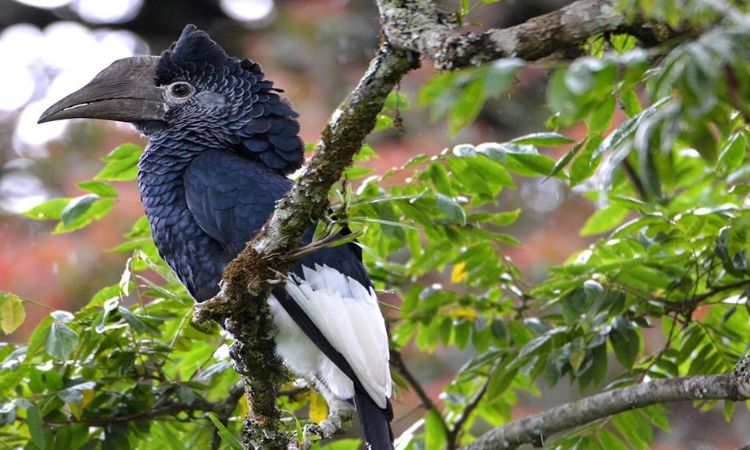
Day 1: Your 17 Days Iconic Bird watching safari in Uganda kicks off beautifully in Entebbe. We begin birding at the lush Entebbe Botanical Gardens, positioned right on the shores of Lake Victoria. This peaceful haven introduces you to classic lakeside and forest-edge residents. Look up into the high canopy to spot the magnificent Great Blue Turaco, Eastern Grey Plantain-eater, and the brilliant Black-and-white-casqued Hornbill. Along the water’s edge, keep your eyes peeled for the Pink-backed Pelican, Yellow-billed Duck, and various weavers, including the orange-hued Golden-backed Weaver. Overhead, Bat Hawks frequently glide as dusk approaches. This gentle introduction allows you to check off common woodland and water species while shaking off any travel fatigue. Enjoy the relaxed atmosphere, unpack your binoculars, and tune your ears to the rich avian chorus. It sets a perfect baseline for the incredible deep-forest and wetland tracking ahead.
Day 2: Today features a cornerstone experience of the 17 Days Iconic Bird watching safari in Uganda. We transfer early to the internationally recognized Mabamba Wetland, a vast papyrus labyrinth. Boarding a traditional motorized canoe, we silently navigate narrow channels in search of Africa's most coveted marsh dweller: the prehistoric Shoebill Stork. Watching this massive, shoe-billed giant patiently stalk lungfish among the reeds is completely unforgettable. The swamp is teeming with specialized life; you will likely spot the striking Papyrus Gonolek, Blue Swallow, Lesser Jacana, and the graceful African Marsh Harrier. Squacco Herons and Purple Swamphens flutter between lily pads while Malachite Kingfishers dart past like colorful arrows. The local community co-manages this pristine Ramsar site, ensuring expert tracking while conserving the fragile habitat. Capturing a clear photograph of a resident Shoebill at eye level provides an early, unbeatable highlight for your East African ornithological collection.
Days 3-4: Lake Mburo National Park
Day 3: Leaving the lakeside behind, our 17 Days Iconic Bird watching safari in Uganda journeys southwest to Lake Mburo National Park. This beautiful park presents a stark change in scenery, dominated by rolling hills, interconnected wetlands, and dense acacia woodlands. As we enter the gates, the avian profile shifts dramatically. We instantly start tracking savanna specialties like the Rufous-bellied Heron, Bare-faced Go-away-bird, and the endemic-heavy Red-faced Barbet. Mburo is unique because its rich woodlands blend seamlessly with grassy plains, allowing you to bird alongside large herds of Impalas, Burchell’s Zebras, and Topis. In the afternoon, a targeted game drive targets the Crested Francolin, Coqui Francolin, and the spectacular Lilac-breasted Roller resting on low branches. As dusk falls, our attention turns to nightjars; we listen carefully for the distinctive call of the Black-shouldered Nightjar, wrapping up an exceptional day of savanna exploration.
Day 4: We dedicate this morning to the quiet waters of Lake Mburo, a vital feature of your 17 Days Iconic Bird watching safari in Uganda. Boarding a peaceful boat cruise, our prime target is the incredibly elusive African Finfoot, which hides quietly under overhanging riverine roots. As we coast along the quiet banks, we frequently observe the brilliant White-backed Night Heron, Giant Kingfisher, and the majestic African Fish Eagle screaming from high snags. Blue-breasted Kingfishers add flashes of sapphire to the papyrus fringes, while pods of snorting hippos keep us company. Later in the afternoon, we head inland for a specialized acacia woodland walk. Walking with an armed ranger brings you close to smaller, fast-moving insectivores like the Red-headed Weaver, Green-capped Eremomela, and the dynamic Greater Honeyguide. It’s an immersive, ground-level birding experience that beautifully rounds out our stay in this compact savanna gem.
Days 5-6: Kibale Forest National Park & Bigodi Wetland
Day 5: Today, our 17 Days Iconic Bird watching safari in Uganda climbs toward the lush, moist evergreen canopy of Kibale Forest National Park. Famed for its exceptional primate density, Kibale is equally legendary among international birdwatchers as an equatorial forest haven. Our primary, highly sought-after target here is the rare and secretive Green-breasted Pitta. Finding this tiny, vibrant bird requires entering the forest floor at the crack of dawn, listening closely for its unique, brief display calls among the leaf litter. As the morning mist clears, the dense mid-story reveals a treasure trove of forest specialists. We will actively search for the stunning African Emerald Cuckoo, Black-billed Turaco, and the vocal Western Nicator. The sheer density of fruiting figs attracts multiple hornbill species, keeping the canopy alive with activity. Every rustle overhead could mean a rare canopy flock or a curious troupe of wild chimpanzees.
Day 6: The adventure continues with an excursion into the community-run Bigodi Wetland Sanctuary on this 17 Days Iconic Bird watching safari in Uganda. This rich papyrus and swamp forest boardwalk serves as an incredible contrast to the deep jungle. Bigodi is fondly known as the "capital of the Great Blue Turaco" due to the high density of these massive, vibrant blue-and-yellow birds crashing through the fruiting trees. We will also track the Papyrus Canary, White-winged Warbler, and the stunningly colorful Superb Sunbird. Primates heavily frequent this boardwalk; expect excellent close-up views of Central African Red Colobus, Grey-cheeked Mangabeys, and L’Hoest’s Monkeys foraging in the branches. In the afternoon, we return to the Kibale forest fringes to search for localized canopy dwellers, including the Speckled Tinkerbird, Joyful Greenbul, and the Dusky Crimson-wing, finalizing a spectacular, highly diverse two-day equatorial forest checklist.
Day 7: Semuliki National Park
Day 7: Today we descend into the hot, steaming lowlands of the Albertine Rift Valley to explore Semuliki National Park, a critical highlight of the 17 Days Iconic Bird watching safari in Uganda. Semuliki represents the easternmost extension of the vast Congo Basin central African rainforest. This unique geographic positioning means you will traverse the forest floors searching for Guinea-Congo forest biome species found nowhere else in East Africa. Our expert tracking targets iconic West African specialties, including the massive Black-casqued Wattled Hornbill, Piping Hornbill, and the striking Nkulengu Rail. We will explore the trails surrounding the famous Sempaya Hot Springs, looking out for the White-crested Hornbill, Red-billed Dwarf Hornbill, and the elusive Spot-breasted Ibis. The dense tangled undergrowth also harbors secretive insect-eaters like the Fiery-breasted Bush-shrike and the African Piculet, rewarding patient birders with highly unique, range-restricted additions to their master trip checklist.
Days 8-9: Queen Elizabeth National Park
Day 8: Our 17 Days Iconic Bird watching safari in Uganda shifts into the expansive savanna landscapes of Queen Elizabeth National Park. Boasting an incredible checklist of over 600 distinct avian species, this park is an absolute powerhouse for aquatic, raptor, and savanna birding. Our morning game drive cuts across the scenic Kasenyi plains, where we look for the stately Secretary Bird, Martial Eagle, and the beautiful Temminck’s Courser running along the short grass. The open landscape makes it easy to spot spectacular seasonal migrants alongside resident raptors like the Bateleur and Rupell’s Vulture. We will also keep a sharp eye out for Queen’s famous big game, including massive African bush elephants, Cape buffaloes, and lions resting in the acacia thickets. This incredible mix of abundant big game and dense predatory birdlife creates an exhilarating, classic African safari atmosphere.
Day 9: Today we focus heavily on the aquatic wonders of the park during this segment of the 17 Days Iconic Bird watching safari in Uganda. The afternoon features a premier boat cruise along the famous Kazinga Channel, a natural waterway connecting Lake Edward and Lake George. This cruise offers world-class, close-range bird photography opportunities. The muddy banks are literally carpeted with hundreds of water birds, including the African Skimmer, Great White Pelican, Yellow-billed Stork, and the striking Saddle-billed Stork. We will glide past wallowing pods of hippos and drinking buffalo herds while spotting Gull-billed Terns and Pied Kingfishers hovering precisely overhead. Later, we explore the nearby saline crater lakes, such as Lake Katwe, which often host magnificent flocks of Lesser Flamingos. This water-rich day ensures an exceptional tally of waders, herons, and shorebirds to significantly boost your overall species count.
Days 10-13: Bwindi Impenetrable National Park
Day 10: We ascend into the ancient, mist-shrouded valleys of Bwindi Impenetrable National Park, an undisputed crown jewel of our 17 Days Iconic Bird watching safari in Uganda. This UNESCO World Heritage site is a global hotspot, protecting over 23 Albertine Rift endemics. We begin our birdwatching through a famous altitudinal transition zone known locally as "The Neck." This narrow forest corridor links Bwindi’s high and low sectors, creating a unique mixing ground for diverse bird life. Walking along the forest road, we track the stunning Black Bee-eater, Many-colored Bush-shrike, and the rare Chapin’s Flycatcher. The rushing river below attracts the African Black Duck and Cassin’s Flycatcher, which dart expertly over the water. The lush, moss-draped canopy rings with a complex symphony of calls, keeping us looking upward as we transition into one of the most biologically diverse forests on earth.
Day 11: This day is intentionally reserved for a truly life-changing optional activity on your 17 Days Iconic Bird watching safari in Uganda: Mountain Gorilla trekking. Venturing deep into the steep, tangled jungle slopes with expert park rangers, you will track one of Bwindi’s habituated mountain gorilla families. Coming face-to-face with a massive, gentle Silverback in his natural forest home is a profound wildlife encounter that transcends traditional birding. For those prioritizing a pure birdwatching focus, the day delivers an equally spectacular alternative. We will deeply explore the ancient forest trail networks around Buhoma. This specialized walk targets secretive understory skulkers like the diminutive Neumann's Warbler, Red-throated Alethe, and the beautiful Bar-tailed Trogon. Whether you spend the day watching gorillas feed or tracking hidden forest endemics, Bwindi’s magical, primeval atmosphere will leave you completely spellbound.
Day 12: Today we climb higher into Bwindi's rugged Ruhija sector, heading straight for the legendary Mubwindi Swamp trail on our 17 Days Iconic Bird watching safari in Uganda. This steep, deeply rewarding mountain trek drops through various montane forest zones into a hidden, high-altitude peat swamp. Mubwindi is world-famous as the premier site to find the highly endangered, prehistoric-looking African Green Broadbill. Finding this tiny, bright green gem sitting quietly in the canopy requires patience and expert local guiding. The surrounding bamboo and marsh vegetation are also home to the globally threatened Grauer’s Rush Warbler, Regal Sunbird, and Archer’s Robin-Chat. The challenging hike back up the ridge is heavily mitigated by spectacular, sweeping views of the undulating valleys and the distant, dramatic Virunga Volcanoes, making it an absolute pilgrimage site for serious global birders.
Day 13: We spend our final full day in the high-altitude Ruhija sector, maximizing our checklist for this legendary section of the 17 Days Iconic Bird watching safari in Uganda. Today we focus on checking off remaining Albertine Rift endemics along the high bamboo ridges and exposed forest edges. Key targets include the stunning, multi-colored Rwenzori Turaco, Stripe-breasted Tit, Mountain Masked Apalis, and the rare Strange Weaver. Ruhija’s open, misty canopy allows for excellent light and clear visibility, making it a favorite for bird photography enthusiasts. We will patiently watch flowering mistletoes for the dazzling Purple-breasted Sunbird and Blue-headed Sunbird. In the quiet afternoon, we engage with a local community guide to learn about traditional forest conservation, reflecting on the incredible endemics we have successfully cataloged across Bwindi’s ancient, impenetrable valleys before preparing for our next montane destination.
Days 14-15: Mgahinga Gorilla National Park
Day 14: Our 17 Days Iconic Bird watching safari in Uganda journeys further south to Mgahinga Gorilla National Park, where Uganda meets Rwanda and the DRC. Mgahinga protects the dramatic slopes of three extinct Virunga Volcanoes, offering a breathtaking alpine backdrop. We spend the day exploring the specialized bamboo and montane forest belts. The star attractions here are the elusive crimson-wings; we will carefully scan the thick bamboo undergrowth to find the rare Shelley’s Crimson-wing and the localized Dusky Crimson-wing. The high-altitude habitat also introduces the handsome Kivu Ground-Thrush, Rwenzori Double-collared Sunbird, and the striking Archer's Robin-Chat. Walking through the giant heather zones feels like stepping into a fantasy world. The crisp mountain air and dramatic volcanic topography add an adventurous, exclusive feel to today’s targeted tracking session.
Day 15: We dedicate our second day in Mgahinga to exploring the unique Gorge Trail on this 17 Days Iconic Bird watching safari in Uganda. This trail winds deeply between Mount Gahinga and Mount Sabinyo, cutting through lush montane forests and spectacular bamboo glades. We will actively search for the Rwenzori Batis, Stripe-breasted Tit, and the beautiful, golden-backed Alpine Swift soaring high along the volcanic cliffs. Mgahinga is also famous as the only place in Uganda to track the endangered Golden Monkey; an optional trek can easily be integrated to watch these playful, orange-furred primates leap through the bamboo canopy. In the afternoon, we explore the park fringes, where local fields offer excellent opportunities to spot the colorful Cinnamon-chested Bee-eater, Cape Robin-Chat, and Streaky Seed-eater, completing a highly specialized, top-tier montane birding experience.
Days 16-17: Lake Mburo & Departure
Day 16: As our incredible journey nears its conclusion, the 17 Days Iconic Bird watching safari in Uganda breaks up the long return drive by stopping once more at Lake Mburo National Park. Arriving in the afternoon allows us to clean up any missing savanna or woodland species on our list. We will embark on a relaxed sunset game drive, specifically targeting the striking Long-tailed Lapwing, African Wattled Lapwing, and various elegant birds of prey like the Wahlberg's Eagle resting in the acacia tops. This evening provides a wonderful opportunity to relax at the lodge, sort through your extensive digital photo galleries, and count up your massive species checklist. The familiar grunts of distant hippos and the peaceful, golden savanna light create a beautiful, nostalgic atmosphere for our final night out in the Ugandan bush.
Day 17: On this final morning of the 17 Days Iconic Bird watching safari in Uganda, we head out for a crisp, early morning bird walk accompanied by an expert park ranger. The golden morning light is perfect for spotting the Green Wood-hoopoe, Common Scimitarbill, and the localized Spot-flanked Barbet hopping through the acacia branches. After a hearty breakfast, we pack up our gear and begin the scenic drive back toward Kampala or Entebbe International Airport. We will make a celebratory stop at the Equator crossing for lunch, some fun souvenir shopping, and final photos. Your guide ensures a smooth, timely transfer directly to the airport for your evening departure flight. You head home with spectacular photographs, unforgettable wildlife memories, and a world-class species checklist from this ultimate African birding adventure
1. What makes the 17 Days Iconic Birdwatching Safari distinct from a standard wildlife safari in Uganda?
While a standard wildlife safari focuses primarily on large savannah mammals via traditional open vehicle game drives, the 17 Days Iconic Birdwatching Safari is a highly specialized, slower-paced expedition designed to maximize avian species counts across multiple distinct ecosystems. Uganda boasts over 1,000 bird species—accounting for roughly 50% of Africa’s avian population and 11% of the global total—all packed into a country the size of Great Britain. This specific 17-day itinerary targets highly sought-after localized endemics, prehistoric macro-fauna, and secretive forest dwellers that casual tourists completely miss.
The structural flow of this safari covers an incredible altitudinal gradient, moving systematically through distinct ecological zones. It carries birders from the low-lying papyrus fringes of Lake Victoria up to the ancient, mist-shrouded Afro-montane forests of the Albertine Rift, and finally into the classic acacia savannahs and riverine systems of western Uganda. Because forest birding requires intense listening, patience, and visual tracking, your daily schedule is entirely different from a standard trip. You will spend hours on foot along narrow forest tracks or quietly paddling in non-motorized wooden canoes, rather than just driving past herds of animals.
Additionally, the guide leading this safari is not a generalist driver-guide. They are an elite, specialized ornithological specialist who knows distinct vocalizations, micro-habitats, and territorial behaviors. While you will still cross paths with iconic African mammals like elephants, tree-climbing lions, and mountain gorillas, every single day is strategically structured around ticking off legendary lifers like the elusive Green-breasted Pitta, the endangered African Green Broadbill, and a spectacular array of colorful sunbirds, turacos, and hornbills.
2. When is the absolute best time of year to schedule this 17-day birding itinerary?
Uganda is an exceptional year-round birding destination due to its permanent equatorial climate, but scheduling your 17-day iconic safari depends on whether you want to prioritize ease of forest trekking or maximize your total species count with migratory birds. The country experiences two primary dry seasons: from June to August and from December to February. These dry months are widely considered optimal for the intensive forest birding segments of the itinerary, particularly within Kibale Forest, Bwindi Impenetrable National Park, and Semuliki Forest. Lower rainfall means forest trails are significantly less muddy, forest canopies are less dense, and visibility is drastically improved, making it much easier to lock your binoculars onto tiny, fast-moving canopy specialists.
Conversely, if your primary goal is to achieve an absolute maximum species checklist, the transitional months and the wet seasons (specifically from September to November and March to May) offer extraordinary rewards. During these periods, heavy fruit flushes in the forests trigger high activity levels, and many resident species display vibrant breeding plumage while engaging in loud, conspicuous courtship calling. Crucially, the months of October to April welcome massive waves of Palearctic and Intra-African migratory birds.
During these months, the savannahs of Murchison Falls and Queen Elizabeth National Parks fill with migratory waders, raptors, and passerines fleeing the European winter. Furthermore, during the wetter months, key target species like the African Green Broadbill are often actively nesting, making their locations more predictable for specialist guides. Therefore, if you prefer comfortable trekking conditions, choose June to August; if you want an explosive, high-count species list filled with rare migrants, target late October through November.
3. How likely are we to see the Shoebill Stork on this safari, and where exactly do we look for it?
The prehistoric-looking Shoebill (Balaeniceps rex) is arguably the most coveted avian target in Africa, and this 17-day safari offers an exceptionally high success rate—typically exceeding 95%—due to deliberate, targeted scouting. The absolute primary location for this encounter occurs right at the start of the itinerary at the Mabamba Bay Wetland, a globally recognized Ramsar site located on the fringes of Lake Victoria. To find this massive, enigmatic bird, you will board traditional, non-motorized wooden canoes accompanied by local site caretakers who track individual birds daily. The Shoebill is a solitary hunter that stands completely motionless for hours among the dense papyrus and miscanthus reeds, waiting to strike at lungfish, catfish, and frogs.
To maximize your chances, the excursion into Mabamba Swamp is strictly scheduled for the early morning, starting between 6:30 AM and 7:00 AM. During these early hours, water levels are calm, temperatures are cool, and the Shoebills actively move to the edges of open water channels to hunt before the midday heat forces them to soar high into the thermals or retreat into impenetrable reed beds.
A secondary, highly reliable backup opportunity is built into the itinerary as you travel north toward Murchison Falls National Park. Here, a private boat safari along the Albert Delta—where the Victoria Nile empties into Lake Albert—provides an entirely different viewing dynamic. You will search the swampy banks from a stable motorboat, frequently spotting Shoebills standing exposed on floating vegetation mats. By combining the intimate canoe tracking of Mabamba with the riverine exploration of the Albert Delta, this 17-day itinerary systematically guarantees that your clients will secure clear, close-up, and memorable views of this legendary bird.
Bird Uganda Safaris
4. What are Albertine Rift Endemics, and why is Bwindi Impenetrable National Park so critical for them?
The Albertine Rift is a major geographic branch of the East African Rift System, forming an western arc that runs along the borders of Uganda, Rwanda, and the Democratic Republic of Congo. This region is one of Africa’s most important biodiversity hotspots, characterized by isolated, ancient mountain ranges that have fueled the evolution of unique species found nowhere else on Earth. These are known as Albertine Rift Endemics (AREs). Of the roughly 27 Albertine Rift endemic bird species recorded in Uganda, Bwindi Impenetrable National Park alone holds an astonishing 24, making it the absolute crown jewel and an unmissable anchor point of your 17-day iconic safari.
Bwindi’s critical importance lies in its extraordinary altitudinal range, which spans from 1,160 meters to over 2,600 meters above sea level. This variation creates distinct micro-climates and forest strata, ranging from lowland forest to high-altitude bamboo zones. Your itinerary dedicates multiple days here, split between the lower-elevation trails of Buhoma and the rugged, high-altitude sector of Ruhija.
In Ruhija, birders hike down into the deep, misty valleys of the Mubwindi Swamp to seek out the holy grail of African birding: the endangered African Green Broadbill (Pseudocalyptomena graueri). This tiny, brilliant green bird is incredibly localized and relies entirely on Bwindi’s undisturbed high-altitude forest canopies. As you traverse Bwindi’s varying elevations, your specialist guide will help you tick off an array of other spectacular endemics, including the regal Grauer's Rush Warbler, Handsome Francolin, Rwenzori Batis, Blue-headed Sunbird, Strange Weaver, and the stunning, elusive Shelley’s Crimsonwing, solidifying Bwindi as a life-changing destination for any serious birder.
5. What are the target species and specific birding conditions in Kibale Forest National Park?
Kibale Forest National Park is globally renowned as the primate capital of East Africa, but for birders on this 17-day safari, it represents one of the premier tropical lowland-to-montane forest birding destinations on the continent. Kibale boasts an impressive checklist of over 375 bird species, thriving within its lush canopy and dense understory. The absolute ultimate target here is the highly enigmatic Green-breasted Pitta (Pitta reichenowi). This secretive, brilliantly colored forest floor dweller is famously difficult to spot, as it spends its time foraging in leaf litter within the darkest thickets. To find it, your guide will lead you into the forest well before dawn, around 5:30 AM, to listen for its brief, mechanical wing-clapping display call performed just as the first morning light breaks.
Beyond the pitta, Kibale is a haven for forest specialists. You will actively search for the rare Joyful Greenbul, African Pitta, Grey-winged Robin-chat, White-naped Pigeon, and the spectacular Great Blue Turaco. The park is also incredibly rich in hornbills, including the massive Black-and-white Casqued Hornbill and the raucous Piping Hornbill.
The birding conditions in Kibale require physical readiness and mental patience. You will be birding on foot along a network of dirt trails beneath a dense canopy rising up to 55 meters high. This means lighting can be low, and birds are frequently high up or concealed by thick foliage, requiring you to rely heavily on your guide’s ability to bird by ear. The terrain is generally undulating but can become slippery after rain, making good waterproof hiking boots and a lightweight, high-performance binoculars setup essential for success.
6. How does the itinerary transition between forest birding and savannah birding, and what changes?
The magic of this 17-day iconic safari lies in its deliberate, dramatic ecological transitions. The first week of the itinerary focuses heavily on dense, closed-canopy rainforests like Kibale and Bwindi. In these environments, birding is slow, auditory, and highly focused. You are walking on foot, quietly tracking individual calls, scanning thick undergrowth, and dealing with challenging lighting conditions where birds appear as brief silhouettes against a high canopy. Success in the forests is measured by patience, yielding rare, highly localized endemics and secretive forest specialists.
By the second week, the safari transitions seamlessly into the expansive savannahs and riverine wetlands of Murchison Falls and Queen Elizabeth National Parks. The birding dynamic changes instantly. Suddenly, visibility opens up completely, and species counts skyrocket. Instead of searching for single birds through thick leaves, you are scanning sweeping grasslands, acacia woodlands, and broad rivers teeming with hundreds of birds simultaneously.
The method of birding shifts from intensive forest trekking to comfortable, open-vehicle game drives and expansive boat safaris. The target families change completely as well. In the savannahs, you leave the greenbuls and illadopsises behind to focus on massive raptors like the Martial Eagle and Bateleur, colorful rollers like the Abyssinian and Lilac-breasted Roller, a massive diversity of weavers, bustards, plovers, and dense concentrations of waterbirds along the shores. This striking contrast ensures that the safari never feels monotonous; just as your eyes grow tired of scanning dense forest branches, you are thrown into wide-open landscapes where brilliant birds sit perfectly exposed on acacia perches.
7. What makes the boat safaris on the Victoria Nile and Kazinga Channel so legendary for birders?
The water-based birding excursions built into this 17-day itinerary—specifically the boat launch on the Victoria Nile in Murchison Falls and the cruise along the Kazinga Channel in Queen Elizabeth National Park—are widely regarded as some of the finest avian spectacles in the entire world. Unlike land-based birding where movement can startle wildlife, a boat allows you to glide silently within meters of the shoreline, offering unparalleled, unobstructed views and sensational close-up photography opportunities. Birds along these permanent waterways are highly habituated to boats, allowing you to observe natural behaviors like hunting, preening, and nesting at incredibly close range.
On the Victoria Nile boat safari, you glide toward the base of the explosive waterfalls, scanning the rugged clifffaces and sandy banks. This is a prime location to spot the striking, rock-dwelling Rock Pratincole, the massive Goliath Heron, and colonies of brilliant Red-throated Bee-eaters nesting in vertical mud banks. You will also look for the elusive Pel’s Fishing Owl roosting in overhanging riverine trees.
When you transition to the Kazinga Channel, a natural 32-kilometer waterway connecting Lake Edward and Lake George, you encounter one of the highest concentrations of waterbirds on Earth. The shoreline is literally carpeted with thousands of birds. Here, you will cruise past massive flocks of African Skimmers cutting through the water surface, Great White and Pink-backed Pelicans, Yellow-billed Storks, African Spoonbills, and up to a dozen species of kingfishers, including the ubiquitous Pied and Malachite Kingfishers. These boat safaris provide a relaxing, high-yield birding experience surrounded by wallowing hippos and drinking elephants.
8. What is the "Royal Mile" in Budongo Forest, and what specific birds do we target there?
The "Royal Mile," located within the Busingiro sector of Budongo Forest Reserve near Murchison Falls, is legendary among international birders as one of the single best forest birding tracks in all of Africa. Historically maintained as a royal hunting ground for the King of Bunyoro, this wide, flat, one-mile dirt road cuts a straight line through a magnificent, old-growth tropical rainforest dominated by massive mahogany trees. The genius of the Royal Mile is its structural design: because the road is exceptionally wide, it creates a clean break in the dense forest canopy, allowing natural sunlight to penetrate down to the forest floor and providing birders with clear, unobstructed lines of sight that are virtually impossible to find on standard narrow forest trails.
Walking slowly up and down this mile-long track over a full day, your specialist guide will target an extraordinary checklist of lowland forest specialists and regional rarities. The absolute prize of Budongo is the stunning Chocolate-backed Kingfisher (Halcyon badia), which can be heard emitting its melancholic, whistling call from the mid-canopy.
You will also search the overhanging branches for the elusive Dwarf Kingfisher and the Blue-breasted Kingfisher. Budongo is also famous for its canopy flocks and understory skulkers; you will actively seek out the rare Ituri Batis, Rufous-crowned Eremomela, Lemon-bellied Crombec, Chestnut-capped Flycatcher, White-thighed Hornbill, and the localized Nahan’s Partridge. The flat, easy terrain makes for an incredibly comfortable and physically relaxing day of birding, yet the sheer density of rare, high-quality canopy and understory species makes it an absolute highlight of the entire 17-day itinerary.
9. Can we integrate Mountain Gorilla and Chimpanzee tracking into this specific 17-day birding safari?
Yes, absolutely. One of the greatest operational advantages of this 17-day iconic birding safari is that its geographic route naturally cuts directly through Uganda’s premier primate strongholds: Kibale Forest National Park and Bwindi Impenetrable National Park. This allows for seamless integration of both chimpanzee habituation or tracking and mountain gorilla tracking without requiring any disruptive detours or sacrificing core birding locations. In fact, these primate excursions enrich the birding experience, as they take you deep into pristine, interior forest zones that are otherwise inaccessible via standard tourist trails.
When you are in Kibale Forest seeking out the Green-breasted Pitta, a morning can be cleanly dedicated to tracking a community of wild Chimpanzees. As you walk through the forest following the vocalizations of the chimps, your birding guide remains right by your side, allowing you to spot elusive forest birds like the Joyful Greenbul or Western Nicator while the primates move through the canopy above.
Later in the itinerary, while stationed in Bwindi for Albertine Rift Endemics, a full day is reserved for the life-changing experience of Mountain Gorilla trekking. While the primary focus during that specific trek shifts to spending an hour with a habituated gorilla family, the hike through the ancient montane forest provides excellent incidental birding. You will frequently hear and see high-altitude endemics like the Rwenzori Turaco or the Handsome Francolin along the steep ridge lines. Combining world-class ornithology with Africa's two most iconic primate encounters makes this 17-day itinerary an incredibly holistic, high-value wildlife expedition.
10. What specific photographic equipment and lenses are recommended for this birding safari?
Photographing birds in Uganda presents two distinctly different scenarios, requiring a flexible gear setup to capture everything from high-canopy forest endemics to highly visible savannah waterbirds. For the forest sections of the safari—such as Kibale, Budongo, and Bwindi—you will face low-light conditions beneath dense tree canopies. For these environments, a fast, high-performance telephoto prime lens or high-end zoom is essential. A 400mm f/2.8 or a 500mm f/4 lens, paired with a modern camera body capable of handling high ISO settings without generating excessive digital noise, is ideal. This allows you to maintain fast shutter speeds to freeze the movement of fast, erratic forest birds hidden in dark branches.
When you transition to the wide-open savannahs, river banks, and boat safaris of Murchison Falls and the Kazinga Channel, light is abundant, but distance can vary. For these zones, a flexible telephoto zoom lens, such as a 100-500mm or a 200-600mm, is highly recommended.
The versatility of a zoom allows you to instantly re-frame shots from a moving boat, capturing a massive Goliath Heron on the shore and then immediately zooming out to frame an African Skimmer flying low across the water. Because you will be walking long distances during forest treks, a lightweight carbon-fiber monopod is far more practical than a bulky tripod. Additionally, ensure you pack a high-quality rain cover for both your camera body and your longest lenses, a battery charger with extra batteries (as cold mountain mornings in Bwindi drain power rapidly), and plenty of high-speed memory cards to handle the high volume of burst shooting required for fast-moving birds.
11. What field guides and digital apps should we use to prepare and reference during the safari?
To fully appreciate and prepare for the staggering diversity of birds encountered on this 17-day safari, having the right reference material is critical. The undisputed print bible for this region is the Birds of East Africa (by Terry Stevenson and John Fanshawe). This definitive field guide features detailed plates, precise distribution maps, and specific behavioral notes for every species you could encounter in Uganda. It is highly recommended that your clients purchase this book well in advance of their trip, using it to familiarize themselves with the key diagnostic markings of major target families, such as the colorful sunbirds, greenbuls, and weavers.
In tandem with the physical field guide, digital tools have revolutionized field identification and tracking. The eBird app, managed by the Cornell Lab of Ornithology, is an absolute must-have. Before departure, clients can download the complete Uganda species pack, allowing them to log sightings digitally in real-time, keep track of their personal life list, and see recent local sightings at specific hotspots like Mabamba or Ruhija.
For vocalizations, the Birds of East Africa digital app or downloading regional tracks from Xeno-Canto is invaluable. Forest birding in Uganda relies heavily on auditory cues; listening to the distinct, chiming call of the Green-breasted Pitta or the low hooting of a Pel’s Fishing Owl on your phone before stepping into the field will train your ears to recognize these sounds instantly when your expert guide points them out in the wild.
12. What type of clothing and footwear should be packed specifically for intensive forest birding?
Dressing for an intensive 17-day Ugandan birding safari requires a strict focus on functionality, safety, and environmental blending, rather than fashion. When birding in dense rainforests like Bwindi and Kibale, you must protect your body from stinging nettles, sharp thorns, and biting insects like safari ants. Long-sleeved shirts and full-length convertible trousers made of lightweight, moisture-wicking, and quick-drying synthetic fabrics are non-negotiable. Cotton should be avoided, as it retains sweat and moisture in highly humid forest environments. Clothing colors should be strictly earth-toned—such as khaki, olive green, tan, and dark brown. Avoid bright colors, especially red, white, and solid blue, as these stand out starkly against vegetation and can startle shy, elusive bird species.
Footwear is your most critical piece of gear. You need high-quality, mid-to-high-cut waterproof hiking boots with deep rubber lugs to navigate steep, muddy, and uneven forest ridges safely. Ensure these boots are well broken-in months before the safari to avoid painful blisters.
A vital insider tip for forest birding is to pack thick gaiters or sturdy kneesocks; when trailing birds off-track, you will want to tuck your trousers into your socks to prevent ground-dwelling ants from crawling up your legs. Additionally, pack a wide-brimmed hat for savannah sun protection, a lightweight, highly breathable waterproof rain jacket or poncho that can be quickly deployed during sudden equatorial downpours, and lightweight, padded gardening gloves to protect your hands when grasping vines or branches along steep forest trails.
13. What are "Little Brown Jobs" (LBJs), and how do expert guides handle them on this safari?
In the international birding community, "Little Brown Jobs" (or LBJs) is an affectionate, slightly humorous term used to describe the vast, bewildering array of small, nondescript passerine species that sport highly uniform brown, buff, or olive plumage. In Uganda, this includes an immense diversity of cisticolas, warblers, greenbuls, pipits, and larks. To an untrained eye, these birds look virtually identical, making them notoriously difficult to identify and frequently causing frustration for amateur birders trying to expand their life lists. On this 17-day safari, you will encounter dozens of these cryptic species, particularly in the dense undergrowth of Semuliki Forest and the sweeping grasslands of Queen Elizabeth National Park.
This is exactly where the value of an elite, specialized Ugandan ornithological guide becomes apparent. Expert birding guides do not rely solely on visual plumage markings to identify LBJs; instead, they utilize a sophisticated combination of G.I.S.S. (General Impression of Shape and Size), precise habitat micro-niches, and—most importantly—vocalizations.
Uganda Safaris
Every cisticola and warbler has a completely distinct, unique song or territorial call. Your guide will instantly identify a bird hidden deep within a thicket simply by hearing a two-note whistle. Furthermore, these specialist guides are masters of subtle behavioral observation—noting whether a bird continuously flicks its wings, wags its tail, or prefers foraging on the ground versus the mid-canopy. Watching your guide cleanly separate a Toro Olive Greenbul from a Cameroon Sombre Greenbul by voice and posture alone is an masterclass in field craft, transforming potentially frustrating LBJ sightings into highly rewarding triumphs.
14. What are the accommodation styles, electricity access, and charging setups across these remote birding hotspots?
The accommodations selected for this 17-day iconic birding safari are strategically chosen to place your clients directly inside or on the immediate borders of Uganda’s premier birding hotspots, minimizing early morning driving distances. These properties range from luxury eco-lodges and permanent tented camps to charming, rustic forest chalets. Most lodges feature expansive private verandas and beautifully landscaped organic gardens planted with native, nectar-rich flowers. This thoughtful design means spectacular birding begins the moment you step outside your room; you will frequently spot dazzling sunbirds, weavers, and turacos hovering around the property before you even meet your guide for breakfast.
Regarding utilities, almost all mid-range and luxury eco-lodges on this circuit utilize robust solar power systems or localized backup generators, as they operate in remote wilderness areas. Electricity is highly reliable, but it is often managed contextually—meaning power in the cabins may be switched off during the deep night hours (from 11:00 PM to 5:00 AM).
Every lodge features a centralized charging station in the main lounge or dedicated charging sockets within the individual rooms. Uganda utilizes the Type G British standard three-pin plug, operating on a 240V/50Hz electrical current. It is vital to advise your clients to pack high-quality universal travel adapters and a heavy-duty multi-plug surge protector power strip. This setup allows them to safely and simultaneously recharge multiple camera batteries, phone batteries, tablet devices, and power banks every evening, ensuring their electronic equipment is fully charged and ready for the intensive shooting demands of the following day.
15. Why is a 17-day itinerary duration necessary to truly experience Uganda’s premier birding highlights?
Uganda is an incredibly biodiverse country, but its premier birding hotspots are geographically spread out across vast distances, separated by rugged terrain and varied infrastructure. Attempting to compress a Ugandan birding safari into a standard 7 or 10-day window forces severe logistical compromises; you would be legally confined to driving past key habitats, or forced to completely omit entire world-class ecosystems like the Albertine Rift or the deep lowland rainforests of Semuliki. A 17-day duration is the absolute optimal structural timeline because it allows for a comprehensive, unhurried circuit that respects the slow, patient nature of high-end ornithological tracking.
This 17-day timeline provides the necessary buffer to spend a minimum of two to three nights at critical anchor locations like Bwindi (Ruhija and Buhoma), Kibale Forest, and Murchison Falls. In forest birding, weather can be highly unpredictable; a heavy morning downpour can completely silence a forest canopy for hours.
By having multiple days dedicated to each ecosystem, your itinerary is resilient against weather disruptions, ensuring that if a target species like the Green-breasted Pitta or African Green Broadbill isn't located on day one, your guide has the operational flexibility to try again the following morning. Furthermore, this extended duration minimizes exhausting, back-to-back travel days, allowing for slow, dedicated birding stops en route—such as exploring the papyrus swamps of Kuna or the dry acacia woodlands of Lake Mburo. Ultimately, 17 days transforms the trip from a rushed glance into a deeply immersive, highly successful expedition that captures the full spectrum of East Africa's avian wonders.
Booking 17 Days Iconic Bird watching safari with us Roads of Adventure safaris
Booking the 17 Days Iconic Bird Watching Safari with Roads of Adventure Safaris is a fantastic way to experience Uganda’s rich avian diversity, with the chance to spot some of the 1,000+ recorded bird species and even optional gorilla trekking
