A 16-day Uganda safari is the perfect pace for first-timers to comfortably explore the "Pearl of Africa". This comprehensive holiday blends primate trekking (gorillas and chimpanzees), savannah game viewing, and cultural encounters without feeling rushed.
16-days-ultimate-uganda-safari-to-rwanda-safari-tour-package-combo
16-days-classic-uganda-wildlife-safari-and-gorilla-trekking-tour
16-days-best-of-uganda-birding-safari-holiday-extravaganza
16-days-classic-uganda-photography-safari
16 Days Uganda wildlife safari holiday
This comprehensive 16 Days Uganda wildlife safari holiday offers the ultimate immersion into East Africa’s diverse landscapes, vibrant culture, and magnificent wildlife. Meticulously designed for nature enthusiasts, this 16 Days Uganda wildlife safari holiday seamlessly connects the powerful currents of the River Nile with ancient, mist-covered rainforests and classic golden savannahs. Throughout your 16 Days Uganda wildlife safari holiday, you will traverse the country’s premier conservation areas, experiencing unforgettable wildlife encounters that few destinations on Earth can match. From tracking endangered rhinos and habituated chimpanzees to locking eyes with majestic mountain gorillas, this itinerary promises deep, meaningful connections with nature. Beyond the wildlife, the 16 Days Uganda wildlife safari holiday introduces you to welcoming local communities, dramatic volcanic crater lakes, and serene islands. Get ready to explore the Pearl of Africa on this definitive 16 Days Uganda wildlife safari holiday, an adventure packed with thrilling memories, spectacular scenery, and world-class safari experiences.
Day 1: Arrival and Transfer to Jinja
Your highly anticipated 16 Days Uganda wildlife safari holiday officially begins the moment you touch down at Entebbe International Airport. Your dedicated professional safari guide will warmly welcome you to the Pearl of Africa, assisting with your luggage before embarking on an eastbound drive toward Jinja. This initial journey of your 16 Days Uganda wildlife safari holiday takes you through Kampala’s bustling outskirts, vibrant roadside markets, and the lush, expansive canopies of Mabira Forest. As you cross the iconic Nile bridge, you will arrive in Jinja, a historic town famously recognized as East Africa's adrenaline capital. Check into your tranquil lodge overlooking the river, where you can unwind, shake off any jetlag, and enjoy a delicious dinner, eagerly anticipating the incredible adventures awaiting you on this unforgettable vacation.
Day 2: Adrenaline Adventures and Source of the Nile
The second morning of your 16 Days Uganda wildlife safari holiday kicks off with an adrenaline-pumping white-water rafting adventure on the mighty River Nile. Guided by expert kayakers, you will navigate legendary, roaring rapids that offer a thrilling mix of wild waves and breathtaking river scenery. If you prefer land-based excitement, a quad-biking safari takes you through rural Ugandan villages and scenic single-track trails along the riverbanks. Late in the afternoon, the pace slows down beautifully for a relaxing sunset boat cruise. You will glide across the water to the precise geographic spot where the Nile exits Lake Victoria to begin its long journey north. Capturing a photo at this historic landmark is a true highlight of your incredible 16 Days Uganda wildlife safari holiday.
Day 3: Transfer to Murchison Falls via Ziwa
Departing Jinja early, your 16 Days Uganda wildlife safari holiday heads northwest toward Uganda's largest conservation area. En route, you will stop at the Ziwa Rhino Sanctuary, a critical wildlife success story dedicated to reintroducing rhinos. Here, an expert ranger will lead you on foot to safely track southern white rhinos roaming freely in the savannah thickets. Watching these prehistoric giants graze just meters away is an exhilarating highlight of your 16 Days Uganda wildlife safari holiday. After a hearty lunch at the sanctuary, you will proceed to Murchison Falls National Park. As you enter the park gates, the landscape transforms into rolling woodlands and open plains, setting the stage for a spectacular wildlife experience in this iconic, beautifully diverse northern safari destination.
Day 4: Game Drive and Murchison Falls Boat Cruise
A classic savannah morning unfolds on day four of your 16 Days Uganda wildlife safari holiday. An early game drive across the northern delta plains reveals a treasure trove of wildlife, including towering Rothschild giraffes, elephants, lions, leopards, Jackson's hartebeests, and elegant Oribis. In the afternoon, the 16 Days Uganda wildlife safari holiday takes to the water with a scenic boat cruise along the Victoria Nile. You will float past massive schools of snorting hippos, giant Nile crocodiles basking on the banks, and diverse waterbirds. The boat sails to the dramatic base of Murchison Falls, where the entire river forces itself through a narrow seven-meter gorge. The sheer power of the crashing water creates a spectacular display, leaving an indelible mark on your African adventure.
Day 5: Scenic Travel to Fort Portal and Kibale
Today, your 16 Days Uganda wildlife safari holiday takes you on a visually stunning southwards journey along the Albertine Rift Valley. This scenic drive showcases Uganda’s breathtaking topography, winding past rural homesteads, vibrant green tea plantations, and undulating hillsides. You will pass through the clean, welcoming town of Fort Portal, an attractive urban center nestled under the shadow of the legendary, snow-capped Rwenzori Mountains. Your destination is the lush fringe of Kibale National Park, a magnificent tropical rainforest celebrated for harboring the highest density and diversity of primates in East Africa. Arriving at your cozy forest lodge, you can relax to the ambient evening symphony of exotic birds and mischievous monkeys, marking another wonderful chapter of your immersive 16 Days Uganda wildlife safari holiday.
Day 6: Chimpanzee Trekking and Bigodi Swamp Walk
Primate tracking is the centerpiece of day six on your 16 Days Uganda wildlife safari holiday. Following an informative morning briefing at the park headquarters, you will plunge into the dense foliage of Kibale Forest alongside an experienced ranger. The forest comes alive as you track vocalizations to locate a community of habituated chimpanzees. Spending a magical hour watching our closest evolutionary relatives swing through branches, groom, and play is a deeply rewarding highlight of your 16 Days Uganda wildlife safari holiday. In the afternoon, you will explore the community-run Bigodi Wetland Sanctuary. This guided nature walk offers exceptional birdwatching opportunities, including the striking Great Blue Turaco, and chances to spot several rare monkey species, including red colobus and grey-cheeked mangabeys.
Day 7: Crater Lake Hike and Transfer to Queen Elizabeth Park
Start your morning with a scenic hike around the breathtaking Kasenda Crater Lakes, a beautiful geological feature of this 16 Days Uganda wildlife safari holiday. Walking along the high ridges offers panoramic views of deep, water-filled volcanic craters framed by emerald-green tea estates. Afterward, your 16 Days Uganda wildlife safari holiday routes south, crossing the Equator as you descend into the scenic rift valley floor to enter Queen Elizabeth National Park. This premier park is blessed with fertile savannahs, crater lakes, and abundant wildlife. As you drive toward your lodge, keep your eyes open for early wildlife sightings, including playful warthogs, elegant waterbucks, and large herds of Cape buffaloes grazing peacefully against the dramatic backdrop of the Rwenzori mountain range.
Day 8: Kasenyi Plains Safari and Kazinga Channel Cruise
An early morning safari drive through the Kasenyi plains kickstarts day eight of your 16 Days Uganda wildlife safari holiday. This open savannah is a primary breeding ground for Uganda kobs, making it a favorite hunting territory for prides of lions. With the help of your expert guide, you will scan the landscape for predators returning from their morning hunt. In the afternoon, your 16 Days Uganda wildlife safari holiday features a legendary boat launch along the natural Kazinga Channel. This narrow waterway connecting Lake George and Lake Edward features an incredible concentration of hippos, massive elephants cooling off in the water, and waterbirds like skimers and pelicans, offering some of the best wildlife photography opportunities of your entire Ugandan holiday.
Day 9: Ishasha Sector and Tree-Climbing Lions
Your 16 Days Uganda wildlife safari holiday moves into the remote southern sector of Queen Elizabeth National Park, known as Ishasha. This unique region is globally famous for its extraordinary population of tree-climbing lions, a fascinating behavioral trait rarely seen elsewhere in Africa. You will spend the day exploring tracks lined with expansive, old fig trees, scanning the thick horizontal branches where these heavy predators lounge during the heat of the day to escape biting insects. Spotting a majestic lion draped over a tree limb is an unforgettable highlight of your 16 Days Uganda wildlife safari holiday. Keep an watch for the sleek Topi antelopes, herds of elephants, and secretive leopards that thrive in this beautiful, untamed woodland savannah.
Day 10: Travel to Bwindi Impenetrable Forest
Leaving the savannah behind, your 16 Days Uganda wildlife safari holiday climbs steadily into the southwestern highlands, heading toward Bwindi Impenetrable National Park. The flat plains transform into steep, terraced hillsides, earning this incredibly beautiful region the nickname "The Switzerland of Africa." The drive itself is an integral part of the 16 Days Uganda wildlife safari holiday experience, offering breathtaking vistas of mist-shrouded volcanic peaks and ancient, dense rainforest canopies. Bwindi is a UNESCO World Heritage site and home to roughly half of the world's remaining mountain gorilla population. You will check into your hillside lodge, feeling the crisp, refreshing mountain air and preparing yourself mentally and physically for tomorrow’s life-changing wildlife encounter in the ancient forest.
Day 11: Mountain Gorilla Trekking in Bwindi
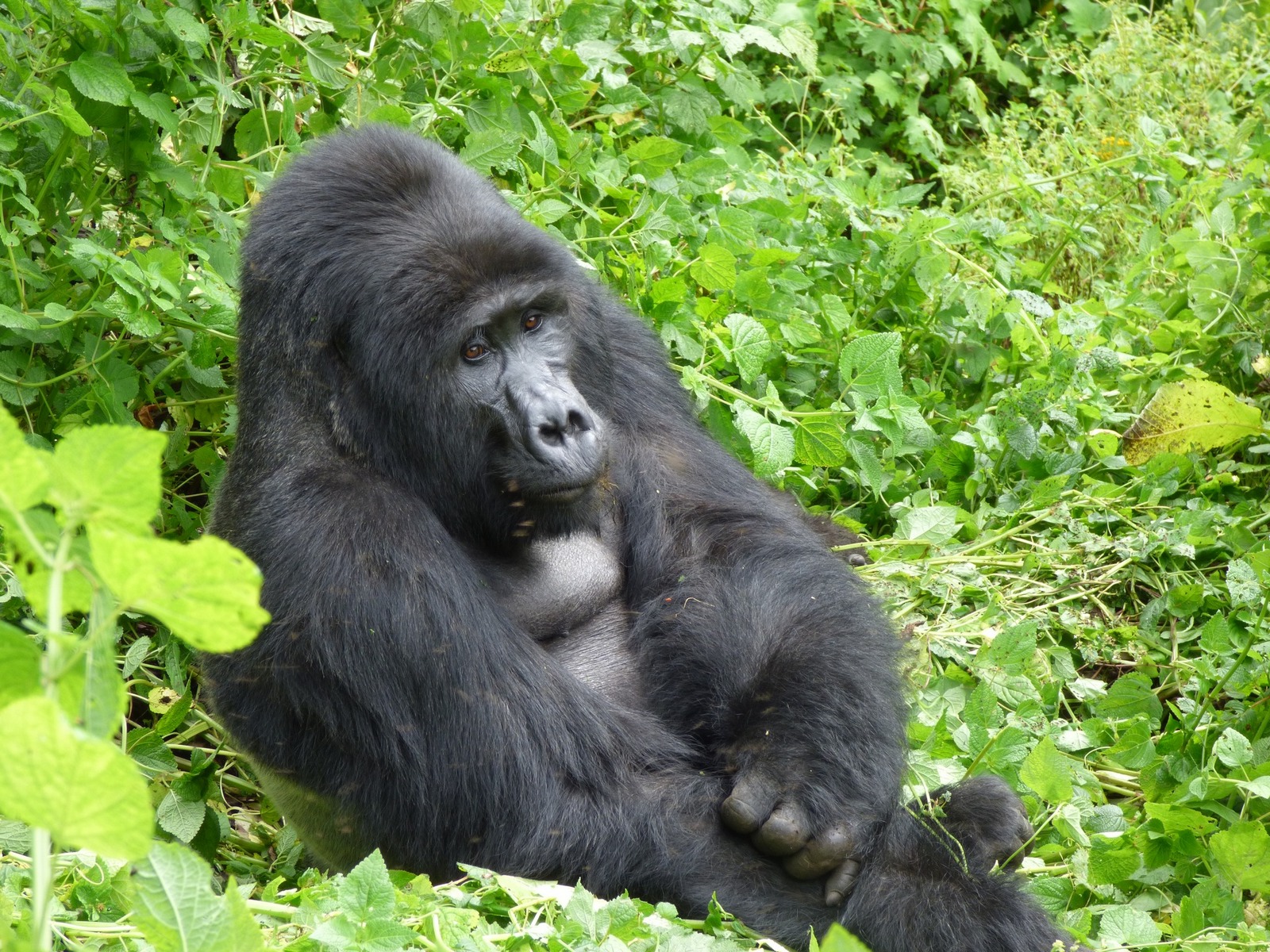
This is the undeniable pinnacle of your 16 Days Uganda wildlife safari holiday. After a crucial early morning safety and protocol briefing, you will enter the dense, tangled jungle of Bwindi alongside expert trackers and rangers. The trek can be physically demanding, involving navigating steep, muddy slopes and thick undergrowth, but the effort vanishes the moment you encounter a magnificent mountain gorilla family. Standing just meters away from a massive, gentle silverback, watching mothers nurse infants, and observing their remarkably human-like interactions is a profoundly moving experience. This hour-long encounter is the crown jewel of your 16 Days Uganda wildlife safari holiday, providing a deep, unforgettable connection with one of the planet's most endangered and beautiful species.
Day 12: Batwa Cultural Experience and Lake Bunyonyi
Following the excitement of gorilla tracking, your 16 Days Uganda wildlife safari holiday introduces you to the indigenous Batwa Pygmy community. The Batwa were the original hunter-gatherer inhabitants of Bwindi Forest, and this guided cultural walk allows them to share their ancient heritage, demonstrating traditional hunting techniques, forest survival skills, and vibrant dances. Afterward, your 16 Days Uganda wildlife safari holiday journeys to the breathtaking Lake Bunyonyi, a spectacularly beautiful, bilateral lake dotted with 29 emerald islands. Encircled by steeply terraced hillsides, Bunyonyi is exceptionally deep and completely safe for swimming as it is free from bilharzia, hippos, and crocodiles, making it the absolute perfect haven for well-deserved relaxation and peaceful reflection.
Day 13: Island Exploration and Relaxation at Bunyonyi
Enjoy a wonderfully relaxed pace today on your 16 Days Uganda wildlife safari holiday. Wake up to the soothing sights of mist rising off the calm water before boarding a traditional wooden dugout canoe or motorized boat to explore Lake Bunyonyi’s islands. Your guide will share fascinating local folklore, including the sobering history of Punishment Island. The rest of the afternoon is yours to enjoy at leisure, a perfect pause in the busy schedule of your 16 Days Uganda wildlife safari holiday. You can find a quiet spot to read, swim in the cool waters, try your hand at paddleboarding, or simply sit back and photograph the colorful sunbirds fluttering through the lakeside gardens, soaking in the serene atmosphere.
Day 14: Transfer to Lake Mburo National Park
Your 16 Days Uganda wildlife safari holiday begins its eastward return journey, heading toward Lake Mburo National Park, Uganda’s smallest savannah gem. This beautiful park is characterized by sculpted hills, rolling acacia woodlands, and a network of peaceful lakes. It is also the only park in western Uganda where you can see massive herds of impalas and Burchell’s zebras. As you drive to your lodge on this phase of your 16 Days Uganda wildlife safari holiday, you will also encounter the iconic Ankole long-horned cattle, safely herded by local pastoralists outside the park boundaries. Check in and enjoy an evening game drive, looking out for leopards, elands, and shy bushbucks under a beautiful African sky.
Day 15: Walking Safari and Boat Cruise on Lake Mburo
Lake Mburo is unique because it lacks elephants, allowing your 16 Days Uganda wildlife safari holiday to offer a thrilling bush walking safari. Accompanied by an armed park ranger, you will explore savannah tracks on foot, learning to identify wildlife tracks, droppings, and medicinal plants while walking alongside zebras and impalas. This intimate ground-level perspective is a refreshing departure from traditional vehicle-bound game drives. In the afternoon, the 16 Days Uganda wildlife safari holiday features a peaceful boat cruise on Lake Mburo, providing up-close views of resident hippos, crocodiles, and specialized waterbirds like the African Finfoot, followed by a celebratory final safari dinner under the stars with your guide.
Day 16: Equator Crossing and Departure via Entebbe
On the final day of your extraordinary 16 Days Uganda wildlife safari holiday, you will embark on the return drive to Entebbe. En route, you will enjoy a memorable stop at the Equator crossing line in Kayabwe. Here, you can witness fun water experiments demonstrating the Coriolis effect, snap classic photos standing simultaneously in the northern and southern hemispheres, and shop for handmade Ugandan crafts and souvenirs. Your guide will then drive you directly to Entebbe International Airport for your evening outbound flight, officially concluding your unforgettable 16 Days Uganda wildlife safari holiday packed with incredible wildlife encounters, beautiful friendships, and lifelong memories of East Africa.
1. Is Uganda a safe country for first-time safari travelers?
Uganda is widely recognized as one of the safest, most welcoming, and most hospitable travel destinations in East Africa. For first-timers, the warmth of the local population is evident the moment you step out of the airport. The country relies heavily on tourism, which means the government places a massive priority on guest safety.
On this extensive itinerary, you will be traveling with a professional, experienced safari driver-guide who acts as your host, translator, and navigator from day one to day 16. Furthermore, every national park you visit—from Murchison Falls to Queen Elizabeth and Bwindi—is managed by the highly trained, armed rangers of the Uganda Wildlife Authority (UWA). These rangers secure the parks, monitor wildlife movements, and guide you during specialized activities like walking safaris and primate trekking.
Your accommodations are located in secure zones with 24-hour onsite security, allowing you to relax completely. While standard international travel precautions apply—such as keeping your valuables in your lodge safety box and avoiding unguided walks in major cities like Kampala or Jinja after dark—you will find that the local communities are incredibly friendly, respectful, and eager to share the beauty of their country with you.
2. When is the absolute best time of year to embark on this itinerary?
Uganda is an equatorial country, meaning it enjoys a comfortable, tropical climate with warm temperatures hovering between 21°C and 27°C year-round. However, the country experiences distinct dry and wet seasons. The absolute best windows for first-timers on this trip are the dry seasons: from June to September and from December to February.
During these months, the tracks in savannah parks like Murchison Falls, Queen Elizabeth, and Lake Mburo are dry and easily navigable by your 4WD safari vehicle. More importantly, sparse vegetation and drying waterholes force animals to congregate around permanent water sources like the Kazinga Channel or the Victoria Nile. This makes wildlife viewing incredibly rewarding and predictable. Furthermore, the mountain paths in Bwindi Impenetrable Forest and Kibale Forest are significantly less muddy, making the steep climbs for gorilla and chimpanzee trekking less physically demanding.
That said, traveling during the "green" wet seasons (March to May and October to November) has its perks. The landscapes are brilliantly emerald, the dust is swept away, and the Uganda Wildlife Authority offers promotional low-season discounts on gorilla permits ($600 instead of $800), making it an appealing option for budget-conscious adventurers.
3. How physically demanding are the gorilla and chimpanzee treks?
Primate trekking is an active, raw wilderness experience that requires varying levels of physical effort. Chimpanzee trekking in Kibale National Park on Day 6 is generally classified as moderately demanding. The terrain is relatively flat, but chimps move fast on the ground and through the canopy, meaning you must walk briskly through the dense, tangled undergrowth to keep up with them as they hunt, play, and vocalize.
Mountain gorilla trekking in Bwindi on Day 11 is much more physically challenging. Bwindi lives up to its name—the forest is truly "impenetrable," and the terrain consists of steep, muddy volcanic ridges, slick roots, and no formal walking paths. Treks can last anywhere from 2 to 8 hours depending on where the habituated gorilla family slept the night before.
You do not need to be an elite athlete, but a baseline of cardiovascular fitness and steady balance is highly recommended. To make the trek easier for first-timers, you can hire a local porter at the park headquarters for around $15. Porters are an invaluable asset; they gently push and pull you up steep mud banks and carry your heavy daypack. For travelers with severe mobility issues, the park can even arrange an "African Helicopter"—a specialized stretcher chair carried by a team of local porters.
4. What are the passport, visa, and mandatory entry requirements?
To cross the border into Uganda smoothly, your passport must be valid for at least six months beyond your scheduled departure date and contain at least two blank pages for immigration stamps. Uganda no longer issues physical tourist visas upon arrival at Entebbe International Airport; all visas must be applied for and paid for online via the official Directorate of Citizenship and Immigration control portal prior to your flight.
A standard single-entry tourist visa costs $50. When completing your online application, you will need to upload a digital copy of your passport bio-data page, a recent passport-sized photo, your comprehensive safari itinerary, and your flight details.
In terms of medical entry mandates, a Yellow Fever vaccination certificate is absolutely mandatory for entry into Uganda. Border officials will check your physical yellow card at the health desk before allowing you to proceed to immigration. It is highly recommended to double-check that you have printed your approved e-visa document and packed your physical yellow fever card in your carry-on bag rather than your checked luggage, ensuring a stress-free entry experience at Entebbe.
5. What health precautions and vaccinations should I secure?
Beyond the mandatory Yellow Fever vaccine, visiting a specialized travel medicine clinic at least two months prior to your departure is highly advisable. Medical professionals typically recommend securing or updating routine vaccinations, including Hepatitis A, Hepatitis B, Typhoid, Tetanus, and Polio booster shots.
Malaria is highly prevalent throughout almost all regions of Uganda, particularly in the low-altitude savannah plains and lakeside areas like Jinja, Murchison Falls, and Queen Elizabeth National Park. Because there is no vaccine for malaria, taking a prescription malaria prophylactic pill (such as Malarone, Doxycycline, or Lariam) is a critical precaution. Your travel doctor can help you select the best medication based on your personal health history.
To complement the pills, protect yourself on the ground by applying a high-concentration DEET insect repellent to exposed skin, especially during dusk and dawn when malaria-carrying mosquitoes are most active. Sleep under the insecticide-treated mosquito nets provided at all your safari lodges, and wear long-sleeved shirts and trousers in the evenings to minimize skin exposure. Lastly, never drink tap water; stick exclusively to the complimentary bottled mineral water provided in your safari vehicle and at your lodges.
6. How do gorilla and chimpanzee permit bookings work?
Primate permits are highly regulated, strictly limited official documents issued exclusively by the government-run Uganda Wildlife Authority (UWA). To protect the health of the primates and prevent habitat degradation, the UWA strictly limits the number of visitors. Only 8 people are allowed to visit a single gorilla family per day for exactly one hour, while chimpanzee groups are limited to small morning and afternoon shifts.
Because demand from global travelers is incredibly high, permits sell out many months in advance, especially during the peak dry seasons. As of 2026, a standard gorilla trekking permit for a foreign non-resident costs $800, while a chimpanzee tracking permit in Kibale Forest costs $250.
When you book through a trusted tour operator, they handle the entire reservation logistics, making full payment to the UWA on your behalf to secure your specific trekking dates. Keep in mind that as of recent 2026 operational updates, the UWA requires immediate full payment to secure a permit booking, eliminating historical temporary reservation holds. To ensure you do not miss out on these life-changing primate encounters, it is essential to finalize your safari booking 4 to 6 months before your departure date.
7. What type of safari vehicles are used and what are the road conditions?
An extensive road trip across Uganda involves covering substantial distances over a variety of road surfaces. The primary highways connecting major hubs like Kampala, Jinja, Fort Portal, and Mbarara are well-tarmacked, providing smooth transits. However, the access roads leading into and inside remote national parks—such as the Ishasha sector of Queen Elizabeth or the mountainous ridges surrounding Bwindi Forest—are unpaved dirt roads. These tracks can become bumpy, dusty, or slick and muddy following heavy rain.
To handle these diverse terrains comfortably, professional operators use heavy-duty, customized 4WD safari vehicles, typically a Toyota Land Cruiser or a robust safari microbus. These specialized vehicles are fitted with heavy-duty suspension systems, high ground clearance, and all-terrain tires.
Crucially for first-timers, they feature a custom pop-up roof that can be raised during game drives in Murchison Falls and Queen Elizabeth National Park. This configuration allows you to stand up safely, feel the African breeze, and capture unobstructed, 360-degree photographs of lions, elephants, and giraffes. Furthermore, reputable agencies guarantee window seats for all guests, ensuring you always have a prime view of the country’s breathtaking landscapes throughout your journey.
8. What standard of accommodation should I expect on this safari?
Uganda’s safari hospitality industry is highly developed, offering an array of accommodation tiers ranging from cozy, intimate budget camps to spectacular, world-class luxury eco-lodges. Regardless of your chosen tier, the standard of service, cleanliness, and hospitality is remarkably high.
Mid-range and luxury lodges are often architectural marvels, built using sustainably sourced local timber, volcanic stone, and traditional thatch. They are strategically positioned to maximize scenery, meaning you might stay in a tented cottage perched dramatically over the roaring rapids of the River Nile in Jinja, a lodge overlooking the expansive savannah plains of Queen Elizabeth National Park, or a forest chalet nestled right against the mist-shrouded canopy of Bwindi.
Most lodges feature private en-suite bathrooms, flushing toilets, and running hot water, which is often heated via eco-friendly solar systems. In remote wilderness areas, electricity is typically powered by solar arrays and backup generators; some properties may turn off power during deep night hours to conserve energy, providing charging stations in common lounge areas. The dining experiences are excellent, typically featuring multi-course meals blending fresh, locally grown tropical fruits and vegetables with continental and international cuisines.
9. What are the rules and guidelines for tipping on safari?
While tipping is not legally mandatory in Uganda, it is a deeply ingrained cultural custom and a highly appreciated way to acknowledge excellent service. Tourism employees work incredibly hard to ensure your journey is seamless, and tips form a significant supplement to their livelihoods.
For your dedicated safari driver-guide, who stays with you for all 16 days, a standard tipping guideline is $10 to $20 per client, per day. This is usually presented in a personal envelope at the very end of your vacation as a heartfelt thank you.
For the specialized national park rangers and trackers who guide you safely through Murchison Falls, Kibale, and Bwindi, a tip of $10 to $15 per group, per activity is customary. When tracking primates, remember to tip both the lead guide and the trackers who went out early to find the animals.
For general lodge staff—including waiters, housekeepers, and chefs—most properties provide a central, shared "Staff Tip Box" located at the main reception or lounge desk. Dropping $5 to $10 per day into this box ensures that the tip is split equitably among all behind-the-scenes staff, making tipping easy and stress-free for first-timers.
10. How should I pack for the diverse climates of this itinerary?
Packing for an all-encompassing Ugandan itinerary requires a smart, multi-layered strategy because you will experience everything from hot, humid savannahs to chilly, high-altitude rainforests. For open-vehicle game drives in Murchison Falls and Queen Elizabeth National Park, pack lightweight, breathable clothing in neutral safari tones like khaki, olive green, beige, and tan. Avoid bright white clothes, which get dirty instantly, and avoid dark blue or black clothing, which actively attracts biting tsetse flies.
For primate trekking in Bwindi and Kibale, you must pack specialized gear. A durable pair of broken-in, waterproof hiking boots with deep traction is essential to protect your ankles on muddy mountain slopes. You must wear long, sturdy trousers and long-sleeved shirts to shield your skin from sharp stinging nettles and scratchy vines.
Crucially, pack a pair of cheap gardening gloves; you will frequently need to grab onto wild branches and thorns for balance. Pack thick, long socks so you can tuck your trousers into them, forming an impenetrable barrier against crawling safari ants. Finally, a lightweight, breathable, waterproof rain jacket is non-negotiable—Bwindi is a tropical rainforest, and a sudden downpour can occur at any moment, regardless of the season.
11. What currency is used and how should I handle money?
The official currency of the country is the Ugandan Shilling (UGX). However, the US Dollar (USD) is widely accepted across the tourism sector. Your major safari expenses—including park entry fees, gorilla permits, and lodge bookings—are pre-paid, but you will need pocket money to cover personal expenses like alcoholic beverages, laundry services, tips, and handmade souvenirs at the Equator crossing on Day 16.
For cash, it is absolutely vital for first-timers to know that banks and businesses in East Africa do not accept US Dollar bills that are torn, creased, stamped, or printed before the year 2013. Ensure all your cash notes are crisp, clean, and series 2013 or newer, or they will be flatly rejected.
Carry a mix of small denominations ($5, $10, $20) for tipping and larger bills ($50, $100) for currency exchange, as large bills fetch a much better exchange rate. Upon arrival at Entebbe airport or in major towns like Fort Portal, your guide can assist you in exchanging a small amount of USD into Ugandan Shillings for roadside purchases. Credit cards like Visa are increasingly accepted at high-end luxury lodges, but they often incur a processing surcharge of 3% to 5%. ATMs are available in larger towns, but they are completely absent inside the deep wilderness parks.
12. What photography gear and etiquette do I need to follow?
This diverse itinerary offers some of the finest wildlife and landscape photography opportunities on earth. For the open savannah game drives in Murchison Falls and Queen Elizabeth National Park, wild animals may be at a distance, making a DSLR or mirrorless camera fitted with a telephoto zoom lens (minimum 200mm to 400mm) highly recommended to capture crisp close-ups of lions, leopards, and birds.
Conversely, during your gorilla and chimpanzee treks, you will be remarkably close to the primates (the standard viewing distance is about 7 to 10 meters). In the dark, heavily shaded forest canopy, a fast lens (f/2.8 or f/4) with a versatile focal length like a 24-70mm or 70-200mm works beautifully.
Flash photography is strictly prohibited during primate tracking because sudden, bright flashes can terrify or anger the gorillas and chimpanzees, potentially triggering a defensive charge. Ensure you know how to turn off your camera and smartphone flash manually before entering the forest. Bring plenty of extra memory cards and spare camera batteries, as the remote locations and cold mountain nights can drain battery life quickly. Lastly, when photographing local people or vibrant village markets, always ask your guide to seek permission first out of respect.
13. How are the electricity and internet connectivity across the country?
Uganda uses the standard British-style three-pin rectangular plug (Type G), operating on a 240V electrical current. First-time travelers should pack a high-quality universal travel adapter to ensure they can charge phones, camera batteries, and power banks effortlessly at every stop.
As mentioned previously, many remote wilderness lodges rely on eco-friendly solar arrays or localized diesel generators. This means power may be active during specific blocks of time—typically morning hours before game drives and evening hours between 6:00 PM and 10:00 PM.
Internet connectivity via Wi-Fi is standard in the main lounge, restaurant, and bar areas of most mid-range and luxury safari lodges. However, due to the remote, rugged geography of locations like the Bwindi ridges or the Ishasha sector, lodge Wi-Fi can be slow, intermittent, or unstable.
If staying connected with family or business is a priority, you can easily purchase a local cellular nano-SIM card (from providers like MTN or Airtel) at Entebbe airport upon arrival for around $5. Data bundles are inexpensive, and Uganda’s cellular network coverage is surprisingly extensive, often providing reliable 4G internet access even in the depths of the savannah parks.
14. What are the food options and can dietary restrictions be accommodated?
Uganda's culinary landscape is a delightful surprise for first-timers, characterized by an abundance of fresh, organic, tropical ingredients. Safari lodges operate on a full-board basis (breakfast, lunch, and dinner included). Breakfasts are typically hearty, featuring fresh tropical fruits like pineapples, mangoes, and passionfruit, alongside eggs cooked to order, sausages, and local Ugandan coffee or tea. Lunch and dinner are usually structured as structured three-course menu selections or extensive buffets featuring continental, international, and traditional flavors.
If you have specific dietary restrictions—such as being strictly vegetarian, vegan, gluten-free, lactose intolerant, or having severe nut allergies—Ugandan lodges can accommodate you beautifully. Because lodges are located deep inside remote national parks, chefs purchase ingredients in advance based on the guest manifest.
It is absolutely crucial that you inform your tour operator of your exact dietary restrictions at the time of booking. This allows the coordination team to alert every lodge kitchen along your route well in advance. On long transit days, your lodge will pack a custom, nutritious lunch box for you to enjoy at a scenic picnic site inside the park or en route, ensuring you are well-nourished throughout your trip.
15. Why is a 16-day safari better for first-timers than a short trip?
Many first-time visitors make the mistake of booking a short 3-to-5-day trip focused exclusively on gorilla trekking. While seeing the gorillas is an undeniable bucket-list experience, a hurried trip misses out on the immense geographical, cultural, and ecological diversity that makes Uganda unique. A comprehensive 16-day holiday is the ultimate itinerary because it allows you to experience the full spectrum of East Africa at a comfortable, rewarding pace.
This circuit transitions you from the adrenaline-pumping waters of the Nile in Jinja to the classic, wildlife-rich savannahs of Murchison Falls and Queen Elizabeth, and finally into the ancient rainforests of Kibale and Bwindi. By combining river boat cruises, walking safaris, chimpanzee tracking, and mountain gorilla encounters, you get to see how beautifully Uganda's diverse ecosystems connect.
Furthermore, an extended trip includes vital relaxation segments, like the serene shores of Lake Bunyonyi on Days 12 and 13. This prevents "safari fatigue" and gives you time to process the incredible sights you've seen. Ultimately, this itinerary transforms a simple vacation into a deeply immersive journey, ensuring your first time in Africa is complete and unforgettable.
Booking 16 Days Uganda wildlife safari holiday with us Roads of Adventure safaris
Booking a 16-day Uganda wildlife safari with Roads of Adventure Safaris offers an immersive tour of the Pearl of Africa, covering top spots like Murchison Falls, Queen Elizabeth, Bwindi Impenetrable Forest, and Kibale National Park. This comprehensive package requires careful planning, as securing permits in advance is essential
