16-day self-drive safari in Uganda offers the ultimate freedom to explore the "Pearl of Africa" at your own pace. By booking a 4x4—such as a Toyota Land Cruiser or a RAV4—through Kampala-based providers like Roadtrip Africa or Your Drive Uganda, you can comfortably navigate both paved highways and the remote, unpaved tracks of the national parks
16-days-classic-uganda-wildlife-safari-and-gorilla-trekking-tour
16-days-classic-uganda-wildlife-safari-and-gorilla-trekking-tour
16-days-ultimate-uganda-safari-to-rwanda-safari-tour-package-combo
Day 1: Drive to Jinja & Sunset Nile Cruise
Your epic journey begins as you collect your 4x4 vehicle in Entebbe or Kampala to kick off this 16 Days self-drive Uganda safari tour. Your first destination is Jinja, the adventure capital of East Africa, located roughly 80 kilometers east. Navigating out of the capital requires patience due to urban traffic, but once on the highway, you will drive through the lush, emerald canopy of Mabira Forest and sprawling sugarcane plantations. Arrive in Jinja by early afternoon and check into your riverside lodge. As the afternoon cools down, embark on a tranquil sunset boat cruise to the official geographic Source of the Nile River, where the water visibly bubbles up from the lake bed to begin its long journey to the Mediterranean Sea. Enjoy a cold drink on board while watching vibrant kingfishers and cormorants hunt along the banks as the sun sets over Lake Victoria.
Day 2: Grade 5 Rafting & Quad Biking Adventure
Prepare for an adrenaline-fueled second day on your 16 Days self-drive Uganda safari tour. After a hearty breakfast, head to the briefing point for a world-class white-water rafting excursion on the mighty Nile. Under the guidance of professional river guides, you will tackle legendary Grade 4 and Grade 5 rapids like "Big Brother" and "The Bad Place." It is a thrilling, wet, and unforgettable experience surrounded by spectacular river scenery. If rafting is too intense, you can opt for a tamer family float or a high-speed jet boat ride. In the afternoon, shift from the water to the dirt tracks with a guided quad biking safari. You will ride powerful all-terrain vehicles along the muddy banks of the Nile, traversing remote farming villages, red-dirt paths, and scenic viewpoints while interacting with welcoming local residents who line the trails to wave you forward.
Days 3–4: Ziwa Rhino Sanctuary & Kidepo Valley National Park
Day 3: Rhino Tracking at Ziwa & Drive to Gulu
Pack up early for a long but deeply rewarding driving leg on your 16 Days self-drive Uganda safari tour. You will drive northwest from Jinja toward the town of Gulu, breaking up the journey with a crucial stop at the Ziwa Rhino Sanctuary. This sanctuary is the only place in Uganda where you can track southern white rhinos on foot. Accompanied by an expert wildlife ranger, you will walk through the bush to stand just meters away from these magnificent, prehistoric-looking giants, learning about the country’s intensive rhino reintroduction programs. After an hours-long encounter and lunch at the sanctuary, jump back into your 4x4 and head north along the smooth tarmac highway to Gulu. This bustling northern hub serves as the perfect urban pitstop to refuel your vehicle, restock your supplies, and enjoy a comfortable night's sleep before heading into the remote wilderness tomorrow.
Day 4: Deep Wilderness Drive to Kidepo Valley
Today features one of the most wild and scenic drives of your 16 Days self-drive Uganda safari tour as you head northeast from Gulu into Kidepo Valley National Park. The paved roads give way to unpaved, corrugated dirt tracks that wind through the rugged, semi-arid landscapes of Karamoja, passing traditional manyattas (fenced mud-and-thatch villages). Drive carefully and enjoy the total isolation. Arrive at Kidepo by midday, a park frequently ranked among Africa’s finest wildernesses due to its raw, uncrowded terrain. In the late afternoon, take your first game drive through the Narus Valley. Because this valley holds the park's only permanent water sources during the dry season, it attracts staggering numbers of wildlife. You will easily spot massive herds of Cape buffaloes, elephants, elegant giraffes, and apex predators like lions and cheetahs scanning the plains from giant granite kopjes.
Days 5–6: Murchison Falls National Park
Day 5: Scenic Transit to Murchison Falls & Top of the Falls
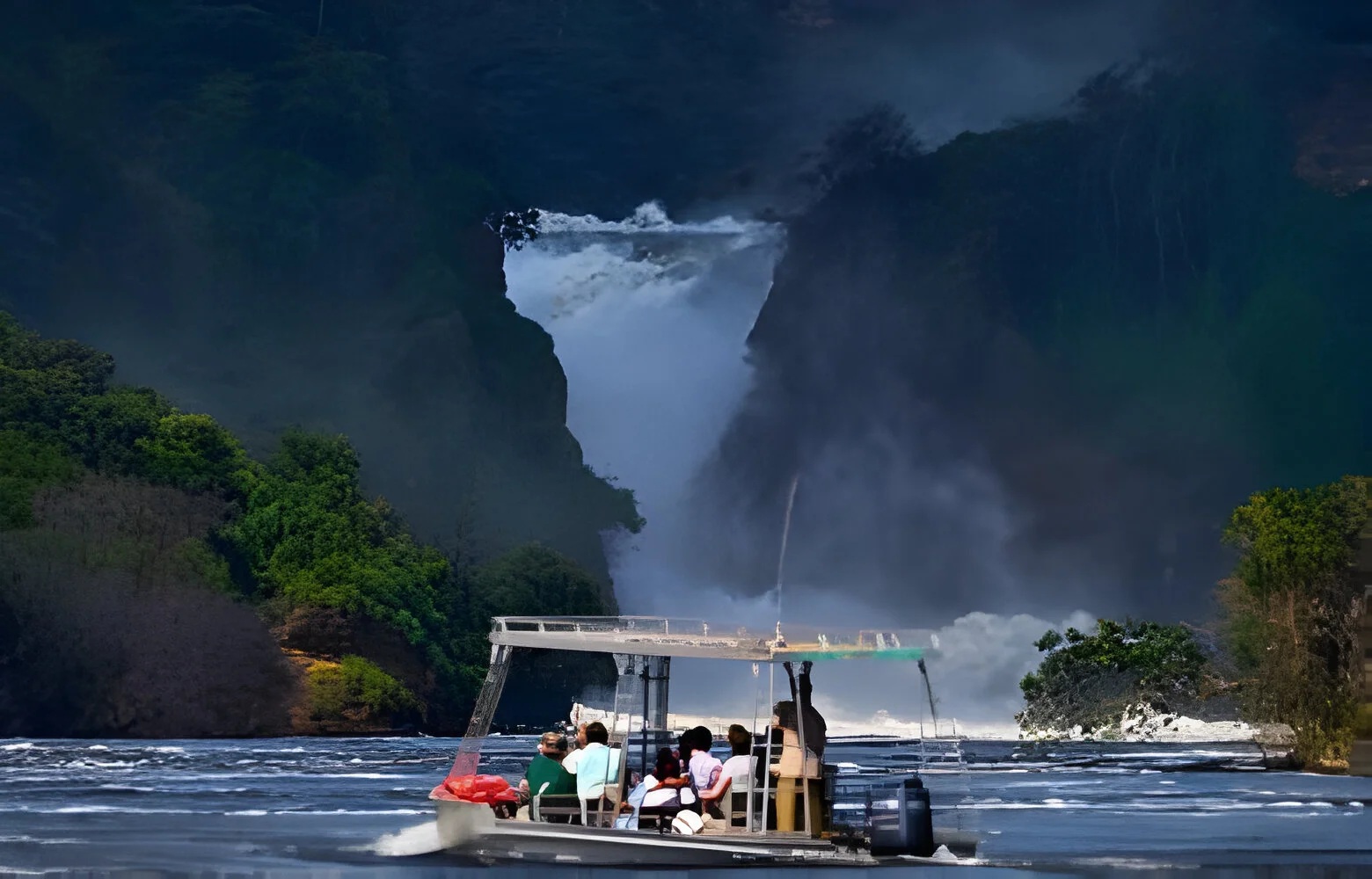
Bid farewell to Kidepo’s dramatic mountain backdrops and drive southwest toward Murchison Falls National Park, a cornerstone destination on this 16 Days self-drive Uganda safari tour. This drive takes you back through northern Uganda’s plains before entering Murchison Falls via the northern Tangi gate. Your afternoon destination is the awe-inspiring Top of the Falls. Here, you will park your vehicle and walk along the clifftop trails to witness the dramatic point where the entire Nile River—nearly 50 meters wide—is violently compressed through a narrow, seven-meter rocky gorge. The sheer, thunderous power of the water dropping 43 meters into the "Devil's Cauldron" creates a permanent mist, magnificent rainbows, and a roaring sound that vibrates beneath your feet. After absorbing this spectacular geological marvel, drive down to the riverbank, cross the Nile via the iconic bridge, and check into your safari lodge.
Day 6: Delta Game Drive & Nile Launch Cruise
An early morning start brings you to the northern delta sector of Murchison Falls, a premier wildlife-spotting zone on your 16 Days self-drive Uganda safari tour. The landscape here features open rolling savannah dotted with thousands of unique Borassus palm trees. As you navigate the game tracks, look out for hunting lion prides, leopards resting in trees, herds of elephants, and the rare, endangered Rothschild’s giraffes. After a midday rest, head to the jetty for a classic three-hour afternoon boat cruise up the Victoria Nile. The boat drifts remarkably close to riverbanks teeming with hundreds of snorting hippos, massive Nile crocodiles basking in the sun, and thirsty buffalo herds coming down to drink. The boat brings you safely to the base of the turbulent falls, offering a fantastic perspective of the churning white water from below before cruising back into the sunset.
Days 7–8: Kibale Forest National Park
Day 7: Long Scenic Drive Through Tea Country to Fort Portal
Get ready for a visually stunning 350-kilometer driving day on your 16 Days self-drive Uganda safari tour, charting a course south from Murchison Falls to the primate capital of Fort Portal and Kibale. Your route snakes along the Albertine Rift Valley escarpment, providing beautiful panoramic views of Lake Albert and the blue mountains of the Democratic Republic of Congo in the distance. As you approach the clean, vibrant town of Fort Portal, the flat savannah completely vanishes, replaced by rolling hills blanketed in endless, bright-green carpets of commercial tea plantations. Take your time navigating the winding, paved mountain roads and enjoy the freedom of stopping your vehicle for photographs whenever a dramatic vista catches your eye. Arrive at your rainforest lodge on the boundary of Kibale National Park by late afternoon, welcoming the cool, crisp mountain air and jungle sounds.
Day 8: Chimpanzee Tracking in Kibale's Ancient Canopy
This morning delivers one of the absolute focal points of your 16 Days self-drive Uganda safari tour: tracking habituated chimpanzees in Kibale National Park. Gather at the Kanyanchu visitor center at 8:00 AM for an essential safety briefing before entering the dense, ancient rainforest with an expert Uganda Wildlife Authority (UWA) ranger. Kibale holds Africa's highest density and diversity of primates, and it won't be long before you hear the echoing, primeval hoots and screams of chimpanzees filtering through the trees. Follow your tracker off-trail through the undergrowth to spend one unforgettable hour observing a wild community. You will watch our closest evolutionary relatives play, groom, vocalize, and swing effortlessly through the high canopy. In the afternoon, complement your primate adventure with a guided community walk through the adjacent Bigodi Wetland Sanctuary to view rare colobus monkeys and exotic birds.
Days 9–11: Queen Elizabeth National Park
Day 9: Equator Crossing & Crater Lakes Drive, Your 16 Days self-drive Uganda safari tour journeys south toward Queen Elizabeth National Park today, a scenic 120-kilometer drive. Along the way, the snow-capped peaks of the legendary Rwenzori Mountains—the "Mountains of the Moon"—rise dramatically to your right. You will cross the equator line, providing an excellent opportunity to stop your 4x4, take classic photographs at the circular monument, and watch local water-drainage demonstrations. Continue into the park and embark on the spectacular explosion crater lakes drive in the late afternoon. This winding dirt track leads you along the high ridges of ancient, water-filled volcanic cones, offering breathtaking, panoramic views extending across the sweeping savannah plains all the way to Lake Edward. Keep your camera ready as wild elephants frequently wander along these volcanic ridges against the backdrop of a glowing African sunset.
Day 10: Kasenyi Plains Game Drive & Kazinga Channel Cruise
An early morning alarm sets up a classic safari day on your 16 Days self-drive Uganda safari tour. Drive out to the Kasenyi plains, an open savannah playground that serves as the primary breeding ground for thousands of Ugandan kobs. This abundance of antelope naturally attracts apex predators; scan the horizon and thickets for lions, hyenas, and leopards. At 3:00 PM, head to the Mweya peninsula for a scheduled launch cruise along the famous Kazinga Channel. This natural 32-kilometer waterway connects Lake George and Lake Edward and boasts one of the highest concentrations of hippos on earth. Your double-decker boat will glide remarkably close to massive elephant herds bathing in the water, wallowing buffaloes, and an array of vibrant water birds like pelicans, sella-billed storks, and skimming kingfishers hunting along the shoreline.
Day 11: Hunting for Tree-Climbing Lions in Ishasha
Today you will pack your bags and drive south into the remote, wild Ishasha sector of Queen Elizabeth National Park, an unforgettable highlight of this 16 Days self-drive Uganda safari tour. Ishasha is globally renowned for its unique population of tree-climbing lions. Unlike typical prides that remain grounded, these lions spend their afternoons draped lazily over the low-hanging branches of giant sycamore fig trees and acacia trees to escape the intense ground heat and pesky tsetse flies. Drive slowly along the dusty game tracks, methodically scanning the large horizontal branches for tan shapes, dangling paws, or swinging tails. Spotting a 400-pound predator lounging comfortably high up in a tree is an extraordinary sight. After exploring this untamed sector, check into a secluded river lodge to fall asleep to the sounds of hippos splashing in the nearby water.
Days 12–13: Bwindi Impenetrable National Park
Day 12: Drive into the Misty Hills of Bwindi, Say goodbye to the low-lying savannahs as your 16 Days self-drive Uganda safari tour shifts into the high-altitude, misty mountains of Bwindi Impenetrable National Park. The flat dirt roads give way to steep, narrow, and winding mountain passes that climb through heavily terraced hillsides. This stunning landscape is affectionately known as the "Switzerland of Africa" due to its vertical green geometry and cool alpine climate. Drive defensively, utilize lower gears on your 4x4, and enjoy the dramatic transitions in vegetation from farmland to ancient, cloud-covered rainforest. Arrive at your mountain lodge on the edge of the primeval forest by early afternoon. Spend the rest of the day relaxing, preparing your hiking gear, and listening to the deep, echoing calls of forest birds as mist rolls over the dense, untamed jungle canopy.
Day 13: The Gorilla Trekking Crown Jewel
This is the undisputed pinnacle of your 16 Days self-drive Uganda safari tour. Wake up early, pack plenty of water and a lunch, and head to the park headquarters for a mandatory 7:30 AM briefing. You will be assigned to a specific habituated mountain gorilla family in a group capped at eight guests. Bwindi’s terrain lives up to its "impenetrable" name; you will trek through thick undergrowth, vines, and steep, slippery mud slopes ranging up to 2,500 meters in elevation. The trek can take anywhere from one to six hours, but all physical exhaustion instantly vanishes the moment you step into a clearing and look into the deep, soulful brown eyes of a wild mountain gorilla. Watch the massive silverback protect his family while juveniles wrestle and mothers cradle infants. You have exactly one magical hour to sit quietly and absorb this life-changing wildlife encounter.
Days 14–15: Lake Bunyonyi & Lake Mburo National Park
After the intense physical hike of yesterday, today is dedicated to pure relaxation on your 16 Days self-drive Uganda safari tour. Drive south through the winding mountains to Lake Bunyonyi, the deepest lake in Uganda and one of the safest, as it is entirely free from bilharzia, crocodiles, and hippos. The lake is famously dotted with 29 terraced islands that rise elegantly out of the water. Check into your lakeside resort and step into a traditional wooden dugout canoe or a motorized boat for a guided exploration. Cruise past historic islands like "Punishment Island," learning about the fascinating and dark local folklore of the Bakiga people. Spend the afternoon swimming in the cool, fresh water, renting a kayak, or simply relaxing on a wooden sun deck while enjoying panoramic views of the surrounding green hills.
Day 15: Drive to Lake Mburo & Night Walking Safari
Your 16 Days self-drive Uganda safari tour heads east toward Lake Mburo National Park today, a comfortable 200-kilometer drive on a smooth paved highway. Lake Mburo is Uganda's smallest savannah park but features unique biodiversity. Because there are no elephants here, it is one of the only places in the country where you can safely experience a walking safari. In the late afternoon, step out of your vehicle and explore the acacia woodlands on foot with an armed UWA ranger. Walking silently allows you to get incredibly close to massive herds of zebras, impalas, topis, and elands grazing peacefully without the barrier of car windows. As night falls, embark on a night game drive using powerful spotlights to catch a glimpse of nocturnal creatures like bush babies, porcupines, genets, hyenas, and leopards out on the hunt.
Day 16: Equator Souvenirs & Return to Entebbe/Kampala
On the final day of your extraordinary 16 Days self-drive Uganda safari tour, you will complete the loop by driving approximately 240 kilometers back toward Kampala or Entebbe International Airport. Break up the highway journey with a final celebratory stop at the Kayabwe Equator line monument. This is the perfect place to pick up unique, hand-carved Ugandan wooden souvenirs, local artwork, and fair-trade coffee from the vibrant craft markets to bring back home to family and friends. Enjoy a final lunch at an open-air cafe, cross the equator one last time, and complete the drive back to the capital. Hand over the keys of your trusted 4x4 rental vehicle back to the agency and check in for your evening international departure flight, bringing your unforgettable, self-driven African adventure to a safe close.
What type of vehicle is recommended for a 16 Days self-drive Uganda safari tour package?
Selecting an appropriate vehicle is the most critical foundation for an extensive 16 Days self-drive Uganda safari tour package. This specific, long-distance loop covers more than 1,500 kilometers across highly contrasting geographic landscapes. While the primary arterial highways connecting Kampala to Jinja, Gulu, and Fort Portal are smooth, high-quality tarmac, the infrastructure completely changes when heading to remote frontiers like Kidepo Valley on Day 4 or the steep slopes of Bwindi on Day 12. For this reason, a standard 2WD vehicle or a soft-roader is completely insufficient.
The undisputed industry standard for a marathon itinerary like this is a heavy-duty, 4-wheel-drive platform, specifically a customized Toyota Land Cruiser Prado (TX/TZ or the older, rugged 70 Series). These mechanical platforms feature highly durable suspension systems capable of absorbing hours of intense corrugations on unpaved gravel "murram" roads. They also provide excellent ground clearance to safely clear deep ruts and rocks without damaging the undercarriage, alongside a manual or electronic low-range transfer case essential for pulling out of deep volcanic clay mud should an unexpected equatorial downpour occur.
When receiving your vehicle, it is vital to ensure it is equipped with a comprehensive off-road recovery kit. This must include a high-lift jack, a spade, heavy-duty tow straps, a tire pressure gauge, a wheel spanner, and a minimum of one—preferably two—full-sized, high-quality spare tires with deep tread. Before departing Entebbe, physically check that the 4WD system engages cleanly, inspect all fluid levels, and ensure the vehicle has a valid comprehensive commercial insurance sticker prominently displayed on the windshield.
How do I secure primate permits for a 16 Days self-drive Uganda safari tour package?
Primate tracking permits are the most time-sensitive and highly competitive components of your 16 Days self-drive Uganda safari tour package. The Uganda Wildlife Authority (UWA) tightly regulates human access to habituated chimpanzees in Kibale Forest (Day 8) and mountain gorillas in Bwindi Impenetrable National Park (Day 13) to prevent disease transmission and limit environmental stress. Because a restricted number of permits are issued daily, they routinely sell out months in advance, especially during the dry peak seasons.
As of 2026, the official price for a standard mountain gorilla trekking permit is $800 USD per person for foreign non-residents ($700 USD for foreign residents). For your chimpanzee trekking excursion in the premier canopy of Kibale Forest, the permit is priced at $250 USD per person for foreign non-residents ($200 USD for foreign residents). These fees cover specialized park entry for the activity, armed UWA ranger security, and expert trackers who locate the families. Note that effective March 2026, UWA has eliminated the historical 7-day reservation grace window; full payment is required immediately at the time of booking to secure your date.
For independent self-drive travelers, navigating direct bank wire transfers with UWA can be logistically challenging. The most efficient strategy is to have your registered Ugandan vehicle rental agency or an authorized local Destination Management Company (DMC) secure these physical electronic permit cards on your behalf when you finalize your car rental. Always demand scanned receipts of your confirmed permits containing your exact passport details before wire-transferring funds, and verify that the trekking sectors match your scheduled overnight lodge locations.
What are the essential driving rules and road safety tips in Uganda?
Operating a vehicle independently throughout a 16 Days self-drive Uganda safari tour package demands constant vigilance, defensive driving habits, and an understanding of local road dynamics. Traffic moves on the left-hand side of the road, a legacy of British colonial administration. To drive legally, you must possess a valid domestic driver’s license from your home country written in English or an International Driving Permit (IDP), which is highly recommended for clearing routine traffic police checkpoints seamlessly.
Speed limits must be respected to avoid heavy on-the-spot fines or safety hazards. In urban centers, towns, and busy roadside trading markets, the legal limit drops strictly to 50 km/h, heavily policed by hidden radar guns and sudden, massive asphalt speed bumps. On open, paved national highways, the limit ranges between 80 and 100 km/h, while inside all national parks, you must maintain a quiet, protective speed of 30 to 40 km/h to prevent wildlife collisions.
The number one golden rule for this self-drive package is to completely avoid driving after dark. Street lighting outside major municipal towns is nonexistent, broken-down long-distance trucks are rarely marked with safety triangles, and livestock regularly rest on the warm asphalt. Furthermore, Ugandan roads are shared with fast-moving public matatus (minibuses) and erratic boda-bodas (motorcycle taxis). Always yield the right of way to larger commercial vehicles, drive with your headlights on low-beam during dusty stretches, and plan your departures early to ensure you arrive at your evening lodge before the daily 6:30 PM sundown.
What is the best season to execute this 16-day self-drive route?
Choosing the optimal time of year significantly shapes the road conditions, physical tracking comfort, and wildlife visibility during your 16 Days self-drive Uganda safari tour package. Uganda’s equatorial climate is characterized by two distinct dry seasons and two rainy intervals, each presenting unique conditions for a self-drive itinerary.
The primary dry season spans from June to August, with a secondary dry window occurring from December to February. These months represent the peak travel season. During these dry periods, gravel roads throughout Kidepo, Murchison Falls, and Queen Elizabeth are firm and easily passable, greatly minimizing the risk of getting your 4x4 stuck. Wildlife viewing is exceptional, as savannah grass is short, and large mammals congregate predictably around permanent water sources like the Narus Valley or Kazinga Channel. Furthermore, mountain trails in Bwindi remain less muddy, making the physical gorilla trek much more manageable.
Conversely, the rainy seasons run from March to May and October to November. While traveling in the low season requires advanced off-road driving skills to navigate slippery volcanic clay and potentially washed-out bridges, it offers remarkable rewards. The landscapes are strikingly lush, vibrant, and ideal for photography. Furthermore, you will enjoy complete exclusivity at major wildlife sightings, and UWA occasionally offers low-season promotional tracking rates (such as gorilla permits reduced to $600 USD and chimpanzee permits to $200 USD for foreign non-residents in select months like April, May, and November 2026). If you choose a wet-season tour, fitting your vehicle with specialized mud-terrain tires is mandatory.
How should I manage fuel, navigation, and connectivity on this loop?
Resource management is a vital operational skill when undertaking a 16 Days self-drive Uganda safari tour package, as you will venture into remote, low-infrastructure areas like Kidepo Valley National Park. Fuel logistics require constant forward planning. Fuel stations become incredibly scarce the further north and west you travel. The absolute law of self-drive travel is to never allow your fuel tank to drop below half capacity. Fill up completely in major urban centers like Kampala, Jinja, Gulu, and Fort Portal, and always use reputable, well-lit fuel brands (such as TotalEnergies or Shell) to avoid contaminated or poor-quality fuel from independent rural pumps.
For route navigation, standard online applications can be highly deceptive, frequently underestimating transit times on unpaved roads or routing drivers down impassable walking tracks. Before launching your trip on Day 1, download extensive offline map packages via applications like Maps.me or Google Maps. Cross-reference your digital navigation with a physical road map of Uganda, and always ask lodge managers or park rangers about current road blockages before starting a new daily transit.
To maintain steady connectivity, your home country's international roaming plan will likely fail in remote valleys. Upon arrival at Entebbe International Airport, immediately locate a registered telecommunications kiosk (MTN or Airtel) to purchase a local SIM card and a high-volume data package using your passport for legal registration. This grants you reliable internet access along major highways and inside park offices, allowing you to run live navigation, monitor regional weather patterns, and keep in touch with your vehicle provider’s emergency backup team via WhatsApp.
What should I expect during the gorilla trekking day in Bwindi?
The mountain gorilla tracking excursion on Day 13 in Bwindi Impenetrable National Park is the crowning experience of your 16 Days self-drive Uganda safari tour package, requiring thorough physical and mental preparation. Your day commences at 7:30 AM at the designated sector park station for an obligatory briefing on forest conservation and safety protocols. Tourists are permanently divided into small groups of eight, with each group assigned to a single habituated gorilla family based on physical fitness levels.
Bwindi’s geography is rugged, steep, and densely forested, meaning you will hike across steep ridges, tangled roots, and muddy ravines at altitudes climbing up to 2,500 meters. The duration of the trek is entirely unpredictable, ranging from one to six hours depending on where the gorillas traveled overnight. It is highly recommended to hire a local community porter at the briefing station for approximately $20 USD. Porters carry your heavy daypack and provide steady physical assistance on slippery inclines, providing direct economic support to the surrounding villages.
When you locate the gorillas, you will maintain a strict 10-meter distance. You are granted exactly one hour to quietly sit and observe them. Watching a 400-pound alpha silverback monitor his family while infants play nearby is a deeply moving experience. Flash photography is strictly forbidden, as it can cause a defensive charge. Pack a minimum of two liters of water, energy snacks, waterproof rain gear, heavy gardening gloves to guard against stinging nettles, and sturdy, broken-in hiking boots with deep traction.
How do I navigate cashless park entry fees and vehicle tariffs?
Understanding the financial logistics of park entries prevents frustrating delays at remote gates during your 16 Days self-drive Uganda safari tour package. The Uganda Wildlife Authority enforces standard conservation tariffs across all protected areas. For primary conservation zones like Kidepo, Murchison Falls, and Queen Elizabeth, the individual entry fee for foreign non-residents stands at $45 USD per adult, which remains valid for a single 24-hour window from the exact timestamp of your entry.
Crucially, you must remember that vehicle entry fees are charged separately from passenger fees. For a standard Ugandan-registered commercial 4x4 safari vehicle provided by a rental agency, the fee is roughly 30,000 to 40,000 Ugandan Shillings (UGX) per entry. If you are operating a foreign-registered vehicle, the tariff scales higher. For specialized primate parks like Kibale and Bwindi, daily individual park entry fees are already included within your official tracking permits, meaning no additional gate entry fee is levied on your scheduled tracking day.
A critical operational point to remember is that UWA gates run on a strict cashless payment system. Park rangers are forbidden from accepting physical cash notes at park gates. You must settle all entry and vehicle fees using an international credit card (Visa and Mastercard are standard) or through local mobile money platforms. Alternatively, you can visit the primary UWA headquarters in Kampala on Day 1 to pre-pay all your anticipated itinerary gate fees, receiving a set of printed electronic receipts to present to rangers along your loop.
What are the essential packing guidelines for this 16-day loop?
Packing efficiently for a 16 Days self-drive Uganda safari tour package requires a balanced selection of gear suitable for hot semi-arid plains, damp tropical rainforests, and formal urban areas. Because you are managing your own vehicle space, pack your gear in durable, soft-sided duffel bags rather than large, rigid suitcases, which can suffer frame damage and rattle incessantly on corrugated dirt roads.
For wildlife viewing on hot savannah game drives in Kidepo and Murchison, your wardrobe should consist of lightweight, breathable clothing in earthy, neutral tones like khaki, tan, and olive green. Avoid bright white garments, which instantly stain with red dust, and completely avoid dark blue or black fabrics, which attract biting tsetse flies. For chilly early mornings on the crater rims or the high altitudes of Bwindi and Bunyonyi, pack a warm fleece jacket, a windbreaker, and long trousers.
When tracking primates in Kibale and Bwindi, you must wear long-sleeved shirts and thick safari trousers to guard your skin against sharp thorns. Bring long, thick socks; it is standard practice to tuck your trousers into your socks to block safari ants from crawling up your legs. Rugged, waterproof hiking boots with deep ankle support are mandatory. Additionally, pack a high-protection insect repellent containing DEET, broad-spectrum sunscreen, a wide-brimmed hat, high-quality compact binoculars ($8\times42$ is recommended), a headlamp for remote lodges with solar power schedules, and a multi-port USB car charger to keep your devices fully charged while driving.
How do I practice safe wildlife viewing on independent game drives?
Executing your own independent game drives in Kidepo (Day 4), Murchison Falls (Day 6), and Queen Elizabeth (Day 10) provides incredible freedom during your 16 Days self-drive Uganda safari tour package, but it places the responsibility for safety squarely on you. Always remember that you are driving through an open, untamed wilderness populated by massive mammals and apex predators. The absolute law of a self-drive safari is to remain inside your vehicle at all times while on the game tracks.
Animals view a safari vehicle as a single, neutral object, but the moment you step out onto the ground, that visual silhouette breaks, and you can be instantly perceived as a direct threat or potential prey. You are welcome to stand up through your vehicle’s pop-up roof or look out of open windows, but keep your limbs within the vehicle frame when in close proximity to wildlife. If you encounter elephants or a herd of buffaloes crossing the track, stop your vehicle, turn off the ignition to minimize engine vibration, and maintain a respectful safety perimeter of at least 30 meters.
Never rev your engine, honk your horn, or drive aggressively toward an animal to clear a path, as this can trigger a defensive charge. Always stay on designated, UWA-approved game tracks; off-roading is strictly illegal and incurs an immediate $150 USD fine while causing severe damage to the ecosystem. Keep your voice to a quiet whisper when near a sighting. If your 4x4 suffers a flat tire or mechanical issue while in a wildlife zone, do not exit the car. Remain inside, call the park emergency number or your rental agency, and wait for an official ranger escort.
What accommodation styles are available across this 16-day itinerary?
The comprehensive routing of your 16 Days self-drive Uganda safari tour package features a well-developed tourism corridor with a diverse array of accommodations tailored to different budgets and travel preferences. These generally fall into three tiers: rooftop tent camping, mid-range safari cottages, and high-end luxury eco-lodges, giving you the flexibility to mix accommodation styles.
Rooftop tent camping is an exceptional option for independent adventurers. Many specialized self-drive agencies in Uganda provide 4x4 Land Cruisers fitted with fold-out rooftop tents, complete with built-in foam mattresses, sleeping bags, storage boxes, folding chairs, tables, and full cooking gas setups. All major national parks along your route feature UWA campsites offering basic eco-amenities like drop toilets, cold running water, and firewood for roughly $10 to $15 USD per night, allowing you to camp under the stars.
The mid-range tier is highly popular, featuring permanent canvas safari tents or stone cottages equipped with private en-suite bathrooms, hot running water, mosquito nets, and inclusive multi-course meals. Excellent examples include riverfront lodges in Jinja, savannah camps in Kidepo, and crater-view properties in Fort Portal. For those seeking premium comfort, high-end luxury eco-lodges provide exceptional personalized service, private viewing decks, and gourmet dining, particularly inside the exclusive sectors of Bwindi and Queen Elizabeth. Because properties near primate tracking zones have limited room capacities, booking all accommodations several months in advance is essential
What is the process for locating tree-climbing lions in Ishasha?
On Day 11 of your 16 Days self-drive Uganda safari tour package, you will navigate through the remote Ishasha sector of Queen Elizabeth National Park, a region globally famous for its unique population of tree-climbing lions. While standard lions remain on the ground, Ishasha’s prides spend their afternoons resting high up in the horizontal forks of giant sycamore fig trees and acacia trees. Researchers believe this behavioral adaptation helps them catch refreshing breezes, escape the baking ground heat, and avoid painful tsetse fly bites.
Locating these lions requires patience and careful scanning. Enter the Ishasha sector during the hot midday hours when lions are most driven to seek shade aloft. Drive slowly along the northern and southern game circuits, using your binoculars to systematically scan the massive lower branches of mature fig trees. Look closely for a dangling tail, a paw, or a distinct tan shape contrasting against the green leaves.
Because the Ishasha sector is expansive and the prides move fluidly, tracking them independently can sometimes be difficult. To maximize your chances of success, you can hire an official UWA park ranger-guide at the gate to sit in your vehicle for a modest fee of approximately $20 USD. These rangers have up-to-the-minute knowledge of recent pride locations and can guide your 4x4 directly to the correct loops. If you desire a more scientific experience, you can pre-book an official lion tracking experiential tour, allowing you to accompany researchers using radio-telemetry equipment to locate collared prides, granting limited, legal off-road driving privileges.
What health precautions, food safety, and water rules apply?
Prioritizing health and wellness protocols ensures your 16 Days self-drive Uganda safari tour package remains smooth and uninterrupted by illness. Before boarding your flight to Uganda, you must secure a Yellow Fever vaccination certificate from a certified clinic. This is an absolute entry requirement, and health officials at Entebbe International Airport will check your physical Yellow Fever yellow card before allowing you to proceed through immigration.
Malaria is endemic throughout Uganda, particularly in low-altitude savannah environments like Murchison Falls and Queen Elizabeth National Park. You should consult a travel medicine physician before departure to secure appropriate malaria prophylaxis, such as Atovaquone/Proguanil (Malarone) or Doxycycline, and commit to taking the dosage precisely as directed. Prevent mosquito bites by applying a high-concentration DEET insect repellent every evening, wearing long trousers, and ensuring that the mosquito netting provided at your lodges is tucked securely under your mattress before sleep.
Food and water hygiene require strict discipline on a self-drive trip. Never drink tap water anywhere in Uganda, and do not use it to brush your teeth. Rely exclusively on sealed, bottled mineral water, which you can purchase affordably in bulk crates at supermarkets in Kampala or Gulu to store in your vehicle's cargo hold. When eating on the road, stick to hot, freshly prepared meals served at established lodges and hotels. Avoid raw salads, unpeeled fruits, or ice cubes in small rural trading centers, and carry a reliable hand sanitizer in your glove compartment for quick use before road snacks.
What cultural etiquette should I follow during this 16-day loop?
Embracing local cultural norms and practicing respectful communication greatly enriches your personal interactions during a 16 Days self-drive Uganda safari tour package. Ugandans are widely celebrated for their immense warmth and hospitality, and demonstrating an authentic appreciation for their customs fosters deep goodwill and friendly encounters throughout your journey.
When interacting with anyone—whether a park ranger at a gate, a fuel station attendant, a lodge receptionist, or a local vendor at a roadside market—never rush directly into business or demands. It is considered impolite to skip standard pleasantries. Always open your conversation with a warm smile and a polite greeting, such as "Good morning, how are you?" or the local Swahili word "Jambo" or Luganda's "Osiatya". Taking a brief moment to show genuine human interest establishes a positive, collaborative tone for your interaction.
Dress codes are an important cultural consideration. While casual safari shorts and tank tops are fully acceptable inside national parks and lodge grounds, they can be perceived as inappropriate when walking through rural towns, traditional markets, or community centers. When stopping in local villages, dress modestly by wearing trousers or longer skirts that cover the knees, and shirts that cover the shoulders. When it comes to photography, never point your camera lens at local residents, children, or traditional homesteads without asking for explicit verbal permission first. If they decline, respect their privacy with a polite nod. Finally, note that photographing government buildings, military personnel, police checkpoints, or strategic infrastructure like bridges and airports is strictly illegal and can lead to immediate detention.
What are the common self-drive mistakes to avoid in Uganda?
Being aware of common pitfalls allows you to proactively safeguard your 16 Days self-drive Uganda safari tour package from unnecessary stress, vehicle damage, or legal complications. The most frequent mistake made by independent travelers is underestimating daily driving times. While a distance of 350 kilometers looks straightforward on paper, managing traffic, navigating steep mountain passes, and negotiating slow-moving trucks on winding sections means a drive can easily take seven to eight hours. Never plan your itinerary based on ideal highway speeds.
Another frequent error is failing to conduct a meticulous, physical vehicle inspection during the handover process on Day 1 in Entebbe. If you accept a rental vehicle without thoroughly documenting pre-existing body scratches, hairline windshield cracks, or worn-out tire treads, you risk being held financially liable for those damages upon your return. Take high-resolution photos and video clips of the entire vehicle exterior and interior in the presence of the rental agent, and ensure every minor defect is noted in writing on the official rental agreement form.
Additionally, avoid the temptation to offer bribes if you are stopped by traffic police officers at a highway checkpoint for a minor infraction like accidental speeding. Bribery is illegal and actively undermines local anti-corruption efforts. If an officer claims you committed an offense, remain polite, calm, and respectful. Ask them to issue an official, printed traffic penalty notification ticket, which you can pay legally at a local bank or through your rental car agency upon your return. Finally, never allow your vehicle's windows to remain completely open when driving through tsetse fly-infested woodlands; keep windows rolled up and utilize your vehicle's air conditioning system to stay comfortable and bite-free.
What should I do in the event of a mechanical failure or emergency?
Being prepared for emergencies is a critical aspect of executing a safe 16 Days self-drive Uganda safari tour package, as you will be driving through remote regions far from major urban service centers. If your vehicle suffers a mechanical breakdown, a flat tire, or an engine warning light while on the road, your very first step is to prioritize safety. Guide the vehicle smoothly off the active driving lane onto a wide shoulder, turn on your hazard warning lights, and place your red reflective warning triangles 50 meters behind and ahead of the car.
If the issue is a standard flat tire and you are in a safe, non-wildlife area outside a national park, you can utilize the vehicle’s high-lift jack and wheel spanner to change to your spare tire. However, if you experience a major mechanical failure—such as a broken suspension leaf spring or an overheating engine—do not attempt amateur repairs. Immediately contact your rental car agency's 24/7 emergency hotline using your local SIM card. Reputable self-drive agencies maintain a network of mobile mechanics stationed in strategic regional hubs like Fort Portal, Kasese, and Mbarara, and they can dispatch support or a replacement vehicle if necessary.
In the highly unlikely event of a minor traffic accident with another vehicle, remain calm and composed. Do not argue with the other driver. Call the local Uganda Police traffic department to report the incident, as an official police report is mandatory to process any comprehensive car insurance claims. Take clear, detailed photos of the positioning of both vehicles, license plates, and structural damage before moving the cars. Inform your rental agency immediately, and allow them to coordinate with insurance adjusters to guide you through the next steps.
Booking 16 Days self-drive Uganda safari tour with us Roads of Adventure safaris
A 16-day self-drive safari in Uganda offers unparalleled freedom. Roads of Adventure Safaris can help customize an extensive off-the-beaten-path itinerary covering Murchison Falls, Kibale Forest, Queen Elizabeth, Bwindi Impenetrable, and Lake Mburo, while arranging your 4x4 rental, permits, and park bookings
