Botswana hosts 130,000 African elephants, 590 bird species, and 16,000 square kilometers of protected reserves. This 15-day safari covers 1,200 kilometers across diverse ecosystems, including salt pans, riverine forests, and wetland deltas. You start in Maun, the gateway town sitting at 945 meters elevation on the Thamalakane River. The route heads east across the 16,000-square-kilometer Makgadikgadi crusts before turning north toward Chobe National Park, home to 50,000 elephants. Bush planes transport you into remote sectors like Savuti, Khwai, and Moremi, where permanent water channels support dense populations of lions, leopards, and African wild dogs. Staying at established lodges and wilderness camps, you experience guided game drives and boat safaris under expert local trackers.
Tour highlights for 15 Days Botswana safari holiday
Day 1: Arrival at Maun International Airport + Relax in the lodge in Maun or get active!
Day 2: Makgadikgadi Pans National Park
Day 3: Makgadikgadi Pans National Park
Day 4: Nxai Pan National Park
Day 5: Drive from Boteti River to Nata + Visit the Nata Bird Sanctuary + Relaxing and animal viewing at the waterhole of the Elephant Sands Lodge
Day 6: Drive from Nata to Kasane + Kasane + Visit the Caracal Biodiversity Centre (Pay on Site)
Day 7: Chobe Riverfront (Chobe National Park)
Day 8: Chobe Riverfront (Chobe National Park)
Day 9: Flight from Kasane to Savuti
Day 10: Savuti (Chobe National Park)
Day 11: Khwai Community Concession
Day 12: Khwai Community Concession
Day 13: Moremi Game Reserve
Day 14: Moremi Game Reserve
Day 15: Flight home from Maun International Airport
Day by day 15 Days Botswana safari holiday
Day 1: Arrival in Maun
Touch down at Maun International Airport (MUB), situated in northern Botswana. After clearing customs, transfer 15 kilometers (a 20-minute drive) to your lodge along the Thamalakane River, such as Cresta Riley's Hotel or Thamalakane River Lodge. Spend the afternoon resting after your flight or exploring the local town center. Optional activities include taking a 45-minute scenic flight over the Okavango Delta in a five-passenger Cessna aircraft to view the intricate waterway systems from above, or visiting a cultural village center. Dinner is served at the lodge terrace overlooking the river, where hippos often gather during dusk hours.
Day 2: Journey to Makgadikgadi Pans National Park
Depart Maun early in a 4x4 safari vehicle for a 160-kilometer drive east along the A3 highway to Makgadikgadi Pans National Park. The trip takes approximately 2 hours and 30 minutes to reach the Phuduhudu gate. Check into your accommodation, such as Leroo La Tau or Boteti River Camp, located along the Boteti River on the western boundary of the 4,900-square-kilometer park. During the dry season (May to October), thousands of zebras and wildebeests assemble along the riverbank, creating the second-largest mammal migration in Africa. Enjoy an afternoon game drive along the riverbed cliffs before returning for sunset.
Day 3: Exploring the Salt Pans
Dedicate a full day to exploring the vast salt crusts of the Makgadikgadi basin, an ancient lakebed spanning 16,000 square kilometers. Depart camp at 06:00 AM for a morning drive into the park interior. Watch for desert-adapted species, including brown hyenas, gemsbok, springbok, and suricates (meerkats). After lunch and a midday rest at camp, head back out at 15:30 PM for a late-afternoon drive. During the wet season (November to April), rain fills the shallow pans, attracting up to 30,000 Greater and Lesser Flamingos. Return to the lodge by 18:30 PM for dinner under the stars.
Day 4: Nxai Pan National Park
Drive 45 kilometers north from your lodge to reach Nxai Pan National Park, a 2,100-square-kilometer reserve forming the northern edge of the Makgadikgadi complex. The main entrance sits 130 kilometers east of Maun. Spend the morning viewing game around the central watering holes, where pride lions, cheetahs, and giraffes congregate. At midday, drive 30 kilometers south within the park to Baines' Baobabs—a famous cluster of seven large baobab trees sketched by explorer Thomas Baines in 1862. Check into Nxai Pan Camp or set up at the South Camp public facilities. Track wildlife until sunset before returning.
Day 5: Boteti River to Nata & Elephant Sands
Depart the Boteti region and drive 200 kilometers east along the A3 highway toward the town of Nata, a journey of roughly 2 hours and 30 minutes. Stop at the 230-square-kilometer Nata Bird Sanctuary, managed by the local community, where over 165 bird species thrive. Next, head 50 kilometers north along the A1 road to Elephant Sands Lodge near Gweta. This lodge features an un-fenced waterhole located just 20 meters from the main dining deck. Hundreds of wild elephants visit this single water source daily, allowing close observation as they drink and interact through the afternoon and night hours.
Day 6: Nata to Kasane & CARACAL Centre
Leave Elephant Sands and drive 250 kilometers north on the A1 road to Kasane, the northernmost hub in Botswana, taking about 3 hours. Upon arrival, visit the CARACAL Biodiversity Centre (Centre for Conservation of African Resources: Animals, Communities and Land Use). Pay the entrance fee on site to view rescued wildlife, including indigenous snakes, pangolins, and birds of prey. Check into your lodge, such as Chobe Safari Lodge or Mowana Safari Resort, situated on the banks of the Chobe River. Spend the late afternoon settling into your room and enjoying views across the water into neighboring Namibia.
Day 7: Chobe Riverfront Safaris
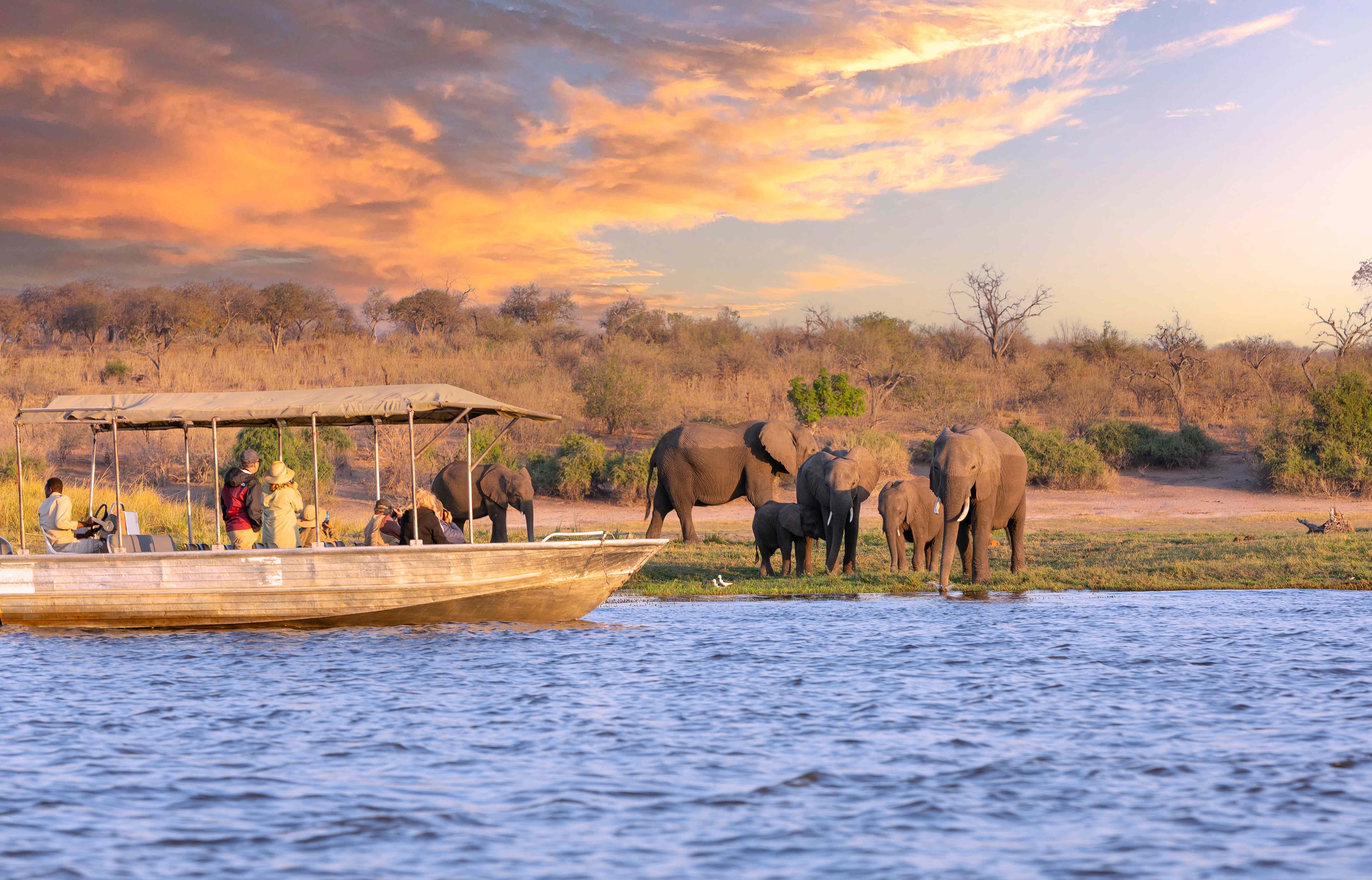
Begin the day at 06:00 AM with a 3-hour 4x4 game drive through the northern sector of Chobe National Park, covering 11,700 square kilometers. The riverfront area supports high wildlife densities, including 50,000 African elephants, cape buffalos, sable antelopes, and lions. Return to the lodge for breakfast and a midday rest. At 15:00 PM, transfer to a flat-bottomed pontoon boat for a 3-hour river safari along the Chobe River channel. Watch elephant herds swim across to Sedudu Island, observe pods of hippos, and spot Nile crocodiles along the muddy banks before returning at dusk.
Day 8: Deep Exploration of Chobe
Spend a second full day exploring the varied terrain of the Chobe Riverfront, moving deeper into the Serondela and Ihaha sectors. Take an early morning game drive along the alluvial floodplains to track leopard spoor and spot rare puku antelopes, which are found only in this region of Botswana. After lunch at your lodge, depart on an afternoon game drive through the dense teak woodlands and mopane forests inland. Over 450 bird species inhabit this park, including the African fish eagle and carmine bee-eater. Return to your lodge along the riverfront for an evening meal.
Day 9: Flight to Savuti Sector
Transfer 10 minutes to Kasane Airport (BBK) for a 45-minute light-aircraft flight southwest to the Savuti Airstrip inside Chobe National Park. Fly over 100 kilometers of wilderness before landing in the remote interior. Check into your accommodation, such as Savute Safari Lodge or Ghoha Hills Imbalala Camp. The Savuti region covers 5,000 square kilometers and is famous for the unpredictable Savuti Channel, which dries up and flows intermittently over decades. In the afternoon, set out on a 3-hour game drive around the marshlands and Gubatsa Hills, home to ancient San rock paintings created over 1,500 years ago.
Day 10: Savuti Marsh Wildlife Tracking
Spend a full day tracking game across the Savuti Marsh and northern plains. Rise at 05:30 AM for tea before embarking on a 4-hour morning game drive. Savuti is famous for its large lion prides, which actively hunt large prey, including sub-adult elephants and buffalos during the dry months. You will also see spotted hyenas, jackals, and bateleur eagles around active kill sites. Return to camp for lunch and rest during the hot hours of the day (12:00 PM to 15:00 PM). Depart for an afternoon drive at 15:30 PM, staying out until sunset to observe nocturnal predators waking up.
Day 11: Transfer to Khwai Concession
Board a 20-minute bush plane flight or take a 4x4 overland transfer 100 kilometers south from Savuti to the Khwai Community Concession, an 1,800-square-kilometer reserve bordering the Okavango Delta. Check into Khwai River Lodge, Machaba Camp, or Sango Safari Camp. The Khwai River forms the primary water source, separating the concession from the Moremi Game Reserve. Embark on an afternoon game drive along the riverbanks, where evergreen trees provide cover for leopards, wild dogs, and bushbucks. In the evening, enjoy a night game drive using spotlighting techniques to find genets, civets, and owls.
Day 12: Khwai River Water and Land Activities
Start the day with a 2-hour mokoro (traditional dugout canoe) trip navigated by a local river guide using a long pole. Glide silently through the shallow channels of the Khwai River system, spotting painted reed frogs, water lilies, and pygmy geese. Return to camp for breakfast. In the late afternoon, take a 4x4 game drive into the acacia woodlands to track one of Africa's largest breeding populations of endangered African wild dogs (Lycaon pictus). End the day with a night drive, searching for nocturnal hunters like lions and leopards active along the riverbed.
Day 13: Moremi Game Reserve (Xakanaxa & Third Bridge)
Cross the North Gate bridge into the Moremi Game Reserve, a 5,000-square-kilometer protected area covering nearly one-third of the Okavango Delta. Spend the morning driving through mopane forests and acacia woodlands toward the Xakanaxa Lagoon and Third Bridge areas. Moremi protects both wetland and terrestrial habitats, resulting in high biodiversity, including 1,000 plant species, 480 bird species, and 130 mammal species. Check into Camp Xakanaxa or Moremi Crossing. Take an afternoon boat safari through deep water channels lined with papyrus reeds to view nesting bird colonies at Gadikwe Heronry.
Day 14: Deep Wilderness in Moremi
Dedicate your final full safari day to exploring the Chief's Island sector and Paradise Pools area within Moremi. Depart at dawn to search for big cats returning from night hunts and monitor grazing herds of red lechwe, tsessebe, and impalas. Red lechwe antelopes are specially adapted to the wetlands, with elongated hooves for running through knee-deep water. After a midday break at camp, head out on your final afternoon drive. Stop at a scenic lagoon point for sunset snacks, watching herds of elephants wade across channels as dusk settles over the delta.
Day 15: Departure via Maun
Enjoy a final 06:00 AM breakfast at camp before transferring to the local airstrip (such as Xakanaxa or Khwai airstrip). Board a 30-minute light-aircraft bush flight heading 130 kilometers south back to Maun International Airport (MUB). As you fly low over the Okavango Delta, observe the winding river networks, palm islands, and elephant paths from above. Arrive in Maun with sufficient time to check in for your onward international flight home, concluding your 15-day wildlife expedition across Botswana.
🟢 Tour Inclusions
- ✈️ Internal light aircraft flights
- 🚘 All ground 4x4 transfers
- 🏨 Fourteen nights lodge accommodation
- 🍽️ All daily meals included
- 🎟️ All national park fees
- 🦁 Professional guided game drives
- 🛶 Traditional mokoro canoe trips
- 🐘 Entrance to biodiversity sanctuaries
- 🥤 Water and game drinks
- 🧭 Licensed local safari trackers
🔴 Tour Exclusions
- ✈️ International roundtrip airfare flights
- 🛂 Visas and tourist levies
- 🚁 Optional Delta scenic flights
- 🍷 Premium imported alcohol drinks
- 🧾 Personal expenses and laundry
- 💡 Safari guide tips gratuities
- 🩺 Medical emergency travel insurance