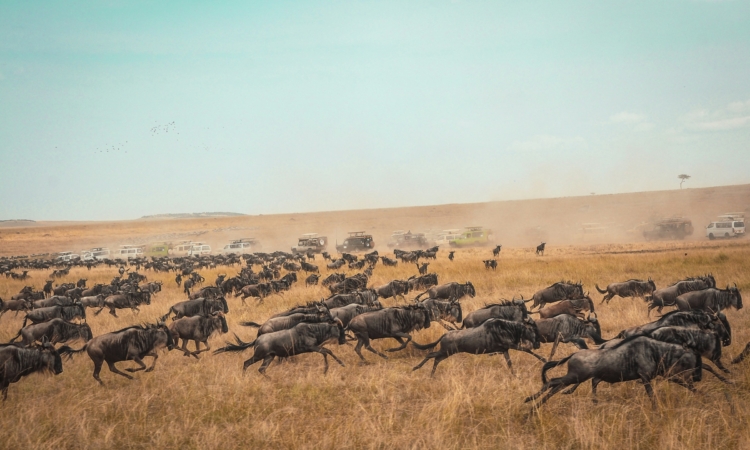
Our special 12-day Signature Wildebeest Migration and Big Five safari take you through Tanzania's most iconic parks. You will explore Tarangire, Lake Manyara, the Ngorongoro Crater, and the endless plains of the Serengeti with no rush, following millions of migrating herds and tracking Africa's premier predators.
Tour highlights for 12 Days Signature Wilde Tanzania Big five safari
Spot Big Five
Witness Great Migration
Massive Elephant Herds
Iconic Baobab Trees
Pink Flamingo Flocks
Tree-Climbing Lions Found
Endless Serengeti Plains
Thilling Predator Actions
Dramatic River Crossings
Nile Crocodile Attacks
Ngorongoro Crater Descent
Rare Black Rhinos
Scenic Rift Valley
Lush Karatu Hills
Vibrant Maasai Culture
Stunning Caldera Views
Day by day 12 Days Signature Wilde Tanzania Big five safaris
Day 1: Arrival and Transfer to Arusha
Your journey begins as you land at Kilimanjaro International Airport. You will be met by our professional driver-guide and transferred to your booked hotel in Arusha, which takes about 1 hour depending on traffic. You can relax, settle in, and recover from your flight. During this time, your guide will brief you in detail on the upcoming adventure. While there are no major wildlife viewings on this day, it marks the perfect starting point of your 12 Days Signature Wilde Tanzania Big five safari & Wildebeest migration. Take this day to adjust to the local time zone and prepare for the exciting wildlife encounters, photography opportunities, and vast landscapes waiting for you in the spectacular northern safari circuit in Tanzania.
Day 2: Arusha to Tarangire National Park
After breakfast, you will depart from your Arusha hotel and drive to Tarangire National Park. This journey takes approximately 2 to 2.5 hours on a well-paved road. Upon arrival, enjoy a full-day game drive featuring the park’s iconic giant baobab trees and massive elephant herds. You will also look out for tree-climbing lions, leopards, and the majestic cape buffalo. This day sets the foundation of your 12 Days Signature Wilde Tanzania Big five safari & Wildebeest migration by offering incredible opportunities to spot some of the big five. Tarangire is particularly famous for its high concentration of elephants that gather around the Tarangire River, providing you with fantastic photographic moments right from the comfort of your 4x4 safari vehicle.
Day 3: Tarangire to Lake Manyara National Park
Today, you will leave Tarangire and travel to Lake Manyara National Park. The driving duration is about 1.5 to 2 hours. Once inside, you will embark on an extensive game drive through lush groundwater forests, grassy plains, and around the alkaline lake. Wildlife to see includes large flocks of pink flamingos, tree-climbing lions, hippos, and lively troops of baboons and monkeys. This leg of the 12 Days Signature Wilde Tanzania Big five safari & Wildebeest migration highlights the diverse birdlife and unique primate species found in the Great Rift Valley. The scenic backdrop of the Manyara Escarpment makes it a brilliant day for both wildlife viewing and landscape photography. [
Day 4: Lake Manyara to Serengeti National Park
You will depart Lake Manyara National Park after breakfast and drive toward the world-famous Serengeti. This journey will take roughly 4 to 5 hours, offering breathtaking views as you ascend the Rift Valley escarpment. Entering through the Naabi Hill Gate, you officially step into the heart of the wilderness. Your afternoon game drive will introduce you to the endless plains and a high density of predators, including lions and cheetahs. This day is a crucial highlight of your 12 Days Signature Wilde Tanzania Big five safari & Wildebeest migration, providing your first real glimpse of vast grazing herds and iconic apex predators in their natural, untamed habitat.
Day 5: Central Serengeti National Park
Spend a full day exploring the Seronera Valley in the Central Serengeti, which requires no major transit as you will already be in the heart of the park. This area is renowned for its rich wildlife viewing opportunities year-round. Wildlife to see includes the resident big cats—lions, leopards, and cheetahs—as well as elephants, giraffes, and large pods of hippos resting in the river. This portion of the 12 Days Signature Wilde Tanzania Big five safari & Wildebeest migration offers unparalleled opportunities to witness thrilling predator-prey interactions. The golden savanna dotted with acacia trees serves as the perfect setting for spotting elusive leopards resting on tree branches or majestic lion prides surveying their territory.
Day 6: Central to Northern Serengeti
Today, embark on a 3 to 4-hour scenic drive as you transition from the central plains to the remote and wildlife-rich Northern Serengeti. This area is a primary theater for the river crossings. Wildlife to see includes massive herds of wildebeest and zebras, along with opportunistic Nile crocodiles and stalking lions. This segment defines the core excitement of your 12 Days Signature Wilde Tanzania Big five safari & Wildebeest migration, especially if you visit during the peak migration season. You will spend the entire afternoon scouring the edges of the Mara River, waiting for the dramatic and chaotic moments when the herds plunge into the rushing waters.
Day 7: Northern Serengeti (Mara River Area)
Enjoy a full day of game drives strictly around the Mara River region, with no long-distance traveling required today. Your entire focus will be on tracking the migrating herds as they navigate the treacherous river crossings. Wildlife to see includes hundreds of thousands of wildebeest, zebras, and the predators that shadow them. This is the ultimate peak of your 12 Days Signature Wilde Tanzania Big five safari & Wildebeest migration. Witnessing the panic, determination, and raw survival instincts of the animals as they brave the crocodile-infested waters is an awe-inspiring spectacle that provides one of the most unforgettable wildlife photography experiences in all of Africa.
Day 8: Northern Serengeti to Ngorongoro Crater
After a morning game drive, you will journey from the Northern Serengeti down to the Ngorongoro Conservation Area. This drive will take approximately 6 to 7 hours, traversing varied, rugged landscapes. You will descend the crater rim to your accommodation where you can take in panoramic views of the spectacular caldera. While this day involves longer travel durations, it prepares you for the next morning’s descent. As part of the 12 Days Signature Wilde Tanzania Big five safari & Wildebeest migration, this drive takes you through the beautiful highland forests and offers the chance to spot diverse wildlife transitioning from the Serengeti ecosystem into the crater.
Day 9: Ngorongoro Crater Floor
You will rise early to descend the steep walls of the Ngorongoro Crater. The descent and ascent take about 30 minutes each way, leaving you with hours to explore the crater floor. Wildlife to see includes the critically endangered black rhino, lions, elephants, hyenas, and vast flocks of flamingos around the soda lake. This is a monumental day for the 12 Days Signature Wilde Tanzania Big five safari & Wildebeest migration. The crater acts as a natural enclosure, allowing you to easily spot the Big Five in a single, concentrated location. The stunning caldera backdrop and dense concentration of wildlife guarantee extraordinary, up-close viewing and photography opportunities.
Day 10: Ngorongoro to Karatu
Today, you will enjoy a relaxed morning with sweeping views over the crater rim. Later, you will take a short drive (about 1 to 1.5 hours) down to the agricultural and forested hills of Karatu. En route, you may see localized wildlife, and you can participate in optional activities like guided nature walks or cultural visits to a local Maasai village. This slower-paced day allows you to catch your breath during your 12 Days Signature Wilde Tanzania Big five safari & Wildebeest migration. Karatu offers a tranquil environment, comfortable lodges, and lush surroundings, allowing you to reflect on the immense wildlife sightings of the previous days while enjoying warm hospitality.
Day 11: Karatu to Arusha
After breakfast, you will pack up and drive back to Arusha. This journey covers approximately 3 to 4 hours, taking you through vibrant local towns and scenic landscapes. Upon arrival, you will check back into your Arusha hotel. The rest of the day is at your leisure, perfect for souvenir shopping or simply resting. This penultimate leg of your 12 Days Signature Wilde Tanzania Big five safari & Wildebeest migration is about transitioning smoothly back into civilization. You can enjoy a farewell dinner and recount the magnificent herds of the wildebeest migration and the thrilling sights of the Big Five that you have experienced over the past ten days.
Day 12: Departure from Arusha
On your final day, you will be transferred from your Arusha hotel to Kilimanjaro International Airport for your departing flight. The transfer takes about 1 hour depending on traffic. This marks the end of your 12 Days Signature Wilde Tanzania Big five safari & Wildebeest migration. As you head home, you will carry with you unforgettable memories of the spectacular river crossings, endless savannas, and iconic African wildlife. Whether you are flying home internationally or connecting to another African destination, this signature journey leaves you with a deep appreciation for Tanzania’s natural heritage, sweeping landscapes, and the incredible conservation efforts that protect these habitats.
What is the best time of year to book this 12 Days Signature Wilde Tanzania Big five safari & Wildebeest migration route to ensure we witness the dramatic Mara River crossings?
The success of tracking the Great Migration relies entirely on understanding seasonal wildlife movements. To witness the dramatic Mara River crossings featured on Days 6 and 7 of this itinerary, you should plan your safari between July and October. During these dry months, hundreds of thousands of wildebeest and zebras arrive in the Northern Serengeti, driven by the search for fresh green grass. The Mara River becomes their ultimate obstacle, forcing them to brave steep embankments, strong currents, and opportunistic Nile crocodiles.
Booking during this peak season requires advanced planning, often up to a year in advance, as mobile camps and luxury lodges near the river fill up quickly. If you travel outside of this window, the itinerary remains spectacular for viewing the Big Five, but the geographic focus of the migration changes. For instance, from January to March, the herds gather in the southern Serengeti plains around Ndutu for the calving season. During this time, thousands of calves are born daily, drawing a high concentration of apex predators like lions and cheetahs.
Choosing the right month dictates where you will spend the core days of your journey. While the Central Serengeti and Ngorongoro Crater offer exceptional, resident wildlife viewing year-round, the Northern Serengeti is highly seasonal. By aligning your travel dates with the natural rhythm of the rainfall, you maximize your chances of witnessing the raw, chaotic energy of a river crossing. This makes the timing of your booking the single most critical factor in fulfilling the promise of this signature route.
How physically demanding is the 12 Days Signature Wilde Tanzania Big five safari & Wildebeest migration route, and what should travelers do to prepare for the long travel durations?
This comprehensive itinerary is highly rewarding but requires physical resilience due to long travel durations and rugged terrain. Most days involve several hours of driving in a 4x4 safari vehicle. Day 8 is the most demanding, requiring a 6 to 7-hour journey from the Northern Serengeti to the Ngorongoro Conservation Area. The roads inside Tanzania’s national parks are unpaved, dusty, and frequently uneven, combination locals affectionately refer to as an "African massage." Travelers with pre-existing back or neck issues should consult a doctor and consider bringing supportive cushions.
To prepare for these conditions, packing the right gear is essential. Staying hydrated is crucial, so always keep bottled water handy in the vehicle's cooler. Wear lightweight, breathable layers to adjust to the shifting temperatures, which can be freezing during early morning game drives and intensely hot by midday. High-quality sunglasses, a wide-brimmed hat, and wet wipes are indispensable for managing the persistent dust that enters the pop-up roof vehicles during dry season travel.
Furthermore, physical preparation involves managing wellness on the road. While you do not need to be an athlete, you will spend long periods sitting. Taking opportunities to stretch your legs at designated picnic sites and park gates helps prevent stiffness. Preparing mentally for long days in the field ensures you stay patient and energized. The reward for enduring these travel times is unparalleled access to remote, untouched wilderness areas where Africa's most spectacular wildlife spectacles unfold right before your eyes.
Which specific locations on this itinerary offer the highest probability of spotting all members of the African Big Five?
Spotting the entire Big Five—lion, leopard, elephant, cape buffalo, and rhino—requires visiting distinct ecosystems, all of which are strategically covered across these twelve days. While lions, elephants, and buffaloes are frequently sighted throughout the journey, the leopard and the black rhinoceros are much more elusive and require specific habitats. Fortunately, this signature route targets the precise locations where these creatures are most resident and active.
The Ngorongoro Crater (Day 9) offers your absolute highest probability of checking off the entire Big Five in a single day, particularly the critically endangered black rhino. Enclosed by steep caldera walls, the crater floor hosts a compact, thriving ecosystem where roughly 30 rhinos live under intense anti-poaching protection. Meanwhile, Tarangire National Park (Day 2) is the premier destination for massive elephant herds and large buffalo blocks, alongside iconic baobab trees that create a dramatic backdrop for wildlife photography.
For the big cats, the Central Serengeti (Day 5) is unparalleled. The Seronera Valley features abundant water sources that draw countless herbivores, making it a permanent territory for multiple lion prides. The rocky outcrops, known as kopjes, serve as elevated lookouts for lions and cheetahs. For the elusive leopard, your guide will carefully scan the sausage trees and acacia branches along the Seronera and Mara rivers. Leopards favor these branches for resting and safeguarding their kills from competing hyenas and lions, making these riverine woodlands critical stopping points.
What types of safari vehicles are utilized on the 12 Days Signature Wilde Tanzania Big five safari & Wildebeest migration route, and how do they enhance the viewing experience?
The quality of your safari vehicle directly impacts your comfort, safety, and photography opportunities throughout this extended journey. This itinerary exclusively utilizes customized 4x4 multi-terrain safari Land Cruisers. These heavy-duty vehicles are specifically engineered to handle Tanzania’s challenging infrastructure, from the muddy tracks of the wet season to the deep corrugations and thick dust of the dry northern circuit roads. They feature heavy-duty suspension systems to help smooth out the rugged paths.
The defining feature of these vehicles is the pop-up roof, which opens up to provide an unobstructed, 360-degree view of the surroundings. This allows you to stand safely within the vehicle to photograph wildlife, view distant animals through binoculars, and feel fully immersed in the savanna environment. Each passenger is guaranteed a window seat, ensuring that no one's view is blocked when a sudden wildlife event occurs, such as a lion hunt or a dramatic wildebeest river crossing.
Additionally, these vehicles are equipped with modern amenities tailored for long expeditions. They feature built-in charging sockets (typically UK-style three-pin plugs) to keep your camera batteries, phones, and tablets fully powered throughout the day. An onboard refrigerator or cooler box keeps your drinking water and sodas chilled. The vehicles also carry high-powered long-range HF radios, allowing your professional driver-guide to communicate with other guides in the area to share real-time updates on rare animal sightings, like a hidden rhino or an impending migration crossing.
What are the key differences in terrain and wildlife behavior between Tarangire National Park and the Serengeti National Park plains?
Understanding the ecological contrasts between Tarangire and the Serengeti enhances your appreciation of how wildlife adapts to different environments. Tarangire National Park (Day 2) is characterized by an undulating landscape dominated by massive, ancient baobab trees, dense acacia woodlands, and the life-giving Tarangire River. This terrain creates a more enclosed environment where wildlife behavior is centered heavily around the riverbed during the dry season, as it serves as the primary water source for miles around.
In contrast, the Serengeti National Park (Days 4–7) translates from the Maasai language as "endless plains." Its geography consists of vast, treeless grasslands stretching to the horizon, interrupted occasionally by granite kopjes and riverine forests. This wide-open terrain dictates an entirely different style of wildlife behavior based on mass movement and long-range visibility. Predators here rely on stealth, camouflage in the golden grass, or the cover of drainage ditches to stalk their prey, rather than utilizing dense bush for ambush.
Wildlife density also behaves differently in these parks. In Tarangire, animals congregate in massive, localized clusters near water, showcasing intense interactions among elephants, zebras, and waterbucks. In the Serengeti, wildlife behavior is defined by the macro-movements of the Great Migration. The sheer scale of the herds creates a nomadic lifestyle where animals are constantly on the march. This supports an incredibly high density of apex predators who have adapted to defend permanent territories while exploiting the temporary bounty of the passing migration herds.
Why is the Ngorongoro Crater considered a unique ecosystem on this route, and how does its microclimate affect early morning game drives?
The Ngorongoro Crater (Day 9) is a geographical marvel, being the largest intact, unfilled volcanic caldera in the world. Formed millions of years ago when a massive volcano exploded and collapsed in on itself, it created a natural enclosure with walls rising over 2,000 feet high. This unique topography has fostered an isolated, self-sustaining ecosystem covering roughly 100 square miles. The crater floor contains grasslands, swamps, acacia forests, and a central soda lake, supporting over 25,000 large mammals.
This unique bowl-like structure creates a highly distinct microclimate that you will experience firsthand during your early morning descent. Due to the high altitude of the crater rim (over 7,500 feet), nights are incredibly cold, and mornings are frequently shrouded in a thick, chilly fog. This mist rolls over the rim and settles on the crater floor, creating an eerie, atmospheric setting for early morning game drives. As the sun rises, it burns off the fog, rapidly warming the caldera floor by midday.
This temperature flux directly influences wildlife behavior. In the cool, misty morning hours, predators like lions and spotted hyenas are highly active, often utilizing the low visibility to hunt or patrol their boundaries. Rhinos are also more likely to be seen grazing openly on the dew-covered grass before the heat forces them into the shade of the Lerai Forest. Dressing in heavy, removable layers is vital for this day, ensuring you stay warm during the frosty descent and comfortable as the sun heats the caldera.
What cultural interaction opportunities exist on the 12 Days Signature Wilde Tanzania Big five safari & Wildebeest migration route, particularly around Karatu and Ngorongoro?
While wildlife is the primary focus of this tour, integrating cultural experiences offers a profound understanding of the human heritage that coexists with Tanzania's wild spaces. The region encompassing the Ngorongoro Conservation Area and the town of Karatu (Day 10) is a vibrant cultural crossroads. Unlike traditional national parks, the Ngorongoro Conservation Area is a multiple land-use zone where indigenous Maasai pastoralists live alongside wildlife, herding their cattle across the highlands just as they have for centuries.
During your time in Karatu or along the crater rim, you can participate in an optional visit to a traditional Maasai village, known as a boma. Here, you can learn about their nomadic lifestyle, architectural techniques using mud and thatch, and deep-rooted customs. You will often be welcomed with traditional singing and the famous Adumu (jumping dance). It is an opportunity to interact directly with community elders and learn how they balance modern challenges with the preservation of their ancestral culture.
Additionally, the surrounding Karatu district offers a glimpse into Tanzania’s agricultural heartland. Famous for its fertile volcanic soil, the area is dotted with expansive coffee plantations. Taking a guided walking tour through a local estate allows you to see the process of growing, harvesting, and roasting premium African coffee beans. Engaging with local guides, visiting community markets, or exploring craft workshops supports the local economy directly, ensuring that the benefits of international tourism extend meaningfully to the communities hosting your safari.
What are the passport, visa, and health requirements that international travelers must fulfill before embarking on this Tanzanian safari?
Preparing for an international safari requires careful attention to official documentation and medical entry requirements to ensure a smooth arrival at Kilimanjaro International Airport. First, your passport must be valid for at least six months beyond your planned departure date from Tanzania. It must also contain at least two consecutive blank pages for entry and exit stamps. Most international travelers, including citizens of the US, UK, Canada, and the EU, require a tourist visa to enter the country.
Visas can be obtained through two primary methods. The most efficient approach is applying for an Electronic Visa (e-Visa) online through the official Tanzanian immigration portal well in advance of your trip. Alternatively, tourist visas can be purchased upon arrival at major entry points, including Kilimanjaro International Airport, for a fee (typically $50 USD for most nationalities, or $100 USD for US citizens, payable in clean, crisp US dollar bills printed after 2013).
From a health perspective, specific vaccinations are highly recommended or legally required. A Yellow Fever vaccination certificate is mandatory if you are arriving from, or have transited for more than 12 hours through, a country with a risk of yellow fever transmission. Since Tanzania is a malaria-endemic region, consulting a travel clinic to obtain a prescription for malaria prophylactics (such as Malarone or Doxycycline) is essential. Staying up to date on routine immunizations like Hepatitis A, Hepatitis B, and Typhoid ensures your health is fully protected throughout the expedition.
What photography gear and camera settings are recommended to capture both sweeping landscapes and fast-moving wildlife actions like river crossings?
Capturing the fast-paced action of a wildebeest river crossing or a predator hunt requires specialized gear and a solid grasp of manual camera settings. For camera bodies, having a fast continuous shooting speed (burst mode) is essential for capturing split-second movements. Bringing two camera bodies is highly recommended; this allows you to mount a long telephoto lens on one and a wide-angle lens on the other, preventing the need to swap lenses in dusty savanna environments.
For lens selection, a telephoto zoom lens reaching at least 300mm to 600mm is indispensable for framing distant animals and getting tight close-ups of behavior without disturbing the wildlife. A versatile wide-angle or standard zoom lens (like a 24-70mm) is perfect for capturing the sweeping, endless plains of the Serengeti and the panoramic vistas of the Ngorongoro Crater. Don't forget to pack plenty of high-speed memory cards and extra batteries, as cold mornings can drain battery life unexpectedly.
When configuring your settings for action shots like the Mara River crossings, prioritize a fast shutter speed—at least 1/1000th of a second or higher—to freeze splashing water and panicked movements. Use continuous autofocus mode to track moving animals effectively. Keep your aperture wide open to isolate the subject from the background, and use Auto ISO with a set ceiling to maintain proper exposure as clouds pass over the sun, ensuring crisp, sharp images.
How do luxury tented camps and safari lodges balance premium comfort with environmental sustainability in remote areas like the Northern Serengeti?
The accommodations selected along this signature route represent a sophisticated blend of high-end hospitality and deep eco-consciousness. In remote wilderness areas like the Northern Serengeti, permanent concrete structures are heavily restricted to protect the environment. Instead, properties utilize luxury tented camps. These structures feature canvas walls and wooden floors set on raised platforms, offering the amenities of a five-star hotel room—including plush beds, private en-suite bathrooms, and hot running water—while leaving a minimal physical footprint on the land.
Operating sustainably in these isolated pockets requires innovative engineering. Most premium camps rely entirely on solar power arrays to generate electricity, utilizing large battery banks to store power for the evening. Hot water is frequently provided via solar water heaters or highly efficient eco-burners. Water conservation is strictly practiced, with many properties implementing sophisticated greywater filtration systems to ensure that no harmful waste or chemicals leach into the delicate savanna water tables or disrupt local wildlife.
Furthermore, these lodges emphasize social sustainability and community integration. They employ a vast majority of their staff from neighboring villages, providing professional hospitality training, fair wages, and healthcare benefits. Kitchens prioritize locally sourced, organic ingredients from nearby farming communities like Karatu, reducing transport emissions while boosting the regional economy. By choosing these properties, your journey actively funds the continuous protection of Tanzania’s wilderness, ensuring that luxury tourism acts as a powerful force for long-term wildlife conservation.
Booking 12 Days Signature Wilde Tanzania Big five safari with us Roads of Adventure safaris
To book your 12 Days Signature Wildebeest Tanzania Big Five Safari with Roads of Adventure Safaris, you should reach out directly to their booking and planning team. Given your proximity to Kampala, you can conveniently initiate and customize this epic journey right here in Uganda.
