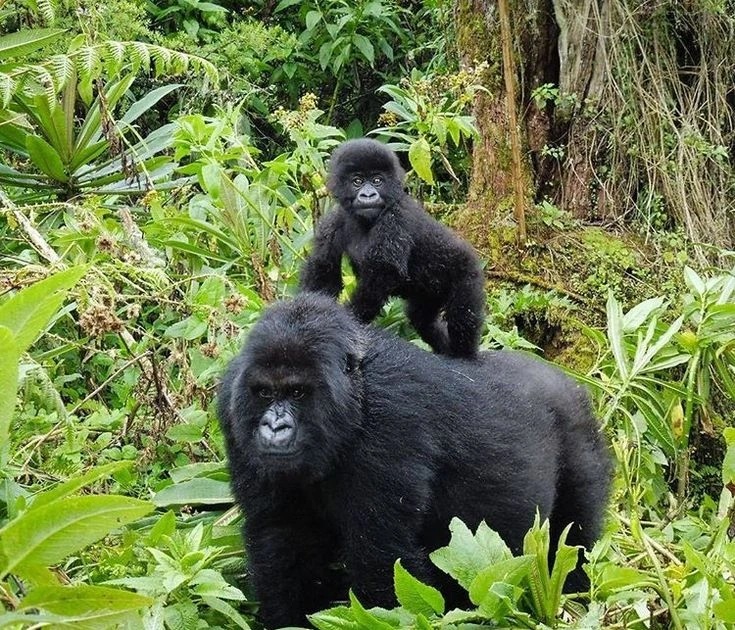
A 12-day safari starting in Kigali (Rwanda) offers the ultimate primate and wildlife experience, combining Rwanda’s Volcanoes National Park with Uganda’s Bwindi Impenetrable Forest and Queen Elizabeth National Park. This 12 Days Rwanda Uganda safari and gorilla trekking from Rwanda Kigali itinerary features bucket-list mountain gorilla treks in both countries, chimpanzee tracking, and big-game viewing.
Tour highlights for 12 Days Rwanda Uganda safari and gorilla trekking from Rwanda Kigali
Kigali Genocide Memorial visit
Scenic twin lakes drive
Volcanoes gorilla trekking encounter
Cross scenic border posts
Bwindi impenetrable forest trek
Double mountain gorilla tracking
Batwa cultural community walk
Ishasha tree climbing lions
Kasenyi savanna game drives
Kazinga channel boat safari
Rwenzori mountain foothills view
Kibale chimpanzee tracking experience
Bigodi wetland primate walk
Albertine rift valley scenery
Murchison falls morning safaris
Victoria Nile boat cruise
Ziwa white rhino tracking
Entebbe international airport departure
Day 1: Arrival and Transfer to your Hotel in Kigali
Your extraordinary 12 Days Rwanda Uganda safari and gorilla trekking from Rwanda Kigali begins the moment you touch down at Kigali International Airport. You will be warmly welcomed by your professional driver-guide, who will transfer you to your pre-booked hotel in the heart of the city. Depending on your arrival time, you can unwind and shed the travel fatigue or step out to explore Rwanda's exceptionally clean, organized, and vibrant capital. Your guide will provide a comprehensive briefing about the upcoming cross-border adventure, detailing the incredible primate encounters and savanna wildlife viewings that await you. Enjoy a relaxed dinner at your hotel, soaking in the ambient night air of Kigali as you look forward to an epic journey through two of East Africa's most beautiful and biodiverse nations.
Day 2: Kigali City Tour and Transfer to Volcanoes National Park
After a hearty breakfast, your 12 Days Rwanda Uganda safari and gorilla trekking from Rwanda Kigali continues with an insightful morning tour of Kigali. You will visit the Kigali Genocide Memorial, a deeply moving site that honors the victims and beautifully showcases the country’s inspiring journey of peace, unity, and reconciliation. Afterward, explore local craft markets like the Caplaki Craft Village to appreciate Rwandan artistry. Following lunch in the city, you will embark on a highly scenic drive northwest toward Volcanoes National Park. The journey takes you through rolling, emerald-green terraced hills, perfectly illustrating why Rwanda is affectionately known as the "Land of a Thousand Hills." You will arrive at your lodge near Kinigi in the late afternoon, surrounded by the dramatic, mist-shrouded silhouettes of the Virunga Volcanoes.
Day 3: Gorilla Trekking in Volcanoes National Park (Rwanda)
This morning marks the first major highlight of your 12 Days Rwanda Uganda safari and gorilla trekking from Rwanda Kigali. After an early breakfast, report to the Kinigi park headquarters at 7:00 AM for a briefing on gorilla etiquette and safety protocols. You will be assigned to a habituated gorilla family and lead into the dense bamboo forest by expert park rangers. The trek can last anywhere from two to six hours, depending on the gentle giants' movements. Once you locate the family, the forest fades away as you spend one unforgettable hour observing them feed, play, and groom just meters from you. Coming face-to-face with a massive silverback is a profoundly spiritual experience. Afterward, return to the lodge for a well-deserved lunch and an afternoon of pure relaxation.
Day 4: Cross the Border to Bwindi Impenetrable National Park (Uganda)
Today, your 12 Days Rwanda Uganda safari and gorilla trekking from Rwanda Kigali takes a cross-border turn as you transition from Rwanda into Uganda. After a leisurely breakfast, you will enjoy a final look at the Virunga chain before driving north toward the Cyanika or Katuna border post. Clearing customs is seamless with East African tourist visas, after which you will enter southwestern Uganda's Kigezi highlands, often called the "Switzerland of Africa." Your drive weaves through steep, hand-terraced hills and vibrant trading centers until you arrive at Bwindi Impenetrable National Park. This UNESCO World Heritage site is an ancient, dense rainforest that holds roughly half of the world's remaining mountain gorilla population. Check into your lodge, enjoy the cooler forest air, and fall asleep to the unique night chorus of the jungle.
Day 5: Gorilla Trekking in Bwindi Impenetrable National Park (Uganda)
Prepare for an incredible, rare double-trekking experience on this day of your 12 Days Rwanda Uganda safari and gorilla trekking from Rwanda Kigali. Bwindi's terrain offers a completely different environment compared to Volcanoes National Park, featuring thicker, multi-tiered jungle canopies and steep ridges. Following a morning briefing from the Uganda Wildlife Authority rangers, you will head deep into the ancient forest to track a second gorilla family. This second encounter allows you to fully appreciate the unique dynamics, behaviors, and distinct facial structures of different gorilla groups without the pressure of trying to capture it all in just one rush. Spend an hour sitting silently among them as they go about their wild routines. In the afternoon, you can optionally visit the local Batwa pygmy community to learn about their ancestral forest heritage.
Day 6: Transfer to Queen Elizabeth National Park via Ishasha Sector
After breakfast, your 12 Days Rwanda Uganda safari and gorilla trekking from Rwanda Kigali heads north to Queen Elizabeth National Park. You will drive through the southern Ishasha sector of the park, a vast savanna landscape world-famous for its unique resident population of tree-climbing lions. Keep your eyes trained on the sturdy limbs of old fig trees, where these majestic predators lazily drape themselves to escape heat and annoying tsetse flies. Along the way, you will also spot herds of Ugandan kobs, topis, and massive cape buffaloes. Continue through the park to the northern sector, arriving at your lodge near the Mweya Peninsula or the Kasenyi plains by late afternoon. The changing scenery from dense, misty tropical rainforests to wide-open African savanna is nothing short of spectacular.
Day 7: Morning Game Drive and Kazinga Channel Boat Cruise
An action-packed savanna experience awaits you today on your 12 Days Rwanda Uganda safari and gorilla trekking from Rwanda Kigali. Set out at sunrise for a morning game drive across the Kasenyi plains, a prime mating ground for local antelopes. This is the optimal time to spot lions and elusive leopards returning from their night hunts, alongside large herds of elephants. After lunch, head to the Mweya Peninsula for a legendary two-hour boat cruise along the Kazinga Channel, which naturally connects Lake Edward and Lake George. This cruise offers some of the highest concentrations of hippos and Nile crocodiles on earth. You will also watch elephants and buffaloes wade into the water to cool off, accompanied by an unbelievable array of waterbirds like pelicans, kingfishers, and saddle-billed storks.
Day 8: Morning Game Drive and Transfer to Kibale Forest National Park
Begin your day with a final morning game drive or an optional walk through the dramatic twin crater lakes area, capturing the golden morning light over the rift valley. Afterward, your 12 Days Rwanda Uganda safari and gorilla trekking from Rwanda Kigali heads further north toward Kibale Forest National Park. The scenic drive takes you directly past the foothills of the fabled, snow-capped Rwenzori Mountains—the "Mountains of the Moon"—and through sprawling, vibrant green tea plantations near Fort Portal town. You will arrive at Kibale Forest, widely recognized as East Africa’s undisputed primate capital, in the afternoon. Check into your tropical lodge and spend the evening relaxing or listening to the distant, haunting calls of wild chimpanzees echoing through the thick canopy.
Day 9: Chimpanzee Tracking in Kibale and Bigodi Swamp Walk
Primate exploration takes center stage today on your 12 Days Rwanda Uganda safari and gorilla trekking from Rwanda Kigali. Gather at the Kanyanchu visitors center for a detailed briefing before venturing into the gorgeous rainforest to track our closest wild relatives. Kibale is home to over 1,500 chimpanzees, and finding them is highly likely. Once located, you will spend an hour watching them swing through branches, vocalize loudly, and interact in highly complex social groups. After lunch, enjoy a guided nature walk through the adjacent Bigodi Wetland Sanctuary. This community-run boardwalk trail is an absolute paradise for birders and primate lovers, frequently yielding sightings of the spectacular Great Blue Turaco and up to eight other monkey species, including red colobus and grey-cheeked mangabeys.
Day 10: Long Scenic Transfer to Murchison Falls National Park
Today features the longest drive of your 12 Days Rwanda Uganda safari and gorilla trekking from Rwanda Kigali, but it is packed with beautiful rural scenery. Leaving the primate capital behind, you will journey northward through traditional Ugandan homesteads, sprawling farmlands, and historic towns like Hoima. The route meanders through the Albertine Rift, offering occasional, sweeping views of Lake Albert in the distance. As you approach Murchison Falls National Park, Uganda's largest protected area, the landscape shifts beautifully into open wood-savanna and rolling plains. Arrive at your safari lodge in the late afternoon or early evening. This long travel day provides a wonderful window into the authentic daily lives and rich agricultural landscapes of rural Uganda, setting the stage for classic Big Five game viewing.
Day 11: Murchison Falls Game Drive and Victoria Nile Boat Safari
Awaken early for an exceptional morning game drive on the northern banks of the Nile, a highlight of your 12 Days Rwanda Uganda safari and gorilla trekking from Rwanda Kigali. The park’s sweeping savannas host an abundance of wildlife, including Rothschild giraffes, lions, leopards, hartebeests, and vast herds of elephants. In the afternoon, embark on an iconic three-hour boat safari upstream on the Victoria Nile toward the base of Murchison Falls. You will float past countless hippos and giant crocodiles basking on sandbanks. The boat stops just meters from the "Devil's Cauldron," where you can witness the entire Nile River furiously forcing itself through a tiny seven-meter gorge before plunging 43 meters down. You can optionally hike to the top of the falls for an incredibly powerful, misty view.
Day 12: Ziwa Rhino Tracking and Transfer to Entebbe for Departure
On the final day of your 12 Days Rwanda Uganda safari and gorilla trekking from Rwanda Kigali, you will depart the park early and drive toward Kampala or Entebbe. En route, stop at the Ziwa Rhino Sanctuary in Nakasongora, the only place in Uganda where you can see rhinos in the wild. Enjoy a thrilling, guided foot safari to track these majestic, critically endangered southern white rhinos at a safe distance. After this final wildlife encounter and a delicious lunch, continue your journey south. You will be transferred directly to Entebbe International Airport for your evening outbound flight or to a hotel of your choice. You will depart with memories of an incredible, comprehensive cross-border loop featuring Africa's most iconic primates and unforgettable wilderness landscapes.
1. What is included in a 12 Days Rwanda Uganda safari and gorilla trekking from Rwanda Kigali?
A comprehensive 12 Days Rwanda Uganda safari and gorilla trekking from Rwanda Kigali is designed to offer an all-inclusive, seamless journey showcasing the absolute best of East Africa’s biodiversity. On the operational side, this itinerary typically includes ground transportation in a customized 4x4 safari Land Cruiser with a pop-up roof for optimal wildlife viewing, the services of a professional, English-speaking driver-guide, and full-board accommodation ranging from mid-range to luxury eco-lodges. It also covers all national park entrance fees, guiding fees, and specific activity permits, which are the most critical components of the tour's logistics.
In terms of specific activities, the package incorporates a curated mix of primate encounters, classic savanna game drives, and boat safaris. The trip generally features an insightful city tour of Kigali, including a visit to the Kigali Genocide Memorial. It then moves into the primate highlights: a gorilla trekking permit for Volcanoes National Park in Rwanda, a second gorilla tracking permit for Bwindi Impenetrable National Park in Uganda, and a chimpanzee tracking permit for the Kanyanchu primates walk in Kibale Forest National Park.
Additionally, the tour includes a guided nature walk through the community-run Bigodi Wetland Sanctuary to spot monkeys and rare birds like the Great Blue Turaco. For savanna wildlife viewing, the package features classic game drives across the Kasenyi plains of Queen Elizabeth National Park to look for lions and leopards, a spectacular boat cruise along the hippopotamus-dense Kazinga Channel, and extensive game viewing in Murchison Falls National Park. Finally, it includes a boat safari upstream to the base of Murchison Falls, a hike to the top of the dramatic gorge, and a foot safari to track white rhinos at the Ziwa Rhino Sanctuary. International flights and personal items are usually excluded.
2. Where does a 12 Days Rwanda Uganda safari and gorilla trekking from Rwanda Kigali start and end?
An itinerary of this nature is structured as an expansive cross-border loop or a linear point-to-point expedition. The journey uniformly starts with your arrival at Kigali International Airport (KGL)—formerly known as Kanombe International Airport—located in the vibrant capital of Rwanda. Starting in Kigali is highly strategic due to its well-connected flight schedules and its geographic proximity to the primary primate habitats of the Albertine Rift. Your tour operator will meet you at the arrivals terminal and transfer you to a local hotel to kick off the trip.
Where the safari concludes depends entirely on the specific route design chosen by the tour operator or customized to your flight preferences. The most common and logistically smooth option is a linear route that finishes at Entebbe International Airport (EBB) in Uganda. After exploring the northernmost parks like Murchison Falls, you drive south back through Kampala directly to Entebbe for an evening outbound flight. This prevents you from having to endure a long, exhausting return drive all the way back across the international border.
However, if you have booked a round-trip flight out of Kigali, the itinerary can easily be modified into a complete circuit. In this scenario, after completing your wildlife viewing in Uganda, your guide will drive you back southward across either the Cyanika or Katuna border post, returning you safely to Kigali for your departure. Regardless of whether the trip ends in Entebbe or loops back to Kigali, all airport drop-offs and border-crossing logistics are fully coordinated by your guide to match your international flight timings perfectly.
3. Why should I choose to start my trip from Kigali?
Choosing to launch your 12 Days Rwanda Uganda safari and gorilla trekking from Rwanda Kigali is one of the smartest logistical decisions an African traveler can make. The primary advantage is geographic efficiency. Bwindi Impenetrable National Park and Mgahinga Gorilla National Park in southwestern Uganda are home to more than half of the world's remaining mountain gorillas, yet they are located very far from Uganda's own international airport in Entebbe. Driving from Entebbe to Bwindi is a grueling, bumpy 8-to-9-hour journey that consumes an entire day of your vacation and can leave you quite exhausted.
In stark contrast, Kigali International Airport is located remarkably close to the gorilla lands. Driving from Kigali to Volcanoes National Park takes a mere 2.5 hours along smooth, beautifully paved roads. Even if you choose to head straight from Kigali into Uganda’s Bwindi forest via the Cyanika or Katuna border posts, the entire journey takes only 4 to 5 hours, including the time spent clearing immigration. This cuts your travel time squarely in half, saving you from physical fatigue and maximizing the time you actually get to spend watching wildlife in the parks.
Furthermore, Kigali is widely celebrated as one of the cleanest, safest, and most peaceful capital cities in the world. Starting your journey here provides a calm, highly organized, and gentle introduction to East Africa. It allows you to smoothly acclimatize to the region, enjoy a short, incredibly meaningful city tour, and dive straight into your high-adventure trekking activities without wasting precious vacation days sitting inside a transport vehicle.
4. How many gorilla trekking permits will I need?
For a cross-border expedition like the 12 Days Rwanda Uganda safari and gorilla trekking from Rwanda Kigali, it is highly recommended that you purchase two separate gorilla trekking permits: one issued by the Rwanda Development Board (RDB) for Volcanoes National Park, and one issued by the Uganda Wildlife Authority (UWA) for Bwindi Impenetrable National Park. While it might seem redundant to track the same species twice, a double-trekking itinerary offers an incredibly rich, well-rounded perspective that single-trek travelers completely miss out on.
First and foremost, the natural environments of the two parks are radically different. Volcanoes National Park features high-altitude bamboo forests and open volcanic slopes where visibility is generally wide and clear, making it excellent for photography. Bwindi, true to its name, is an ancient, multi-tiered, and tangled primeval rainforest filled with thick vines, giant ferns, and steep ridges. Tracking gorillas in these two distinct settings feels like two completely different adventures.
Secondly, mountain gorilla families possess unique group dynamics, structures, and personalities. By going on two separate treks, you get to observe two completely different families. On your first day, you might spend an hour watching multiple playful infants tumbling around a relaxed mother; on the second day, you might find yourself observing a massive, dominant silverback interacting with his sub-adult males. Buying two permits also takes the pressure off your first hour. If you spend your first trek frantically trying to snap perfect photos through your camera lens, your second trek allows you to put the camera down completely and simply soak in the magical presence of these gentle giants.
5. How much does a gorilla permit cost?
The cost of gorilla trekking permits is a major factor in the pricing of an East African safari, as these permits are premium documents that are strictly regulated to support intense conservation efforts. The permit prices vary significantly between the two countries, which is another reason why combining both nations on a single 12 Days Rwanda Uganda safari and gorilla trekking from Rwanda Kigali offers excellent financial and experiential balance.
In Rwanda, a standard gorilla trekking permit costs US$1,500 per person for all non-resident international visitors. This premium price tag reflects Rwanda’s deliberate tourism strategy, which focuses on low-volume, high-value luxury travel to minimize environmental impact on the fragile Virunga ecosystem. The funds collected from these permits go directly toward paying park rangers, funding advanced veterinary care for the wild groups, and financing community development projects around the park borders to ensure locals benefit from tourism.
In Uganda, a standard gorilla trekking permit is noticeably more budget-friendly, costing US1,500 per permit. Available only in the southern sectors of Bwindi forest, this specialized permit allows a maximum of just four tourists to accompany researchers and rangers as they follow a wild gorilla group that is still getting used to human presence. This extended encounter lasts for four hours instead of the standard one hour.
6. How much time do I get to spend with the gorillas?
Regardless of whether you are trekking in the bamboo forests of Rwanda's Volcanoes National Park or the dense jungles of Uganda's Bwindi Impenetrable Forest, your time face-to-face with a wild, habituated mountain gorilla family is strictly limited to exactly one hour per trek. The countdown begins the precise moment your expert lead ranger locates the family and signals for the group to quiet down and get ready.
This strict 60-minute rule is a non-negotiable international conservation standard that serves two vital purposes. First, mountain gorillas share roughly 98% of their DNA with humans, making them highly susceptible to human airborne diseases, common colds, and viruses. Limiting the exposure time drastically reduces the risk of cross-species disease transmission. Second, it prevents the gorillas from becoming overly stressed, agitated, or dependent on human presence, ensuring they maintain their wild instincts, natural foraging habits, and complex social structures without prolonged daily disruptions.
While one hour might sound short on paper, it is an incredibly intense, visually packed, and deeply memorable experience. Because the gorillas are fully habituated to humans, they continue going about their daily routines completely unbothered by your presence. You will watch them munching on giant celery stalks, grooming each other's thick black fur, and watching infants somersault off low branches right in front of you. Your expert guide will track the time carefully, giving you a gentle 10-minute warning so you can put your camera down, take a deep breath, and fully absorb the magic of the moment before heading back down the mountain.
7. Is a 12 Days Rwanda Uganda safari and gorilla trekking from Rwanda Kigali safe?
Yes, embarking on a 12 Days Rwanda Uganda safari and gorilla trekking from Rwanda Kigali is incredibly safe, secure, and highly organized. Both Rwanda and Uganda consider conservation and tourism to be vital national priorities, and both governments have established world-class security protocols to ensure that international travelers are protected at every single stage of their journey.
When it comes to the wildlife treks themselves, you are never left alone in the wilderness. Every trekking group is escorted by a team of highly trained, professional park rangers and tracking guides from the Rwanda Development Board (RDB) and the Uganda Wildlife Authority (UWA). These rangers are armed and possess an intimate, expert understanding of animal behavior. They use specific vocalizations to communicate peacefully with the gorillas and chimpanzees, ensuring that the animals remain calm and secure. Additionally, military detachments and tourism police forces constantly patrol the national park boundaries to secure the forests against any illegal activities.
On a broader level, the travel corridors between Kigali and the various Ugandan national parks are peaceful and welcoming. Tourism vehicles are easily recognized, and local communities along the safari routes are incredibly hospitable and friendly toward visitors. Your professional driver-guide handles all navigation, border-crossing clearances, and local communications, ensuring that you never have to guess where to go. By adhering to standard safari safety protocols—such as listening closely to your ranger’s briefing, maintaining the required 7-meter distance from primates, and remaining inside your safari vehicle during savanna game drives—you will enjoy a completely secure and worry-free adventure.
8. What is the physical fitness requirement for a gorilla trek?
Gorilla trekking is an outdoor adventure that requires a moderate to good level of physical fitness, as it involves hiking through wild, undeveloped terrains. Mountain gorillas live up to their name; they reside in high-altitude zones ranging from 2,000 to over 4,000 meters above sea level. At these heights, the air is thinner, which means your lungs will work harder than usual. Furthermore, the trails are not paved paths—you will be hiking through thick undergrowth, scrambling over fallen logs, navigating steep ridges, and walking on muddy, slippery slopes that can be challenging to balance on.
The duration of a trek is highly unpredictable. Depending on where the gorilla family slept the night before and how fast they are moving to find food, a trek can take anywhere from 1 to 2 hours on the short side, or stretch up to 6 or 7 hours of strenuous hiking in the hot sun or pouring rain. To prepare for this, it is highly recommended that you engage in some cardiovascular training—such as hiking, walking on a treadmill with an incline, or stair climbing—for a few weeks leading up to your safari departure.
Crucially, park officials do their best to accommodate different fitness levels during the morning briefing. Trekkers are split into groups of eight based on their age, physical ability, and self-reported fitness. If you prefer a shorter, less steep walk, you can request an "easy" trek to a gorilla family that is currently residing closer to the park boundaries. You can also hire a local porter at the trailhead for a small fee. Porters are incredibly helpful; they carry your heavy backpack and provide a steady, reassuring hand to pull you up steep mud banks or stabilize you on tricky downhill descents.
9. Can children go on a gorilla trek?
No, children under a certain age are not permitted to participate in gorilla trekking. According to the strict, unified conservation policies enforced by both the Rwanda Development Board (RDB) and the Uganda Wildlife Authority (UWA), the absolute minimum age requirement for gorilla trekking is 15 years old. This age limit is enforced across all tracking sectors without exception, and passports are thoroughly checked at the park headquarters during the morning registration process.
There are several vital conservation and safety reasons for this age restriction. First, children are much more likely to carry common childhood communicable diseases—such as chickenpox, measles, mumps, or flu—which could easily spread to the mountain gorilla population and cause a devastating wildlife epidemic. Second, children can be highly unpredictable when faced with a wild animal. If a massive 400-pound silverback beats his chest, makes a loud vocalization, or charges to assert dominance, a younger child might panic, scream, or run away. Running from a mountain gorilla is incredibly dangerous, as it triggers their predatory pursuit instinct.
A person who is 15 years or older is generally considered mature enough to understand the safety briefings, follow instructions perfectly, remain calm during an unexpected animal encounter, and handle the physical demands of a long hike. If you are planning a family 12 Days Rwanda Uganda safari and gorilla trekking from Rwanda Kigali with younger children, you can coordinate with your tour operator to arrange alternative, supervised activities for them—such as guided cultural village walks, bird-watching nature trails, or kid-friendly lodge crafts—while the adults head up the mountains for the gorilla trek.
10. Do I need to book my permits and tour in advance?
Yes, booking your permits and your entire safari package well in advance is absolutely critical. To preserve the wild nature of mountain gorillas and protect them from over-tourism, park authorities enforce a strict daily cap on the number of visitors. Only eight trekkers are allowed to visit a single habituated gorilla family per day for exactly one hour. Because there are only a limited number of habituated gorilla groups in Volcanoes and Bwindi national parks, the total number of permits available on any given day is very small.
Due to the massive global popularity of gorilla trekking, these permits are in extremely high demand and regularly sell out 4 to 6 months ahead of time, particularly for travel during the peak dry seasons. If you show up at the park headquarters hoping to buy a walk-in permit on the day of a trek, you will almost certainly be turned away. Therefore, you should aim to secure your 12 Days Rwanda Uganda safari and gorilla trekking from Rwanda Kigali at least 6 months to a year before your intended departure date.
Booking early is equally important for securing high-quality accommodations. The top-rated eco-lodges and luxury tented camps situated close to the park tracking gates are relatively small, often featuring just 8 to 15 rooms to maintain an intimate, low-impact atmosphere. These rooms fill up just as fast as the trekking permits. By planning far in advance, your tour operator can secure your specific permits, lock in your preferred lodge choices, and guarantee that your cross-border itinerary runs smoothly without any sudden, disappointing logistical gaps.
11. What is the best time of the year to do this safari?
While a 12 Days Rwanda Uganda safari and gorilla trekking from Rwanda Kigali can be successfully conducted year-round, the absolute best time to go is during the two distinct dry seasons: from June to September (the long dry season) and from mid-December to early February (the short dry season). These months offer the most comfortable, predictable, and logistically smooth conditions for a classic East African safari.
During the dry seasons, rainfall is minimal, which has a massive impact on your trekking experience. The forest floors in Bwindi and Volcanoes national parks receive less rain, meaning the hiking trails are firmer, less muddy, and much less slippery, making the physical climb significantly easier. In savanna parks like Queen Elizabeth and Murchison Falls, the dry weather causes the dense bush vegetation to thin out, making it much easier to spot lions, leopards, and giraffes. Furthermore, animals naturally gather around permanent water sources like rivers and waterholes, allowing you to enjoy spectacular wildlife viewing right from your safari vehicle.
The wet seasons—running from March to May and from October to November—should not be completely discounted, however. During these months, the parks receive frequent rain showers, which transforms the landscapes into a lush, vibrant green that is an absolute dream for landscape photographers. Additionally, food is abundant on the lower slopes, so the gorillas often descend closer to the park boundaries, resulting in shorter, less strenuous hikes. Wet season travel also features far fewer crowds in the parks and great seasonal discounts from luxury lodges, making it an excellent option for intrepid travelers looking for a quiet, budget-friendly adventure.
12. What are the luggage and clothing requirements for the trek?
Packing correctly for a primate and savanna safari requires balancing protection from elements with the strict weight limits of safari transport vehicles. For your gorilla and chimpanzee treks, your clothing choices should focus on protection from stinging nettles, sharp thorns, and biting insects. You should pack long, lightweight trousers and long-sleeved shirts made from breathable, quick-drying materials. It is best to stick to neutral safari colors like khaki, olive green, or tan, while strictly avoiding bright whites, dark blues, or blacks, which can attract annoying tsetse flies.
Sturdy, waterproof hiking boots with excellent ankle support and a deep tread are an absolute must for navigating slippery mud banks. You should also pack high-quality, breathable rain gear—such as a lightweight rain jacket or poncho—as tropical downpours can happen at any time. A pair of thick gardening gloves is a classic pro-tip; they allow you to safely grab onto prickly branches or vines for balance without getting stung or scratched. Don't forget a wide-brimmed hat, insect repellent containing DEET, and a comfortable, lightweight backpack to carry your camera gear, binoculars, and packed lunch.
For the savanna game drives, casual, comfortable clothing is perfect. Keep in mind that early morning game drives can be surprisingly chilly, so packing a warm fleece jacket, windbreaker, or scarf that you can layer is highly recommended. Because safari vehicle luggage compartments have limited space, you should pack your gear in a soft-sided duffel bag rather than a large, rigid, hard-shell suitcase, ensuring everything fits easily into the vehicle.
13. What kind of vaccine or visa requirements are necessary?
Navigating the cross-border paperwork for a 12 Days Rwanda Uganda safari and gorilla trekking from Rwanda Kigali is straightforward if you secure the correct documents prior to your travel date. The most efficient solution for this itinerary is to apply online for an East African Tourist Visa. This single, multi-entry visa costs US$100 and allows you to travel freely between Rwanda, Uganda, and Kenya for up to 90 days. Because your trip begins in Kigali, you must apply for this visa through the official immigration portal of the Republic of Rwanda, selecting it as your point of entry.
On the medical front, a valid Yellow Fever vaccination certificate is a mandatory entry requirement for both Rwanda and Uganda. You must present this official yellow card to health officials at the airport upon arrival and again at the overland border posts between the two nations. It is highly recommended that you receive this vaccination at least 10 days before your trip to ensure it is legally valid when you arrive.
Additionally, because both Rwanda and Uganda are malaria-endemic zones—particularly in the lower-altitude savanna areas near the water channels—you should consult a specialized travel medicine clinic or your healthcare provider well in advance. They can prescribe appropriate anti-malarial prophylaxis tablets (such as Atovaquone/Proguanil or Doxycycline) and ensure that your routine immunizations, including Hepatitis A, Hepatitis B, Typhoid, and Tetanus boosters, are fully up to date. Packing a basic personal first-aid kit with broad-spectrum antibiotics, antidiarrheal medication, and rehydration salts is also highly recommended.
14. What are the accommodations like on this trip?
The accommodations available along the route of a 12 Days Rwanda Uganda safari and gorilla trekking from Rwanda Kigali are an experience in themselves, designed to offer comfort and immersion into the wild landscapes. Lodges are categorized into three main tiers—budget, mid-range, and luxury—allowing you to easily tailor the safari to your preferred level of comfort and budget.
Standard mid-range and luxury eco-lodges are built using local, sustainable materials like volcanic stone, thatch, and timber, allowing them to blend into the surrounding hills and forests. In primate areas like Bwindi and Volcanoes, these lodges are often nestled right on the forest edge or perched high on mountain ridges, offering private balconies with sweeping views of the misty canopies. They feature cozy beds with mosquito netting, en-suite bathrooms with hot running water, flushing toilets, and charming central lounge areas centered around cozy stone fireplaces to take the chill off the crisp mountain nights.
In savanna parks like Queen Elizabeth and Murchison Falls, accommodations often take the form of luxury tented camps. These are permanent, large canvas tents erected on solid wooden platforms, combining the romantic, classic feel of an old-school African safari with modern amenities like private verandas, electricity, and fine dining. Most safari lodges operate on a full-board basis, serving delicious multi-course meals that combine fresh local produce with international cuisine. They also provide early-morning coffee stations and custom packed picnic lunches for your long days out on game drives or forest treks.
15. Can I see other primates besides mountain gorillas on this trip?
Yes, absolutely. While coming face-to-face with mountain gorillas is undoubtedly a massive drawcard, a 12 Days Rwanda Uganda safari and gorilla trekking from Rwanda Kigali is an absolute paradise for primate lovers, offering access to an incredible variety of other species. The Albertine Rift region features some of the highest primate diversity on the planet, and this itinerary is carefully structured to showcase multiple species across different habitats.
The most prominent primate highlight alongside the gorillas is the eastern chimpanzee (Pan troglodytes schweinfurthii). By including a visit to Kibale Forest National Park in Uganda—widely celebrated as the primate capital of East Africa—you will track some of the 1,500 chimpanzees that live within the park. Watching a community of chimpanzees vocalize loudly, hunt, and swing effortlessly through the high forest canopy offers an incredible contrast to the quiet, grounded behavior of mountain gorilla families.
Beyond gorillas and chimpanzees, you will also have the opportunity to track golden monkeys (Cercopithecus kandti) in Volcanoes National Park. These beautiful, rare, and playful primates are endemic to the bamboo zones of the Virunga Volcanoes and are known for their bright golden-orange fur. Furthermore, during your guided nature walks in the Bigodi Wetland Sanctuary and your treks through the rainforests, you can spot up to 10 to 12 other smaller primate species. Keep your binoculars ready to spot Central African red colobus monkeys, grey-cheeked mangabeys, black-and-white colobus monkeys, L'Hoest's monkeys, olive baboons, and playful red-tailed monkeys swinging through the branches.
Booking 12 Days Rwanda Uganda safari and gorilla trekking from Rwanda with us Roads of Adventure safaris
Book your 12-day Rwanda and Uganda safari with Roads of Adventure Safaris for an unforgettable experience 12 Days Africa Safari Trip in Rwanda and Uganda Combined .... Their packages include gorilla and primate trekking, game drives in 4x4 vehicles, and comfortable lodging Booking Uganda-Rwanda Tour with us Roads of Adventure safaris. A 30% deposit is required to secure your booking Booking Uganda-Rwanda Tour with us Roads of Adventure safaris.
