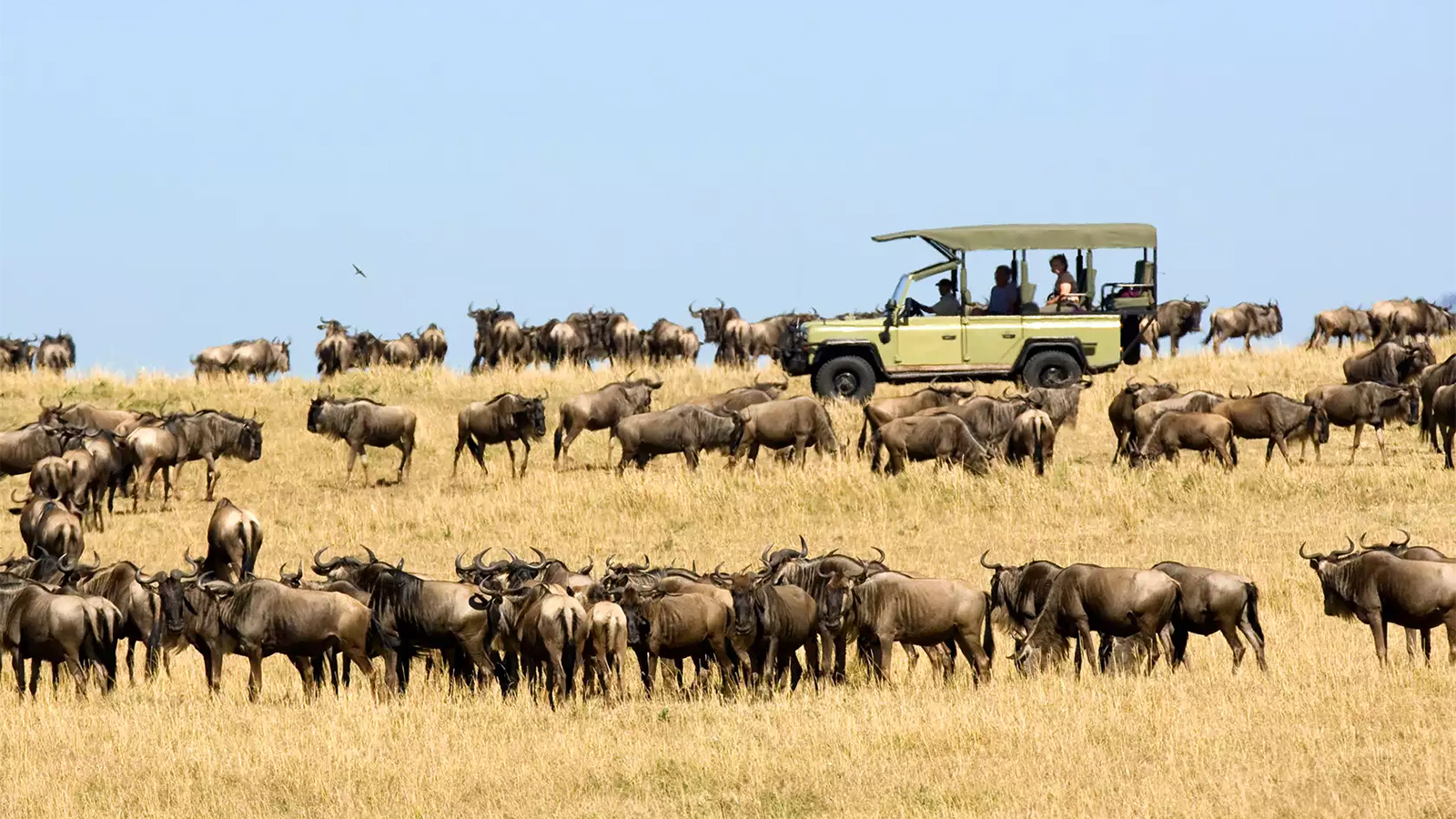
This classic East African overland combined Safari in Kenya and Tanzania itinerary connects the premier wildlife sanctuaries of two nations, allowing you to maximize your time in the field. Traveling across the border brings distinct ecosystems into focus, from the acacia-studded savannas of the north to the unique crater highlands of the south. This path ensures thorough coverage of prime wildlife habitats while keeping road transit logical, efficient, and highly manageable.
This 12 Days best combined Safari in Kenya and Tanzania Northern circuit parks begins in Kenya's capital before heading into the Great Rift Valley, a dramatic geological trench that shapes the regional ecology. From there, you follow the ancient migratory pathways through the plains of the Maasai Mara. After entering Tanzania, the route covers the vast expanses of the Serengeti and the unique volcanic environment of the Ngorongoro Crater, finally concluding among the baobab trees of Tarangire. This carefully structured itinerary focuses on maximum field hours and optimal seasonal tracking, delivering the absolute 12 Days best combined Safari in Kenya and Tanzania Northern circuit parks.
Tour highlights for 12 Days best combined Safari in Kenya and Tanzania
Nairobi city arrival transfer
Lake Nakuru rhino tracking
Alkaline lake flamingo populations
Maasai Mara predator tracking
Pristine savanna wildlife drives
Mara River hippopotamus pods
International Isebania border crossing
Serengeti western corridor transit
Central Seronera valley exploration
Ancient granite kopjes tracking
Great wildebeest migration observation
Olduvai Gorge museum visit
Volcanic crater floor descent
Endangered black rhinoceros tracking
Massive bull elephant viewing
Tarangire ancient baobab landscapes
Southern swamp birdwatching sessions
Convenient Arusha departure transfer
Day by day for 12 Days best combined Safari in Kenya and Tanzania
Day 1: Arrival in Nairobi
Your 12 Days best combined Safari in Kenya and Tanzania Northern circuit parks begins with your arrival at Jomo Kenyatta International Airport in Nairobi. A dedicated representative meets you at the terminal and handles your transfer to a quiet, comfortable hotel in the city center. This initial day is designed for rest and acclimatization after your international flight, ensuring you are fully refreshed for the road ahead. Depending on your arrival time, you can opt to visit local conservation centers, such as the giraffe sanctuary, or simply relax at your hotel. Dinner is served at the lodge, where your private guide provides a comprehensive briefing on the logistics, safety protocols, and daily schedules for your upcoming 12 Days best combined Safari in Kenya and Tanzania Northern circuit parks. This preparation ensures a smooth departure into the wilderness the following morning.
Day 2: Nairobi to Lake Nakuru National Park
After an early breakfast, you leave the capital and drive northwest toward the Great Rift Valley. Your destination is Lake Nakuru National Park, a sanctuary renowned for its avian life and significant mammal populations. You arrive at your lodge in time for lunch and a brief rest before heading out into the field. The afternoon is spent exploring the shores of the alkaline lake, where thousands of flamingos regularly feed. This park is also a vital sanctuary for both black and white rhinoceroses, which are frequently spotted grazing along the forest edges. Your guide tracks these heavily protected residents alongside herds of Rothschild's giraffes, waterbucks, and occasional leopards resting in the yellow-barked acacia trees. You return to your lodge as dusk approaches for a relaxing dinner.
Day 3: Lake Nakuru to Maasai Mara National Reserve
The journey continues southwest across the valley floor to the famous Maasai Mara National Reserve. The drive takes you through local trading towns and vast agricultural lands before entering the pristine savanna ecosystem. You reach your permanent tented camp for lunch, followed by an afternoon exploratory drive through the rolling grasslands. The Maasai Mara serves as the northern extension of the greater Serengeti ecosystem, hosting an exceptional concentration of resident predators. During this initial drive, your guide introduces you to the local prides of lions, solitary cheetahs hunting in the short grass, and large herds of plains zebras and Thomson's gazelles. This introduces the spectacular wildlife density that characterizes your 12 Days best combined Safari in Kenya and Tanzania Northern circuit parks, ending with dinner under the stars.
Day 4: Full Day in the Maasai Mara
A full day in the reserve allows for deep exploration of the distinct habitats, from the open plains to the riverine forests. You depart early with packed picnic lunches to maximize your time in the field. The morning hours offer the best tracking conditions as top predators like lions, leopards, and spotted hyenas remain active before the midday heat. You travel toward the Mara River, a critical geographic feature where hippopotamuses wallow in large pools and massive Nile crocodiles sun themselves on the muddy banks. Your guide explains the dynamics of the local food webs and identifies resident bird species, including secretary birds and martial eagles. A picnic lunch is served at a designated safe site under a lone balanites tree, followed by further wildlife tracking until sunset.
Day 5: Maasai Mara to Serengeti National Park via Isebania
This is a transitional day as you cross the international border between Kenya and Tanzania. You depart the Maasai Mara after an early breakfast, driving toward the Isebania border post. Your guide assists you through the customs and immigration formalities, after which you switch to a Tanzanian safari vehicle and meet your new driver-guide. From the border, you enter the western corridor of the Serengeti National Park, traveling through remote villages and conservation buffer zones. The drive doubles as an extended transit safari, offering opportunities to spot resident wildlife along the way. The vast scale of the Serengeti immediately becomes apparent as the acacia woodlands give way to endless grasslands. You arrive at your central Serengeti lodge in the late afternoon for dinner and a well-earned rest.
Day 6: Full Day Exploring Central Serengeti
You spend the day exploring the central reaches of the park, specifically the Seronera Valley. This region is famous for its year-round wildlife resident populations, driven by permanent water sources that attract diverse prey species. The area is characterized by classic savanna landscapes punctuated by kopjes—ancient granite rock islands that serve as favorite lookout points for lions and leopards. Your guide navigates the network of tracks along the Seronera River, searching for camouflaged predators and large herds of resident elephants. You also visit the Retima Hippo Pool, where hundreds of these massive mammals congregate in noisy groups. This intensive tracking session highlights the sheer ecological scale of your 12 Days best combined Safari in Kenya and Tanzania Northern circuit parks, returning to camp for dinner.
Day 7: Central Serengeti to Northern or Eastern Serengeti
Depending on the exact time of year, your guide directs the vehicle toward the seasonal concentration areas of the great wildebeest migration. In the dry season, you head north toward the Mara River; during the green months, you explore the southern or eastern plains. This flexible approach ensures you witness the large-scale movements of over a million wildebeest and zebras as they navigate the ecosystem in search of fresh pasture. The day involves extensive tracking across varying terrains, observing the intense herd dynamics and the trailing predators that follow the movement. Your guide provides insights into the migratory instinct and the survival challenges these animals face. Dinner and overnight accommodation are positioned close to the seasonal herds, maximizing your field time.
Day 8: Serengeti Plains to Ngorongoro Conservation Area
Enjoy a final morning drive in the Serengeti as you travel southeast toward the Ngorongoro Conservation Area. The route takes you past Olduvai Gorge, a significant archaeological site where pioneering researchers discovered early human fossils. You stop to visit the museum and learn about the evolutionary history of the region. From there, the road ascends into the cooler, forested crater highlands. The landscape changes dramatically from dry savanna to lush montane forest. You check into your lodge, which is situated directly on the rim of the crater or in the nearby town of Karatu. The evening is spent relaxing in the cooler mountain air, preparing for an early descent into the volcanic caldera the following morning.
Day 9: Ngorongoro Crater Tour
This morning you descend 600 meters down the steep volcanic walls onto the floor of the Ngorongoro Crater. This intact caldera forms a self-contained ecosystem measuring roughly 260 square kilometers, hosting over 25,000 large mammals. The flat crater floor features distinct habitats, including the saline Lake Magadi, the Lerai Lerai fever tree forest, and open grasslands. This is your best opportunity to spot the endangered black rhinoceros, which finds safety within the steep crater walls. You spend the day tracking resident lion prides, large bull elephants with massive tusks, spotted hyenas, and pairs of golden jackals. A picnic lunch is enjoyed near a hippo-filled pool before you ascend back to the rim in the afternoon, traveling to Karatu for dinner.
Day 10: Karatu to Tarangire National Park
After breakfast, you drive down the escarpment to Tarangire National Park, the final wilderness destination of your 12 Days best combined Safari in Kenya and Tanzania Northern circuit parks. Tarangire is defined by its dramatic landscape of ancient baobab trees and the permanent Tarangire River, which acts as a magnet for wildlife during the dry season. You arrive at your lodge for lunch, followed by an afternoon drive along the river loops. The park is famous for hosting some of the largest elephant herds in East Africa, sometimes numbering hundreds of individuals traveling together. You also look for specialized dry-country antelopes, such as the fringe-eared oryx and the long-necked gerenuk, alongside resident lions and leopards using the baobab trunks for shade.
Day 11: Full Day in Tarangire National Park
A full day inside Tarangire allows you to venture into the quieter southern sectors of the park, far away from the busier main gates. These remote areas consist of extensive swamps and acacia woodlands where wildlife congregates around seasonal waterholes. You observe the complex social structures of the resident elephant families as they dig for water in the dry riverbeds. Tarangire is also an exceptional destination for birdwatching, boasting over 550 species, including the colorful yellow-collared lovebird, the rufous-tailed weaver, and various large raptors. Your guide shares detailed knowledge of the park’s unique flora and complex termite mounds. You return to your safari lodge for a final evening dinner in the African bush.
Day 12: Tarangire to Arusha and Departure
Your final day begins with a leisurely breakfast at the lodge before checking out. You enjoy a short, final drive out of Tarangire National Park, taking in your last views of the baobab landscapes and resident wildlife. From the park gates, you drive north along a smooth tarmac road to the city of Arusha. A day-use room is provided at a local hotel, allowing you to repack your gear, shower, and rest before your journey home. You can visit local cultural centers or markets to purchase regional handicrafts and souvenirs. In the afternoon or evening, you are transferred to Kilimanjaro International Airport for your international flight home, marking the completion of your comprehensive 12 Days best combined Safari in Kenya and Tanzania Northern circuit parks.
1. Which national parks and reserves are included in this 12-day circuit?
This comprehensive route is designed to provide an extensive look at East Africa’s prime wildlife habitats by balancing key destinations across both nations. The circuit typically integrates Kenya’s premier savanna reserve along with the most celebrated conservation areas within the northern circuit of Tanzania.
In Kenya, the journey centers around the iconic Masai Mara National Reserve, globally renowned for its exceptional predator densities and open grasslands. Travelers then cross the international border into Tanzania to explore a sequence of highly diverse ecosystems. This includes the legendary Serengeti National Park, which encompasses vast, unfragmented plains, and the Ngorongoro Conservation Area, featuring a self-contained volcanic caldera teeming with resident wildlife. The itinerary also incorporates Tarangire National Park, characterized by its ancient baobab trees and massive elephant family groups. Depending on your specific operator's routing, Amboseli National Park is sometimes integrated on the Kenyan side to provide panoramic views of Mount Kilimanjaro and encounters with large tuskers, ensuring a diverse and balanced cross-border circuit.
2. What is the best time of year to undertake this 12-day combined safari?
Timing your expedition appropriately is essential for maximizing your wildlife viewing opportunities and ensuring comfortable travel conditions across varying terrains. The optimal window to undertake this cross-border journey spans from July to October, which aligns with the regional dry season.
During these months, weather patterns are characterized by cool, clear days and minimal rainfall, significantly reducing malaria risks and making bush roads easily navigable. The lack of rain causes seasonal waterholes to dry up, forcing wildlife to concentrate in high densities around permanent water sources like the Seronera and Tarangire rivers. Additionally, vegetation thins out across the savannas, providing unobstructed lines of sight for tracking elusive predators. Crucially, this July-to-October window is the prime period to witness the dramatic river crossings of the Great Migration in the northern Serengeti and Masai Mara sectors. If you prefer witnessing the synchronized wildebeest calving season, a secondary optimal period occurs between January and March within the southern Serengeti plains.
3. Can I witness the Great Wildebeest Migration on this trip?
Yes, this specific cross-border circuit is uniquely positioned to track the continuous movement of the Great Wildebeest Migration, as the route directly spans the contiguous Mara-Serengeti ecosystem. The migration is a fluid, year-round search for fresh pasture and water, meaning your geographic location dictates the exact nature of the spectacle you observe.
If your journey is scheduled between July and October, you will be in prime position to witness the dramatic river crossings. During this phase, massive herds face off against strong currents and large Nile crocodiles as they move across the Mara and Grumeti rivers between the Serengeti and the Masai Mara. If you choose to travel between January and March, the focus shifts to the southern plains of the Serengeti and the Ndutu region. Here, you can observe the calving season, during which roughly 8,000 wildebeest calves are born daily, attracting a high concentration of opportunistic apex predators like lions, cheetahs, and hyenas.
4. Will I be able to see the "Big Five" during the 12 days?
You have an exceptionally high probability of encountering all members of the traditional "Big Five"—lion, leopard, African elephant, Cape buffalo, and rhinoceros—throughout this twelve-day circuit. The specific combination of the Masai Mara and the Tanzanian northern circuit parks covers some of the highest wildlife densities on the African continent.
Lions are abundant across the plains of the Masai Mara and the Seronera Valley of the Serengeti, where large prides territory-mark the granite kopjes. Elephants and Cape buffaloes are encountered daily in massive numbers, particularly within Tarangire National Park and along the marshlands of the Serengeti. Leopards require a bit more tracking diligence; your guide will scan the branches of yellow-barked acacia trees and sausage trees along riverine loops where these solitary cats cache their kills. The Ngorongoro Crater provides your absolute best opportunity for spotting the highly endangered black rhinoceros, as the steep, 600-meter volcanic walls create a natural sanctuary that protects a resident population, allowing for clear viewing on the flat caldera floor.
5. How do I travel between Kenya and Tanzania during the safari?
Navigating the transit between Kenya and Tanzania is a structured process that can be executed via two distinct logistical methods depending on your preferences for travel time and budget. The traditional method involves an overland road transfer, which typically utilizes the Isebania border post when traveling directly from the Masai Mara to the western Serengeti, or the Namanga border post if your route connects Amboseli or Nairobi with Arusha. At these entry points, you disembark, clear bilateral immigration, and switch from your Kenyan safari vehicle to a Tanzanian vehicle with a local driver-guide.
Alternatively, travelers can opt for regional scheduled flights to bypass long road journeys. These flights commonly operate out of local airstrips in the Masai Mara, flying into Migori on the Kenyan side, followed by a short road transfer across the border to Tarime, where a domestic flight connects you directly into the Serengeti. This aerial approach significantly maximizes your active field hours.
6. Do I need a visa for both countries, and is there a combined visa option?
Critical Immigration Notice: It is a common misconception that the East Africa Tourist Visa covers Tanzania. It does not.
To complete this cross-border itinerary, you must secure official entry authorization for both Kenya and Tanzania independently. The East Africa Tourist Visa (EATV) is a joint initiative that permits multiple entries solely between Kenya, Uganda, and Rwanda for a flat fee of $100 USD. If you use the EATV to enter Kenya, please be fully aware that Tanzania remains entirely separate from this agreement.
Therefore, you must apply for a separate Tanzanian Tourist Visa (which costs between $50 and $100 USD depending on your nationality). In 2026, both nations have transitioned their immigration systems to fully digital, pre-travel platforms. You must apply online in advance via the official government portals—obtaining an Electronic Travel Authorization (eTA) for Kenya and an e-Visa for Tanzania. Ensure your passport has at least six months of validity from your travel date and contains at least two blank pages before initiating these applications.
7. What kind of accommodations can I expect on this 12-day trip?
This classic circuit features an exceptional infrastructure of hospitality properties, allowing you to select an accommodation tier that perfectly matches your desired comfort level, ranging from classic mid-range options to ultra-luxury eco-resorts.
At the luxury end, you can expect properties that blend sophisticated architecture with the surrounding wilderness. These lodges and permanent camps feature spacious suites with private viewing decks, en-suite bathrooms with flushing toilets and running hot water, plunge pools, and fine dining paired with premium wines. Mid-range options provide comfortable, localized hospitality, featuring cozy rooms or walk-in canvas tents with full en-suite amenities, electricity powered by solar systems, and freshly prepared multi-course meals. Regardless of the tier you choose, properties are strategically positioned near key wildlife corridors or directly inside the park boundaries, allowing you to hear the nighttime calls of predators and enjoy early morning departures into the field without lengthy transit delays.
8. What is the difference between a safari lodge and a tented camp?
Understanding the structural and experiential differences between a safari lodge and a permanent tented camp helps you set the correct expectations for your nightly stays in the bush.
A safari lodge is a traditional, permanent structure constructed using solid materials like stone, timber, and concrete. Lodges mirror standard luxury hotels or boutique resorts, featuring expansive main buildings, solid-walled chalets or cottages, glass windows, air conditioning or ceiling fans, and comprehensive physical barriers from the wilderness. Conversely, a permanent tented camp consists of large, heavy-duty canvas structures erected on raised wooden or concrete platforms. These are not basic camping tents; they are walk-in luxury spaces equipped with standard beds, fine linens, and integrated en-suite bathrooms with plumbing. Tented camps offer a significantly more immersive experience, as the canvas walls allow you to hear the wind through the acacia trees, the laughter of hyenas, and the distant roaring of lions, providing an authentic bush ambiance without sacrificing modern comforts.
9. Will I need to take any vaccinations or health precautions?
Medical preparation is an essential step when planning a cross-border expedition to East Africa. A primary health requirement for this combined circuit is the Yellow Fever vaccination certificate. Because your itinerary involves traveling directly from Kenya (which is classified as a Yellow Fever endemic country) into Tanzania, Tanzanian immigration officials will strictly verify your physical or digital international certificate of vaccination upon arrival at the border posts or regional airports.
Additionally, both the Masai Mara and the low-lying northern circuit parks are classified as malaria-endemic zones, especially during or immediately following rainy periods. You should consult a travel medicine specialist well in advance to secure a prescription for appropriate anti-malarial prophylactics, such as Malarone or Doxycycline. Standard precautions in the field include applying insect repellent containing DEET, wearing long-sleeved clothing during dawn and dusk hours, and utilizing the mosquito netting provided by your accommodations.
10. Are children allowed on this 12-day combined safari?
Yes, children are welcome in most parks and properties, but this extensive twelve-day cross-border circuit is best suited for older children, pre-teens, and teenagers. The primary consideration for families is the sheer volume of time spent driving. Game tracking requires patience, and transiting between major hubs like the Masai Mara and the Serengeti involves long hours navigating bumpy, unpaved roads, which can be physically tiring for younger kids.
Furthermore, it is important to note that many luxury safari lodges and tented camps enforce internal age restrictions, frequently setting a minimum limit of twelve years old for safety and atmospheric reasons. This is particularly true for specialized activities like guided walking safaris or night game drives, where absolute silence and compliance with guide commands are non-negotiable. If traveling with younger children, booking a private vehicle ensures maximum flexibility for customized schedules and frequent restroom breaks.
11. What is a typical daily safari routine like?
Daily schedules in the bush are entirely dictated by animal behavior and temperature variations, requiring early departures to maximize your wildlife encounters.
Time
Activity
Description
06:00 AM
Wake-Up & Light Breakfast
Hot coffee or tea with biscuits served at dawn before departure.
06:30 AM
Morning Game Drive
Tracking apex predators while temperatures are cool and cats are active.
10:30 AM
Return to Camp / Brunch
Returning to the property for a hot, comprehensive meal as the sun rises.
11:00 AM
Midday Siesta
Resting, reading, or editing photographs during the peak heat of the day.
03:30 PM
Afternoon Tea & Game Drive
Heading back into the field as temperatures cool down; tracking plains game.
06:30 PM
Sundowners & Return
Observing the sunset in the bush before returning to camp for dinner.
Alternatively, on full-exploration days, you may depart at dawn with packed picnic lunches, spending up to eight hours deep in remote sectors of the parks.
12. What photography gear or clothing should I bring?
Packing purposefully ensures you are comfortable in the field and fully equipped to document your wildlife sightings. For clothing, opt for lightweight, breathable fabrics in neutral tones like khaki, olive green, and tan. Avoid bright colors that disrupt wildlife, and strictly avoid camouflage patterns, which are legally reserved for military personnel in East Africa. Dark blue and black clothing should also be left behind, as these specific shades actively attract tsetse flies.
For photography, a camera body paired with a versatile telephoto zoom lens—ideally reaching 200mm to 400mm or higher—is essential for capturing crisp close-ups of birds and distant predators without encroaching on their space. A wide-angle lens (16mm to 35mm) is excellent for documenting the expansive landscapes of the Serengeti and Ngorongoro. Remember to bring a high-quality pair of binoculars (8x42 or 10x42) for scanning the canopy, a wide-brimmed sun hat, and plenty of extra memory cards and spare batteries, as cold bush nights can drain power quickly.
13. How much should I tip my safari guide and camp staff?
Tipping is a well-established custom within the East African tourism industry, serving as an important way to acknowledge exceptional service and directly support local hospitality professionals. While gratuities remain entirely voluntary, standard regional guidelines help you budget accurately.
For your dedicated private driver-guide, who stays with you throughout the journey, a tip of $15 to $20 USD per day from the vehicle group is customary. For the general lodge and camp staff—including chefs, housekeepers, tent attendants, and guards—most properties utilize a centralized, communal tipping box located in the main reception area. A pooled contribution of $5 to $10 USD per day is standard, and these funds are divided equally among the back-of-house team members whom you do not interact with directly. It is highly recommended to carry clean, crisp US dollar bills printed after 2013, or small denominations of local currency, to ensure easy distribution.
14. Are there cultural encounters included on this 12-day safari?
Yes, this twelve-day circuit offers meaningful opportunities to experience the rich cultural heritage of East Africa alongside your wildlife tracking. The geographical route directly cuts through the traditional ancestral lands of the Maasai people in Kenya and northern Tanzania.
Most structured itineraries incorporate a planned visit to an authentic Maasai boma (a traditional fortified village built using mud, thatch, and thorny acacia branches). During these encounters, community elders guide you through their village, demonstrating traditional fire-making techniques, explaining their sophisticated pastoralist lifestyle, and sharing insights into how their culture coexists with the surrounding wildlife ecosystems. You can also witness traditional jump-dancing ceremonies and purchase intricate, handmade beadwork directly from the women's cooperatives. These visits provide important economic support to local communities, and your guide will ensure that all cultural interactions are conducted respectfully, ethically, and with proper community consent.
15. How do I customize this itinerary or book a reliable tour operator?
Tailoring this cross-border journey requires careful coordination to align property selections, border logistics, and flight schedules with your personal travel goals. When choosing a tour operator, prioritize companies that hold verified memberships in reputable regulatory bodies, such as the Kenya Association of Tour Operators (KATO) or the Tanzania Association of Tour Operators (TATO).
Begin by reviewing authentic traveler feedback on independent platforms like TripAdvisor or SafariBookings to evaluate an operator’s vehicle maintenance standards, guiding expertise, and responsiveness. A reliable specialist will collaborate with you to customize the pace of the trip—whether you prefer a fast-moving, multi-park circuit or a slower route with multi-night stays in specific ecosystems. They will also ensure your daily mileage is logical and handle your digital immigration documentation seamlessly, guaranteeing a well-structured, stress-free wilderness experience across both nations.
Booking Safari in Kenya and Tanzania with us Roads of Adventure safaris
To book your combined Kenya and Tanzania safari with Roads of Adventure Safaris, you can connect directly with their main office to customize your itinerary, secure permits, and arrange local transport. As a prominent East African tour operator headquartered in Kampala, Uganda, Roads of Adventure Safaris specializes in cross-border wildlife circuits, combining top destinations like the Maasai Mara and the Serengeti
