10 top Rwanda bird watching destinations to visit on birding safari in Rwanda, Rwanda is a premier African birding destination boasting over 700 species within a compact area, featuring Albertine Rift endemics, savanna birds, and papyrus swamp specialists. Key, must-visit spots include Nyungwe Forest, Akagera National Park, and Volcanoes National Park, which host the highest concentration of specialized birdlife.
12-days-perfect-rwanda-birding-safari-itinerary
10-days-best-rwanda-birding-safari-combined-with-rwanda-gorilla-trekking-vacation
5-days-perfect-rwanda-birding-safari-and-wildlife-and-gorilla-trekking
14-days-rwanda-uganda-birding-safari-extravaganza-focused-on-the-albertine-endemics
18-days-rwanda-uganda-birding-safari-and-primate-experience
17-days-rwanda-birding-safari-and-uganda-birding-tour-combined-vacation
1. Nyungwe National Park
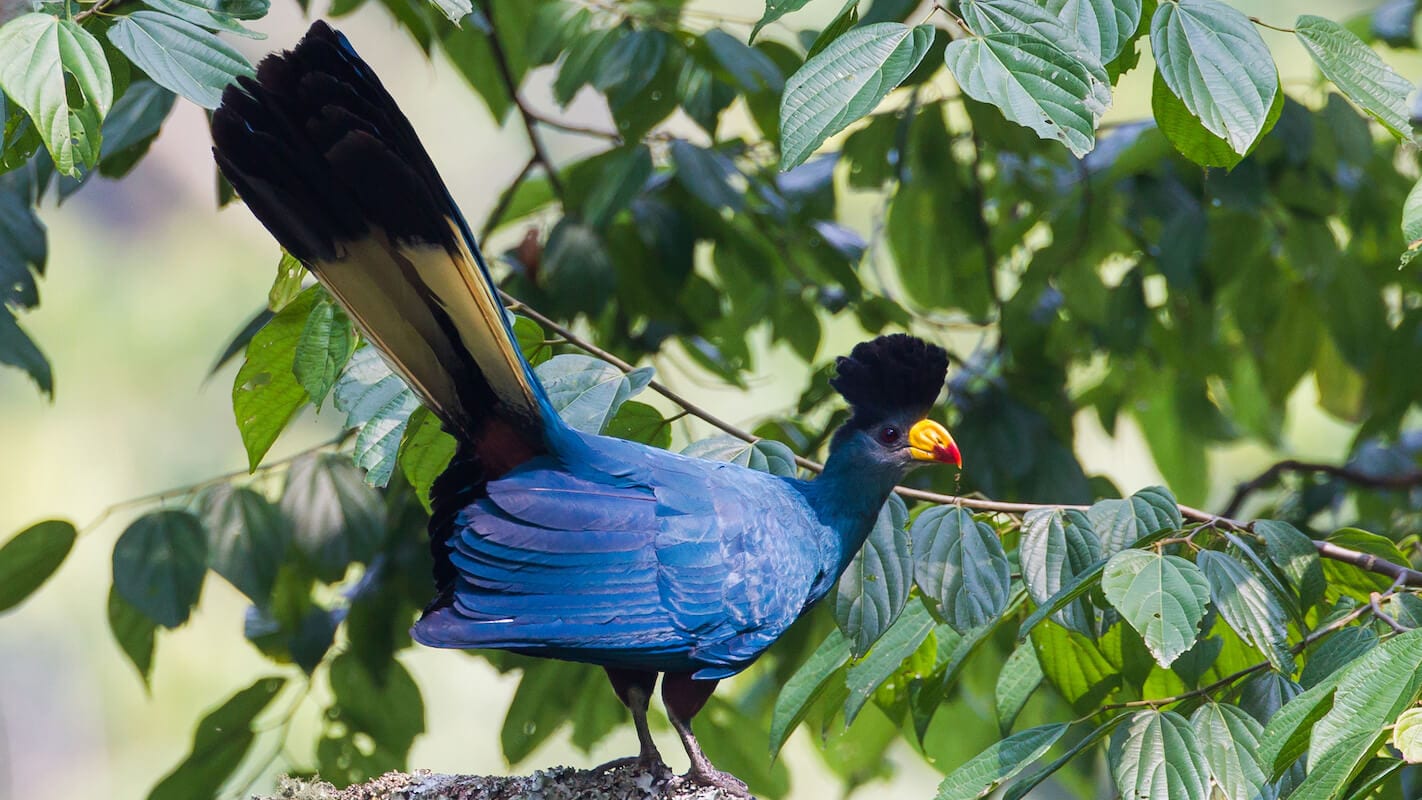
Nyungwe is the crown jewel of bird watching in Rwanda. As one of the oldest rainforests in Africa, it hosts over 320 species, including 29 Albertine Rift endemics. The star attraction is the Rwenzori Turaco, a stunning bird with vibrant blue and red plumage often seen gliding through the canopy. Birders also seek out the Red-collared Babbler, a species nearly impossible to find outside this forest. The park’s well-maintained trail system and the famous Canopy Walkway allow for multi-level viewing, where you can spot the Purple-breasted Sunbird or the Great Blue Turaco. The dense foliage requires patience, but the rewards are unparalleled for serious enthusiasts.
2. Akagera National Park
For those seeking a savannah-style birding safari in Rwanda, Akagera is essential. Its unique mosaic of acacia woodlands, open grasslands, and vast papyrus swamps supports over 480 species. The park’s greatest prize is the prehistoric-looking Shoebill Stork, which can often be spotted on boat safaris through the wetlands of Lake Ihema. Akagera is also a stronghold for the Papyrus Gonolek and a variety of raptors, including the Fish Eagle and Bateleur. The transition from water to land creates incredible biodiversity, making it easy to tick off dozens of species in a single afternoon.
3. Volcanoes National Park
While famous for mountain gorillas, this park is a high-altitude haven for bird watching. With over 180 species, the focus here is on Afro-montane specialists. You will find the Handsome Francolin scurrying through the bamboo zones and the Rwenzori Batis flitting in the higher canopy. The park’s dramatic topography creates distinct altitudinal zones, each hosting different residents like the Archer’s Robin-Chat. Because the forest is often shrouded in mist, the birding experience here feels particularly atmospheric and wild.
4. Gishwati-Mukura National Park
As Rwanda's newest national park, Gishwati-Mukura is a testament to successful reforestation. It serves as a vital corridor for forest endemics, hosting 232 species in Gishwati and 163 in Mukura. This is one of the best places to observe the Mountain Yellow Warbler and the Regal Sunbird. Because it is less visited than Nyungwe, it offers a quieter, more intimate birding safari in Rwanda experience. The park is still revealing its secrets, making it a favorite for those who enjoy "exploratory" birding.
5. Rugezi Marsh
Recognized as a RAMSAR site of international importance, Rugezi is a high-altitude peatland and a sanctuary for wetland specialists. It is the premier location for bird watching the rare and endemic Grauer’s Swamp Warbler. The marsh also supports the Papyrus Canary and the Papyrus Gonolek. Because the terrain is boggy and unique, birding here often involves scanning from the edges or utilizing local knowledge to find the specific niches where these shy, habitat-specific birds hide.
6. Nyabarongo River Wetlands
Located conveniently near Kigali, the Nyabarongo wetlands are a critical stop for any birding safari in Rwanda. The area is dominated by papyrus and reeds, making it a specialist site for the White-winged Scrub-warbler and the Madagascar Squacco Heron. It provides a fascinating contrast to the forest parks, offering easy access to water-associated species like the African Marsh Harrier. It’s an ideal spot for a "day-one" excursion to get acclimated to Rwanda's avian diversity.
7. Cyamudongo Forest
Though small and isolated, Cyamudongo is an essential "extension" for serious bird watching. It is a fragment of the ancient Nyungwe forest but often holds species that are more easily viewed here than in the main park. One of its most sought-after residents is the Kungwe Apalis, along with various forest-dwelling bulbuls and flycatchers. Its isolation has made it a refuge for specialized species, making it a high-value "micro-site" for enthusiasts.
8. Lake Kivu & Islands
The shoreline of Lake Kivu offers a relaxed pace for bird watching. Exploring by boat allows you to get close to water-dwelling species like the elusive African Finfoot and the iconic Hammerkop. The many islands dotting the lake serve as roosting sites for hundreds of Egrets and Cormorants. The Malachite Kingfisher is a frequent sight along the rocky inlets, providing excellent photographic opportunities against the backdrop of the lake’s emerald waters.
9. Umusambi Village
This restored wetland in Kigali is a must-visit for its conservation success. It was established as a sanctuary for Grey Crowned Cranes rescued from the illegal pet trade. Today, it offers a tranquil environment for birding safari in Rwanda participants to see these majestic birds up close. The site also attracts over 100 other wild species, including various weavers and sunbirds, making it the perfect introduction to Rwanda’s commitment to avian protection.
10. Buhanga Eco-Park
Built on a former royal coronation site, Buhanga is a small but biologically dense forest patch. It is a "birding gem" because of the sheer variety of birds packed into its small acreage. You can find high-altitude forest birds like the African Paradise Flycatcher and various species of Woodpeckers. Its spiritual and historical significance adds a layer of depth to the bird watching experience, as you walk through giant ficus trees that have stood for centuries.
1. What is the top destination for a birding safari in Rwanda?
Nyungwe Forest National Park is the undisputed champion of birding safaris in Rwanda. This ancient montane rainforest is a biodiversity hotspot, home to over 320 bird species, including 29 of the 43 Albertine Rift endemics. Its high-altitude terrain and dense canopy provide a dramatic backdrop for spotting some of Africa’s most elusive birds.
The forest's primary draw is its unique specialization; it is one of the few places on earth where you can find the stunning Rwenzori Turaco and the rare Red-collared Mountain Babbler. Birders can explore a network of well-maintained trails ranging from the marshy Kamiranzovu Swamp to high-altitude ridges. The park also features a 160-meter-long canopy walkway, offering a literal bird’s-eye view of species that rarely descend from the treetops, such as various sunbirds and hornbills. Because of its sheer density and the rarity of its residents, Nyungwe remains the essential foundation of any Rwandan birding itinerary.
2. Where can I see the Shoebill Stork on a birding safari in Rwanda?
The prehistoric Shoebill Stork is the most sought-after prize for many on a birding safari in Rwanda, and Akagera National Park is the only place to find it. This park is a vast landscape of savannah, acacia woodlands, and most importantly, a complex system of lakes and papyrus swamps along the Kagera River.
The Shoebill is typically found in the inaccessible, dense papyrus marshes of the park’s northern and central lake systems, particularly around Lake Ihema and Lake Mihindi. To maximize your chances, a boat safari is highly recommended; drifting silently through the reeds allows you to spot this giant, blue-grey bird as it stands motionless waiting for lungfish. While sightings require patience and a bit of luck, the surrounding wetlands are teeming with other spectacular waterbirds, including the Papyrus Gonolek, African Fish Eagles, and Giant Kingfishers, making the search a rewarding experience regardless of whether the "King of the Marsh" makes an appearance.
3. Are there specialized guides for a birding safari in Rwanda?
Yes, the success of a birding safari in Rwanda often relies on the exceptional local expertise found within the national parks. Rwanda has invested heavily in guide training, and both Nyungwe Forest and Akagera National Park boast specialized birding guides who are master trackers.
These guides are not just general wildlife experts; they are trained specifically in avian acoustics and behavior. In the dense, misty forests of Nyungwe, where birds are often heard long before they are seen, a guide's ability to identify a call—such as the distinct whistle of the Albertine Owlet—is the difference between a missed opportunity and a lifetime sighting. In Akagera, guides are adept at navigating the complex seasonal movements of migratory species and the specific nesting habits of wetland specialists. Many of these experts are also involved in local conservation and census projects, providing travelers with deep ecological context that goes far beyond a simple identification checklist.
4. When is the best time for a birding safari in Rwanda?
While birding is a year-round activity here, the "best" time for a birding safari in Rwanda depends on whether you are looking for residents or migrants. Generally, the dry seasons—June to September and mid-December to mid-February—are preferred because forest trails are less slippery and the weather is more predictable for long days in the field.
However, many enthusiasts argue that the wet season (October to May) offers distinct advantages. This is the period when Palearctic and intra-African migrants arrive, significantly boosting the species count. Furthermore, many resident birds are in their vibrant breeding plumage during these months and are more vocal as they defend territories, making them easier to locate. December and January are particularly spectacular as they combine the presence of migratory birds with relatively clear skies. Regardless of the month, Rwanda’s tropical climate means you should always pack rain gear, as mountain weather can change in minutes.
5. What Albertine endemics can I see in Volcanoes National Park on a birding safari in Rwanda?
While famous for its mountain gorillas, Volcanoes National Park is an underrated gem for a birding safari in Rwanda, particularly for those hunting Albertine Rift endemics. The park's high-altitude bamboo and heath zones provide a specific habitat for several rare species that are hard to find elsewhere.
The most iconic endemic here is the Rwenzori Turaco, with its spectacular crimson wings and blue body. Other key targets include the Handsome Francolin, a ground-dwelling bird often seen on the forest floor, and the Archer’s Robin-Chat, known for its beautiful melodic song. The Dusky Crimsonwing and Rwenzori Double-collared Sunbird are also residents of these volcanic slopes. Because the park’s birdlife is concentrated in distinct altitudinal bands, a single hike up the volcanoes can yield a diverse array of species that shift as you move from the lower bamboo thickets into the alpine moorlands.
6. What makes Akagera National Park unique for a birding safari in Rwanda?
Akagera National Park offers a dramatic departure from the montane forest environments that dominate much of the country's birding scene. As Rwanda’s only savannah park, it provides a habitat for over 500 species, many of which cannot be found in the western forests.
What makes Akagera truly unique for a birding safari in Rwanda is the intersection of three distinct ecosystems: open grasslands, dry acacia woodlands, and one of Africa’s largest protected wetlands. This diversity allows birders to see the African Fish Eagle soaring over Lake Ihema, the Grey Crowned Crane (Rwanda’s national bird) in the marshy floodplains, and colorful Lilac-breasted Rollers perched in the acacia trees. The park is also a vital sanctuary for the Papyrus Gonolek and the Carruthers's Cisticola, species that are strictly tied to papyrus habitats. This variety ensures that every game drive or boat cruise brings a completely different set of birds into view.
7. Is Gishwati-Mukura National Park worth visiting on a birding safari in Rwanda?
Absolutely. Gishwati-Mukura is Rwanda’s newest national park and a rising star for any birding safari in Rwanda. Following intensive reforestation efforts, this corridor has become a sanctuary for birds that were once displaced by human activity.
The park currently hosts approximately 395 recorded species, including several high-altitude specialists and Albertine Rift endemics. Birders here can seek out the Regal Sunbird, Mountain Yellow Warbler, and the shy Red-throated Alethe. Because Gishwati-Mukura receives fewer visitors than Nyungwe or Volcanoes, it offers a much quieter and more exclusive experience. The trails are less crowded, and the birds are often less habituated to human presence, providing a sense of discovery. It is an excellent "add-on" to a western circuit, sitting conveniently between the primate-watching hubs of the north and south.
8. Can I combine a birding safari in Rwanda with gorilla tracking?
One of the greatest advantages of a birding safari in Rwanda is how seamlessly it integrates with the country's famous primate adventures. Volcanoes National Park is the primary site for this combination.
Most visitors spend their mornings trekking for the endangered mountain gorillas, but the afternoons and "off" days are perfect for exploring the park’s 200 bird species. Since gorilla tracking takes you through various forest layers, you are essentially birding as you hike. A professional guide will often point out rare species like the Doherty’s Bush-shrike while you are en route to a gorilla family. Many birders choose to spend 2-3 extra days in the Musanze area specifically to focus on the birds and Golden Monkeys, ensuring they don't have to choose between the world's most famous primates and its rarest birds.
9. Which swamps are best for a birding safari in Rwanda?
Rwanda’s wetlands are arguably its most biodiverse habitats, and several swamps are critical for a comprehensive birding safari in Rwanda. Rugezi Marsh, located in the north, is a high-altitude RAMSAR site and the best place to find the endemic Grauer's Swamp Warbler.
The Nyabarongo Wetlands, near Kigali, are another vital stop, known for supporting the Madagascar Squacco Heron and the White-winged Scrub-warbler. Further south, the Akanyaru Wetlands provide a vast expanse of papyrus and reeds that host the Papyrus Canary and various weavers. These swamp environments are specialized niches; they require different birding techniques, often involving scanning from elevated banks or taking small pirogues (canoes) into the reeds. For birders looking to "complete the list," these marshes are the only places to find Rwanda’s most habitat-specific residents.
10. What is the best way to travel between top birding sites in Rwanda?
The most efficient and comfortable way to conduct a birding safari in Rwanda is via a private 4x4 safari vehicle. Because the top sites—Nyungwe, Volcanoes, and Akagera—are located in different corners of the country, having a dedicated vehicle allows you to stop at unplanned roadside birding spots, such as river crossings or forest fragments.
A typical 7-10 day itinerary involves driving from Kigali to Akagera in the east, then traversing the country to the western mountains. The roads are generally in excellent condition, but a 4x4 is necessary for navigating the steeper, unpaved tracks within the national parks themselves. Many birders prefer a "circuit" approach, which minimizes back-and-forth travel and allows for a gradual transition from savannah species to the high-altitude endemics of the Albertine Rift. This mode of travel also offers the flexibility to start birding at dawn, which is essential for catching the morning chorus.
11. What is the "African Big Five" of birding in Nyungwe?
While the traditional "Big Five" refers to mammals, enthusiasts on a birding safari in Rwanda have created their own must-see list for Nyungwe Forest. While lists vary, the consensus usually centers on the rarest endemics.
The Red-collared Mountain Babbler is often at the top, as Nyungwe is one of the few places in the world where it is consistently seen. The Great Blue Turaco, though not an endemic, is a "Big Five" member due to its sheer size and spectacular colors. Others often included are the Rwenzori Turaco, the Purple-breasted Sunbird, and the Albertine Owlet. Spotting all five requires multiple days in the forest and a skilled guide, as some are canopy-dwellers while others hide in the thick undergrowth. Ticking off this list is considered a major achievement for any birder visiting the region.
12. Can I see forest birds in Kigali on a birding safari in Rwanda?
You don't even have to leave the capital to start a birding safari in Rwanda. Kigali is surprisingly green, and several sites within the city offer excellent birding for those on a short stopover.
Nyarutarama Lake, often called "Lover’s Lake" and bordering the Kigali Golf Course, is a premier urban birding spot. Here, you can easily see over 50 species in a single morning, including the Black-headed Heron, Yellow-billed Duck, and various kingfishers. For forest-associated birds, the gardens of the Kigali Genocide Memorial and various hilly suburbs host African Paradise Flycatchers and sunbirds. The Umusambi Village, a restored wetland sanctuary on the outskirts of the city, is another fantastic spot to see Grey Crowned Cranes and dozens of wild wetland species without traveling to a distant national park.
13. Are there any unique, small habitats to explore on a birding safari in Rwanda?
For birders who want to get off the beaten path, the Cyamudongo Forest is a fascinating destination. It is a small, 18-square-kilometer fragment of rainforest that is technically part of Nyungwe but is physically detached and surrounded by tea plantations.
Despite its small size, it is a critical site for a birding safari in Rwanda because its isolation has created a unique micro-habitat. It is often easier to spot certain shy forest birds here than in the vastness of Nyungwe. Cyamudongo is particularly known for the Kungwe Apalis and several species of forest-dwelling butterflies and primates. Because the forest is compact, birders can cover a lot of ground in a short time, making it an excellent specialized stop for those looking to find birds that might be overshadowed in the larger national parks.
14. What is the average cost of a birding safari in Rwanda?
The cost of a birding safari in Rwanda varies significantly based on the duration and the level of luxury. Rwanda has positioned itself as a high-end destination, and prices reflect the quality of infrastructure and conservation.
A short, 3-day introductory tour focusing on one park (like Akagera or Nyungwe) can start around $800 to $1,200 per person, covering transport, a guide, and mid-range lodging. A comprehensive 10-12 day "all-Rwanda" birding circuit, which includes expert guides, private 4x4 transport, and stays at luxury lodges, can range from $4,000 to $7,000+ per person. It is important to note that if you choose to add gorilla tracking ($1,500 for the permit alone), the cost will increase substantially. However, many birding-focused travelers find that by staying in mid-range forest lodges and focusing purely on avian sites, they can achieve a world-class experience at a more accessible price point.
15. What birding spots does a 7-day birding safari in Rwanda typically cover?
A standard 7-day birding safari in Rwanda is designed to capture the best of the "Western Circuit," which hosts the highest concentration of endemics.
The journey typically begins in Kigali with a quick visit to Nyarutarama Lake before heading to Nyungwe Forest National Park for 3 to 4 days. This is the core of the trip, focusing on the Albertine Rift endemics. From there, the tour often moves north along the shores of Lake Kivu, offering a chance to see waterbirds like the African Finfoot. The final 1 to 2 days are usually spent in Volcanoes National Park, targeting high-altitude species and potentially combining the trip with a primate trek. This 7-day loop is highly efficient, covering the montane forests and lakes that make Rwanda a global birding destination, while keeping travel times manageable between locations.
Booking birding safari in Rwanda with us Roads of Adventure safaris
Roads of Adventure Safaris is a Uganda-based ground operator specializing in tailor-made birding and primate tours across Rwanda, including Nyungwe Forest, Akagera, and Volcanoes National Park. They offer customized, mid-range itineraries focusing on Albertine Rift endemics and gorillas, with costs ranging from $300 to $1,000 per person per day
