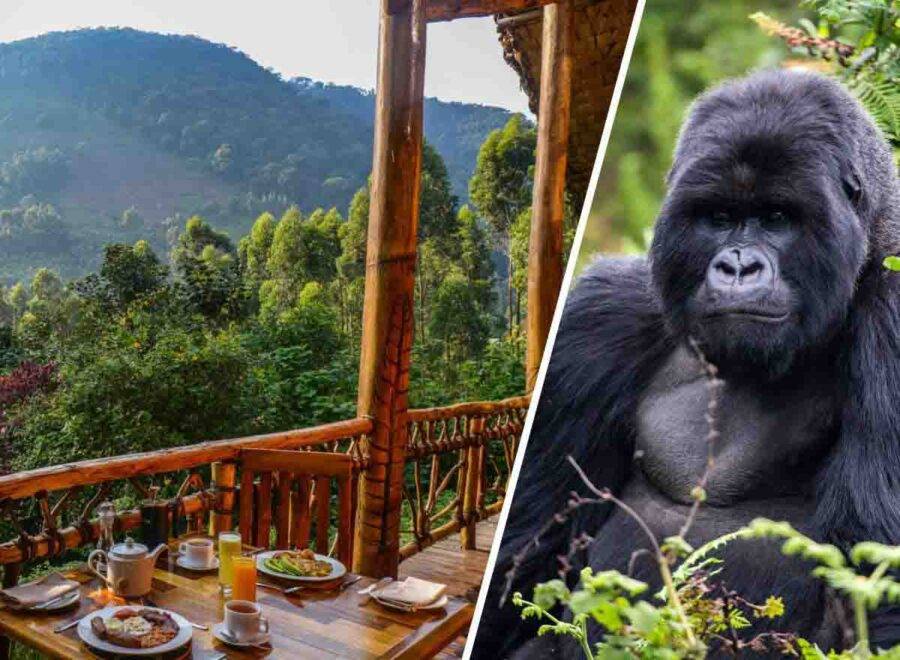
Few places on Earth pack as much raw magic into a small footprint as Rwanda. Known as the "Land of a Thousand Hills," this vibrant country offers a safari experience unlike any other, seamlessly blending soul-stirring wildlife encounters with serene, misty landscapes.
Picture yourself hiking through the bamboo forests of Volcanoes National Park to lock eyes with a majestic mountain gorilla—a moment that genuinely stays with you forever. Beyond the primates, you can trade the cool rainforest mist for the sun-drenched savannahs of Akagera, where the Big Five roam freely, or walk high above the ancient canopy in Nyungwe. From moving historical sites in Kigali to the tranquil shores of Lake Kivu, Rwanda isn't just a destination; it’s a deeply inspiring story of conservation and resilience.
9-days-rwanda-gorilla-trekking-and-adventure-activities-and-relaxation
10-days-rwanda-photography-safari-and-gorilla-trekking-adventure
7-days-all-inclusive-luxury-rwanda-primate-safari-holiday-and-wildlife
8-days-best-of-rwanda-safari-tour-uganda-and-ending-in-kigali
6-days-unmatched-rwanda-honeymoon-safari-holiday
5-days-rwanda-double-gorilla-trekking-and-golden-monkey-tracking
4-days-best-rwanda-gorilla-trekking-golden-monkey-and-lake-kivu-beach-relaxation
3-days-rwanda-safari-to-akagera-national-park-combined-with-lake-ihema-boat-cruise
1. Mountain Gorilla Trekking (Volcanoes National Park)
Tracking endangered mountain gorillas through the misty Virunga Mountains is widely considered the crown jewel of any Rwanda safari. Your day begins early at 7:00 AM at the Kinigi park headquarters with a warm cup of Rwandan coffee and a safety briefing, where you are assigned to one of the habituated gorilla families, such as the famous Sabyinyo or Amahoro groups. Guided by expert park rangers, the trek starts at 8:00 AM and can last anywhere from 1 to 6 hours depending on where the family nested the previous night. The trail takes you through dense bamboo forests and lush vegetation at high elevations ranging between 2,500 and 3,000 meters. Permits cost $1,500 USD per person, issued by the Rwanda Development Board, with strict daily limits to protect the animals. Once your group locates the family, you are granted a strict 1-hour observation window to stand just meters away, watching giant silverbacks groom, young infants tumble through the foliage, and mothers care for their young in silence.
2. Big Five Safari (Akagera National Park)
Spanning  along Rwanda’s eastern border with Tanzania, Akagera National Park delivers a classic, sun-drenched savannah experience to balance out your forest treks on a Rwanda safari. Thanks to a groundbreaking partnership between the Rwanda Development Board and African Parks, Akagera has undergone an extraordinary restoration, officially regaining its Big Five status over the last decade. A standard game drive takes roughly 3 to 4 hours for a half-day or up to 6 to 8 hours to traverse the entire park from the southern gate to the northern exit. As you drive across rolling grasslands and papyrus swamps, you can spot herds of African bush elephants, Cape buffaloes, giraffes, zebras, topis, and hunting lion prides. In the northern plains of Kilala, keen eyes might catch a rare glimpse of a elusive leopard or recently reintroduced black and white rhinoceroses, followed by a serene afternoon boat cruise on Lake Ihema to watch hippos and giant Nile crocodiles.
3. Chimpanzee Trekking (Nyungwe National Park)
Trekking through Nyungwe National Park—one of Africa's oldest and best-preserved montane rainforests covering over  —offers an energetic, high-octane wildlife adventure for active travelers on a Rwanda safari. Permits cost $150 USD per person, and the activity begins early at around 5:00 AM to allow trekkers to reach known feeding sites just as the forest wakes up. Guided search efforts take between 2 to 5 hours over rugged, uneven terrain covered in ancient tree ferns and tangled vines. The park hosts two main habituated chimp communities: one larger group of around 60 individuals in the main Uwinka section of the forest, and a smaller group of roughly 30 chimps in the isolated Cyamudongo forest patch. Once you locate the troop, you spend 1 hour following their frantic, vocal chatter as they leap through the high canopy, feed on wild figs, and send echoing pant-hoots bouncing through the jungle valley.
4. Nyungwe Canopy Walkway
For a breathtaking aerial view of the ancient rainforest, the Nyungwe Canopy Walkway is an unmissable adventure on your Rwanda safari. Suspended high above a deep, lush valley, this metal suspension bridge spans 160 meters in length and hangs an exhilarating 70 meters above the forest floor. Starting from the Uwinka Visitor Center, the entire guided excursion takes about 2 hours to complete, which includes a pleasant 1.6 km walk along the Igishigishigi Trail before reaching the bridge. Permits cost $60 USD per person. Walking across the central 90-meter span puts you right at eye-level with the rainforest’s upper canopy, giving you a rare chance to spot colorful endemic birds like the Ruwenzori Turaco, observe rare L'Hoest's monkeys darting through high branches, and gaze out over endless horizons of emerald greenery stretching toward the Congolese border.
5. Golden Monkey Tracking (Volcanoes National Park)
If you are looking for a playful, fast-paced primate encounter that requires less strenuous climbing than a gorilla trek, golden monkey tracking in Volcanoes National Park is the perfect addition to a Rwanda safari. These endangered, vibrant primates live in large habituated troops near the base of the Virunga volcanoes. The excursion kicks off at 7:00 AM from the Kinigi park headquarters and costs $100 USD per person. Because golden monkeys live primarily in the lower bamboo vegetation zones at altitudes between 2,300 and 2,800 meters, finding them takes a relatively easy 2 to 4 hours total. Once located, you enjoy a full 1 hour watching a troop of 80 or more monkeys leap acrobatically between bamboo stalks, flash their bright golden-orange fur in the sunlight, and greedily forage on young bamboo shoots right around your feet.
6. Cultural Immersion (Iby'iwacu Cultural Village)
Located just outside Volcanoes National Park in Musanze, the Iby'iwacu Cultural Village (officially known as the Gorilla Guardians Cultural Village) offers a rich cultural experience that directly supports former poachers and local communities. Entry costs $35 USD per person, with proceeds going directly into community development and conservation efforts surrounding the national park. A typical visit lasts 2 to 3 hours and takes you on an interactive journey into traditional Rwandan heritage. Visitors are treated to high-energy Intore drum-and-dance performances, step-by-step demonstrations on how to brew traditional banana beer (Urwagwa), and lessons in ancient herbal medicine. You can even participate in a mock royal coronation ceremony, where you are dressed in traditional royal robes and crowned as a king or queen for the day.
7. Lake Kivu Boat Safari & Water Sports
Stretching dramatically along Rwanda’s western border, Lake Kivu provides a scenic, tropical sanctuary where travelers can relax after intense jungle treks on their Rwanda safari. In the northern resort town of Rubavu (Gisenyi), visitors can spend the day kayaking, stand-up paddleboarding, or relaxing along sandy inland beaches. Further south in Karongi (Kibuye), you can embark on a 2-to-3-hour boat safari across the lake's calm, emerald waters to visit Napoleon Island, where a steep short hike rewards you with panoramic views and the site of thousands of straw-colored fruit bats hanging from the trees. At dusk, you can witness Kivu’s famous "night fishermen" paddle out in three-hulled wooden canoes, lighting kerosene lanterns and singing rhythmic traditional songs as they prepare to harvest sambaza (sardines) under the night sky.
8. Kigali Genocide Memorial
Located in Gisozi, just a short drive from the center of the nation's capital, the Kigali Genocide Memorial is an essential and deeply moving historical stop for anyone on a Rwanda safari. The memorial serves as the final resting place for more than 250,000 victims of the 1994 Genocide against the Tutsi. While entrance to the memorial is free, renting a self-guided audio tour for around $15 USD allows you to navigate the exhibits at your own pace over 1.5 to 2.5 hours. The exhibits detail the complex historical context leading up to the tragedy, display personal photographs and artifacts from survivors, and highlight Rwanda’s extraordinary journey toward national reconciliation and economic recovery. Outside, quiet rose gardens and stone mass graves provide a peaceful space for reflection on the country's immense resilience.
9. Dian Fossey Tomb Hike
For history buffs and wildlife enthusiasts, hiking to the original Karisoke Research Center ruins is one of the most historically rich treks to include on a Rwanda safari. The trail leads into the high-altitude saddle between Mount Karisimbi and Mount Bisoke at elevations reaching nearly 3,000 meters. The guided round-trip hike takes approximately 3 to 6 hours depending on mud conditions and costs $75 USD per person. As you hike through dense Hagenia-Hypericum forests, your park guide shares stories of Dian Fossey's pioneering gorilla conservation work starting in 1967. At the historic site, you can stand beside Dian Fossey’s grave, located directly next to the graveyard where her beloved silverbacks—including her favorite, Digit—were laid to rest after losing their lives to poachers decades ago.
10. Hike Mount Bisoke
Scaling Mount Bisoke offers one of the most rewarding single-day mountain treks available on a Rwanda safari. Standing at 3,711 meters ( ) above sea level on the border between Rwanda and the Democratic Republic of Congo, this inactive volcano demands a steep hike with a
  vertical elevation gain. Permits cost $75 USD per person and include armed national park guides. The entire hike usually takes 5 to 7 hours round-trip—roughly 3 to 4 hours to climb up through muddy bamboo and hypericum forests, and 2 hours to descend. Reaching the foggy rim at the summit opens up to a view of a crater lake measuring roughly 400 meters in diameter, nestled inside the volcano’s peak. Sturdy, waterproof hiking boots and gaiters are essential for tackling the steep, slippery terrain.
How much does a gorilla tracking permit cost in Rwanda?
For international travelers, standard gorilla tracking permits cost $1,500 USD per person. The permit system is managed directly by the Rwanda Development Board (RDB) to carefully control daily visitor counts and fund habitat protection. Discounted rates are available for specific groups: foreign residents living in Africa pay $500 USD, while Rwandan and East African Community (EAC) citizens pay $200 USD. During the low-season months of March, April, May, and November, international travelers who extend their stay by spending at least two additional nights in either Akagera or Nyungwe National Park can access promotional rates of $1,050 USD.
Because permit availability is strictly limited to 8 visitors per gorilla group per day, spots during peak travel months (June through October and December through February) often sell out months in advance. Booking early through the official RDB online portal or a registered tour operator is essential. The $1,500 fee covers your entry, park guides, trackers, and a strict 1-hour observation period with a habituated gorilla family once located. A portion of these revenues goes directly toward surrounding communities to fund schools, healthcare, and local infrastructure projects.
When is the best time to go on Rwanda safari?
The optimal time to go on a Rwanda safari is during the two primary dry seasons: from June to September and December to February. During these months, the country experiences significantly lower rainfall, making jungle trails less muddy, easier to hike, and far less slippery when tracking gorillas or chimpanzees in Volcanoes and Nyungwe National Parks. Clearer skies also improve overall visibility during savannah game drives in Akagera, where animals congregate around remaining water sources like Lake Ihema, making wildlife easier to spot.
However, Rwanda is open year-round for safari trips. The wet seasons—spanning March through May and October through November—bring heavier downpours and mist, but they come with distinct advantages. Lush, green landscapes make for striking photography, birdwatching is exceptional as migratory species arrive, and chimps are often easier to locate at lower rainforest elevations where fruit is abundant. Furthermore, traveling during the low season lets you take advantage of reduced lodge prices and discounted promotional gorilla permits when combining park visits, offering high value if you don't mind carrying waterproof rain gear.
How long should a full Rwanda safari trip last?
An ideal Rwanda safari itinerary lasts between 7 to 10 days to enjoy the country's highlights without rushing. Because Rwanda is relatively small—often called the "Land of a Thousand Hills"—travel times between destinations are short, with most major national parks located within a 3- to 5-hour drive from the capital city of Kigali.
A week-long trip typically begins with a day in Kigali visiting cultural sites and the Genocide Memorial, followed by two days in Akagera National Park for game drives and boat trips. From there, you can drive northwest to Volcanoes National Park for two days dedicated to gorilla and golden monkey tracking. You can then finish your trip with two days down south exploring Nyungwe Forest National Park for chimpanzee trekking and the Canopy Walk, perhaps adding a night along the shores of Lake Kivu in Karongi or Rubavu to unwind. If you are short on time, a focused 3-to-4-day express safari allows you to fit in gorilla tracking and a quick Kigali city tour.
Is gorilla trekking physically demanding for average travelers?
Gorilla trekking can range from moderately easy to physically challenging depending on the movement of the gorilla family you are assigned to track. Volcanoes National Park sits at high elevations between 2,500 and 3,000 meters ( ) above sea level, meaning the air is thinner, which can cause visitors to tire more quickly than usual.
Treks can last anywhere from 1 to 6 hours round-trip over steep, uneven terrain covered in dense bamboo, thick underbrush, and stinging nettles. Trails are rarely paved; you will be walking off-grid through deep mud, across loose volcanic soil, and up wet, forested slopes.
That said, you do not need to be an elite athlete to complete a trek. On the morning of your hike, park rangers organize groups based on fitness levels, assigning less strenuous trails to older travelers or those seeking a shorter walk. Hiring a local porter at the trailhead (typically costing around $15 to $20 USD) is highly recommended; they assist you up slippery inclines, carry your daypack, and help make the journey manageable for travelers with average physical fitness.
What animals can you see in Akagera Park?
Akagera National Park is Rwanda’s sole savannah park and a major conservation success story, hosting a wide array of wildlife, including all members of the classic Big Five. Thanks to ongoing restoration work alongside African Parks, you can observe healthy populations of African bush elephants, Cape buffaloes, hunting lion prides, and both black and white rhinoceroses. Leopards are present throughout the park, though they are nocturnal and elusive, making early morning or night game drives your best chance at a sighting.
Beyond the Big Five, Akagera’s landscape—which mixes open rolling plains, acacia woodlands, and papyrus wetlands—is home to giraffes, plains zebras, topis, waterbucks, impalas, and elands. The park’s southern lake system, centered around Lake Ihema, supports dense populations of hippos and large Nile crocodiles, which are easy to spot on guided boat cruises. For birdwatchers, Akagera features over 480 bird species, including the rare shoebill stork, papyrus gonolek, and numerous raptors and fish eagles soaring above the open lakes.
How do I get around Rwanda safely and easily?
Getting around Rwanda is straightforward, safe, and efficient due to the country's small geographical size and well-maintained infrastructure. The primary paved highways connecting Kigali to major towns like Musanze (Volcanoes NP), Rubavu (Lake Kivu), and Huye (en route to Nyungwe) are well-surfaced, clearly signed, and smooth compared to regional standards.
For a safari, hiring a private 4x4 vehicle (such as a Toyota Land Cruiser) with an experienced local driver-guide is the most convenient option. Private vehicles make it simple to navigate unpaved, rutted tracks near park boundaries, volcanic trailheads, and rural dirt roads.
Alternatively, domestic flight options operated by local air charters (such as Akagera Aviation) offer quick helicopter transfers between Kigali, Akagera, and Nyungwe for luxury travelers short on time. Within cities like Kigali, official taxis and popular motorcycle-taxis (moto-taxis) are readily available and widely used for short trips. Public coaster buses connect all major urban centers safely and economically, though they operate on fixed routes and do not enter the national parks directly.
What should I pack for a Rwanda gorilla trek?
Packing correctly for a gorilla trek in Volcanoes National Park ensures you stay comfortable, dry, and protected against high-altitude weather and thick jungle vegetation.
Start with sturdy, broken-in waterproof hiking boots featuring high ankle support to manage muddy, uneven footing. Wear long, lightweight trousers and long-sleeved shirts to protect your skin from stinging nettles, sharp branches, and insects; tucking your pants into tall socks or sturdy gaiters helps keep mud and ants out.
A tough pair of gardening gloves is useful for gripping thorny vines, branches, and muddy banks as you navigate steep off-trail terrain. Bring a reliable waterproof rain jacket, as rainforest downpours can happen unexpectedly even during dry months. Wear layers, including a fleece jacket, as mornings at high elevations can be chilly before warming up as you hike. Finally, pack a lightweight waterproof daypack carrying at least 2 liters of water, energy snacks, personal medication, camera gear with extra batteries (flash photography is prohibited), and an adjustable trekking pole.
Is Rwanda a safe country for international tourists?
Yes, Rwanda is widely recognized as one of the safest and most stable countries for international travelers in Africa. The government places a high priority on national security, public safety, and clean public infrastructure. Violent crime targeting tourists is rare, and cities like Kigali feature well-lit main streets, active law enforcement, and low overall crime rates compared to major international hubs.
Solo travelers, including women traveling alone, regularly report feeling comfortable exploring Kigali and rural safari areas independently. While general safety precautions apply—such as keeping an eye on personal belongings in crowded markets and avoiding unlit alleyways late at night—visitors encounter very few issues.
Park rangers, armed guards, and experienced guides accompany tourists on all safari activities, ensuring security within wilderness zones. From a health perspective, Rwanda is well-organized, with straightforward entry procedures and clean public environments (supported by Umuganda, a monthly community cleanup day). Ensure your routine vaccinations are up to date, bring insect repellent, and review any required entry health regulations, such as yellow fever vaccination proof if arriving from an endemic area.
How expensive is a luxury safari in Rwanda?
Rwanda has positioned itself as an eco-luxury safari destination, focusing on high-value, low-impact tourism. A top-tier luxury safari generally ranges from $1,500 to $3,500+ USD per person per night, excluding international flights.
A major portion of the cost goes toward exclusive, world-class eco-lodges, such as Wilderness Bisate, Singita Kwitonda, or One&Only Gorilla's Nest in Volcanoes National Park, along with One&Only Nyungwe House and Magashi Camp in Akagera. Nightly rates at these properties often range between $1,800 and $3,000+ USD per person sharing, though they typically feature fine dining, open bars, private plunge pools, massage services, and dedicated butler service.
Beyond accommodation, safari permits contribute significantly to the total cost, highlighted by the $1,500 USD gorilla tracking permit. Private 4x4 Land Cruiser transport, domestic helicopter transfers, personal guides, and park entrance fees quickly build out the total. As a result, a complete 7-day high-end luxury safari in Rwanda generally totals between $12,000 and $20,000 USD per person.
Do I need a visa to visit Rwanda?
Yes, most international travelers need a visa to enter Rwanda, but the process is straightforward. Citizens of all countries can receive a 30-day tourist visa upon arrival at Kigali International Airport or at land border crossings without needing to apply in advance. The standard single-entry tourist visa fee on arrival is $50 USD (payable in cash or by credit card).
Citizens of certain jurisdictions—including member states of the African Union, East African Community (EAC), the Commonwealth, and La Francophonie (OIF)—are eligible for fee waivers or free visas upon arrival for stays ranging from 30 to 90 days.
If you plan to visit multiple countries in East Africa on the same trip, you can opt for the East Africa Tourist Visa. Costing $100 USD, this joint visa permits multiple-entry travel between Rwanda, Uganda, and Kenya over a 90-day period. However, it must be issued by the country you enter first. Make sure your passport has at least six months of remaining validity from your date of entry and at least two blank pages.
Booking Rwanda safari with us Roads of Adventure safaris
Planning a safari is an exciting journey, and crafting the perfect itinerary with Roads of Adventure Safaris starts with knowing your schedule and dream activities. To help tailor every detail to your pace, how many days are you planning for your trip, and which experiences top your wish list—standing eye-to-eye with mountain gorillas in Volcanoes National Park, tracking chimpanzees in Nyungwe, or taking on a Big Five savannah drive in Akagera?
