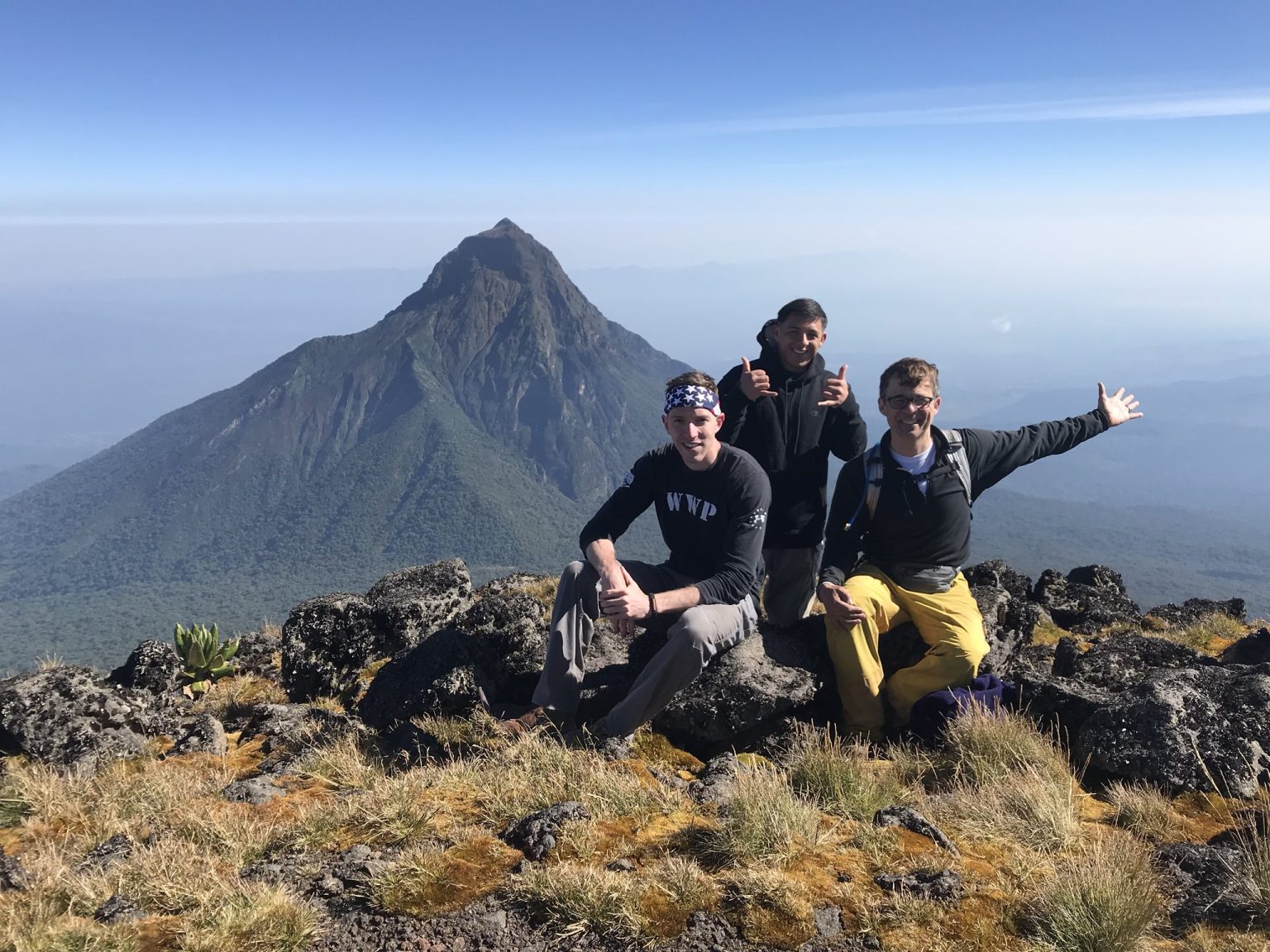
Trekking Mount Karisimbi is a phenomenal, two-day high-altitude challenge in Rwanda’s Volcanoes National Park. Towering at 4,507 meters as the highest giant in the Virunga range, its Kinyarwanda name amasimbi—meaning "white shell"—perfectly describes the frequent hail, sleet, and snow capping its summit.
The rewarding expedition requires an overnight camp at 3,700 meters, taking you through five distinct vegetation zones, from dense bamboo forests home to Dian Fossey's famous Susa gorilla group to stark alpine deserts. Along the way, you pass unique volcanic features like the Muntango Crater and Branca Lake caldera. Straddling the Rwanda-DRC border, the summit opens up into a spectacular, three-country panorama over Uganda on clear days. As you hike alongside rare Albertine Rift birds near its sister peak, Mount Bisoke, packing serious thermal and rain layers is essential to withstand the volcano's fierce, unpredictable high-altitude microclimates.
1. The "White Shell" Name
The Mountain Karisimbi hike introduces you to a peak steeped in local cultural lore and vivid imagery. In the native Kinyarwanda language, the name Karisimbi is beautifully derived from the word amasimbi, which translates directly to "white shell." For generations, the local communities living at the base of the Virunga Massif have looked up at the towering volcano and used this poetic description to capture the brilliant, glistening white cap that regularly crowns its highest peak.
For example, when the heavy morning clouds part over the Musanze district, the summit stands out against the blue sky like a polished, pristine sea shell resting on top of a dark green volcanic ridge. This striking visual phenomenon is so distinct that it acts as a regional weather indicator for the surrounding communities; a heavily whitened peak often signals that intense, cold storms have recently swept through the upper atmosphere. Experiencing this gleaming summit firsthand is the ultimate visual reward for anyone undertaking the trek.
2. It’s Made of Sleet, Not Snow
While the brilliant white cap looks exactly like a traditional, permanent alpine glacier from the lowlands, the Mountain Karisimbi hike actually reveals a fascinating meteorological quirk. Because of its specific geographic position right near the equator, the mountain does not support classic, slow-moving glacial ice. Instead, the frost crowning the 4,507-meter summit is a temporary, hyper-frequent buildup of accumulated hail and sleet generated by sudden, violent high-altitude storms.
For example, a hiker reaching the summit area will not find packed, deep blue glacial ice fields like those on Mount Kilimanjaro. Instead, they will walk over a crunchy, constantly shifting layer of fresh sleet and frozen pellets that have blanketed the dark volcanic rock during the previous night's tempest. The intense tropical sun during the day often melts a significant portion of this white cap, only for the freezing nighttime storms to completely replenish it, creating a dynamic and ever-changing landscape at the roof of Rwanda.
3. The Strenuous Two-Day Six-Hour Summit Push
Unlike smaller neighboring peaks, the sheer scale of the Mountain Karisimbi hike demands that the expedition be split into a rigorous two-day itinerary. Attempting to conquer the massive elevation change in a single day is highly impractical for safety and acclimatization reasons. On the first day, hikers set out from the park briefing point and face a challenging six-hour ascent through muddy slopes and dense forests to reach the designated base camp situated at an altitude of roughly 3,700 meters.
For instance, day one is all about steady pacing and physical grit as you haul your gear up to the camping shelf, where you will spend a cold night sleeping in tents. Day two kicks off in the pitch black of the early morning, requiring hikers to switch on headlamps and tackle the remaining, steep summit push to the top. Breaking the trek into these two distinct phases is essential for giving your body a fighting chance to adjust to the thinning air.
4. Breathtaking Three-Country Views
Reaching the absolute apex of the Mountain Karisimbi hike rewards you with one of the most geographically spectacular vantage points on the African continent. Standing proudly at 4,507 meters above sea level, you are positioned high above the clouds, completely dominating the surrounding landscape. On an exceptionally clear morning, the reward is a breathtaking, unobstructed 360-degree view that effortlessly spans across three different sovereign nations: Rwanda, the Democratic Republic of Congo (DRC), and Uganda.
For example, as you catch your breath at the summit marker, you can look directly eastward to trace the jagged peaks of Mount Sabinyo and Muhavura in Uganda, turn your head westward to peer at the smoking, active craters of Nyiragongo in the DRC, and look straight down at the lush, rolling green hills of Rwanda. It feels like standing on a natural watchtower over the entire Albertine Rift Valley, offering a perspective few people ever get to witness.
5. Straddling the International Border
The Mountain Karisimbi hike brings you to a place of immense geopolitical significance. The massive stratovolcano does not belong exclusively to a single nation; rather, its highest peak serves as a fixed, natural boundary stone. The official international border separating Rwanda and the Democratic Republic of the Congo runs directly through the very center of the summit.
For example, when you reach the highest point of the climb, you are physically straddling the border line. You can place your left boot on the Rwandan side of the crest within Volcanoes National Park and your right boot on the Congolese slope within the boundaries of Africa’s oldest protected reserve, Virunga National Park. There are no passport control stations or physical fences at this extreme altitude—just an incredible sense of freedom and the unique thrill of standing precisely between two vast, beautiful nations simultaneously.
6. Rare Primate and Wildlife Encounters
Because the trail cuts through a highly protected, pristine montane habitat, the Mountain Karisimbi hike offers an authentic wildlife adventure alongside the mountaineering challenge. The lower elevations of the volcano serve as the primary sanctuary for some of the world’s most endangered primates. Trekkers routinely share the forest paths with a variety of specialized wildlife that cannot survive outside of this specific ecosystem.
For instance, as you push through the initial bamboo zones, it is not uncommon to spot flash-flashes of bright gold as rare Golden Monkeys leap through the canopy above. Lucky hikers might even cross paths with the mountain's most famous residents: the mountain gorillas. The slopes of Karisimbi are the home territory of legendary habituated gorilla families, including the world-renowned Susa group. While this is a climbing expedition rather than a tracking tour, hearing a silverback crash through the dense undergrowth nearby adds an unforgettable element of wild safari magic to the morning walk.
7. A Journey Through Five Vegetation Zones
Trekking up the mountain feels exactly like walking firsthand through a living textbook on ecology. The Mountain Karisimbi hike forces you to cross through five entirely distinct botanical microclimates, each defined by its changing altitude, temperature, and moisture levels. The landscape completely transforms every few hundred meters, keeping the visual experience incredibly fresh and engaging.
For example, you will start the trek at the base in a dense, humid bamboo forest. As you climb higher, the bamboo gives way to the eerie, moss-draped Hagenia-Hypericum woodlands. Pushing past the camp at 3,700 meters, you enter the surreal giant Senecio and lobelia moorlands, which look like a landscape straight out of a science fiction movie. Finally, the hardy giant groundsels disappear, forcing you to navigate an exposed alpine desert before arriving at the stark, rocky volcanic terrain at the summit where only the toughest mosses survive.
8. Dian Fossey's Historic Backyard
The Mountain Karisimbi hike is deeply intertwined with the history of global wildlife conservation. The saddle area between Karisimbi and neighboring Mount Bisoke serves as the physical location for the legendary Karisoke Research Center, which was established by the pioneering primatologist Dian Fossey in 1967. The very name "Karisoke" was created by combining the names of the two volcanoes that shelter the valley.
For example, as you ascend the lower ridges, you are walking through the exact forests where Fossey spent decades studying, habituating, and aggressively protecting mountain gorillas from poachers. Her final resting place, where she was buried alongside her favorite gorilla companion, Digit, sits tucked away in the dense forest just a short detour from the main climbing route. Passing through this historic backyard lends the trek a profound sense of reverence and appreciation for the fragility of the surrounding ecosystem.
9. Raw Geological Wonders: Muntangano Crater & Lakes
Geology enthusiasts will find the Mountain Karisimbi hike to be an absolute dream, as the trail showcases the raw, dormant power of the Virunga volcanic massif. The mountain is an ancient stratovolcano, and its upper slopes are heavily scarred by past volcanic activity, leaving behind dramatic geographical structures that add a rugged, imposing beauty to the trek.
For instance, as you make your final push toward the peak on day two, you will hike right past the striking Muntangano crater, a massive depression carved into the side of the cone. Nearby, you can peer down into the impressive Branca Caldera, a collapsed volcanic basin located southeast of the main peak. These stark, rocky craters often catch the mountain's frequent sleet and rain, creating small, eerie high-altitude tarns that sit trapped within the volcanic rock, serving as a powerful reminder of the explosive forces that shaped East Africa.
10. Freezing Peak Temperatures
One of the most dangerous mistakes a traveler can make is underestimating the climate on the Mountain Karisimbi hike. Even though the volcano sits just a few degrees south of the hot, tropical equator, the extreme altitude completely dictates the local weather patterns. As you climb above the cloud line, the temperature drops rapidly, frequently plunging near or below zero degrees Celsius at the summit.
For example, while you might start the trek in short sleeves under the warm Rwandan sun at the trailhead, the conditions at the 3,700-meter base camp and the summit require serious cold-weather gear. The wind-chill factor along the exposed ridges can be biting, and if a sudden sleet storm rolls in, hypothermia becomes a real threat to unprepared hikers. Packing top-tier thermal base layers, a heavy fleece, insulated gloves, a warm beanie, and a high-quality winter jacket is absolutely essential to staying safe and comfortable during this high-altitude alpine adventure.
What level of physical conditioning does this multi-day climb demand?
The Mountain Karisimbi hike is an exceptionally grueling physical challenge that demands excellent cardiovascular endurance and leg strength. You will be gaining significant altitude over a short period, carrying a backpack, and navigating uneven, challenging terrain. This is not a casual weekend walk; it is a serious high-altitude expedition that requires preparation.
To complete this trek comfortably, your body needs to be accustomed to sustained cardiovascular exertion. In the months leading up to your climb, focus on long-distance hiking, running, or stair-climbing to build up your stamina. Strong legs and a solid core are vital for pushing through the thick mud of the lower forest and scrambling up the steep, rocky volcanic scree near the summit. Furthermore, your body must cope with the rapid drop in oxygen levels as you cross the 4,000-meter mark. If you maintain a consistent fitness routine and incorporate strength training, your muscles will better handle the relentless incline, allowing you to focus on the spectacular wilderness rather than physical exhaustion. Pacing yourself is everything on this mountain.
What gear is absolutely essential for the overnight camp?
Equipping yourself with the correct gear is the difference between a rewarding adventure and a miserable, dangerous night on the Mountain Karisimbi hike. Because you will be sleeping at an altitude of 3,700 meters, the environment is intensely cold, damp, and unpredictable. A high-quality, four-season sleeping bag rated for sub-zero temperatures is your most important piece of equipment.
You also need a reliable, waterproof, and windproof tent that can withstand sudden high-altitude storms. Layering your clothing is crucial: pack heavy thermal base layers, a thick fleece jacket, and a high-quality down coat to trap your body heat once the sun sets. Your outer layer must be entirely waterproof to shield you from the frequent sleet and driving rain. Do not forget insulated gloves, a warm winter beanie, and thick wool hiking socks. A sturdy headlamp with extra batteries is essential for navigating the dark camp and beginning the early morning summit push. Finally, packing a lightweight, insulated sleeping pad will insulate your body from the freezing, damp volcanic ground beneath your tent.
How do hikers effectively manage altitude sickness on Karisimbi?
Managing altitude sickness on the Mountain Karisimbi hike requires a mix of careful preparation, self-awareness, and strict adherence to the guidance of your park rangers. Because the summit towers at 4,507 meters, the air pressure is significantly lower than at the trailhead, meaning your body receives less oxygen with every breath.
The single most effective strategy to prevent acute mountain sickness is to hike slowly and deliberately, a practice the local guides call pole pole. This slow pace gives your heart and lungs vital time to acclimatize to the changing atmospheric conditions. Hydration is equally critical; you should drink between three to four liters of water daily, as dehydration accelerates altitude symptoms. Avoid alcohol and heavy, fatty meals before and during the climb. It is entirely normal to experience a mild headache or slight shortness of breath, but if these symptoms escalate into severe dizziness, persistent vomiting, or a loss of physical coordination, you must inform your guide immediately. The only definitive cure for severe altitude sickness is an immediate descent to lower ground.
Are porters available to help carry heavy camping gear?
Hiring a local porter before setting off on the Mountain Karisimbi hike is highly recommended and serves as an invaluable asset for your journey. Porters are residents from the communities surrounding Volcanoes National Park who are thoroughly acclimated to the high elevation and know the volcanic trails intimately.
For a standard daily fee, a porter will carry your heavy backpack containing your tent, sleeping bag, extra water, and cold-weather clothing, capping their load at a safe weight limit. Entrusting your heavy gear to a porter drastically reduces the physical toll on your joints and back, allowing you to maintain better balance on the steep, muddy slopes and conserve your energy for the final summit push. Beyond the obvious physical relief it provides, hiring a porter is a powerful way to practice responsible eco-tourism. The wages they earn go directly to supporting local families, paying school fees, and funding community projects. This direct financial benefit fosters a deep connection between the local population and the long-term conservation of the national park and its wildlife.
What unique wildlife might you see along the trail?
While the primary objective of the Mountain Karisimbi hike is mountaineering, the trail cuts through a highly protected biodiverse sanctuary, making wildlife encounters a distinct possibility. The lower slopes of the volcano are blanketed in dense bamboo and montane forests, providing a crucial habitat for several globally endangered species.
As you quietly hike through the bamboo zone, you might spot rare golden monkeys leaping through the stalks or glimpse unique Albertine Rift endemic birds flashing through the canopy. The mountain is also home to several habituated and wild families of mountain gorillas, including the historic Susa group. While this trek is not a dedicated gorilla tracking excursion, it is not uncommon to hear a distant chest-beat, spot fresh nesting sites, or occasionally cross paths with a family moving across the trail. If an encounter happens, your armed park rangers will immediately guide you to step back and observe a safe, respectful distance. These unexpected glimpses of rare primates add an incredible element of raw, wild safari magic to your high-altitude trek.
How unpredictable is the weather near the volcanic peak?
The weather during the Mountain Karisimbi hike is notoriously fierce, sudden, and entirely unpredictable, regardless of the season you choose to climb. Because the volcano sits near the equator but reaches an extreme altitude, it creates its own complex microclimate that can change from bright sunshine to a violent storm in minutes.
You might begin your morning hiking under a warm, clear sky, only for a thick blanket of mountain mist to roll in by midday, dropping the visibility down to a few meters. The summit area is particularly famous for its sudden high-altitude tempests, which unleash heavy downpours of rain, dense sleet, and pelting hail. The wind-chill factor along the exposed rocky ridges can cause temperatures to plummet below freezing instantly. This volatility means you can never lower your guard; you must always keep your waterproof shells and warm layers easily accessible at the top of your pack. Respecting the mountain’s weather patterns and moving with caution ensures you stay dry, warm, and safe.
Why does the climb require a two-day itinerary?
The Mountain Karisimbi hike is structured as a strict two-day itinerary to ensure the physical safety and health of every trekker. Attempting to ascend and descend a 4,507-meter peak in a single day would require an extreme, dangerous level of physical exertion and would dramatically increase the risk of severe altitude sickness.
Day one focuses on a steady, six-hour climb through the lower forest zones to reach the midway base camp at 3,700 meters. Spending the night at this elevation serves a vital medical purpose: it allows your body to rest, adapt, and acclimatize to the significantly thinner air overnight. Day two begins before dawn, allowing you to tackle the final, steep summit push in the crisp, clear morning air when views are best and storm risks are lowest. After enjoying the summit, you face a long, continuous descent back to the park headquarters. Breaking the journey into two distinct phases makes the immense elevation change manageable and ensures you have the energy required to navigate the technical sections safely.
What cooking and food arrangements should hikers plan?
Proper nutritional planning is essential for the Mountain Karisimbi hike, as your body will burn thousands of calories navigating the steep inclines and fighting the high-altitude cold. Because there are no lodges or food vendors on the volcano, you must carry all your sustenance with you.
Most hikers choose to book their expedition through a local tour operator, who will provide a dedicated camp chef and porters to carry fresh food, stoves, and fuel up to the 3,700-meter camp. This setup ensures you are rewarded with hot, carbohydrate-rich meals like pasta, rice, hot soups, and stews at the end of a grueling day, which is vital for restoring your energy and warming your core. If you are trekking self-sufficiently, you must pack lightweight, high-calorie dehydrated meals, a portable camping stove, and efficient fuel. Additionally, pack a generous supply of quick-energy snacks like nuts, dried fruit, chocolate, and energy bars to nibble on during short trail breaks to keep your blood sugar steady.
Where is the volcano located within East Africa?
The Mountain Karisimbi hike takes place in a geographically stunning and politically significant corner of East Africa. The massive stratovolcano is located within Rwanda's Volcanoes National Park, situated in the northwestern region of the country near the vibrant tourism hub of Musanze.
The mountain is part of the legendary Virunga Massif, a chain of eight volcanic peaks that straddle the international borders of Rwanda, Uganda, and the Democratic Republic of the Congo. Karisimbi specifically sits directly on the border line separating Rwanda from the DRC. This means that as you stand on the western slopes and the summit, you are looking directly down into the vast wilderness of Africa’s oldest protected area, Virunga National Park in the Congo. Its central location makes it easily accessible for travelers exploring the Albertine Rift region, offering an ideal anchor point for an extended East African adventure that combines intense mountain climbing with world-class primate tracking.
Can you see Dian Fossey’s grave from here?
While the Mountain Karisimbi hike does not take you directly past Dian Fossey's final resting place, the trail is deeply connected to her historic conservation legacy. Her famous Karisoke Research Center was established in the deep, misty saddle that separates Mount Karisimbi from its immediate neighbor, Mount Bisoke.
The name "Karisoke" was actually created by combining the names of these two towering volcanoes. If you wish to visit her gravesite and the ruins of her original research cabin, it requires a separate, dedicated trek through Volcanoes National Park rather than attempting to combine it with the summit climb. However, as you ascend the lower slopes of Karisimbi, you are walking through the exact same afro-montane forests where Fossey spent decades living among, studying, and fiercely protecting the mountain gorillas from poachers. Looking down into the forested valley from the ridges of Karisimbi provides a powerful visual appreciation for the remote, rugged wilderness she dedicated her life to saving.
Booking Mountain Karisimbi hike with us Roads of Adventure safaris
Booking your Mount Karisimbi hike with Roads of Adventure Safaris takes the stress out of planning this massive 4,507-meter expedition. They handle all the heavy lifting—from securing your mandatory $400 Rwanda hiking permit and providing rugged mountain camping gear to arranging private 4×4 transfers straight from Kigali. The classic 3-day itinerary gives you a travel day to settle in before tackling the intense 2-day climb, complete with full-board meals and an overnight camp at 3,700 meters. You can even customize the trip by adding legendary experiences like mountain gorilla trekking or golden monkey tracking.
