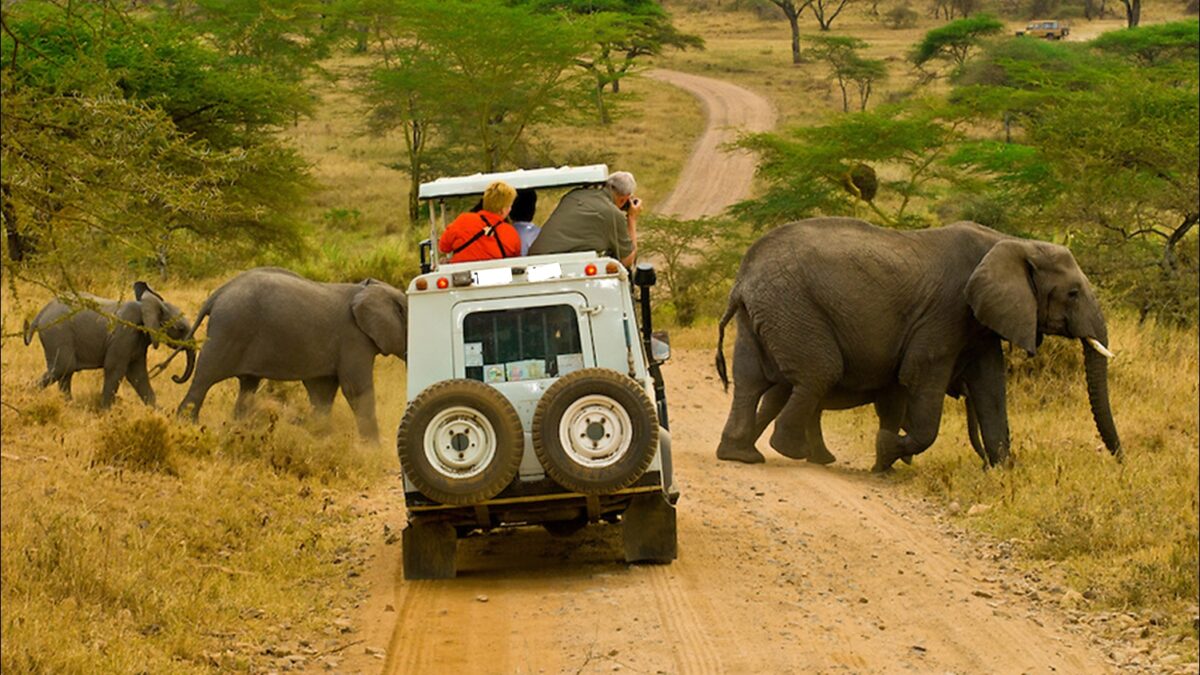
This 10-day self-drive Uganda safari takes you through the ultimate "Pearl of Africa" primate and savannah circuit. Spanning from Entebbe to Murchison Falls, Kibale, Queen Elizabeth, Bwindi, and Lake Mburo, it is a perfect blend of independent exploration and bucket-list wildlife tracking.
Tour highlights for 10 Days Self-drive Uganda safari
Entebbe Arrival Logistics
Lake Victoria Sunset
On-Foot Rhino Tracking
Murchison Savannah Drives
Thunderous Murchison Falls
Nile River Safari
Scenic Tea Plantations
Chimpanzee Rainforest Encounter
Bigodi Primate Walk
Equator Photo Stop
Volcanic Crater Lakes
Kazinga Channel Boat
Tree-Climbing Ishasha Lions
Misty Bwindi Mountains
Mountain Gorilla Trekking
Lake Mburo Zebras
Day by day 10 Days Self-drive Uganda safari
Day 1: Arrival & Entebbe
Arrive at Entebbe International Airport, the starting point of your epic 10 Days Self-drive Uganda safari. After clearing customs, you will pick up your rental 4x4, which will be your trusted companion for the journey ahead. Take some time to double-check your Uganda Wildlife Authority (UWA) tracking permits to ensure everything is perfectly in order. Afterward, drive to a charming lakeside guesthouse nestled along the shores of Lake Victoria. This afternoon is all about relaxation and recovery from your flight. You can stroll through the lush Entebbe Botanical Gardens, watch local fishermen handle their wooden boats, or simply sip a cold drink while watching the sunset over the water. Get an early night's rest, familiarize yourself with the vehicle's controls and GPS navigation, and prepare your mind for the spectacular wildlife, diverse landscapes, and incredible road trip adventures that await you tomorrow.
Day 2: Ziwa Rhino Sanctuary to Murchison Falls
Wake up early to begin the second leg of your 10 Days Self-drive Uganda safari, driving roughly 300 kilometers north toward Murchison Falls National Park. Along the way, you will make a highly anticipated stop at the Ziwa Rhino Sanctuary. This is the only place in Uganda where you can experience an intimate, on-foot tracking tour to see southern white rhinos roaming in the wild. Walking alongside an expert ranger, you will get incredibly close to these magnificent, prehistoric-looking giants. After this thrilling encounter, enjoy a quick lunch at the sanctuary before continuing your drive. As you approach Murchison Falls, the landscape transforms into rolling savannahs and thick woodlands. Cross the iconic Nile River and check into your safari lodge. The evening is perfect for listening to the nocturnal sounds of the African bush, enjoying a warm meal, and resting up for an action-packed day of big game viewing.
Day 3: Big 5 Game Drives & Nile Boat Cruise
Today offers a quintessential savannah experience on your 10 Days Self-drive Uganda safari. Start with an early morning game drive along the northern bank of the Nile. The golden morning light is ideal for spotting massive herds of Rothschild's giraffes, elephants, Cape buffaloes, and elegant Ugandan kobs. Keep your eyes peeled for lions and elusive leopards resting in the branches of fig trees. In the afternoon, exchange your 4x4 keys for a seat on a classic boat safari launching up the Victoria Nile. You will cruise past hundreds of snorting hippos, massive Nile crocodiles basking on the sandbanks, and drinking elephants. The boat brings you safely to the base of the spectacular Murchison Falls, where the world’s longest river forces itself through a tiny seven-meter gap. Hike up to the top of the falls if time permits to witness the sheer, thunderous power of the water.
Day 4: Murchison to Kibale Forest
Bid farewell to the savannahs as you embark on a scenic 350-kilometer drive south toward Kibale National Park. This journey is a highlight of the 10 Days Self-drive Uganda safari, taking you through the heart of the vibrant Ugandan countryside. You will navigate winding roads that pass traditional homesteads, bustling roadside markets packed with colorful fruits, and emerald-green tea plantations that blanket the rolling hills of Fort Portal. Take your time, drive defensively, and enjoy the freedom of stopping for photos whenever a stunning vista catches your eye. The changing geography provides a beautiful transition from dry northern plains to lush tropical rainforests. Arrive at your lodge on the edge of Kibale Forest by late afternoon. The cool, crisp mountain air and the distant, echoing calls of hidden forest birds will welcome you to Africa's premier primate capital.
Day 5: Chimpanzee Tracking & Bigodi Swamp
Prepare for an exhilarating primate encounter on day five of your 10 Days Self-drive Uganda safari. Enter the dense, ancient canopy of Kibale Forest with an experienced UWA ranger to track wild chimpanzees. Following their loud hoots and pant-hoots through the thick undergrowth, you will find yourself standing beneath a community of our closest evolutionary relatives as they swing effortlessly through the branches, play, and groom one another. After a thrilling hour in their presence, return to camp for lunch. In the afternoon, head over to the nearby Bigodi Wetland Sanctuary for a guided community boardwalk safari. This swamp is a haven for biodiversity, offering incredible birding opportunities—including the famous Great Blue Turaco—and sightings of several rare primate species like the red colobus and grey-cheeked mangabey. Supporting this community-run eco-tourism initiative directly assists local families and ongoing conservation efforts.
Day 6: Kibale to Queen Elizabeth National Park
Your 10 Days Self-drive Uganda safari continues with a beautiful 160-kilometer drive south to Queen Elizabeth National Park. As you descend the massive Albertine Rift Valley, you will cross the equator, providing a fantastic photo opportunity. The snow-capped peaks of the Rwenzori Mountains form a dramatic backdrop to your right. Arrive at the park in time to check in and enjoy a relaxing lunch. In the late afternoon, take your 4x4 out for a scenic drive around the spectacular explosion crater lakes. These dramatic, water-filled volcanic cones offer breathtaking panoramic views across the sweeping savannah plains and the tranquil Lake Edward. The scenery here is completely unique, showcasing Uganda's intense tectonic history. Keep an eye out for wildlife wandering along the ridges, and enjoy a peaceful African sunset from a high vantage point before driving down to your lodge.
Day 7: Game Drive & Kazinga Channel Cruise
An early start brings you to the Kasenyi sector of the park, a prime wildlife viewing hub on your 10 Days Self-drive Uganda safari. The vast open plains are the mating grounds for thousands of Ugandan kobs, which naturally attracts apex predators like lions and hyenas. With the freedom of your self-drive vehicle, you can navigate the tracks at your own pace, scanning the horizon for hunting prides. After a midday break, head down to the Mweya peninsula for a scheduled afternoon boat cruise along the famous Kazinga Channel. This natural waterway connects Lake George and Lake Edward, hosting one of the world's highest concentrations of hippos. You will cruise remarkably close to elephant herds bathing in the water, massive buffaloes cooling off in the mud, and an array of water birds like pelicans and kingfishers.
Day 8: Tree-Climbing Lions to Bwindi
Pack up and drive south through the remote Ishasha sector of Queen Elizabeth National Park, an unforgettable route on your 10 Days Self-drive Uganda safari. Ishasha is globally famous for its unique population of tree-climbing lions. Drive slowly and scan the low-hanging branches of the giant sycamore fig trees, where these predators lounge to escape the midday heat and pesky tsetse flies. Spotting a lion draped lazily over a tree branch is an incredible sight. After this unique game drive, continue your journey south as the flat savannah transitions into the steep, terraced, and misty hills of Kigezi. This region is affectionately known as the "Switzerland of Africa." Navigate the winding mountain roads carefully until you reach the edge of the ancient, mist-covered Bwindi Impenetrable National Park. Rest up and eat a hearty dinner, because tomorrow is the big day.
Day 9: Gorilla Trekking
This is the undisputed crown jewel of your 10 Days Self-drive Uganda safari. Wake up early, pack plenty of water, and head to the park headquarters for an essential safety briefing. You will be assigned to a specific gorilla family based on your fitness level before entering the thick, tangled jungle with expert trackers and armed rangers. Trekking through Bwindi's steep slopes and dense vegetation can be physically demanding, taking anywhere from one to six hours. However, all exhaustion vanishes the moment you step into a clearing and look into the deep, soulful eyes of a wild mountain gorilla. Watching the silverback guard his family while mothers cradle infants and juveniles wrestle is a profoundly moving, spiritual experience. You are permitted exactly one magical hour to observe and photograph them before hiking back down the mountain.
Day 10: Lake Mburo & Return to Entebbe
On the final day of your 10 Days Self-drive Uganda safari, you will drive approximately 250 kilometers back toward the capital. Break up the long drive with a rewarding stop at Lake Mburo National Park, Uganda's smallest savannah park. Because there are no elephants here, it is the perfect place for an unforgettable walking safari. Stroll alongside a ranger to get remarkably close to herds of impalas, zebras, and elands grazing peacefully in the acacia woodlands. Alternatively, take a quick boat ride on the lake to spot vibrant kingfishers and leopards drinking at the water's edge. Afterward, continue your drive back to Entebbe, making a final stop at the Equator monument for souvenirs and photos. Return your rental 4x4 vehicle to the agency before heading to the airport for your evening departure flight home.
What type of vehicle is required for a 10 Days Self-drive Uganda safari?
Selecting the right vehicle is the foundational key to a successful 10 Days Self-drive Uganda safari. While Uganda’s primary highways connecting major towns like Entebbe, Fort Portal, and Mbarara are well-paved, the access roads leading into national parks are mostly unpaved gravel, dirt, and volcanic clay, commonly referred to as "murram" roads. These surfaces are unpredictable and change drastically depending on local weather conditions. Therefore, a robust 4-wheel-drive (4x4) vehicle with excellent ground clearance is an absolute necessity, rather than a luxury.
The gold standard for this specific ten-day loop is a Toyota Land Cruiser Prado (TX or TZ models). This vehicle strikes a perfect balance between power and fuel efficiency. It features a strong suspension system to absorb rough corrugations, high ground clearance to navigate deep ruts, and a reliable 4WD system to conquer sudden mud baths. For budget-conscious couples or solo travelers sticking strictly to the dry seasons, a smaller 4x4 like a Toyota RAV4 can suffice, though it struggles with the steep, muddy terrains of Bwindi Impenetrable National Park. For those tackling the peak rainy seasons, upgrading to a heavy-duty Land Cruiser V8 or GX provides maximum torque and safety.
Furthermore, you should ensure your rental vehicle comes equipped with essential roadside tools. A high-lift jack, a wheel spanner, a spade, jumper cables, and a minimum of one high-quality, full-sized spare tire are vital safety items. When you pick up the vehicle on Day 1 in Entebbe, test the manual engagement of the 4WD system, inspect the tire treads, and check all fluid levels under the hood. Driving a dependable, thoroughly vetted mechanical platform gives you peace of mind to navigate remote locations confidently.
How do I secure gorilla and chimpanzee trekking permits for this itinerary?
Primate tracking permits are the most time-sensitive and highly contested components of your 10 Days Self-drive Uganda safari. The Uganda Wildlife Authority (UWA) regulates the number of visitors allowed to trek mountain gorillas in Bwindi on Day 9 and chimpanzees in Kibale Forest on Day 5 to minimize human impact and protect these endangered species. Because demand is exceptionally high—particularly during the peak dry seasons from June to August and December to February—it is imperative to secure your tracking permits three to six months before your scheduled arrival date.
The official cost for a gorilla trekking permit is $800 USD per person for foreign non-residents ($700 USD for foreign residents). A chimpanzee tracking permit in Kibale Forest costs $250 USD per person for foreign non-residents ($200 USD for foreign residents). These fees include park entry for the specific trekking day, professional UWA ranger-guides, trackers, and armed security personnel. You can purchase these permits directly through the official UWA booking office in Kampala via email, but the process can be slow and requires direct bank wire transfers.
A more efficient alternative for self-drive travelers is to request your vehicle rental company or a local registered tour operator to secure the permits on your behalf. Most reputable self-drive agencies offer permit booking as a complimentary or low-fee service when you rent a car. Once purchased, you will receive scanned copies of the electronic cards, which you must collect in person or have delivered with your vehicle on Day 1 in Entebbe. Never embark on your road trip without verifying that your physical permit cards or vouchers match the exact dates and sectors specified in your loop.
What are the general road conditions and driving rules in Uganda?
Navigating your 10 Days Self-drive Uganda safari requires a solid understanding of local traffic laws, driving etiquette, and changing road conditions. First and foremost, driving in Uganda is conducted on the left-hand side of the road, a legacy of British colonial influence. You must possess a valid driver’s license from your home country written in English, or alternatively, an International Driving Permit (IDP). An IDP is highly recommended as it simplifies your interactions at regular traffic police checkpoints and ensures your comprehensive rental car insurance remains fully valid.
Speed limits are strictly enforced across the country by both radar guns and sudden speed bumps. In urban areas, towns, and busy trading centers, the speed limit drops to 50 km/h. On open, paved rural highways, the legal limit is 80 to 100 km/h, while inside national parks like Murchison Falls and Queen Elizabeth, the strict limit is 30 to 40 km/h to protect wildlife. Defensive driving is mandatory. Ugandan roads are shared with long-distance trucks, speeding matatus (public minibuses), unpredictable boda-bodas (motorcycle taxis), pedestrians, and livestock.
Paved highways can develop sudden, deep potholes, while the gravel "murram" roads leading into Bwindi or Kibale can turn into slippery, clay-like tracks during unexpected downpours. A major golden rule for self-drive safaris is to completely avoid driving at night. Street lighting outside major cities is nonexistent, broken-down vehicles are rarely marked with warning triangles, and livestock often sleep on the warm tarmac. Plan your daily departures early in the morning so that you arrive safely at your next destination well before the 6:30 PM equatorial sunset.
What is the best time of year to embark on this self-drive loop?
Timing your 10 Days Self-drive Uganda safari significantly influences your overall driving experience, road safety, and wildlife viewing success. Uganda experiences an equatorial climate divided into two distinct dry seasons and two rainy seasons. The primary dry season runs from June to August, followed by a shorter dry window from December to February. These months represent the peak tourism season and are widely considered the ideal time to complete this comprehensive western looping itinerary.
During the dry months, the savannah grass in Murchison Falls (Day 3) and Queen Elizabeth National Park (Day 7) is short, making it much easier to spot lions, leopards, and elephants congregating around permanent water sources. Crucially for self-drive travelers, the dirt and clay roads are firm, dry, and easily navigable, minimizing the risk of getting stuck in deep mud. Furthermore, hiking trails in Bwindi (Day 9) and Kibale (Day 5) are less slippery, rendering the physical tracking of gorillas and chimpanzees far more manageable.
Conversely, the rainy seasons occur from March to May and from October to November. While traveling during these low-season months presents challenges, it also offers unique advantages. The landscapes are exceptionally lush, vibrant, and beautiful, providing stunning backdrops for photography. Additionally, lodges often offer discounted rates, and the Uganda Wildlife Authority sometimes introduces promotional low-season permit prices, reducing gorilla permits to $600 USD and chimpanzee permits to $200 USD. However, if you choose a low-season safari, a heavy-duty 4x4 with specialized mud tires, excellent off-road driving skills, and a flexible daily schedule are absolute requirements to manage washed-out tracks and sudden roadblocks.
How should I manage fuel, navigation, and connectivity on the road?
Managing resources efficiently is vital for a smooth 10 Days Self-drive Uganda safari, as you will cover more than 1,200 kilometers across changing, sometimes remote terrains. Fuel management requires constant foresight. Petrol and diesel prices fluctuate, and fuel stations become increasingly sparse as you travel further away from major towns. The golden rule is to never let your fuel tank drop below half capacity. Always fill your tank completely on Day 1 in Entebbe, top up in major hubs like Fort Portal (Day 4) and Kasese (Day 6), and avoid relying on tiny, independent fuel pumps found in remote villages, which may sell contaminated or watered-down fuel.
For navigation, relying solely on standard online mapping can lead to errors, as Google Maps often underestimates driving times on unpaved roads or suggests impassable shortcuts through rural villages. Before departing Entebbe, download comprehensive offline navigation packages via applications like Maps.me or Google Maps. Many travelers find it highly beneficial to rent a dedicated GPS unit from their car provider or purchase a physical, up-to-date road map of Uganda to cross-reference routes.
Regarding connectivity, your international roaming plan can be unreliable and expensive in rural areas. Upon arrival at Entebbe Airport on Day 1, visit a registered telecommunications kiosk (such as Airtel or MTN) to purchase a local SIM card and a high-speed data package using your passport for registration. This provides affordable, consistent internet access along major routes, allowing you to use live navigation, check weather forecasts, and maintain direct communication with your car rental agency's 24/7 roadside assistance hotline via WhatsApp in the event of an unexpected mechanical emergency.
What should I expect during the gorilla trekking experience in Bwindi?
The gorilla trekking excursion on Day 9 in Bwindi Impenetrable National Park is the undisputed highlight of the 10 Days Self-drive Uganda safari, requiring careful mental and physical preparation. Your day begins at 7:30 AM at the designated park headquarters for an obligatory safety and conservation briefing. Here, you will be assigned to a specific habituated gorilla family in a group capped at a maximum of eight tourists. Bwindi's terrain lives up to its "impenetrable" name; you will hike through thick undergrowth, across tangled vines, and up steep, muddy ridges ranging from 1,100 to 2,500 meters in elevation.
The duration of the trek is entirely unpredictable, lasting anywhere from one to six hours depending on where the gorillas nested the previous night. It is highly recommended to hire a local porter at the briefing station for roughly $20 USD. Porters carry your heavy backpack and provide a steady, physical hand during steep climbs, while the fee directly supports a local family. You must pack a minimum of two liters of drinking water, a packed lunch, energy snacks, waterproof rain gear, sturdy hiking boots, and thick gardening gloves to protect your hands from stinging nettles.
Once your trackers locate the gorilla family, you must maintain a strict ten-meter distance. You are granted exactly one hour to stand in their presence. Watching a massive 400-pound silverback manage his family while juveniles play nearby is an intensely moving experience. Flash photography is strictly forbidden as it can provoke the primates. Maintain a quiet demeanor, follow your ranger's instructions explicitly, and focus on absorbing the profound magic of this rare wildlife encounter.
How do I navigate park entry fees and cashless payment systems?
Navigating the financial logistics of park entries is a critical task on your 10 Days Self-drive Uganda safari. The Uganda Wildlife Authority (UWA) manages conservation fees across all national parks, and understanding their specific payment protocols prevents delays at remote entry gates. Conservation entry fees for major savannah parks, including Murchison Falls (Day 2) and Queen Elizabeth National Park (Day 6), are currently fixed at $45 USD per person for foreign non-residents, valid for a 24-hour period from the moment of entry.
Crucially, you must account for vehicle entry fees, which are separate from individual passenger fees. Standard foreign-registered or local commercial tour vehicles, such as your rental 4x4 Prado, incur a separate fee of approximately 30,000 to 40,000 Ugandan Shillings (UGX) per entry. For parks like Kibale Forest and Bwindi Impenetrable National Park, individual daily park entry fees are already bundled into your official chimpanzee and gorilla trekking permits, meaning you do not pay separate gate entry fees on the specific days you track primates.
Crucially, UWA gates operate on a strict cashless payment system. Park gates do not accept physical cash notes for entry fees. You must pay at the gate using a valid international credit card (Visa and Mastercard are widely accepted) or via local mobile money platforms. Alternatively, you can pre-pay all your park entry and vehicle fees at the main UWA headquarters in Kampala before starting your trip. Always keep physical printouts and digital copies of your payment receipts, as rangers at checkpoint exits will thoroughly scan and verify your documentation before allowing your vehicle to pass.
What are the packing essentials for this specific 10-day loop?
Packing for a 10 Days Self-drive Uganda safari requires preparation for diverse ecosystems, ranging from hot, dusty savannahs to cool, damp rainforests. Because you are operating a self-drive vehicle, packing your gear in soft-sided duffel bags rather than large, rigid suitcases makes it much easier to maximize cargo space and prevent items from rattling on rough roads.
For your wardrobe, layering is key. For hot game drives in Murchison Falls and Queen Elizabeth National Park, pack lightweight, breathable clothing in neutral, earthy tones like khaki, olive green, and tan. Avoid bright white clothes, which quickly collect red dust, and avoid dark blue or black clothing, which actively attracts tsetse flies—insects whose bites are painful. For chilly mornings in Fort Portal and the high-altitude misty hills of Bwindi, include a warm fleece jacket, a windbreaker, and long trousers.
For primate tracking in Kibale and Bwindi, you must pack long-sleeved shirts and rugged safari trousers to protect your skin from sharp thorns and stinging nettles. Pack thick, tall socks; it is standard practice to tuck your trousers into your socks to prevent safari ants from crawling up your legs. Waterproof hiking boots with deep tread are essential for slippery mountain slopes. Finally, do not forget a high-quality insect repellent containing DEET, broad-spectrum sunscreen, a wide-brimmed safari hat, compact binoculars for wildlife spotting, a headlamp for dark evenings, and a multi-socket car charger adapter to keep your phone, camera batteries, and offline GPS units fully powered as you drive.
How do I safely view wildlife during self-drive game drives?
Conducting your own independent game drives in Murchison Falls (Day 3) and Queen Elizabeth National Park (Day 7) is an empowering highlight of the 10 Days Self-drive Uganda safari, but it requires strict adherence to safety protocols. When entering the tracks, remember that you are a guest in a wild environment inhabited by apex predators and massive mammals. The most fundamental rule of a self-drive safari is to remain inside your vehicle at all times. Animals view cars as singular, non-threatening objects, but the moment you step out onto the ground, that illusion breaks, and you can be perceived as an existential threat or prey.
You are permitted to stand up through your vehicle's pop-up roof or look out of open windows, but you must keep your limbs inside the frame when close to large animals. If you encounter a herd of elephants or Cape buffaloes crossing the track, stop your vehicle, turn off the engine to reduce noise, and give them a wide berth of at least 20 to 30 meters. Never rev your engine, honk your horn, or drive aggressively toward an animal to force it to move, as this can provoke a dangerous charge.
Always stay on designated, cleared tracks. Off-roading is strictly illegal in Uganda’s national parks and carries a heavy on-the-spot fine of $150 USD, while causing irreversible damage to the fragile environment. If you spot a pride of lions or a leopard, keep your voice to a low whisper and minimize sudden movements inside the car. If your vehicle suffers a flat tire or mechanical breakdown inside a game track, do not step out. Stay inside, utilize your local SIM card to call the park ranger emergency number or your rental agency, and wait for an official escort.
What are the accommodation options along this self-drive route?
Your 10 Days Self-drive Uganda safari route is well-developed, offering a diverse array of accommodations tailored to different budgets and travel styles. These options generally fall into three distinct tiers: budget camping, mid-range safari lodges, and high-end luxury eco-lodges. Because you are managing your own transportation, you have the total flexibility to mix and match styles across the ten-day loop.
For budget-conscious adventurers, rooftop tent camping is highly popular. Many car rental agencies in Uganda offer 4x4 vehicles fitted with fold-out rooftop tents, complete with high-quality mattresses, sleeping bags, cooking gas cylinders, folding tables, and cooler boxes. Most national parks feature designated public campsites managed by UWA, offering basic amenities like drop toilets, cold showers, and firewood for a modest fee of $10 to $15 USD per person per night, allowing you to immerse yourself in nature.
The mid-range tier is the most popular choice for self-drive travelers. Lodges in this category offer comfortable, permanent canvas safari tents or stone cottages equipped with private en-suite bathrooms, hot running water, mosquito netting, and inclusive multi-course meals. Excellent examples along your route include lodges positioned right on the edge of the Nile in Murchison Falls or overlooking crater lakes in Kibale and Queen Elizabeth National Park. For those seeking luxury, high-end eco-lodges provide premium comfort, exceptional personalized service, private plunge pools, and spectacular views, particularly in the Buhoma and Rushaga sectors of Bwindi. Whichever tier you choose, booking your accommodations well in advance is highly recommended, as remote properties near primate tracking zones have limited room capacities and fill up quickly.
What is the process for tracking tree-climbing lions in Ishasha?
On Day 8 of your 10 Days Self drive Uganda safari, you will drive south through the remote Ishasha sector of Queen Elizabeth National Park, famous for its unique population of tree-climbing lions. Unlike typical lions that remain on the ground, Ishasha's prides spend their days lounging high up in the sturdy branches of giant sycamore fig trees and acacia trees. Scientists believe they do this to escape the intense heat of the ground, catch cool breezes, and avoid biting tsetse flies.
Finding these lions requires patience and careful scanning. As a self-drive traveler, enter the Ishasha gate early in the morning or during the hot midday hours when lions are most likely to seek shade aloft. Drive slowly along the northern and southern game circuits, focusing your binoculars on the horizontal branches of large fig trees. Look for a dangling tail, a paw, or a tan shape contrasting against the green canopy.
Because the search area is vast and the lions move frequently, navigating this independently can sometimes be challenging. To maximize your chances, you can hire an official UWA park ranger-guide at the Ishasha gate to sit in your vehicle for a modest fee of around $20 USD. These rangers possess up-to-the-minute knowledge of recent pride movements and can guide your 4x4 directly to the correct loops. If you want a more specialized experience, you can pre-book an official lion tracking experiential tour through UWA. This permits you to accompany researchers using specialized radio-telemetry equipment to locate collared prides, allowing for limited, legal off-road access to get closer to the trees for photography.
How should I handle health precautions, water, and food safety?
Prioritizing health and wellness protocols ensures your 10 Days Self-drive Uganda safari remains uninterrupted by illness. Before entering Uganda, you must visit a travel clinic in your home country to secure a Yellow Fever vaccination certificate. This is a mandatory entry requirement, and immigration officials at Entebbe International Airport will thoroughly inspect your physical Yellow Fever yellow card before granting entry into the country.
Malaria is endemic throughout most regions of Uganda, particularly in low-altitude savannah zones like Murchison Falls and Queen Elizabeth National Park. Consult your physician to obtain appropriate malaria prophylaxis medications, such as Atovaquone/Proguanil (Malarone) or Doxycycline, and commit to taking them precisely as directed. Prevent mosquito bites by applying a high-concentration DEET insect repellent every evening, wearing long trousers, and ensuring the mosquito nets provided at your lodges are tucked securely under the mattress before you turn off the lights.
Food and water safety require constant vigilance on a self-drive trip. Never drink tap water anywhere in Uganda, and avoid using it to brush your teeth. Rely exclusively on sealed, bottled mineral water, which you can purchase affordably in bulk crates of 1.5-liter bottles at supermarkets in Entebbe on Day 1 to store in your vehicle's cargo space. When dining on the road, stick to hot, freshly cooked meals served at reputable lodges or hotels. Avoid raw salads, unpeeled fruits, or ice cubes in rural villages, which may be prepared with contaminated water. Wash your hands frequently with soap or carry a reliable hand sanitizer in your vehicle’s glove box for quick use before snacks on long driving stretches.
What cultural etiquette should I practice during the loop?
Embracing local cultural norms and practicing respectful etiquette enriches your interactions during the 10 Days Self-drive Uganda safari. Ugandans are widely celebrated as some of the most warm, welcoming, and hospitable people in East Africa, and showing an authentic appreciation for their customs fosters deep goodwill and friendly exchanges throughout your road trip.
When interacting with anyone—whether a park ranger at a gate, a fuel station attendant, a lodge receptionist, or a vendor at a rural roadside market—never rush directly into business or demands. It is considered impolite to skip formal pleasantries. Always begin your conversation with a warm smile and a polite greeting, such as "Good morning, how are you?" or the local Luganda phrase "Osiatya" (How are you?) or Swahili's "Jambo". Taking a brief moment to show genuine interest sets a collaborative, positive tone for your interaction.
Dress code is another important consideration. While casual shorts and tank tops are fully acceptable inside national parks and within lodge grounds, they can be perceived as inappropriate when walking through rural towns, traditional markets, or community centers. When stopping in local villages, dress modestly by wearing trousers or longer skirts that cover the knees, and shirts that cover the shoulders. When it comes to photography, never point your camera lens at local people, children, traditional homesteads, or private property without asking for explicit permission first. If they decline, respect their privacy with a polite nod. Furthermore, photographing government buildings, military personnel, police checkpoints, or strategic infrastructure like bridges and airports is strictly illegal and can lead to immediate detention.
What are the common self-drive mistakes to avoid in Uganda?
Being aware of common pitfalls allows you to proactively safeguard your 10 Days Self-drive Uganda safari from avoidable stress, costly fines, or mechanical delays. The most frequent mistake made by independent travelers is underestimating driving times between destinations. While a distance of 350 kilometers from Murchison Falls to Kibale Forest (Day 4) looks straightforward on paper, managing traffic, navigating steep hills, and negotiating slow-moving trucks means the drive can easily take seven to eight hours. Never plan your itinerary based on ideal highway speeds.
Another frequent error is failing to conduct a meticulous, physical vehicle inspection during the handover process on Day 1 in Entebbe. If you accept a vehicle without documenting pre-existing body scratches, hairline windshield cracks, or worn-out tire treads, you risk being held financially liable for those damages upon your return. Take high-resolution photos and video clips of the entire vehicle exterior and interior in the presence of the rental agent, and ensure every minor defect is noted in writing on the official rental agreement form.
Additionally, avoid the temptation to bribe traffic police officers if you are stopped at a highway checkpoint for a minor infraction like accidental speeding. Bribery is illegal and actively undermines local anti-corruption efforts. If an officer claims you committed an offense, remain polite, calm, and respectful. Ask them to issue an official, printed traffic penalty notification ticket, which you can pay legally at a local bank or through your rental car agency upon your return. Finally, never allow your vehicle's windows to remain completely open when driving through tsetse fly-infested woodlands; keep windows rolled up and utilize your vehicle's air conditioning system to stay comfortable and bite-free.
What should I do in the event of a mechanical breakdown or emergency?
Being prepared for emergencies is a critical aspect of executing a safe 10 Days Self-drive Uganda safari, as you will be driving through remote regions far from major urban service centers. If your vehicle suffers a mechanical breakdown, a flat tire, or an engine warning light while on the road, your very first step is to prioritize safety. Guide the vehicle smoothly off the active driving lane onto a wide shoulder, turn on your hazard warning lights, and place your red reflective warning triangles 50 meters behind and ahead of the car.
If the issue is a standard flat tire and you are in a safe, non-wildlife area outside a national park, you can utilize the vehicle’s high-lift jack and wheel spanner to change to your spare tire. However, if you experience a major mechanical failure—such as a broken suspension leaf spring or an overheating engine—do not attempt amateur repairs. Immediately contact your rental car agency's 24/7 emergency hotline using your local SIM card. Reputable self-drive agencies maintain a network of mobile mechanics stationed in strategic regional hubs like Fort Portal, Kasese, and Mbarara, and they can dispatch support or a replacement vehicle if necessary.
In the highly unlikely event of a minor traffic accident with another vehicle, remain calm and composed. Do not argue with the other driver. Call the local Uganda Police traffic department to report the incident, as an official police report is mandatory to process any comprehensive car insurance claims. Take clear, detailed photos of the positioning of both vehicles, license plates, and structural damage before moving the cars. Inform your rental agency immediately, and allow them to coordinate with insurance adjusters to guide you through the next steps.
Booking 10 Days Self-drive Uganda safari with us Roads of Adventure safaris
Booking a 10-day self-drive safari with Roads of Adventure Safaris is an excellent way to explore Uganda at your own pace while having local logistics and permits expertly handled. Their local office is conveniently located along the Kampala-Entebbe Road in Seguku, Kampala
