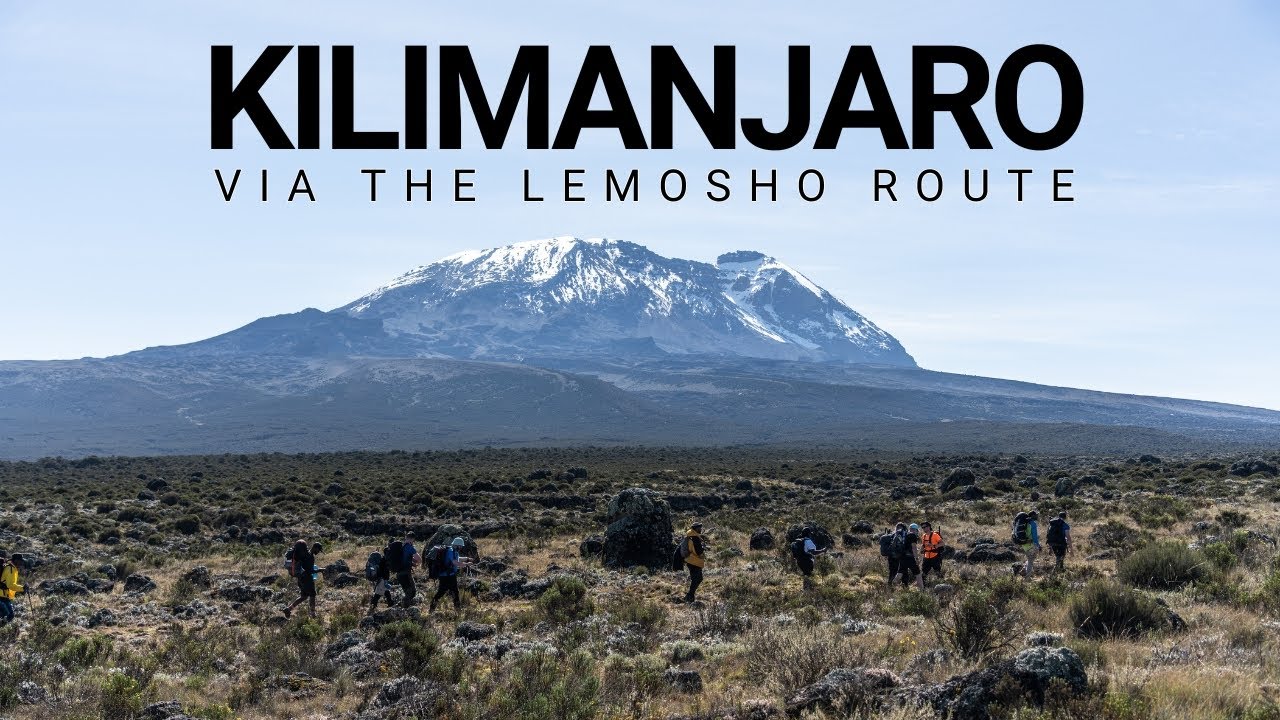
Choosing a 10 Days Kilimanjaro climb Via Lemosho route, interesting hike is a strategic decision for any serious climber. By extending your expedition over ten days, you provide your body with the necessary time to adjust to high altitudes, which significantly improves your success rate. This path offers a quiet, remote approach, allowing you to transition slowly through five distinct climate zones. You start in the lush rainforests, pass through the heath and moorland, navigate the vast alpine desert, and finally stand amidst the ice fields of the summit. Every mile covered on this 10 Days Kilimanjaro climb Via Lemosho route, interesting hike is designed to keep your energy high and your health stable. This is a journey of endurance and careful planning, ensuring you reach the peak feeling strong and capable rather than depleted by the rapid gain of altitude.
Tour highlights for 10 Days Kilimanjaro climb Via Lemosho route
Gear check in Moshi
Dense Afromontane forest trek
Big Tree Camp rest
Moorland zone scenic walk
Shira Plateau camping nights
Volcanic landscape steady pace
High altitude Lava Tower
Barranco Valley scenic camp
Exciting Barranco Wall climb
Southern Icefield mountain views
Karanga Valley ridge trek
Steep alpine desert ascent
Barafu Camp summit prep
Midnight summit attempt start
Uhuru Peak sunrise glory
Millennium Camp descent recovery
Mweka Gate park exit
Proud summit certificate award
Day by Dy 10 Days Kilimanjaro climb Via Lemosho route, interesting hike
Day 1: Arrival in Moshi
Your trip starts in Moshi, where you will settle into your lodge. After a long flight, this time is for resting and meeting your guides for a detailed gear inspection. They will verify that you have all the necessary thermal layers and sturdy footwear required for a 10 Days Kilimanjaro climb Via Lemosho route, interesting hike. Your guide will explain the mountain safety protocols and how to manage your hydration and nutrition. Getting a good night's sleep in a comfortable bed is the best way to start. Tonight, your bags will be prepared for the morning departure, as the team ensures everything is packed correctly for the days ahead. Focus on staying relaxed and hydrated, as the quiet atmosphere of Moshi provides the perfect environment to mentally prepare for the challenging climb that begins tomorrow.
Day 2: Londorossi Gate to Mti Mkubwa
We drive from Moshi to the Londorossi Gate (2,250m) to register for your 10 Days Kilimanjaro climb Via Lemosho route, interesting hike. We then travel to the trailhead and begin a steady trek through the dense Afromontane forest. You will notice the thick canopy and the damp, cool air as you climb toward Mti Mkubwa (Big Tree) Camp, located at 2,780m. The hike takes about 3 to 4 hours. You will spend the night here, surrounded by ancient trees and the sounds of the forest. This first day is quite moderate, helping your muscles warm up for the trek ahead. The camp is tucked into the hillside, providing a sheltered spot to sleep while you adjust to the new environment. Your team will have camp set up by the time you arrive, allowing you to settle in immediately.
Day 3: Forest to Shira 1
Leaving the forest, the path moves into the moorland zone. You will see giant heathers and small shrubs as you head toward the Shira Plateau. This 10 Days Kilimanjaro climb Via Lemosho route, interesting hike involves a trek of approximately 7 to 8 kilometers to reach Shira 1 Camp (3,500m). The air becomes thinner, and you will notice the temperature drop compared to the lower forest. As we reach the plateau, the view of the Kibo peak becomes much clearer. We set up camp in a wide-open area where the sunset offers a view of the surrounding valleys. This is a vital day for acclimatization, as you are moving steadily to higher ground. Eating a nutritious meal and drinking plenty of water are key priorities for tonight, as your body begins to work harder in the thinning mountain air.
Day 4: Across the Shira Plateau
Today we trek across the center of the Shira Plateau. This section of your 10 Days Kilimanjaro climb Via Lemosho route, interesting hike is mostly flat, making for a pleasant walk through a volcanic landscape. You will pass rocky outcrops and streams formed by glacier melt as you head toward Moir Hut (4,150m). Walking at a steady, slow pace is essential here to keep your heart rate down. The landscape is sparse and rocky, showing the volcanic history of the mountain. We reach the camp by the early afternoon, giving you time to rest or explore the immediate surroundings under the watch of your guides. Being at over 4,000 meters is a significant step, and sleeping here helps your body prepare for the even higher altitudes to come. The quiet of the plateau is perfect for resting.
Day 5: The Lava Tower Acclimatization
We climb higher today toward the Lava Tower, which sits at 4,630m. This part of your 10 Days Kilimanjaro climb Via Lemosho route, interesting hike is demanding because of the rapid gain in elevation. We spend time near the tower to allow your body to experience the pressure of the altitude before we head down. We descend into the Barranco Valley to sleep at Barranco Camp (3,960m). This "climb high, sleep low" method is the most effective way to prevent altitude sickness. The terrain is rocky and steep, requiring careful attention to where you place your feet. Once we arrive in the valley, the environment is much greener, providing a more comfortable setting for the night. You will feel tired after this day, but the descent will make you feel more energized for the following morning.
Day 6: The Barranco Wall and Karanga
Today starts with the climb up the Barranco Wall. This 10 Days Kilimanjaro climb Via Lemosho route, interesting hike requires you to use both your hands and feet to navigate the rocky sections. It is a slow, methodical climb that brings you to the top of the ridge, where you can see the Southern Icefields. We then trek through the Karanga Valley (4,035m) before reaching the camp. This day is shorter in distance, about 5 kilometers, which is necessary for recovery. The Karanga camp is a busy hub, as several trails meet here. You will spend the afternoon relaxing, drinking tea, and preparing for the final ascent phase. Staying warm and dry is essential tonight, as the evening temperatures are quite cold at this height. Your guides will brief you on the final stages tomorrow.
Day 7: Ascending to Barafu Camp
We leave Karanga and trek toward the Barafu Camp, located at 4,670m. This 10 Days Kilimanjaro climb Via Lemosho route, interesting hike is short but involves very steep, rocky sections through the alpine desert. You will notice that there is very little vegetation here. Because we arrive at camp by lunchtime, you have the entire afternoon to sleep and organize your equipment for the summit attempt. You must ensure your headlamp batteries are fresh and your layers are ready, as you will need them before dawn. At this altitude, you might find it harder to sleep, which is normal. Focus on resting your legs and consuming a high-calorie meal provided by the cooking team. The summit is now clearly visible, and the sense of anticipation is very strong as you prepare for the midnight start.
Day 8: The Summit Attempt
We wake up at 11:30 PM to start the trek to Uhuru Peak (5,895m). This 10 Days Kilimanjaro climb Via Lemosho route, interesting hike is physically demanding as we navigate the scree slopes in the dark. We aim to reach Stella Point (5,756m) as the sun rises, providing a clear path to the summit. After reaching the peak and staying for a short time, we begin the long trek back down to Millennium Camp (3,820m). This is your most challenging day, involving about 12 to 14 hours of walking. Your focus must be on maintaining a steady pace and staying warm in the freezing temperatures. Once we arrive at the camp, you will be exhausted, but the feeling of having stood at the highest point in Africa makes the effort feel worthwhile. A hot meal and a long sleep await.
Day 9: Descent to Mweka Gate
We have a much easier walk today as we leave the alpine zone and descend back into the thick, humid rainforest. This 10 Days Kilimanjaro climb Via Lemosho route, interesting hike covers about 10 kilometers of downhill trekking to reach the Mweka Gate (1,650m). Your knees will feel the pressure of the descent, so use your trekking poles to maintain stability. At the gate, you will sign out of the park and receive your climbing certificate. The team will be waiting to celebrate with you as you exit the park boundaries. We then drive back to your lodge in Moshi. A long, hot shower and a proper bed will feel like luxury. This evening is for reflecting on the journey and appreciating the comfort after such a rigorous test of your endurance and personal grit.
Day 10: Departure from Moshi
Today marks the end of your 10 Days Kilimanjaro climb Via Lemosho route, interesting hike. You will have a slow morning to pack your bags and enjoy a final breakfast in Tanzania. If you have time, you might visit a local market to pick up souvenirs or simply rest by the lodge pool. Your transfer will take you to Kilimanjaro International Airport (JRO) based on your flight schedule. As you head home, you will realize that the ten days spent on the mountain have provided you with a new perspective and a lasting sense of achievement. You have tested your limits, learned about your own resilience, and experienced one of the most iconic landscapes on Earth. Kilimanjaro will always be a part of your history now. Safe travels on your flight back home.
1. Why choose the Lemosho route?
The Lemosho route is widely regarded by experienced guides and seasoned Kilimanjaro trekkers as the premier path to the summit, primarily due to its unparalleled aesthetic beauty and superior acclimatization profile. Unlike more congested trails that experience heavy foot traffic from day one, Lemosho approaches the mountain from the west, through remote and relatively untouched wilderness. This solitude allows for a deeper connection with the mountain’s diverse ecosystems, offering a profound sense of wilderness that is increasingly rare on popular trekking routes.
One of the most compelling reasons to choose Lemosho is the diversity of the landscape it traverses. The ascent begins through the lush, emerald-green montane rainforest, where hikers have a high probability of spotting endemic wildlife, including blue monkeys and various bird species. As the route progresses, it transitions through the heather and moorland zones, providing sweeping, panoramic views of the Shira Plateau—one of the highest and largest volcanic plateaus in the world.
Beyond its visual grandeur, the Lemosho route is structurally superior for climbers. Because it starts at a lower elevation and traverses the plateau, it offers a more gradual ascent compared to other routes. This strategic design naturally facilitates better acclimatization, as it allows the body to adjust to the thinning air over a longer period. By avoiding the steep, rapid vertical gains found on shorter routes, Lemosho maximizes both your enjoyment of the scenery and your physical capacity to reach the summit. For those who view the climb as more than just a checkbox—but as an immersive, multi-day adventure through the clouds—Lemosho provides the perfect balance of challenge, comfort, and breathtaking natural spectacle.
2. Is a 10-day itinerary too long?
Far from being too long, a 10-day itinerary is widely considered the gold standard for anyone serious about reaching the summit of Mount Kilimanjaro. While it is possible to cram the climb into fewer days, doing so significantly compromises both your safety and your statistical probability of success. The primary challenge on Kilimanjaro is not the technical difficulty of the terrain, but the physiological response to altitude. A 10-day tour, which typically includes 8 days of active trekking on the mountain, provides the "golden ratio" for success.
The fundamental principle of high-altitude mountaineering is "climb high, sleep low." By spreading the ascent over more days, you grant your body the necessary time to undergo physiological adaptations, such as increasing red blood cell production and adjusting breathing rates to compensate for lower oxygen levels. When a trek is too short, climbers often fall victim to Acute Mountain Sickness (AMS), which can manifest as debilitating headaches, nausea, and dizziness, forcing a premature descent.
Furthermore, a longer itinerary transforms the experience from a grueling endurance test into a manageable, enjoyable journey. It allows for shorter daily walking hours, leaving plenty of time in the afternoons to relax at camp, hydrate, and enjoy the company of your trekking group. This reduced physical strain prevents the accumulation of fatigue, ensuring you are fresh and energized for the final, most strenuous push on summit night. Statistics consistently show that itineraries spanning 8 days or longer on the mountain see success rates exceeding 90%, compared to significantly lower rates for 5- or 6-day climbs. Choosing the 10-day option is essentially an investment in your own success, transforming the climb from a desperate struggle against hypoxia into a controlled, rewarding ascent where you have the best possible chance to stand proudly at Uhuru Peak.
3. What is the typical daily distance covered?
One of the most common misconceptions about climbing Mount Kilimanjaro is that it requires running or sprinting up the mountain. In reality, the success of the Lemosho route relies on the Swahili mantra, "pole, pole"—meaning "slowly, slowly." When you look at the raw numbers, the daily distances might seem deceptively small, covering roughly to ( to miles) over the entire expedition. On a day-to-day basis, you will typically trek between and . However, to interpret these distances simply as "short" is to misunderstand the nature of high-altitude trekking.
These distances are intentionally curated to match the physiological constraints of ascending to nearly meters. At high altitudes, every movement requires more effort due to the decreasing oxygen concentration in the atmosphere. Even a short distance of can feel equivalent to a much longer hike at sea level. By keeping the daily mileage relatively modest, the Lemosho route ensures that your heart rate remains in a sustainable aerobic zone, which is vital for preventing rapid exhaustion and altitude-related illness.
Walking at this slow, steady pace is not merely about physical stamina; it is a vital acclimatization technique. It prevents you from overexerting yourself and sweating excessively, which can lead to rapid dehydration—a key precursor to altitude sickness. Moreover, these shorter daily treks allow you to reach your next campsite early in the afternoon. This provides ample time for "active recovery," where you can eat, hydrate, and sleep at a lower elevation before climbing higher the next day. By prioritizing a slow, deliberate pace, you preserve your energy reserves for the penultimate challenge: the summit night. The goal is to reach the top not by racing against the clock, but by moving with a rhythmic, consistent pace that allows your body to thrive in an environment that is otherwise hostile to human life.
4. What is the highest altitude reached?
The culmination of the Lemosho route is the attainment of Uhuru Peak, which stands as the highest point on Mount Kilimanjaro and, indeed, the entire African continent. Reaching an elevation of () above sea level is a monumental achievement that places you well within the "extreme altitude" zone. At this height, the atmospheric pressure is approximately half of what it is at sea level, meaning that every breath you take contains roughly 50% less oxygen than you are accustomed to.
Understanding the magnitude of this altitude is essential for your preparation. The climb to Uhuru Peak is not just a physical endeavor; it is a test of your body’s ability to function in a low-oxygen environment. As you approach the summit, you will notice that even simple actions—tying your boots, standing up, or speaking—become laborious and require conscious effort. The thin air can also cause a feeling of lightheadedness or euphoria, which is why your guides will be constantly monitoring your mental and physical state.
Reaching is a rarefied experience. At this elevation, you are standing above the clouds, witnessing a sunrise that few people on Earth ever see from such a vantage point. The glaciers that surround the summit crater are remnants of an ancient ice cap, providing a stark, beautiful contrast to the volcanic scree under your feet. It is critical to respect this altitude. The summit is not the end of the journey; you must still navigate the descent, which can be equally taxing on the joints. Achieving this height is a testament to your endurance, your patience with the "pole, pole" pace, and your successful acclimatization throughout the previous days. It is a moment of profound personal triumph, marking your arrival at the "Roof of Africa."
5. Will I get altitude sickness?
Altitude sickness, clinically known as Acute Mountain Sickness (AMS), is the primary challenge faced by every climber on Kilimanjaro. It is important to understand that altitude does not discriminate based on age, gender, or physical fitness; even world-class athletes can be struck by it if they ascend too quickly. Because the human body is not naturally adapted to thrive at meters, it is entirely possible—and indeed likely—that you will experience some level of mild discomfort during your climb.
Common symptoms of mild AMS include a mild headache, fatigue, loss of appetite, and occasional nausea. These are your body's natural warning signs that it is struggling to adjust to the lower oxygen levels. The most effective way to combat this is through a combination of slow ascent, aggressive hydration, and active communication. Drinking 3 to 4 liters of water daily is non-negotiable; dehydration exacerbates the symptoms of altitude sickness significantly, making it much harder for your body to process oxygen.
Preventative measures, such as the use of medication like Diamox (acetazolamide), are common and often recommended by trekking operators. Diamox helps the body acclimatize faster by mimicking the respiratory response to altitude. However, you must consult your doctor before your trip to ensure it is appropriate for you.
The most vital rule on the mountain is the "golden rule of honesty." You must communicate everything to your lead guide. If you have a headache, tell them. If you feel dizzy, tell them. Guides are highly trained to distinguish between a temporary adjustment period and the onset of serious illness. Never attempt to "tough it out" or hide symptoms; the safety of the entire group depends on transparency. Altitude sickness is a manageable condition as long as it is caught early and treated with proper pacing and, if necessary, descent. By respecting the mountain and listening to your body, you can navigate these challenges successfully.
6. Where does the route start?
The journey on the Lemosho route begins at the Londorossi Gate, located at an elevation of approximately . This entry point is nestled on the western flank of the mountain, a stark contrast to the more heavily traveled routes on the eastern side. To get there, most climbers are driven from their base in the bustling towns of Moshi or Arusha. This drive itself is an adventure, taking you through the lush, fertile foothills where local coffee and banana plantations thrive, before the terrain begins to climb steadily toward the gate.
Upon arrival at Londorossi, you will complete the necessary park registration formalities. This is a moment of anticipation, where you will meet your full support team—the porters, cooks, and assistant guides who will be your companions for the next week. Once the paperwork is sorted and your gear is weighed and distributed among the porters, you begin the hike by stepping into the dense, vibrant rainforest.
Starting at is a strategic advantage. It is high enough to be away from the intense heat of the savanna but low enough to allow for a gentle, progressive introduction to the mountain environment. The trail immediately immerses you in the "cloud forest," a canopy of ancient trees draped in moss and lichen, filled with the sounds of exotic birds and the occasional chattering of monkeys. The path is narrow, winding, and lush, providing a starkly beautiful start to your trek. The air here is cool and fragrant, thick with the scent of damp earth and greenery. This first day of trekking is usually relatively short, designed to help you shake off the fatigue of your travels and find your "mountain legs" before you begin the more strenuous ascent toward the alpine zones.
7. Do I need to carry all my own gear?
One of the most common myths about Kilimanjaro is that you must lug a massive, heavy backpack up the mountain like a self-sufficient mountaineer. In truth, the support system on Kilimanjaro is designed to allow you to focus entirely on the trek itself, rather than the logistics of survival. You absolutely do not need to carry all your own gear; that is the role of your dedicated team of local porters.
Your primary luggage—containing your sleeping bag, extra layers, spare clothing, and personal items—is packed into a sturdy, waterproof duffel bag. This bag is carried by a porter for the duration of the trek. These professionals are incredibly strong and agile, often traversing the steep, uneven terrain with far more speed and grace than the climbers themselves. Each day, they will depart camp ahead of you, ensuring that your tent is pitched and your camp is ready by the time you arrive.
Your only responsibility is your daypack, which should weigh roughly to liters. This pack is your "survival kit" for the day, containing the essentials you might need between camps. This includes your water supply (ideally in a hydration bladder for easy access), high-energy snacks like nuts or chocolate, a waterproof rain jacket or poncho, a sun hat, sunscreen, and the extra warm layers that you might need to add or remove as the temperature shifts throughout the day. By keeping your daypack light, you significantly reduce the strain on your back and shoulders, which preserves your energy for the long, steady climb. This division of labor is not just for convenience; it is a crucial component of the Kilimanjaro trekking culture, providing sustainable employment for the local community and ensuring that you have the best possible chance of reaching the summit without unnecessary physical exhaustion.
8. What is the sleeping arrangement?
The Lemosho route is a wilderness trekking experience, which means that for the entire duration of your journey, your home will be a tent. There are no mountain lodges or permanent structures once you ascend past the lower gates. This is perhaps one of the most rewarding aspects of the climb—the ability to wake up in the heart of the mountain, surrounded by nothing but silence and the incredible landscapes of the Kilimanjaro massif.
Your support team acts as a highly efficient nomadic household. Every day, as you hike to the next destination, your porters break down the camp, transport the gear to the next campsite, and set it up again before you arrive. You will typically be provided with high-quality, four-season mountain tents designed to withstand high winds and freezing temperatures. These tents are surprisingly spacious, usually configured for two people, giving you a safe and cozy retreat for your nightly rest.
In addition to your sleeping quarters, your team sets up a mess tent. This is a central communal space, often outfitted with chairs and a folding table. This is where you will gather for your meals, share stories from the day's hike, and receive important briefings from your head guide regarding the next day's route. Sleeping on the mountain is an adventure in itself. While the nights can be cold, a quality sleeping bag—combined with the warm, nutritious meals provided by your cook—ensures you remain comfortable. Looking up at the clear, star-filled sky from outside your tent at meters is an experience that stays with you forever. It is a simple, grounded way to live, stripping away the complexities of modern life and focusing entirely on the rhythm of the mountain: hike, eat, rest, repeat.
9. What kind of food will I eat?
Fueling your body for the physical demands of Kilimanjaro is a top priority, and you will be pleasantly surprised by the quality and variety of food served on the Lemosho route. Despite the remote location, your trekking crew’s cook is a master of mountain nutrition, capable of preparing three hearty, wholesome meals a day that are specifically designed to keep your energy levels high and your digestion steady.
Breakfasts are typically a robust affair, designed to start your day with plenty of calories. You can expect staples like hot porridge (which is excellent for hydration), eggs cooked to order, toast with jam or honey, and sometimes pancakes or crepes. You will also be served hot coffee, tea, and cocoa, which are essential for staying warm in the chilly morning air.
Lunches and dinners are intentionally carb-heavy and protein-rich, providing the glycogen your muscles need for the day's trek and the protein required for muscle recovery. A typical meal might start with a warming vegetable or lentil soup—a staple that helps with hydration and provides comfort in the cold. Main courses are varied and satisfying, featuring pasta, rice, or potatoes served with chicken, beef, or nutrient-dense stews, accompanied by fresh vegetables like carrots, cabbage, and spinach.
Special dietary requirements are rarely an issue, as the cooks are accustomed to catering to vegetarians, vegans, and those with allergies or gluten sensitivities; however, be sure to inform your operator well in advance. Hydration is also heavily supported by the kitchen, with plenty of soups and hot drinks offered at every meal. The food is not just sustenance; it is a social event. Gathering in the mess tent to share a warm, freshly prepared meal after a long day of hiking is one of the most comforting aspects of the journey, proving that even at high altitudes, it is possible to eat well and stay motivated.
10. What is the weather like on the mountain?
Climbing Kilimanjaro is often described as a walk from the equator to the Arctic. Because the mountain rises so dramatically from the surrounding plains, you will pass through several distinct climatic zones, experiencing a full spectrum of weather conditions within a single week. This makes packing a challenge, but it also makes the journey visually and sensory-rich.
At the start of your trek, you are in the rainforest zone. It is typically hot, humid, and frequently misty or rainy. You will want light, moisture-wicking clothing here, and your rain gear should be easily accessible. As you move upward into the moorland zone, the vegetation becomes sparse, and the air becomes significantly cooler and much drier. Here, the sun is intense during the day, but temperatures can drop near or below freezing as soon as the sun dips below the horizon.
Higher up, you enter the alpine desert. This is a harsh, arid environment with extreme temperature fluctuations. During the day, the high-altitude sun is searing, but the air remains crisp and chilly. At night, the temperature plummets, and frost is common. Finally, you reach the summit zone, which is arctic in nature. On summit night, you are trekking through the dead of night at extreme altitude, where temperatures often drop to to ( to ). When you factor in the wind chill at the peak, it can feel even colder.
The key to dealing with this weather is the "layering system." You must be prepared to shed or add layers at a moment's notice. Never underestimate the power of the sun at altitude, and never underestimate the freezing temperatures of the summit. By respecting the volatile nature of the mountain's weather and being prepared for every extreme, you can focus on the climb rather than the discomfort of the elements.
11. What are the essential items to pack?
Packing for Kilimanjaro is a balancing act between having everything you need and keeping your total load manageable. Your most critical investment is your footwear. You need a pair of high-quality, waterproof, and well-broken-in hiking boots. Do not attempt the climb in brand-new boots; you will inevitably get blisters, which can ruin your entire trip. Ensure your boots provide good ankle support and have been tested on multiple long hikes prior to your arrival.
Beyond footwear, the "layering system" is your greatest ally against the mountain’s changing weather. You will need high-quality thermal base layers (merino wool or synthetic, never cotton, as it stays wet) that wick moisture away from your skin. For the middle layers, a fleece or a softshell jacket provides warmth, while a high-quality, down-filled jacket is non-negotiable for the summit night, where you will be stationary or moving slowly in sub-zero temperatures.
Your accessories are equally important. Trekking poles are highly recommended—they take significant pressure off your knees during long, steep descents. A warm sleeping bag, rated to at least , is essential for a good night’s sleep. You will also need a reliable, high-lumen headlamp with at least two sets of fresh lithium batteries (cold weather kills batteries quickly). Pack high-quality moisture-wicking hiking socks, polarized sunglasses to protect against intense UV rays reflecting off the snow, and a brimmed hat for sun protection. Finally, keep your electronics and clothing in waterproof dry bags; even if your duffel is water-resistant, "mountain proofing" your gear ensures that your essentials remain dry during the inevitable rain showers in the rainforest zone. By focusing on quality and functionality, you ensure that your gear supports your summit bid rather than hindering it.
12. Are there toilets on the mountain?
One of the most frequently asked questions regarding the logistics of a Kilimanjaro expedition concerns bathroom facilities. For many, the idea of communal, long-drop toilets in a remote wilderness setting is a source of anxiety. It is important to know that most campsites on the Lemosho route do indeed feature basic, communal, long-drop toilets provided by the national park. These are functional but often sparse, and their cleanliness can vary significantly depending on the volume of hikers and the frequency of maintenance.
However, if personal hygiene and comfort are significant concerns, you have a much better alternative. Many reputable, high-end trekking agencies offer a private, portable eco-toilet service. This involves a dedicated, lightweight "toilet tent" that is carried by your porters and set up at every campsite. This setup consists of a simple, portable toilet seat placed over a waste container, which is then removed by the support team and disposed of responsibly at the end of the trek.
Opting for a private toilet tent is a small luxury that makes a world of difference. It provides privacy, avoids the queues at the communal facilities, and generally offers a much more sanitary environment. It is particularly valuable on summit night, or when you are feeling fatigued and simply want the convenience of having your own space. If your chosen operator does not explicitly list this as part of their package, it is often worth asking if it can be added as an optional extra. Ultimately, while you are in the wilderness, having access to a private, clean toilet can significantly improve your overall morale and allow you to focus your mental energy on the climb rather than the logistics of basic bodily functions.
13. How fit do I need to be?
You do not need to be a professional athlete or a mountaineer to climb Mount Kilimanjaro, but you do need to be in good, functional physical condition. The Lemosho route is a long-distance trekking challenge, and the benchmark for success is the ability to walk comfortably for to hours on uneven, rocky, and steep terrain for several consecutive days. If you can handle a full day of hiking in your local hills or mountains without being completely incapacitated the next morning, you likely have the base fitness required.
Training should be purposeful rather than just intense. Since the climb involves thousands of meters of elevation gain, stair-climbing is one of the most effective exercises you can do. Using a treadmill with an incline, hitting the stair-master at the gym, or finding local hiking trails with significant vertical gain will prepare your leg muscles and joints for the demands of the mountain. Incorporating cardio-based training—like jogging, cycling, or swimming—is also crucial, as it builds the respiratory endurance your body needs to thrive in a low-oxygen environment.
Perhaps even more important than cardiovascular fitness is core and balance training. Walking on loose, rocky, and steep paths for hours requires constant, small-scale muscle engagement. Strengthening your core, hips, and glutes will improve your stability, which in turn prevents injuries and reduces the overall fatigue of the hike. Remember that training for Kilimanjaro is a marathon, not a sprint. Start your regimen at least three to four months before your departure date, gradually increasing your volume and intensity. The goal is to reach the trailhead feeling robust and capable, so that the physical exertion of the trek is a manageable challenge rather than a barrier to your enjoyment of the mountain.
14. What is summit night like?
Summit night is the defining moment of your Kilimanjaro experience—a period of intense challenge, profound endurance, and eventual triumph. It typically begins around midnight, as you are awoken in your tent for a light snack and a final check of your gear. Leaving the comfort of your warm sleeping bag for the biting cold of the alpine night is mentally difficult, but the adrenaline of knowing you are making the final push is a powerful motivator.
The hike itself is slow and methodical. You will trek in the darkness, illuminated only by the focused beam of your headlamp and the stars above. The path is steep and covered in loose scree—small, gravel-like volcanic rocks that make every step feel like you are sliding backward. This is where your trekking poles become vital for balance. The cold is extreme, often reaching well below freezing, and the thin air makes every step a deliberate, conscious effort. You will likely feel a mix of exhaustion and determination as the hours tick by.
The goal is to reach Stella Point—a crater rim—by dawn. The psychological benefit of seeing the first light of day as you crest the rim is immense, providing a sudden boost of energy. From Stella Point, it is another hour or so of trekking along the relatively flat crater rim to reach the true summit, Uhuru Peak. Seeing the sign at the peak, watching the sunrise paint the African horizon, and realizing that you have succeeded in reaching the top is an incredibly emotional, life-changing experience. It is the most physically demanding thing you will likely ever do, but the pace is kept slow by your guides, and the reward of standing at the highest point in Africa is a memory that will remain with you for the rest of your life.
15. How do I book a climb?
Booking a climb to the summit of Kilimanjaro is a decision that should not be taken lightly, as the quality of your operator directly correlates to your safety, your comfort, and the overall ethics of the expedition. You should prioritize booking through a licensed, reputable tour operator that has a proven track record. It is vital to look for companies that explicitly prioritize safety protocols—such as mandatory daily oxygen checks, high-quality medical kits, and evacuation procedures—as well as fair treatment for their porters.
The treatment of your support crew is a critical ethical consideration. Look for operators who are members of the Kilimanjaro Porters Assistance Project (KPAP). Being a "KPAP Partner" means the company has been audited and verified to provide fair wages, proper equipment, and adequate meals for their porters. This is not just a moral imperative; it directly affects the quality of your trip. A well-treated, well-fed, and motivated crew is a safe and helpful crew.
When comparing options, platforms like Much Better Adventures or TourRadar are excellent resources. They allow you to browse itineraries, read verified customer reviews, and compare success rates between different providers. Do not simply look for the cheapest option; the cost of a Kilimanjaro climb covers extensive park fees, park entry taxes, crew wages, and high-quality logistics. A suspiciously cheap tour often indicates that corners are being cut, usually at the expense of your safety or the well-being of the local team. Reach out to a few highly-rated operators, ask them specifically about their summit success rates, their acclimatization strategies, and their porter welfare policies. Trust your instincts—you want an operator that communicates professionally and makes you feel confident and informed before you ever set foot in Tanzania.
Booking 10 Days Kilimanjaro climb Via Lemosho route, interesting hike with us Roads of Adventure safaris
The 10-day Lemosho route on Mount Kilimanjaro with Roads of Adventure Safaris offers a highly scenic and successful climb. The extended duration provides excellent acclimatization, allowing you to traverse diverse ecosystems, from lush rainforests to the alpine desert, before reaching the summit.
