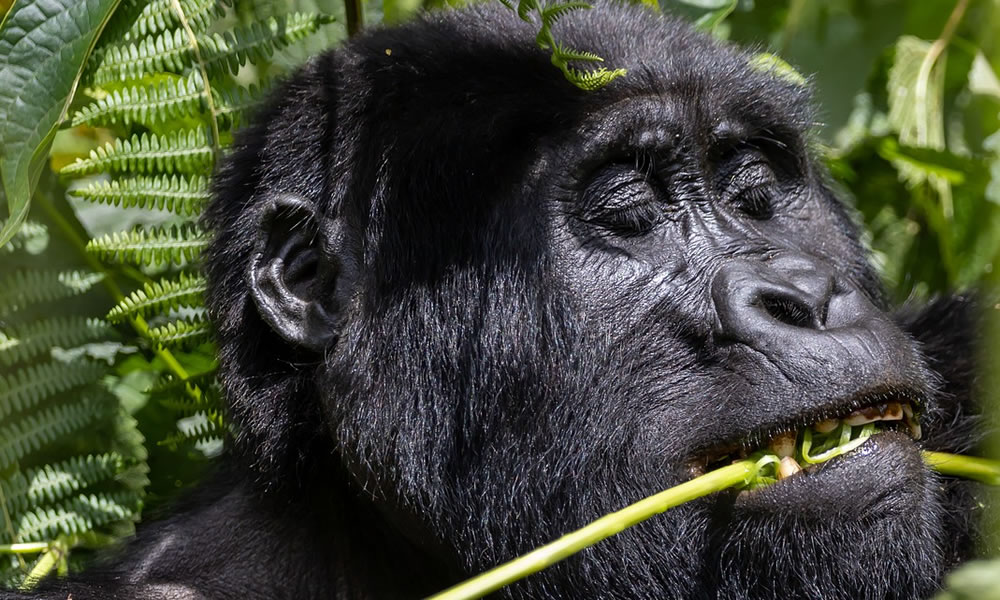
The 10 Days Gorilla tour Uganda itinerary links the savannah, riverine, and montane ecosystems across the country's western safari circuit. Traversing over 1,200 kilometers of varied terrain, travelers journey from the Victoria Nile in Murchison Falls National Park south along the Albertine Rift Valley to Queen Elizabeth National Park. The expedition continues into the high-altitude rainforests of Bwindi Impenetrable National Park, home to nearly half of the world's remaining wild mountain gorillas, before concluding among the 29 islands of Lake Bunyonyi. Along this route, travelers encounter 1,000 recorded bird species and classic big game—including southern white rhinos, Rothschild's giraffes, African bush elephants, and tree-climbing lions—while staying at established safari lodges throughout the country.
Detailed Itinerary
Day 1: Arrival in Uganda & Transfer to Entebbe or Kampala
Arrive at Entebbe International Airport on the shores of Lake Victoria, where you will meet your private safari guide. Complete immigration clearances before boarding a 4x4 safari vehicle for your transfer to your hotel in Entebbe or Kampala. The short 5-kilometer drive to Entebbe takes roughly 15 minutes, while the 40-kilometer transfer to central Kampala via the Entebbe-Kampala Expressway takes approximately 45 minutes depending on traffic. Settle into your hotel room, receive a comprehensive trip briefing from your guide regarding the upcoming circuit, and spend the rest of the afternoon resting. Option to take a brief walk through the Entebbe Botanical Gardens to spot native plant species and early birdlife such as the Great Blue Turaco, Ross's Turaco, and vervet monkeys along the Lake Victoria shoreline before dinner.
Day 2: Transfer to Murchison Falls via Ziwa Rhino Sanctuary
Depart your hotel early in the morning for the 305-kilometer drive north toward Murchison Falls National Park, a journey taking roughly six hours. Travel along the Gulu highway through Luweero District to Nakasongola, arriving at Ziwa Rhino Sanctuary after three hours. Join an armed ranger for a 1.5-hour trek on foot through acacia bushland to track habituated southern white rhinos (Ceratotherium simum simum), learning about breeding programs aimed at reintroducing rhinos to Uganda's national parks. Following the trek, enjoy a warm lunch at the sanctuary restaurant before continuing two hours north through Masindi town to the Kichumbanyobo Gate of Murchison Falls National Park. Drive through the Budongo Forest reserve to reach your lodge along the Victoria Nile, checking in for dinner and overnight accommodations along the riverbank.
Day 3: Buligi Game Drive & Victoria Nile Launch Cruise
Begin at 06:30 with an early morning game drive across the Buligi tracks in the park's northern savannah sector. Over four hours, track active prides of lions, leopards, side-striped jackals, and large herds of Rothschild's giraffes, Jackson's hartebeests, oribis, and African bush elephants. Return to the lodge for lunch and rest. At 14:00, board a three-hour public launch boat heading upstream along the Victoria Nile toward the base of Murchison Falls. Pass large pods of submerged hippos, Nile crocodiles sunning on sandbars, and waterbirds such as the African Skimmer and Goliath Heron. Disembark at the river landing base to join a ranger for a 45-minute hike up steep, rocky paths to the top of the falls, watching the Nile force through a 7-meter gorge before returning to your lodge for dinner.
Day 4: Overland Transfer to Queen Elizabeth National Park
Check out of the lodge after breakfast to begin the 370-kilometer overland transfer south to Queen Elizabeth National Park, a driving duration of roughly seven to eight hours. Travel along the Albertine Rift Valley escarpment, passing local tea plantations in Hoima and the agrarian town of Fort Portal situated under the foothills of the Rwenzori Mountains. Stop in Fort Portal for a sit-down lunch at a local restaurant before continuing south through Kasese, crossing the Equator line at Kikorongo. As you enter Queen Elizabeth National Park, observe views of Lake George, Lake Edward, and open savannah plains. Arrive at your lodge in the northern Kasenyi sector by late afternoon, check into your room, and relax on the veranda overlooking the rift valley floor before dinner.
Day 5: Kasenyi Game Drive & Kazinga Channel Boat Cruise
Set out at 06:30 for a four-hour game drive across the Kasenyi plains, a primary breeding ground for the Uganda kob (Kobus kob thomasi). Search for active predators, including lions and hyenas hunting along the open grassland, alongside Cape buffaloes, giant forest hogs, and defassa waterbucks. Return to the lodge for lunch. At 14:00, transfer to the Mweya peninsula for a two-hour boat cruise along the 32-kilometer Kazinga Channel, which connects Lake George and Lake Edward. Sail close to riverbanks lined with herds of elephants, buffaloes, and hippos. Avian observations along the channel include the Pink-backed Pelican, African Fish Eagle, Saddle-billed Stork, and Malachite Kingfisher. Return to the lodge at 17:00 for an evening at leisure and dinner.
Day 6: Ishasha Tree-Climbing Lions & Transfer to Bwindi Forest
Depart the lodge after breakfast and drive 100 kilometers south to the Ishasha sector of Queen Elizabeth National Park, taking approximately two hours. Conduct a two-hour game drive through riverine networks and savannah tracks, searching high in the branches of sycamore fig (Ficus sycomorus) and acacia trees for resident tree-climbing lions resting during the midday heat. Observe grazing herds of topi and Uganda kob across the plains. After lunch in Ishasha, continue the journey 90 kilometers south into the Kigezi highlands toward Bwindi Impenetrable National Park, a three-hour drive along winding dirt roads. Arrive at the northern Buhoma sector, check into your forest lodge, and spend the evening resting while preparing gear for the upcoming gorilla trek.
Day 7: Mountain Gorilla Trekking in Bwindi Impenetrable Forest
Report to the Buhoma park headquarters at 07:30 for a mandatory safety and conservation briefing by Uganda Wildlife Authority lead rangers. Enter the dense, high-altitude rainforest to track habituated mountain gorillas (Gorilla beringei beringei), hiking across steep, foliage-covered terrain between 1,160 and 2,600 meters elevation. The trek lasts two to six hours depending on the movement of the assigned gorilla family. Upon locating the family, spend one permitted hour observing the silverback, females, and juveniles feeding, grooming, and resting on the forest floor. Learn about local conservation measures from your ranger while taking photos. Descend back to the trailhead, receive your trekking completion certificate, and return to the lodge for a warm bath, relaxation, and dinner.
Day 8: Transfer from Bwindi Forest to Lake Bunyonyi
Enjoy a relaxed morning breakfast at the lodge before checking out for the 110-kilometer transfer southeast to Lake Bunyonyi, a driving duration of roughly three hours through terraced hillsides. Arrive at the lake, situated at 1,962 meters altitude, and check into your lakeside resort or island camp. Lake Bunyonyi is free of bilharzia, hippos, and crocodiles, making its waters safe for aquatic activities. In the afternoon, board a traditional wooden dugout canoe or motorized boat for a two-hour tour across the lake, visiting several of its 29 islands, including Akampene (Punishment Island) and Bwama Island. Observe highland bird species like the Pied Kingfisher, African Harrier-Hawk, and Levailant's Cuckoo along the shoreline before returning to the resort for dinner.
Day 9: Full Day Relaxation & Community Visits at Lake Bunyonyi
Spend a full, unhurried day relaxing along the tranquil shores of Lake Bunyonyi. Following breakfast on the terrace, choose from several low-impact activities around the lake. Take a guided two-hour nature walk along the ridge paths above the lake for views of the terraced farming landscapes managed by the local Bakiga people. Alternatively, visit a local community project or school on the mainland to learn about regional agricultural practices and craft-making traditions. Spend the afternoon swimming in the lake, kayaking along quiet bays, or reading on your private balcony. Spot endemic waterbirds nesting in the papyrus reed beds along the shore. Gather at the lodge terrace in the evening for a meal featuring fresh local crayfish while watching the sunset over the water.
Day 10: Scenic Overland Return Drive to Entebbe & Departure
Check out of the resort after an early breakfast to begin the 410-kilometer return journey to Entebbe or Kampala, a travel duration of roughly eight hours. Drive northeast through the towns of Kabale, Mbarara, and Masaka, descending from the southwestern highlands into cattle corridor plains. Stop in Mbarara at the Igongo Cultural Centre for a sit-down buffet lunch featuring traditional regional cuisine. Continue east to Kayabwe for a one-hour stop at the official Uganda Equator monument at 0 degrees latitude, participating in water-coriolis demonstrations and visiting local craft shops. Proceed through Mpigi District, arriving in Entebbe by late afternoon. Transfer directly to Entebbe International Airport for check-in ahead of your outbound evening flight home.
Here are 10 key questions travellers often ask when planning a 10-day Uganda gorilla and wildlife tour, with detailed answers in paragraph form.
What makes combining Murchison Falls, Queen Elizabeth, and Bwindi into a 10-day itinerary ideal?
A 10-day circuit provides the ideal timeframe to experience Uganda’s core ecosystems without feeling rushed. Covering over 1,200 kilometers, this route seamlessly links savannah grasslands, powerful river systems, and ancient high-altitude rainforests. Starting in the north at Murchison Falls National Park introduces classic big game safari viewing, featuring Rothschild's giraffes, African elephants, and the dramatic Victoria Nile. Moving south along the Albertine Rift Valley brings you to Queen Elizabeth National Park for open-plains predator tracking and the Kazinga Channel boat safari. Finally, ascending into Bwindi Impenetrable Forest offers the rare opportunity to trek mountain gorillas. Spacing these highlights across ten days allows for realistic driving legs, adequate rest, and a final relaxation stop at Lake Bunyonyi, ensuring a well-balanced journey across western Uganda.
How physically demanding is the mountain gorilla trek in Bwindi Impenetrable Forest?
Gorilla trekking in Bwindi requires a moderate to high level of physical fitness due to the rugged mountain terrain. Bwindi sits at elevations between 1,160 and 2,600 meters above sea level, where steep ridges, thick vines, and slippery mud slopes present continuous hiking challenges. Treks last anywhere from two to six hours round-trip, depending on where the assigned gorilla family moved overnight. You walk off-trail through dense foliage, requiring steady footing and stamina. To make the hike significantly more manageable, you can hire a local porter at the park headquarters for $20 USD. Porters carry your daypack, offer a steadying hand on steep ascents, and assist across muddy terrain. Wearing sturdy waterproof boots with deep tread, long trousers, gaiters, and gardening gloves ensures you remain comfortable throughout the trail.
What are the main rules and health safety protocols for gorilla trekking?
To protect endangered mountain gorillas from human-transmitted diseases, the Uganda Wildlife Authority enforces strict safety guidelines. Before entering the forest, rangers conduct a mandatory safety briefing at 07:30. Visitors must maintain a minimum distance of seven meters (about 23 feet) from the gorillas at all times to prevent stress and disease transmission. Wearing protective N95 or surgical face masks during the one-hour observation window is required, as gorillas share roughly 98% of human DNA and are highly susceptible to respiratory illnesses. If you show symptoms of a cold, flu, or contagious illness on the morning of the trek, you will be barred from entering the forest to safeguard the troop. Additionally, flash photography, eating, drinking, or making loud noises near the gorillas are strictly prohibited.
What wildlife sightings can I expect on the Kazinga Channel boat cruise?
The two-hour boat safari along the 32-kilometer Kazinga Channel in Queen Elizabeth National Park is famous for its dense concentration of wildlife. Connecting Lake George and Lake Edward, this natural waterway draws thousands of animals to its banks daily, especially during warm afternoons. Passengers regularly observe large pods of submerged hippos, Nile crocodiles basking on sandbars, and herds of African bush elephants drinking and bathing along the shore. Cape buffaloes, waterbucks, and monitor lizards are also frequent sightings along the water's edge. For birdwatching enthusiasts, the channel supports over 600 recorded avian species. You can expect to spot pink-backed pelicans, saddle-billed storks, African fish eagles, goliath herons, grey-headed gulls, and malachite kingfishers hunting along the papyrus reed beds from close proximity.
Why do lions in the Ishasha sector climb trees, and how easy are they to spot?
The southern Ishasha sector of Queen Elizabeth National Park is one of only two places in Africa where lions routinely climb native trees. Prides ascend high into the branches of sycamore fig (Ficus sycomorus) and acacia trees primarily for two practical reasons: to catch cool breezes above the hot savannah floor and to escape swarms of biting tsetse flies hiding in the grass. This elevation also provides a clear vantage point to monitor grazing herds of topi and Uganda kob across the plains. While spotting tree-climbing lions is a highlight, it is never fully guaranteed, as wild animals move freely across large territories. However, experienced driver-guides focus on known "lion trees" during the warmer hours between late morning and early afternoon, when the cats retreat into the canopy to rest.
What should I know about tracking southern white rhinos at Ziwa Rhino Sanctuary?
Ziwa Rhino Sanctuary in Nakasongola District provides a crucial conservation bridge on the drive from Entebbe to Murchison Falls. Wild rhinos were declared extinct in Uganda by 1983 due to rampant poaching and civil conflict, leading to Ziwa’s establishment in 2005 to breed and reintroduce southern white rhinos into national parks. The on-foot tracking experience lasts roughly 1.5 hours, guided by armed, knowledgeable rangers. After driving near the rhinos' last known location, visitors walk through acacia thickets to observe these massive mammals from a safe distance of six to seven meters. Because the rhinos roam freely within a protected 7,000-hectare fenced sanctuary monitored 24 hours a day, sighting success rates exceed 95%. All entry fees directly support ongoing security, veterinary care, and breeding programs.
What makes Lake Bunyonyi the ideal location to relax at the end of a safari?
Lake Bunyonyi provides a peaceful, scenic environment to unwind after long travel days and strenuous forest hikes. Nestled at an elevation of 1,962 meters in the southwestern highlands near Kabale, Bunyonyi is Africa's second-deepest lake, framed by steep, terraced green hillsides. Unlike many major African lakes, Bunyonyi is completely free of bilharzia parasites, Nile crocodiles, and hippos, making its calm waters safe for swimming, kayaking, and canoeing. The lake contains 29 distinct islands, each steeped in local history and folklore, such as Akampene (Punishment Island) and Bwama Island. Spending two nights here allows travellers to explore the lake on traditional wooden dugout canoes, visit local Bakiga community projects, observe abundant highland birdlife, and enjoy cool, crisp evening air before taking the long return drive back to Entebbe.
What packing essentials are required for a 10-day Ugandan safari?
Packing for a Uganda safari requires preparing for hot, sunny savannahs alongside cool, wet montane rainforests. For clothing, pack lightweight, moisture-wicking apparel in neutral earth tones like khaki, tan, and green; avoid bright colors, as well as dark blue and black garments which attract tsetse flies. Essential gear includes sturdy, worn-in waterproof hiking boots with high ankle support for gorilla trekking, paired with thick wool socks and gaiters. Bring lightweight long-sleeved shirts and long trousers to protect against stinging nettles, thorns, and insects in the forest. A high-quality waterproof rain jacket, a wide-brimmed sun hat, polarized sunglasses, DEET-based insect repellent, high-SPF sunscreen, and a 20-liter daypack with a hydration bladder are essential daily items. Don't forget tough gardening gloves for gripping rough vegetation on steep climbs.
What are the typical driving distances and road conditions on this 10-day circuit?
Overland travel covers approximately 1,200 kilometers across western Uganda, making comfortable transit a significant component of the journey. Main highways connecting major urban centers—such as the Kampala-Gulu highway to Murchison Falls or the Kabale-Mbarara road—are fully paved and generally smooth. However, roads inside national parks and dirt tracks leading into Bwindi Impenetrable Forest consist of winding, unpaved gravel and clay routes that can become bumpy and slippery during heavy rains. Key long-distance transit legs include Day 2 from Kampala to Murchison Falls (305 km, 6 hours), Day 4 from Murchison to Queen Elizabeth (370 km, 7–8 hours), and Day 10 from Lake Bunyonyi back to Entebbe (410 km, 8 hours). Traveling in a customized 4x4 Land Cruiser with pop-up roofs and air conditioning ensures comfort throughout these long, scenic drives.
How does booking this safari directly support wildlife conservation and local communities?
Tourism serves as the financial backbone for conservation and rural community development across Uganda. A major portion of park entrance fees and mandatory primate permits—such as the $800 USD gorilla permit and $250 USD chimpanzee permit—directly funds the Uganda Wildlife Authority (UWA). These funds pay for park ranger salaries, anti-poaching patrols, veterinary care teams like Gorilla Doctors, and continuous habitat monitoring. Furthermore, Ugandan law dictates that 20% of all national park entry fees are redistributed directly to local communities bordering park boundaries. This revenue funds essential local infrastructure projects, including primary schools, health clinics, roads, and clean water access. Choosing community-owned rest camps, hiring local porters, and purchasing handmade goods directly empowers former hunting families to become active stewards of rainforest conservation.
Booking 10 Days Gorilla tour Uganda with us Roads of Adventure safaris
Booking 10 Days Gorilla tour Uganda with us Roads of Adventure safaris
To book your 10 Days Uganda Gorilla Trekking and Safari Tour Vacation with Roads of Adventure Safaris, you can contact them directly via email at info@roadsofadventuresafaris.com or call their team at +256-701-041-637 to secure your gorilla trekking permits and finalize your itinerary dates
