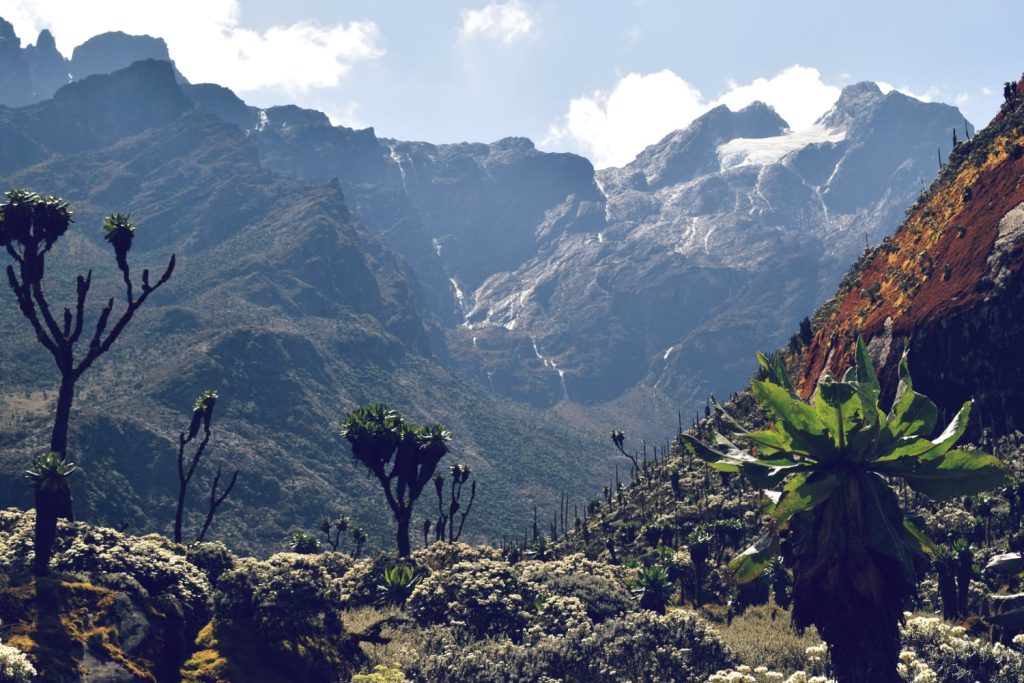
Climbing the Rwenzori Mountains in 5 days is a physically demanding adventure. The most essential tip is to prioritize physical training months in advance, as the route requires navigating steep cliffs, muddy paths, and high altitudes for up to 8 hours daily.
1. Prioritize Physical Training Months in Advance
Climbing the Rwenzoris isn't a casual weekend stroll. A 5-day trek requires grinding through 6 to 8 hours of strenuous movement daily, tackling relentless vertical gains and slick, unpredictable terrain. You'll be pushing your heart and legs to their absolute limits as you move from the trailhead around 1,600 meters (5,249 feet) up to high-altitude camps pushing past 4,000 meters (13,123 feet).
If your body isn't prepped for this kind of volume, your legs will turn to jelly by day two. Start training at least 3 to 4 months before your trip. Focus heavily on building cardiovascular stamina through long distance running, cycling, or rowing sessions lasting 45 to 60 minutes, 4 times a week.
However, cardio alone won't save your knees on steep descents. Incorporate targeted strength training twice a week. Exercises like Bulgarian split squats, lunges, step-ups, and weighted calf raises build the exact stabilizing muscles needed to navigate loose rock and deep mud.
Pro Tip: Toss a 10 kg (22 lbs) weight plate into your backpack and find a steep set of stadium stairs or a local hill. Practice climbing up and down for an hour straight. Mocking the exact stress your joints will face under load is the single best way to ensure you actually enjoy the summit views instead of staring at your boots in agony.
2. Invest in Proper Footwear and Gaiters
The Rwenzoris are famous for one thing above all else: relentless, deep, shoe-snatching mud. The mid-altitude zones, particularly around the Bigo Bog sitting between 3,000 and 3,800 meters, are essentially giant, saturated sponges. Moving from the damp lower forest into the deep mud of Bigo Bog and eventually up to the icy alpine zone demands smart footwear choices.
Standard GORE-TEX hiking boots—no matter how expensive or top-rated—will often get completely waterlogged within the first three hours of stepping into the bog. Once water pours over the ankle collar, your boots act like heavy, wet anchors for the rest of the trek, leading to severe blisters and cold feet.
This is why veteran Rwenzori guides almost universally recommend wearing high-quality, knee-high rubber Wellington boots (gum boots) fitted with custom arch-support insoles for the lower and middle sections.
Pair these boots with durable, waterproof gaiters wrapped tightly around your calves to block debris and splashing mud. Save your sturdy, rigid leather hiking boots or mountaineering boots for the higher, drier, and icy rocky sections above 4,000 meters.
Packing two pairs of footwear might add about 1.5 kg to your gear, but keeping your feet dry in sub-zero alpine nights is worth every single gram. Don't forget to pack 5 to 6 pairs of thick, moisture-wicking merino wool socks to swap out daily.
3. Book a Certified Tour Operator
You cannot simply turn up at the gates of Rwenzori Mountains National Park with a daypack and start hiking. Ugandan wildlife regulations strictly require every trekking group to be accompanied by licensed local guides, armed rangers, professional mountain cooks, and porters.
Booking through a trusted, certified local operator like Roads of Adventure Safaris ensures that your trip is legally compliant, safe, and smoothly executed.
A professional crew plays distinct roles to keep you safe and comfortable on the trail:
- Lead Guide: Manages overall pacing, safety checks, and altitude monitoring.
- Armed Ranger: Ensures wildlife safety and maintains park compliance.
- Mountain Cook: Prepares 3 hot meals a day and provides boiled drinking water.
- Porters: Typically 2 to 3 per trekker, handling heavy gear up to 15 kg.
Working with Roads of Adventure Safaris handles all the complex logistics that would otherwise turn into a nightmare, such as arranging transportation from Entebbe or Kampala (a 7 to 8-hour drive), organizing park entry permits, and managing mountain rescue insurance.
These local porters are the unsung heroes of the mountain. They carry up to 15 kg of your main gear in waterproof duffle bags, arriving at camp hours ahead of you to set up tents and prep the mess area. Booking with an established team ensures fair wages, proper gear, and warm clothing for these local staff, which directly supports the surrounding communities in Kasese.
4. Target the Drier Seasons
Positioned right on the equator, the Rwenzoris don't experience traditional spring, summer, fall, and winter. Instead, the weather patterns are defined by dry and wet seasons.
Attempting a tight, fast-paced 5-day itinerary during the peak rainy months of March to May or September to November is a recipe for frustration. Heavy downpours transform peaceful mountain streams into impassable torrents, double the depth of the bogs, and obscure the stunning views behind dense, freezing fog.
To give yourself the highest chance of success, target the two main dry windows:
- June through August: Generally the driest period of the year.
- December through February: Slightly warmer with clear morning skies.
During these dry windows, daytime temperatures at lower elevations around 2,000 meters hover at a pleasant 18°C to 22°C (64°F to 72°F). However, night temperatures at high camps like Elena Camp at 4,541 meters will still plunge well below 0°C (32°F).
Even in the dry season, remember that the Rwenzoris are tropical cloud forests at heart—you will almost certainly encounter an afternoon shower or two. The difference is that during dry months, the rain passes quickly, leaving behind crisp blue skies and breathtaking, crystal-clear views of the surrounding glaciers.
5. Train Specifically for Mountain Treks
General gym fitness is great, but mountain fitness requires a completely different muscular adaptation. The 5-day Rwenzori routes hit you with relentless elevation profiles—you might easily gain 1,000 meters of elevation in a single day, moving from Sine Camp at 2,596 meters to Mutinda Camp at 3,588 meters. This puts immense strain on your quads, hamstrings, glutes, and stabilizing core muscles.
To prepare effectively, structure your workout routine around functional, multi-joint movements:
- Weighted Step-ups: Perform 4 sets of 15 to 20 reps per leg on a 12-inch box while wearing a weighted vest or pack.
- Eccentric Squats: Lower down for 3 slow seconds to train your quads for the grueling downhill sections.
- Walking Lunges: Complete 3 sets of 30 total paces while holding light dumbbells.
- Planks and Farmer's Carries: Build the core and grip strength needed to stabilize yourself with trekking poles on slick logs.
Structure your weekly training two to three months out by alternating leg strength workouts, Zone 2 cardio for 45 minutes, stairmaster or weighted hill reps, and dedicated long outdoor hikes of 5 to 6 hours on weekends.
Wear the exact boots, socks, and backpack you plan to use in Uganda. Loading your spine and knees with 7 to 10 kg over a 5-hour hike teaches your body how to balance on uneven, shifting surfaces—a skill no treadmill can mimic.
6. Prepare for Freezing Temperatures
It surprises many first-time visitors that a mountain range sitting directly on the equator can feel like the Arctic at night. As you gain altitude, the air thins and heat retention disappears. At base trailhead areas around 1,600 meters, it is warm and humid at roughly 24°C (75°F). By the mid-alpine camps at 3,500 meters, it drops to a chilly 5°C (41°F), and at high-alpine camps near 4,500 meters, night temperatures plunge down to freezing levels between -2°C and -5°C (23°F to 28°F).
Packing requires a strict, modular layering system:
- Base Layer: Heavyweight merino wool top and bottoms (200g/m² density or higher) to wick sweat away from your skin during long rests.
- Mid Layer: A cozy fleece sweater or lightweight grid-fleece jacket for active movement in chilly conditions.
- Insulation Layer: A high-loft down jacket (800+ fill power) that compresses small in your pack but traps maximum body heat during camp rests.
- Outer Shell: A windproof, fully seam-sealed waterproof Gore-Tex jacket and rain pants.
For sleeping, do not rely on standard lightweight camping gear. Bring or rent a winter sleeping bag rated for comfort at -10°C (14°F), along with an insulated sleeping pad with an R-value of 4.0 or higher to block the freezing ground cold.
A pair of thermal windproof gloves, a fleece beanie, and hot-water bottles tucked into your sleeping bag at night can make the difference between a restful night and hours of shivering.
7. Master Acclimatization
A 5-day itinerary leaves very little margin for slow adjustment. You are compressing a massive amount of altitude gain into a short window, which significantly raises the risk of Acute Mountain Sickness (AMS). Symptoms can range from mild headaches, fatigue, and loss of appetite to severe dizziness and nausea. To reach your highest target point safely, you must actively manage your body's adaptation process.
Focus on a simple acclimatization checklist: maintain a slow pace, drink 4 to 5 liters of water daily, eat high-carb meals, and report any symptoms early to your guide.
The golden rule of high-altitude trekking is "Pole, Pole"—Swahili for slowly, slowly. Even if you feel energized at 2,500 meters, restrain yourself. Keep your heart rate low, take short, rhythmic steps, and maintain a conversational pace.
Drink between 4 to 5 liters of water every single day. The cold, dry mountain air dehydrates you rapidly with every breath, and blood thickens at high altitude, making acclimatization much harder.
Consider asking your physician about bringing Acetazolamide (Diamox), a prescription medication that speeds up your body's natural acclimatization rate.
Most importantly, be honest with your guide from Roads of Adventure Safaris. If you develop a throbbing headache or feel unusually nauseous at 3,800 meters, tell them immediately. They carry pulse oximeters to check your blood oxygen saturation ( ) and can help adjust the daily pace or administer supplemental oxygen if necessary.
8. Rent or Bring Gear in Kampala
Getting hold of specialized high-altitude mountaineering gear in the immediate Kasese region right near the park gates can be a gamble. While base camps do hold basic rental items, local stock sizes can be limited, and equipment like crampons, ice axes, or harnesses may show significant wear and tear.
It is best to organize equipment ahead of time with Roads of Adventure Safaris in Kampala prior to making the journey west, or bring your own critical items from home:
- Bring from Home: Worn-in hiking boots (crucial to avoid severe blisters), personal merino base layers, custom insoles, gloves, and technical rain shells.
- Rent in Kampala or at Base Camp: Heavy outer parkas, down coats, sleeping bags rated to -10°C, trekking poles, rubber gum boots, and technical gear like crampons or harnesses.
When picking up rental gear, take 30 minutes to inspect everything thoroughly. Test all zippers on jackets and sleeping bags to make sure they run smoothly. Double-check that crampons fit securely onto your specific mountaineering boots with zero play, and inspect climbing harnesses for any fraying or damaged stitching.
Finding out your crampon binding is broken while standing on a slick sheet of ice at 4,500 meters is an ordeal best avoided!
9. Pack Waterproof Bags
The humidity in the Rwenzori cloud forests is relentless. Between driving rains, heavy morning mists, wet vegetation brushing against your pack, and muddy river crossings, dampness finds a way into everything if you don't take strict precautions. A standard backpack rain cover is simply not enough—water eventually seeps down your back harness and soaks through the bottom seams.
Use a simple, multi-layered dry-bag packing system:
- Outer Protection: Line the inside of your heavy-duty main duffle bag or backpack with a thick plastic liner or fitted dry bag.
- Category Bags: Pack items into dedicated, roll-top dry bags (5L to 20L capacities). Use one dry bag for your down sleeping bag and thermal night layers, a second for daily trail clothes and extra socks, and a third for your camera, power banks, and electronics.
- Strict Separation: Keep your dry sleeping bag and thermal night clothes tucked into their own dedicated dry bag, opening it only once you are safely inside your dry tent at night.
For delicate items like smartphones, cameras, spare lithium-ion batteries, and passports, use clear, double-zipper dry cases or tough Pelican-style hard cases.
Keep a few silica gel packets inside your electronics dry bags to pull out lingering ambient moisture. There are few things worse than finishing an 8-hour trek in cold rain only to find your spare socks and sleeping bag soaked through.
10. Bring Nutrition and Snacks
While your mountain cook will serve hearty, warm meals at camp—think big plates of rice, pasta, potatoes, fresh eggs, and hot soups—the relentless physical output of trekking burns between 3,500 and 5,000 calories per day. You will need quick, easily accessible calories to keep your energy high during long hours on the trail between major meals.
Assemble a daily trail fuel kit containing:
- 2x Electrolyte Replacement Packets: Add these to 1 liter of drinking water daily to replace sodium and potassium lost through sweat, preventing cramps and fatigue.
- 2x High-Carb Energy Gels or Chews: Keep these in an exterior jacket pocket for quick boosts during sudden, steep ascents.
- 100g Custom Trail Mix: Combine macadamia nuts, almonds, dark chocolate pieces, and dried local fruit like bananas or mangoes.
- 2x Dark Chocolate or Protein Bars: Choose dense, high-calorie options that won't turn into an unappetizing paste in cold weather.
At high altitudes, loss of appetite is common. Choose snacks you genuinely enjoy eating at home so you don't have to force them down when your stomach feels a bit sensitive.
11. Secure Permits Early
Access to Rwenzori Mountains National Park is strictly managed by the Ugandan Wildlife Authority (UWA) to protect its fragile, UNESCO World Heritage-listed alpine ecosystem. Because total daily permits are capped to prevent overcrowding and environmental damage—and because mountain rescue teams, rangers, and park staff need advance notice to mobilize—you cannot arrange entry on a walk-in basis.
Follow a clear booking timeline:
- 3 to 6 Months Out: Work with Roads of Adventure Safaris to secure national park entry permits, camping fees, and mountain rescue logistics.
- 2 Months Out: Finalize your specific 5-day route itinerary and confirm your dedicated guide and porter crew.
- 1 Month Out: Double-check your equipment list and complete your medical and physical preparation.
The all-inclusive permit costs arranged by Roads of Adventure Safaris cover daily park entrance fees, hut and camping accommodations, UWA armed ranger escorts, conservation fees, and emergency evacuation logistics support.
5 Days Mountain Rwenzori climb
Tackling a 5-day trek in Uganda’s Rwenzori Mountains is a fast-paced, high-intensity adventure into another world. Starting at the Nyakalengija trailhead at 1,600 meters (5,249 feet) near Kasese, you quickly leave civilization behind to ascend through three distinct ecosystems: dense equatorial rainforest, dense bamboo thickets, and surreal Afro-alpine moorland. Depending on your goals and fitness, you might push up to the spectacular Bujuku Valley at 3,962 meters, attempt Mount Speke at 4,890 meters, or tackle an intense, fast-tracked climb toward Margherita Peak at 5,109 meters. Organized with Roads of Adventure Safaris, this condensed itinerary packs iconic glacial views, towering giant lobelias, and classic mountain terrain into an unforgettable 5-day journey.
Day 1: Nyakalengija (1,600 m) to Nyabitaba Hut (2,652 m)
Your expedition starts at the park gate in Nyakalengija around 9:00 AM, where you will meet your dedicated Roads of Adventure Safaris guides, cook, and porter crew. The trail begins with a gentle warm-up, winding past local farmland and crossing the rushing waters of the Mubuku River. Soon, the path tilts upward into dense montane forest. Expect a solid 5 to 6-hour hike covering roughly 10 kilometers, with your legs getting a real workout during the final steep ridge climb. Keep an eye out for blue monkeys and colorful Rwenzori turacos in the canopy. You will reach Nyabitaba Hut at 2,652 meters (8,700 feet) by mid-afternoon, just in time for a hot tea while listening to the forest come alive at dusk.
Day 2: Nyabitaba Hut (2,652 m) to John Matte Camp (3,505 m)
Day two is a demanding 7 to 8-hour push covering about 11 kilometers, so an early start is key. You will drop down through the forest to cross the Kurt Shafer Bridge, where the Mubuku and Bujuku rivers meet. From there, the trail climbs steeply into a dense bamboo zone before hitting the infamous muddy stretches. Slip into your rubber Wellington boots here—the mud can easily swallow a standard hiking boot whole! After navigating slick mossy rocks and giant heather trees, you will emerge into the lower moorland zone. You will arrive at John Matte Camp, sitting at 3,505 meters (11,500 feet), where clear evenings reveal striking, distant glimpses of the snow-capped Mount Stanley massifs.
Day 3: John Matte Camp (3,505 m) to Bujuku Camp (3,962 m)
Today is shorter in distance at roughly 6 kilometers, but it takes 5 to 6 hours due to the technical terrain. You will cross a wooden boardwalk spanning the sprawling Bigo Bog—a vast, prehistoric wetland filled with towering 4-meter giant lobelias and tussock grass. As you hike past Lake Bujuku, the valley opens up into a dramatic, amphitheater-like alpine basin. Standing at Bujuku Camp at 3,962 meters (13,000 feet), you are completely surrounded by the towering peaks of Mount Stanley, Mount Speke, and Mount Baker. The air is noticeably thinner here, and night temperatures regularly plunge down to around  (
( ), making your warm down jacket and hot camp dinner absolute lifesavers.
Day 4: Bujuku Camp (3,962 m) to Nyabitaba Hut (2,652 m)
After taking in a crisp mountain sunrise over the Bujuku Valley, turn around to begin the long descent back toward the forest line. Retracing your steps across the Bigo Bog and back down the rocky river trails takes around 6 to 7 hours of continuous trekking, covering about 17 kilometers. Going downhill puts a lot of pressure on your knees, so relying on sturdy trekking poles is essential to stay balanced on the muddy slopes. You will drop over 1,300 meters in elevation throughout the day, watching the alpine vegetation transition back into dense bamboo and thick rainforest. Arriving back at Nyabitaba Hut at 2,652 meters feels surprisingly warm and comfortable compared to the frozen high camps.
Day 5: Nyabitaba Hut (2,652 m) to Nyakalengija (1,600 m)
The final leg of your journey is a pleasant 2 to 3-hour descent covering the last 10 kilometers back to the park headquarters. You will drop down the forested ridge, crossing wooden footbridges over the Mubuku River one last time. Reach the Nyakalengija trailhead around mid-morning to sign out with the park rangers and collect your official mountain climbing certificate. Your Roads of Adventure Safaris driver will meet you right at the gate, ready to help load your gear into the safari vehicle and transfer you back to Kasese, Fort Portal, or Kampala for a well-deserved hot shower, a hearty meal, and a good night's rest.
Booking 5 Days Mountain Rwenzori climb with us Roads of Adventure safaris
Booking a 5-day Rwenzori expedition with Roads of Adventure Safaris offers a thrilling, fast-paced dive into Uganda’s grandest alpine wilderness. Your journey kicks off at the Nyakalengija or Kilembe base camps near Kasese, easily reached via a 7-hour scenic drive from Kampala or a quick 1-hour flight from Entebbe. Because you will gain massive elevation quickly—ascending through mossy rainforests, high-altitude bogs, and landscapes filled with 4-meter giant lobelias—solid leg strength and cardiovascular stamina are vital. Supported by expert local guides and porters, this compressed trek delivers raw, untouched high-mountain magic in one unforgettable week.
